Co-founders Tawanda Masawi and Rana Taj (left to right). Image courtesy of GameSeta
Written by: Madeleine Chan, Staff Writer
SFU’s 2020 Coast Capital Savings Venture Prize competition has announced their winners, with GameSeta taking the Idea Prize award. The competition supports new businesses founded by SFU students, staff, faculty, and recent alumni.
In the other competition stream, the top winner was Mala the Brand with the Venture Prize award.
According to the competition website, the entrepreneurs competed in a “series of pitch-offs” to be “judged by a panel of industry experts on the quality of their business concept, current progress and future plans, founder track record, [and] presentation skills.”
GameSeta co-founders Rana Taj and Tawanda Masawi discussed their venture further in a video interview with The Peak.
Taj, who is a mechatronics student at SFU, explained that GameSeta is “a one-stop solution” for in-school competitive eSports.
Co-founder and recent economics grad Masawi explained that through their “centralized web-application platform,” they run competitive eSports competitions and provide logistical features like statistics, game management, and supervision. Masawi added that GameSeta creates a “safe and inclusive community for kids to participate in competitive gaming while also developing problem-solving, teamwork, and communication skills.”
Masawi said that he created the company out of his own fond childhood experiences with video games.
“[GameSeta] isn’t just an opportunity for kids to get integrated with eSports at school, it’s a way for them to have a vibrant community at school and also get recognised for competing in gaming.”
The competition is held by SFU’s Coast Capital Savings Venture Connection, a program that supports SFU students, staff, and faculty, and recent alumni’s early-stage ventures through “incubation, mentorship, office space, and access to the university’s vast entrepreneurship community.” Janice OBriain, director of the program, explained in an email interview that the program aims to empower “the next generation of SFU entrepreneurial leaders to transform the future with their problem solving, innovations and creations.”
The competition, OBriain said, is an “annual celebration of innovative ideas and ventures that spark from the SFU community” and that it provides “both the validation and resources to take their ventures to the next level.”
On GameSeta’s win, OBriain noted that in “the current COVID-19 world a startup like GameSeta has a very positive short term horizon [ . . . ] [we] are looking forward to helping the team achieve their venture goals.”
When asked about winning the award Masawi said that “it means a lot.”
“We spent about eight months to a year just doing a lot of research and testing our idea with users but winning this competition is really important to us because it provides us with a lot of validation [ . . . ] being picked as the top idea [ . . . ] shows that hard work that has been put behind the scenes by our huge team at GameSeta.”
Masawi hopes to “expand across Canada” in the future.
“Hopefully one day GameSeta will be in every single high school across Canada [ . . . ] The same way in which students have huge soccer tournaments and huge tennis tournaments [and] swimming competitions across provinces in Canada, that’s the same way in which we hope one day that students will be using the GameSeta platform.”
Monday Music: your weekly themed playlist. Image courtesy of The Peak.
By: Michelle Young, Staff Writer
During isolation, many of us have been on the hunt for new tracks to add to our playlists. So why not check out the many talented Asian-American and Asian-Canadian artists who are making their mark on North America’s music scene? Asian Heritage Month may have just ended, but here are some artists that are carving their own sound that you can check out at anytime.
Diverseddie 舵
Courtesy of Diverseddie.
Vancouver-based artist, Diverseddie 舵, is an R&B Chinese-Canadian artist. His music features effortless transitions between bilingual rap verses in Mandarin and English. Musically, his songs feature a variety of range; some use fast rap, deep bass, and subtle synthesizers accompanied by trap-inspired beats, like on “You Won’t Lose Me.” Other tracks, such as “Long Live,” feature steady rap mixed with smooth vocals and piano chords for a subdued sound. His work explores topics such as materialism, immigration, and self-improval.
Sweater Beats
Courtesy of WEA International Inc.
Sweater Beats (Antonia Cuna) is a Filipino-American electronica producer based in Los Angeles. His uptempo songs use climatic beat drops and rich synths. Vocals are diverse throughout his discography as he features a variety of artists on his tracks, such as Hayley Kiyoko and Icona Pop on “Glory Days” and “Faded Away,” respectively. Influenced by R&B and pop-punk, Sweater Beats has experimented with fusing genres, such as on his EMO NITE MIX. While some songs are solely instrumental, Sweater Beats remains distinctive via his use of rising electronics to craft songs that evoke an upbeat and radiant sound.
Keshi
Courtesy of Island Records.
Based in Houston, the Vietnamese-American artist, Keshi (Casey Luong) features an alternative lo-fi hip-hop inspired sound paired with wavering vocals to capture vulnerability on his tracks. Melancholy and soft guitar strums capture the entirety of his work. His minimal use of echoes and rolling piano chords complement the raw emotion found throughout his discography. Keshi examines loneliness and what it means to heal from heartbreak on songs like “alright” and “blue.”
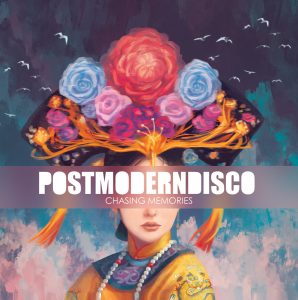
Postmoderndisco
Courtesy of postmoderndisco.
Postmoderndisco (Mandy) is a Toronto-based, Chinese-Canadian electronic artist who focuses on the atmosphere of her work. Tracks like “Wings” are filled with reverb and choiring vocals that build on top of one another for a hazy and ethereal sound. Beats are rich and layered, providing the listener with mesmerizingly chill electronics. The artist stated in an interview on Medium that she “create[s] without thinking in terms of genres.”
Run River North
Courtesy of Run River North.
Run River North is an alternative folk Korean-American band based in Los Angeles, currently made up of Daniel Chae, Alex Hwang, and Sally Kang. Songs like “Run or Hide” feature aggressive drum beats, paired with voices that contrast cooing hymns against angry verses. Other tracks, such as “Foxbeard” use soft electric guitar strums paired with strings to complement harmonizing vocals. Their sound emphasizes acoustics and captures how it feels to bask in the fleeting sunlight.
Student senators inquire about SFU’s COVID-19 policies during the question period
Beginning the question period of Tuesday’s Senate meeting, Senator Colin Fowler started by asking: “Will SFU commit today to do a thorough, independent, and unbiased survey of all students and faculty members to create a blueprint for a future emergency response?”
Senator Jonathan Driver, Vice-President Academic and Provost pro tem responded that SFU is too busy to conduct a survey at the time. “I think it will be more sensible to investigate our experiences once we’ve got to a more stable point, if that ever happens,” Driver added.
Senator Jennifer Chou, who is also VP Student Life of the Simon Fraser Student Society, asked a number of questions.
Her first question involved multiple sub-questions regarding support for international students, including when the Summer 2020 emergency funding would open, what percentage of this funding would be allocated to international students, and if SFU is involved in advocacy on behalf of international students to the government.
Driver responded that the emergency funding offered in the Spring 2020 term was intended as a one-time funding program. After the application deadline for the SFU’s regular bursary for the Summer 2020 semester, they will review to see if additional funding is needed. Driver also noted that the allocation of funding to international students is not dictated by a percentage.
“If you look across the country, you will find that SFU’s bursary support to international students is quite a bit more generous than most other universities,” added Driver.
According to Driver, SFU is advocating for international students to the government. “There is a very very wide range of activities taking place locally, provincially, and nationally in order to improve conditions for international students,” he explained.
Chou’s second question was: “Why are students still being charged late fees for tuition, and what are SFU’s plans for students who cannot afford the extra 2% late penalty?”
“We charge late fees for a very simple reason: that is to provide an incentive for students to pay their tuition,” Driver responded. He noted that the tuition deadline has been extended and that students are now allowed to enroll in Fall classes if they haven’t paid their Summer fees, provided that they are on the payment plan.
Chou asked if SFU would consider implementing pass/fail grading or the Summer 2020 semester.
“For the Summer term students have plenty of time to understand what assessment practices will be used, they can therefore make up their minds as to whether or not they wish to take the course, and we see no reason to implement the pass/fail option under these circumstances,” answered Driver.
Lastly, Chou asked how SFU will accommodate students in different time zones, or students who may not be able to attend live lectures due to other time conflicts.
“We have recently sent out an email to all instructors encouraging people to adopt asynchronous learning methods where that is consistent with the learning outcomes of the course,” said Driver, although he noted that it is not a requirement at the moment.
Senate Chair Andrew Petter also noted that there are plans for virtual town halls to be held in the future, where students and faculty can submit questions and have them answered.
Senate approves and recommends to Board of Governors new programs
A number of motions involved approving and recommending to the Board of Governors the proposals for various new programs at SFU.
Effective Spring 2021, the Senate approved both a new Geographic Information Science Minor in the Department of Geography and a Minor in Indigenous studies in the Department of Linguistics and the First Nations Languages Program.
Additionally, the Senate approved in the Beedie School of Business a Graduate Diploma in Management as well as a Master in Management, both effective Fall 2021.
Senate suspends programs
The Senate voted to suspend admission and terminate the Modelling of Complex Social Systems Graduate Certificate within the Faculty of Applied Sciences, starting Fall 2020.
Also beginning in Fall 2020, the Senate also voted to suspend admission to the Latin American Studies Graduate Certificate within the Faculty of Arts and Social Sciences.
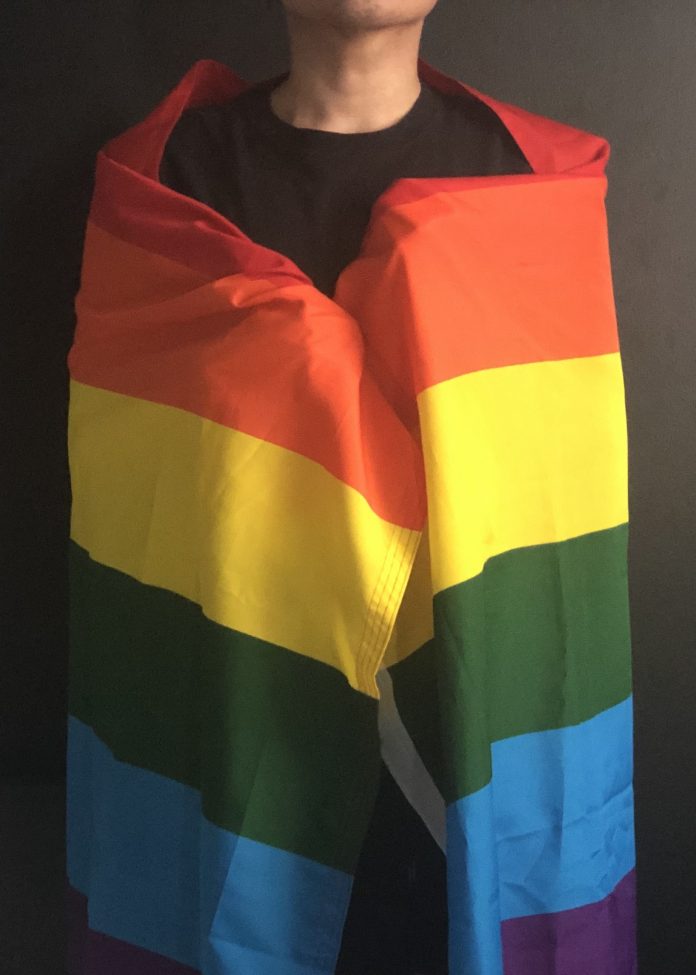
Pride is something that can be celebrated without the need of physical space. Photo: Juztin Bello/The peak
By: Juztin Bello, Copy Editor
Due to the ongoing uncertainty around COVID-19, Pride festivities worldwide have either been cancelled or re-imagined into virtual events. These cancellations include New York City’s Pride March, which has been cancelled for the first time in history, and San Francisco’s Pride Parade, which would have celebrated its 50th anniversary.
Although Vancouver’s Pride festivities are not until August, the Vancouver Pride Society has opted to follow in the footsteps of several other Pride organizations and released a statement back in April on the matter. In this statement they expressed heartbreak over the worldwide cancellations, with a promise to do what they can to fill the hole that the cancellations have left, and encouraged a continued celebration of Pride. I know going into Pride month that people are going to be disappointed by the lack of Vancouver’s big, flashy Pride celebrations. What people need to remember, however, is that Pride, and the feeling of pride itself, can continue on without such events happening.
As someone who has attended Vancouver Pride for the last four years, I fully understand those who feel they are missing out on an event that celebrates togetherness — especially physical togetherness. Being amongst the bustling crowds walking the streets with flags in hand, and the bars packed with celebrants dancing as one unit is a feeling of physical connection that I have felt at Prides in the past.
However, just because the physicality that comes with Pride has been lost does not mean we have any less reason to celebrate queerness and pay homage to the LGBTQ2+ community. The Vancouver Pride Society sums it up best in their statement:
What people often forget is that Pride began as a protest. The first Pride was credited more than 50 years ago at the 1969 Stonewall Riots, which saw countless LGBTQ2+ folk fighting back after a bubbling of tension erupted between police and patrons of the gay club, Stonewall Inn.
When we celebrate Pride, regardless of physical space, we’re celebrating the strength and courage to fight back against ignorance and oppression, and to feel empowered in our identities.
We’re paying homage to the movement makers, past and present, who continue to fight or have fought for LGBTQ2+ rights. Whether it’s by donating to causes that support the LGBTQ2+ community, cheering as more advancements are made, or simply loving and fighting for our own voices, Pride can still be celebrated.
Behind the flashy rainbow-clad crowds and the sounds of corporations furiously leaping at opportunities to profit off of rebranding is the true sentiment of Pride — it’s about fighting back against years of oppression and celebrating the entire spectrum of gender, race, and sexuality. And, frankly, these ideas are things we can celebrate and feel without the need of the big, commercialized events that many Pride parades have become.
Pride is something I feel when I see people of the LGBTQ2+ community being celebrated in the media and finding success in a heteronormative, binary driven world. It’s the feeling of serenity when we can openly talk about our identities to friends or like-minded community members, and feel a sense of belonging. It’s a feeling that’s close-to-home, when my parents ask me questions to better educate themselves about LGBTQ2+ issues, and I see them make efforts to learn more about the LGBTQ2+ community. And, it’s a feeling of struggle to push for progress, for those still fighting for equality and a voice within our own community.
Of course, the parties and the drinking are excellent aspects of celebration, but the loss of such luxuries does not and should not denote any less pride in being queer.
So while the parade and the drinks will definitely be missed, I will be continuing my Pride from the comfort and safety of my home; ultimately, Pride is about feeling at home, and right now, home is exactly where this feeling shall be.
In lieu of Pride events being cancelled, there are several alternatives one could take to celebrating Pride Month this year. Global Pride 2020, a 24-hour event, will be conducted on June 27 with performances and speeches. Additionally, from June 19 to 21, NYC Pride will be hosting Pride 2020 Drag Fest which will see more than 100 drag queens performing in support of LGBTQ2+ advocacy organization GLAAD (Gay & Lesbian Alliance Against Defamation). While no Vancouver events have been announced, patrons should expect to hear soon once the Vancouver Pride Society’s website goes back up.
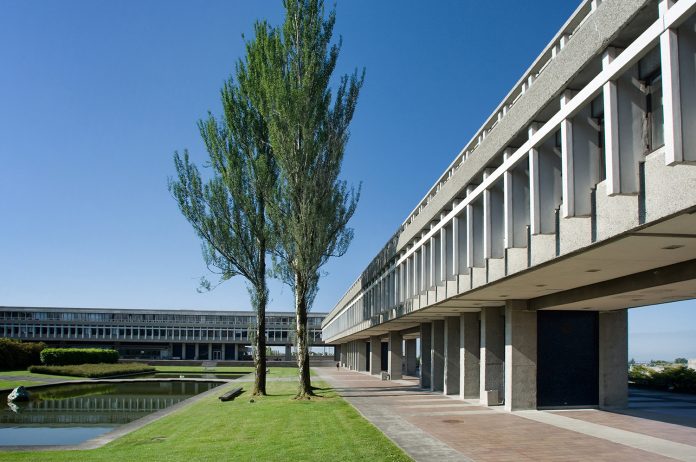
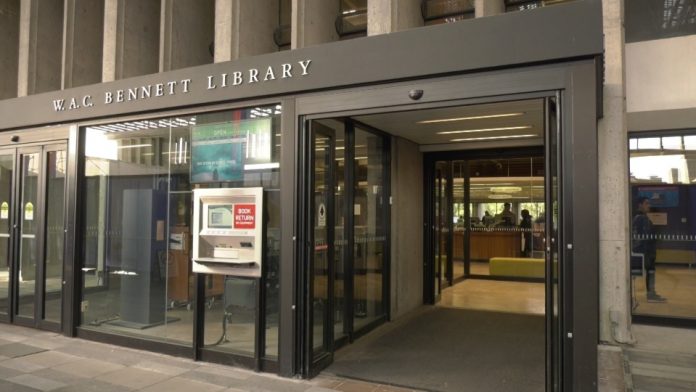
SFU’s Five Year Capital Plan currently involves a library renovation project that was initially anticipated to have the W.A.C Bennett Library shut down for five years. However, they are now looking at a phased approach that would take longer, but would allow students access to the library throughout the renovation.
The plan states that the library is in “poor condition” and requires upgrades to address “life safety, seismic, and accessibility issues.” It has a current Facility Condition Index (FCI) assessment of 0.89, which measures the condition of a building to the cost of reproduction. According to the condition scale, any FCI number above 0.30 is considered in critical condition.
The Peak interviewed Ian Abercrombie, Director of Campus Planning & Development in SFU’s Facilities Services for more information.
Abercrombie explained that the renovations would include seismic upgrades, the replacement of the ventilation and electric systems, repairs to the roof (which is currently subject to frequent leaks), replacing windows, and asbestos removal. However, he added that the Capital Plan is aspirational, meaning that the university is waiting on provincial funding to begin.
The current Capital Plan stated that all library services will be moved to the Shrum Science Centre Biology building during the renovation project. However, Abercrombie noted that these plans have now been changed. They are instead hoping to take a phased approach, where the library would not be entirely shut down, but instead would be renovated on a floor-by-floor basis over a longer period of time. This plan is to be presented to the Board of Governors for approval in the upcoming June Board meeting.
A downside of this approach is the difficulty of completing the renovation without being disruptive to students, added Abercrombie.
Student Senator Colin Fowler said in a phone interview with The Peak that “it’s going to be a very intense and very invasive operation over several years.”
Fowler, who in 2019 ran for Senate on a platform that openly opposed the five year library shutdown, stated that, “The library was really my second home on campus [ . . . ] Many people can’t study at home, they don’t have any other alternative study spaces that are suitable for them.”
“It’s the heart of campus,” added Fowler.
When asked if the costs outweigh the benefits, Fowler did acknowledge that it is important to uphold safety standards. However, he argued, “I think five years is a bit excessive [ . . . ] There’s night work there’s weekend work, I don’t see why this should be any more than two years.”
Although the cost of renovating the library was not that much lower than the cost of building an entirely new building, Abercrombie explained why rebuilding is not currently an option being considered: “It is considered an important historic building on the SFU campus [ . . . ] when we did the Burnaby campus master plan and reviewed all the buildings it was widely recognized as being an important building to preserve on our campus.”
I was born in Vancouver to two Hong Kong-born immigrants. I’ve had the privilege of growing up in two cultures: a culture found in my home, family, and church, and a culture in my school, friends, and overall community. I have a foot firmly planted in each world, because I have simultaneously experienced both these cultures my entire life. I recognise my privilege. I am neither a stranger in Canada nor in Hong Kong, because I’ve always known and loved both.
I’m one of the lucky ones, the ones who grew up living the outcome of the choices their parents made. Choices that were repeated by many across the world, spanning decades, ages, and socio-economic statuses. Hearing immigration stories from immigrants of different backgrounds and their journey to a new identity is a crucial aspect to understanding each other, and perhaps ourselves, better.
I asked my friends, their parents, family friends, and others in the Asian-Canadian community to share their immigration stories. These are deeply personal stories, and pseudonyms were given to some interviewees in order to protect their privacy. While everyone came to Canada for various reasons, there is one recurring theme: the search for something . . . different. Better. New.
Two: The journey
When discussing Asian immigration to North America, the difficulties of crossing the ocean are usually the first things mentioned. I hear harrowing stories of months spent on a cramped boat, fleeing a war-torn country in hopes that the West brings the solace they so desperately want. I hear the gamble people take, spending their last penny to come to North America with nothing but the clothes on their back, and perhaps a few treasured possessions, if they’re lucky. I hear stories of families separated, a parent going ahead to North America alone in order to lay the framework down for a reunion on Western soil. I hear stories of those who make it, and others who don’t. The journey to the West is a mentally, physically, and emotionally taxing journey, one where the hope for a better future is their anchor and motivator to start a new life in a foreign city.
Hope — it’s uncertain, but the belief of a better future is stronger than uncertainty, or second-guessing. They want a better future, be it for themselves, their children, or future generations.
The thing is, the hardships don’t end there.
The future they aspire to have is a future they will have to build from scratch.
Three: Adaptation and choices
Adaptation and assimilation into a new culture is hard; in fact, adults and older teenagers often have a harder time accepting their identity as Canadians. In a 2011 press release by UBC psychologist Steven Heine, he noted that children 15 and under identify more with Canadian culture “with each passing year,” but those who immigrated to Canada after the age of 25 were found to have accepted their Canadian identity less and less.
Yet, despite the chance of being unable to adapt or assimilate to Canadian culture, forever destined to live amongst Canadians but separate from them, they still came. And stayed.
Four: Meaning of the dream
Word: A·mer·i·can Dream (/əˈmerəkən drēm/): noun. The belief that all American citizens should possess “an equal opportunity to achieve success and prosperity through hard work, determination, and initiative.” This is attained by “sacrifice, risk-taking, and hard work, rather than by chance.”
What makes the Canadian Dream different?
~
My mother immigrated to Vancouver with her family in April 1994. My father immigrated here alone later that year. I sometimes wonder what type of courage it takes to get on a vehicle whose destination is in a foreign land filled with promise, while leaving behind everything you’ve ever known?
How can the hope for a better future, in a land thousands of kilometres away from your home and/or family, be so strong that you are willing to give all that up? How can they be willing to go through the struggles of learning a new language, adapting to a whole different culture, experiencing homesickness, and finding a community or even just a few people who speak the same language? The idea is almost too much too fathom, but they did it. Over and over. Be it for themselves, for their family, or for their children, both present and future, they did it.
The end goal of the Dream is not encased in gold and shining lights or the attainment of economic success, but rather, a single seed of hope, planted in each of their futures. I don’t think the children of immigrants will ever understand the significance of their parents’ actions.
I know I didn’t. I still don’t think I do.
Five: The other voices
Carol Lam, Jackie Tan, Nely Delisa, and Mr. Chou all immigrated to Vancouver in hopes of providing a better life, environment, and future for their children to grow up in. Carol left Hong Kong in 1995, when Hong Kong was about to rejoin China after 99 years under British rule. She was unsure of what the future brought with this change, and chose to immigrate overseas to either Singapore or Canada — the only two countries that accepted their immigration application. She decided against immigrating to Singapore as she didn’t want her sons partaking in the two-year mandatory military service. Both Jackie and Nely chose Canada due to the opportunities it brought, believing it would provide a better future for their families. Jackie knew Canada was accepting of immigrants, and believed she and her family would be welcomed there. While Nely’s husband got a new job overseas, she also believed the Canadian education system to be better for her daughter and future children. Mr. Chou echoed this sentiment, thinking Canada to be the safest country for his children, noting that he wouldn’t have to “worry about [ . . . ] someone [losing] his mind [and shooting] students [during] school.”
21-year-old Matthew Lewi came to Vancouver in 2017, drawn by the chance to start a new life overseas. He came to Simon Fraser University and began his major in communication, and since then, he’s worked hard on his English pronunciation, trying to blend with the locals. He’s succeeded on that front; there is no trace of an Indonesian accent in his spoken English. Some immigrants are not able to overcome the language barrier. Ita Ho finds the language barrier one of the hardest things for her to adapt to. Despite having lived in Toronto for almost 30 years, she still speaks broken English. Carol Lam, also a fellow Hong Kong native, has the same experience. While the Hong Kong education system made learning English compulsory, she found that her spoken English skills were not sufficient. “I need to think so hard to communicate with the [locals],” she adds. “I [make] plenty of mistakes and [feel] so embarrassed when they [misunderstand] me.”
It is widely agreed that the “Canadian Dream,” as I like to call it, is built from the American Dream, but with the addition of peace, freedom, an appreciation for cultural diversity, and a dedication to inclusivity and equality regardless of background. Carol suggests that the Canadian Dream was probably built as such because “most Canadians are immigrants.” Most Canadians understand the courage it took to come to a new country, feeling thankful that they and their culture are accepted. The warm welcome they experienced may cause them to extend the same gratitude to others, with these values taught in educational settings and strengthened in cultural settings. Jackie strongly believes that the American Dream is not reachable these days, especially for immigrants, because they do not fit in with the mold of the “perfect” American, be it in language, appearance, or background. Racism is perceived to be less prevalent in Canada, a factor that was included in many people’s decisions to immigrate to Canada.
For some, the Canadian Dream is not an indicator of quality of life. Simon Chan and Mr. K came to Canada as young teenagers, not by choice but out of fear for their own safety. They fled to Canada with their families at the end of the Chinese cultural revolution in 1976 and when the Vietnamese political issues started taking ground, respectively. Their Canadian Dream was to simply escape and find refuge overseas. Ita thinks that a balance between working hard in her career and being able to relax after work is the “key to [a] high quality of life.” Mr. Chou agrees: a peaceful life is what’s important. In Canada, Mr. K adds, an uncertainty about tomorrow does not exist. “You don’t have to worry about whether you’ll have food, shelter, [or] family security [ . . . ] to wake up alive tomorrow.” Certainty. He fled from Vietnam due to uncertainty, and he’s found it here, in his second home.
Achieving the Canadian Dream does not equate to identity, however. Peng Leong, who immigrated to Vancouver from Malaysia as a newly graduated university student, says that, even years later, she does not consider herself to be Canadian, declaring her Canadian passport to be the only Canadian thing about her. An immigrant status may also hinder the journey to achieving the Canadian Dream. Simon points out that language barriers prevent individuals from easily expressing themselves, and people may “harbour resentment against ethnic minorities for ‘taking away their jobs’.” He’s seen first-hand the damage the language barrier can bring; his parents were not able to find jobs that reflected their level of education, and he himself laments the language barrier, calling that the one thing that prevents him from achieving more.
Despite having lived in Canada for over two-thirds of his life, Simon still feels like a foreigner sometimes. If someone who has spent the majority of his life in Canada still sees himself as “apart” from Canadians, imagine the separation those who came here later in life or immigrated in recent years can feel when it comes to their identity.
When asked, “What makes you most proud of being Canadian?”, many of the answers are less about identifying as Canadian or self-identity and more about the beauty of the Canadian landscape, the security and quality of life being on Canadian soil brings, and the overall acceptance of immigrants and refugees.
Many of these individuals sacrificed everything in order to live in a country they do not consider their own, to live in a country they feel no connection to. They allowed themselves a potential lifetime of feelings of isolation, a lifetime of living thousands of miles away from their family, and a lifetime of difficulty communicating in a language not their own . . . just so their children can have a better future.
Six: Our legacy
I, like many other first-generation Canadians, have had the privilege and honour of growing up in two cultures: my family’s and Canada’s. I, like many of my interviewee’s children, grew up speaking, living in, and experiencing their ethnic culture at home, and adopting their native or near native Canadian identity when outside, be it at school, with their friends, or in public.
Matthew describes Canada as an extremely open-minded country about different cultures as opposed to a country with a singular set of traditions and beliefs. Multiculturality is frequently mentioned, both in Toronto- and Vancouver-based interviewees, with many mentioning said existence in Canada to be an asset in retaining their own cultures. For Jackie, multiculturalism allows her to celebrate both identities without forfeiting either one, and Simon says that the addition of modern technology gives us easy access to retaining and learning about our ethnic cultures, languages, traditions, and histories. Traditional recipes are just beyond our fingertips — as Nely points out, it is another way to remember your roots and the values that come with your culture.
I dare say that children of immigrants have an obligation to remember their culture. We cannot deny that is a large part of us and our history. We are privileged enough to grow up in a country that encourages multiculturalism; the least we can do is preserve it and introduce it to future generations. Our families did not come here just for us to lose a piece of ourselves. Our background is part of our identity; our upbringing is shaped by the culture. Our parents left family and loved ones behind as they sought a new life overseas; we should not forget them.
Identity is more than the place we grew up in, more than the place we love, more than the place our ancestors came from. It’s found in the foods we grew up eating, the familiar call of “sik faan lah!” (“dinner’s ready!”), the values and morals instilled in you, the stories and traditions we might not understand but still hold dearly, and a feeling of comfort and home whenever you think of it.
Mr. Chou can already witness the fruits of his decision. Giving his children an opportunity to learn English properly, succeed, and be happy . . . that’s all he wanted.
And they are.
We all are.
End: Reflections
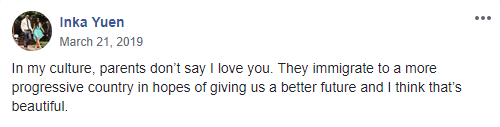
Screenshot via Subtle Asian Traits on Facebook courtesy of Inka Yuen
Jonathan Driver, Vice-President Academic & Provost pro tem, elaborated on the university’s decision to move most courses online for the Fall 2020 semester. Not only will certain international students struggle to return back to Canada, said Driver, but there are countless students not willing to return to in-person teaching due to compromised health situations or personal reasons.
“My prediction is that this will continue on into the spring and possibly right through into next summer,” stated Driver.
“We are going to be prepared for at least one academic year where we will have very few students on campus.”
President Report
SFU President Andrew Petter elaborated on the university’s efforts surrounding COVID-19, including conversing with other research universities about how to proceed as an institution while following the Canadian government’s guidelines.
Petter elaborated on SFU’s Urgent Response Fund for COVID-10 relief. The university has received donations from the Simon Fraser Student Society, various undergraduate students, the Alumni Association, and more. In total, over $335,000 has been raised on top of university-provided funds via bursaries and grants. To date, SFU’s COVID-19 relief funding equals around $3 million.
Annual Enrollment Report
The Audit, Risk and Compliance Committee Chair Angie Hall reported that enrollments remain generally “on target” for both undergraduate and graduate students for the 2019/20 audit year. Domestic student enrollment showed a slight drop, affecting the Faculty of Arts and Social Sciences in particular.
The Board predicts a 3% decrease in enrollment for the Fall 2020 semester due to uncertainties surrounding the pandemic.
EMBA Students request tuition cuts as courses go online
Two Masters students in the Executive MBA program, Erik Brinkman and Yasmin Rahman, requested a 40% decrease in tuition and fees for their program due to their courses being delivered remotely.
Brinkman, the EMBA 2019 Working Group spokesperson, explained that keeping fees the same as they are now despite remote delivery would be “a case of overcharging and breach of contract.” Further, the student noted that the negative impact of overcharging students is accentuated in the wake of a pandemic.
The EMBA program’s $57,000+ tuition typically includes interpersonal learning experiences, “enriched with executive leadership networking opportunities to develop strong relationships with profs, mentors, and other business leaders.” With these opportunities being compromised with online courses, the EMBA students hope to see a tuition decrease to reflect this.
The BOG will formally respond to this request via a letter at a later time.
2019–2020 Carry-Forward Update
This report, reflecting changes in the operating budget from the year ending on March 31 2020, showed a carry-over price into the new year of $48 million. This price resulted from “positive variances in investment revenues, increased tuition revenues, and increased Fraser International College royalties, and some related reduced expenditures,” according to presenter Mike Cordoba, Finance Chair.
Under normal circumstances, the Committee would provide a Carry-Forward Spend Plan in which the members would revise the university’s budget to accommodate these funds from the previous year; however, for security in the wake of a pandemic, the Committee instead advised faculties to hold these reserves unless an emergency arises.
President Andrew Petter explained that “[these reversed funds] have spending expectations and plans associated with them, which we’re asking the faculty and others to try to temper at this time.”
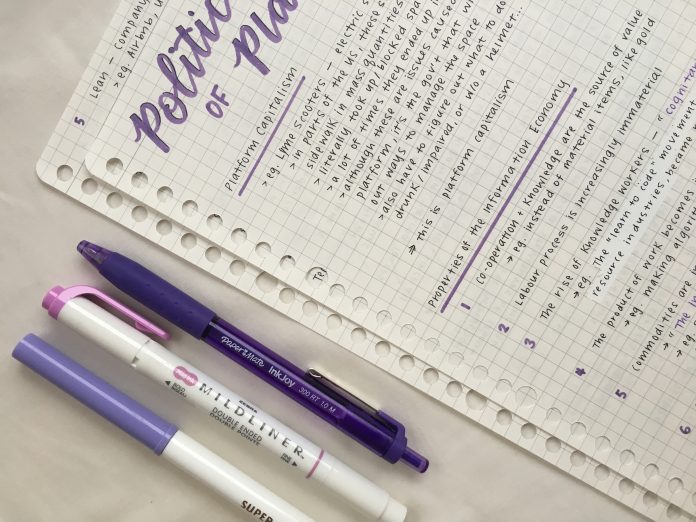
So what exactly is hand lettering, anyways? You’ve probably seen photos of it floating around, and maybe even called it the wrong name. But it’s important to note that there’s a distinction between calligraphy and hand lettering, or “modern calligraphy,” as it’s called sometimes. Calligraphy is about having beautiful writing and often uses specific tools and scripts (Roman, Gothic, Italic, etc.) to achieve it, while lettering is about illustrating letters and words. I won’t go into the details here, but keep in mind that they’re different.
I first stumbled down the hand-lettering rabbit hole a couple years ago when I started bullet journaling. To me, it was crazy how the simple addition of a hand-lettered title could transform the page from bland to beautiful. On that day, I decided I wanted to learn how to do it myself, and so I took to Instagram to pick up the basics by watching people letter words and phrases. These days I use lettering for everything, even things that don’t need it: envelopes, birthday cards, song lyrics, bullet journaling, signage, you name it. Last semester, I lettered the titles of all my school notes. Was it necessary? No. Did I still do it? Absolutely.
Thankfully, not only does lettering look impressive, but it’s really easy to pick up as well! For beginners, I recommend following letteritwrite on Instagram. She has short videos that demonstrate how to write each letter, in multiple styles, and with different types of pens. If you prefer to have more structure though, the books Creative Lettering and Beyond and Calligraphy Made Easy are great for beginners to practice lettering. The books have nifty little instructions on the basic principles of hand lettering and also come with practice sheets for you to mimic at the end.
Photo: Michelle Chiang
As for tools, it’s easy to be intimidated by the sheer amount of pens available to use, but you really only need one brush pen. A brush pen is exactly what it sounds like: a type of marker with a flexible, brush-like tip. The Tombow dual brush pens are the go-to pen of many letterers, but for beginners, I’d recommend the Pentel touch pens. It has a flexible nib and a harder brush instead of a softer brush. The bigger and more flexible the brush, the harder it is to control. Another good one to start with is the Tombow Fudenosuke and I also personally like the Faber-Castell brush pen! But if you’re stuck at home, you can definitely try out lettering just with pencils, pens, or whatever markers you have on hand. In fact, one of the more popular tools used by letterers, myself included, are actually Crayola Supertips.
For those who are hoping to really get into lettering, I’d also recommend picking up a pad of Rhodia paper. It’s a lot smoother than regular printer paper, which will help your brush pens stay in good condition.
The roughness of printer paper tends to fray the brush tips and makes it unusable. My Faber-Castell brush pen died a very sad and quick death because of this. I’d encourage people to wait until they’re sure they want to continue before buying one though, because they can be a little pricey.
Lettering is a skill that makes your handwriting a hundred times more sophisticated. Once you learn how to hand letter, you’re literally unstoppable. Letter your envelopes. Letter your school notes. Letter the wall. Really, the possibilities are endless.
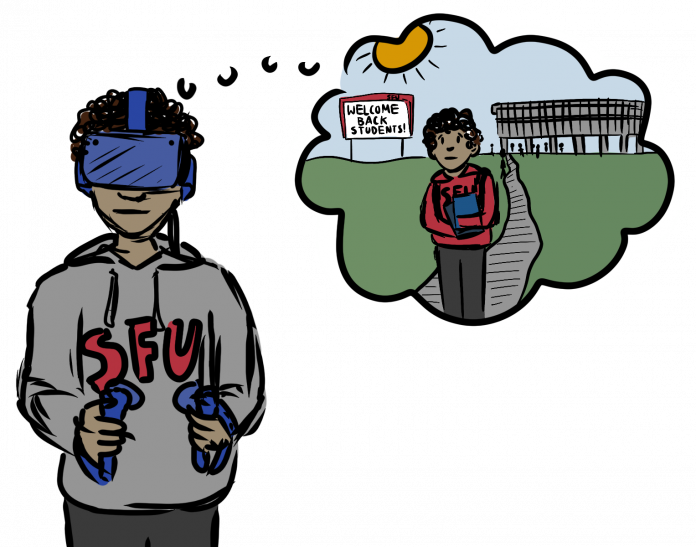
How can you virtually recreate the experience of the feeling of walking in on the first day of class? Illustration: Alex Vanderput/The Peak
By: Nathan Tok, Peak Associate
Do you remember your first day of classes? I vaguely recall a whirlwind of back-to-back classes as advised by my seniors, getting swamped outside C9001, and losing my beloved laptop mouse. Rest in peace. But despite all that, there were some good experiences and good people who made that first year memorable. When I consider the incoming Fall 2024 class coming into things in the middle of a pandemic, I can only think that they’re going to have a much different and even harder time than the rest of us, with so much fewer of the meaningful experiences that made it worthwhile.
First years coming into SFU for Fall 2020 are going to have as, everyone says, an “unprecedented” experience. There’s no way to sugarcoat this. The transition from high school to university is hard enough, but it’s going to be harder still without the full, unhindered support normally provided in person by the SFU experience. Advisors, professors, and SFU student services are now limited to what they can type in emails and chats or present over a Zoom call — this is the best they can do, but we all know that it’s easy to misinterpret or read things incorrectly in emails or worse, to overlook an email.
No matter what faculty or demographic, there are some common experiences shared by all students, and in particular, students who are entering the university environment for the first time. The most important thing I learnt in my first year was not so much the actual course material itself, but about how to function in a brand new environment.
Take for example the importance of utilizing the expertise of a TA. We’ve all been there one day before an exam in the TA’s office, desperately trying to digest the material. Now Fall semester students will have to do this over email. This means a lot of back and forths sometimes just to confirm a simple yes or no question. And it gets much worse for subjects like math or economics where graphs and diagrams are sometimes needed to explain concepts. I mean, you can send images back and forth, but email can’t substitute sitting with a TA or a professor in their office and getting real-time help with the materials tangibly in front of you both.
And that’s not the only positive interaction that’s lost with remote learning. Incoming students will miss out on so much of the university life that earlier cohorts have taken for granted now that they have to stay home and study. This starts right from the first day on campus. Walking around the school, seeing the massive library and lecture halls, or playing one of the festival style games on the Convo Mall during Welcome Week. As current students, we often forget that Month of Welcome is not about us, but rather about showing incoming students the scale and potential of their new life now that they are in university. This experience will now be lost on the new Fall students, and they won’t be able to regain that sense of excitement and wonder if or when the school reopens for them.
And let’s not forget the social events that are also now gone. One way that previous cohorts have mitigated loneliness has been to participate in student life. We can put classes online but we cannot recreate those “deep” 1 a.m. conversations held while stuck in a computer lab working on a project. Nor can we recreate the sense of accomplishment students get when successfully completing a fundraiser as a team with their clubmates, and going out for celebratory drinks afterward.
First years this fall will not be able to live out their student life to the fullest — at least, not to the same extent that us older cohorts have done in the past. So much of our learning and growing at university is done horizontally through our peers, not just top down from instructors. These kinds of interactions are now reduced to Facebook group chats and Canvas discussion boards, which though they are better than nothing, are still not ideal.
All this means that first years in Fall 2020, like the rest of us, are going to have to figure out a lot of things. But unlike the rest of us, they are going to have far fewer opportunities to connect with people in the way that made university tolerable to many of us seniors.
Best of luck class of 2024, I don’t envy you. Your first year is going to be filled with new challenges no one has overcome before that might change your lives, but know that you, like all other first years will get through this, and become all the better because of it.