Home Blog Page 423

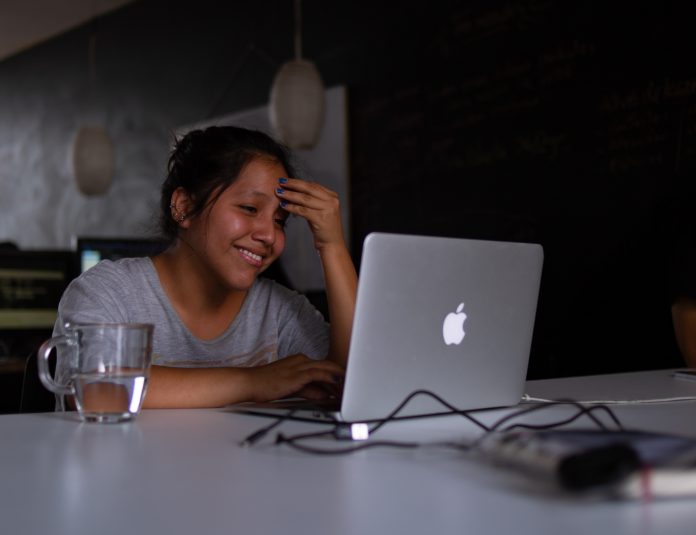
QUIZ: Should you add your sleep paralysis demon to your social bubble?

1
Photo courtesy of Quin Stevenson via Unsplash

1. With whom else does your sleep paralysis demon spend his time?

     a) No one, he promised me he doesn’t even follow hot people on Instagram anymore

     b) His fellow spindly, many-eyed friends from the netherworld

2. Do you trust your sleep paralysis demon?

     a) Yes, although he still whispers all my secrets to my sleep-paralyzed neighbours

     b) I don’t trust anyone, that’s part of why he hangs around

3. Have you ever seen your sleep paralysis demon break social distancing rules?

     a) My eyes are closed when he’s here

     b) Sometimes he radiates evil energy at me from five feet away instead of six

4. Does your sleep paralysis demon share food and drink with people?

     a) He would absolutely never

     b) He and my toxic friendships both feed on my stress and fear

5. Would your sleep paralysis demon be open to making a pact with you to limit the growth of your shared bubble?

     a) Yes, we make new blood pacts every Thursday. It’s fun

     b) No, he’s kind of a free spirit

If you answered mostly “A” . . . you SHOULD add your sleep paralysis demon to your social bubble

Friends are important right now. You need to open your heart to those few you can believe in — and nothing screams believing in someone like manifesting them physically from the depths of your psyche.

If you answered mostly “B” . . . you SHOULD NOT add your sleep paralysis demon to your social bubble

Demons can breathe COVID-19 onto you, too. Wake up, sheeple — literally.

I am Tails ‘B’ Wagging Animal Shelter and I am very sad and empty

0

My name is Tails ‘B’ Wagging Animal Shelter and today has been a bittersweet day. 

You may have guessed it. I am an animal shelter, and over the last few months, something strange has been happening . . . The number of animals I have kept safe while they await their new homes has been slowly but surely dwindling . . . The animals seem to have been taking their little tails out the door faster than they are being brought in! 

Usually, I will have time to get to know an animal well as they sit under my roof, shit on my floors, and sniff around in the corners of my rooms. But it seems that they’ve been swept out the door so quickly after they’ve come in that I’ve barely even had a chance to say hi! 

I miss Hugh the pug, and Weiner the mixed-breed, and Stella the other mixed-breed, and Bonnie the other, other mixed-breed who looked like a husky the size of a corgi with the body composition of a rottweiler.

I also miss Sprinkles, the cat who used to have fleas but doesn’t anymore. I miss the way Sprinkles and the other cats would pee all over my floors and hiss at nothing sometimes.

I miss Skytrain the pigeon, who was named after the SkyTrain station someone found him near. (Skytrain actually left a long time ago when we realized he was just a regular pigeon. But these times are making me feel especially nostalgic). 

I even miss Spaghetti, the rat who would crawl around in my walls. I named him that because he would eat my wires, and wires are essentially rat spaghetti. Like Skytrain, Spaghetti wasn’t even up for adoption, but it seems even he’s found his way into a new home. 

Hank was the last dog to go, adopted today, a crusty little fella who was accepted with open arms and masked faces by a family who I can only assume was smiling. Now I feel particularly empty, but strangely, I hope that I stay empty for a while. I want their homes to be permanent ones. I hope I never see them again. 

In particular I hope they are finding comfort in homes that were ready to take animals in and not just by people indulging in the fleeting urge of having a pet because of some unforeseen extra time at home. I am definitely not referring to any unprecedented event in particular that may have suddenly given a lot of people some extra time on their hands or anything. I am just an animal shelter. I don’t actually know anything. 

My dear animal friends that have been adopted and taken out of my care: I hope you are safe, happy, and I hope I never see you again. 

My name is Tails ‘B’ Wagging Animal Shelter and I approve this message.

Your weekly SFU horoscopes: June 29–July 5

0
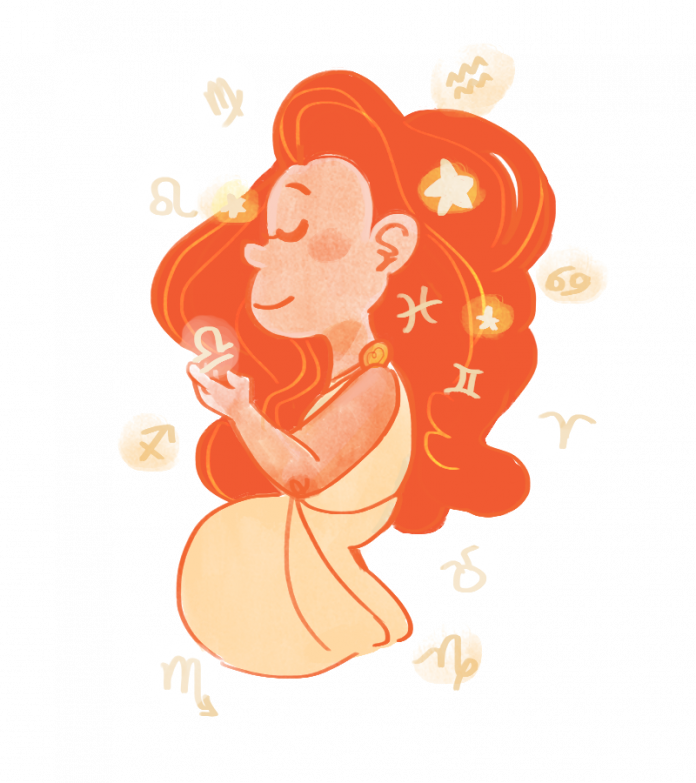
An illustration of a girl with long flowing hair. Astrological signs and stars shine around her.
ILLUSTRATION: Marissa Ouyang / The Peak

Aries: How many tabs does your computer have open? Does it feel like your brain has just as much running at once and you’re feeling overwhelmed? Remember to calm your mind and close some of those tabs draining you of your energy. Just, uh, don’t close the breathing one. That would be bad.

Taurus: Write your own one-person show this week. I’m talking theatrics, musical numbers, emotion, the works. You’ll become part of something bigger than yourself while safely inside. Your two IG live viewers will love it while they watch Netflix and have you on mute.

Gemini: As you’re reading this, check the tension in your body. Is your tongue on the roof of your mouth? Are you hunched over? Is your jaw clenched? Maybe you just have a tension headache from these bitches testing your patience.

Cancer: You may be wondering how January through March felt like five years and June felt like it lasted five minutes. Were you super busy? Did you spend a bunch of it doing schoolwork? Or did you retreat into your Jungian shadow this whole past month to protect yourself?

Leo: If you’re nervous about a presentation or discussion over Zoom this week, just remember that nobody will pay much attention anyway, probably not even you. You’ll be too busy perfecting your face angles on camera.

Virgo: Have you lost friends over them being punished by the universe for not following your advice? As a mutable sign, some may mistake your adaptive problem-solving for you not being fully reliable. See where it gets them? So why do you doubt yourself?

Libra: Save time by not proofreading your Canvas discussion this week. Saying “introspectino” and “perspectibe” will hardly take away from the fact that you didn’t really know what you were saying in the first place, but wanted to sound clever anyway with your $5 words.

Scorpio: Why can you never plug in a USB cord the right way the first time, causing you to flip it four times? As though your whole life weren’t always flipped upside down by your changing energies. Sometimes you’re quiet and calm, next you’re utterly chaotic. What’ll it be this week?

Sagittarius: This week, you just need to spit out what’s been on your mind already. The mental capacity the thought takes far outweighs the sinking feeling in your chest you’ll feel when you ruin something good in your life — and inevitably you will, so . . . 

Capricorn: Keep rolling your eyes during Zoom calls while someone asks an apparently obvious question, and you’ll give yourself a bigger headache than your TA’s already given you by ignoring you for five days.

Aquarius: Fall enrollment starts next week. Can you believe that? You were just getting a small grasp on your current situation and the world is presenting a new chapter already. All you can do is take the days as they come. In your case, that just involves you spending the present worrying about wrongs of the past.

Pisces: When will those around you stop contacting you at ridiculous hours asking for your help? This week, establish office hours. That way, your free therapy sessions will be organized so you can use up all your emotional capacity Monday to Friday, 10 a.m. to 2 p.m. only. You know how not to strain yourself.


SFU C19 Coalition is needed to keep the university working for students

0
SFU C19 Coalition asks the administration to take real action. PHOTO: SFU C19 Coalition

Formed shortly after the university closed its doors when the COVID-19 pandemic hit BC, the SFU C19 Coalition has gained widespread support across the university. From grad students to undergrads to staff members, the Coalition is fighting for the rights and well-being of all members of the SFU community. At a time when we are uniquely isolated from one another, establishing an organization built for and around solidarity is both important and empowering.

The Coalition’s demands are divided into three sections: information, academics, and finances. These address, in order: the need for transparency and priority in informing students about the pandemic situation; the many issues arising from entirely online courses during a global crisis; and the compounding financial stress being placed on students. These demands are grown directly from the experiences and perspectives of students, and they show the necessity of student voices and participation within SFU’s politics.

One of the issues that the Coalition has been fighting for includes the use of room scan and intrusive computer technologies. This issue has been “addressed” by the administration as something for professors to work out with students on a case-by-case basis. The university could simply ban the use of this technology instead of allowing for its use in “some exceptional cases,” but it has decided to forego that responsibility instead. This forces students to make a difficult choice: to do as their professor says or drop the course. This is despite the very legitimate reasons students have to reject the use of these invasive softwares. 

SEE MORE: Students raise concerns over use of proctoring software during remote exams

Degree timeline extensions have also not been offered — although the administration vaguely discussed looking into ways to prevent grad students from “aging out” of their degrees in the May 26 Town Hall. This is of special concern for international students who are at risk of losing their status if they take a term off. It forces international students, who are not eligible for CESB and have restrictions on employment at the best of times, to take classes they may not be able to afford with fewer resources and higher stakes. The Coalition has called for the university to lobby the Canadian government to make CESB equal to CERB — if SFU is really so strapped for cash they can’t help students financially, why won’t they at least use their platform as one of the world’s leading teaching and research universities to help us? 

Without organized student networks like the SFU C19 Coalition to hold the administration accountable and fight for what we actually need, the university would let all these needs fall through the cracks. These are not radical or difficult demands to be met — they are what the university is supposed to — and needs to — be doing. And we the students need organizations like the C19 Coalition to make change possible — as individual students we have very little leverage, but as a loud and public group we have power. 

Students should know that activism isn’t just collectively pushing against a (seemingly) immovable object. The administration has it within their power to meaningfully address these demands. They’ve shrunk and extended degree timelines in the past. They could also offer tuition deferment for all students like they already do for TAs. Finally, they could work with departments to better regulate class sizes, adjust degree requirements, eliminate the use of online proctor technologies, and more. What is stopping them? In whose interest are they acting? From their responses, it’s clear that, while they are taking the pandemic seriously, they continue to not take students seriously.

Students must continue fighting and organizing to make the administration meet our lowest expectations. To do otherwise is to allow the university to treat us as beneath consideration, when it is us who make the university accomplished.

Read more about the Coalition’s demands on their website, and see their Facebook, Twitter, and Instagram pages for updates.


People need to stop using the present to excuse and ignore past injustices

0
Canada needs to reckon with its past before it congratulates itself on its present. Photo: Jon Tyson/Unsplash

Catastrophic wildfires in Australia, a global pandemic, and worldwide anti-racism protests, amongst other impactful events, all equal a 2020 that never seems to end. At least, that’s what people keep saying. In reality, these types of tragedies and injustices happen every year and we need to stop expecting a “woke” badge of honour for thinking that this is anything new, just because they happen to be impacting our privileged ways of living.

Yes, there have been many recent global occurrences that may seem so life-shattering to individuals who haven’t experienced them before, but there are also many people who live through them daily. Even before 2020, immunocompromised people had to social distance to survive. Environmental crises like wildfires that disproportionately affect Indigenous people came in spades. Prejudice was always rampant, and folks have always been fighting to make people see that Black lives matter. Claiming that this year is somehow worse than previous ones erases these chronic issues and gives the person saying it an excuse to not do anything to help them.

This “2020 is crazy” sentiment is similar to how people answer questions with “It’s 20XX, we’re better now.” Of course it’s nice to think that we are better, but it doesn’t mean that the world actually is better, just because it’s the present. Using this phrase is just an attempt to appear progressive because there is no actual acknowledgement of the many things that are still wrong with the world. Imagine if someone asked Andrew Petter why he recently spoke out against racism and he just said, “It’s 2020.” So what? This is the same 2020 where conversion therapy is still practiced in BC, where people are drawing swastikas at SkyTrain stations, where over 150,000 litres of crude oil casually spill on Indigenous land, and people are arrested for protesting racism?

A popular example of this is Justin Trudeau’s “It’s 2015” reasoning for his “gender-balanced” cabinet. It’s great that he recognised that there should be greater gender equity, but simply having a gender-balanced cabinet does nothing to actually address systemic gender discrimination. Women and the feminist movement have been fighting for these rights for years. How is it only a big step forward for women when Trudeau opens up a few more cabinet seats to women? Using a hollow deflection such as this while not addressing the prejudiced system we still live in is just another way to appear forward-thinking, which I guess is already a part of his “Liberal” brand.

Both of these “2020” narratives only try to justify a “woke” perspective on the world. Just because we don’t have blatant prejudices like chattel slavery, residential schools, and Chinese Head Taxes anymore doesn’t mean that hidden prejudices through institutions like the prison system, the RCMP, and an education system that barely teaches us about the aforementioned prejudices are any better. This merely serves to cover the person appealing to modern times under a shroud of “wokeness” by excusing them from any wrongdoing — and any further action — simply because they acknowledged it.

2020 may continue to get crazier, but that doesn’t mean we should reify its events as some apocalyptic outlier and use it to ignore past and continuing systemic crises. We also can’t defend our ignorance by claiming the present is some harmonious haven. Realizing this year is the continuation of a past full of catastrophe will not only help to put our privilege in perspective, but also to truly work towards a future where 2020’s perpetual peril will actually be a notion of the past. 


Political Corner: Romina Ashrafi’s murder in Iran could have been prevented

0
Iran has a history of human rights abuses that need to be immediately addressed. Image via Wikimedia Commons

In late May of this year, Romina Ashrafi, age 14, ran away from her home in Iran to be with her boyfriend. The decision came after Ashrafi’s father objected to their marriage. After running away, the couple was intercepted and Ashrafi was sent home, despite telling the police that she feared for her life. Soon after returning home, she was attacked by her father in her bedroom and decapitated with a sickle. 

At the time that Ashrafi was murdered, children had minimal rights and protection in Iran. Juveniles could legally be executed, girls could be married at 13, and there were no standard child labour laws. However, in May 2009 — 11 years before Ashrafi’s murder — Iranian lawmakers had submitted the Bill for the Protection of the Rights of Children and Youth in order to shield children from violence and abuse. 

Unfortunately, this bill still had not been placed into law when Ashrafi was murdered. As a result, she had nowhere to turn to for legal protection while she feared for her life. Her murder clearly highlights the lack of protections for children in similar situations across Iran who did not have people to protect them. The people of Iran also noticed this and were rightly incensed.

Following the national call to action, President Hassan Rouhani pressed parliament to expedite the passing of the 2009 bill. Following much delay, the bill was finally passed by the parliament after they ruled that it was not inconsistent with Shariah or Islamic law. Now, officials are legally required to report child abuse cases and remove children from abusisve situations. 

While this bill does improve the lives of children across the country, it still took 11 years for the Iranian parliament to pass it. Had the bill been in place while Ashrafi was alive, she may not have been returned to a home where she feared for her life. Instead the bill, much like other bills aimed at protecting vulnerable groups, was placed in legal limbo and as a result, abuse was allowed to continue — with fatal consequences.


What Grinds Our Gears: No one should be shocked by recent coronavirus surges

0
I can’t be the only person not surprised that a fast food joint poses a health hazard. Illustration: Tiffany Chan/The Peak

During the June 15 COVID-19 briefing, Dr. Bonnie Henry announced that an outbreak of the novel coronavirus had been discovered in a small fast food restaurant. While no known exposure to customers occurred, she used this case as an example as to why British Columbians need to continue to remain vigilant against further viral spread. 

This announcement surprised absolutely no one. Or at least, it shouldn’t have surprised anyone, least of all anyone who’s ever had any experience with the fast food industry. What is perhaps more surprising is that it took four months for an outbreak to be reported at a fast food location in the first place.

We are now six full months into this global pandemic. As of the time of writing, over nine million cases have been reported worldwide. Almost 500,000 people have died. And yet there are still individuals and whole governments walking around like an army of shocked pikachus when cases spike “unexpectedly.”

Six US states are battling spikes of the virus following premature Memorial Day reopenings and large-scale gatherings. Russia — which for months suspiciously had very few COVID-19 cases but a ridiculous surge in pneumonia cases — and Brazil — which also downplayed the severity of coronavirus — are now also both in the grips of massive spikes in cases. 

None of this should be at all surprising, yet infuriatingly, daily news updates keep framing these natural consequences as “shocking.”

Look, there are some things that should just go without saying at this point in the pandemic. That fast food restaurants have working conditions and pay structures that all but hold the door open for coronavirus infection is one of them. But this is also true of areas with weak leadership and more concern for economic health than population health. 

Let’s stop being shocked and actually fix the damn problem.


There’s nothing wrong with taking your time with your degree

1
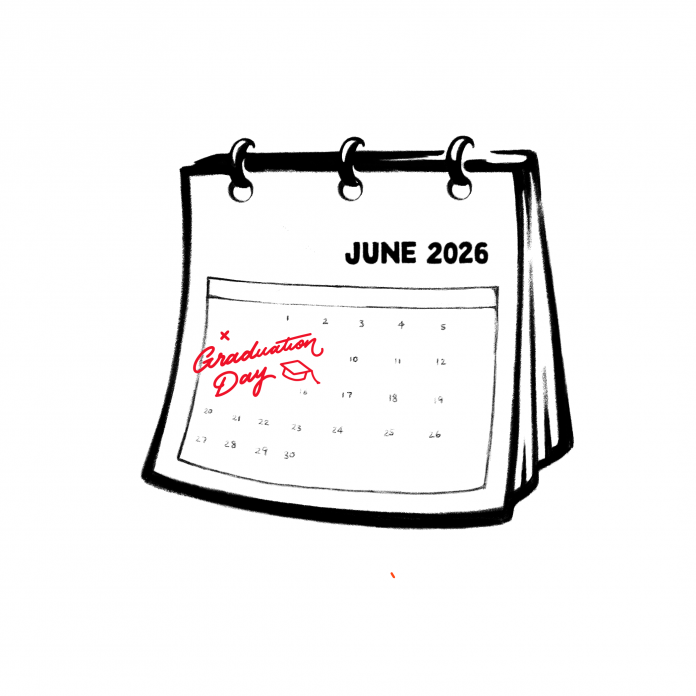
There are many good reasons to hold off on graduating on time. Illustration: Audrey Chow/The Peak

Often the world pressures us into living quickly and moving ahead in life “on schedule.” But is that always wise? There are many benefits to graduating “on time” within the standard four years. These include getting into the working world sooner and earning a living, or getting your parents off your case. Being able to put a four-year completion of your degree on your LinkedIn profile shows employers you are driven and can finish things on time. We all know this. However, there are also benefits to taking more time before graduating than the usual four-year schedule.

University life is full of opportunities, to start with. Rushing through a degree means less time spent getting the most out of these opportunities. Think about it, students are in the midst of a community of scholars and professionals all working to make a difference in the world. How often have we received emails from professors looking for RAs for meaningful research, or an SFU department doing outreach looking for students to take part in community service? These are valuable work experience and networking opportunities that students should take their time with.

Or perhaps students need a temporary job. Yeah, a friend of a classmate knows someone who needs a person to do some casual work in that field for a few months, a few hours a week. They can’t pay much but it’s something. When students graduate these wide-ranging connections are less readily available. Graduates are no longer fed information and opportunities through an active and mixed social network — they have to actively seek them out. 

Despite the secondary perks of university, the fact is that taking advantage of all these opportunities means taking time away from studying, which can delay graduation. But that’s not a bad thing. Building up a resume is something we can all agree is essential.

Students are also given more leeway and freedom to explore and to work on themselves along with their degrees. Not satisfied with your program? Take an extra year and add a minor. Want to take some time off school to travel? Go ahead, try out exchange for a couple of extra terms. At perhaps no other time in life are adults able to have the freedom to explore, take opportunities as they come, and fail without being harshly penalized by society. 

These personal explorations become harder to fit into life and responsibilities when people start working. Not happy with your job? Too bad you have a degree in that field and bills to pay. Feeling lost? You can’t just take months off to work on yourself or to explore different paths. You have responsibilities and people who depend on you. No longer is it grades but actual lives that are at stake. 

University is hard work yes, but so is everything else. It is worth it to take some more time to grow before spreading our wings and flying away. While some students don’t have a choice but to get done with university as quickly as possible, if you’re in a situation that you can take your time, can explore what the university has to offer and more importantly, explore yourself, then I highly recommend taking your time with your degree. Use that extra time to get to know what you really want, and who you really are before you leave school.


A single at-home TikTok workout made me too powerful

1
Photo courtesy of Kon Karampelas via Unsplash

Once all the gyms closed, I was at a loss as to where to find easy at-home workouts. Should I look to qualified trainers online? Local gyms holding free or reduced cost classes online? Friends who can provide fitness inspiration and accountability?

Doing absolutely none of these things was a grave mistake. I turned to some teenager giving workout advice on TikTok, and now . . .

I’ve become too powerful. 

This bleach-blonde, Gymshark-clad TikTok influencer I stumbled across seemed inconspicuous enough. Aside from their inadvertent and misinformed promotions of unhealthy and potentially dangerous diet culture, facilitated by presenting undereating and undernourishment as normal and healthy — not to mention their makeup skills being better than mine despite the fact that they are almost eight years younger than me — I still had a feeling that I would find exactly what I wanted on their account. 

The teen’s minimal knowledge of fitness seemed to be founded solely on other TikToks by other teens with minimal knowledge of fitness. 

Perfect! I thought. These kids don’t seem to have any sort of professional background or qualifications. So surely I won’t be gaining anything from these workouts!

You see, when I exercise, I want to exactly . . . maintain the level of fitness that I am at. I do not want to get stronger or faster! Proper form is a snooze and a scam! So Tik Tok was the perfect platform for me to find exercises and workouts that do absolutely nothing! 

Or so I thought . . .

I followed their 15-second instructions: 10 toe wiggles, 10 seconds of walking around the room, a scoobideewoop, 15 belly taps. That single squat at the end wiped me out. And that’s when the transformation happened. 

My jeans ripped clean off my body! My shirt disintegrated from the sudden increase of muscle fibers in my chest, arms, and shoulders. I went for some water and my water bottle SHATTERED. I took a regular step and sent myself straight into the ceiling! 

Confused and panicking, I soon began my research. 

“How are these TikTok fitness people not as powerful as I am . . . especially after doing these exercises everyday,” I asked Google. “Is there something wrong with me? Have they not also experienced the effects of these workouts and the undeniable, terrible strength they instill within those who complete them?”

I visited some of the accounts of some of the more popular fitness TikTok-ers and noticed something strange in the background of every TikTok exercise icon. 

On first glance, their homes look normal. But on closer inspection, I saw evidence of hastily done home repairs, the exact type of home repair you might do if you, say, accidentally ripped off your closet door because you didn’t realize your own strength. These TikTokkers assumed that there wouldn’t be anyone like me looking closely enough at their videos to sniff out their bluff. They assumed WRONG. 

I even noticed that these TikTokkers’ clothing was altered, almost imperceptibly, with velcro wraps and straps . . . I can only assume these modifications were to avoid the embarrassing fate that awaited me after completing my TikTok workout. 

So. Let us band together and help these teens become less powerful. Let us empathize with the horror of being too strong for your own good, crushing coffee cups in your upsettingly powerful grip, swinging doors straight off their hinges.

We need these TikTok workouts to be banned. They are turning ducklings into gorillas, gorillas into King Kongs, butterflies into butterflies with huge biceps. In other words, people who were otherwise perfectly happy with their bodies are becoming unbelievably and surprisingly swole, against their will. 

Let us bring awareness to these TikTok workouts — not for their inefficiency, but for the fact that they work terrifyingly well.

Students excited for Canvas discussion that has absolutely nothing to do with the class

0
Photo courtesy of Frank Romero via Unsplash

Students enrolled in ENGL 190: Misc. Studies in Literature are abuzz with anticipation as they await this Thursday: the next weekly online Canvas discussion, which once again will have absolutely no connection to the actual course material.

Barry Shell, the student assigned to start a discussion post this week, is happy to triple his classmates’ opportunities to learn about Margaret Atwood’s Oryx and Crake.

“There’s what you thought this week’s reading was about,” Shell explained, “and then there’s what I thought the reading was about, which was totally different and way more interesting. And then my discussion question will be unrelated to both of those!” This threefold sequence is also known to many students, and the medical community, as the “triad of death.”

The unpredictability of it all keeps the blood flowing, says Polly Selmie, another student in the class. 

“I’m just so hyped for yet another week of posting 500-word responses to literary concepts I’m pretty sure he just made up while listening to Wallows songs on repeat,” she wrote to The Peak in an email interview.

Lacey Teamsure, the professor of ENGL 390, has traditionally left these discussions to develop on their own. The goal of university education, says Teamsure, is to get students critically thinking — and sometimes that means criticizing the readings enough to realize that it’s best to just ignore them and write your own narrative. 

At press time, most students still had no idea how to respond to last week’s questions about whether A&W’s Beyond Meat burger counted as “artificial life.” A select few were scrabbling for participation marks by purposely not participating in the class at all, in preparation to frame their questions and complaints during the next Zoom conference as “engagement.”