Home Blog Page 421

What Grinds Our Gears: I need more respect from my intrusive family

0
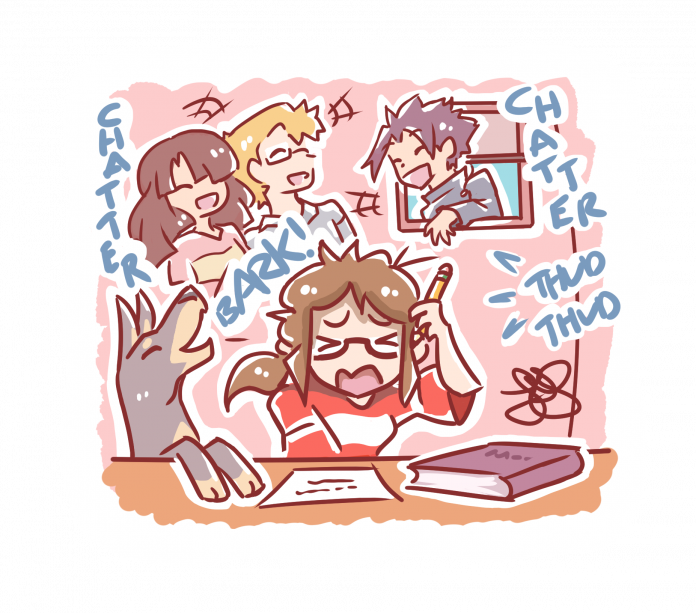
This social distancing isn’t distant enough! Illustration: Sabrina Kedzior/The Peak

By: Alex Masse, SFU Student

I have a very specific study ritual, one that works with my painfully neurodivergent brain: I move all my distractions, set up my phone to play 30 minutes of rain noises, and essentially hyperfocus. It’s been lifesaving for university. I don’t know why, but this specific setting just gets me into the zone. I feel alive and in control, which is fairly uncommon considering I’m a university student. 

One problem: other people continue to exist within earshot of me. 

My neighbours aren’t too bad, being quiet senior citizens. The problem, unfortunately, is that I live with a couple extroverts. While I’m trying to study, my dad will be downstairs blaring workout tunes that shake the house. Right next door, my sister will be loudly chatting with her boyfriend to keep isolation at bay. On the bright side, my mother is often inoffensively watching old CW shows — thanks, Mom. 

Sometimes they’ll even burst into my room unprompted. I put a “knock first” sign on my door, but cabin fever gives one blinders to those kinds of things. I could cover my door in caution tape and it wouldn’t mean anything to my family. 

The only thing that seems to sometimes work is sharing my daily agenda with everyone. I’m about two steps from making that thing required reading if it means getting through a Zoom call uninterrupted. 


International students needed more financial support in the past, and they need support now

0
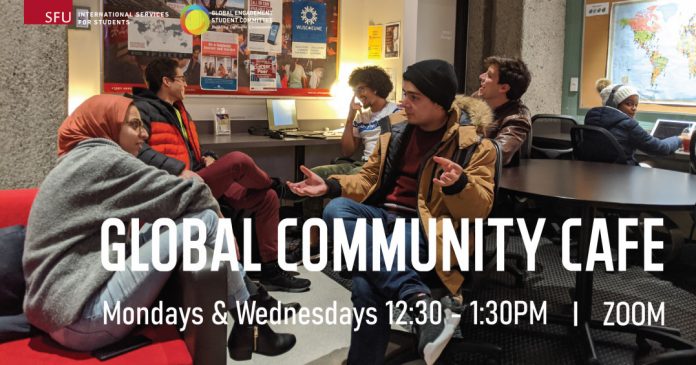
Organizing social events isn’t enough for students worried about how to pay for basic necessities. Image courtesy of SFU.

By: Devana Petrovic, Staff Writer

Although another remote semester in the fall is a bummer for everyone, it’s especially difficult for the international students who are still paying the same outrageous tuition fees as they did for in-person classes. These students are being hit particularly hard by our current university circumstances. International students make up about a quarter of SFU’s total student body — our university would be sunk without them. Now, with so many international student lives cast into chaos by COVID-19, the structural flaws in how SFU supports them have become even more apparent, and it is imperative that SFU does everything it can to make its international students’ lives easier. 

As of right now, SFU’s “support” for international students is scarce. While some attempts at virtual socialization have been introduced like the Global Community Cafe via Zoom, it’s not enough to address the real hardships international students are facing. Truly, the best way to support international students now — as well as in the long term — is for SFU to implement structural changes. This starts with a tuition cap, as well as an increase in financial aid and more bursaries for which permanent residence is not an eligibility requirement. 

For the most part, international students can only work up to 20 hours a week while studying. With most low-wage, part-time jobs this isn’t a livable arrangement, especially in Greater Vancouver. Now, with the massive job insecurity brought on by COVID-19, in addition to the fact that international students living in Canada may not have a family to live at home with, financial stress on many international students is at emergency levels. 

The uncertainty and insecurity in both jobs and housing puts international students between a rock and a hard place during this pandemic. This is particularly because they aren’t eligible for BC’s student support funds either. But SFU could step in here to really help support the international students who are struggling, by increasing scholarship and bursary opportunities. It’s as simple as expanding existing eligibility to students who aren’t permanent residents, but who are just as much a part of the SFU community as domestic students and should be allowed to apply for the same awards. 

Keep in mind that part of the reason why international students are in this financial pickle to begin with is because SFU takes advantage of the fact that the provincial government does not impose a tuition cap for international students. In the spring of 2019, SFU increased the tuition of a majority of its programs by 12% for international students — with business courses increasing by an incredible 20%.

Clearly, so many financial aspects of being an international student at SFU were problematic before the global pandemic. The international student program is not structurally designed to be supportive to those who don’t have massive amounts of financial support already backing them — a shameful reality that promotes classism and economic inequality. Particularly at this time, when job options are restricted and some can’t travel home, international students need extra help from SFU in order to continue learning and growing at this institution. 

While workshops and virtual events are fun, real help is needed: more financial aid opportunities is an important and beneficial step. And, you know, maybe consider a tuition freeze on international student fees so a quarter of our community isn’t overburdened in an emergency situation again in the future.


SFU should bring back the food science and nutrition program

0
The science of food is a big industry in BC. Illustration: Maple Sukontasukkul/The Peak

By: Nathan Tok, Peak Associate

You know what is the most important thing to students? No, I’m not thinking of grades, or even how full the 145 is during rush hour. I am thinking of food. You know, the thing which enables people to live? Which gives us energy and enables students to study? Which keeps society functioning? 

Did you know the department of biomedical physiology and kinesiology (BPK) in the Faculty of Science used to offer the Applied Human Nutrition Certificate Program? Now the only certificate program in BPK is the Occupational Ergonomics certificate. While that program is important for students wanting to work toward keeping people safe and comfortable in various industries, nutrition or food science is important as well and should once again be offered to students. Indeed, the food science program at SFU was famous enough to have even been promoted by the Alberta government and on international student websites.

Food science, according to the UBC Faculty of Land and Food Systems, goes beyond just how to make food. It looks at the biochemistry of food, nutrition, how food is made and processed, how food is developed, distributed, and influences our society. In short, it studies food through the tools of the natural and social sciences.

Beyond just offering essential life knowledge to students, a food science program would enable graduates to access and apply for a wide range of jobs such as food analysis technicians and food processing inspectors. Food and nutrition is a huge field in BC with over 2,500 food-related businesses generating around $9 billion worth of food per year. In fact, over 30,000 people in this province work in food-related jobs. In order to prepare its students for what is a very prevalent industry, SFU should reinstate a food science or nutrition program. 

There is good news, though! The infrastructure for the program is mostly in place already. To begin with, the program could follow the old Applied Human Nutrition Certificate Program with necessary changes made for course updates. For example, KIN 312: Nutrition in Fitness and Sport which existed in the old certificate program simply needs to be updated to BPK 312: Nutrition for Fitness and Sport. Other departments like biology can contribute courses to the program — such as BISC 373: Brewing Science — as an elective to supplement learning. 

As the food science program expands, brand new courses unique to the program, such as those dealing with food production processes, and food laws and regulations, could also be created to round off, strengthen, and specialize the program as per student interest.

BC is famous for food production. Just think about the Okanagan wineries, fruit farms, and dairy production (check where your milk comes from next time, it might be closer than you think) SFU should create a program to help students gain job-ready skills to tap into these promising BC industries.

So come on SFU, let’s recreate a program that will let students and faculty explore the exciting world of food!


Dr. Ken Seigneurie’s event How Stories Move Us highlighted the universality of storytelling

0
Dr. Ken Seigneurie, professor in the World Literature department, hosted the talk on short stories. Courtesy of SFU

By: Nathaniel Tok, Peak Associate

My first non-academic Zoom lecture consisted of a professor reading us stories. I last had that in . . . I can’t even remember. As someone more used to policy, graphs, science, and numbers, this was both unusual and refreshing. 

The talk by Dr. Ken Seigneurie was titled FASS e-Lecture: Writing in World Literature: The Short Story and the Self, and focused on why stories matter to humans. Dr. Seigneurie gave a brief overview of how stories have always played a role in human cultures and read us two stories. One story was about how a man accidentally betrays an animal that cares for his family, and the other one was about anxieties a newly married couple might have on their wedding night. 

We then discussed literary elements and tools used in both stories by the authors to communicate their points and to make it more powerful for the reader. From reception to emotional appeal, to metaphors and symbols.

The event then finished off with some testimonies from current world literature (WL) students on the benefits of doing a program in WL. They discussed what their department, The World Languages and Literatures Student Union, and the WL degree offer to SFU students.

The talk’s centerpiece, however, was on the importance of stories. This was something I think I knew instinctively but never quite put into words. As Dr. Seigneurie said, “Stories are the world’s hard drive.” Stories contain the world’s collective wisdom and give us ideas on what it means to be human. How do we understand choices other people make? Through stories. How can that help us make sense of our own choices? Through stories. Stories help us to grow as much as the people around us, like our parents and friends, do.

This talk was quite eye-opening for me. I went into it thinking I would get some ideas on how to write stories but came out understanding them better. Stories went from being entertainment when bored to being something essential for us as a society and helpful for life events. What stories resonate with you? Think about them. They may be important for a reason.

Pokémon Sword and Shield’s new DLC proves these games need more TLC

0
Though designed with aesthetics in mind, this expansion leaves players wanting in this and every respect. Courtesy of The Pokemon Company

By: Zach Siddiqui, Humour Editor

After a not-so-glowing first reception, Pokémon Sword and Shield just got its first DLC add-on, Isle of Armor. Players can now travel from Galar to the Isle of Armor, complete with new sidequests and a widened selection of Pokémon. Sadly, as lovely as the new location is, it’s a little like a Pidgey in a Master Ball: a missed opportunity, obvious the moment it unfolds. 

When I first played Sword and Shield, I defended it from the mass incineration it received from corners of the fanbase — and I stand by that. This DLC, in turn, brought quite a few positives to the table. However, as the first major DLC in the history of the franchise (and a DLC applied to a game as controversial as Sword and Shield), the Isle of Armor simply didn’t go far enough in addressing the legitimate concerns raised about its base game. 

The battle scene in the Isle of Armor was a joke. Trainer fights are limited, and most plot-relevant battles are a breeze, picking up slightly only at the DLC plot’s end. While this admittedly wasn’t helped by my playing through with my Hall of Fame team, players shouldn’t have to purposely switch to a weaker team to enjoy the content, especially in a game that explicitly includes level-matching opponents in its battle mechanics. 

Worse were the sidequests, which mostly amounted to “travel from X location to Y and then report back to the home base.” You could tell that the intention was for players to explore the Isle of Armor and see the sights, but the DLC locale, for all its superiority to the Galar region, simply isn’t interesting enough to make these monotonous quests worth the walking. Pokémon has also failed to capitalize on the Switch’s graphical capabilities, and so its graphics cannot carry the game the way it seemed they’re supposed to do.

Even the storyline and characters of the Isle, like the base game’s plot, lacked substance. Once again, I found myself grappling with hollow exposition characters, a rival with no personality beyond being arrogant and badly dressed, and an incredibly low-stakes narrative. I won’t lie: I miss the Pokémon days where evil misanthropes were summoning deities of time and space to rewrite the universe. Today our biggest struggle is the League Champion’s inability to download Google Maps.

In sum, I confess myself disappointed. The Isle of Armor could have been the redemption of Pokemon’s Gen VIII, and it could have also set a positive precedent for what DLC could look like in the future. Instead, it simply took a half-baked game and turned it three-quarters baked. 

Some things did get done well: many of my favourite Pokémon were added back in with the new Pokedex (Azumarill is an adorable king), we got some key new quality of life features (like the ability to turn any eligible Pokemon into a Gigantamax variant), and I am ready to buy the new clothes up for grabs. But this DLC codifies what Sword and Shield already proved: Pokémon is suffering for its rushed production timelines and newfound drive to keep its games simple and unchallenging. Until these games start getting the care and consideration they once did, we have little to look forward to. 

Will I still play the upcoming Crown Tundra in the hopes of being surprised? I’m sure I will. But I wouldn’t waste a Master Ball on it.

The honesty and vulnerability of Ocean Waves will lap at your heart

0
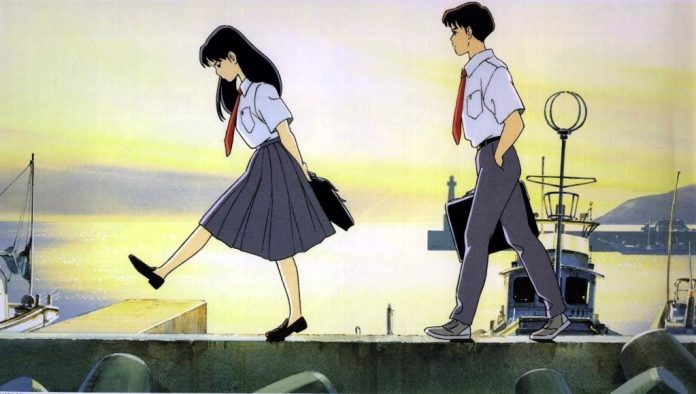
Though Ocean Waves is rougher around the edges than other Studio Ghibli films, this quality is what makes it feel more real. Courtesy of gKids

By: Michelle Young, Staff Writer

Studio Ghibli films have finally arrived on Netflix Canada. You can now watch Ghibli classics like My Neighbor Totoro, Spirited Away, and Kiki’s Delivery Service as you please. However, one of the Ghibli films that has come to Netflix is a smaller one called Ocean Waves. The 1993 film, directed by Tomomi Mochizuki as a part of a project for new animators, is overshadowed by many of the classic Ghibli staples — don’t let that stop you from tasting one of the most underrated Ghibli delights. 

The film is set in Kōchi, Japan and follows the lives of a few high school students, told from the perspective of the main character, Taku. The plot doesn’t seem to have a particular goal, nor does it appear to be working towards anything. However, where Ocean Waves succeeds is in its portrayal of the lives of high schoolers. It explores the nature behind social relations and how people react to one another. It’s filled with nearly nothing more than surges of petty drama in otherwise mundane lives. 

Main characters, Taku, Rikako, and Yutaka, react poorly to conflict, and at times, they’re unlikeable and inconsiderate. But the film perfectly captures the rush of an awkward, confusing, and frustrating youth. While the characters have trouble understanding one another, it’s much simpler for an older audience to sympathize with how they feel. Ocean Waves takes its viewers on a ride: they observe the lulls and stirs of daily life, emulating the unsteadiness of ocean waves themselves. 

Ocean Waves has not received many kind reviews; it holds a 6.7 on IMDb. I think part of this is due to the Ghibli expectation. Ghibli films are known for their fantastical worlds and driven characters, but Ocean Waves doesn’t have either of these things — and that’s OK. The film is messy, and in that aspect, feels more real than most other Ghibli films I’ve seen. 

When I watch Ocean Waves, despite shaking my head at these characters’ actions, I can remember fondly, that I too, was once a teenager, whose world revolved around my own immediate problems. Many of us have had to learn how to understand other people’s experiences and perspectives, and Ocean Waves portrays these growing pains. The audience can watch as Taku slowly tries to learn and understand those around him. It is in its simplicity that Ocean Waves can be appreciated. The film is slow, and arguably not for everyone — but it shouldn’t be dismissed simply because its way of storytelling is unconventional. 

Student organizers lead demand for changing SFU’s sports team name

0
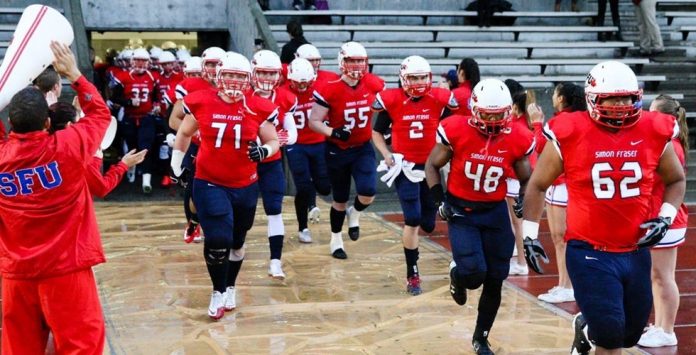
Photo courtesy of SFU Athletics

Written by: Paige Riding, News Writer

SFU Athletics expressed their support for a name change of the athletics team name, the Simon Fraser Clan, last Thursday, July 2.

The SFU Athletics website says that, “In response to student athletes’ concerns about the nickname, SFU initiated a review process that has been ongoing since the beginning of 2020.  SFU Athletics will provide a report to the president in August and a decision will be shared before the fall term begins.”

The demand for change began back in 2017 through the efforts of various activists, including SFU philosophy professor Holly Andersen and former SFU Men’s Basketball team captain Othniel Spence

Spence and SFU student Marie Haddad created a petition titled “‘The Clan’ Simon Fraser University Needs a New Name.” The petition has over 8,000 signatures at the time of writing. 

The Peak spoke with Haddad over email about the name’s affiliation with the Ku Klux Klan. 

Haddad noted that “the implications of the political and social realm behind this history and era have directly affected Black communities until this day on several levels and it is a history we need to be aware of.”

“I recognize that [The Clan] was initially inspired by Scottish heritage but unfortunately it still portrays affiliation with the original name and carries the negative connotation [ . . . ] There is also an unfortunate and prominent North American History regarding the name which is deeply enrooted in the racist segregated threat to Black people and communities.”

The Peak also reached out to Mason Glover, an SFU Football player. He explained over email how the team name has affected him as a Black student athlete traveling frequently to the US.

“The name has greatly affected me,” he began, “it has affected family relationships and conversations, how I communicate with people when talking about my school, but most of all how I represent myself. 

“We get mostly dirty or inappropriate responses when people find out that our name is “Clan” especially playing in the United States. It’s not fair for students, especially students of colour to have to feel ashamed of representing themselves in an environment that they should feel most confident in,” he continued.

The #IAmNotYourClansman hashtag had been used by SFU student athletes on social media to demand the name change. Glover explained that student athletes are posing with athletic gear and using this hashtag to demand change from the university.

Glover noted that SFU “claimed to promote an engaged and diverse learning and social environment but put issues such as this on the back burner consistently. 

On SFU’s failure to acknowledge this issue previously, Glover stated: “And I also question what made them think differently all of the sudden? Why did it take an entire BLM movement, athletes such as Othniel Spence to make himself VERY vulnerable and bring up issues that are traumatizing to him and on top of that THOUSANDS of signatures when the majority of us have clearly wanted this for years.”

“It’s sickening that it has taken this long and this much push for them to finally understand the seriousness of this.”

Haddad and Spence have also called for support from various SFU organizations, including the Student-Athlete Advisory Committee and the Simon Fraser Student Society (SFSS). 

On June 24, the SFSS Council voted in favour of supporting the name change. The passed motion mandated the Council Chair to write a letter directed to Andrew Petter, Joy Johnson, and Rummana Khan Hemani in alignment with the email template found on the petition’s page itself. Council also called on the SFSS Board of Directors to follow suit. The Board passed the motion to write a letter and endorse the efforts in their June 26 meeting.

Haddad echoed this concern around the importance of having student voices heard while maintaining SFU’s Scottish heritage.

“The point is to acknowledge Scottish heritage in a way that does not undermine North American POC/Black History associated to the name,” Haddad wrote.

“That being said, connotation has great meaning to words aside from just a word’s definition, and it’s sad to say that the North American connotation [ . . . ] can be affiliated with the Ku Klux Klan.”

When asked for a comment on the newest announcement from SFU sports administration, Haddad said, “I’m glad to hear that SFU is standing in solidarity with their Athletes and taking this movement seriously. Seeing a commitment to changing the name from the university is definitely a sign of hope. That being said, there is still a big decision to be made by Andrew Petter, and we will keep amplifying Black and POC voices while applying pressure until the change is confirmed and made.”

LETTER TO THE EDITOR: There are other solutions to policing problems other than abolishing the police

0
The police should be just one small part of a larger community protection service. Illustrated by Reslus/The Peak.

Dear Editor-in-Chief,

Recently, The Peak published an editorial covering the debate surrounding policing in Canada, and whether the institution needs to be abolished or reformed. There’s no question that we have a problem with policing — namely the lack of accountability and the no-holds-barred approach the police have to even minor issues. While I agree that reform alone is not the answer, it is imperative that a deeper dive be taken into this issue — one that outlines alternative solutions to dissolving the police entirely.

Demands to completely abolish the police have at their crux the argument that policing is an institution of violence, and thus beyond reform or repair. It is a demand raised out of genuine, long-standing frustration with police brutality and abuse of power. However, it does come with a key problem: if the police are completely eradicated as an institution, what are they replaced with?

As of 2013, the Vancouver Police Department (VPD) has over 1,500 employees. Federally, the RCMP has over 30,000 employees. When taken as one institution, law enforcement is one of the largest employers in the country. Calls for complete abolishment essentially mean that all these workers — in uniform and otherwise — would be out of work, a prospect that police unions will (and should) fight bitterly.  

There is also the public safety side of things, with legitimate concerns around response to violent crimes. It is true that a large part of the time, police officers respond to issues such as noise complaints, traffic citations, and other non-criminal matters. Having said that, simply because responding to violent crimes is not what an officer does on a daily basis does not mean that violent crimes don’t exist. The public should have a police force to protect them in these rare cases.

Complete abolishment, thus, is not the solution. The example of Camden, New Jersey is frequently used to highlight “successful” abolishment. Prior to its sweeping changes, Camden’s violent crime was high and police brutality worse. There were 37 complaints of brutality at the hands of police in 2011. Since the police reforms, violent crimes have dropped 42% according to data provided by the department, and the crime rate itself has dropped considerably. The general public’s perception of the police has improved radically too. 

However, one needs to remember that Camden has a population of under 100,000, and in turn has a different law enforcement dynamic compared to much larger cities in the US and Canada. Also, and more importantly perhaps, the police force in Camden was not eliminated completely. They only changed the way policing took place, via retraining staff and putting new policies in place. So even if cities in Canada were to implement the same changes as in Camden, there is no guarantee that the results would be the same.

What is the answer to the police problem then? Defunding, for one.

Regardless of where we are in the debate, we can all agree that police departments across Canada are grossly overfunded. As reported by Statistics Canada, over $15 billion was spent in this country on policing in 2017–18, an increase of 2% from the prior year. At home in Vancouver, the city allocates $314 million to the VPD. This is an increase of $100 million over the last one decade.

Defunding these departments even by 50% would maintain the ability to respond to violent crimes and would also result in the availability of substantial funds for other essential services. However even a small decrease of 10–20% would be substantial. A shift in funding to public servants such as mental health responders, addiction professionals, and outreach support workers would be a critical cog in the solution to the policing problem. 

Not only are these professionals better equipped to address mental health and addiction, but they really should be the first people to encounter calls for help from people going through these crises — not the police. Examples such as the recent murder of Ejaz Chaudhry in Ontario, and the abuse suffered by Mona Wang and Shanna Blanchard in BC — all during police wellness checks — come to mind. 

None of what I have proposed is intended to deny that systemic racism exists in our policing institutions, however it would be incorrect to say that every police officer on the force has racist views. Furthermore, we need to acknowledge that at the end of the day, everyone in a police force is a worker doing a job. The political left has historically fought for both civil rights and workers rights. This case should be no different. Officers who are guilty of homicides, assault, and abuse of power should absolutely be prosecuted, but complete abolishment of the force creates more problems than solutions. 

The focus of solving the policing problem should not be on eliminating the force altogether, but to bring it back in a new form that preserves the jobs of those who deserve them, as well as ends the violent practices too often made against the general populace.

Sincerely,
Salman Zafar
SFU Alumnus

What I learned about navigating relationships during COVID-19

0
Illustration: Out On Campus

By: Winona Young, Peak Associate

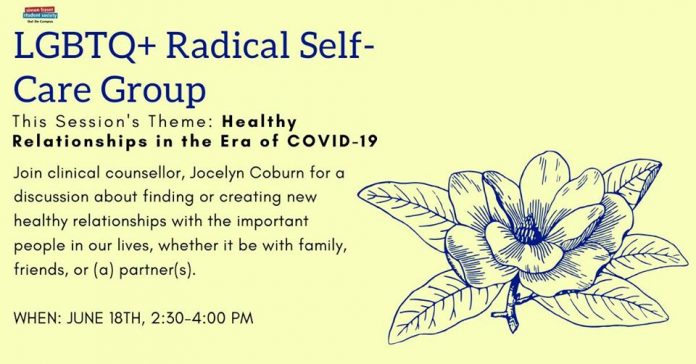
I’m not sure if therapy can count as a special interest, but if I see any article or event that involves self-improvement or healing as the focus, my reaction is usually of dorkish excitement. So when I learned that SFU Health & Counselling was collaborating with Out On Campus on a series of workshops focused on LGBTQ2+ radical self-care, I was all in. The workshop I signed up for was called, “Healthy Relationships in the Era of COVID-19” wherein individuals would talk about how to forge a healthy relationship with friends, family, and partners during the pandemic. 

For the sake of confidentiality of other people in the workshop, I will focus on my own personal experience as well as the experience of other participants who have consented to sharing their answers. Amongst them was SFU clinical counsellor Jocelyn Coburn, the organizer of the workshop, who I interviewed via email afterwards on why she began these workshops with OOC.


IMMEDIATELY INTIMATE

After completing a consent form confirming my registration for the workshop itself, I received a Zoom link and I immediately felt some  anxiety on what the workshop would look like. My worries melted away when I logged into the Zoom conference room and heard laughter along with welcome wishes.

We began the workshop by stating our names, pronouns, and which relationships of ours were most affected during COVID-19. I was struck instantly by how much honesty we had to indulge right away. But our cozy group stepped up; Ashley Brooks  (Out On Campus’ Director) spoke about how the relationships he felt were most affected were with his partner and friend group. Jocelyn spoke about her relationship with her live-in partner and her parents. I spoke on how throughout COVID-19, I felt my relationship with myself and my friends felt strained. 

When I asked Jocelyn later why we should focus on relationships for this workshop, she remarked on how important it is to focus on relationships other than romantic ones. She hoped that through this workshop, individuals could feel a sense of community by connecting to others in a virtual space.

“Hearing your experiences reflected back from others is so empowering,” she said. “Feeling connected and heard is so foundational to healing!”


GVING MYSELF COMPASSION

Ashley mentioned earlier how in pre-COVID-19 times, he felt the need to be ‘go-go-go.’ I replied with the emotionally articulate, ‘mood,’ and expressed how one problem I felt was scheduling with friends and myself. I shared with the group that even during COVID-19, I made plans like crazy to 1. keep busy, and 2. fill the frightening silence of my empty apartment. 

I expressed how I felt guilty with my long stretches of unproductivity and irritation with friends after an hour or two of calling, even though in pre-COVID-19 times, friends and I would hang out from lunch ‘til sundown. I asked if anyone else was feeling this kind of guilt. While I am spending hours upon hours of time with myself these days, and have a glutton of free time theoretically between online classes and errand running, I feel relieved to hear my friends cancel call plans. While scheduled calls were initially a comfort to me, they now felt like a burden. Time by myself now didn’t feel like my own.

While others told me they couldn’t relate (oof), they recommended that I practice being compassionate to myself. It honestly felt comforting being told by relative strangers that I needed to be easier on myself while they reminded me that pre-COVID-19 rules don’t apply these days. In my journal, I scrawled one participant’s response which was: “It’s very taxing to be alive.” 

“COVID-19 is putting stress on not only us but our relationships! It is OK to acknowledge that your emotional needs may be very different […]”

SETTING DIFFERENT BOUNDARIES

When I asked Jocelyn what one thing she wanted individuals to walk out of the workshop with, she replied with a very helpful reminder: 

“It is OK to acknowledge that your emotional needs may be very different during COVID-19 and you can adjust your boundaries accordingly,” she wrote. 

“Practically speaking, this means you may have less capacity to meet others needs right now because just existing is taking a lot of energy.”

A common problem that Ashley and Jocelyn expressed were their difficulties maintaining boundaries. Given that both of them live with other people, they both felt home situations felt strained at times by constantly being with each other. While I’m currently living with a relatively quiet roommate, I told the group how I felt pressured to constantly hangout with friends online. I asked others if they felt that difficulty of feeling tired with spending virtual time with others, i.e. what I’ve termed, “Zoom fatigue.” Others agreed that scheduling in social time even with their roommates felt different because ‘alone time’ was virtually non-existent, even if doors were closed. 

Jocelyn remarked that for individuals living with others, managing physical space was important. She emphasized that there was a difference between coexistence and cohabitating. While coexisting meant simply being in each other’s presence constantly, cohabitating meant intentionally spending time with others in different contexts and spending time with yourself at home were different. Intention, she reasoned, was important in setting important emotional and physical boundaries, whether it was with friends online or people you’re living with. 


PRACTICING MINDFULNESS 

By far one of my favourite parts of the workshop was when Jocelyn walked us through a mindfulness exercise that she researched online

It was surprisingly easy to do a guided meditation via Zoom. Jocelyn told us to begin by physically rooting ourselves to the ground, like having both feet placed on the floor. We were told to think of something we were having difficulty with for relationships, and while COVID-19 hadn’t impacted my relationship with my partner, I thought of how jealous I felt when they would mention their ex. Jocelyn then asked to observe our feelings — for me, I thought, “I feel jealous, I feel stupid, I feel irrational, and I feel so small.” 

She then asked to acknowledge the difficulty of our feelings, and think to ourselves, “This is a moment of suffering,” which felt cathartic to admit to myself, and helped me be more accepting towards myself. The next step then was to establish a comforting touch to oneself, like placing one’s hand over heart, which Jocelyn mentioned felt too intense for her so she would hold her other hand. And once we would be holding ourselves, she would tell us to think of our problem, and then ask ourselves, “Can I be compassionate to myself? Can I be kind to myself at this moment?”

I remember the exercise feeling very intimate and calming; and at the time of writing this, after being upset by violently triggering content, repeating this exercise helped ground me. Asking myself to feel compassion for myself made me feel peaceful, more in control of my problem, and less overwhelmed. 

FINAL WORDS (LITERALLY)

We ended the workshop by going around the group and summarizing the workshop in one word and why. Ashley chose his word to be ‘compassion,’ while Jocelyn chose ‘learning’ as hers. I chose ‘intention’ as mine. I wanted to remind myself that whether or not it’s interacting with others, or even noticing how you talk with yourself in times of stress, it’s important to be mindful and interact with others with intention. While it was definitely an emotional and very introspection-heavy way to spend an afternoon, this workshop was definitely worthwhile.

For more information on workshops provided by Out On Campus, visit SFU’s Health & Counselling’s tab of Support Options for LGBTQ2+ students. The next workshop, “Finding Community and Boundary-Setting Online” will be held on July 2.

My experiences with dating during COVID-19

0
Illustration: MIchelle Chiang / The Peak

By: A hopeless romantic

So, this is the first time I’m single in almost three years and of course it’s during a world pandemic, which makes things kind of difficult. You can’t exactly go to your local coffee shop and flirt with the cute barista, fall in love, get married, and have three kids anymore. Nope, you have to resort to the amazingly awful world of online dating. Spending your days swiping left and right just praying that you match with someone whose only personality trait isn’t “watching The Office” (it ended seven years ago, it’s time to move on). But as the hopeless romantic that I am, I wanted to meet someone. 

So that’s where I stumbled across this super cute girl who I seemed to have a lot in common with. We started talking, I got her number, and we even did a paint night over FaceTime. The next step? Well, naturally, since I work at The Peak, my journalistic instincts told me that I needed to interview her. 

I was curious what had drawn someone to download a dating app during a time where you can’t exactly go out with strangers, but honestly, I was also looking for an excuse to flirt with her. 


Warning: This is about as corny as it sounds. 


Me: Umm, yeah, I started the recording. Hi. I’m also very embarrassed ’cause I have to send this to my coworkers to check that I wrote my quotes correctly.

Her: Oh, the recording?

Me: Yeah, the recording. So I’m fully going to embarrass myself, but y’know what? That’s fine, I’m used to it, I’m literally writing this piece so, umm . . . the first question I have is: 

How did we meet? How would you rate our first interaction, and is it what you were expecting from a typical Tinder match?

Her: We met on Tinder. You sent me the worst out of context pick-up line. It was like “Are you from Paris? ‘Cause I think Eiffel for you.” 

She said this in a deep voice that I can only assume was her attempt at mocking me and was in no way anywhere close to what I sound like . . .

I read it, rolled my eyes, I had to take half a day to respond, I think. “Do I respond?” was running through my head because y’know, he seemed sweet, a bit dorky, maybe I’ll even give him cute.

I laughed nervously.

Her: Was it what I expected from a typical Tinder match? Yes. You’d be surprised at how many cheesy pick-up lines I get on that thing, so you’re not so special after all.

Me: Damn, and I thought I was original, hurts me a little bit.

It hurt more than a little bit. 

But let’s be honest, I did give you the best line. ‘Cause here we are . . . in an interview. 

Me: The next question is . . .  I forgot I wrote this. 

I laughed nervously again as I read the question.

Can you tell the readers how handsome I am and how good I am at painting?

For, uhh . . . journalistic integrity. Just so I get the full scoop, y’know, I don’t want to leave any details out of the story. 

Her: OK, I know you called yourself a 13/10 before you got the haircut.

Me: Oh, you’re literally going to roast me right now? Is this what’s going to happen?

Her: I thought you were pretty cute before the haircut, too. But then you got a haircut, and so that puts you at a nice even 8.

I took a long pause.

Me: Oh my god . . . an 8 . . . out of 8 right? The scale only goes up to 8?

She laughs.

Me: I’m concerned.

Her: It’s an A.

Me: It’s an A? Hmm.

Her: It’s an A for an Egg.

She is convinced my head looks like an egg after I cut all of my hair off. It is also worth mentioning “egg” does not start with “A.”

Me: Honestly, I have to agree with you. I miss my hair. But it’s OK, we’re here now, you just insulted me, and everyone’s going to know and I’m going to call you out in this interview. 

Me: Now onto the serious questions . . .

Her: We didn’t start?

What made you download Tinder in the middle of a pandemic?

Her: Because I had just come back to Canada [from Italy] right? And I was stuck alone in quarantine and I had never lived alone alone before. So, [quarantine is] two weeks, and halfway through I [just needed] mind-numbing conversations and a big ego boost. But actually meeting and dating anyone was not on the forefront of my mind. 

As we spoke, I realized that I was too distracted with flirting and ended up ruining the recording. But what she said made a lot of sense, and I think reflects a lot on this basic human desire to connect with people. 

Ever since entering this pandemic I always reminisce on the crowd that used to gather in front of C9001 in between classes. That sort of human connection you get from seeing someone you know in that crowd, stopping for a bit and having that mind numbing conversation. Or like the small talk you might have when you order a coffee and ask the barista how their day went. 

But more importantly, her answer really made me reflect why I was on a dating app? And I think it was for the same reasons. I missed having some sort of connection with someone. I wasn’t exactly looking for a serious relationship, but just the fact that there are strangers online who think you are cute and you have a platform to engage with small talk with likeminded people offered some sort of comfort while we are all confined because of social distancing. 

On a scale of 1–10, how well would you rate our social distancing dates and why? Would they compare to a real one?

Her: So we’ve had two so far.

Me: I’m glad you keep track.

What the fuck am I doing? It’s like I’m not even listening to myself speak.

Her: They have both revolved around painting and small talk. They were good times. Do they compare to a real life date? I don’t think so. Sorry?

Me: No, no, no, no, I agree, but if you would like to elaborate on that.

Her: There’s definitely something missing when you’re talking to someone from a screen. There’s a bit of that human interaction that you miss, y’know, seeing how the air sort of moves around them as they walk into a room, how they smile, and how things around them light up . . . or not light up. 

She laughs.

So I think there’s definitely a vibe that you cannot catch from a computer, but [our dates] have been tight. I get to see how awfully you paint plants and sunsets and how awful you are at Skribbl.io. Those aren’t things I would get to experience in real life, so in a way this quarantine date situation has allowed me to see a different side of you that not many people — so fortunately — have been able to see.

Yep, dating virtually has definitely been interesting, but quite honestly I feel like it’s a very unique opportunity. I agree with what she said about being able to see a different side of someone, and I think that is especially interesting when you haven’t met them in person yet. 

Plus, you erase all the pressures that have to do with being in person. Personally when I’m on a date with someone I really like, I’m always very self conscious of my body cues. Do I kiss them at the end of the night? Offer to drive them home? Do that thing where you “accidentally” touched their hand but you totally meant to do it on purpose? 

With a computer screen between you two, all of that is gone and it opens up an opportunity to have a connection based entirely off of conversation. You really get to know a person, and I mean that’s the objective of dating . . . right? But anyways, back to the interview. 

This girl is about to roast the hell out of me. Is this flirting? Someone please tell me I have no clue.

Me: Nowhere in the question does it ask you to roast my painting skills so I’m a bit confused why you brought that up.

Her: Well, it’s definitely because you had to cut out most of my roasting [at the beginning] so I have to make up for it because of your recording failure.

Me: Well that’s just because I’m not good at my job. Oh shit, I can’t say.

Damn it, I work here.

. . . ‘Cause I’m writing this under a pseudonym which I haven’t decided yet. So I’m going to include that as a question, what should my pseudonym be?

Her: Definitely not like “Spider Planter,” or whatever the fuck you called your plant.

Me: OK, my spider plant is named Peter Planter, like Peter Parker because it’s like Spider-Man but it’s a spider plant and don’t roll your eyes, how dare you I think it’s so clever and you’re just jealous.

Her: So, no name recommendations right now, just definitely not that.

Me: Cool, so that’s going to be the name now, actually, it’s going to be the name I use for you.

Her: So does that make you my Mary John or something? 

She pretends to smoke a joint

Me: No, I’m Mary Jane ‘cause that’s already a plant and I think that’s really funny. 

See, the great thing about recording an audio interview is when you do hand motions and you don’t say anything, that just makes quality content.

Her: But you still think I’m funny, so me pretending to smoke a joint still translates pretty well. 

Me: That’s a bold assumption for someone who said they only wanted to talk to me for “mind numbing conversations.” Don’t think I’m going to forget that.

My voice 100% cracked here. Apparently, I’m a prepubescent child. 

Me: So, you kind of answered this in your previous question but:

What are some of the pros and cons of virtual dating?

Her: Pros — you don’t have to leave your bed, you don’t have to wear pants, no travel time, you don’t have to get into his car, and worry about whether or not he is going to murder you. 

Me: Well, I am a murderer as a side hustle, so it’s good you brought that up. 

Her: I don’t know, it’s just the ease and accessibility. 

She literally ignored my comment about being a murderer. Either she is entirely done with my shenanigans or the bar is so low for men that being a murderer is OK.

There’s very little commitment with having to log on for a couple of hours to chat. It’s nice, you really do get to know someone before you decide whether you want to take time out of your day to go and spend time with them. So it’s helpful, it’s easy, it’s still quite nice. 

Cons are still the whole not getting to feel out their vibe: you don’t get to see the way they smile at other people, not just how they smile at you. You get a better sense of a person when you’re outside doing everyday things. Otherwise, I guess our dates haven’t been that bad. And make sure to italicize the “that.”

Me: Oh, OK, all of a sudden she does one interview and she’s deciding how we write the piece.

Her: OK, next.

Me: Have you decided it’s time for the next question? I’ve lost control of this interview so quickly. 

Does virtual dating compare to the real thing? I don’t think so (and I’m not just agreeing with her cause I’m absolutely head over heels). I feel like it’s very easy to put on this sort of fictitious persona when you’re in front of a computer screen. It’s a very controlled environment and while the area that your webcam is pointing to is clean, it is impossible to see what is outside of that square. 

But I guess you could compare that to dating in real life, too. We want to present the best version of ourselves, that perfect shot of us with all of our mess pushed out of frame. I also haven’t gone on a first date in years so maybe I’m not the best one to judge. 

Me: So the last question I have for you is . . .

 Would you want to go out with me again?

She takes a long pause before responding. I may have been laughing in the recording but I was sweating from how nervous I was.

Me: Take your time!

Her: Yes.

Me: I mean, don’t just say yes for the piece, ‘cause if you say no I’ll just cut it. 

Her: Nah, we’re going out, it’s cool. 

Me: Cool.

Her: Cool.

Me: Cool cool cool.


I feel like it’s worth mentioning that she didn’t just say yes for the piece and we have plans for a picnic date. Please wish me luck. I need it.