Home Blog Page 418

Senate Report: July 6, 2020

1

Written by: Michelle Young, Staff Writer

Petter responds to questions regarding the name change of SFU Athletics’ team, “The Clan”

During the question period, Senator Erika Plettner inquired about the SFU Athletics team name “The Clan.” “We ask what efforts to change that name have been initiated and what the approximate timeline of such a change would be,” said Plettner. 

SFU President and Senate Chair Andrew Petter responded: “It’s unfortunate that the term ‘clan’ was appropriated by a racist organization in [the US] and that that has created some real difficulties for our athletes [ . . . ] But to change the name because of a racist organization could be seen as succumbing to the hegemony of a racist organization, so it’s been a complex issue.” 

Petter added, “I think what’s really changed is the strong weight of opinion of our student athletes” and said a process to decide whether to change the name started in January. “A report, hopefully should be into me by the end of [July], no later than the beginning of [August] and as soon as it comes to me I am committed to making a decision.” 

Question regarding proctoring software

During the question period, Student Senator Gabe Liosis said students were concerned about the use of online invigilation software. According to Liosis, students “were reporting in high numbers” that professors requiring the use of these softwares, stated this requirement past the withdrawal date. Liosis also added that students’ accessibility resources may be limited. 

Following these statements, Liosis asked why instructors were able to require the use of proctoring software past withdrawal deadlines. 

It is “the responsibility and right of the instructor to select appropriate methods of assessment” and there is “an expectation [ . . . ] to limit, or preferably eliminate, the opportunity for academic dishonesty,” Vice-President, Academic and Provost pro tem Jonathan Driver responded. 

Driver added that SFU normally does not require instructors to inform students of the “exact format of assessment” before the course begins or early into the semester — instructors only need to provide the grade distribution. “For the Summer term of 2020, under exceptional circumstances, we did require instructors to inform students if exams would be conducted using [ . . . ] proctoring software [because] such programs are [ . . . ] more intrusive than students would experience on a final exam,” Driver said. 

Driver also said instructors may use video conferencing software for exams, as it falls within SFU policies and that “students can request accommodation, if they wish.” 

Inquiries on the use of Zoom 

At the start of the question period, Student Senator Bryan Daniel inquired as to whether the use of Zoom had been vetted by SFU, which measures have been taken to address Zoom’s risks, and what is being done to “ensure that any recordings are being processed properly.” 

Driver confirmed that the use of Zoom had been vetted, noting that “SFU’s office of General Counsel has reviewed the use of Zoom with regard to privacy impacts and has determined legal risks are within an acceptable range.” 

Chief Information Officer Mark Roman elaborated on the steps taken to address the risks of Zoom. Roman said that while many privacy issues remain with Zoom’s free version, the Zoom purchased by SFU — the enterprise software — has “superior privacy and security built into it.” Roman added that this version of Zoom had been “assessed for risk” and security features have been added “following industry best-practice recommendations.”

Regarding the security of recordings, Roman stated that on “the enterprise versions of Zoom, recordings are stored locally, not on Zoom’s server.”

Driver responds to questions regarding asynchronous learning

Senator Liosis stated that the SFSS has called on SFU to “mandate asynchronous learning in all courses that do not absolutely require an in-person or synchronous teaching method.” Liosis said that leaving the choice up to individual instructors “fails to recognize the diverse learning methods and needs of students who are facing extreme difficulty trying to learn at home.”

Liosis inquired, “how can students’ needs for asynchronous learning be met [ . . . ] to ensure [a] stronger, more centralized approach to teaching at SFU?” 

Driver said that it is the decision of the instructors to select “the most appropriate method of instruction.” Driver added, “opinions of students do, indeed, vary” and cited advantages to synchronous and asynchronous learning — such as real-time discussion for synchronous learning and convenience for asynchronous learning.  

“Under normal circumstances, the university runs on both synchronous and asynchronous activity. It’s not unusual to expect students to show up for certain events, and then for students to manage their own time,” stated Driver, who also cited data from a Summer 2020 survey suggesting that the majority of students have a preference for a mixture of synchronous and asynchronous learning. 

Lastly, Driver said, “I anticipate that we will not be issuing any instructions that all courses need to be asynchronous [ . . . ] The instructor needs to determine what is best for students [ . . . ] and I think we need to respect students’ desire for interaction with each other and with the instructor.” 

The next regular Senate Meeting will take place on September 14, 2020

14 creative sitting postures for online lectures

0

Written by Hannah Davis, Peak Associate

The best thing about online classes is that you can sit any way you want to. Every student hates how in-person classes mean you’re confined to regular seated positions in a regular chair. Butt in seat, back on back rest, eyes looking at the professor . . . Bleh! It’s so typical!

Have a look at these incredible alternative sitting positions, so that maybe you can be more than a boring sack of dust.

1“I do not like that my lecturer plus 30 strangers can see me, and would prefer not being on camera, but I am not allowed to turn my camera off.”

Alternatively, this also makes you feel like an egg. Which is conducive to learning. 

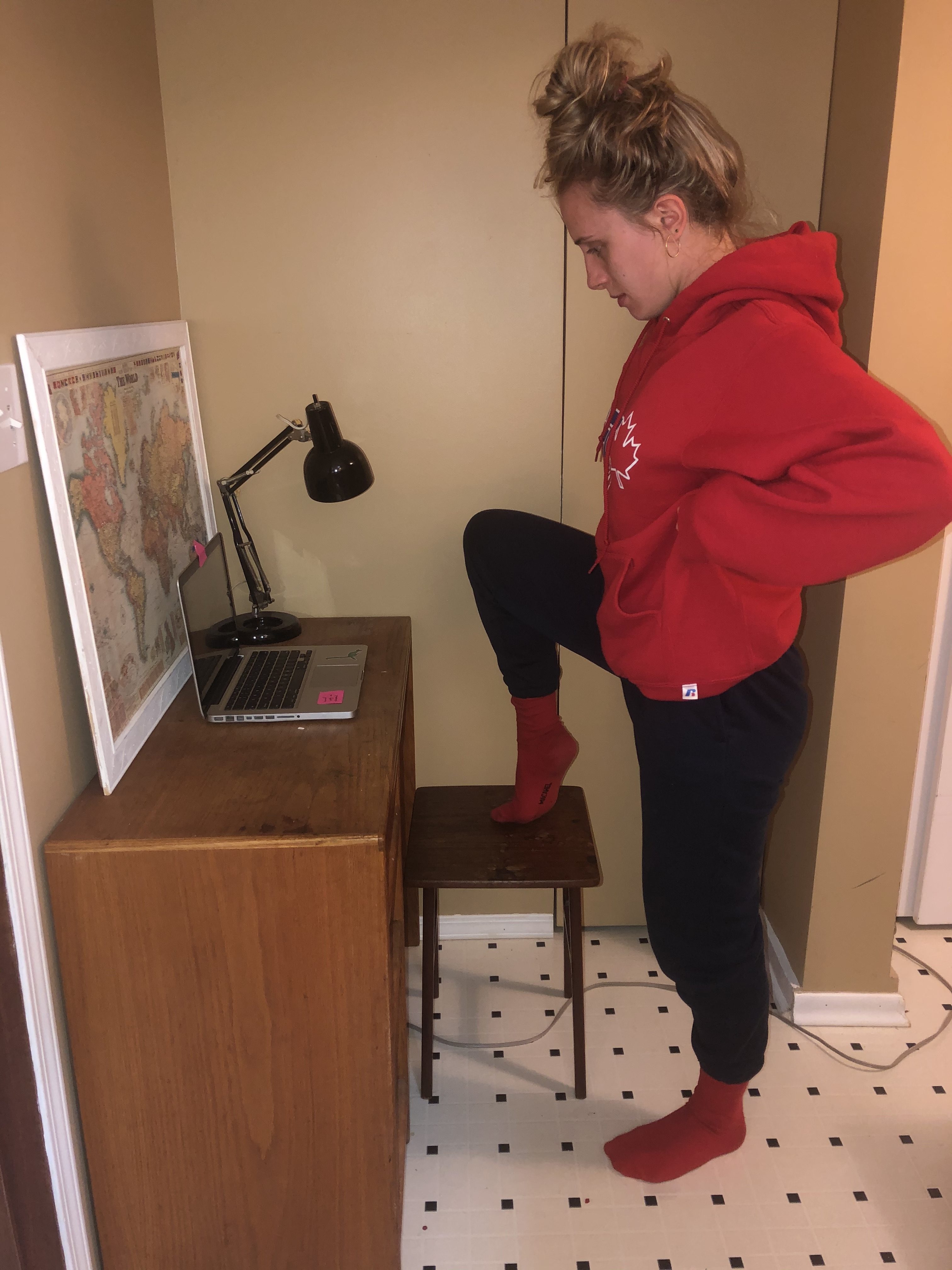
2Toe rest position.

From this angle, you will also have a nice double chin, and there’s a higher probability of having a menacing appearance.

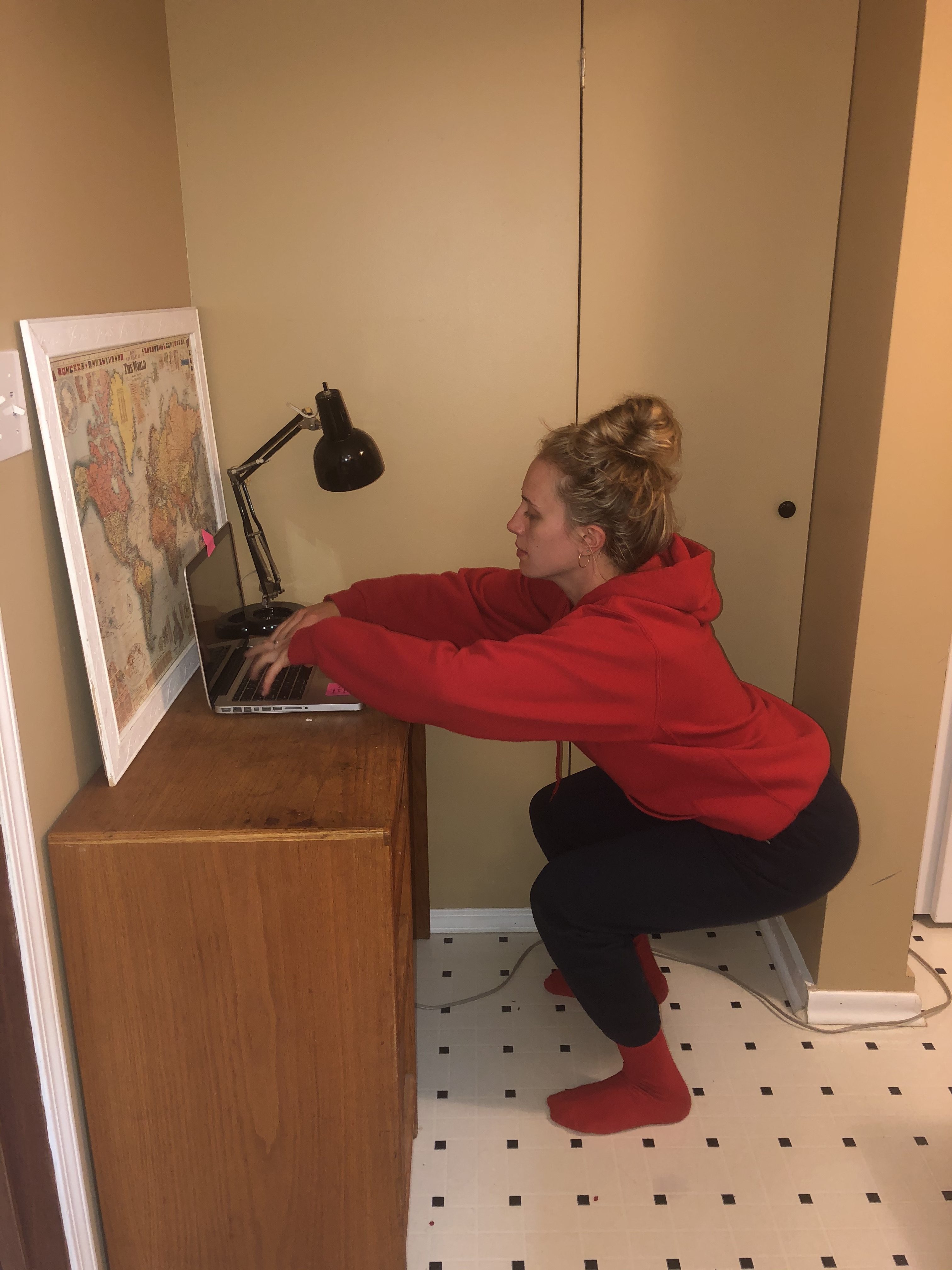
3Pretend your butt blasts fire . . .

. . . and you’re about to power into outer space.

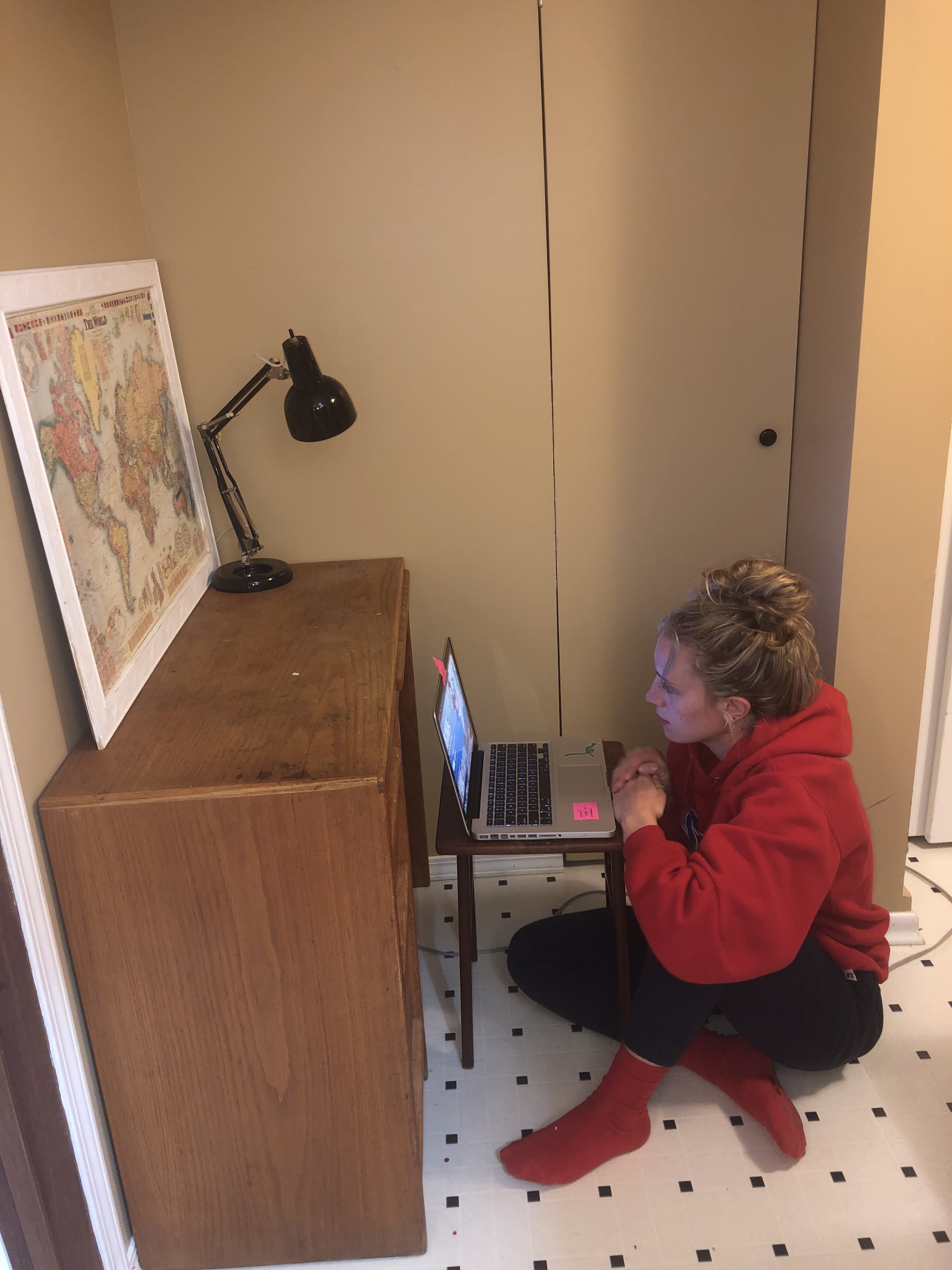
4Your chair can be anything you want it to be.

It can even be a table. You have such a wild imagination and people will think you’re quirky because you’re sitting on the floor. 🙂

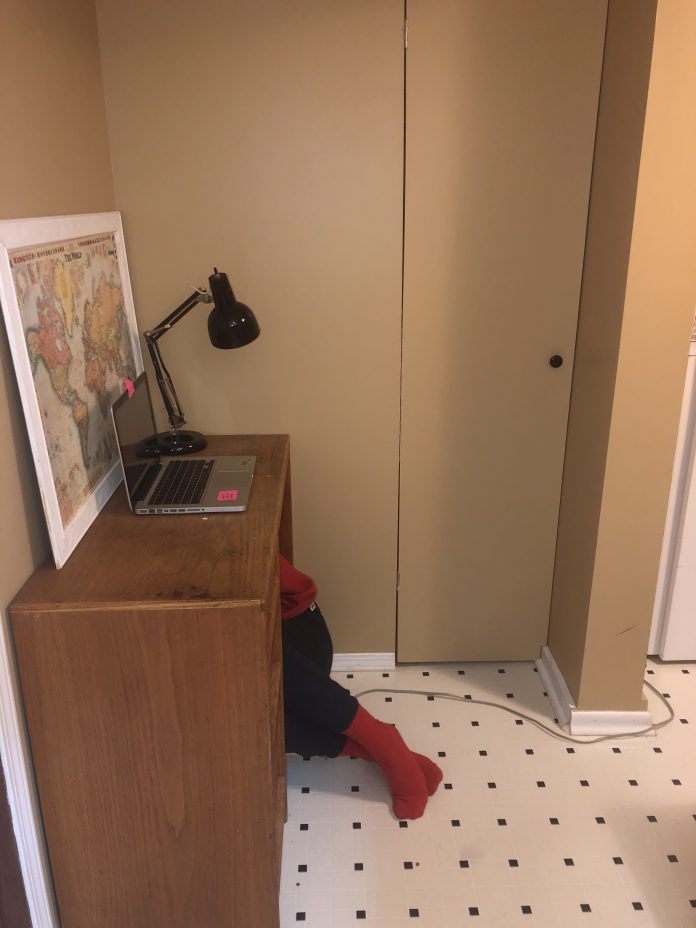
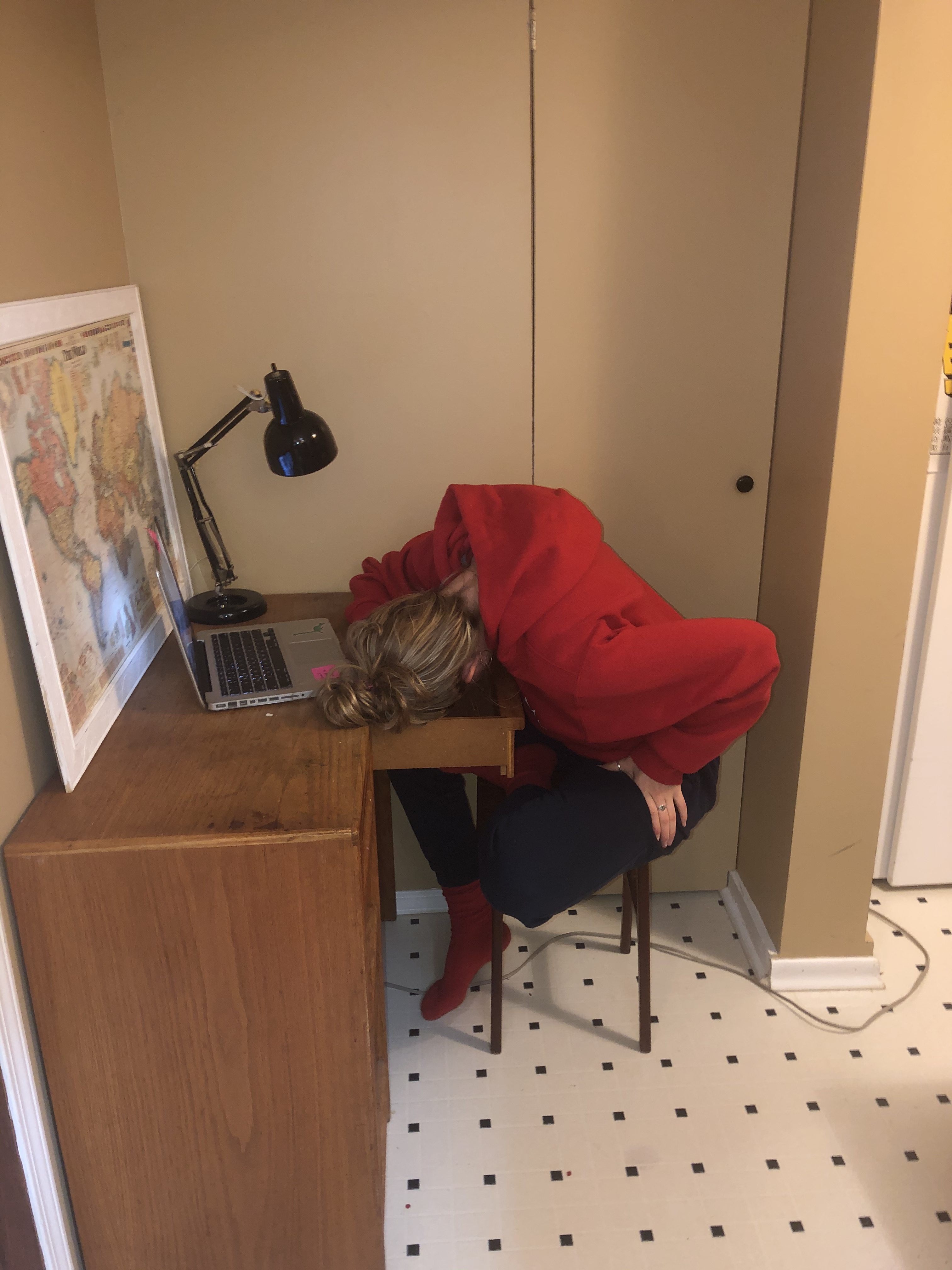
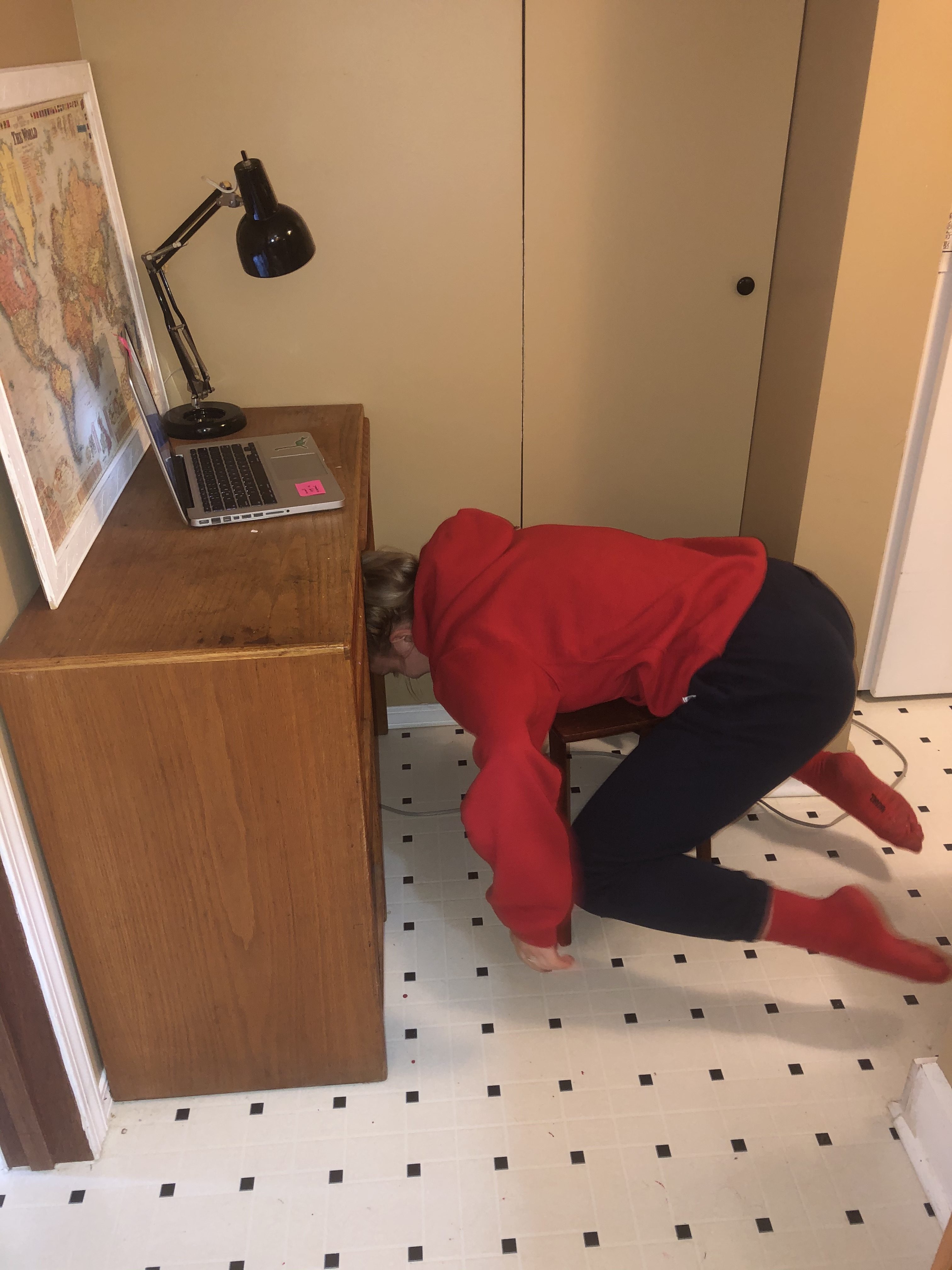
5Head in drawer position.

(Self-explanatory.)

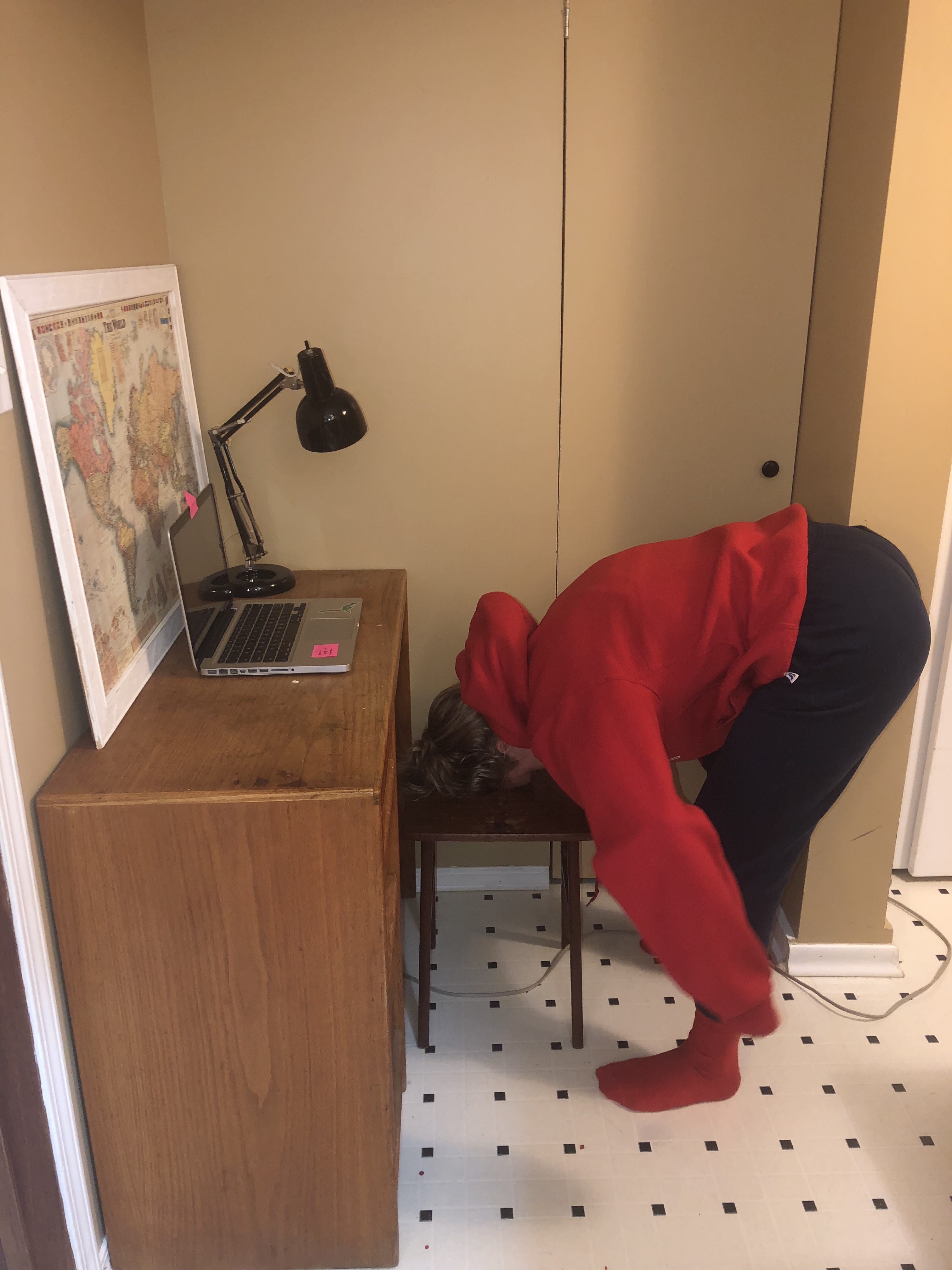
6Your butt warmed up the seat . . .

. . . so now you’re warming up your forehead on the warm spot. 

7Look at your lecturer AND at your feet at the same time!

Feet are so funny! Make this position even funnier by wearing funny socks. Funny!

8Your desk becomes your chair.

How whimsical! From this vantage point, you can no longer see the floor directly under the desk. It had started to look like a comfortable place to sit, and so you wanted to resist the temptation to get down there. 

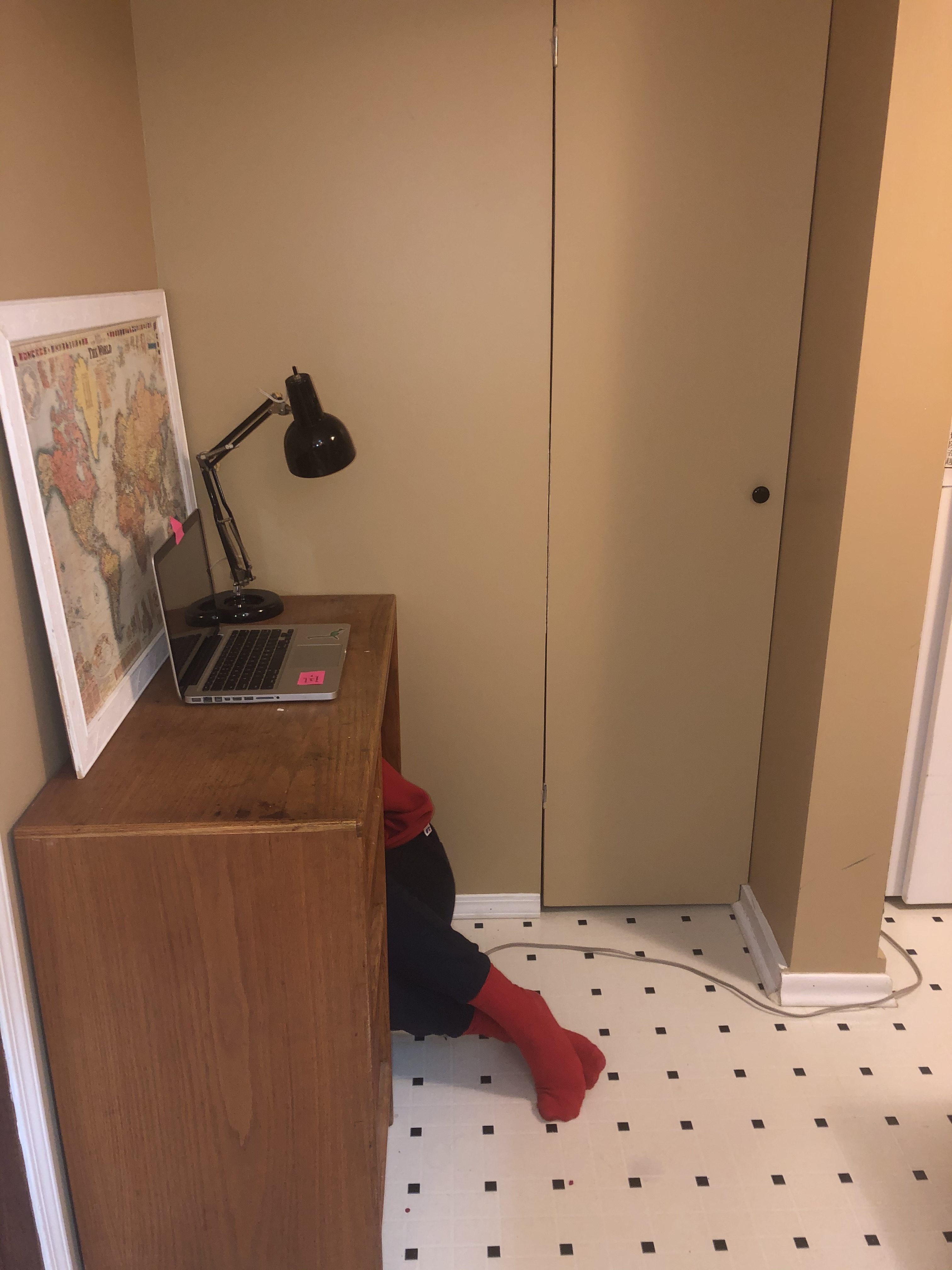
9Oops! The temptation was too strong.

You are now under your desk like a mole person. 

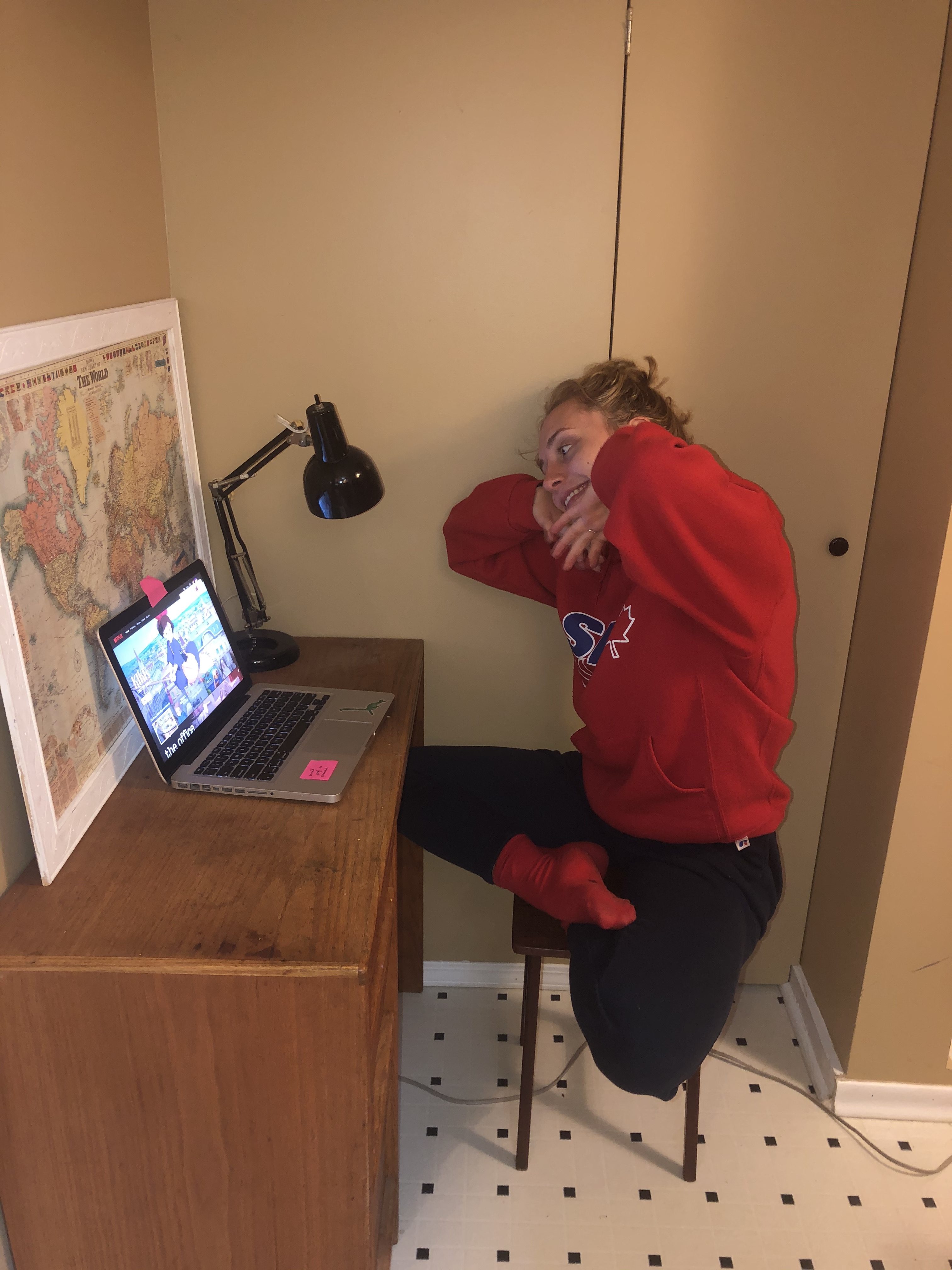
10“Leaving the lecture tab open to peruse Netflix and you make this face to seem interested in the class when really you’re watching Kiki’s Delivery Service.”

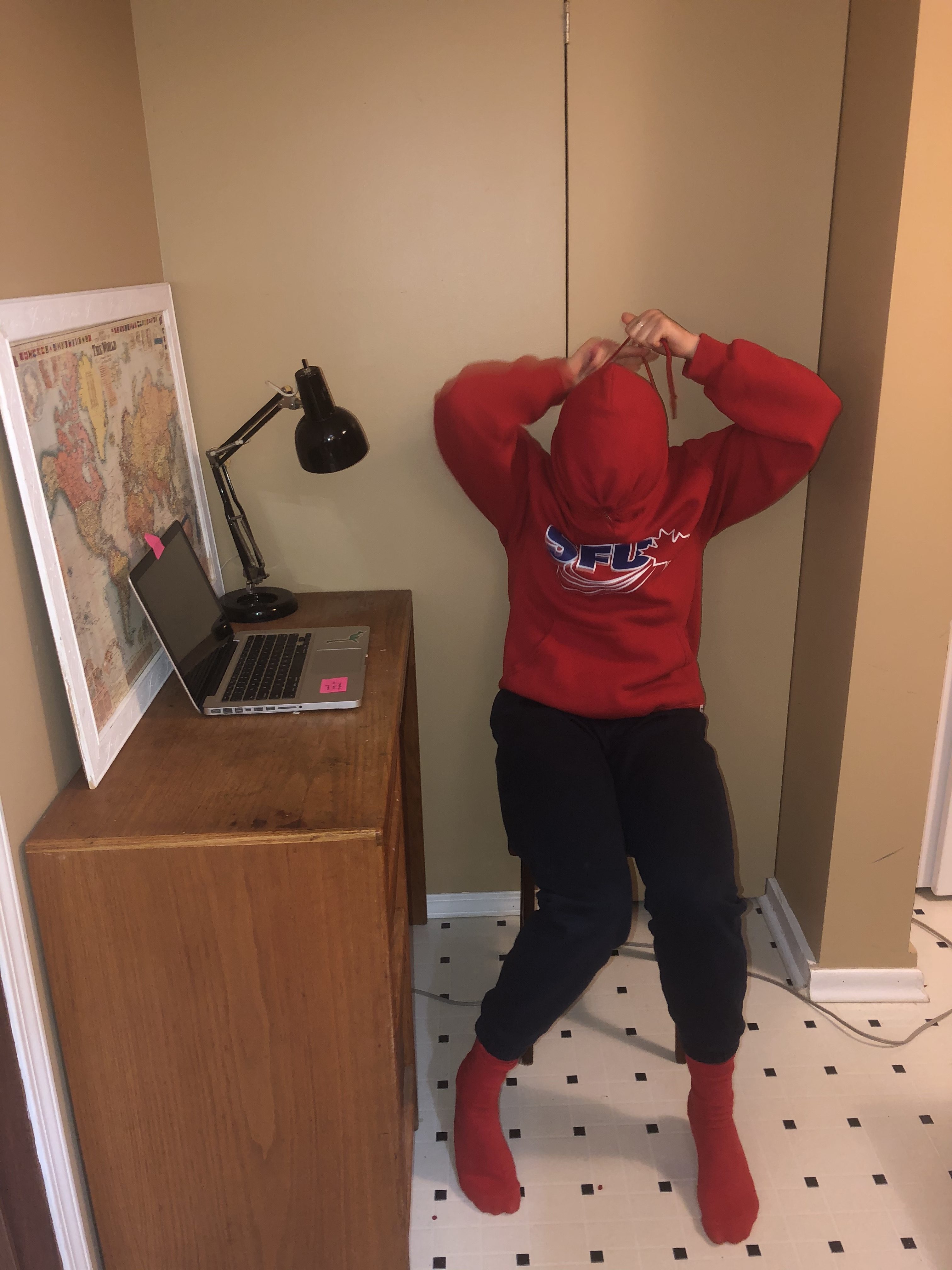
11You wonder what it would be like to have a face cover on like a Dementor.

Your class sees you in the camera and they all start applauding. They see what you’re doing, and they like it.

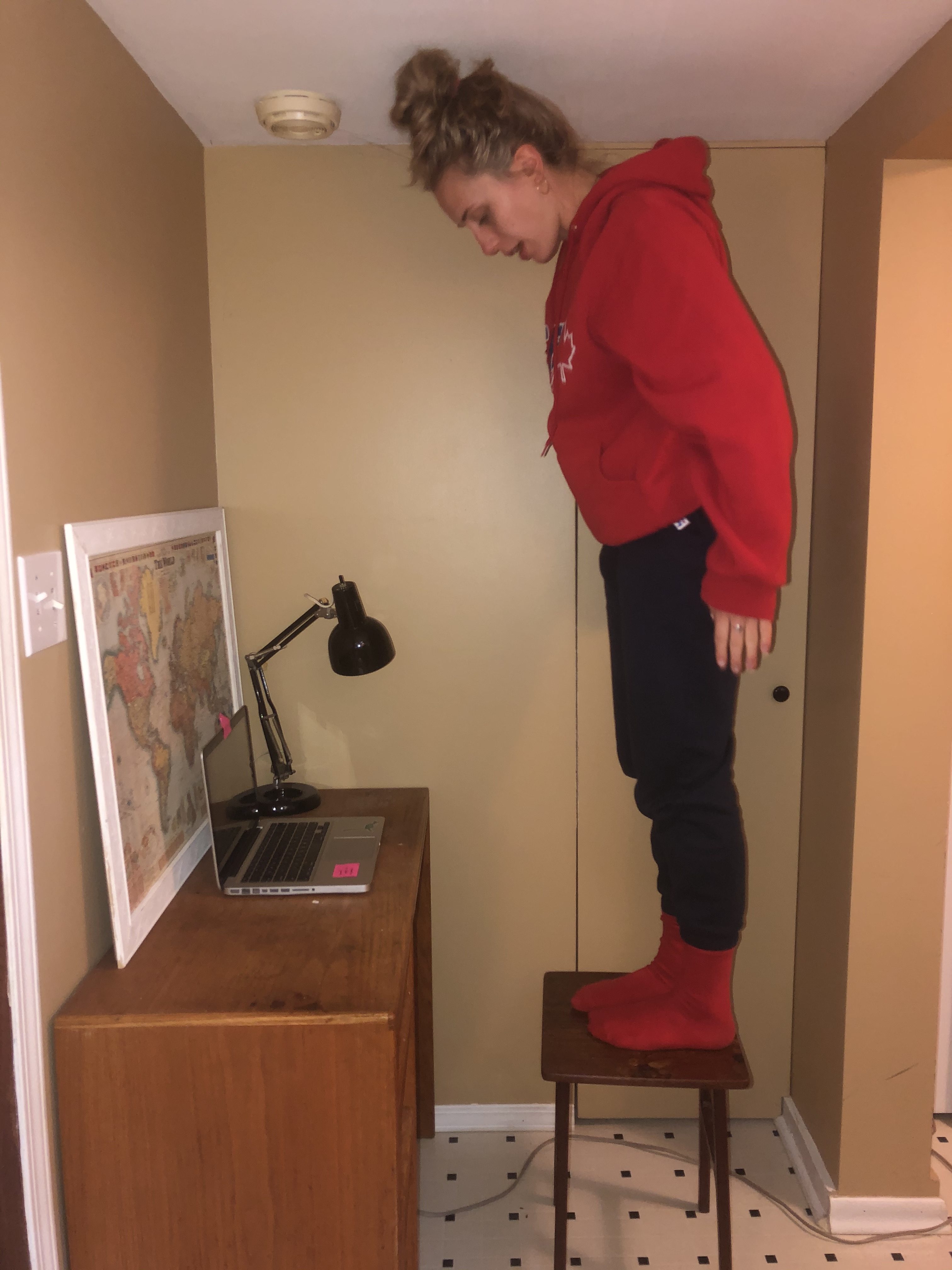
12Floaty feet.

Your feet are not on the ground and you get the sensation of flying. Don’t get scared though! You’re not actually in the air.

13“Hello, hello, baby, you called, I can’t hear a thing.”

“I ain’t got no service in the club, you see, see.” — Lady Gaga

14The feistiest of them all.

This one allows you to SQUARE UP in case anyone acts dishonourable towards you. You can immediately threaten them . . . with fisty-cuffs.

Group partners file for divorce, dispute custody of project

0
Photo courtesy of Zoriana Stakhniv on Unsplash

Written by Devana Petrovic, Staff Writer

Two Beedie students have recently filed for a “group project divorce” after an assignment conflict erupted on their shared Google Doc. Amy Peti, the second year divorcee, spoke with The Peak about the events leading up to the split.

“I just knew it from the very beginning, when my now ex-partner said he didn’t have LinkedIn,” said Peti. I was the only one who was going to take this seriously. I was obviously right.” 

Peti started her own individual document upon the assignment guidelines getting released on Canvas. When finally Peti’s partner, Will Skrüyaova, sent Peti an email two nights before the due date, asking “if [they] should like…start or something,” she decided it was now an appropriate time to include her partner in the assignment.

“So evil, man,” said Skrüyaova, “She added me to a Google Doc, but she didn’t give me editing privileges. I didn’t have to ask — I knew it was because she hated me.”

Peti confirmed Skrüyaova’s statement, swearing that she had “loved him, even though [she’d] never met him” but “just did not want to give someone so ugly and incompetent a chance to ruin things.” 

Their main form of communication quickly collapsed to passive-aggressive suggestions on the document, says Peti. Skrüyaova complained about Peti’s demands for citations, highlights of his grammar mistakes, and criticism of his work having nothing to do with their actual assignment guidelines, amongst other things.  

“It just seemed like we weren’t meant for each other I guess.” 

As tensions started to increase, communication shifted to deleting each other’s text in the midst of typing, leading to a slew of insults. Both parties allege that things came to a head when Peti deleted Skrüyaova’s plant facts and called him a whore. 

Since then, Peti and Skrüyaova have decided to divorce. Now it is unknown whether they are communicating through another Google Doc, Parseltongue, or even at all, nor is it clear whether their split will be recognized in either a court of law or their TA’s grading rubric. Skrüyaova “will not be getting a [grade per]cent of my assets,” Peti promises. 

Their assignment child is currently in the custody of an anonymous student, who had also, coincidentally, just gotten their hands on some extra cash.

Your weekly SFU horoscopes: July 20–26

0
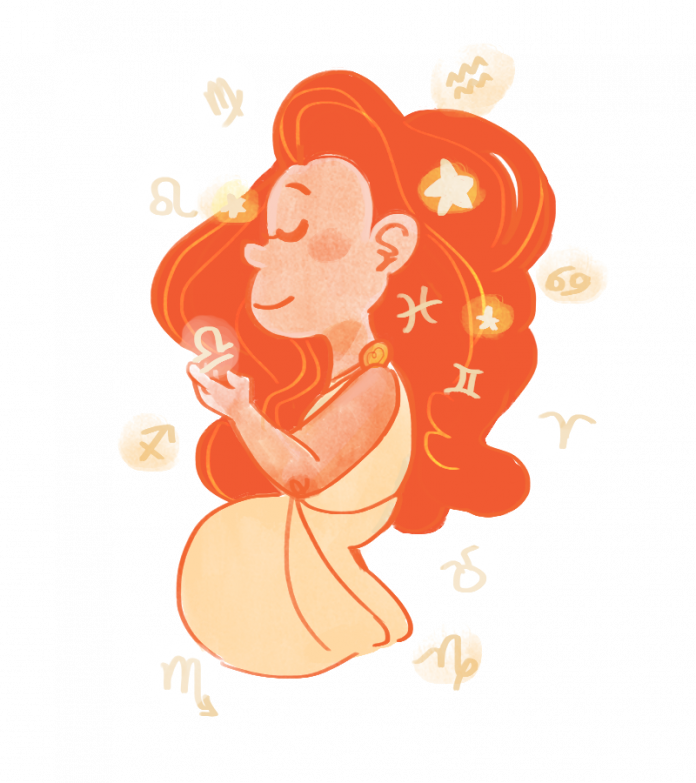
An illustration of a girl with long flowing hair. Astrological signs and stars shine around her.
ILLUSTRATION: Marissa Ouyang / The Peak

Written by Paige Riding, News Writer

Aries: As the first sign of the Zodiac, you really prove that the old saying “first the worst, second the best” is true. When you’re not busy victimizing yourself, you’re bullying others around you. Being a miserable asshole is technically a personality trait, but you’ve made it your whole life.

Taurus: People gravitate towards your calmness. They feel the same pull they feel in the drooping eyelids during a boring lecture. Being around you is tiring, boring, and unhelpful in the long haul. Picture a big ol’ pitcher of alcohol-free beer in your gut. That’s what your company feels like.

Gemini: You’re the human equivalent of a cracked phone screen. You hurt those that try to get close to you, you tend to shatter under any amount of pressure, and others comment on how you should just be replaced.

Cancer: You take the idiom “cry me a river” and run with it — away from any source of conflict, all so you can go snivel instead of solving anything. Some call it sensitivity. Others just (appropriately) call you a little bitch.

Leo: The overwhelming narcissism radiating from your body reaches me in my northern BC town. Keep checking your own social media feeds to see how people perceive you and your God complex will burst right out of your brain. Shut up.

Virgo: You give off such “I’m not like other people” vibes, it’s nauseating. Sure, you’re not like other people. You’re so obsessed with being DiFfErEnT and ~quirky~, shown through your annoying nerdy interests and determination to steer away from what’s “cool.” You’re not like everyone else. You’re worse.

Libra: You’re so forgettable I’m not even going to bother talking about you.

Scorpio: Mysterious? Sexy? Intense? In reality, you doubt yourself and all that you do so intensely that it’s a mystery how you think you can finish your degree or go anywhere. Keep sleeping in this rut you’ve dug yourself.

Sagittarius: You have plans. You want to dismantle the patriarchy. You want to stop capitalism in its exploitative tracks. That’s all well and good, but eat a vegetable first, you piece of shit.

Capricorn: Did you know Jeff Bezos, Amazon CEO, is a Capricorn? Just like you, he prioritizes his own success over the emotions of those around him. His sardonic fascism leaves those he views as “lesser” in suffering. “That’s not me,” you think frantically. But you’re still messaging your TA about your useless group for your project.

Aquarius: When you’re in a bad mood, everyone is. Cute little parasite. Just keep sinking your fangs in deeper every time you message your friends asking “am I annoying? Do you hate me?” Let me answer for them. You really fucking are. And they do.

Pisces: Such low self-esteem. Eeyore feels sorry for you. I would try comforting you, but you’re that dickhead who can never take a compliment. You just brush it off and everyone gets annoyed. Half the time they don’t even mean the compliment they say to you, anyway. Yikes.


Federal government offers grants to student volunteers amid COVID-19

0
Photo: Adrian Wyld / The Canadian Press

Written by: Paige Riding, News Writer

Announced in late June by the federal Government, the Canada Student Service Grant will support students and recent graduates who are volunteering in spite of COVID-19. This grant program falls under the $9 billion COVID-19 aid efforts for students. 

According to CTV News, every 100 hours spent working on COVID-19 efforts will equate to $1,000. This total maxes at $5,000. To be eligible, volunteers must work a minimum of two hours per week for four weeks, and these hours must occur between June 25 and October 31, 2020. 

Volunteer activities with eligible organizations range, including helping seniors learn about technology, mask making, tutoring, and researching. 

There is an age limit of 30 years for eligible students and recent graduates. As well, applicants must either be Canadian citizens, permanent residents, or have a refugee status. Current student volunteers must have enrolled at a post-secondary institution during the spring, summer, or fall semesters of 2020. Recent graduates are applicable if their graduation occurred no earlier than December 2019. Canadians who are in post-secondary school abroad but are currently in Canada also qualify.

Prime Minister Trudeau faced criticism from Conservative Party representatives for the delay in explaining the program. MPs Dan Albas and Raquel Dancho said, “We are already two months into summer — every day the Liberals delay support or refuse to fix their programs Canadians fall through the cracks. Conservatives will continue to advocate relentlessly for all Canadians left behind by Trudeau and his Liberal government.”

Registration for the program closes August 21. November 6 is the deadline for completed applications. More information can be found at a newly developed “I want to help” website.

“There are plenty of service opportunities available for students looking to get involved in their community to support Canada’s response to COVID-19. By volunteering with a local organization this summer, they can gain valuable experience and obtain the Canada Student Service Grant in recognition for their service,” the website’s homepage reads.

When visiting the site, prospective volunteers may search their city for opportunities and register, as well. Not-for-profit organizations submit opportunities to the site, and any openings for any city come up with a search.

The service grant was initially to be administrated by WE Charity, which would have also been “responsible for screening, training and matching applicants with opportunities and distributing the grants.” 

Minister of Diversity and Inclusion and Youth Bardish Chagger recently announced that WE Charity could have received as much as $43 million for it’s commitments, which is more than double the amount of $19.5 million that the federal government initially said it would receive. Trudeau’s family has come under fire for having ties with the WE Charity organization. Multiple family members (wife Sophie Gregoire Trudeau, mother Margaret Trudeau, and brother Alexndre Trudeau) and Trudeau himself have been paid to speak at WE Charity events in the past. 

The contract between the federal Government and WE Charity has been cancelled. 

Music Monday: Socially Distanced Neighbourhood Strolls

0
"Monday Music" in giant yellow block letters with a red background
Monday Music: your weekly themed playlist. Image courtesy of The Peak.

All Monday Music for the Summer 2020 semester is now available on The Peak’s Spotify Playlist, Monday Music Summer 2020. Don’t forget to follow thepeaksfu on Spotify to listen more easily!

By: Alex Masse, SFU Student

I don’t know about you, but I’ve personally spent social distancing getting intimately familiar with every block of my neighbourhood. I’ve taken every nearby path in the park, gotten lost in the suburban labyrinth, and picked lots of flowers along the way. 

With the nature of the whole quarantine deal, these walks can be rather lonely. So, here are four songs to keep you company that I feel really capture the vibe of walking through abandoned parks and suburbs. 

“Run Rings Right Wrongs” by Cosmo Sheldrake 

Courtesy of Tardigrade Records

The name Cosmo Sheldrake might ring a bell, and that would be because one of his songs, “Birthday Suit,” went viral late last year on apps like TikTok for its ominous instrumentals, Sheldrake’s unique voice, and its ambiguous genre which has been described with terminology such as baroque pop and folktronica. “Run Rings Right Wrongs” is the same, packed with atmospheric sounds and samples that bring to mind wandering through an ancient forest. It’s much brighter, and to many brings a sense of youthful amazement. Perfect for picking flowers and watching the clouds go by. 


“Sugar Neighbors” by Dane Terry 

Courtesy of 682902 Records DK

I listened to this slow jam on a stroll a couple weeks back. I walked down a hill, looked up to a clear blue sky donning the first tints of sunset, and felt an almost crushing sense that things were going to be okay. That’s actually a line in the song: “And for a moment I / I thought I could see / things get better than we ever thought they could be”. It’s a simplistic enough song, with a basic instrumental and Terry’s voice. But what a voice it is, dreamy and wistful. Also, as I was walking, I ran into a dog, which made a great moment even better. Really, though, this song is just magical. It feels like summer sunsets and sepia. 


“Just Fine” by Desirée Dawson

Courtesy of Desiree Dawson Music

Yet another song that reassures me into next week, this one by local gem Desirée Dawson. As the title suggests, it’s a dance-y, pop-y go-to anthem for healing, rising, and being just fine. Walking along abandoned roads and belting this out when the world seems so scary is a powerful experience, one I can wholeheartedly recommend to everyone. The way the song builds up, the chorus always hitting just right, makes it the perfect song to sing along to. Each instrument works in harmony, and Dawson’s voice is so strong but also so sweet. As society creeps back to normal, listen to that voice telling you things are going to work out, that things are going to be just fine. 


“If I Were” by Vashti Bunyan 

Courtesy of Vashti Bunyan

This folk song is dreamy in the best way. Like Cosmo Sheldrake, Vashti Bunyan’s sound is that of wondering and wandering, though hers is gentler. It’s picking flowers and searching for shapes in clouds. With the world so quiet, you can really enjoy every note of Bunyan’s soft voice and the whimsical track behind it. The story the song tells is one of yearning hypotheticals: “If I were to go away / Would you follow me to the ends of the earth / To show me what your love is worth?” It’s dreamy, it’s flickering, and it almost feels like a lullaby, but those lyrics keep you ruminating, keep you reflective. I wish I could listen to it for the first time again. 

Catherine Dauvergne will be SFU’s next Vice-President, Academic and Provost

0
Photo courtesy of SFU News

Written by: Michelle Gomez, News Editor

Dr. Catherine Dauvergne is currently the Dean of Law at the Peter A. Allard School of Law at UBC, and previously held the role of Special Advisor to the UBC President between 2009 and 2011. She was also appointed to the Queen’s Counsel in 2019. However, beginning November 23, 2020 and until August 31, 3025, Dr. Dauvergne will serve as SFU’s Vice-President, Academic and Provost. 

The Vice-President Academic and Provost is the senior academic officer at SFU, and oversees all academic programs. They are also involved in supporting students, recruiting and retaining faculty, supporting innovation in academia, and responding to community needs with research. Throughout COVID-19, the VP Academic and Provost has been heavily involved in academic, research, and course delivery planning. 

Members of the SFU Senate brought up some concerns in the June 8 Senate meeting regarding the appointment process of the new VP Academic and Provost. The main critique was the lack of a public presentation of a short list of candidates prior to the appointment being made, which is what has typically been done in the past. The Board instead chose a single candidate for approval or denial of the position. 

Dr. Jonathan Driver originally held the position between 2008 and 2016, however, is currently serving on a pro tem basis for the 2019/20 academic year. 

“We are grateful to Dr. Driver for serving as Vice-President Academic and Provost pro tem, and most recently for his role in leading SFU’s COVID-19 operational response team,” said an SFU news release

Mixing things up with mixology: my journey into cocktail making

0
Photo: Meera Eragoda / The Peak

By: Meera Eragoda, Arts and Culture Editor

During the height of social distancing restrictions, my partner had his birthday. In celebration, one of his friends made a contactless dropoff of a whiskey sour in a mason jar. He split this with me and my tastebuds genuinely went wild. I had never had a whiskey sour before — cocktails are expensive and never really seem worth it so I usually stick with beer — and there was something about the lemony sweetness that was reminiscent of a lemonade, but better. The whiskey and thickness of the simple syrup gave it depth and fullness of flavour that lemonade lacks. The taste lingered in my mouth for days, and since at the time, I couldn’t seek out the nearest cocktail bar, I decided to make my own. And so began my journey into cocktail making. As someone who doesn’t drink much, I think cocktails are the perfect way to enjoy drinks without drinking to get drunk — though of course, no judgement if you prefer the latter!

Here are some of the tips I’d like to share with you from my (admittedly) short journey:

  1. Pick one cocktail and make it until you master it. This will save you money because you won’t be trying to get all the ingredients for all the cocktails which will get pricey, fast.
  2. Don’t be afraid to be cheap. There are a lot of bartending snobs who will tell you that you need freshly squeezed juice or the exact ingredients that a drink calls for. While I do agree things taste better with freshly squeezed juice, I’ve used lemon concentrate in whiskey sours and they’ve still been delicious. 

Same goes for the type of glasses you use. You can be fancy and use the specific glasses various cocktails call for but within reason (I don’t think you should try and drink an old-fashioned out of a martini glass), I’ve not noticed any difference in taste or ability to drink using whatever I have on hand. And same with the alcohol. Especially if you’re experimenting and are going to go through a lot, start cheap and build from there.

  1. Thrift shops are a great place to buy bartending gear. I bought most of my starter gear new from Gourmet Warehouse and the Modern Bartender before I realized this — but I did manage to snag a pair of glass for $2 each.
  2. Know when to shake vs. when to stir. Basically, if you’re just using liquor or spirits in your drinks (AKA the already alcoholic ingredients), you just stir. If you are adding things like citrus juice, egg whites or non-alcoholic ingredients (with the exception of simple syrup), shake. This is so the ingredients actually combine.
  3. YouTube is very helpful for both recipes and tips on shaking, stirring with a bar spoon, separating egg whites, etc. Two of my favourite recipe accounts have been How To Drink and The Educated Barfly.


The essentials:

  • A cocktail shaker with a built-in strainer — this will save you the cost of an additional strainer. I got mine for $16.99 and that’s usually the starting point.
  • Jigger with the ounces marked on the inside — mine is way too expensive and weighted but most start at around $7.99.
  • Bar spoon — I didn’t get this at first because I thought a regular spoon would suffice but the shape and the handle make life so much easier. I got mine for $2 so it was a pretty good purchase.


Optional but helpful:

  • A second mixing glass. It’s easier to shake with two and I find it easier to use. 
  • Cocktail strainer and/or julep strainer to take out the ice shards and pulp from citrus juices. Each is about $10.
  • Muddler. These start at around $5 but if you have a pestle in the house, this can be used instead. Though if it’s a stone one, I wouldn’t recommend it.

As you can already tell, this can get expensive quickly, which is why I would start with the bare minimum and slowly add to your collection. And again remember, thrift shops are good options.

Common non-alcoholic ingredients:

  • Simple syrup —  this is one of the most common ingredients in cocktails and it lives up to its name. It’s a 1:1 ratio of sugar and water. Heat it on a low temperature until the sugar dissolves and then let it cool. You can make infused syrup very easily too using ingredients like cardamom or mint or a million other things.
  • Lemon/lime juice —  if you use fresh fruit, you can use the peels as garnish but concentrate will save you time and money.
  • Tonic/soda water  — any kind you want will do.
  • Angostura bitters — these will run you about $12 but they’re so good and they’ll last a long time. They remind me of cherries and mulled wine spices.

I’ve really enjoyed experimenting with different tastes and making cocktails for my partner and housemates and I hope you get some joy out of this as well.

Here are some recipes to help you get started on your journey!


Recipes:

Photo: Meera Eragoda / The Peak

Whiskey Sour

Having made a few different cocktails now, I’ve come to the conclusion that once you master the whiskey sour, many of the other basic cocktails become a breeze to make.

1 egg white (optional) 

¾ oz simple syrup

¾ oz lemon juice

1.5 oz whiskey of your choosing (I’ve been using bourbon*)

4 – 8 dashes angostura bitters (optional but delicious)

Feel free to adjust the measurements to your liking. Also feel free to substitute maple syrup for simple syrup but if you do, remember it’s sweeter so you might want to use a little less. If you choose to make this with the egg white, it makes a huge difference to dry shake (no ice) it on its own before adding the rest of the ingredients. Do this for about 30 seconds. This will make it very nice and foamy and give it a creamier taste. And I promise it won’t taste like egg. 

Once this looks frothy, add the simple syrup, lemon juice, and whiskey and do a second dry shake for another 20 seconds. Then add the ice (use recently-made ice or the old fridge taste will ruin your drink) and give it a final shake for about 15 seconds. If you have a cocktail strainer, use that to pour into a coupe glass (ideally) or any other glass you have around. For a final touch, add a few dashes of the bitters on top for an aromatic experience.

*Bourbon vs. Scotch vs. Rye vs. Whiskey (the oversimplified answer)

Bourbon, scotch, and rye are all whiskey. Scotch is made in Scotland, bourbon in the US (originating in Kentucky). Scotch has to be aged for a minimum of three years and made with barley while bourbon is aged in charred oak barrels and is made with corn. Rye is made in North America with rye wheat.

Photo: Meera Eragoda / The Peak

Old-fashioned

I started making this since I had bourbon on hand. This is another whiskey drink but quite a bit stronger than the sour. As many YouTube videos informed me, this is an evolving drink. I thought this sounded quite pretentious but it actually does evolve so they weren’t wrong. It just means that it gets both sweeter and more diluted the longer you have it. This drink also typically uses large ice cubes to prevent it from dissolving as quickly and I got myself a large round ice cube mold but there’s nothing wrong with using regular cubes. Just keep in mind that they will melt quicker. You can also use chilling stones if you have them.

1 sugar cube (or ¼ oz maple syrup or ½ oz simple syrup)

4-8 dashes angostura bitters

2 oz whiskey

Orange or lemon peel

This is a drink that is made in the glass. Add your sugar cube in and then add a few dashes of bitters to soak the cube. In case it isn’t obvious, I really enjoy the taste of bitters so I add in about eight to ten dashes but start with about five or six and go from there. Once you’re done, add in your ice cube(s), pour in the whiskey and stir with the bar spoon so the sugar somewhat dissolves. Then grab a lemon or orange peel of about two to three inches and lightly twist so the juices express (aka fancy bartender-speak for spray) into the drink. You’re likely not going to be able to see the spray coming out, but trust me, it does. Then just wipe the peel around the glass and place it inside. After looking at multiple videos and pictures, I’ve come to the conclusion that there’s no way to make the presentation of this that nice. People try (I’ve tried) and it just doesn’t look that good. Luckily, it tastes delicious and strong.


Photo: Meera Eragoda / The Peak

Negroni (and Boulevardier)

The negroni is very simple to make but tastes stronger than an old-fashioned, not because of the alcohol but because of the campari and vermouth. This drink is both bitter and sweet — some might even say bittersweet heh — and might not be for everyone. Unlike the angostura bitters which aren’t actually all that bitter, the campari definitely is.

1.5 oz campari

1.5 oz sweet vermouth (the red kind)

2 oz gin for a negroni OR 1 oz bourbon for a boulevardier

This one is real easy. Pour into a mixing glass, add ice, stir with a bar spoon, then strain into a drinking glass filled with ice. Or do what I do when I’m feeling lazy and just make it directly in the drinking glass. This also tastes good with tonic/soda water and it helps cut the strongness so feel free to add however much your heart desires.

Photo: Meera Eragoda / The Peak

Tom Collins aka Gin Fizz

Apparently the name Tom Collins sprung out of a 19th century joke which will take too long to explain and isn’t all that funny but google it if you want to know anyway. 

½ oz simple syrup

¾ oz lemon juice (or if you want to get real fancy, ½ oz limoncello)

2 oz gin

tonic/soda water (to what your heart desires, I’m not here to constrain you)

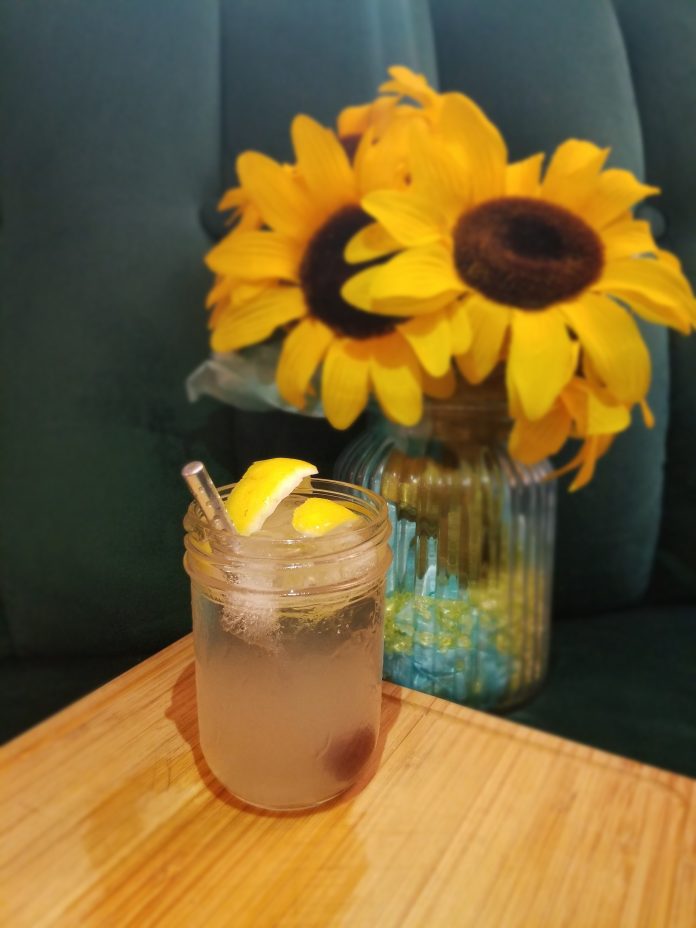
Add some ice to a drinking glass. Combine all ingredients except the tonic water into a shaker with ice and well, shake until combined. Then strain into the drinking glass, add the tonic water in, and serve with a stirring spoon. Garnish however you want. I went with a lemon peel and a liquor-soaked cherry here but these are all completely optional.

Photo: Meera Eragoda / The Peak

Daiquiri

Ending with a new favourite. 

¾ oz simple syrup

2 oz light rum (I used spice rum because that’s all I had. It was delicious. No regrets!)

1 oz lime juice (I also didn’t have any lime so I used lemon but I would try and have the limes next time)

Combine in the shaker with ice. Shake. Strain into martini glass or any other glass. Then kick your feet back and dream that you’re in Cuba — where it was invented.

Hopefully, this will get you started in the world of cocktails. There are millions out there so if you prefer vodka or tequila, or don’t love all these citrusy drinks, there are definitely a ton of options for you. Go forth and shake up a storm.

Dimension 20’s A Crown of Candy shows the sweet and sour sides of nobility

0
Heavy is the head that wears the crown of candy (and heavier is the conflict). Courtesy of Dropout

By: Juztin Bello, Copy Editor

OK, imagine this: Game of Thrones as a Dungeons & Dragons (D&D) campaign, except it’s coated with Candy Land-inspired main characters and a food-based setting. Well, you don’t have to imagine it, because this is an actual thing.

Dimension 20, a D&D-based show, is currently airing its fifth season: A Crown of Candy (ACOC). The story is set in the world of Calorum, and follows House Rocks from the Kingdom of Candia as they deal with the bitter realities of war, politics, and family conflict. 

Led by Dungeon Master (DM) Brennan Lee Mulligan, ACOC follows the simultaneous improv/tabletop role-playing talents of Emily Axford, Ally Beardsley, Brian Murphy, Zac Oyama, Siobhan Thompson, and Lou Wilson. As a cast that I’ve followed since season one and their CollegeHumor days, I knew going into ACOC to expect tasty jokes, the sweetness of jam-packed action, fully fleshed out and meaty stories/characters, and, of course, a delectable amount of strategic combat. 

The season begins with the Saints Day (birthday) of licorice twin princesses Jet and Ruby Rocks, played by Axford and Thompson, respectively. Kept under the watchful eye of their chocolate bunny tutor Chancellor Lapin Cadbury (Oyama) and the right-hand-gummy bear Lord Commander Sir Theobald Gumbar (Murphy), the princesses are introduced to the harsh realities of political struggle while handling the petty hardship of wishing for a royalty-free life. Rounding up the party is the princess’ father/Pop Rocks man King Amethar (Wilson) and peppermint ward Liam Wilhelmina (Beardsley) with his pig companion Peppermint Preston. 

Creating an entire lore based around the conflicts of food illustrates high-level creativity that only a DM like Mulligan could muster. While the player characters (PCs) are quite literally chocolate or candy, their interpersonal relationships, issues, and off-the-cuff thinking make them feel completely organic. With themes such as family, trust, religion, and politics, ACOC sees a multitude of dynamics which act as ingredients for an absolutely mouthwatering season. 

From the princesses refusing their royal responsibilities, the realities of Liam’s presence in the Candian Kingdom as a political prisoner, Lapin’s relationship with the Bulbian church, Theobald’s secrecy and adherence to hierarchy, and Amethar’s insecurity as both an ill-fit king and father, the characters — and as an extension, the cast — do not hold back from delving into the realities each of their characters must confront and overcome. 

As well, what’s stressful about this season is that just like in Game of Thrones, important characters are set to die. With but one healer in the party (Lapin) and a whole lore about the taboo usage of magic, players were told to prepare back-up characters to anticipate full character death at the likelihood of not being able to be revived — something yet to be seen or established on any season of Dimension 20. Is this stressful as a viewer? Yes. Does it make the show that much more intriguing? You better believe it. 

Siobhan Thompson, Lou Wilson, and Zac Oyama in Season 5 Episode 3, “Keep Sharp.” Screenshot courtesy of Dropout

The cast’s chemistry is ever apparent, and their ability to play off of one another drives the story in ways that shocks and entices both viewers and the DM, much to his chagrin. You’ll catch on fast that Mulligan simultaneously loves and loathes the chaos created by the PCs — and the infectious taste of PCs and DM “whomping” (besting) one another with nonchalant delight is ever so sweet to watch.

Viewers are also provided with a helping of incredible visuals, consisting of artwork, set pieces, character minis, comedic object work, and more. With character art provided by artist Samir Barrett and sets/minis created by a team led by art director Rick Perry, the entire story is brought to life before the audience’s eyes. A mixture of incredible acting and the completed settings in narrative and combat episodes is the perfect recipe for visual delight. I have definitely spent moments gripped with utmost anxiety/excitement being able perfectly visualize highly emotive scenes. 

In addition to the phenomenal storytelling, the entirety of Dimension 20 excels in its unwavering ability to represent identity spectrums across the board, without coming across as unnatural or showing a lack of research. With a highly diverse and open-minded cast, Dimension 20 manages to feel like a safe space that encourages all identities to feel simultaneously represented while enthralled in the world of D&D. ACOC includes polyamorous House Jawbreaker (Liam’s family), POC-coded characters such as the entire Rocks family, usage of non-binary pronouns, amongst several other respectful choices. 

Other seasons included NPCs (non-player characters) Ayda Aguefort, a Black half-phoenix who is autistic and non-heterosexual, and Lydia Barkrock, a half-orc wheelchair user. The cast themselves have also well-represented various identities through characters they’ve played. This includes Thompson’s character in Fantasy High, Adaine Abernant, who has several tear-inducing conversations about her anxiety and makes rolls in the first season to see if she can maintain her panic attacks, as well as Beardsley’s character in The Unsleeping City, Pete the Plug, whose identity as a trans man is not pigeonholed as his primary character trait or contextualized as his main story arc. 

While the D&D community has currently been reworking the character creation systems and lore to better recognize and dispel racism, Dimension 20 exemplifies the much needed mindset necessary for steps in the right direction for improved, D&D-based equity. Ultimately, Mulligan and the entire cast do not shy away from making efforts towards better representation or touching on the very real issues such as racism, capitalism, and toxic relationships — something I think is significant for myself and other viewers to see normalized. Don’t forget, however, that this entire cast is made up of great comedians. So while these types of conversations are important and included seamlessly into Mulligan’s narratives with the cast, there are plenty of goofs and bits to be had.

My advice to viewers: trust no one, be prepared to fall in love with a food person, and get ready to eat this show up. 

If you’re interested in watching ACOC, the show premiers every Wednesday at 4 p.m. on the Dimension 20 YouTube channel, but is removed after airing. Following every episode, the cast also does a talk-back to reflect on the respective episode at 7 p.m., known as Dimension 20’s: Adventuring Party. Although other seasons of the show are found in parts on the YouTube channel as well, all full seasons (which include the two “Side Quest” seasons of Escape from the Bloodkeep and Tiny Heist) can be found by subscribing to Dropout — CollegeHumor’s streaming service. Since content is typically uploaded to Dropout first, remain on Dropout, includes several other shows, and is as cheap as $6.56 CAD a month, I would highly recommend simply subscribing to Dropout to support the cast as well as other genius creators. 

Political Corner: Trump’s inaction on the Russian bounties should not be allowed to fall out of the news cycle

0
Russia is alleged to have offered militants bounties to kill coalition troops. Image: via Wikimedia Commons

By: Kelly Grounds, Peak Associate

On June 26, 2020, the New York Times released a report that claimed American intelligence had determined that a Russian military intelligence unit had offered bounties to militants to kill Afghanistan coalition forces. The disturbing part of the report was that it appeared that the United States’ president had been briefed at the beginning of last year, and again in 2020 about the plot. Despite this, he had not taken any actions to stop it, nor to immediately inform American coalition allies. 

Following the release of the report in the New York Times, the Whitehouse denied that the President had ever been briefed on the intelligence because it had never been verified. However, members of the intelligence community said that this was not true and that the intelligence had in fact been included in the daily intelligence briefings that were given to the President. This claim was later corroborated by the Associated Press who confirmed that the President had been briefed in March 2019. President Trump did not follow up on the report.

Even if the initial briefing contained intelligence that may not have been viewed as credible at the time, the same cannot be said about the briefing in 2020. The second briefing was backed up by the discovery of $500,000 USD in a Taliban outpost, an extremely high amount of foreign currency for the group to possess, that confirmed suspicions and led the CIA to believe that the entire plot was credible. In March 2020, approximately one year after the first briefing, the President was briefed again with the update. 

So why was nothing done at any point to stop the Russian plot and protect US and coalition troops? One explanation could be that it is an election year and ending the war in Afghanistan has been a key pillar in the President’s reelection campaign. To tout Afghanistan as a success of his first term, the President needs two things: a complete withdrawal of troops from the country by election day, and a peace deal with the Taliban. Unsurprisingly, the announcement of a plot to pay off Taliban militia to kill US troops would make achieving these goals very difficult and could potentially lead to greater involvement in the conflict.

It could also be that President Trump just wasn’t paying attention to the intelligence. Various personnel within the White House have reported that the President is rarely briefed on intelligence by experts and when he is, the information is not processed. It could also be that the President did not want to harm his relationship with Russia. In May 2020, two months after the second briefing, the President made an appeal to have Russia rejoin the G7 (they were removed from the G8 following the invasion of Crimea in 2014). 

This has the potential to be downplayed by the media as part of the ongoing collusion message that has been present since the beginning of the President’s term, but it shouldn’t be. At its heart, this incident was a major slight against the core of the President’s base, which tends to draw stronger support from veterans. With his inaction, the President is essentially telling his base that they are less important than a yet unknown motivator. This should not be downplayed but instead be given the full attention and scrutiny that it deserves, especially as the US draws nearer to its November election.