Home Blog Page 412

A name change is not enough to hide SFU’s institutional whiteness

0
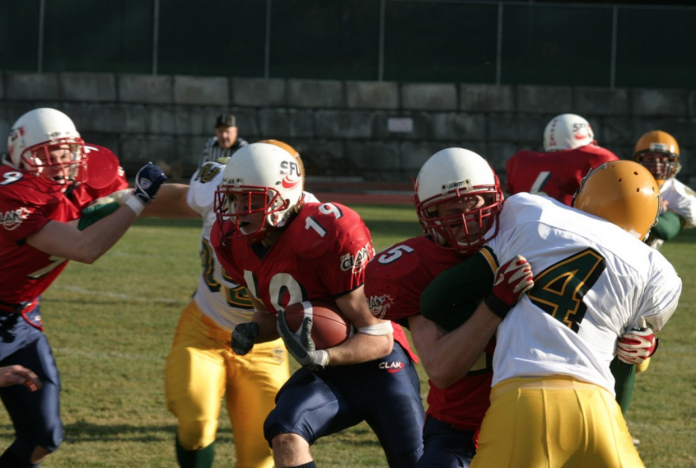
Courtesy of SFU Athletics

by Victor Yin, SFU Student

Former SFU President Andrew Petter released a statement on his decision to change the name of SFU Athletics’ varsity teams after an “an extensive stakeholder engagement process.” Petter’s statement, which does not recognize any Black student organizing, activism, or petitioning, seriously undermines the physical and emotional labour of student activists and disregards Black trauma and oppression.

Black students and Black athletes mobilized and pushed for this name change. Not acknowledging these efforts is an insidious way of disarming and suppressing Black power while also minimizing the impact and importance of student activism. Othniel Spence, a Black student-athlete who fought for the name change, expressed that he was “brought back [into the discussion] by Petter’s lack of acknowledgement for the students that were involved in this name change; especially students of colour that placed themselves in vulnerable positions.” Even from the beginning, radical student activism has played a key role at SFU, and choosing not to acknowledge student organizers, like Spence, downplays the ability of their activism to change systems of oppression.

In addition, although SFU has made strides with Indigenous reconciliation — such as with the construction of the First Peoples’ Gathering House — Petter’s statement appears to completely disregard indigeneity by using the university’s Scottish and colonial heritage in defence of the original name. Marie Haddad, a student who also fought for the name change, voiced that “there was a greater priority to recognize Scottish heritage and hold its legacy at SFU than it was to equally speak on the North American POC/Black history behind ‘The Clan’ name.” Colonization is not an acceptable excuse to keep a sports team name, and certainly goes against the university’s apparent commitment to reconciliation.

This leniency towards whiteness and white privilege in academia is not a new issue. Petter’s response hints at disturbing institutionalized systems of racism and colonialism embedded in the university and within the community. According to the SFU 2019 Diversity Meter, Black-identifying employees, who are underrepresented in faculty, reported lower feelings of  inclusion compared to other racialized groups. This shows that there may be a gap related to diversity and equity perceived by Black-identifying employees working at SFU.

Instead of performative lip service, the university and its leaders need to begin proper reconciliation. As Spence stated, Petter’s response “didn’t acknowledge the trauma and pain this name caused for black student-athletes.” A good way to start doing this would be by recognizing the efforts of Black SFU student organizers and allocating mental health resources specifically for Black, Indigenous, and POC student athletes.

Entertaining that a name change is enough is “specifically harmful and compliant to the racist systems that are embedded in our educational institutions,” as Haddad expressed. More work needs to be done by SFU to recognize institutional structures on inequity, and the student labour done against them. Although changing a name is a good start to making amends, recognizing historical marginalization and the significant efforts of Black student activism would be even better.

SFU students and alumni create program to aid ESL learning

0
PHOTO: Annie Spratt / Unsplash

Written by: Karissa Ketter, News Writer

SFU students and alumni teamed up to create CommuniCreate, a program that supports immigrant and refugee youth aged 10–17 learn English, become involved in the community, and exercise life skills in a safe space under the guidance of SFU student mentors. Their curriculum was ready to launch as the COVID-19 pandemic forced British Columbia’s communities into lockdown. The program was adapted to virtual learning by student leaders and some of the founders of CommuniCreate, Saba Fatemi, Rufiada Kheraj, and Eunbee Baik. 

CommuniCreate’s bi-weekly meetings are now held on Zoom where an equal number of SFU student mentors and newcomer youth interact with each other. These meetings include roleplaying real life scenarios, interactive videos and worksheets, games, and one-on-one connection with a mentor. 

In an email statement given to The Peak, Eunbee Baik, Co-Founder and Program Coordinator, noted the “greatest benefit of this program is having the students work one-on-one with a volunteer.” Saba Fatemi agreed, stating that it “gives them a sense of community amidst [ . . . ] the disconnection of the world right now.” According to Fatemi, persevering through British Columbia’s pandemic restrictions was challenging, but they “couldn’t have done it without [the TD Community Engagement Centre].”

The program was created when Trisha Dulku, the Community Engagement Associate and partner in the CommuniCreate program, noted that “especially in Surrey, there’s a need for more English language learning services and programs that are fun [ . . . ] for youth specifically in that teen age range.” There were students arriving at welcome centres in Surrey, looking for free English learning support, but it was not readily available, according to Fatemi. She told The Peak that her, Kheraj, and Baik “recognized the value of having a free resource led by other people [their] own age.”

Dulku told The Peak that everything “was flipped on its head” and “there were discussions around delaying the launch of the program until it [could] be in person.” She also noted that it was due to the team’s eagerness that the program was able to begin this summer; they found that “every [obstacle] leads you to a new path and new potential.”

CommuniCreate will continue in the fall and welcome a new group of youth. In an email statement to The Peak, Rufiada Kheraj, a Co-Founder and Program Coordinator of CommuniCreate, said “I feel like my experiences with this program has given me the gift of true empathy for English language learners [ . . . ] we all need to make an effort and appreciate people who are learning.” Dulku noted that the program’s goal is to “remove any preconceived barriers or moments of stress that English language learners are often facing.” 

Volunteer applications for SFU student mentors to engage in this opportunity are planned to open soon. For more information on getting involved, students are encouraged to seek out the CommuniCreate website

Increasing tuition does nothing to support students

1
PHOTO: Pxfuel

by Devana Petrovic, Staff Writer

As initially determined at the Board of Governors meeting on March 19, SFU has approved a 2% tuition fee hike (4% for international students, and upwards of 20% for specialized programs) for the 2020–21 Budget and Financial plan. Concerns by students circulated around the decision, and the SFSS even responded in a letter to the Department of Finance opposing the move.

But, these concerns — as prevalent as they are — arose in the spring, before the pandemic. There has been some discussion of the student body going on strike, but so far there has been little organized action surrounding it. With rising concerns over virtual education’s quality, students who are financially struggling are also now expected to jump through hoops just to pay for a less-than-ideal version of their studies. Considering these circumstances, a tuition increase is the last thing students need.

Being able to afford post-secondary education is without a doubt already a huge financial burden for many students. The stress of applying for student loans, scholarships, bursaries, and any other form of financial aid is on its own a headache. Let alone other financial requirements like purchasing textbooks, supplies, adequate technology, and the latest software to go with it. Alongside other financial tolls that students and young people face (e.g. housing and food security), I’m sure most students would agree that being a student is just so darn expensive. Even without the financial and economic insecurities students may be facing due to COVID-19, the continuous tuition increases alone bring on an inequitable studying barrier for lower-income students. 

It’s been clear that in non-pandemic circumstances that the SFU administration has not entirely considered the financial capabilities of their student body. Now that COVID-19 has been added to the mix, students are experiencing additional hardships brought on by circumstances like job insecurity or decreased income. On top of that, online learning for some requires additional costs to properly participate in classes, which can mean investing in a stronger internet connection and an adequate at-home workspace. Ultimately, the administration should consider that such costs would be avoidable if classes were not remote, but unfortunately this is not the case. 

I understand that the continuation of remote learning means that professors and TAs still need to be paid, campuses need to continue to be looked after, and that construction projects still need my tuition money. However, I also understand what it’s like to be an SFU student, who is not receiving the expected level of education that they enrolled in. Specifically, a now lacklustre education that will make me go into debt. Frankly, I am frustrated that in times like these, I feel not only unsupported by SFU, but as if my tuition money is more important than my mental and financial well-being.

Students need SFU to step up and provide more support right now, and a hefty tuition increase completely overlooks the needs of students who have been financially struggling and who are also feeling impacts of the pandemic. That being said, if there are students who choose to go on strike over the tuition hike, to say the least, I would not be surprised at all.

How SFU’s A-listers are managing without the limelight (and potato wedges) during the pandemic

0

By: Emma Jean, Staff Writer

Providing its readers with the latest scoops on SFU’s most notable, The Peak reached out to three different raccoons on the Burnaby campus to get a sense of how they’re coping with being away from their adoring fans on the mountain.

One prominent raccoon, who wished to keep her name private but is famously known on campus as “Tailless Boi,” noted with relief that the insufferable years as an A-lister have finally ceased. 

“So the other night, I go to the AQ garbage bin to grab a bite ’cause, you know, Mama’s gotta eat, but I was worried I’d run into all the students with their stupid cameras trying to pet me for the ‘gram. But once I got there? No one! Not a single person! I still haven’t gotten used to it.” 

She noted that, as a single mother, it’s difficult to deal with always being in the limelight. 

“You know, it’s hard enough to keep a strong face in front of your kids sometimes when people are always in your face yelling, ‘IT’S DAT BOI!’ like I’m some type of animal. Honestly, this whole quarantine thing has been just rejuvenating.” 

That feeling of gratitude, however, was far from universal for other SFU inhabitants. 

Another anonymous raccoon with which I spoke, who I’ll call Lindsay for the sake of this interview, seemed to be having a difficult time adjusting to this newfound freedom. Sporting dark circles under her eyes, brassy bleached highlights and a brutalist, deconstructed take on choppy bangs, Lindsay disclosed that she had recently gotten in trouble with the other raccoons over possession of a dangerous substance: pearls from Bubble World. 

“They keep trying to force us to be the little cutie patooties the students want us to be, but why should they care?” Lindsay began. “What is it to them if the boba pearls could get stuck in my throat? I’m sick of having to be whatever they want me to be. Their precious students aren’t here so I should finally get a chance to eat trash and live fast. They can all BACK OFF.” 

Another anonymous raccoon I’ll call Norma, whose presence at SFU has been a staple for years, also seemed to be struggling despite her brave, camera-ready face. 

When asked if she had any worries about being forgotten by students, she fluffed up her tail and wrapped it around her neck like a feather boa. 

“What, no . . .  Of COURSE not. Sure, it’s been a bit difficult for all of us, hearing silence from the Dining Hall where there used to be cheering mobs at all hours of the day, and we no longer have a constant supply of potato wedges. We’re still big, though. It’s just the campus that got small.

“I do, of course, still get my admirers,” Norma continued. “The construction workers who have come in and out of that shiny new box they’ve been building for generations of raccoons have always been so kind to me and my family. So long as we get love from them, we will get love from the people of Simon Fraser University.” 

I pointed out that the structure, the Student Union Building, was finally completed, and the construction workers would likely appear there no longer. 

“WHAT?!” Norma wailed, dropping the twig she was pretending to smoke. “They’ve been here for five goddamn years and even THEY’RE leaving? No. They can’t! We’re STARS! No one ever leaves a star!” 

Norma then began hissing and foaming at the mouth, so it seemed best to conclude the interviews for the day. 

Be sure to think of your friendly neighbourhood raccoons in isolation this fall. They are certainly thinking of you.

Professor shocked that students do not have the textbook mentioned in the syllabus emailed the night before class

0
Illustration: Maple Sukontasukkul / The Peak

Written by Paige Riding, Humour Editor

As Dr. Galicken’s PSYC 392 course started this week, he was infuriated to see half of the Zoom call participants turn off their cameras and the other half visibly roll their eyes when he asked them to open the course’s textbook.

“Come on, people. Is this really how you want to start the new semester?” Galicken sighed, adjusting the pink cat-ear-endowed gaming headset he had to borrow from his daughter.

“I sent an email regarding all the required materials for this course. It would do you good to check your email once in a while,” he grumbled, flapping his arms out of habit of teaching large crowds in the Images Theatre. This habit inspired his nickname “Chickalicken,” coined by a previous PSYC 100 course during a discussion on short-term memory.

The senior professor’s interpretive dance cut off as a message reflected in his rage-filled eyes.

ya ok but u emailed us the syllabus at like 11pm last night,” a student had typed into the Zoom call’s chat.

Galicken slowly raised his fingers to his temples, taking a moment to collect himself before responding. He was so used to students fearing speaking up in person that he only expected looks of disoriented fear from his lectures. That had all changed with this online stuff and the new chat box option. There was discussion? During his three hour lecture?

“Listen, you had time to make arrangements. School preparation really needs to be your top priority,” he said finally to his students trying to live through a global pandemic.

Despite the entire class being muted, a collective sigh was heard from the 8:30 a.m. class.

I tried to buy it but the bookstore was sold out 🙁“ typed another student, mostly annoyed that this was the course she was stuck with thanks to SFU hating third-years. A late enrolment date stuck her with this professor who wasn’t accommodating at all and has at least 94 Funko Pop figurines visible in the background of his video.

Galicken glanced at the chat and huffed.

“In my old age, I shouldn’t be the one who has to tell you this, but there are these things called ebooks here in the modern age!” Galicken sneered, a wave of nostalgia hitting him from the old days of publicly shaming any student who did dare to ask a question.

Another message popped up in the chat saying, “Bro you made us get this weird exclusive edition with supplementary stuff at the end. Only the physical book has that.”

“Who are you to call me ‘bro?!’ Listen, everyone, I already have my degrees. This is about you. Make all the excuses you want, but at the end of the day, you are the one in charge of your education. You need to work in my course,” said Galicken, cursing under his breath as his iPhone 4 charger got caught in his chair’s wheels.

At this point, 27 students signed off the call and in a bout of self-care, dropped the class immediately. 

With no textbook or positive outlook for the class in sight, Dr. Galicken flapped his arms once again and decided to continue lecturing, only to be stopped by failing to know how to share his screen.

SFU alumnus working on viral-resistant bath products

0
Image Courtesy of Valley Acrylic via Facebook

Written by: Mahdi Dialden, News Writer

SFU Alumnus Ravi Bansal-Beech, the cofounder of Valley Acrylic Bath, has been working on sinks and bathtubs that fight viral transmission. This is made possible by using innovative materials such as acrylic, that provides a coat which prevents the spread of bacteria. When asked about the objective of her company in an interview, Bansal-Beech said she aimed to create “an environmentally-friendly engineering company.” 

Valley Acrylic Bath is a “company started in 2007, that is 100% female owned,” Bansal-Beech claimed. Based in Mission, British Columbia, Bansal-Beech noted all the molding of their products take place in Canada. According to Bansal-Beech, Valley Acrylic Bath “created an oxymoron for bathtubs, because [the bathtubs] save water and energy.” 

The whole industry was in panic mode during the pandemic, which motivated Valley Acrylic Bath’s to refocus their vision. “The scariest thing for our industry was when they noticed that the virus lives on stainless steel [as] most of our hospitals are full of stainless steel,” she explained.

Their research resulted in the use of acrylic. The material is insulated which retains energy, is easy to clean, lightweight, and repairable. It offered the coating that would prevent the spread viruses. “Our plumbing industry is the first defense for healthcare [ . . . ] because without proper plumbing and sanitation we don’t have modern medicine,” Bansal-Beech said. 

As Bansal-Beech explained, “Short term we can use hand sanitizers but I think that’ll become another problem,” In accordance with this, she stated that Valley Acrylic Bath “are creating portable hand-washing stations that can be put anywhere.” She also talked about how she wants her company to simultaneously educate and promote environmental sustainability and proper sanitation for all Canadians. “For me it’s always been important that the business lines up with my values [ . . . ] sustainability, healthy living, and proper sanitation should be for everybody.”

In regards to the plumbing industry, Bansal-Beech said that it wasn’t easy being a women-owned company in a male-dominated field. “[We’re] at the table, but the table was never created for [us].” She concluded by urging youth to use their entrepreneurial skills to promote proper values. 

The one piece of advice she has: “advocacy is one thing, getting shit done is another thing.”

Sounds Like Growth tackles food sovereignty and encourages engagement with land

0
VAF brings new understanding to parks through spoken performances situating histories and imagining new futures. Courtesy of Adriana Contreras Correal

By: Meera Eragoda, Arts & Culture Editor

This year’s Vines Arts Festival took place from August 5 to 15 in various parks across Vancouver. According to the event’s website the festival’s goal is to feature artists who are “working toward land, water, and relational justice.” While the festival of physically-distanced, free, small events has ended, the organizers have made these performances available as soundscapes on the website. Along with these are an interactive map with the Indigenous names of the various parks, and transcriptions of the soundscapes for increased accessibility.

As Strathcona Park is located close to me and I had enjoyed many walks through the Strathcona Community Gardens and into the park during the height of COVID-19 restrictions, I chose the soundscape (spoken performances) titled Sounds Like Growth that intersected with the park. For a fully immersive experience, I decided to listen at the garden (but not the park itself) as I did not want to disturb the people who are currently sheltering in the tent city there. 

I settled myself on a bench where I had previously enjoyed watching northern flickers, robins, and hummingbirds flit around. As I started listening, it became clear that the theme of this soundscape was food sovereignty and I realized I could not have chosen a better location to listen in. The garden was occupied with a couple of people working on their plots, people walking through and admiring the kale, tomatoes, flowers, and other vegetables being grown there. 

The soundscape started out with a variety of bird sounds intertwined with the sounds of human voices and sirens. This faded into the background as Senaqwila Wyss, an Indigenous ethnobotanist and SFU student, explained that Strathcona Park is located near a village site that was known in the Squamish language as Skwácháy̓s. Wyss further explained that some of the park sites in the festival were chosen because they were actual village sites while others (like Strathcona Park) because of their close proximity to a village site.

Skwácháy̓s, I learned, was located near the False Creek mudflat (coastal wetlands) area and were important for the abundance of shellfish they provided otters, people, and other animals in the ecosystem they were a part of. Of course, the False Creek mudflats have now been built over and that biodiversity displaced and polluted as a result of colonialism and capitalism.

According to Wyss, part of the goal of the soundscape is to understand that “even though we see a public space as somewhere for humans to enjoy and be outdoors and hang out, it’s also important to think about the wildlife and the different parts of the ecosystem that today still rely on those parts of the ocean and different public areas or forests that are part of their natural ecosystem as well.”

The next speaker, Jaz Whitford, posed a series of questions for listeners to keep in mind throughout the soundscape. Many of the questions urged listeners to consider their own relationship with colonial food systems and what we could do to engage in a more sustainable way with the land. Whitford then encouraged listeners to journal their thoughts, create artwork, have conversations, and organize around the ideas presented in the soundscape.

Listening to these questions, I thought of a few signs on various plots that ask people not to take any of the plants or food. I understand that the people planting this food put a lot of work into it but I couldn’t help but think that this was a colonialist take on the food they were planting. Instead, could they not ask people to take what they need but leave a little? 

Cease Wyss, Senaqwila’s mother and an ethnobotanist herself, also spoke about how capitalism has corrupted the food system. “As sovereign Indigenous people and people of colour, we have the ability to get up and walk out into the environment and get what we need immediately, but also take care of everything else, our mind, our body, spirit. But with commercialism, capitalism, we’re forced into being a cog, a wheel that doesn’t get fed until [ . . . ] we’ve done all this work [ . . . ] there’s no freedom there.”

What was once simply accessible to anyone who needed it is what has been commodified in a way that creates food insecurity and barriers. In addition, this erosion of the food system is tied to the erosion of the land.

Eddie Garner spoke about the importance of preserving salmon stocks which have been severely impacted by the mining and fossil fuel industry. Alisha Lettman provided knowledge about the importance of learning about and staying connected to ancestral food systems. 

Susan Yáñez’ performance included the powerful lines, “for thousands of years, our way of eating has been organic. And now we are being charged three, four times the effort. Because to eat healthy, you need to be wealthy.” This spoke to how much work needs to be done toward food sovereignty, and who currently benefits from this capitalist system.

Leona Brown spoke about preserving local food systems and starting gardens and supporting community gardens within the city.

Though this soundscape contained many important lessons, my main takeaways were the importance of learning about Indigenous food systems as well as food systems from my own culture, and cultivating a garden on my own in order to connect more to and take care of the land and soil in a small way. 

Other soundscapes available as part of this festival cover topics such as Black liberation, Indigenous resistance and history, bodies and the land, and more.

All soundscapes are available on vinesartfestival.com.

Need to Know, Need to Go: September 7-13

0
Illustration of a blue calendar, with "Need to Know, Need to Go" written on top
Arts & Culture events to catch around the city. Image courtesy of Brianna Quan

By: Meera Eragoda, Arts & Culture Editor

Art Since 1970 | September 5–October 3 | FREE (donations accepted) | Deer Lake Art Gallery @ 6584 Deer Lake Avenue

Deer Lake Art Gallery is reopening to the public and putting on an exhibition as part of their 50th anniversary to understand what Burnaby — which has a quickly growing art scene — looks like through the eyes of artists. The past, present, and future will all be explored through the artwork on display.

 Learning to Identify Mushrooms | September 10 | 6:00 p.m. to 7:30 p.m. | $10-$20 | Online

Stanley Park Ecology Society is hosting this digital event with Wiloughby Arevalo to learn all about mushrooms and how to identify them without using a microscope or loupe. This workshop will help differentiate between mushrooms that can be foraged and those which should be left alone. Attendees will also be given additional resources.

 Word Vancouver 2020 | pre-events September 10–11 | FREE | Online

Word Vancouver is holding an online writers festival, and while the official festival will be taking place from September 19–27, there are three pre-events occurring on September 10–11:

At the Crossroads (about race, history, and diaspora), Worlds of Tomorrow (exploring how greed affects families and the environment), and Finding Home (about identity). All of these events feature fiction authors and can be found at wordvancouver.ca.

 F-O-R-M Festival | September 12–19 | Pay What You Can min. $5 (suggested price $20) | Online

The Festival of Recorded Movement (FORM) was formed in 2015 to create films that explore bodies in motion. This year’s film festival will take place entirely digitally and will showcase dancers, athletes, artists, and performers who explore a variety of themes using the body as a focal point. A full list of the films is available at f-o-r-m.ca.


Chadwick Boseman’s legacy and what his death shows about medical racism and ableism

0
Boseman's legacy will live on in the roles he embodied and continue to inspire future generations. Courtesy of @chadwickboseman via Instagram

By: Harvin Bhathal, Features Editor

In an interview with the Huffington Post in 2017, Chadwick Boseman was asked if he bulked up, slimmed down, and bulked up again having finished on Captain America: Civil War, Marshall, and then Black Panther. He nodded his head, looking visibly exhausted. The interviewer said, “You’ve been through the wringer.”

Boseman responded, “Oh you don’t even know [laughs]. You have no idea. One day I’ll live to tell the story.”

On August 28, 2020, Chadwick Boseman passed away from Stage IV colon cancer before he could tell his story. But a part of his story exists in the roles he played, his contribution to Black culture, and the lives he touched along the way.

From playing Jackie Robinson in 42, James Brown in Get on Up, Thurgood Marshall in Marshall, T’Challa (Black Panther) in the Marvel Cinematic Universe, and Stormin’ Norm in Da 5 Bloods, Boseman’s story lies in representation — of portraying and honouring Black historical figures, and in showing Black children today that they too can be heroes.

Boseman was something of a Renaissance man having been an American actor, director, playwright, teacher, and producer. His legacy is one that is being mourned worldwide, including in Vancouver.

Although his most notable contributions were made as an actor, he had a background in directing from his education at Howard University, earning a Bachelor of Fine Arts degree in Directing. It can be surmised that this education allowed him to completely immerse himself into these roles he played, knowing how it would come across on the film screen and be processed by audiences. 

His identification with characters such as Robinson, Brown, Marshall, and Stormin’ Norm (fictional) not only brought life to their actions and experiences but their essence, what made them such luminaries in the first place.

From situating himself in 1940s/50s America as the first Black baseball player to play in Major League Baseball, embodying one of the greatest Black artists to live, bringing virtuosity to his role as a civil rights attorney, and tributing the lives of the forgotten heroes from the Vietnam War — what Boseman brought to each portrayal is understanding the centrality of Black lives in America. 

It’s why his role as Black Panther was so important.

Heroes represent the best of humanity through intelligence, strength, and compassion, and his role as Black Panther was just that. The Black Panther character has been in Marvel comics since 1966, and has been one of the few Black heroes that Black children have looked up to since. Those children from decades ago never thought that they would see that character come to life on the film screen, and Boseman was able to give them the feeling of being represented in superhero cinema for the first time.

Black children today also look up to Boseman’s Black Panther with admiration and as a source of inspiration. Billy Dee Williams, a Black actor and trailblazer, said on Twitter, “He taught an entire generation of children that no matter their background, to be the hero of their own story. He taught an entire generation of young white children that their hero’s [sic] don’t have to look like them.”

He did so staying true to himself and his character. When Marvel raised concerns about whether an African accent would be too much for American audiences, Boseman was adamant about keeping it.

“Colonialism in Africa would have it that, in order to be a ruler, his education comes from Europe,” said Boseman. “I wanted to be completely sure that we didn’t convey that idea, because that would be counter to everything that Wakanda is about. It’s supposed to be the most technologically advanced nation on the planet. If it’s supposed to not have been conquered — which means that advancement has happened without colonialism tainting it, poisoning the well of it, without stopping it or disrupting it — then there’s no way he would speak with a European accent.”

In retrospect, each role Boseman took on is especially important in light of the finite amount of time he had left. That Boseman’s final films are films with lasting impacts is a true testament to his dedication to embodying Black histories and Black futures. 

While many have praised Boseman, posthumously, for his bravery, his story cannot be discussed without mentioning the disparities in healthcare for Black men and women facing colon cancer. There is a lack of race-based data in Canada regarding colon cancer for Black people but it is the second most common cancer amongst Canadians. 1 in 14 men and 1 in 18 women will be diagnosed with colon cancer in their lifetime. 

In the United States, the rates of colon cancer among Black people are the highest of any racial group with incidence rates being 24% higher in Black men and 19% higher in Black women.

Boseman kept his cancer hidden from the public for four years which in today’s day and age, is almost impossible. It’s a testament to the people in his life, and the respect they have for him. But Boseman making the decision to keep his cancer hidden speaks to our culture of ableism.

Earlier this year, he made an IGTV video about Operation 42, an initiative aimed to help Black communities affected by COVID-19 through providing personal protective equipment (PPE). In the video, he discussed the disproportionate rates of COVID-19 in Black and Brown communities, and a $4.2 million donation from Thomas Tull, producer of 42

Instead of focusing on Boseman highlighting the inequities in access to health care, people focused on his appearance. They made obscene jokes about his weight loss, causing him to hide the video from his main feed, delete several photos, and turn off comments.

If his weight loss caused severe invasions of his privacy, imagine if the public, paparazzi, and media knew about his illness. If he had made it public that he had cancer, it’s likely that Hollywood executives wouldn’t have treated him the same. Illness is seen as a flaw and it makes people uncomfortable

Given that those with disabilities are more likely to face hiring and workplace discrimination, there’s an argument to be made disclosure would have impacted the roles Boseman received, and hindered his ability to be a public figure without having his health be a topic of public discussion. 

What Boseman did in these four years is nothing but admirable, and that is an understatement. However, his death has people making statements that perpetuate the belief that having an illness is no excuse for not trying to work hard. Comparing Boseman’s  story to that of all people with disabilities reinforces the reasons we can only assume for now that he kept having cancer hidden. 

People with disabilities shouldn’t have to suffer in silence to be considered strong. If Boseman was so affected by his illness that he couldn’t film anymore, it doesn’t mean he wouldn’t have been strong. Illness comes in all shapes and forms, and each person who has an illness is as strong as the next. 

Instead of using Boseman’s death to perpetuate ableism, we can honour him by working towards a world where nobody needs to hide their illness for fear of being underestimated for it. 

Boseman was a hero for his work as an actor and a hero for the lives he touched along the way.

Rest in power Chadwick Boseman.

 

SFU’s W.A.C. Bennett Library alters services in response to COVID-19 restrictions

0
PHOTO: Monjur Hasan / Unsplash

Written by: Karissa Ketter, News Writer

The SFU library has adapted to remote and limited in-person services to comply with safety recommendations. The Peak received a joint email statement on the library’s fall services from Karen Munro, Associate Dean of Libraries, Learning & Research Services, and Chloe Riley, Library Communications Officer. 

There is an extensive digital collection accessible through the library’s website, which includes “articles, ebooks, and databases.” Students can also request virtual scans for a “digital delivery” of scanned print book chapters. For those who are seeking in-person guidance, they can access AskAway, the “online chat service that connects to live research advising seven days a week during the academic term,” said Munro. Further, students will be able to email a liaison librarian, a specialized university department official, to set up an appointment for assistance with research.

Students will also be able to request paper books from the library with a contactless pick-up routine that will not have students entering the building. According to Munro, “Staff will be on hand to assist you and provide instructions on how to safely collect your hold.” 

SFU students, faculty, and staff can download the W.A.C. Bennett Library lab’s computer software to their personal computers. The software grants students access to the lab computer’s technology, files, and apps from home. 

The Student Learning Commons is offering remote workshops and online consultation sessions, such as the “Getting Ready for Academic Success program.” This week-long program offers undergraduates the opportunity to develop time management skills, practice writing university-level research papers, and connect with a panel of SFU professors. The Research Commons, which aims to aid graduate students, also offers support for citations and writing through the Research Commons website. 

The library is also considering offering “some study and computing space to SFU students on the third floor of Bennett Library, for limited hours, during fall semester.” While this would not include full access to library books or other areas of the building, it would provide students a “safe place to study and use computers and printers.” Regarding COVID-19 protocols, Munro noted that the library “[anticipates] that SFU staff would be on hand to remind students about the need for physical distancing, and cleaning supplies would be provided for any shared equipment [ . . . ] SFU [recommends] everyone to wear masks in public indoor areas.”

While unsure if it is feasible to open the library during the pandemic’s restrictions, Munro stated that “the library’s buildings may be closed, [but the] staff are still here to help you start the year.” 

For up to date information on the library’s available services, students can refer to the library’s website