Home Blog Page 4

Political Corner: Prime Minister Mark Carney is a climate coward

0
Illustration of Mark Carney sitting on a lawn chair drinking a beer while beside him a pipeline spills out money and buildings are burning in the background
ILLUSTRATION: Cliff Ebora / The Peak

By: Corbett Gildersleve, Opinions Editor

On Canada Day, Prime Minister Mark Carney released a 17 minute video talking about Canada’s energy future. In it, he discussed how we are in a time of disruption, traditional shipping routes and trade partners have changed, climate change is worsening, and everything is less affordable. His solution is to massively expand fossil fuel exports to reduce other countries’ reliance on shipping through the Strait of Hormuz. Additionally, on July 3, Carney and Alberta Premier Daniel Smith announced the route for their oil pipeline agreement. The Peak has already written on how this agreement will set back Canada’s climate goals by 10 years. Now in his Canada Day video he confirms that Canada won’t meet its targets. It is unacceptable that Carney’s solution is to sell out our shared climate in favour of financial profit.

His goal for domestic energy is to expand electricity infrastructure, nuclear, solar, wind, hydro, and gas power. On the surface it sounds nice, but we aren’t exporting green power or products to Europe or Asia, we’re selling oil and gas. Canada is investing in exporting dirty products to other countries to burn while we make money off of high oil prices from the US and Israel attacking Iran and closing off the Strait of Hormuz. “We don’t control the price of oil,” but we can sure as hell profit off it. 

Carney says that “our independence, sustainability, and prosperity will depend crucially on our ability to supply and control our energy” and “when we control our own energy, we control our future.” So, are we going to nationalize these resources like Norway did in 1963, or take over the fossil fuel companies and infrastructure? And, if we do, will history repeat itself with forced resettling of Indigenous Peoples like what Canada and Norway did? Who is this “we” that he talks about? According to a Policy Options 2023 article, “14 prominent shareholders collectively control significant portions of Imperial Oil, Cenovus Energy, Canadian Natural Resources, and Suncor. More striking is that over 70% of these major shareholders are foreign entities.” Canada doesn’t actually control its energy. 

Just because you have a resource someone wants, doesn’t mean that you have to take it to market, especially when that resource is bad for the environment we all share. It’s much better if it was left in the ground in the first place, that way there’s no environmental costs to extract, ship, process, ship again, and later burn that fuel. 

The world has had multiple oil shocks going back to 1973, however we have good green power alternatives, but Carney barely mentions that. Instead he focuses mostly on how important it is to get Alberta’s oil and gas to BC for exporting to Asia and Europe. The video displays five fossil fuel projects in BC that range from being planned to operating, four of which are liquified natural gas (LNG) projects. These include the LNG Canada phase 1 and 2, Woodfibre LNG, and Cedar LNG

One idea we share is that for us to be secure, sustainable, and have affordable living costs we need to increase the amount of electricity we produce and what uses it. Carney’s idea is that as the amount of total electricity grows, it becomes cheaper for households. But, in a capitalist economy with private energy providers like ATCO Group in Alberta and Hydro One in Ontario, they still need to be profitable. Prices can’t go too low. 

What I noticed most from this video is the complete lack of green power projects that he said are needed

What I noticed most from this video is the complete lack of green power projects that he said are needed. The University of Alberta mapped renewable energy projects up to 2024 and showed that many provinces were not utilizing their solar power potential. Every area of those provinces could host solar farms that produce at least 1 MW of electricity each. Canada has a lot of space, and with support from First Nations and other local governments across the country, we can meet our needs without needing to further pollute the environment. 

Concerning Canada’s climate targets Carney says “we can’t afford to restrain the growth of an important part of our energy mix, oil and gas, to meet a short term goal.” What bullshit! Canada meeting its climate targets is not a short-term goal as the climate crisis is not a short-term problem! He talks about how the previous Liberal government’s plan was used by others to pull this country apart. However former prime minister Justin Trudeau bought an oil pipeline for Alberta helping the province sell more oil, yet the United Conservative Party of Alberta and separatists still went forward with their division

This video’s message was that you have to accept Alberta’s oil and gas dependence under the guise of unity. Sorry, but no we don’t. I grew up in Alberta and even worked in the oil and gas sector for four years. I’ve seen first hand how dirty and wasteful this industry can be. How about we invest in and develop different green tech that works even better in cold climates? Or more efficient on-shore and off-shore wind farms? Or, tidal energy generation, that’s safer for the local habitat, and sell it to all 213 countries that have coast lines? Renewable energy across the world has grown significantly recently, potentially accounting for 50% of world energy demand by 2030 according to an International Energy Agency report in 2024. No, this is just Carney being a coward on climate.

What Grinds Our Gears: The intersection of Arts and East Campus Road

0
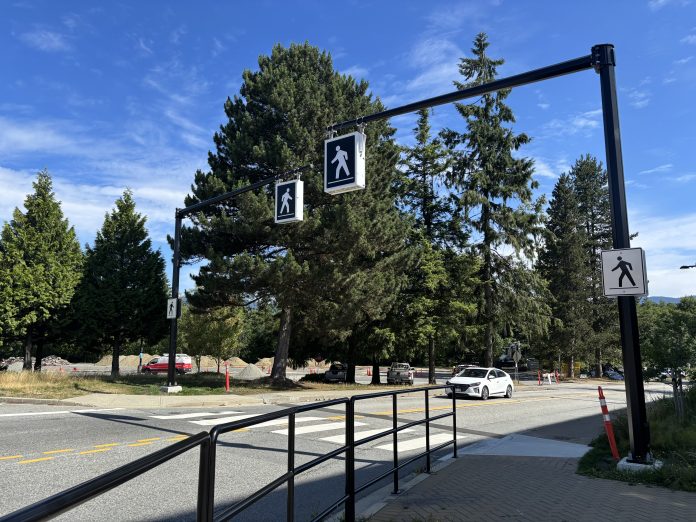
Picture of the new pedestrian crosswalk before the SFU bus loop near Cornerstone
PHOTO: Sasha Rubick / The Peak

By: Sasha Rubick, Fact Checker

Imagine, if you will, a perfectly normal intersection at SFU. There are cheerful pedestrians walking to UniverCity, Blusson, or the SFU Exchange. If you want to take the fastest-possible route to UniverCity, you can take one of the crosswalks and then go diagonally for a few meters. That saves you about 15 seconds of the invaluable time you have left on this mortal coil, neat!

Well now, the crosswalks at the intersection of Arts and East Campus Road have been redrawn. But pedestrians will do as pedestrians do, from jumping the turnstiles in NYC to jaywalking in front of the R5 at SFU. The most recent time I crossed the intersection, the sea of jaywalkers was denser than the Great Nile Migration. The pedestrian consensus is in: screw your guardrails and some person’s plants, people are taking the short way. 

The problem is when car-centric urban planning doesn’t take pedestrians into account it sometimes leads to dangerous ends with more pedestrian accidents. Of course, in response barriers were installed along with a mocking, god-awful pedestrian-symbol sign over the new crosswalk. The Pythagorean theorem all taught us that it takes longer to cross when there are no diagonals. 

A new paint job isn’t going to stop a desire path from forming via natural traffic. It’s poor design that forces people to choose between convenience and safety, and it’s sad to see at our campus.

New laws enshrine latest sexual violence protections into criminal code

0
Woman activist holding a sign, covered in paint by other women who've experienced violence at the hands of male partners at the Vancouver International Women's Day March
PHOTO: Kelly Lozinski / Rosalind Project

By: Lucaiah Smith-Miodownik, News Writer

Content warning: mentions of sexual violence, femicide, and child sexual abuse.

On June 19, the Department of Justice announced “one of the most consequential updates to Canada’s Criminal Code in generations to better protect victims and survivors.” Bill C-16, also referred to as the Protecting Victims Act, was codified into law and aims to strengthen protections for survivors of sexual and gender-based violence. This comes in addition to bills C-14 (Bail and Sentencing Reform Act) and C-225 (Bailey’s Law), passed on June 15 and 17 respectively. The trio of laws “will help address repeat offending, better protect victims, and put public safety first,” commented Kelowna mayor Tom Dyas in a national press release

Most notably, Bill C-16 classifies femicide, often understood as “the killings of women or girls because of their sex or gender,” as first-degree murder. Canadian law defines first-degree murder as “planned and deliberate,” and automatically carries a “life sentence with no parole eligibility for 25 years.” Second-degree murder is deemed deliberate, but unplanned, while homicide denotes a killing that was not intentional, though may include negligence or intent to harm. Certain categories of murder, such as those involving kidnapping and hijacking, are automatically deemed first-degree murder. 

The Protecting Victims Act defines femicide as murder “against an intimate partner in the context of a pattern of coercive or controlling conduct,” in the context of sexual violence or human trafficking, or “motivated by hate.” 

The Canadian Femicide Observatory for Justice and Accountability notes that femicide is most commonly committed by a current or former intimate partner, with the second highest perpetrator being family members. According to their #CallItFemicide report, 187 women and girls were killed by femicide in Canada in 2024, with 49.5% of the perpetrators being current or former intimate partners, and 28% a family member. Racialized and Indigenous women and girls also face disproportionately higher rates of femicide. Indigenous women are six times more likely to be murdered than any other demographic in Canada. As stated by the Canadian Museum for Human Rights, “These statistics do not give a name or a face to these daughters, granddaughters, sisters, aunts, mothers, grandmothers and friends – human beings – who have experienced this ultimate victimization of ongoing colonialism.”

Bill C-16 expands the definitions of three existing sexual offences pertaining to sexual touching and exploitation “to include inviting, counselling, or inciting the victim to expose their own sexual organs.” The act also seeks to protect children by reinstating mandatory minimum sentencing for child sexual offenses, among other crimes. At the same time, it creates “a new offence that prohibits threatening to distribute child sexual abuse and exploitation material,” while also expanding the definion of current child luring and sexual offenses, to include extortion via telecommunications for child sexual exploitation. 

“This is a major step in prioritizing the rights and safety of Canadian children,” Lianna McDonald, executive director at the Canadian Centre for Child Protection commented in the press release. “The risks of online sexual violence against children continue to rise in frequency and intensity and we need legislation now more than ever to help protect our most vulnerable population.”

Additional amendments to the criminal code aim to combat the non-consensual distribution of AI deepfakes by redefining “intimate image.” The definition will now include visual representations “made by electronic or mechanical means, that shows an identifiable person who is depicted as nude, as exposing their sexual organs, or as engaged in explicit sexual activity, if the depiction is likely to be mistaken for a visual recording of that person.”

The Peak corresponded with Kelly Lozinski, co-director of the Rosalind Project, for more information on the effects of the bill.

The organization works to improve “the health, safety, and wellness of underrepresented women and individuals facing sex and gender-based oppression” by creating health literacy resources, and advocating for policy reform. The project owes its name to the late Rosalind Franklin. Franklin contributed significantly to the discovery of the structure of DNA, though her work was “not fully appreciated during her lifetime” and men “took credit for her discoveries.” The project aims to “liberate women from systemic exclusion and constraints and to empower their mental, physical, reproductive, and community health through self-determination.”

“Bill C-16’s greatest win is its recognition and definition of terms such as femicide, coercion, counselling, and harassment, which disproportionately affect vulnerable populations at the intersection of sex, disability, and age.” 

— Kelly Lozinski, co-director, Rosalind Project

“We cannot confront violence that we refuse to name. Naming these acts is necessary toward recognizing them, condemning them, and preventing them,” Lozinski said. “Bill C-16’s greatest win is its recognition and definition of terms such as, coercion, counselling, and harassment, which disproportionately affect vulnerable populations at the intersection of sex, disability, and age.”

For Lozinski, the new acts “represent meaningful progress; however, these measures are ultimately a delayed response to violence rooted in millennia of social and cultural norms.

“The effectiveness of any law depends not only on its existence, but also on public understanding, cultural attitude, and consistent condemnation,” she added. “The legal salinity within Canada also depends on its medical and emergency infrastructure in order to support victims in accessing justice the law is meant to maintain. Even when aware of their legal rights, women still underreport sexual violence because the social, economic, and personal consequences of reporting often outweigh the perceived likelihood of justice. Moreover, among the few sexual offence convictions, many offenders do not serve their full sentence, undermining public confidence in the legal system’s response to sexual violence.

“Lasting change must begin with society’s living understanding of violence itself. Sexual violence should be regarded with the same unequivocal moral condemnation reserved for other grave crimes, including murder and aggravated assault,” Lozinski noted.

SFU students can access Sexual Violence Support & Prevention Office, which offers a 24/7 support helpline, virtual and in-person appointments with case managers for accessing support, and resources on supporting survivors.


Photo campaign honours substance-use disorder victims

0
A photo of a Naloxone kit
PHOTO: Pharmacy Images / Unsplash

By: Maya Barillas Mohan, Staff Writer

Established by the International Network of People Who Use Drugs, International Drug Users Remembrance Day is held annually on July 21, to “remember the people whose lives were unjustly cut short due to the criminalization and stigmatization of people who use drugs.” The day also reflects on the humanity of people who use substances. In 2021, the network made a Facebook post urging those with loved ones whose lives were harmed by substance use disorder to share a photo tribute. The hashtag is five years old now, and not many posts remain, but those that do taught me something valuable. 

I noticed a theme of an unshakeable “everyday” feeling in each photograph. The pictures capture these loved ones in their most natural state; one line cook looks as though he were photographed in the middle of a sentence, a light smile directed at the person responsible for the image. Comments on his memorial post grieve competitive industries and trades as sites of intense stress, noting that in hospitality or nightlife, there is rampant exposure to substances. 

Another entry is a black and white image of a law and international development student who passed away at the age of 24. The photo is bright and smooth, and the yellow text overlay “daughter, friend” is prominent. The overdose crisis impacts not just those with substance use disorder, but the ones around them too. Victims of this crisis cannot be distilled into numbers; they should be considered as people first. A variety of occupations and interests span the infographic to furnish the truth that addiction doesn’t look one way. Even though stigma is disassembling itself through advocacy groups and heightened visibility, it obviously still remains, as evidenced by the recent shut down on drug decriminalization in BC.  

Current drug policies put the emphasis of punishment on people who use substances. Overdose prevention sites are closing, and recriminalization will only hurt those struggling even more. These issues are persistent. Arts and photography are useful supplements for activism against these policies because they humanize people. Vulnerable art and writing, such as survivors’ memoirs or newspaper articles serve the dual function of reflection and education. Without giving space to survivors, either of loved ones or of addiction itself, we lose access to an array of perspectives. Art gives proof of experience and detaches all of us from a view that those with substance use disorder are just numbers to be reduced, and their faces and lived experiences to be neglected.

This campaign remembers and memorializes people using photos of their lives, directing them away from the narrow view of stereotypes and stigmatization.

This makes me reflect on the verbs we use for photography, especially “captured,” or “taken.” For many, these candid images are the lone mementos of entire lives cut short. A photo takes a moment and saves it — but we also tend to describe someone’s life as taken by a particular drug. I think the word is used to change the longevity of a single instance. It seems to me that this campaign, even though it has aged half a decade, remembers and memorialize people using photos of their lives, directing them away from the narrow view of stereotypes and stigmatization. Such media campaigns are valuable because they show us how awareness and care are ongoing resources, and also build coalitions between those with substance use disorder and allies — I think similar campaigns de-stigmatizing substance use are long overdue, and we definitely need more of them.

Art is a path towards healing

0
A still from the movie of Hache drawing one of his geometric shapes
IMAGE: Courtesy of Beechwood Productions

By: Marie Jen Galilo, Staff Writer

Content warning: mention of suicide. 

Art is more than aesthetics, talent, and skill — it’s a pathway towards peace and healing. The Artistic Accountant directed by Dom Fegan is a short documentary featuring accountant and sacred geometry artist, Bert J. Haché. In 12 minutes, this film explores how art helps people find a sense of calm amidst life’s hardships. 

Standing outside in the winter cold wearing a brown wool coat, trapper hat, and shades, Haché happily welcomes viewers to the accounting firm he works at. Haché takes viewers on a trip down memory lane to tell the story of how he simultaneously became an accountant and an artist. 

Haché’s interest in numbers began when he was about four to five years old. After working in an income tax firm, he worked his way up to a management position within just six months. For Haché, number manipulation is like a puzzle, and he enjoys the process of solving them. Haché lives with obsessive-compulsive disorder (OCD), which influences his drive for precision and accuracy, but he views OCD as an “asset” that makes his sacred geometry artwork possible. 

The scene transitions from Haché at his accounting desk to him drawing evenly-spaced geometric shapes. According to EBSCO, “Sacred geometry is the study of geometric forms and concepts that hold spiritual and symbolic significance across various cultures and historical periods.” The camera pans out to reveal intricate shapes formed by the overlapping boundaries of layered circles. The foundation for Haché’s drawings is the “flower of life,” which, according to the film, is “one of the basic shapes of sacred geometry consisting of equally spaced overlapping circles that represent creation and unity.” 

We then return to Haché’s office, where he shares the heartbreaking story of losing his brother and the grief that followed. The subsequent scene in which he stands against a wall enwrapped in the projected images of his artwork visually depicts how his art is a safe space for his mind, sheltering him from life’s hardships. Haché then fades away, but his art remains, as if he became one with his drawings. Sacred geometry requires precision, and precision requires focus. When Haché draws, his focus becomes an anchor that grounds him in the present.

Only by learning to embrace our differences, which we often perceive as flaws, can we truly live in the present.

Haché reminds us that perfection is an unattainable standard, and only by learning to embrace our differences, which we often perceive as flaws, can we truly live in the present. Near the film’s end, Haché stands in a projected flower of life, showing how the process of creating art is like a blooming flower that stretches its petals outwards to unite us all — the artist, the art, the natural world, and the viewer.

I believe that every past experience you had changes you in some way, no matter how small that change may be, and this film was no different. This documentary was my door into the world of sacred geometry. As a perfectionist, it was comforting to hear Haché — who’s a perfectionist himself — say that we must learn to accept our imperfections in order to fully experience the limited time we were given to live out on this Earth, because life itself is imperfect, but still meaningful. I recommend this film to anyone who’s looking for a short yet meaningful watch, and to those who are looking to understand the connection between art, grief, and health through mundane lived experiences. 

The Artistic Accountant is available to be streamed free of charge on CBC Gem.

Restoring, not changemaking: highlights from Indigenous Changemakers

0
A collage of the portraits of Rebecca Baker-Grenier, Julian Brave NoiseCat, and Janna Wale
PHOTOS: Courtesy of @rebecca.baker.g / Instagram, Emily Kassie (Julian Brave Noisecat), and Janna Wale

By: Jonah Lazar, Staff Writer

Indigenous Changemakers was a Zoom webinar hosted by the West Vancouver Memorial Library on July 8. This event brought into dialogue three notable Indigenous community members in the arts industry. One was Rebecca Baker-Grenier of the Kwakiuł, Dzawada̱ʼenux̱w, and Sḵwx̱wú7mesh nations, a fashion designer featured in New York Fashion Week and Vogue. Also taking part in this conversation was Julian Brave NoiseCat, a champion Powwow dancer, author, and the first ever Academy Award-nominated Indigenous filmmaker from Turtle Island (North America). Rounding out the cast of this talk was Janna Wale, a Gitxsan and Cree-Métis climate change activist working with the Pacific Institute for Climate Solutions, along with Kayla Lar-Son, who is a Métis UBC librarian, and the webinar moderator.

The webinar began with Chief Dr. Janice George, a hereditary Sḵwx̱wú7mesh Chief, who welcomed us to the webinar, and briefly introduced the speakers. After a round of introductions, the speakers pondered: “What is an Indigenous changemaker?” Baker-Grenier responded by saying that going into anything with the idea of being a changemaker in the industry is an impure approach, and that her purpose is one of responsibility in strengthening and revitalizing her culture. This was echoed by Wale, who views changemaking as honouring the responsibilities to her ancestors and the land. NoiseCat said Indigenous people have been so underrepresented in recent times in comparison to their vibrant cultural fabric of precolonialism, remarking, “So much of what I see in all sorts of different Indigenous artists, activists, and storytellers is not changemaking, but restoration.” 

These speakers continued on to discuss how storytelling is a vital aspect of their respective disciplines, discussing how NoiseCat views himself as a restorer of oral and narrative traditions of his people. Wale has used storytelling as a foundational tool to communicate the effects of climate change on a more personal level, rather than relying on data and statistics, which can create accessibility challenges for some people. As an example, she told us everyone in her community has stories about the impacts of climate change, affecting their ability to interact with the land and conduct their cultural practices. “That is where I see the most change happening, when people use stories to illustrate how we’re all experiencing this larger thing,” she concluded. 

Wale’s reflection reminds me of the many efforts by Indigenous artists across Turtle Island to shed light on the climate crisis and its impacts — from the grassroots efforts of photographers and storytellers from the Nunatsiavut Nation documenting the everyday impacts of climate change on their community, to arts exhibitions that display the changes in lives of Indigenous communities living near the Pacific Ocean. Indigenous musicians have also led the way in efforts towards language and cultural revitalization.

Whether it’s someone receiving an award, presenting their work on the international stage, or graduating high school, every step in our journey is remarkable.”

— Rebecca Baker-Grenier, fashion designer

A thoughtful concluding remark that stuck with me after the webinar came from Baker-Grenier; “No matter what it is they’re doing, to see all Indigenous people succeed and push through is remarkable because of what we carry. Whether it’s someone receiving an award, presenting their work on the international stage, or graduating high school, every step in our journey is remarkable.” 

Video game soundtracks that capture the soul of a game

0
A photo of a man playing video games on a set of computers
PHOTO: Fidan Mammadli / Pexels

By: Nejdana Houshyar, Peak Associate

Soundtracks can completely shape the experience of playing a video game. Whether that be an intense, drum-heavy score during a fight, or a melancholic piano ballad during a character’s death, music is one of the key things that affects our moods and emotions. It allows the player to immerse themselves in these fantastical worlds. This playlist consists of three songs, each varying in genres, that capture the essence of their respective games.

Promise (Reprise) by Akira Yamaoka

This bleak, melancholic, and mysterious track highlights the best part of Silent Hill 2: its atmosphere. As a psychological horror game, Silent Hill 2 aims to scare and penetrate the player’s mind, while the song “Promise (Reprise)” creates a suffocating feeling with each strike of the piano. As the main instrument, the piano drives the score’s emotional core, and establishes the game’s themes of melancholy, grief, and trauma. Alongside it, an obscure and haunting buzz haunts over the track — reminiscent of white noise — that elicits unease in the player and listener. When paired with the creatures, the abandoned buildings, and the grey, misty world of Silent Hill 2, “Promise (Reprise)” serves as an eerie reminder that the player is never safe.

I Really Want to Stay at Your House by Rosa Walton/Hallie Coggins 

A track that feels transported from the future, “I Really Want to Stay at Your House,” elevates the dystopian universe of Cyberpunk 2077. In the game’s vibrant and flashy world, human relationships are largely de-emphasized (compared to other open world games). Walton uses this premise in her track, and by adopting the alter ego “Hallie Coggins,” she uses her perspective of living in that world, creating a heart-wrenching song about abandonment and desire. Lyrics like, “But now you’re gone and leaving nothing but a sign / Another evening, I’ll be sitting reading in-between your lines / Because I miss you all the time,” showcase heartbreak and emotional desertion. The use of synths serves as the primary focus for the song. The instrumental synth not only masks the depressing lyrics but also sets a futuristic tone, and the vocal synth works excellently in the song to subtly represent the game’s usage of human augmentation with cyberware. Listening to this song while driving around the colourful yet chaotic world of Cyberpunk 2077 definitely immerses the player there.

Simple And Clean by Hikaru Utada 

This song is a burst of energy with its unique electronic production, most notably using sparkle effects in the chorus drops, while upbeat drums and guitar create a dance-pop sound. Although the Kingdom Hearts franchise uses multiple versions of the track throughout the games, my favourite is the original. The synth, sparkle effects, and echoing vocals give it an ethereal essence, and collectively produce a feeling of nostalgia. Throughout the fantastical setting of Kingdom Hearts, the player travels through different Disney worlds, defeating bosses, solving puzzles, and upgrading weapons. “Simple and Clean” has then become the unofficial theme song of the franchise. Through the song’s intimate lyrics contrasting with its electronic sound, it captures the game’s fantasy-based, coming-of-age plotline, blended with a magical, multiverse journey.

Peak Speaks: How does SFU wake up?

0
A photo of a student carrying books in one arm, adjusting their earphones.
Element 5 Digital / Unsplash

By: Mason Mattu, Humour Editor

Question: What is the best way to get out of bed in the morning?

Reese, political science major: I get my roommate to pour eye drops below my eyes at such an angle that, when I rise from my slumber, the solution drips into my mouth. The taste will immediately prompt me to rinse my mouth out, thus preventing me from falling back to sleep. It preps me for the taste of tears that I experience throughout the day. If I do choose to go back to sleep, I’ve told my roommate to put hot sauce up my nose. Hence why I always get up on that first “alarm.”

Joanne, math major: Honestly? I don’t even need to wake-up at this point in my degree. When I try to close my eyes, all I can see are two different numbers on different sides of an equation sign. My body tells me there’s no solution to be found in sleeping. Oh well. 

Isha, SIAT student: I’ve trained my brain to immediately react to the sound of dishes clanking in the kitchen. Unlike me, my roommates actually make home-cooked meals for breakfast (and they don’t consume day-old burger patties like yours truly). I’m also a sleep walker, so I’ll sometimes throw all the pans out in the garbage in the middle of the night. So much for that plan. 

Dylan, history student: Expired gravy before bed. That’ll upset anybody’s stomach enough to get up. Good luck staying sleepy after those aches.

Sukhie, Beedie student: I set my alarm to the part of the blockbuster film  Titanic where the band continues to play while the boat sinks. It tenses me right up, so I wake up faster! 


Recommended seating spaces at SFU

0
A composite edit of a photo of the On the Beach exhibit and a photo of the AQ pond at SFU, where a person in a gray sweatshirt lounges in front of.
PHOTOS: Kriti Monga / The Peak (AQ pond), Syda Productions / Adobe Stock (sitting guy), and Courtesy of Gibson Art Museum (sculptures)

By: Katie Walkley, Peak Associate

Last week, world-renowned chiropractor Dr. Knot Mal-Praktis partnered with the department of kinesiology for a guest lecture titled, Lumb-ARE Ya Kidding Me? Back Health in the Era of Dank Memes. Only here for a day, she assessed the impacts of cellular devices on the spinal health of students.  

“These students move as if they’re aliens impersonating a chimp impersonating a human!” she said in an exclusive after-lecture interview with The Peak. She considered this to be an emergency situation and made an irresistible offer to our readers: a list of the best places to sit on campus in exchange for my commitment to be her patient for the next ten years. In her single day on campus, she had found the spots no one else could. This was a great deal for me since I didn’t have a family doctor anyways — who knew a chiropractor would be my only choice for accessing healthcare. So, here are the spaces she found for us to sit on campus to improve our back health before we can even type WebMD. 

Treat yourself to a summer vacay at the On the Beach exhibit!

We are all now well-aware that our mental health impacts our physical health, but what do we do to keep both in check? Dr. Mal-Praktis advises that to escape the despair of summer courses, students should bring their beach towels and floaties to the On the Beach exhibit near Saywell Hall so they can pretend they’re on vacation as they read academic papers on the communist hermeneutics of garden gnomes. Through the act of make-believe, students can raise their mood and their chances of healthy back posture because they won’t have their sad heads down.

Find your postural alignment in the creaky chairs in West Mall Centre (WMC)

While touring SFU, Dr. Mal-Praktis discovered the secret ergonomic genius behind those creaky chairs in WMC lecture halls. Breaking news: they have so much more purpose than simply humiliating you whenever you need to slightly adjust the way you’re sitting. With her patented seat cushion, the BS 5000, Dr. Mal-Praktis discovered that if you creak the chair to an exact angle, your spine will reach an alignment so perfect that it will reverse 20 years of spinal damage. To take advantage of this seating spot, every student will need to see Dr. Mal-Praktis to receive their very own BS 5000 and have her personally calibrate it to their spine — FOR FREE (your gift does not include the $3,000 yearly subscription fee and initial, non-refundable $300 damage deposit)!

Support your lumbar at the bottom of the AQ pond

Finally, we must consider the importance of the lumbar. Dr. Mal-Praktis informed The Peak that the koi fish at SFU have a unique evolutionary instinct that leads them to gather around large surfaces, such as the human back. This provides back support, similar to the advanced technology of the beanbag chair. However, students will need scuba equipment and waterproof laptops to take advantage of this spot. Fortunately, Dr. Mal-Prakris also sells these exact items!

Dr. Mal-Praktis says that if you don’t see immediate results, your back is probably beyond repair. But don’t worry! Dr. Mal-Praktis is the only doctor in the world who can fix your back and she conveniently has a sale going on for the month of July for 50% off on your first treatment. Her temporary office during this sale undergoes its official business in the sus meeting quarters (referring to the science undergraduate society, of course). Go quickly before she continues on her international tour!

Opinions-in-Chaos: Is breakfast really the most important meal of the day?

0
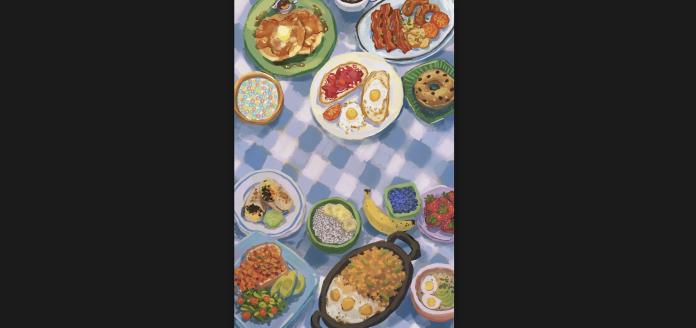
A watercolour illustration of a gingham picnic blanket, where various breakfast dishes are on the top side of the illustration: pancakes, bacon, sausage, and tomato slices. More fibre-rich breakfast options are on the bottom part of the illustration: chia seed pudding, a banana, and blueberries.
ILLUSTRATION: Angelina Tran / The Peak

By: Petra Chase, Features Editor and Mason Mattu, Humour Editor

As SFU’s independent student newspaper, The Peak is committed to highlighting the concerns of our local community. This week, our team decided to settle a decades-long rivalry between Bob and Frank, two Burnaby locals with very strong opinions on a pertinent health-related topic. Both of them bussed down to our offices at the SFU Burnaby campus to stand face-to-face. It was our hope that the two would walk away with a renewed sense of what disagreement means — and why it can actually be healthy.   

Bob, local tinfoil hat manufacturer: Every day, millions of Canadians participate in a cult-like ritual that has been orchestrated by Big Jam, Big Toast, and Big Dairy. They eat in the morning. Why mornings? Mind control. They want to erase our dreams with their demonic egg yolk. Why on God’s flat earth would you support this, you corporate shill? 

Fibermaxxed Frank (and the Microbes): The real cult is thinking jam, toast, and dairy are breakfast foods. If your first meal doesn’t at least include chia seeds soaked in matcha or a lentil-yogurt smoothie, what are you even doing?? As a fibermaxxer for four years now (#fibermaxxed4Lyfe), I’ve become one with my gut microbiome’s hive mind, and we can teach you The Way. Follow our TikTok for incantation recipes we’ve whispered to optimize your poop schedule.

Bob: Don’t talk to me about my poop, you walking billboard for death. It’s just as liquid as any healthy person’s. Let me debunk some of the lies you just told. Chia seeds are patented by some Big Seed company. They put spyware in that shit. One sniff of that and the CIA will be on your trail for years. Your sweet, innocent, lentils? Heh. They’re packed with thousands of microplastics that Sandra Bullock and her Hollywood crew want us to ingest — so they look better than us. I’ve gone 30 years without breakfast and I mog Sandra Bullock 24 hours a day. All I’m asking is for you to go hungry for a few hours before lunch. Is that too much to ask? 

Fibermaxxed Frank: I’m constantly in direct contact with my gut-brain axis. Right now the microbes are saying, “Your liquid poops are a sign your microbes resent you for feeding them anything but a fibrous, mucilaginous goop to start their day . . . just so you can look like Sandra Bullock.” The highly cultured gut microbiome exists on an elevated plane of existence beyond our understanding, where churning your leftovers into solid, compact [insert your favourite poophemism] helps them tap into the all-knowing consciousness. They’re like trillions of little WALL-Es pressing your trash into little cubes of treasure. They’d certainly be the first to know if there was some widespread Hollywood conspiracy occurring at the digestive level. 

Bob: I’m looking at your pathetic face right now. Your jawline looks like the space aliens from planet Pluto took a landing right on it (this happened to my aunt as well, I would get you the name of her plastic surgeon if I liked your pathetic gastrointestinal system). Wait . . . your shits are compact? Only a military diet could do that . . .  you . . . mole

At this point in time, Bob slapped Fibermaxxed Frank with a lining of tinfoil in his palm. Frank proceeded to pour oats all over Bob’s head, prompting Bob to scream in agony on the floor. Our team separated the two for a period of time before bringing them back to the non-meal specific table. All props were taken away. Our fact-checker also confirmed that Frank has never worked for the military or the government in any capacity. 

Bob: Since we’ve determined that you’re most likely a government spy, I’ve got a real big question for you buddy. They call breakfast the most important meal of the day — but I don’t remember dragging myself over to the polling booth to vote for that. Unless . . . no. I am sure that I didn’t vote for that. Who gives you the right to push that onto me? Huh?

Fibermaxxed Frank: Well, I’ve got a question for you, buddy. Breakfast literally means the meal to break your fast, and you actually haven’t been skipping breakfast all along — you’ve just been having it late and calling it lunch (which is a made up concept anyway — there is only breakfast, second breakfast, and third breakfast, and breakfast eve — the night before breakfast). I don’t know what you’re eating, but if you’re not fibermaxxing, you’re going to get left behind. And I don’t mean that in a metaphorical sense. I mean that when the aliens who’ve been communing with my microbial culture come to save them from the impending apocalypse, they will see how good of a host I’ve been to them, and take me along. You, and your ridiculous tinfoil hat, will succumb. 

Bob: You believe in aliens, too? Are we more alike than I think . . . ? Or perhaps . . . 

Bob took a brief pause to gather his thoughts. He then proceeded to punch Frank in the nose with another piece of tinfoil. He then ran out of the room, accusing Frank of not only working for the CIA, but for the aliens of Pluto. We were unable to derive further reason for this accusation. 

Have a controversial opinion? Ready to learn the power of dialogue to resolve our differences? Email us! [email protected].