Home Blog Page 213

SFYou: Dr. Rebecca Cobb’s Close Relationships Lab

0
A photo of three women hugging and laughing with a city skyline as a background
Remember that love is the one thing you can keep sharing and it will only keep growing.

By: Maya Beninteso, Peak Associate and Research Assistant in the Close Relationships Lab

“The love of your life.” “The one.” “Your person.” These expressions reference an assumption and expectation that has been set by society — monogamy. Despite monogamy only being pervasive for the last 1,000 years, this idea that you must find one person, and one person only, to meet all of your romantic and/or sexual needs is untrue. You’re not confined to monogamy; other relationship structures exist, such as consensual non-monogamy (CNM). CNM relationships include all relationships where all partners receive explicit consent to engage in relationships with others. There is a clear lack of understanding surrounding CNM relationships, which has contributed to its stigmatization. This lack of understanding is what Dr. Rebecca Cobb, director of SFU Close Relationships Lab, intends to address through her latest research endeavour. SFU Close Relationships Lab studies the change and development of romantic relationships and how “factors such as psychological health, attachment security, and communication” affect relationships and sexual satisfaction.

Cobb’s inspiration for the study derived from several experiences throughout her career, the most notable being through her Transition to Marriage Study that included following newly-wed couples through their first two years of marriage. Cobb and her research team assumed the couples were all monogamous, however that didn’t appear to be the case. During the study, Cobb inquired about their sexual relationship with their husband, to which the participant responded, “It’s going pretty well, but mostly that’s because of my boyfriend.” This incited reflection on the “assumptions we make about relationships in society.” In the following studies, Cobb began asking participants whether they had “exclusivity agreements” or if they were in CNM relationships. Cobb found “up to 15% or 18% of people in [these] studies were non-monogamous.” This finding is consistent with an article in The Journal of Sex Research that suggested up to 20% of individuals have been in an open relationship.

Cobb sought out to explore the experiences of those in CNM relationships and the intricacies with which these relationships are associated. Although there were a variety of motives, a main theme regarding reasons for engaging in CNM was the “idea of living one’s true authentic self” and “a sense of ‘this is who I am.’” Other reasons included: making them happy, providing them with a sense of autonomy, giving them a sense of interconnectedness, and being an authentic way to live their life.

Cobb found the study was “far more diverse . . .  than any other study” she has done. For sexual orientation, she found 27% identified as pansexual, 22.5% as bisexual, 20% as heterosexual, 13% as queer, and the remaining few as unlabeled, demisexual, or gay.

Despite a growing population of individuals engaging in CNM relationships, there are many incorrect, preconceived notions as to why individuals engage in CNM relationships: Cobb noted the most important one surrounds sex. “People are not becoming involved in CNM relationships simply to have more sex, ”she explained. Other misconceptions about CNM relationships include: engaging in CNM due to an unfulfilling primary relationship and a lack of commitment. These misconceptions have been disproven because typically, CNM relationships originate from a happy and secure primary relationship, and there needs to be a certain level of commitment from all parties involved.

Cobb explored discussions surrounding boundaries for individuals in CNM relationships. In her experience, while there is “consistent attention to boundaries” and the renegotiation of boundaries, there is rarely a time when individuals explicitly discuss them beforehand. Cobb noted these conversations occur before and throughout the relationship. The time or method by which these conversations take place is “different depending on how [they] got into a CNM relationship.” Regardless of the differing times at which these conversations take place, Cobb noted that “the spirit of clear, open, transparent communication is dominant.” A way by which communication differs between some CNM relationships is whether or not partners adopt a “don’t ask, don’t tell” policy, or if they wish to know the details of their time spent with other partners. There’s an expectation for partners to be respectful, thoughtful, “and caring about each other.”  There isn’t just one way to love or engage in relationships — there are many.

Don’t tell me to “go to therapy”

0
illustrated speech bubble saying “you need therapy”
ILLUSTRATION: Angela Shen / The Peak

By: C Icart, Staff Writer

These days, telling someone to “get therapy” or “get help” is such a common read. But even when said with good intentions, saying this to someone unprompted is kind of rude. Don’t get me wrong, the openness with which Gen Z talks about mental health and therapy is a good thing. It contributes to destigmatizing these topics. However, it’s also led to some disturbing trends. 

Somewhere in the sea of jokes and memes about men needing therapy, we lost our way. Now, it seems like instead of just appreciating when therapy works for us or people we know, we are now judging those who don’t go to therapy. For instance, “on dating apps, being in therapy can vouch for your emotional soundness, while not being in therapy may be considered a red flag.”

You have no idea what someone’s circumstances are. On top of being condescending, you might be recommending an option that is inaccessible to some because of its cost. Others may be avoiding therapy because of its stigma. However you look at it, therapy is a privilege. 

Finding the right therapist for you can be a challenge as well. If you’re already down and struggling, “shopping” for a therapist can seem like a pretty daunting task. The times in my life where I could barely brush my teeth are not the times I wanted to spend hours searching for a therapist that was going to make me feel safe as a Black, queer, and trans person. I needed someone that I’d mesh well with, whose practice meets my needs, whose price works within my budget, and whose waitlist wasn’t a mile long. Jumping through all those hoops to end up seeing someone who isn’t a good fit is a pretty demoralizing experience. Personally, some therapists I’ve had in my teenage years have said some stigmatizing and alienating things to me, and it’s part of the reason I haven’t gone back. 

On top of that, therapy isn’t the only way to work on your mental health. Assuming that you are doing more internal work than others, or that your mental health is better than someone because you go to therapy and they don’t — is misguided. Exercise, art, journalling, self care, self-help books, and support from friends and family are possible alternatives

Writer Julladonna Park highlights how telling someone to “get help” pathologizes them as well. “Nobody is entitled to an upfront explanation of these complex and intersectional reasons for avoiding therapy,” Park writes. 

Are you using the phrase “get therapy” to insinuate that someone is “crazy” or “sick?” Are you doing it to discredit them? That’s not okay. Everyone’s needs, resources, capacity, and lived experiences are different. Therapy (and as a reminder there are many kinds, not just “traditional” talk therapy) is meant to be a tool to help people improve their health, so it’s time we stop using the term in such toxic ways. 

More uneducated opinions from your tutor

0
Photo of a student helping another student with homework questions.
PHOTO: Manmeet Sagri / The Peak

By: Nercya Kalino, Staff Writer

  1. Explain Marshall McLuhan’s phrase, “The medium is the message.”

Is there supposed to be a double meaning to this? Nothing is as clear as day, as bright as the sun, as clean as the . . . I’ve lost my train of thought. The medium! Ah yes, the middle, mid, and such. How else am I supposed to explain what we all understand as the medium? Why, here’s an example! If we were only to speak through telepathy, like the very real Martians, then we would not need a medium because talking would be needless. Just contemplate my concise answer. Even I still have not conjured the answer, that is the simplicity and sheer brilliance of my wisdom. I’m certainly not trying to talk about something I don’t understand. But what does it matter? After all, the medium is nowhere to be found when you need one. Like those mediums that pretend to read your worries with cheap tricks. 

2. If you record a sound and pitch it up by three octaves, how will it sound when placed in a large room with minimal secondary reverb?

Like when a choir sings, but it’s the tenor that chases your ears? Er, no, that’s a tone. Maybe close to an echo, then? I believe it was Nicki Minaj who said that a minimal secondary reverb is like when you rap then comes the reverb. Some people call it a chorus. For example . . . actually, I don’t have an example, just take my word for it. 

3. When should you use an em dash, an en dash, and a hyphen?

Hear me out, in my whole academic career I’ve always avoided these three sins of nature. I call them the three musketeers. Nothing about them makes sense. When you need to use one of them, they confuse you. The best way to go about it is to wing it and hope for the best. 

Just romanticize them. Em dash is the dashing knight on the white horse, and he comes riding at dawn to rescue you from his enemies — in no time, you are in love with this mysterious saviour. En dash is his shorter and stronger older brother who is definitely a flirt. You might catch feelings fast, I’m talking 0–100 fast but it won’t last. Hyphen is the mister know-it-all of the group, and always has to be right and precise about everything. You should use either one based on what you are looking for. But academically speaking, use autocorrect. 

Hoo, is it getting (grammatically) hot in here?

4. What does spaghettification mean?

This seems like a space language. It is when two stars meet and fall in love. The next thing we know they have a baby star and so it starts to grow and one day it goes to mama star and asks for a bowl of spaghetti. But the mama star with sadness tells the baby star: “You know we can’t afford pasta and your dad hasn’t sent us any money since he last left to crash land on earth.” Spaghettification is when baby stars find out that spaghetti is not so cheap in space.

Social media is psychologically addictive

0
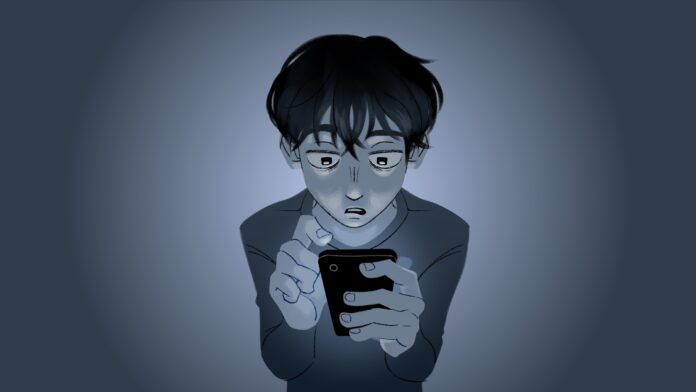
someone staring at their phone with a zombie-like expression on their illuminated face
ILLUSTRATION: Jill Baccay / The Peak

By: Hannah Kazemi, Staff Writer

The realities of social media addiction have been highly debated alongside increasing internet use. Not enough people truly understand the impact of spending hours staring at their tiny rectangles all day, and the effects on our mental health and psychological development are still being discovered. Social media addiction can be as harmful as other forms of addiction, and should be taken seriously.

I was 13-years-old when I got my first iPod with a touch screen. I started using Instagram and Snapchat, and as the years passed, the number of social media accounts I acquired increased. I love many things about social media — particularly its ability to connect me to friends and family who live far away. I find the act of sharing photos and snapshots of my life to be quite meaningful. Unfortunately, it also became something I obsessed over. I would often compare the number of followers I had to my friends and check the number of likes I got on every post. It became unhealthy really quickly.

TikTok is one of the most popular social media platforms right now, with over one billion monthly active users. There’s been a lot of research into the way that TikTok affects our attention spans by allowing us to consume so much content in such short periods of time. The TikTok algorithm has been studied relative to a concept called intermittent reinforcement; this psychological term describes the way rewards are used to capture users’ attention in randomized intervals. Sometimes when you post a video, it’ll go viral or gain a considerable amount of positive attention. Your first video that goes viral might give you a high number of likes and followers, which triggers a release of dopamine — the neurotransmitter responsible for pleasure in your brain’s “reward system.” Other videos you post might not go viral, but the more you post the higher your chances are. Thus, our willingness to continuously engage with TikTok is maintained due to our desire to feel that hit of dopamine again. The constant positive reinforcement validates us and makes us feel good about ourselves.

The same principle can be applied to other addictions like gambling, due to the way that dopamine is released when we receive these rewards. We may not win all of the time, but when we do get a positive result it’s enough to keep us going until we get our reward again. Though researchers have made it clear that dopamine is not what we are addicted to when we develop addictions, it’s a highly influential motivator that encourages us to continue seeking out positive rewards. We become neurologically addicted and develop a psychological response that makes us use social media constantly.

Unlike gambling, social media addiction isn’t classified in the Diagnostic and Statistical Manual of Mental Disorders (DSM). However, since Internet Gaming Disorder (ICD) was recently added in 2013, more people have pushed for the inclusion of social media addiction as a mental health condition. ICD refers to “impaired control over gaming” that significantly impairs one’s daily life. According to Forbes, social media addiction can also have a significant impact on people’s personal lives, and even lead to withdrawal symptoms like anxiety.

Take a look at your screen time and set a goal to bring it down a little bit each day. Maybe that means reading a book instead of scrolling TikTok before bed, participating in phone-free activities, or setting time limits through your phone’s settings to decrease the time you’re using social media. Small steps like this add up and make a big difference on the way we engage with social media and the off-screen world.

TransLink is electrifying their bus routes

0
This is a photo of a TransLink bus. The side of the bus says “100% electric-bus”
PHOTO: TransLink

By: Nercya Kalino, Staff Writer

At the beginning of 2022, TransLink released a Climate Action Strategy. A message from the chief executive officer Kevin Quinn stated, “It’s our responsibility, as the backbone of Metro Vancouver’s sustainable transportation system, to do everything we can to respond to the climate emergency.” Since the plan’s release, TransLink has now begun implementing their strategies. 

In February 2023, TransLink released a statement about launching a fleet of LFSe+ battery-electric buses. There are currently 15 electric buses and their aim is to quadruple TransLink’s battery-electric bus fleet by 2030. TransLink plans to order more battery-electric buses and set charging infrastructures in place so they can expand the fleet to more areas. The new Nova LFSe+ Electric bus travels “150 kilometres on a single charge and can be topped up by an on-route overhead charger within five minutes.” 

This step to electrify the roads “will reduce greenhouse gas emissions by 1,000 tonnes annually,” according to TransLink’s estimations. They also note it will “save TransLink around $40,000 in fuel cost per bus.” 

The TransLink Climate Action Strategy outlines seven key areas where they are making changes to account for climate change. These include implementing the low-carbon electric buses, developing climate change adaptation policy, developing their resilience roadmap, and supporting a climate-resilient region and low-carbon economy. 

Quinn also stated transit is one of the most reliable sources for the public; this decision will reduce the public’s carbon footprint. “Electrifying our bus fleet and moving to renewable fuels are the fastest ways TransLink can reduce GHG emissions to help combat climate change.” This step towards the betterment of the environment was a $16 million investment administered by the Union of BC through the Canada Community-Building Fund

Chair of the Vancouver mayor’s council, Brad West, also shared his excitement. “The mayor’s council is supportive of electrifying TransLink’s fleet to help fight climate change and create a brighter future,” West stated. 

On TransLink’s announcement post on their website, most of the comments indicated curiosity on the significance of the battery. One person questioned why the initial route is a short distance, indicating it is a waste when the bus can go 150 kilometres on a single charge. 

There are more steps that TransLink has stated in their strategy plan that goes beyond the bus fleet. Since Translink is “one of British Columbia’s largest employers, fleet operators, and purchasers of fuel,” innovation for better technology and policy are included in the Climate Action Strategy. 

To read more on the TransLink Climate Action Strategy, visit the press release on the TransLink website. 

Q&A with Elvira Chan on her independently-published novel

0
Elvira Chan holds her book, displaying the cover with an illustration of two shadows of people walking against a backdrop of tall buildings on each side of the book. Between them is a watercolor gradient of a blue, cloudy sky. They are each on opposite sides of the book— one on top and one on the bottom. The one on top is upside down. Chan is smiling wearing an orange knit sweater.
PHOTO: Elvira Chan

By: Petra Chase, Arts & Culture Editor

Elvira Chan is an SFU graduate student in the area of counselling and human development. She holds a bachelor’s degree in communication with a minor in print and digital publishing. The following is The Peak’s conversation with Chan about her self-published debut novel, The State of Us.

The Peak: How did your undergraduate education at SFU shape and inform your experience of writing and publishing this novel?

Elvira Chan: My background in communication and publishing at SFU helped me gain a clearer understanding about how storytelling can be such a unique blend of lived experience and imagination! Nobody tells a story exactly the same way, and the idea of gathering my own experiences and memories and turning them into a work of fiction through new characters and plot ideas was really compelling to me when I first started writing. In my courses, I was often taught how to design covers, properly format dialogue, pitch a manuscript, and pull off a lot of research to support my writing. My background gave me the technical tools and skills that I needed to get started, but it was actually the people and places I had come across during my time at SFU that made the biggest difference and gave the greatest inspiration when it came to writing and publishing my novel!

P: That sounds like the perfect learning environment to successfully publish a novel! Was this something you planned to do from the beginning of your education and did your vision of what that process / final product would look like change at all along the way? Side note — the cover looks beautiful!

EC: Putting a novel out into the world has been a goal of mine for as long as I can remember; it’s something I have always wanted to do! I used to write and draw on plain paper, staple it all together, and call it a book when I was a little kid. I wrote hundreds of those “books” back then and it has been incredibly rewarding to be able to bring my dream to life. 

My vision of the final product changed more times than I can count! One of the most interesting things about the process is that I didn’t write it from beginning to end in a linear fashion. It was actually quite the opposite, where I pieced together chunks of dialogue and scenes over time, almost like a puzzle. It was a challenge to weave everything together, but one of my favorite things about the book now is that it threads through the characters’ lives over the years, and you get a glimpse of all these little moments and memories that might have been cut out completely if I had written the book from beginning to end without finding a special place for them.

Interestingly enough, the idea for the cover came quickly and stayed very true to the original design! I wanted the cover to show a different perspective depending on which way you were holding the book and to show the two characters crossing paths despite being in different places and phases of their life.

P: I want to know more about these characters! What was your inspiration for them? Can you tell us a little about your favourite moment from the book?

EC: Like my main character, I was also in a long-distance relationship during my time at university. Five years can feel like a really long and impactful time when you’re in your twenties! I wanted to write about that past experience through the eyes of new characters. I was also inspired by other people’s relationships at the time, and everything from my favorite movies to song lyrics inspired different parts of the book as well. It’s like a collage and time capsule in one, which I really love. 

One of my favorite scenes has to be when my two characters first meet! They’re both stranded overnight at a Seattle airport during a snowstorm on New Year’s Eve, and that’s when the reader discovers that the characters are struggling to accept the reality of loss in their lives (for very different reasons), and they end up bonding over it. That chapter jumps to different times over the course of that first night, and you gain insight into their past, and a lot of empathy for their situation. I think losing someone you love is a very universal and human experience, which many people may relate to in the book.

P: I’m looking forward to reading it! What is your current area of study and what are your plans for the future? Do you have more characters and moments you hope to bring to life in fiction?

EC: Yes, a hundred percent! My current book is categorized as adult fiction and leans toward a modern romance, but I’m so intrigued by different genres such as fantasy, paranormal fiction, and thrillers, and I’ve already got the gears in my head working overtime for my next one. Putting myself in a different character’s shoes and trying to understand their mindset and motivations is one of my favorite things about writing. You can elicit a wide variety of emotions and reactions through something completely made up, something you created with words and your own imagination!

I’m currently in the PBD program at SFU for counselling and human development, and my goal is to work in the mental health field by becoming a registered clinical counsellor. 

Whether it’s counselling, storytelling, or writing a book, there’s the common thread of connection at the core of it! I think it’s fair to say that I’m very intrigued by other people and what they have to share with the rest of us. 

The State of Us is available as a paperback or Kindle ebook on Amazon. Follow Chan on Instagram at @littlelvira.

New Music: “Sinisin” is melancholic and full of yearning in the very best way

0
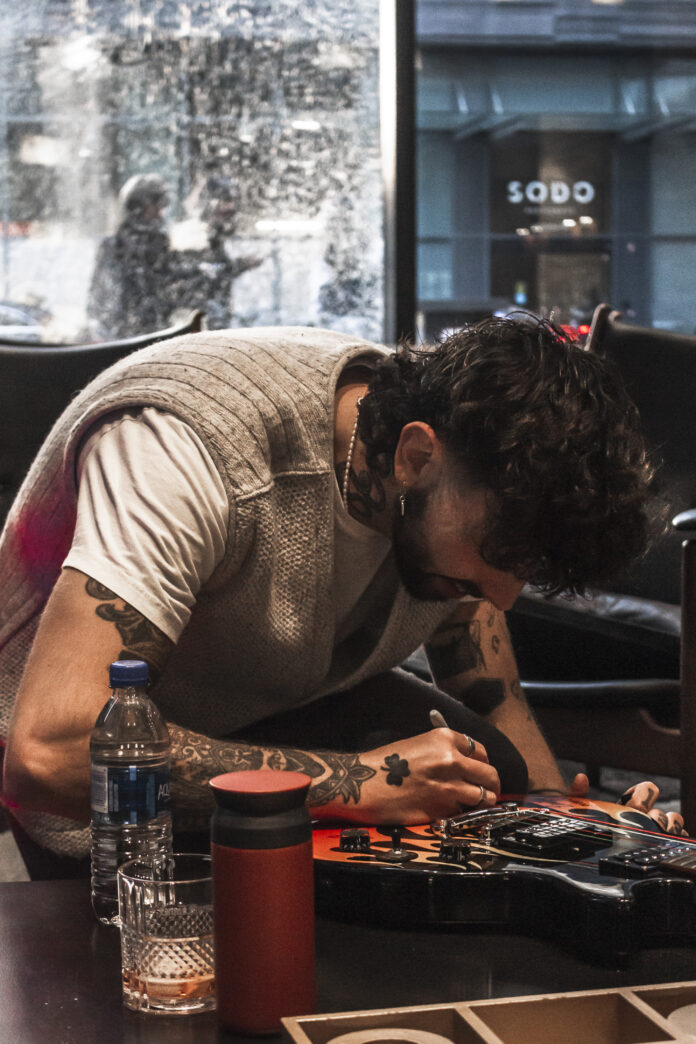
Emét is seated and signing a guitar. They are wearing a gray sweater vest on top of a white T-shirt with tattoos on their arms. Behind them, there is a window that shows snow outside.
PHOTO: Jayka (Jay) Herrera

By: Hannah Kazemi, Staff Writer

Emét gives off soft indie-folk vibes with their single, “Sinisin,” their most recent release following their EP, Carlin’s Farm. “Sinisin” was my introduction to Emét’s funky discography, and it sent me down a rabbit hole searching for more. I reached out to Emét to learn about their inspiration for the song. 

According to Emét, “Sinisin” tells the story of a “relationship doomed to fail” and “the heartbreak of accepting less than what you deserve, the heartbreak of being complacent instead of truly content.” 

“Sinisin” hinges on the emotional impact of the tone and meaning of both the instrumentals and the lyrics. The different feelings and buildup of emotions is really interesting and definitely caught my attention. 

“It’s a different kind of heartbreak,” they said. “Jealousy is a really strange emotion when you think about it.” You can feel this gut-wrenching sentiment settle into your soul as Emét sings.

“Growing up in Ireland, folk music has always felt like the most authentic way to tell a story,” they said. They cited Phoebe Bridgers, Leonard Cohen, and Damien Rice as inspirations. The song’s strong guitar presence and poeticism also reminded me of Hozier. 

I was intrigued especially by the hypnotic guitar instrumentals in “Sinisin,” and how well it blends with Emét’s harmonies. There are some consistent melodies throughout the song, but Emét also incorporates different guitar accents and motifs to add personality to an otherwise constant and steady beat. Emét’s voice has a sense of anguish in it — it’s a lower, deeper sound that lulls and swells with the instrumentals. Because of this, there’s a bigger impact when they start to hit some of the higher harmonies. 

“Sinisin” feels dark in some ways, while repeatedly coming back to that sense of melancholy with the steady rhythm.

The end of “Sinisin” introduces an epic, angsty electric guitar solo. Emét said that they recorded every part of the song themself:  “The recording process was a lot more about letting the track swell, stripping it away in places and giving it enough depth to stay interesting [ . . . ] The guitar solo at the end is so ridiculous compared to where the song started out, definitely a departure from ‘folk’ in a lot of ways.”

To listen to “Sinisin” and more of Emét’s music, you can find them on all streaming platforms. They’re also on all social media as @itsemetofficial.

Listen to The Peak’s regularly-updated “New Music” playlist on our Spotify profile.

Blaming women for filming gym harassment misses the point

0
photo of exercise bikes in a gym
PHOTO: Manmeet Sagri / The Peak

By: Saije Rusimovici, Staff Writer

Content warning: mentions of assault and harassment

From my experience, the gym is a place where I can thrive. I feel confident in my skin and glow after a good sweat on the treadmill. Likewise, lifting weights makes me feel powerful and strong. Even though I workout in the women-only section, I still often find myself looking over my shoulder, feeling like there are eyes on me. I can only imagine what I would feel like exercising in the co-ed section. With recent discussions about filming unwanted gym interactions, we should focus on the deeper issues that lead to discomfort in gyms.

Gym culture has always been something that’s difficult for many people to find their place in. Significant efforts have been made in the past decade that encourage women to take part in activities that have historically been dominated by men. Additionally, some gyms now use branding strategies that encourage inclusion for all body types and fitness levels. However, there are still many toxic components of gym culture that are ingrained into the way we perceive fitness. According to The Globe and Mail, the gym can be a place where you’re very likely to find yourself surrounded by ageist, ableist, racist, and homophobic behaviour — not to mention the sexism and fatphobia. These issues can lead to unsafe conditions for many people in gyms, particularly women who work out alongside men.

The ongoing TikTok trend #gymcreep has become a viral sensation with over 240.5 million views and counting. This hashtag has become a way for women to share harassment from male gym-goers while they work out. Something to keep in mind is that women have been subjected to unwanted advances from men in more instances than just gyms. At least 30% of women over 15 have experienced some form of sexual assault in Canada. For this reason, women have to be “on-guard” in their daily lives, thus bringing this trend to the gym. 

Video surveillance can be used to offer protection for women in gyms. Recently, a 24-year-old woman was attacked while working out alone in her apartment gym. Surveillance recordings provided a way for the attacker to be identified, arrested, and charged. When it comes to the sharing of personally recorded videos attempting to address this issue, Leilani Carver, “director of undergraduate communication at Maryville University,” told USA Today that these videos can be a mechanism for exposing problematic behaviour and harassment in gyms. She also mentions video recordings can empower women to report these individuals. Sharing their experiences with others shows that the harassment they experience is real. 

However, Carver notes that the act of filming other people in gyms is a complex issue that can also be considered a form of harassment itself, as people are being filmed without their consent. If the harassment is not explicit, it’s difficult to see what’s actually happening in these videos. She also points out that the “pile-on effect” of digital shaming may have the power to shift the narrative and create sympathy towards an offender. For this reason, it’s important that these videos are directed towards encouraging people to speak out about gym harassment, not just gaining views on social media. It’s also crucial to recognize that gym harassment still exists despite the occasionally questionable recordings that may circulate online.

The culture that’s been upheld in gyms for years has made women hyper-vigilant, turning to social media as a tool to express their long built-up discomfort. The root of this problem is a misogynistic culture that’s reinforced by media and social expectations. Going forward, it’s important that gym organizations and gym-goers work together to change this culture that has been ingrained in fitness for so long. 

The existence of wisdom teeth

0
a close-up shot of a pile of teeth
PHOTO: Tima Miroshnichenko / Pexels

By: Karissa Ketter, News Editor

I’ll say it: wisdom teeth are ridiculous. Why are they even called “wisdom” teeth? They aren’t so wise growing sideways, are they? A couple years ago, I went down to the surgeon’s office and he removed all four of my wisdom teeth while I had a little anaesthesia nap. For the next few days, I had a purple and puffy chipmunk face while ice packs and jello were my two best friends.

Now, my partner is about to get his wisdom teeth removed, only for me to find out he only has three wisdom teeth. What an absolute scam! Only three!? What about my family, you might ask? My brother doesn’t have any wisdom teeth at all. 

Why did evolution curse me with all four wisdom teeth while my brother gets away scot-free with none!? Mother Nature, c’mon, couldn’t we have split them 50/50 — two each? 

I feel like I’ve been cursed with a life of dental hell. I’ve had multiple gum graft surgeries, braces, teeth expanders, and now four teeth yanked. Both my partner and my brother have had nothing wrong with their teeth — ever

Look, I understand that being able to take care of my teeth is a huge privilege that not a lot of folks have. I’m incredibly grateful that my surgeons have always done great work, and I’ve healed quite nicely. In reality, yeah of course, wisdom teeth aren’t the worst thing to go wrong. 

But come on, Mother Nature. Humans haven’t needed those molars for thousands of years. It’s time to phase them out and move on. 

BREAKING NEWS: SFU Road Report cameras capture emotional story

0
Illustration of a person smiling at the camera. Behind them, the snowy Gaglardi Way going up to SFU, and students visibly grimacing as they push the bus up the hill.
ILLUSTRATION: Hailey Gil / The Peak

By: Hannah Kazemi, Staff Writer

SFU News — There was a heartwarming display of strength at Simon Fraser University’s Burnaby Mountain campus last week as students were seen pushing a bus up the mountain. SFU’s traffic cameras caught the whole thing on tape. It was leaked and posted on TikTok, with the video gaining over 50,000 views within only a few days.

The video depicted a wet and dreary day at the cusp of the intersection of Gaglardi Way and University Drive. We see the 143 make its way up Gaglardi Way and then come to a sudden stop. The hazard lights go on and the door opens as the bus driver steps out to walk around the bus to see what went wrong, then the video shows her staring blankly at the bus as the sleet continues to pour down. 

A few minutes later, we see the passengers from the bus get off and take position behind the bus and through the intersection with begrudging looks on their faces, ultimately terminating at SFU’s lower bus loop. The students have been commended for their leadership — SFU has noted that in times like these, validation is the ideal acknowledgement for the brave students accustomed to the nasty weather on the mountain every winter. 

Readers, SFU is unique for its location atop Burnaby Mountain, and heroic students. The mountain is also notorious for its accessibility challenges — particularly in the winter months when snow and ice are on the ground. The transit system suffers in these situations as well, and in times like this, there is nothing like seeing our intrepid students taking matters into their own hands — literally — to get their bus up the hill.

Students Ari and Jordan* were part of the team of students pushing the 143 bus, connecting SFU to the Burquitlam Station, up Burnaby Mountain.

*Names have not been changed to reflect student bravery.

“All of a sudden it just stopped and started rolling backwards a little bit,” said Ari. “It was like the gas just, like, stopped working.” Jordan noted that they were almost to the crest of the hill when the bus stalled and the driver got out to investigate. “She looked super pissed, like it had happened before. All of us just sat there for a minute waiting for her to come back and tell us what happened, but she never did.”

The students had looks of agitation on their faces as they recounted the conditions of the day. “The bus driver came back on the bus and told us to start pushing,” said Ari, bewildered.

“None of us moved for a minute because we thought she was bullshitting us. Before we knew it, we were standing in the rain and snow pushing the fucking bus up the mountain. My socks were squishy and moist for the rest of the day. It was so gross. I’m never taking that bus again!”

“It’s almost like all of this could have been preventable if SFU had made an announcement,” Jordan nodded. 

What bravery shown by these students! Jordan and Ari both said that “it was unlike anything that has happened before,” which highlights the tenacity of SFU’s students. Their willingness to step up is commendable and highlights just how well-rounded and full of initiative they are. They certainly exemplify SFU standards.

This has been SFU News, where we know student’s groans of frustrations just translate into their willingness to engage with their work! Until next time.