Home Blog Page 179

Bottoms is unabashedly gay, unhinged, and bloody

0
A film still featuring two protagonists of Bottoms, PJ and Josie, in a school gym looking to the side, looking bewildered. PJ has a slight black eye and a bandaid on her nose.
PHOTO: Courtesy of Metro-Goldwyn-Mayer

By: Emilio Gutierrez, SFU Student

When I first read the synopsis of Emma Seligman’s Bottoms — two girls start a fight club at their high school to meet girls and lose their virginity — I thought I knew what I was in for. I expected a queer take on the edgy high school comedy formula, and some of the magic found in Seligman and Rachel Sennott’s (Bottoms’ co-writer and lead) previous collaboration, Shiva Baby

I walked out of the theatre pleasantly surprised.

At a quick glance, Bottoms would seem like it fits under the high school comedy genre label. And, technically, it does; it’s a comedy set in a high school. However, stamping that label on it brings to mind movies like Mean Girls, Superbad, or, more recently, Booksmart, which aren’t really the same type of movie as Bottoms. Those movies seem to hold on to a degree of realism when depicting high school, which Bottoms doesn’t really bother with maintaining.

Seligman and Sennott are not afraid of being completely nonsensical and unrealistic, showing football players acting like bemused cheerleaders or school mascots walking around with huge, flopping . . . you know . . . phalluses. The writers have a lot of fun playing around with their action-packed, over-the-top version of high school, which, at its strongest, provides the script and actors with great opportunities to be outlandishly hilarious.  

The highlight, however, is without a doubt the film’s cast. Sennott and Ayo Edeberi do a solid job at translating the desperate awkwardness of the two main characters, PJ and Josie, into two consistently likable and hilarious performances. 

But they’re certainly not the only performances that stand out. Two of my own personal highlights were Nicholas Galitzine as Jeff, the fruity star quarterback, and Miles Fowlers as Tim, Jeff’s scheming, fiercely loyal right-hand man. They both knock it out of the park portraying their respective ridiculous personas, seamlessly injecting them with so much detail and character. Marshawn Lynch as Mr. G and Summer Joy Campbell as Sylvie also deserve honourable mentions, as they were both consistently funny.

The cast also demonstrates a good amount of flexibility by, surprisingly, providing the film with some genuinely well-delivered emotional notes, in spite of the characters’ seemingly unhinged amorality throughout a lot of the film.

Seligman and Maria Rusche (director of photography) also succeed at employing a fair share of fun, creatively-shot sequences, making the movie that much more engaging to watch. But perhaps one of the most striking technical aspects of the film is Leo Birenberg and Charli XCX’s soundtrack. The duo provide the movie with a beautifully textured mix of synth and guitar instrumentation that’s simultaneously lush and electrifying. Although its use in the film feels a bit limited at times, overall, it gives Bottoms a ton of memorable flair and character.

In the end, I do feel that Bottoms’ lack of focus and occasionally spotty humour keep it from being a definite favourite for me. In spite of that, I still find it to be a comedic, well-made movie that stands out as a unique take on the high school comedy formula. If Bottoms sounds like something you might like, I definitely recommend giving it a shot. Bottoms is currently only being shown in select cinemas, so if you are unable to find a screening near you, you’ll have to wait for the film to release digitally.


Paperback isn’t dead

0
An open paperback
PHOTO: Lily Rum / Unsplash

By: Saije Rusimovici, Staff Writer

Even though I love spending afternoons scrolling through the countless options of free e-books on Libby, there is something special about the feeling of scouring the library for the perfect read. You know: the book that fits perfectly in your hands, the texture and smell of its pages transporting you to another place entirely. It takes me back to the days where I used to visit the public library near my house, leaving with a bag of books so full that practically tipped me over on the walk home. An e-book is convenient, but a real book is an entire experience. Anyone who claims the digital e-book is going to completely replace print is entirely mistaken. 

The most obvious reason is books have a sentimentality to them that can’t be replaced. I treat the books on my bookshelf with care and attention, the space they take up in my room a sentiment to not only my interest in mystery and romance but a window into my inner personality. The books on my e-reader become faceless when I’m finished, disappearing into the depths of an invisible bookshelf. My physical copies are tear-stained and worn down from being flipped through so many times. 

The second is that the environmental impact of paperback has been overblown. A single e-reader’s carbon footprint is around 168 kg, whereas a book is equivalent to approximately 7.5 kg. According to these statistics, if an e-reader read 44 books on an electronic device this would halve its negative impact on the environment. A frequent reader that uses an e-book would significantly reduce their carbon footprint. 

Even if someone reads enough to reduce their carbon footprint with an e-reader, producing traditional books requires less materials. It takes the extraction of nearly 15 kg of minerals and uses about 300 litres of water to produce a single e-reader. Electronic waste is also a concern, because when it comes time for an e-reader to be replaced, they must be recycled properly in order to avoid improper disposal of toxic metals. 

While e-books tend to be cheaper than physical books, printed books do not necessarily need to be bought brand new. Thrift stores and second-hand bookstores are great places to reduce the amount of money you spend and support small businesses. Additionally, there are thousands of books that can be borrowed and returned to the library for free. 

Many of the books I own have been passed down through generations. Not only do they represent specific chapters of my life, but they reflect some of my deepest ambitions, emotions, and thoughts. Books connect me to the people I love, the places I hope to go, and the experiences I’ve lived. Reading an e-book just doesn’t compare to the feeling I get when I hold a physical novel. 

Council Chats: Council elects temporary vice-president internal after resignation

0
This is an illustration of a graphic that reads “Council Chats.” The image also has two text boxes to symbolise messages being sent.
ILLUSTRATION: Andrea Choi / The Peak

By: Eden Chipperfield, News Writer

The Peak attended the bi-weekly Simon Fraser Student Society (SFSS) Council meeting on September 13. The business included nominations for the vacant vice-president internal position and a presentation for a new sustainable initiative. 

Elections to fill vice-president internal position 

During September, the previous vice-president internal resigned from their position. At this Council meeting, the SFSS elected a temporary replacement, until a new vice-president could be elected through student bi-elections. President Liam Feng stated they will “have a by-election in the coming months before April 30 of next year [2024].” 

Temporary operation organizer, Sindhu Dharmarajah, noted, “Our by-laws call for a by-election in the event of a vacancy with certain parameters, so we need to appoint a councillor in the interim.” 

President Feng called for nominations. Ashley Flett, representative of gender, sexuality and women’s studies, self-nominated for the role. No other candidates stepped forward. The motion was passed and Flett was elected temporary vice-president internal. 

However, Thomas Leuth, vice-president of university and academic affairs, voted to express dissent for the motion, but the matter was not discussed further. As Flett held the vice-chair position before their election into the temporary vice-president internal role, another election was held to see who would fill the vice-chair position. Flett nominated molecular biology and biochemistry student union representative, Sam Killawee, for the role, which they accepted. Killawee was elected as temporary vice-chair. 

Presentation for a new sustainability initiative, Reusables

Anastasia Kiku, chief operations officer and co-founder of Reusables, delivered a presentation to the Council regarding the brand’s mission. Their project is rolling out at SFU in October. 

Reusables is a company that promotes reusable stainless-steel food containers. Kiku explained how the mission of Reusables is to “eliminate single-use plastic waste” and raise awareness for how “only 5% of plastic is recycled, while the rest ends up in our landfills or the environment.” 

The company is supported by major corporations such as Bunzl, Disney, Doordash, Uber Eats, and IGA. Reusables is coming to SFU in the Mackenzie Cafe on October 2 in response to how “students are demanding climate action.” Students will be able to take out food and beverages in Reusables containers through the Reusables app to log their container and then, after five days, drop off their borrowed items to the situated return bins around the Mackenzie Café and the AQ. 

Kiku also stated using the app will not be necessary, as the Reusables containers have barcodes that will log when checked out and will require a debit or credit card preauthorization. This means the user will only be charged if they do not return their containers after use. Kiku noted in her presentation that Reusables has a 98.5% return rate, and they saw success when they tested the project over three months at the old dining commons. According to Kiku’s data, 2,500+ Reusables were used over the trial of 3 months by over 100 students. Councillor Denise Arias-Guillen asked Kiku if students were expected to wash the containers before returning them to the bins. Kiku responded that Reusables and the Chartwells groups have partnered and will collect and clean the containers. 

Evan Accettola, Indigenous studies student union councillor, asked if Reusables sells subscriptions to students and if access to credit cards is necessary for the app. Kiku noted students can use debit cards to check out the containers.

“The Story of Three Journeys” showcases Tassos Boulmetis’ childhood in Istanbul

0
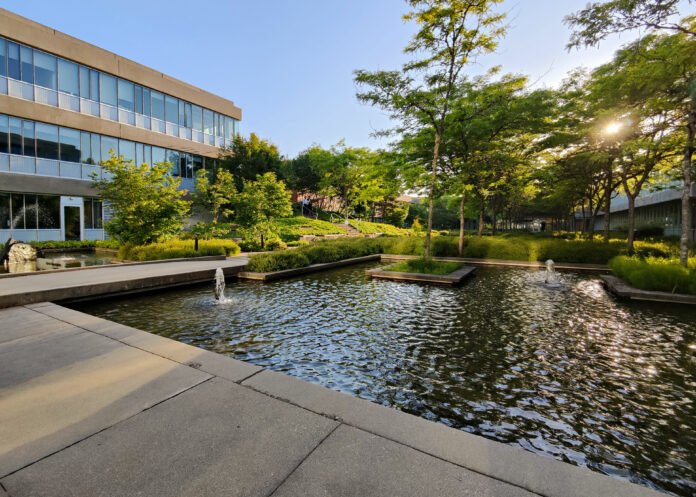
This is a photo of the outside of the SFU Burnaby campus. There is a reflection pond with a water fountain surrounded by trees and other buildings.
PHOTO: Kriti Monga / The Peak

By: Olivia Sherman, News Writer

Content warning: mentions of genocide and forced displacement. 

The Stavros Niarchos Foundation Centre for Hellenic studies at SFU is hosting a series of seminars this fall, where Greek scholars and artists will present stories and lived experiences. Tassos Boulmetis, a Greek director, presented at the most recent seminar. The presentation was titled, “On Sublimation of Displacement: The Story of Three Journeys.” 

The journeys in question spanned over several decades of Boulmetis’ life. He described them as, “One, geographical, that created the trauma. Another, esoteric: an inner journey which helped me overcome the denial of my childhood homeland. And another, [a] hidden journey that led to the creation of my film.” Boulmetis said it was that hidden journey that “helped [him] to reconcile with [his] past.”

Boulmetis was born Greek in Constantinople, now Istanbul, at a turning point in both Greek and Turkish history. “I remember my mother telling me not to speak Greek loudly in the streets,” he recalled, noting this was unusual for him because he was previously comfortable speaking his native language in Istanbul.

Boulmetis describes the political strife he faced throughout his childhood: “If we consider the Greek-Turkey relationship, metaphorically, as a film production, the screenplay for this film was written back in 1908,” during the Ottoman Revolution. The first act took place in 1915, during the Armenian Genocide. The second was in 1922, during the mass exodus of Greeks after the burning of Smyrna. In 1964, over 45,000 Greeks were deported from Turkey, including the young Boulmetis and his family. He and his family relocated to Athens, Greece. 

Despite being friends with both Turks and Greeks in Istanbul, Boulmetis found himself ostracised in Athens. In order to assimilate with his peers, he learned Greek and attempted to hide his Turkish identity. “It was a bad word to say to a Greek that he’s a Turk,” and vice versa for Turkish people. This was the beginning of Boulmetis’ trauma with his cultural identity. “I became a displaced Constantinoplian of Greek origin.” 

Later, Boulmetis enrolled as a physics student at the University of Athens but felt a calling toward film and directing. Throughout university, he directed short films. These were ripe with artistic and political themes, which reflected the ongoing political strife in Greece and Turkey throughout the 1970s when Boulmetis was a student. “We were very active and very thirsty to be involved in the arts and politics and demonstrations.”

After moving to California and graduating from UCLA, Boulmetis began directing commercials. To date, he has directed over 500 commercials, some of which have been broadcast worldwide. However, despite his success, Boulmetis said “there was something missing.” He broke the contract he had made with his producing company, in order to become a filmmaker rather than a commercial director. At the recommendation of a friend, he travelled back to Istanbul, the place he was forced to flee decades ago. “I realized, the last 30 years, I had been almost all over the world, but I never went to my homeland, which was only 50 minutes by plane.”

Boulmetis describes walking around his childhood neighbourhood with an “emotional GPS,” and was able to find his old home, his grandfather’s grocery store, the old playground, and the schoolhouse. “I recorded almost every single step that I did for three continuous days.” He documented his travels with photographs and videos taken at waist-length, about the height of a seven-year-old, the age he was forced to leave his home. 

He was inspired after returning to his homeland. Throughout the next several years, Boulmetis directed films about reconnecting with his heritage. The most famous, gaining worldwide attention, is “A Touch of Spice,” inspired by Boulmetis’ own life and history with being expelled from his home country and finding his lost identity. 

A summer of SFU athletics updates

0
photo of SFU swimmer midrace
PHOTO: Garrett James / SFU Athletics

By: Isabella Urbani, Sports Editor

Swimming 

Women’s Recruitments 

  • Abigail Andrews: backstroke and freestyle swimmer from St. John’s, Newfoundland, who won seven events at her high school’s provincial championships. 
  • Grace Arnott: breaststroke and backstroke swimmer from Calgary, Alberta, who competed at the 2023 Western Canadian Championships. 
  • Kayla Houlder: sprint freestyle swimmer from Milton, Ontario, who won two medals at the 2023 Eastern Canadian Championships.
  • Chloe Mcara: freestyle swimmer from Montréal, Québec, who competed at the 2019 Eastern Canadian Championships.
  • Laine Perry: freestyle and backstroke swimmer from Comox, BC, who won four medals at the 2023 Vancouver Island Regional Short-Course Championships.
  • Nicole Petrisor: sprint freestyle and individual medley swimmer from Richmond Hill, Ontario, who won the 50-metre freestyle at the 2023 Winter Ontario Youth-Junior Championships. 
  • Rachel Tong: butterfly and freestyle swimmer from Burnaby, BC, who won two medals at the 2023 Swim BC Winter Provincial Championships.

Men’s recruitments 

  • Thomas Caruso: backstroke and individual medley swimmer from Lindell Beach, BC, who won the 2023 Bell Canadian Swimming’s 200-metre backstroke junior national championship.
  • Gaspar Lazure: butterfly and freestyle sprint swimmer from Windsor, Ontario, who won three events at the 2023 Eastern Canadian Championships.
  • Mateja Mesic: backstroke, individual medley, and breaststroke swimmer from Belle River, Ontario, who competed at the 2023 Eastern Canadian Championships.
  • Peter Morch: freestyle swimmer from Lantzville, BC, who won two bronze medals at the 2023 Winter Provincial Championships.
  • Owen Nicholson: distance freestyle and individual medley swimmer from Halifax, Nova Scotia, who won a bronze medal for Canada at the 2023 Best Fest Open Water Festival. 
  • Jordan Raume: freestyle and breaststroke swimmer from Comox, BC, who holds nine records for the Comox Valley Aquatic Club. 
  • Lochlan Rogers: freestyle sprint swimmer from Victoria, BC, who is a two-time Canadian Junior Swimming Championships award winner. 
  • Luka Tomic: butterfly swimmer from Kitchener, Ontario, who was the sole member of his swim team to compete at the 2022 Eastern Canadian Championships. 
  • Hayden Visscher: breaststroke swimmer from St. Albert, Alberta, who competed for Canada at last year’s Junior Pan Pacific Swimming Championships.

News 

  • The swim team will make the switch to the Rocky Mountain Athletic Conference to begin the season.
  • Sophomore, Monyo Maina, competed for Kenya at the 2023 FINA World Aquatics Championships in the 100 and 200-metre freestyle. He was joined by SFU coach, Demone Tissira.
  • SFU assistant coach, Dexter Bligh, resigned after one season to become the head coach of Camana Bay Aquatic Club.

Awards 

  • Sophomore, Randon Hall, was a recipient of the Academic Achievement Award, winner of his second Faculty Athletic Representative Scholar-Athlete Award, and Nadine Caron Top Scholar-Athlete for the highest GPA with a 4.31 CGPA as a mathematical physics student.

Track and Field

Recruitments 

  • Jacob Hall: sprints runner from North Bend, Washington, who has competed for the US at the Track & Field National Junior Olympic Championships.
  • Liam O’Donnell: sprints runner from Surrey, BC, who won the 100-metre in the U-20 BC Championship Jamboree. 
  • Kerlinda Chatwin: sprints and triple jump athlete from Surrey, BC, who competed at the 2022 Canadian Track and Field Championships. 
  • Gemma Dumas: middle distance and distance runner from Delta, BC, who will compete for SFU in both track and cross country. 
  • Serena Kennedy-Hailu: sprints runner from Port Coquitlam, BC, who finished third at last year’s 100-metre high school provincial championships. 
  • Grace Mack: middle distance and distance runner from St John’s, Newfoundland, who competed at last year’s Canada Summer Games. 
  • Steph Millar: middle distance runner from Lake Country, BC, who won the 2023 800-metre Okanagan Zone championship.

Awards 

  • Gibbs and Paugh were two of 10 recipients of the Nadine Caron Top 10 Scholar-Athletes Award. 
  • Gibbs, Lenton, Paugh, Schmidt, and Voloshin win the the Faculty Athletic Representative Scholar-Athlete Award for having a 3.85 CGPA or higher.
  • Last year’s GNAC Rookie of the Year, Marie-Éloïse Leclair, was named 2023 Outdoor Track and Field Female Athlete of the Year. She is also the SFU women’s individual sport Athlete of the Year.
  • Women’s track and field team was named President’s Team of the Year.
  • Javelin thrower Jarrett Chong was the SFU men’s Freshman of the Year.
  • Women’s track and field team earned NCAA Div. II All-Academic Team honours. 

This week at SFU

0
two soccer players captured jumping up to headbutt the ball
PHOTO: Paul Yates / SFU Athletics

By: Isabella Urbani, Sports Editor

Monday, September 18–September 24

Home 

Thursday, September 21: volleyball vs. Alaska Fairbanks in the West Gym (7:00 p.m.)

  • 1–1 against Alaska Fairbanks last season.

Saturday, September 23: volleyball vs. Alaska Anchorage in the West Gym (7:00 p.m.) 

  • 1–1 against Alaska Anchorage last season.

Away 

Monday, September 18–Tuesday, September 19: women’s golf at Saint Martin’s University Invitational in DuPont, Washington

  • First competition of the season.
  • Finished first on day one of the invitational last season.

Thursday, September 21: women’s soccer vs. Western Washington in Bellingham, Washington

  • 0–2 against Washington last year in the regular season. 

Friday, September 22–Saturday, September 23: men’s golf at Saint Martin’s University Invitational 

  • First competition of the season.
  • Finished first at this invitational last season. 

Saturday, September 23: cross country at the Bill Roe Invitational in Bellingham, Washington

  • Men’s and women’s teams looking to improve last season’s second place finish in Washington.

Saturday, September 23: swimming at Biola (California) (1:00 p.m.) 

  • First meet of the season.
  • Failed to compete in the championships last season after breaking a participation bylaw.


The Rundown (September 3–September 13)

Women’s soccer 

  • Beat Dominican California on the road 1–0 on Sunday, September 3. 
  • The lone goal of the game was scored by midfielder, Kate Cartier, and assisted by midfielder, Alyssa Clark. Goalkeeper, Sarah Loewen, earned her first win and second consecutive shutout of the season.

Record: 1–0–1

Men’s soccer 

  • Lost 20 to No. 25 Chico State (California) at home on Thursday, September 7.
  • Lost 10 to Sonoma State (California) at home on Saturday, September 9.

Record: 22

Volleyball 

  • Finished 22 at the APU/CPP Invitational in California from Thursday, September 7Saturday, September 9.

Record: 5

Canvas to ban phrases “I agree with you” and “jumping off what you just said”

0
Dialogue bubbles of all shapes and sizes. Some bubbles have phrases in them (“echoing what you said” “piggybacking on that idea” “I agree with that point”).
ILLUSTRATION: Alyssa Umbal / The Peak

By: Chloe Arneson, Peak Associate

SFU News —-

In a groundbreaking move that’s set to change the way we communicate with our fellow students online, Canvas has unveiled its new chatbot to rid academia of dreaded copycat commenters. 

Are you tired of staying up all night to devise a creative response for your discussion boards only to see later that five other students received full marks by telling you how much they agreed with your position? Well, Canvas’ new bot, EchoChamber, has your back!

Does this sound familiar to you? 

“Just to echo what you said about the discussion we had earlier in class, I think it’s important to remember that there is a certain kind of duality in this conversation that is not often acknowledged, and it’s key to understanding the differing perspectives blah blah blah.” This plagiarism detection software promises to put an end to all things “circling back to your first point” and “to piggyback off of that.” 

As you know, it’s hard to keep up with weekly readings. But you don’t do it just so someone else can take the top 50 most used words in class conversations and hot-glue them to each other. But how exactly does Echo put the ban in banter? This digital enforcer patrols the app’s discussion boards with the eye of a watchful hawk, swiftly identifying copycat comments. Echo will leave students friendly yet embarrassing reminders under their posts. Some of the bot’s featured phrases include: “You’ve got a voice worth hearing! Tell us what you think” and “It looks like someone else cooked here.” 

It’s important to remember that being boring is just as valid as being quirky. EchoChamber does not prevent users from agreeing with their classmates. It simply calls them out when their point starts sounding like they fed it through a word scrambler. 

The developers have announced that this new feature will launch by the end of the month, so there’s no more need to worry about carrying a bunch of freeloaders through their degrees. This revolutionary new technology is ready to help you showcase your academic brilliance on the discussion boards nobody really reads anyway! 

EchoChamber does not guarantee that your lukewarm take about SFU’s removal of hand towels from residence will impress your PoliSci professor, just because it’s original doesn’t mean it’s intelligent, try reading the textbook.

Venba is a heartwarming love letter to a Tamil immigrant’s experience

0
An illustration of an Indian mother and son sitting at a table in a house. The mother is wearing a red saree with a henna tattoo on her hand, and the son is feeding her.
ILLUSTRATION: Courtesy of Visai Games

By: Izzy Cheung, Staff Writer

I’ve always believed a great game is characterized by the way it engages the player physically, mentally, and emotionally. Most video games tend to capture players with elaborate plotlines, dramatic effects, and competitive battles, but Venba awakened my emotional state with a reflective narrative that carried out nostalgic themes — it was so emotionally engaging that I actually cried a couple of times while playing. 

The narrative video game created by Abhi, a Tamil immigrant living in Toronto, and Toronto-based Visai Games, was launched on July 31. It follows the story of a young Indian mother — the titular character, Venba — as she adjusts to life in a new country while trying to keep cultural traditions alive. Playing this first-person cooking game will allow you to step into Venba’s shoes and experience the bittersweet emotions of “first-generation immigrant parents and their assimilated children,” while learning to cook delicious South Indian dishes, like Idli and Puttu. As charming as the pink, purple, and blue animations may be, Venba’s greatest strength lies in its sentimental storytelling. 

The game begins with Venba (the player) and her husband, Paavalan, looking for jobs as new immigrants from Tamil Nadu. As the game progresses, it explores the growth of their son, Kavin, through the eyes of his mother. Acts of deciphering handwritten recipes of various Indian dishes and cooking them are woven within the narrative of an immigrant mother and her second-generation son. Recipes from Venba’s mother are provided at the start of cooking each dish, though parts are often smudged or torn away, prompting players to figure out the best solution themselves.     

Cooking the recipes in first-person allows the player to feel the frustration and excitement of making dough too watery or perfecting a recipe. It took me a bit of time to get used to executing the recipes, as I was playing on a laptop, but once I figured it out, I felt like I’d just solved a complex puzzle. The “dish” levels are relatively easy, progressively getting a little more difficult with each one, and the steps are simple — they only really require players to drag the mouse or click buttons. 

Venba does an excellent job of making the player feel like they’re stepping into their childhood home when entering Venba’s virtual kitchen. The soft plucks of an acoustic guitar’s strings welcome players into a home filled with framed family photographs, colourful cultural artifacts such as artistic masks, and Tamil words of endearment sprinkled into conversation. As Kavin grows up, players watch alongside Venba as he begins to reject Tamil culture in favour of fitting in with his surroundings; despite this, Venba continues to cook recipes with the love that only a mother could give. This was the most poignant part of the game for me. 

Stepping into the kitchen as Venba brought me into not only the world of the video game, but the world of my mother as well. I followed Venba and Kavin’s story as if it were my own — every lovingly home-cooked meal that Venba offered her son reminded me of my own mom’s culinary habits. While it may not bring the intensity of a video game filled with lively battles, Venba tackles themes of cooking, culture, and family that are sure to invoke more than just hunger from its players. 

Available on PlayStation5 and Xbox Series and One for $14.99 or Nintendo Switch and Steam (not playable on Mac) for $16.99. 

Bright-er Side: Bridges for animals

0
A deer in a forest
PHOTO: Federico Beccari / Unsplash

By: Michelle Young, Opinions Editor

In the midst of raging wildfires, a pandemic, and increasing inflation, it often feels like the world around us is collapsing (and it kind of is). The effects of climate change are creating deteriorating conditions for the surrounding wildlife and destroying their homes. It’s very easy to feel hopeless in this timeline, but something that has been easing my mind lately is the existence of bridges for animals to cross roads safely. 

It brings me so much joy imagining bears, penguins, and boars crossing bridges on their little paws, flippers, and hooves. They have places to go! These aren’t just regular bridges either, but built as overpasses over highways and tiny tunnels to blend into the natural environment. These bridges can even include passages for fish to swim through.

They are built beautifully, and reflect a desire to coexist with wildlife in a way that accommodates them. These bridges save the lives of many animals and allow them to migrate freely, when they might otherwise be harmed by oncoming traffic. This is a step forward in respecting the wildlife around us, and ensuring their safety. The existence of this infrastructure makes me feel hopeful for the future, like maybe we’re doing some things right, after all.

BC Coroners Service report shows increasing concern over drug-related deaths

0
This is a photo of an ambulance, driving down the street with its emergency lights on.
PHOTO: Jonnica Hill / Unsplash

By: Eden Chipperfield, News Writer

Content warning: this article refers to substance-related deaths. 

July was a critical month for British Columbians, as outlined in the BC Coroners Service’s data report on deaths involving hazardous substances from August 22. The report stated 198 individuals died from toxic drug supply in July, adding to the quickly rising fatality count from the beginning of 2023

The BC Coroners Service stated in their report there have been 1,455 fatalities in the past seven months. This timespan marks the highest levels on record since the initial public emergency of toxic drug deaths was announced in 2016

To further understand the severity of the coroner’s report and how the public emergency affects residents, The Peak connected with Jack Farrell, a PhD student in SFU’s department of criminology. Farrell is engaged in the research project, Imagine Safe Supply, through the Canadian Drug Policy Coalition

“The criminalization of drugs has led to an unregulated drug market that facilitates drugs being contaminated with highly potent substitutes (such as fentanyl, and fentanyl derivatives such as carfentanil) and other toxic adulterants,” said Farrell. He added this “has not only failed in every measurable way to reduce harms to people who use drugs, it is a primary cause of the staggering and preventable loss of life we are seeing today.”

Farrell also addressed a significant finding in the report data, quoting: “‘There is no evidence that prescribed safer supply is contributing to unregulated drug deaths.’” He noted this piece of information deconstructs the argument created by many politicians and reporters, who wave off the proposal for safe supply. 

Another highlight in the report, as noted by Farrell, is that the “drug toxicity crisis is not localized to any specific community but affects people across generations, occupations, and locations.” 

When inquiring about Farrell’s experience working on the Imagine Safe Supply project, Farrell responded: “Safe supply works by providing a known and consistent supply of drugs, so people do not have to access the unpredictable and deadly street supply,” he said. “Our participants expressed a range of health and relational benefits from accessing safe supply, including reduced anxiety, re-engaging in family relationships, finding meaningful employment, maintaining stable housing, engaging in less survival crime, experiencing less withdrawal and infections, and reporting an overall better quality of life.” 

In 2016, BC declared a public health emergency due to the loss of life surrounding hazardous drugs. They were the first in Canada to announce the crisis in April 2016. When the announcement was released, there was a “30% increase from the year before (2015).”

In 2022, the toxic drug supply took the lives of approximately 2,383 people in BC. “The overwhelming majority of these deaths were preventable if the government acted appropriately and listened to the needs and solutions, given time and time again by drug user groups such as the Vancouver Area Network of Drug Users (VANDU) and Drug User Liberation Front (DULF), who have continually stressed the harms and failures of drug prohibition,” said Farrell. “We also heard from our participants in Imagine Safe Supply that non-clinical programs, such as the one currently being run by DULF in Vancouver, are crucial to ensure more people who use drugs have access to safe supply, as many people experience serious barriers to clinical programs.” 

On August 31, International Overdose Awareness Day was recognized to help bring awareness and remove stigma from drug-related deaths. “Stigma prevents us from recognizing the capacity, creativity and value of people who use drugs. Understanding that people who use drugs have always been on the frontline. Developing innovative strategies to keep themselves and others safe can make clear how inaccurate and damaging misconceptions about drug users are. Again, however, while getting informed is an important first step, the most effective way people can help is by getting involved.” 

For more information on getting involved with VANDU or DULF, visit their respective websites at www.vandu.org/contact-us/ or www.dulf.ca/resources