Home Blog Page 1177

Satellite Signals

0

vancouverHarbour Centre

Monday, May 5 was a cause for celebration at the place The Vancouver Sun has dubbed “the intellectual heart of Vancouver”: SFU’s Harbour Centre campus celebrated its 25th year of operations. Executive director Laurie Anderson kicked off the festivities with a lively speech before cutting up the birthday cake. The campus first opened its doors at 10 a.m. on May 5, 1989. 

surreySurrey

SFU Surrey unveiled its new Institute for Diaspora Research and Engagement on April 25. IDRE director James Busumtwi-Sam explained in a media release that, “The institute will combine interdisciplinary scholarly research with community-based research.” 

He continued, “Canada is often described as a ‘diaspora nation’ because of its diverse population and the important role of immigrants and immigration.” The institute’s opening event entailed a speech from President Andrew Petter, as well as a panel of experts to speak on the discipline. 

WEB-woodwardWoodward’s

Sunday, May 4 saw a musical performance created by an unlikely composer — a robot! SFU professor Arne Eigenfeldt has created an artificially intelligent system that, along with local Turning Point Ensemble music group, composes music on the spot. 

Using technology that allows it to translate the sounds of instruments in an orchestra into sheet music that the musicians read off iPads in real-time, HyperEnsemble delivered a performance of computer and human expertise called An Unnatural Selection.

University Briefs

0

WEB-briefs-Gerry Lauzon-Flickr

Montreal police intervene during May Day marches

Over 500 protesters marched from McGill College to Square Victoria on May 1 to mark International Workers’ Day, also known as May Day. Similar marches and protests have been held around the city since 1906; this year,  however some encountered heavy police interference.

“I don’t think we can have a better example of police repression; there’s nothing more totalitarian that that, goddamn it, because we went to two different locations, and it hadn’t even begun, and there were already people kettled [. . .],” Maxence, a visibly angered protester, told The Daily in French. “It’s absolutely ridiculous.”

In total, 132 protesters were detained and fined, while four people were taken to hospital following injuries suffered during police interventions.

With files from The McGill Daily


3-D sock keeps hearts healthy

New technology from the University of Alberta is combining socks and smartphones to create a 3D heart sock that can be stretched over the heart muscle to monitor its condition. Patients would be able to use their smartphones to review their heart health using an embedded wireless chip.

“When your heart is unhealthy, there can be a lot of different signals coming from an [electrocardiogram], where the signal is really average,” said Hyun-Joong Chung, assistant professor of engineering at the U of A. “What our sock can give you is a direct, localized signal straight from the heart.

The researchers hope that the 3D heart sock could potentially be used in the future for heat ablation, drug delivery or shock therapy. 

With files from The Gateway


Alleged sexual assault at McMaster

Students perusing the Spotted at Mac Facebook page were in for more than they bargained for early this month when a student posted about an alleged sexual assault.

The girl posted a photo of a man who she claims forced himself on her after they’d had a few drinks at a local bar. The site has been used previously to post pictures of a supposed thief and other foul players.

Jenny McGreal, media relations officer at Hamilton Police Services, applauded this vigilantism, saying, “As difficult as it is, we do need victims to come forward and that’s part of our constant challenge of educating the public, of creating that awareness that we’re here to help.”

With files from The Silhouette

SFU author David Stouck wins big

0

CMYK-BCBP-DavidStouck_crMonicaMiller

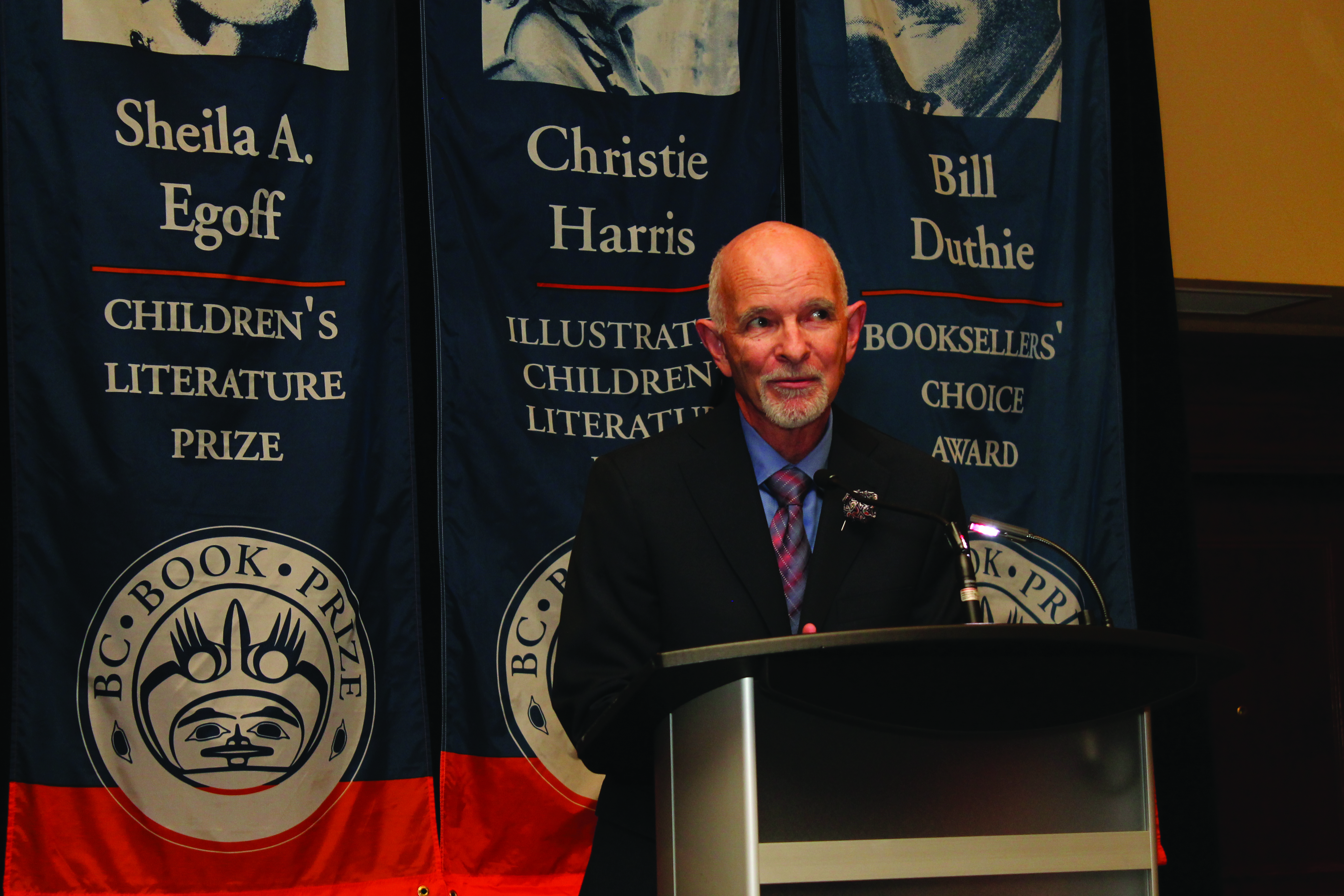
Comedian, writer, and former Peak editor Charlie Demers emceed the 30th annual BC Book Prizes Gala Saturday, May 3. The ceremony, held at the Renaissance Harbourside Hotel in downtown Vancouver with the jovial Demers at the helm, awarded eight prizes for literary excellence in the province. 

SFU professor emeritus David Stouck won two different categories for his biography, Arthur Erickson: An Architect’s Life: the Hubert Evans Non-Fiction Prize and the Roderick Haig-Brown Regional Prize.

In his thank-yous, Stouck said it was an “enormous privilege” to study Erickson, the renowned local architect who designed our own SFU Burnaby campus as well as the Museum of Anthropoogy at UBC, and Vancouver’s law courts. Stouck also acknowledged Ethel Wilson’s niece, Mary Buckerfield White, who suggested he write the book on Erickson. 

The Dorothy Livesay Poetry Prize was awarded to Jordan Abel for The Place of Scraps, which explores the connection between First Nations cultures and ethnography. He was inspired by Marius Barbeau’s book Totem Poles, whereby attempting to preserve Native culture and artifacts, Barbeau actually aided in breaking it apart. 

Abel is a Nisga’a poet, an SFU Continuing Studies instructor, writer, and editor. He beat out two other SFU-connected authors, Renée Sarojini Saklikar for her debut collection children of air india: un/authorized exhibits and interjections, and Russell Thornton for Birds, Metals, Stones and Rain

Other winners announced Saturday night included Ashley Little, who won two different categories for two different books — the Ethel Wilson Fiction Prize for the novel Anatomy of a Girl Gang, and the Sheila A. Egoff Children’s Literature Prize for her YA book The New Normal; Julie Morstad won the Christie Harris Illustrated Children’s Literature Prize for How To, which she both wrote and illustrated; and CBC broadcaster Grant Lawrence, received his second Bill Duthie Booksellers’ Choice Award for The Lonely End of the Rink: Confessions of a Reluctant Goalie

Also honoured at the gala was children’s author Kit Pearson, who accepted the Lieutenant Governor’s Award for Literary Excellence.

Vaporize this

2

8676463181_a410d5e162_o

When I was young, my mother, frustrated with my fidgeting, always told me: “You need something new every now and then to play with!” Nowadays, as I grow up in this tech savvy world, the innocent statement made by mother seems truer than ever.

From inventing gadgets to making tequila drumsticks, humans have done it all. This time, our new obsession seems to be e-cigarettes. So what exactly is an e-cigarette? It’s basically a cigarette-shaped tube through which people can inhale evaporated liquid nicotine as smoke to simulate smoking a regular tobacco cigarette. The draw is that there’s less nicotine and other chemicals than your average cigarette, and some e-cigarettes, or personal vaporizers (PVs), don’t use any at all, relying instead on flavoured vapor.

When I first heard about this invention, I was thrilled — after all, I have more than a few friends whom I’ve been pushing to quit smoking. However, as I later realized, there’s more to this story than meets the eye. In 2013, the World Health Organization released a statement saying that e-cigarettes should not be used as an alternative to quit smoking until they have been proved to be safe and beneficial in the process.

The Canadian Cancer Society reaffirms this opinion, as their research done on 13 e-cigarette products dictates that nine of these had “abnormalities” which could be potentially harmful to users. On top of that, of all the e-cigarette brands surveyed which claimed to be “nicotine-free,” two thirds were proven to contain traces of nicotine and other harmful chemicals.

There’s also the question of the toxicity of e-cigarettes. Though not much has been proven in regards to the danger of smoking these tubes, liquid nitrogen can be very dangerous when ingested or absorbed through the skin. The number of calls to poison control centres with complaints of e-cigarette poisoning — usually of young children — has risen steadily every month between September 2010 and February 2014.

To be fair, many people claim to have quit smoking as a result of this alternative, which is much cheaper than regular cigarettes and doesn’t contain tobacco, tar, carbon monoxide, or any of the other dangerous chemicals that we’re used to hearing about in PSAs. For example, an article in the Ottawa Sun talks about a 25 year pack-a-day smoker who switched from smoking to “vaping” with e-cigarettes and, seeing his wallet fuller and his health improved, “never looked back.”
The real question, then, is this: do the pros outweigh the cons?

The normalization of e-cigarettes could easily become a stepping stone to the real thing.

According to the Centers for Disease Control and Prevention, the percentage of US high school students who’ve tried vaping doubled from 2011 to 2012. Angela Webb, a senior public policy advisor for the Canadian Cancer Society in Alberta, spoke to The Calgary Herald about the dangers of vapour, saying, “Even if they are approved as a cessation device, e-cigarettes still normalize smoking. The big concern is they undermine smoking bans.” One might consider that the normalization of e-cigarettes could easily become a stepping stone to the real thing.

Given that there’s little to no regulation on the production and taxation of e-cigarettes, we still don’t really know what the dangers are, which is pretty scary. The e-cigarette industry, still in its infancy, also benefits from a lack of rules and regulations regarding the use of e-cigarettes in public places. Canada’s ban on smoking in public places applies only to cigarettes containing tobacco, and so far, electronic cigarettes do not fall under that category.

Lack of research regarding this matter leaves us with no choice but to rely on public opinion, which is split: one side argues that smoking an electronic cigarette in a restaurant, for example, is perfectly harmless as it does not contain tobacco, whereas the other side argues that e-cigarette users inhale vapours which sometimes contains nicotine — not exactly a part of a healthy atmosphere.

The world is a scary place. An electronic cigarette — which, according to manufacturers, is completely harmless — could easily be hijacked by the tobacco industry, putting the young adults of tomorrow in a difficult situation. If there are no laws in place regulating the use of electronic cigarettes, it’s hard to imagine what will happen if these products start being circulated with tobacco.

Of course, I may be biased. A part of me becomes immensely sad every single time one of my best friends pulls out a cigarette, and to their credit, I think electronic cigarettes are a significant invention when it comes to those who are desperately trying to quit smoking. However, the lack of adequate research conducted, plus the fact that this product is readily available in the market to all age groups, is more than a little unnerving.

When I was a child, I once tried to copy an actor I saw in a Bollywood movie — I mimicked his actions by pretending to blow smoke in the air with a pencil. I got a glare from my mother, which made sure that I never even touched a pencil with that intention again, let alone a cigarette.

This is the point I’m trying to make. If we’re saying that vaping is okay, is it unreasonable to suggest that young people might decide to try an actual cigarette? For a country that has cancer as its leading cause of death, we ought to be a lot more careful about what we’re introducing our children to, and what regulations are being placed on such products.


Words can move us in many ways

0

CMYK-Kaitlin Williams, Mother Tongue 1449 cred Tim Matheson (7x8)

Described as “poetic movement performed by actors, dancers and musicians,” Wild Excursions Performance’s new show transforms poetry into physical theatre. “It’s kind of like adapting one marginalized, ignored, misunderstood art form to another,” laughed artistic director Conrad Alexandrowicz. 

The concept for this show came about a few years ago when Alexandrowicz had the idea to work with poetry to create movement theatre. “I’m a fan of Lorna Crozier’s poetry. I contacted her and she said there’s a deadline for a SSHRC grant,” said Alexandrowicz. The two began working to secure the grant funding from the Social Sciences and Humanities Research Council and were successful; along the way more collaborators became involved in the project including another poet, Erin Mouré. “There’s a tremendous amount of untapped material in poetry,” said Alexandrowicz.

Six actors and two dancers make up the cast and the two disciplines work well together: “The dancers are talented improvisers who made up a lot of the movement material,” while “the actors are good at moving text around and editing things,” explained Alexandrowicz. Being open to collaborating with the performers is also an important part of the creative process. “I’m open to all kinds of ideas. If I weren’t I’d be a fool,” he said. 

The show’s music features violin, percussion and a recording of electronic music. Alexandrowicz explained that he has to have the basis of show in place before he can bring in the musical element: “I have to get something sketched out first then bring them in. You have to find room for the music and be careful about the volume.” 

“There’s a tremendous amount of untapped material in poetry.” – Conrad Alexandrowicz, artistic director

Being an interdisciplinary show and working with poetic text, there are some differences for the actors: the language can be very different than what they’re used to and “there is no stable character-actor relationship,” said Alexandrowicz. Their roles are changing within the text so quickly and sketched in the moment. “Sometimes I wish they could take the text in pill form,” he said, explaining that it’s hard to do movement work when holding a script.

The poets were also involved in the creative process and provided their feedback and suggestions to Alexandrowicz who took them into consideration when working on the show. Mouré acted as a sort of dramaturge to make sure that her poem dealing with ethnic conflict between Ukrainians and Poles was interpreted in a suitable way. 

Alexandrowicz said there are so many performance possibilities with poetry and the way it can be interpreted into a dramatic utterance of the text. “You have to open yourself up to a whole new use of language and movement,” he said. There are many universal themes such as love and the importance of family that people can relate to, and the words have plenty of emotional impact. “There’s language in there that I just adore,” said Alexandrowicz. Full of dance, theatre, poetry, and music Mother Tongue will appeal to fans of all artistic disciplines.  

Mother Tongue will be presented by Wild Excursions Performance at the Scotiabank Dance Centre from May 14 to 18. For more information, visit wildexcursions.ca.

The 4 Types of Professors You’ll Meet at University

0

Written by Dr. Thomas McKinley, SFU Professor


There are a few things you can count on when it comes to your university experience. You’re going to take classes, you’re going to make friends, and of course you’re going to meet some professors. Now, I hate to promote stereotypes but unfortunately when it comes to profs at SFU you can pretty much boil them down to four categories. Of course, generally they aren’t going to be just one type but a combination. Some might even fall into all four categories. Anyway, here are the four types of professors you’ll probably meet during your college years, especially if you take my class (Business Administration 201!!!).


1. The “Chill” Professor

BW-chill-EleanorQu

Oh man, this guy is great. He’s the kind of prof who’ll just be really cool and chill all the time. You know, the type who will crack a few jokes about, I don’t know, buisness administration, and everyone will think it’s real funny and want to hang out with him. It’s always a great time with this professor and you’ll just love him.

2. The “Super-Cool” Professor

BW-cool-EleanorQu

Believe it or not, the “super-cool” professor really exists. He’s the dude you’ll take a class with and just think the whole time “Wow, I can’t believe Dr. McKinley (or whatever his name is) could really be a professor, he’s so hip and into all the same music as me.” Definitely, do not miss an opportunity to take a class with this type of prof, or get a beer with him after class at the pub at 4:30 p.m. on Tuesdays.

3. The “Sexy” Professor

BW-gorgeous-EleanorQu

Ah, the “sexy” prof, always a campus favourite. Whether you’re a guy or a girl, gay or straight, you’ll want to take his class just to get a look at him in some of his cool tweed pants. Not only is this type of prof fashionable and extremely attractive, he’s also pretty funny too and can make jokes about anything, even business administration, and actually be funny!

4. The “Too Interesting, Informative and Also Gorgeous” Professor

BW-sexy-EleanorQu

Hey, did you really think they would all be positive? Well, sorry, at university you’re going to meet a few profs who are just so downright good at their jobs that it’s annoying. Seriously, give yourself a week in this guy’s class and you’ll want to be his friend so bad you’ll just want to die. If you want to fall madly in love with a prof to the point where you spend all lecture writing “Mrs. Thomas McKinley” inside hearts, be my guest, but don’t say I didn’t warn you!

Tippy Top Ten: Summer Classes

0

Here are the Tippy Top Ten Reasons Professors Hate Teaching Summer Classes…


10. Outdoor lectures no longer effective punishment

9. No chance to do any extracurricular firefly catching

8. Have to work with only burnout, skateboarder TAs

7. Can’t have barbecues without inviting entire class

6. Had plans

5. Shakespeare can’t compare with the Spiderman movie

4. Students clearly thinking about MLB regular season instead of lectures

3. Struggling with air conditioner takes valuable time away from struggling with Powerpoint

2. Elbow patches look ridiculous without sleeves

1. Beach-bod going to waste on a bunch of nerds

Mental Alopecia #2

0

SFU faculty push to unionize

0

CMYK-Facutly union-Flickr-Alejandro Maija Greene

The SFU Faculty Association (SFUFA) is pursuing certification, which would make the SFUFA a bargaining unit recognized by the BC Labour Relations Board. This move follows in the footsteps of the University of Victoria, whose faculty association voted to unionize on January 24.

According to SFUFA president, Neil Abramson, the SFU administration currently allows the SFUFA to bargain on behalf of professors. However, that power is dependant on SFU administration and could be revoked.

“The issue about where you get your power from is that if your power comes from the university administration and they might get seriously pissed off at you, they could withdraw that [power],” said Abramson. “Whereas if you’re a union, you’re recognized by the Labour Relations Board.”

However, he is careful to point out that the push for certification is not due to a strained relationship with administration, or animosity, as was the case with UVic: “We have a very positive relationship with our administration, and we’ve had the whole time I’ve been involved, which is about 17 years now.”

Abramson added, “We’re not doing it because we’re unhappy about what the administration is doing; we’re doing it because our administration just doesn’t have the horsepower to help us.”

However, he does lay some blame on the Public Sector Employers’ Council (PSEC), the provincial regulatory body in labour relations.

Abramson noted that he was initially against certification and had tried to negotiate interest arbitration — in which an arbitrator can pick a compromise between the two sides — rather than having to choose a side, as SFU currently must. Allegedly, SFU administration was willing to accept, but PSEC proposed conditions that were unfavorable.

“We’re doing it because our administration just doesn’t have the horsepower to help us.”

– Neil Abramson, SFUFA President

“All of administration supported us [. . .] about interest arbitration but they had to confirm with PSEC whether that was a possibility or not and they said yeah [. . .] but one of the factors has to be that they absolutely can’t go any higher than what PSEC has dictated,” said Abramson.

He added, “Our lawyers said don’t take that because that’s even worse than what you got now.”

In a statement released online, SFU vice-president, academic and provost Jonathan Driver said that SFU administration has taken a neutral position on certification. “The relationship with SFUFA has been one of cooperation and mutual respect and, regardless of the outcome of this process, the administration remains committed to ensuring it remains so,” stated Driver. However, he said certification “would put the relationship on a different legal footing.”

Said Abramson, “Nothing is likely to change except we will have some extra places [where] we can talk to [the administration] and ask them to listen to us.”

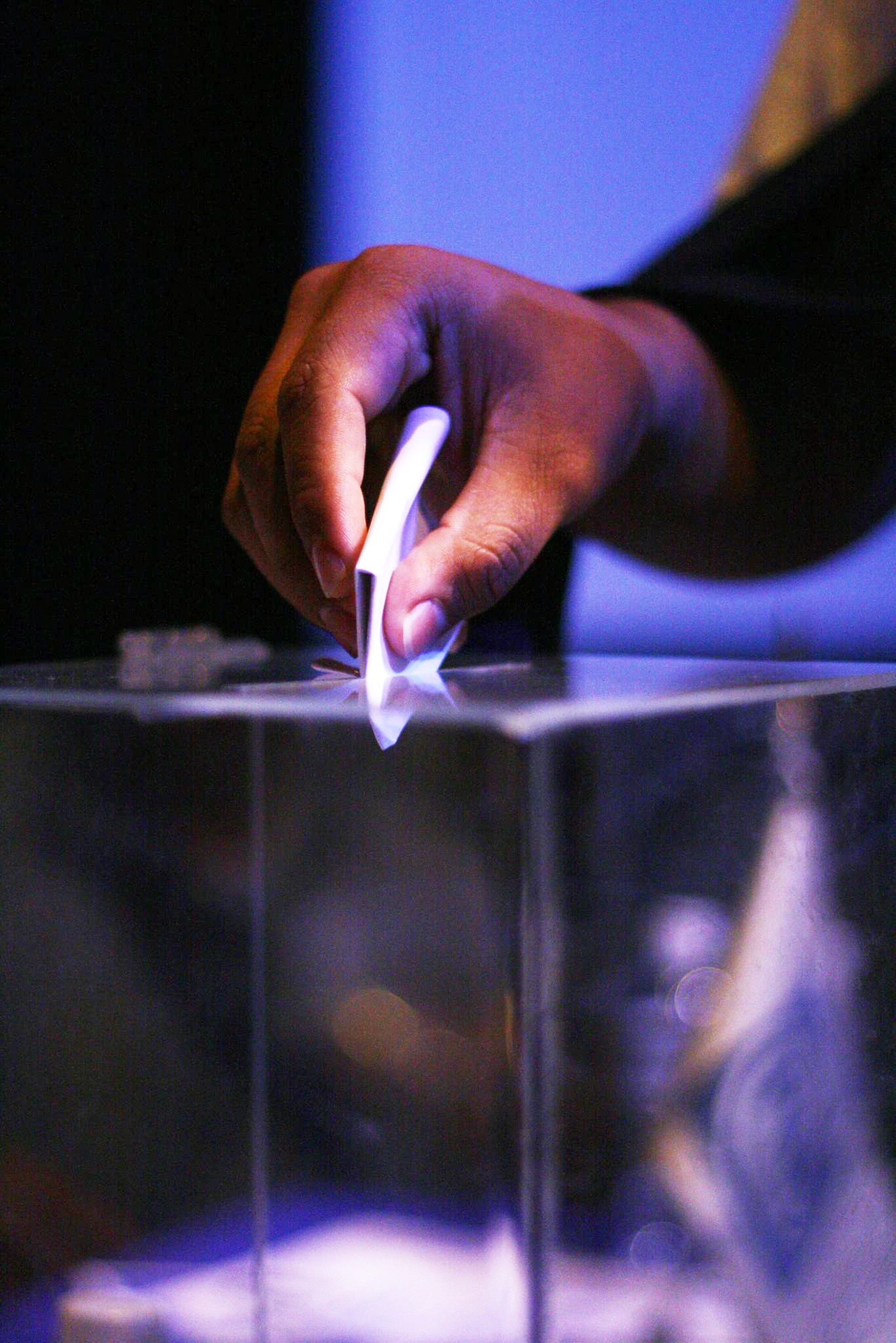
Unionization was first brought up in a SFUFA meeting last spring, and now it appears that most faculty are behind certification. In an electronic poll over Christmas, 45 per cent of faculty voiced their opinions on the issue, as compared to the 35 per cent estimated to respond. However, Abramson believes that 10 to 15 per cent of faculty could be against unionization.

Although the SFUFA were initially planning to vote in the fall, they have decided to do so sooner. Abramson is hoping to be certified by June, with a vote by the end of the month, but the vote itself is up to Labour Relations. “We’ll see what happens,” he concluded.

National parks should be WiFi-free zones

0


WEB Cell phone park-Flickr-MTSOfan

As warm weather and sunny skies appear, more campers and hikers prepare for weekends away from the daily grind. However, by the end of the summer, as many as 50 national parks could be WiFi enabled.

According to Andrew Campbell, director of visitor experience with Parks Canada, the inclusion of WiFi in parks is meant to attract youth as well as help adults stay connected with work and social life while away. The project promises to only include the installation of WiFi around campgrounds and information centers. Regardless, WiFi in national parks is a step in the wrong direction that comprises a major reason city folk flock to the great outdoors: to escape the Internet.

In their efforts to sustain a peaceful and enjoyable atmosphere, Parks Canada has forgotten their own mandate which is to “protect and present nationally significant examples of Canada’s natural and cultural heritage” (The Parks Canada Charter). WiFi capabilities endanger the environment they have set out to protect. Nothing about tablets and smartphones exemplifies Canada’s natural heritage, nor should it represent our cultural heritage.

By installing a virtual way out of the woods, many people will succumb to the temptation of Facebook, email, and Netflix.

Staying plugged into the city life while away will hinder the experience of campers and vacation seekers. Being in the woods with no reception forces campers to relax and families to spend time together. By installing a way out, many people will succumb to the temptation of Facebook, email, and Netflix. National parks would no longer be places of refuge for those who wish to be temporarily disconnected from the outside world.

Campbell claims that younger generations will feel more compelled to make the trip out of the city to experience the campgrounds if they feel they can continue to communicate with friends back home. But by letting web connectivity control the enjoyment of the youth, part of the purpose of making such a trip is defeated.

Parks Canada needs to focus on their primary commitment to Canadian citizens: the protection of our wilderness and historic sites. It seems as if they have lost focus, becoming too tangled up in the modern world. The time and money spent on this counterproductive project could be better spent on conservation and maintenance of national sites.

Ultimately, Parks Canada is pursuing a contradictory project. It is not aligned with the mandate that the organization has prided themselves on in the past, and should be reconsidered before investing excessively in the installation of WiFi on campgrounds.

Parks Canada, acknowledge and respect the negative outpour of frequent and seasonal campers. Making campgrounds web-accessible hardly acts in the best interest of Canadians and our parks.