Home Blog Page 1178

Former SFU employee pleads guilty to fraud

0

WEB-Greedy Saidi-Flickr-Andreas
Siamak Saidi, former SFU director of finance, has pleaded guilty to the charge of fraud against SFU.

He was charged with defrauding the university of over $800,000 and, after one year in custody, has been sentenced to four more. In addition to his four-year sentence, Saidi has been ordered to pay a restitution of $50,000 to the university.

The money was funnelled out of the Faculty of Science. An internal audit showed that over the two years Saidi spent in his position, he processed over 500 false invoices from companies of which he was a director. His actions were discovered by a new manager only after he had left the job.

Saidi has also pleaded guilty to another count of fraud of against the Cultus Lake Park Board of which he is now a former employee. Records show that he siphoned approximately $10,500 in HST funds from the board.

Saidi’s lawyer, Larry Gold, told CBC, “The crimes that he plead guilty, they were serious, they involved a lot of money and a fair amount of planning.” Gold also said of Saidi, “He’s a man in his middle 50’s who hasn’t really got a lot to look forward to when he comes out.”


Staff raise concerns over toxic mould

1

WEB-Mould-2

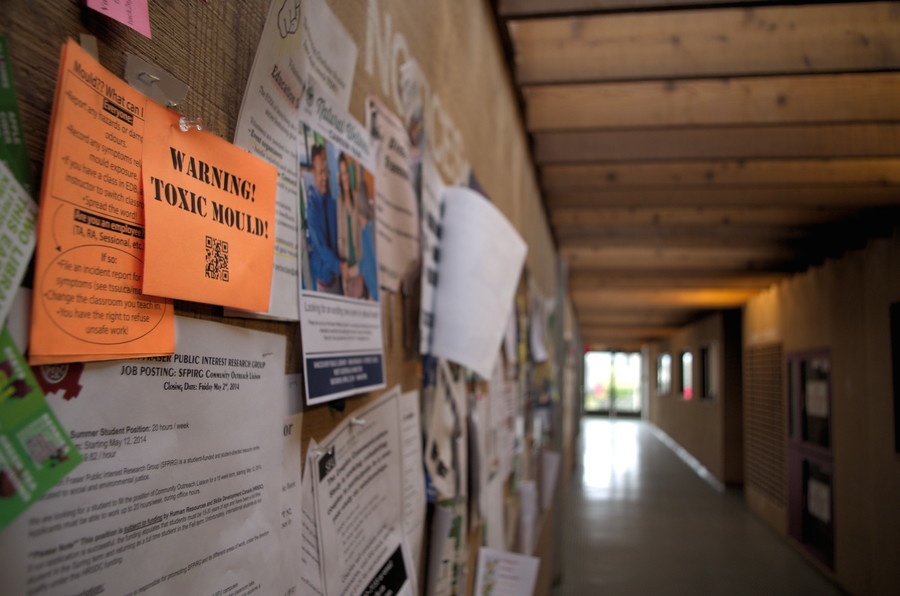
Close on the heels of the Graduate Student Society’s (GSS) deferred maintenance campaign, which strove to create awareness around SFU Burnaby’s aging infrastructure, the Teaching and Support Staff Union (TSSU) is calling attention to potentially hazardous toxic mould in Burnaby’s education building.

The University held a town hall meeting on the issue on March 17 and the TSSU held an event on May 5 to discuss the possible health concerns for staff and students working in the area, and what action should be taken by the university. According to TSSU spokesperson Melissa Roth, the TSSU’s recent event was a great success. “We spoke to more than 200 people easily from every group on campus, [and] totally covered the education building in posters [. . .] detailing symptoms of exposure.”

Roth has spoken publicly on the issue, and articulated concerns at the town hall meeting that the health of staff has already been seriously affected by the mould. As reported the Burnaby Newsleader, Roth provided an anecdote of another SFU union member who said that they had worked in the education building for 20 years, and had experienced symptoms of exposure to toxic mould for much of that time.

In an official release, Roth criticized the breakdown of communication and lack of action from the university on the issue. “Even though some of our members have reported adverse health effects from working in the education building during this time, the union has not received any official communications in 1.5 years as to the extent of the problem.

She continued, “We are disappointed but determined to solve this problem to ensure that our workers have a safe work environment in the future.”

According to Terry Waterhouse, SFU’s chief safety officer, the mould problem is indicative of moisture seeping into the 40-year old building, a fact that the university discovered over the past two years.

Waterhouse, who spoke to the Burnaby Newsleader, said that the water damage has affected the structure of the building along with creating the mould and affecting indoor air quality. The extent of the problem will not be known until June, when assessments have been completed. However, work to fix the problem began approximately a year ago.

Waterhouse also refuted the TSSU’s claims of poor communication, saying that the university has “communicated broadly” with users of the building, disseminated information about the work being done, and held a town hall meeting in March.

The university receives $2.2 million annually from the provincial government for maintenance, although required yearly maintenance costs are estimated at $20 million. In 2011, the university’s Five Year Capital Plan reported that 53 per cent of the campus’ buildings are in poor condition, while another 27 per cent are ranked fair.

TSN needs to stop neglecting the NHL

0

Mr. Ovechkin...The Stanley Cup Playoffs are Calling

If you’ve read many of my articles, you’ve probably deduced that I am a hockey guy.

That being said, since the Canucks season ended, I have been catching markedly fewer games despite the playoff action. However, one of the games I decided to watch was the Anaheim-Dallas game six, an elimination game (although it may have had something to do with fact that my favourite goalie Roberto Luongo was on the TSN panel).

Much to my chagrin, though, the Toronto Raptors game was on the main TSN network, ahead of NHL playoff hockey. The Anaheim-Dallas game was left to TSN2, and also was put behind the Telus Cup, a minor league hockey tournament, while waiting for it to finish in triple overtime.

First of all, I would have to imagine that anyone in Canada, except maybe Toronto or the GTA, would prefer to watch the NHL playoffs over the NBA, no matter how much a Toronto-based sports network wants us to believe that the Raptors are Canada’s main team.

I realize the game showed was Anaheim and Dallas, two of the bigger teams in the league. But at the end of the day, any hockey beats basketball, at least here in Canada.

Even if putting the NBA over the NHL was a valid choice, I would rather cheer for any team but Toronto, perhaps Memphis or Oklahoma, former home teams that moved from Vancouver and Seattle. You can put this down to my Toronto-phobia, but this does not seem limited to me.

If no one wants to watch the Telus Cup in person, I cannot imagine any TV audience.

Most people outside of Toronto surely share my opinion, in line with the attitude that spurred TSN’s mocking nickname ― the “Toronto Sports Network” ― for its heavily Toronto-biased reporting.

Second, it is silly that the Telus Cup bumped the game on their second network. TSN seems to believe NHL playoff hockey is barely worthy of being on their secondary channel.

I feel bad when I say this, because the Telus Cup is for kids. For kids to get that kind of exposure is kind of awesome; all the power to these players. But at the same time, the arena was empty. If no one wants to watch it in person, I cannot imagine any TV audience watching the event.

I cannot be the only one who wants to watch playoff hockey. I would imagine I was not the only fan disappointed to see the NHL playoffs neglected in favour of not one but two other programs.
At least now that the Raptors are out, hopefully, TSN will provide some better playoff coverage.

Weekly List: The 10 Best Batman Stories

0
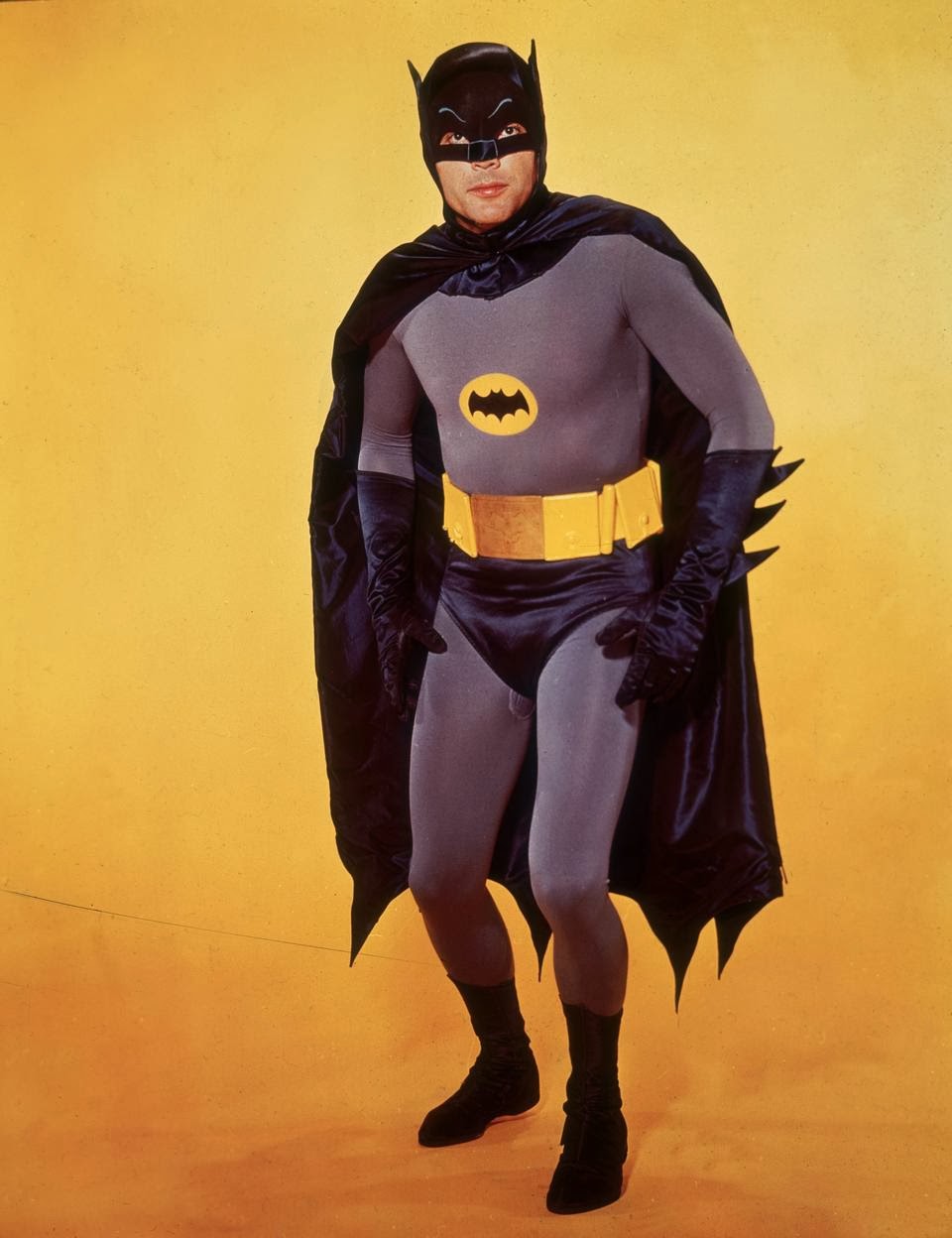
Note: The Weekly List is a new feature for The Peak where we count down the Top 10 of anything and everything. Check back for a new list every week.

10. Year Zero

3195605-4856054162-Batma

2013–present | Written by Scott Snyder and James Tynion IV | Illustrated by Greg Capullo and Rafael Albuquerque

This one comes in at the bottom of this list simply because we’re still waiting for the final chapter in this trilogy that has been showing us the origins of the Dark Knight in the New 52, an ongoing relaunch of DC Comics which began in 2011. It is a great retelling of Batman’s origin story, as he slowly develops into the character we’ve known for years.

9. Gotham by Gaslight

batman-gotham-by-gaslight-048

1989 | Written by Brian Augustyn | Illustrated by Mike Mignola

The first of the Elseworlds comics, Gotham by Gaslight reimagines Batman in 1889, where he does battle with Jack the Ripper even as Bruce Wayne is accused of being the infamous serial killer. Its success launched an entire sub-genre of DC Comics in which the characters exist in entirely alternate worlds. A must read if you’re a fan of the steampunk genre, or Mike Mignola’s work with Hellboy.

8. A Death in the Family

Death-In-the-Family

1988–1989 | Written by Jim Starlin | Illustrated by Jim Aparo

This arc remains a significant milestone in the world of comics, featuring the death of Jason Todd, Robin #2, at the hands of the Joker. For the first time, we see Batman willing to cross the line set by his moral code and end the threat of the Joker once and for all. This death affected Batman for years, and even in the modern comic series, Jason’s death is considered a moment in Batman’s life almost as the death of his parents.

7. Requiem for Damien

GalleryChar_1900x900_DamianWayne_52ab7536d3f7a0.28359128

2013 | Written by Paul Cornell, Peter Tomasi, Judd Winick | Illustrated by Scott McDaniel, Patrick Gleason, Guillem March

If the death of Jason Todd affected Batman over the course of several years, one can only imagine how much the death of the most recent Robin affected him, as that Boy Wonder was none other than Damien Wayne — his own son. This story arc gives us an insight into the suffering of both the hero Batman and the man Bruce Wayne; it shows him going through the stages of grief as he struggles to deal with the loss, not only of another partner, but of his child. This arc reminds us that, behind the mask and utility belt, Batman is a human being.

6. Arkham Asylum: A Serious House on Serious Earth

batman-arkham-asylum-wallpaper-322

1989 | Written by Grant Morrison | Illustrated by Dave McKean

Fans of the 2009 video game Batman: Arkham Asylum will recognize this comic even if they’ve never read it, as it was used as a primary source for the game. It’s a psychological thriller, made all the creepier by Dave McKean’s distinctive art style. The Joker takes the staff of the titular asylum hostage and runs Batman through a gauntlet of his foes, all in an effort to show that Batman is just as crazy as they all are. In the novel’s famous conclusion, the Joker tells Batman that there’s always room for him in Arkham.

5. Batman: The Killing Joke

ha-ha

1988 | Written by Alan Moore | Illustrated by Brian Bolland

Considered by many to be one of the best Joker stories out there, The Killing Joke is the closest thing we’ve ever gotten to a Joker origin story, though the character has suggested he prefers his past to be “multiple choice”. The Joker kidnaps and tortures Commissioner Gordon, in an attempt to show that anyone can go mad after a bad day. This story really hit home the concept that Batman and Joker are two sides of the same coin, born out of tragedy, and that the difference between them is much smaller than either one realizes.

4. Death of the Family

2871519-batman_17_pg_021

2012–2013 | Written by Scott Snyder, Adam Glass, Kyle Higgins, John Layman, Scott Lobdell, Ann Nocenti, Gail Simone, Peter Tomasi, James Tynion IV | Illustrated by Greg Capullo, Eddy Barrows, Ed Benes, Brett Booth, Fernando Dagnino, Jason Fabok, Patrick Gleason, Jock, Timothy Green, Rafa Sandoval

One of the many Batman stories that crosses between multiple comic series, Death of the Family highlights the return of the Joker to the New 52 a year after his departure, as he systematically torments the members of the Bat-Family in an effort to eliminate all of Batman’s partnerships — which he sees as a weakness. In addition to Joker’s return, this story also showed that, despite his friendships and partnerships, Batman’s greatest weakness remains his inability to trust those around him.

3. Tales of the Multiverse: Batman–Vampire

batman-crimson_mist_pgokae

1991, 1994, 1999 | Written by Doug Moench | Illustrated by Kelley Jones

My personal favourite Elseworlds story, this unique arc imagines Batman turned into a vampire in order to combat Dracula, who has come to Gotham in search of new feeding grounds. Though Batman has often struggled with his moral code regarding killing, this collection adds another dimension to that struggle, as he must fight his desire to feed even as he continues to serve as Gotham’s protector.

2. Batman: Knightfall

1627460-dcul_7__005

1993–1994 | Written by Chuck Dixon, Jo Duffy, Alan Grant, Dennis O’Neil, Doug Moench | Illustrated by Jim Aparo, Jim Balent, Eduardo Barreto, Bret Blevins, Norm Breyfogle, Vincent Giarrano, Tom Grummett, Klaus Janson, Barry Kitson, Mike Manley, Graham Nolan, Sal Velluto, Mike Vosburg, Ron Wagner

The introduction of the superstrong genius Bane was one of the most shocking events in the world of comic books, especially coming after the death of Superman only a year before. Everyone knows Bane as the supervillain who broke Batman’s spine, but many do not realize that he also orchestrated the breaking of his spirit, burning him out by forcing him to battle most of the villains in his rogues gallery before ambushing him at Wayne Manor. In the aftermath of these events, Batman takes a year to recover, while a reckless protegé takes his place.

1. The Dark Knight Returns

Batman-The-Dark-Knight

1986 | Written by Frank Miller | Illustrated by Frank Miller and Klaus Janson

In addition to being a major influence on both Tim Burton’s and Christopher Nolan’s Batman movies — as well as being arguably the best-written Batman arc — The Dark Knight Returns has often been credited with saving the character, as DC was considering cancelling Batman during the 1980s. The story focuses on a retired Batman at the age of 55 returning to save Gotham, which has become overrun by gangs in his absence. Several scenes from the film The Dark Knight Rises were pulled straight out of the pages of this comic, showing just how long its impact has lasted.


DOXA is full of secrets and lies

0

DOXA fest

“Documentary in Canada is in an embattled moment,” explains Dorothy Woodend, director of programming for DOXA, Vancouver’s documentary film festival. There was a time when National Film Board (NFB) short films were played before Hollywood blockbusters at the local cinema, but it is a time most likely forgotten. For Woodend, the decline of Canadian film and documentary is detrimental to the country; “It feels so insidious,” she said, describing the gradual crumble of the support for Canadian film institutions such as NFB.

This year DOXA presents the world premiere of Shameless Propaganda, an NFB film about, well, the NFB. For its 75th anniversary, the film documents the work of this important Canadian institution, including profiling one of its most important leaders, John Grierson.

“[Shameless Propaganda] is a real celebration of Canadian and B films,” said Woodend. “You forget how left-leaning and radical the NFB once was, under Grierson.” She describes the film as humorous in many parts, affectionate, and presenting Canada in a way we can all be proud of, reminding us why these kinds of organizations are important: “It’s about what Canada really is.”

The current “systematic dismantling of ideology” is such a shame because Canada has been a leader in the art of documentary films. “Other countries look to the NFB,” explained Woodend, “they set a precedent for documentary practice.” With these institutions receiving less and less funding, it’s harder to access Canadian films. “That’s why it’s so important for DOXA to show as much Canadian film as possible,” said Woodend.

 “You forget how left-leaning and radical the NFB once was, under Grierson.” – Dorothy Woodend, Director of Programming

While Canadian film in general is struggling, DOXA is getting bigger each year, with over 1,200 submissions this year and a program of over 100 films. “We look very hard for Canadian films,” explained Woodend, “and we want to include as much Canadian and local content as we can.” This year’s closing night film is Vancouver filmmaker Brent Hodge’s A Brony Tale, a film about the male fans of My Little Pony. Woodend said it’s very nice to be able to close the festival with something Canadian and more importantly local.

One broad theme of this year’s festival is Secrets and Lies. Inspired by the recent news of Edward Snowden and the many references to surveillance culture, Woodend said this theme went in many directions from there as all kinds of films were submitted.

The selections to be featured at the festival include John Lundberg, Mark Piklington, Roland Denning and Kypros Kyprianou’s Mirage Men, a film about the FBI infiltrating a UFO community. Woodend also highly recommends Anna Odell’s The Reunion which she said is “a bit wild” and deals with high school revenge.

Selecting all the films for this festival is not an easy task, and the volunteer screening committee spends many hours watching all kinds of documentaries. The open call for submissions each October allows almost anyone to submit their film with a low cost entry fee of $15. The goal is to always keep the barriers to accessibility very small and Woodend said it’s nice to be able to discover talented emerging filmmakers. “You want to discover their first films,” she said.

Over the years, much has changed at the festival, including the way the committee watches each submission. “When I first started at DOXA, we received all the submissions as VHS tapes,” said Woodend. “This year almost every film was sent as an online screener,” but she said this major shift to online has only happened over the past six months. Processes must be constantly reinvented with the technology changing rapidly.

Canada’s largest documentary festival, HotDocs, just concluded in Toronto; Woodend explained that DOXA is different in many ways. “DOXA is not an industry festival,” she said, so people aren’t trying to buy and sell films. It’s also much smaller than HotDocs and is an audience driven festival. “Vancouver is not Toronto,” said Woodend, “the industry and audience is much smaller, but that doesn’t mean it’s any less valuable.”

When filmmakers come to DOXA, the goal is more about appreciating film with the audiences and networking with the other filmmakers, rather than pitching their own films. The humble DOXA always tries to maintain the ethos of its origins: a documentary festival with a focus on social justice and grassroots activism that promotes local and national films.

DOXA runs May 2 to 11. For more information, visit doxafestival.ca.  

SFU Burnaby road construction enters Phase 2

0

WEB-Road Work

As construction began on the second half of Phase 1 of SFU’s 2014 Roadway Improvement Project, the plan to replace SFU Burnaby’s 50-year old roads also moved into its second phase on April 28. 

Initially estimated to begin in May or June, construction on Phase 2 officially began on Thursday, May 1. This phase, which will overlap with the last half of Phase 1 and first half of Phase 3, will see major reconstruction on Gaglardi Way from the intersection of South Campus Rd northbound to the three-way intersection at University Drive. Construction will therefore involve traffic underneath the transportation center.

Director of parking services, David Agosti, does not anticipate major inconveniences to students. “Phase 2 is just sort of uncomfortable pieces rather than major changes,” he said.

This phase will also involve University Drive from the three-way stop at Arts Road westward to the intersection of West Campus Road, near Residences. Construction on these areas is expected to last until the end of August.

The project was implemented to tackle the growing issue of poor road conditions on SFU’s Burnaby campus; the roads have not been replaced since the university first opened in 1965. Furthermore, the university hopes the improvements will create better pedestrian and cyclist access to campus, make navigation around campus easier, and allow for future development on the west side of campus.

“Phase 2 is just sort of uncomfortable pieces rather than major changes.”

– David Agosti, director, parking services

Phase 1 of the Roadway Improvement Project saw the closure of northbound Gaglardi Way up until South Campus Road, with traffic redirected along University Drive East. According to Agosti, “Everything has been fine. We don’t have any lost buses or anything along those lines. Everything has been happening as anticipated.”

One of the greatest successes of Phase 1, according to Agosti, was the ability to reroute the buses to leave campus via their normal route, despite closing off the residence bus loop. “That made life a lot easier for a lot of the students in residence,” he said.

In order to minimize congestion and traffic complications, Phase 2 will occur in a series of “sub-phases.” Parking services expects there to be at least a half-dozen of these sub-phases, during which one section of the road will be worked on at a time. 

This phase should not involve any road closures or significant traffic pattern changes. However, there will likely be single lane traffic, gravel roadways, and the closure of certain access points.

“The down campus buses for a period of a week or two may use that other bus stop adjacent to the library rather than the one adjacent to the island,” said Agosti. However, students will be most affected when Phase 1 ends and or Phase 3 starts.

“When Phase 3 starts, [the residence] bus stop will be out of service because the road will be closed from there down,” said Agosti.

Parking Services expects Phase 1 to end on schedule on July 1, when construction will shift and continue southbound West Campus road all the way to the main Gaglardi intersection for Phase 3. At this time, northbound West Campus road is expected to be open.

Canadians react to Fair Elections Act

0

Fair Elections Act Web

Opposition to the Conservatives’ Fair Elections Act, which was created to make it more difficult to break elections laws, has resulted in the proposal of 45 new amendments to the bill.


The original bill came under considerable controversy because it would make it harder for some voters to cast a ballot: first, by eliminating the vouching system that allowed 120,000 people to vote in 2011; and second, by disallowing the use of Voter Identification Cards (VICs) for university students, seniors in residence, and Aboriginal people living on reserves.


However, the proposed amendments include backing down on the elimination of the vouching system and the continual acceptance of VICs as ID. Also, the proposal no longer includes a campaign-finance change which would eliminate limits on fundraising calls to anyone who has donated $20 or more in the previous five years, a provision that some worry would give considerable advantage to larger parties with wealthy donors.


As reported in The Globe and Mail, chief electoral officer Marc Mayrand warned parliament that this financial exemption would “compromise the playing field” between political parties and would be “difficult if not impossible” to enforce.


Despite expectations that the bill will now pass, critics are still concerned about the Fair Elections Act. “I’d say it’s significantly improved in about one-third of the problematic areas, but there’s two-thirds of very problematic areas it doesn’t touch,” said NDP critic Craig Scott.


The 2014 Fair Elections Act was met with much opposition from Canadian politicians and citizens. A petition against the bill exceeded its goal of 50,000 signatures from Canadians within just 24 hours.


Chardaye Bueckert, SFSS president, has been a strong voice in opposition to the bill since its first proposal. She pointed to its significance to students, with an emphasis on the necessity of vouching and the use of VICs. “[Students] are less likely than the average person to have government-issued photo ID that shows their current address,” due to the fact that they tend to move around the country for education, she explained.


Though unable to have someone else vouch for their residency, or to use a VIC, students from out-of-province would be able to present bills or bank statements showing their addresses to prove residency. Bueckert says this presents a barrier to voting for a demographic with steadily declining voter turnout: “At a time when youth are continually voting less and less [. . .] it is fundamentally illogical and immoral to not make efforts to encourage them to vote.”


While the amendments attempt to address the issue of voter suppression, and to even the political playing field with the removal of the exemption on limit of phone calls to previous donors, the bill still leaves something to be desired for Bueckert. “The second major concern is the inability of Elections Canada to do non-partisan ‘get out the vote’ efforts,” she explained, inhibiting the initiative to improve voter turnout.


On behalf of the SFSS, Bueckert attended a day of national action on March 25, called “Let People Vote!,” organized by local group, LeadNow. The event involved the presentation of a joint petition boasting approximately 84,000 signatures opposing the bill at the office of MP James Moore in Port Moody. There were about 40 people in attendance, including some students, who stood out in the rain to demonstrate their opposition.


Bueckert concluded that it is extremely important for people to be aware of the important changes this bill could bring, a bill that in her words, attempts to systematically disenfranchise people who are less likely to vote for a conservative-style party. Said Bueckert, the proposal “is not appropriate, it’s not democratic, and I think that the response to this bill has shown that it’s not something Canadians will stand for.”

BC Law Society rejects motion to disapprove Trinity Western law school

0

WEB-TWU

In mid-April, the BC Law Society rejected a motion that would have barred graduates of Trinity Western University’s (TWU) new law school from practising law in BC. Opposition to the new law school, which will open in 2016, voiced concerns about the school’s ban on intimate relations outside of heterosexual marriage.

This vote follows Advanced Education Minister Amrik Virk’s decision last December to green-light TWU’s proposed law school. The decision has come under concentrated criticism following the approval of the school by the government of BC and the BC Law Society because of TWU’s controversial community covenant.

Trinity Western requires that its 3,600 students sign a community covenant that “bars sexual intimacy that ‘violates the sacredness of marriage between a man and a woman.’” According to Huffington Post, the covenant has been criticized as discriminatory against gays and lesbians, and the opposition sees this as grounds to question the establishment of a law school.

This view has been challenged by the TWU administration; president Bob Kuhn said in a news release on Friday, April 25, “We are very disappointed. These decisions impact all Canadians and people of faith everywhere. They send the chilling message that you cannot hold religious values and also participate fully in public society.”

Trinity Western University is a private institution and so is able to shape its regulations as it sees fit — in this case, with Christian values at its core. However, Victoria criminal lawyer Michael Mulligan launched a petition to overturn the Law Society’s decision earlier this April. Mulligan collected and submitted more than 1,000 signatures from BC lawyers opposed to the decision — more than twice the number required to trigger a vote.

“[The opposition] send[s] the chilling message that you cannot hold religious values and also participate fully in public society.”

– Bob Kuhn, TWU president

In light of the petition, the society had 60 days to hold a special general meeting to allow all members to vote on the recent decision. On April 11, the benchers voted 20-6 against the motion.

The clash between freedom of expression and freedom of religion has caused clear cleavages across the country, with the law societies of BC, Alberta, Saskatchewan, Prince Edward Island, Newfoundland and Labrador and Nunavut having cleared Trinity Western Law graduates to practice law.

The Societies of Ontario and Nova Scotia have voted against the school’s accreditation. The Law Society of Upper Canada voted 28 to 21 against the accreditation of Trinity Western University’s proposed law school, meaning that graduates would be unable to practice law in Ontario.

In an interview with The Peak, SFU professor of political science and ethics, and Scholar-in-Residence, Amyn Sajoo, commented on the issue. “It is not about a human rights claim versus mere interest, but rather about two clashing human rights claims. [It is about] the right to equality on basis of sexual orientation versus freedom of religion to regulate practices in conformity with Christian beliefs,” he said.

For Sajoo, this conflict is similar to one which occurred in 2001, when the British Columbia College of Teachers rejected the TWU’s application to have their teaching degrees certified. The case was eventually brought before the Supreme Court of Canada and, in an 8-1 vote, the court ruled in favour of Trinity Western. The court reversed the college’s decision on the grounds that the rejection was baseless, stating “the concern that graduates of TWU will act in a detrimental fashion in the classroom is not supported by any evidence.”

These sentiments were echoed by Sajoo, who stated that, “TWU and its grads were free to hold beliefs that might be regarded as offensive, but unless they acted in ways that harmed the public interest, it was not proper to restrict the university.”

Today, the tension between the two human rights claims is still difficult to resolve. “The line may be difficult to draw in all instances, but it is a vital aspect of reconciling religious freedom and equality,” concluded Sajoo.

Commander in Chief

0

WEB-RGB-Chardaye-1

It’s a chilly morning on Burnaby Mountain. The semester has yet to begin, and aside from a few stragglers, the campus is empty: the calm before the storm. Chardaye Bueckert is still days away from beginning her term as the new president of the Simon Fraser Student Society, but she’s already got her work cut out for her.

“It’s really exciting,” she tells me. She’s serious, articulate, and nowhere near as nervous as you’d expect someone in her position to be. “I’ve been sitting down and making plans for the next year. I went through my platform and counted, and I officially made 21 promises in there. So, lots of commitments to follow up on.”

Looking forward to the year ahead as the leader of the Simon Fraser Student Society, Chardaye is leaving no stone unturned. Having been elected by a 23 vote margin over her ACE competitor Brandon Chapman at the end of last semester, she’s spent the past few weeks planning out the details of her upcoming presidential term.

At the top of her list is increasing the accessibility of the SFSS to the average SFU undergrad. “Most students are working a job or two, taking classes full time, transiting from Vancouver or Surrey, so they don’t have a ton of extra time,” she says. “I think what we need to do is make it dead easy to be involved in the student society.”

“We’re not your typical university. We have a different take on things, and I think that makes SFU worth fighting for.” – Chardaye Bueckert, SFSS president

One of her first planned projects as president is an upcoming student consultation in the fall, organized in hopes of encouraging students to participate in their government and to make their voices heard. “We could be doing a better job reaching out to students,” she says.

She’s not kidding: only about 9.5 per cent of students cast a vote in this year’s SFSS election, the lowest turnout in years.

It’s clear from this figure that many SFU undergrads feel like they aren’t being adequately represented by their government — or that they simply don’t care one way or the other. Either way, Chardaye aims to change their minds. But first, she needs to unite one of the most politically diverse boards in SFSS history.

“The way that I look at it, the president is the one who enables the other board members to be leaders in their own respect,” she says, referring to the predominantly ACE board she’ll be working with in the next year. “I think we need to have a collective vision as a team. Everyone might have a different idea of what they want to do — whether that’s throwing a party, or doing advocacy efforts — but we need to make sure it’s going towards one goal.”

That goal, in her mind, is simple: helping SFU students.

“We have the ability to do really amazing things,” she says. “We have such a unique history. We started off as the people’s university, as a response to the elitism and the inaccessibility of higher education. Our history is one of radicalism and rebellion, and although we might not have protests with thousands of people in Convocation Mall anymore, you can still feel that spirit — particularly in the Rotunda area. I think that’s so unique, and so cool.”

President Chardaye is intent on rekindling the activist spark that defined SFU in its formative decades, and she’s not afraid to challenge the status quo to do it. When I ask her why the average student should care about the SFSS, she immediately pulls her uPass out of her wallet. It’s clear this isn’t the first time she’s been asked this question.

“Students currently benefit a lot from things that the SFSS has done,” she says, citing the uPass, originally an SFSS initiative, as a prime example of that benefit.

“When people ask me what the student society is here to do, I always imagine, well, what would happen if we weren’t here?” she says. “I guarantee you that there would be no one to advocate for lower tuition, for instance. The university, they’re great, but they don’t necessarily have the student’s perspective in mind. Same with the government. While they have a conception of what is best for students, only we can really have that voice.”

In her new role as president, Chardaye hopes to speak for the average student — and to give them the courage to speak for themselves. “People do care, they care so deeply,” she says. “And giving them the sense that they can turn that caring into action is one of my biggest goals.”

Whether or not she’ll be able to accomplish all of her goals in the year to come, it’s clear that Chardaye has big plans for this university, and for all of us. For better or worse, Chardaye is prepared to give her all for this school. “We’re not your typical university,” she smiles. “We have a different take on things, and I think that makes SFU worth fighting for.”

So, what does Chardaye do when she’s not climbing the echelons of student government? It seems like the only question she’s not completely prepared for. “I’m a heart of hearts political science kid. I live and breathe politics; I think it’s so interesting and so important.” Other than that, she says, “I really like heavy metal music, I rollerskate, and I’m originally from Medicine Hat, Alberta.”

The more you know, right?

Super-advanced ape signs convincing argument against evolution

4

VANCOUVER — Scientists were shocked this week when a chimpanzee with remarkable intellect carried out an entire conversation in sign language in which he argued strongly in opposition of the Darwinian theory of evolution.

Jojo, an 8-year old chimp born and raised at the Greater Vancouver Zoo, has been working with a team of researchers for his entire life and is reportedly incredibly advanced for his species. 

“He’s so smart, I sometimes forget he’s not just a really ugly, hairy human,” laughed Dr. Jean Wiseman, a biologist who’s been studying Jojo since he was born. “We’ve never seen an ape pick up language this quickly before. It’s incredible.”

According to Wiseman, only a few years ago Jojo could hardly sign at all but in recent months he has become quite fluent, not to mention very opinionated.

“For a long time he would just imitate us, you know like a child would,” Wiseman said. “Now he’s expressing full ideas, it’s remarkable . . . I don’t know where he picked up the idea that earth is only 6,000 years old though.”

“He mostly just asks us ‘if evolution really exists, why am I still here,’ that kind of thing.”

– Dr. Jean Wiseman

While Wiseman is thrilled by the chimp’s progress which she was planning to include as part of her ongoing research into the evolutionary connection between apes and humans, she’s found Jojo’s signs to be a little discouraging.

“He mostly just quotes Genesis and asks us about how ‘if evolution really exists, why am I still here,’ that kind of stuff,” Wiseman explained. “At first, I thought I could easily convince him evolution was real but the more we went back and forth, I started to get doubts myself.”

The Peak briefly sat down with Jojo who signed that he just “could not honestly believe that we had descended from him and that in his mind God created the universe and mankind and ape-kind, and that was that.” 

While researchers like Wiseman are conflicted by the Jojo situation, others, like Pope Francis, have been nothing but delighted by the news.

It’s great to finally see a creature who has enough sense to understand how life works,” Francis said in a press release concerning Jojo. “This chimp is a good Christian animal, very devout, very smart. You know, he reminds me a lot of myself actually. Wait, ignore that last part.”

Although Jojo remains in the care of scientists, he has used his signing skills to request returning full time to the wild where he hopes he can spread his newfound knowledge to his fellow apes.

He hopes that someday all apes will be able to communicate through signlanguage. Then he hopes they’ll all be able to speak and walk full-time on their hind legs and start wearing clothing and lose their annoying unopposable thumbs. But, most importantly he hopes to spread the good word of Jesus Christ and the theory of creationism.