Home Blog Page 1176

The modern mom is only human

0

WEB-Peaches Geldof-Flickr-LGEPR

Model and TV host Peaches Geldof was infamous in the British tabloids from a young age, dabbling in drugs and flirting her way through the London party scene. Her image, though, changed when she became mother to two young boys in her early twenties. She was an advocate of “attachment parenting,” an overly attentive parenting style involving, for instance, letting your child share a bed with you, or continuing breastfeeding until the child is much older than usual.

Most assumed Peaches had turned over a new leaf . . . until she was found dead at home with her nine-month old son on April 7. The official coroner’s report revealed that she had died of a heroin overdose.

The media was quick to judge her. Unfair, patronizing headlines such as “Peaches Geldof Cared More About Heroin Than About Her Children,” (Mirror UK) quickly emerged. While she comes across as overbearing and irritating in her much publicized parenting debates, one thing is clear: she cared about her children. This woman was suffering from a disease, one that she lost her own mother to at a young age.

If her husband, equally outspoken about the “right” way to be a parent, had died, the media would not have been shocked. Fathers, however devoted, are expected to have a life outside of their children. We can equate a father who dabbles in drugs with being a loving guy when he’s home on the weekends.

The public notion is that there are more men who have, to use tabloid terms, “illicit double lives” outside of their family lives. Men are the ones who slip up with affairs and addictions, while women who do the same are home-wreckers and bad mothers. Peaches’ death is proof that addiction doesn’t discriminate and can befall even those who are in a role of extreme responsibility.

Peaches had the means to pay for childcare, but she chose to take drugs while she was alone with her son. We can pity her for being unable to resist heroin, but why would someone who has the money to pay for a babysitter think getting high with her child was a better idea?

Peaches’ overly-attached style of parenting could be to blame for her son’s tragic proximity to her death. She used her role as a mother as a lifeline separating her from the party girl image that seemed to haunt her. This is a woman who associated being a good mother with being a constant presence in her childrens’ lives.

The very notion of motherhood is put under a microscope in modern day society. Motherhood is expected to be central to a woman’s life, with all that came before it being abandoned for breastfeeding and grinning while elbows-deep in poop. We expect mothers to be more central to a child’s upbringing and more devoted than fathers, as reflected most clearly in Peaches’ own parenting style.

The fact that a way of parenting can even be critiqued as right or wrong is ludicrous, but exemplifies the extreme pressure that women are put under to perform to their very best feminine ideal. The pressure of being the ultimate figure in her sons’ lives, which Geldof took on publicly with such vigour, did not leave room for taking the personal time required to fight her addiction.
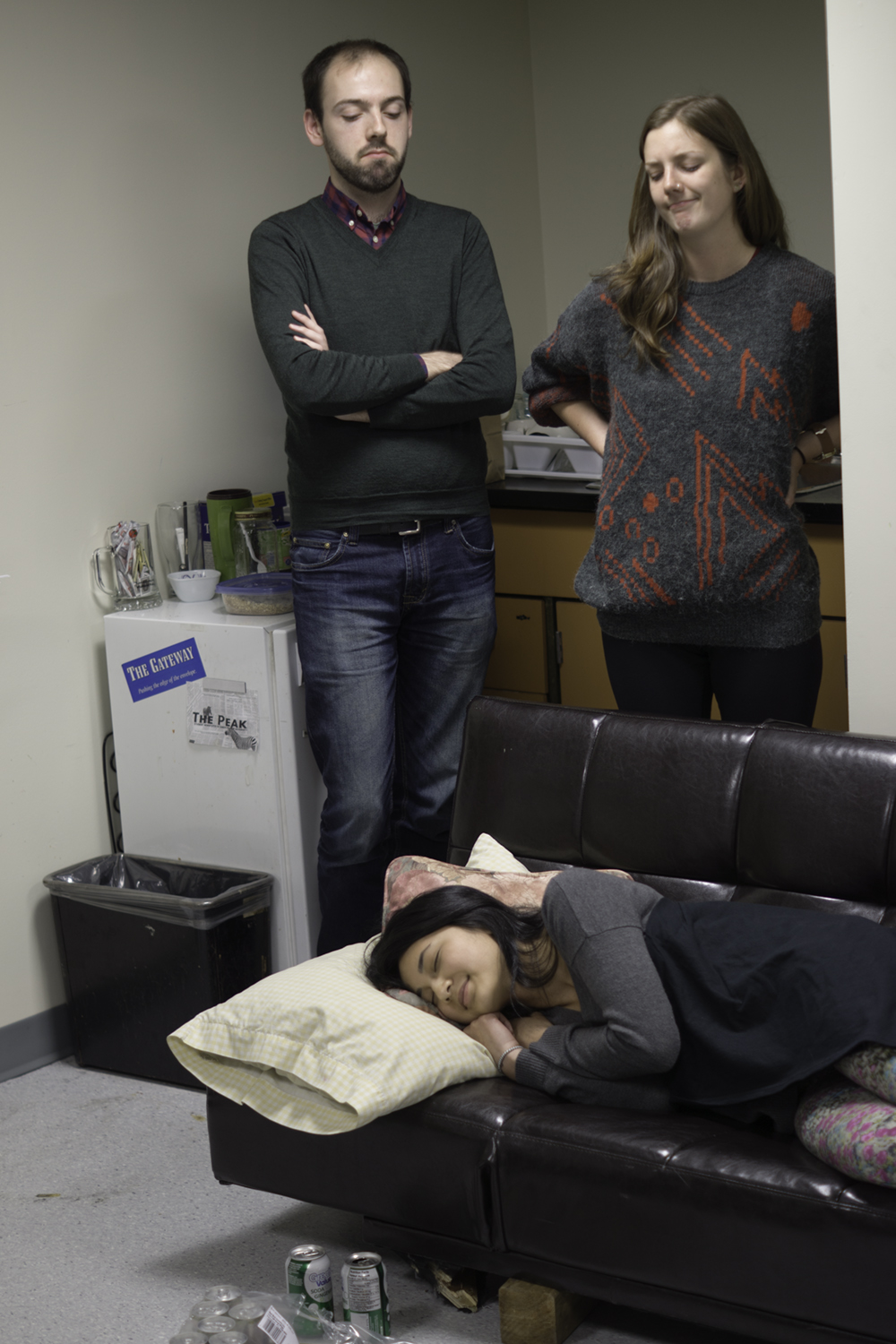

 

Loser parents still living at home with adult kids

0

BURNABY — In a trend which has become all too common in recent years, a local family with three grown children currently in university has opted to remain living together, a decision which has garnered ridicule for the nearly 50-year old parents.

Although believing when they first had kids that they would be completely independant by the time they reached 45, Mary and Herbert Winfried say their transition into autonomy hasn’t been as smooth as they thought.

“Oh man, when I was 34, I was sure I would be living away from the kids by this point,” explained Herbert, thinking back. “I pictured us being totally independent, being able to just buy like one carton of milk a week and only doing a load or two of laundry, I couldn’t wait.”

Unfortunately, things just didn’t work out as planned and the couple remain under their own roof with the kids, a reality that they claim has put a real damper on their social life.

“We can’t stay out late, or have wild shindigs and worst of all our friends won’t stop making fun of us,” Mary explained. “Everyone we raised kids with is off travelling the world or taking sailing lessons and we’re stuck here like losers.”

While the Winfrieds do admit that there are some perks to still living at home, like not having to pay for their kids to live in residence, they say they’re really hoping they can get out soon, or at least get rid of their kids.

“My friend Marty lives in a retirement plaza in Florida and says he can totally hook us up with a place there” Herbert said. “I don’t know if I want to do it though, I mean I still kind of like it at home, not that I couldn’t live alone, I’m just waiting for the right time.”

Despite what their friends might think of them, the Winfrieds say that at least they have the support of the kids they support.

“I do think its a little pathetic that they still live with us, but if they’re not going to kick us out that’s okay, they just need a little more time than some parents,” the couple’s oldest child, Bill, who just celebrated his 29th birthday, told The Peak. “They probably would just be lost without us though, I don’t know what mom would do if nobody was asking her to make lunches every morning.”

Although they continue to look at themselves as losers who will probably live with their kids forever, there is hope for the Winfrieds. While statistics show that almost half of parents in their 50s still live with their kids, the number takes a dramatic dive when they reach their 60s.

“No matter what people might think, our situation is fine for now,” Herbert concluded. “Maybe I could just ask my parents to move in, then at least we’d be cooler than them, I mean can you imagine, still living with with your kids at 80! They’d be such losers!”

HIV continues to adapt to human hosts

6

amoeba-JerryGuoUsing evidence from HIV evolution in North America, SFU researchers have discovered that the virus is slowly adapting over time to its human hosts. Nevertheless, assistant professor of health sciences at SFU and lead author of this study, Zabrina Brumme asserts that the evolution is not progressing fast enough to be a danger to humans.

Brumme explained, “The purpose of our study was to investigate the adaptation of HIV to immune selection pressures in the North American population. To do this, we studied HIV specimens dating back from 1979 to the present day. From these specimens we extracted human immune information as well as virus sequence data and looked for evidence that the virus was adapting to our immune systems over time.”

With funding from the Canadian Institutes of Health Research (CIHR) and the Michael Smith Foundation for Health Research (MSFHR), Brumme’s lab was able to collaborate with scientists at UBC, the BC Centre for Excellence in HIV/AIDS, and sites across the US.

Although HIV-1 specimens used in the study were from 1979, the oldest specimens sequenced date back to 1959 and 1960.  “Both are from Central Africa. With respect to North America, the oldest sequences date back to 1979 and were collected as part of our study.” Brumme said.

The findings of the study, she stated, were evidence that the virus is indeed slowly adapting over time to its human hosts. However, Brumme says there is no need to panic: “This change is so gradual that it is unlikely to have an impact on host immunity to HIV — or vaccine design — on a relevant timescale.”

She continued, “Basically, we’ve got the tools now, in the form of potent anti-HIV drugs, to turn the tide of HIV globally. These drugs do two things: a) they save lives and b) they reduce the risk of HIV transmission essentially to zero.”

The research team hopes that by collecting and sequencing historic HIV-1 isolates, they will be able to achieve a deeper understanding of how HIV has spread around the world. “Understanding how HIV evolves in infected persons and host populations is also relevant to HIV prevention, notably development of an HIV vaccine,” Brumme said.

Although the evolutionary side of HIV is just one piece in a much larger puzzle, the team says they have reasons to be hopeful. Brumme explained, “A major global priority is the delivery of HIV treatment to the millions of people worldwide who need it — to save lives and eliminate new infections. While we do the above, we also need to continue to invest resources and scientific efforts towards finding an HIV vaccine and an HIV cure.”


Board Shorts

0
10322451_870130803004330_2358523515364909558_n
The old Board made way for the new during orientation at the start of May.


Committee Appointments

With a new SFSS board now in place, the first order of business was to appoint members to the society’s various committees. The new committee chairs and members were ratified at the last board meeting on May 6. However, there were issues in regards to committee appointments arising from the recent restructuring of the board.

The Internal Relations Officer (IRO) position no longer exists, leaving that spot open on several committees. While the President is to assume all responsibilities of the IRO, the President must already sit on every committee.

The other concern is that of the Member Service Officer’s (MSO) committee seats. The MSO position has now been split into that of VP, Student Services and VP, Student Life. The board proposed recommendations as to how the seats should be divided among the two positions, but this matter — as well as that of the IRO vacancies — will be addressed by the executive members at their next meeting.


Studentcare Health and Dental Stakeholders Conference

The board has decided to send both President Chardaye Bueckert and VP, Student Services Zied Masmoudi to an upcoming Studentcare Health and Dental Stakeholders Conference this May 21 to 23. “The SFSS would not be incurring any costs on this trip beyond the per diem,” said Bueckert, the per diem being $35 each.

Moe Kopahi, VP, University Relations attended the conference last year and called it, “a really good opportunity for us to see what Studentcare will provide in the student plan.” He added that the conference is a place for sharing ideas, one example coming out of last year’s event being a Health and Dental Plan smartphone application.

Batman vs. Gotham

0

6910971608_17e761a42f_bWoohoo: Batman

I didn’t want to write about this. Saying Batman rocks is like saying umbrellas keep you dry. I know it, you know it, and even Marvel fans can admit it.

It’s not just the character. Not just his being the classic young person who devotes his life to avenging his parents, and who uses his every means to make the world a better place, and separate good from evil.

It’s also the stories that ask us what good and evil are, and how one person can define them in the real world. They ask what it means to be a hero, and often, what it means to stand up for what one believes in.

We, as students, are all Batmans, aren’t we? We all similarly struggle to find, define, and do “good.” (I like to think.)

But sometimes it’s more interesting to watch this expressed in its most physical form, one that fights, grows old, and faces death head-on, in its full force.

Boohoo: Gotham

No, I’m not talking about Batman’s city. I’m talking about a new Fox prequel Batman series titled Gotham. I’m also kind of talking about the suspected Batman vs. Superman movie.

Prequels are usually nothing but a means to mentally masturbate over a beat-down concept of a show, especially one as fetishizable as Batman. If companies are so hell-bent on making superhero franchises, where are the new ones? Does the comic book remain the only medium acceptable for superhero experimentation?

If you agree, you might be interested in the countless other Batman prequels that have already been published as comics, and that Fox was not involved in. Cough.

Frankly, I think we’ve had enough Batman in general. The Batman of today probably won’t differ much from the Batman of two years ago.

And damn it, if you agree with me, then don’t watch the movies or series. Don’t talk about them. Preserve the concept of Batman.

New rEvolutions in theatre

0

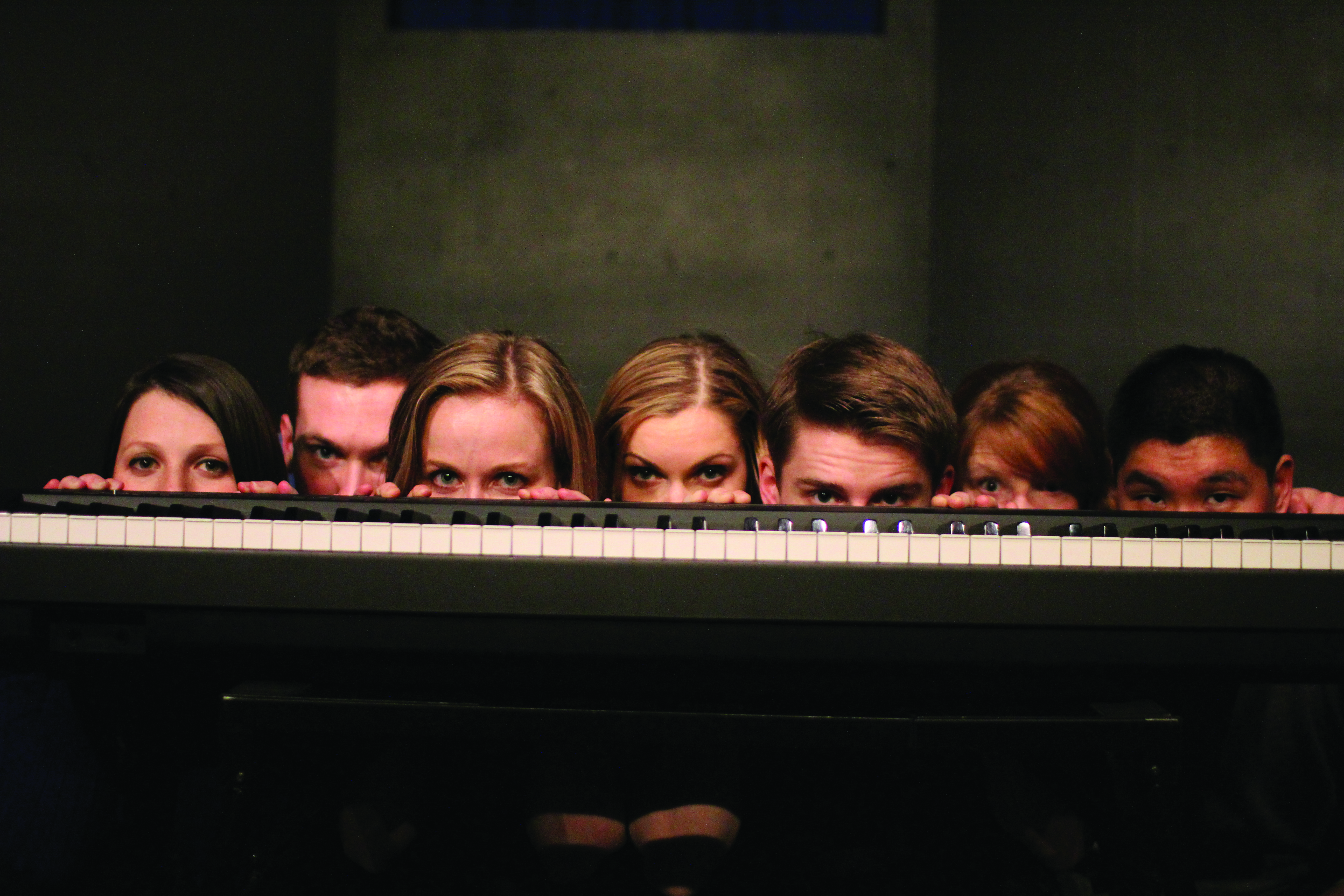
CMYK-off key-revolver fest-in photo alison chisholm, evan thompson, jennifer pielak, jamieson mccormack, sam mitchell, kasia gabinska, peter abando. photo credit jonathan kim

Now in its second year, the rEvolver Festival showcases new works by emerging artists from all over Canada during two incredible weeks of theatre performance. As managing artistic producer Daniel Martin explains, this is “not your grandma’s theatre.” 

The works featured are relevant and modern, fostering discussion and debate among spectators. Hosted at The Cultch, a gorgeous playhouse in Vancouver, the wonderful atmosphere sets the stage for the rEvolver Festival.

In a city such as Vancouver, art is integrated into everyday life, so what sets the rEvolver Festival apart? As Martin says, a big distinguishing factor is that rEvolver Festival is curated; “There is a performance guarantee,” said Martin, “[it’s] not a lottery system.” 

This baseline allows the rEvolver Festival to set high standards for quality, ensuring thought provoking and entertaining pieces are delivered to the audience. 

The performers, writers, and directors participating in the rEvolver Festival consist of emerging artists. The reason for this is “partly biographical,” Martin explains, as there were few opportunities to showcase his work when he was a recent graduate of acting school. 

Not having “the necessary connections as new artists, we made the opportunity,” Martin says, starting with the Walking Fish Festival. Opportunities such as these, Martin says, are “important, they give young people exposure” allowing them to “nurture their talents, which helps them grow as artists.” 

The performers, writers, and directors participating in the rEvolver Festival consist of emerging artists.

Every year, certain topics and styles help to unify the festival, and this year is no exception. Plan to experience lots of music in the various performances, along with an emphasis on creation-based works, instead of the more commonly encountered play-written works. A theme of self discovery runs through the festival, Martin says, as each work has an element that addresses “issues about being in the world.” 

“Expect everything EXCEPT the kitchen sink,” says Martin, as performances will not be about “a family working out their issues in their living room.” Instead, the works featured in the rEvolver Festival will be “stories and presentations that only work in a theatre setting.”  

This festival accents variety, as Martin says that the “variety of genre[s], variety of style[s], [and] variety of artists” will keep all audience members interested. The rEvolver Festival promises to be a place that offers “opportunities for engagement with the arts.”

Those who like “exciting, relevant, risky” works will love the rEvolver Festival, says Martin. Audience members should expect to witness performances that “push outside comfort levels” and “do new things.” There will also be pirates, for any Blackbeard fans out there. 

The artists featured at the rEvolver Festival are those who “are starting to do important work” says Martin. Supporting them, Martin says, allows for a “healthy ecology” of the theatre scene in Vancouver, giving artists continuity in artistic opportunity as they “graduate to the next level.”

Especially relevant to the SFU community are those performances that feature current students and alumni. 

Such performances include Caezr: 33 Cuts, featuring SFU theatre program graduate Victoria Lions, and Off Key: An Improvised Musical, which is a collaboration by various SFU graduates. Catch Emily Pearlman, who graduated from SFU’s MFA program in REVISED From The Belly of a Whale, and recent SFU grad Minah Lee in the performance art piece We’ll Need A Piece of Cake Before We Die

The rEvolver Festival is presented by Upintheair Theatre May 13 to 25 at The Cultch. For more information, visit upintheairtheatre.com

Avril can’t make it any more obvious

0

CKNY Avril Lavigne - Dartagnan Raphael Flikr

Avril Lavigne’s latest single “Hello Kitty” is guilty of a lot of things: lazily choreographed arm waves with camera jitter, unimaginative lyrics, and intense colours and costumes to distract you from all the wretched noise (sorry, Avril, but leave a cupcake skirt for Gaga to work). But contrary to what the Internet is exploding over, racism should not be what the former sk8er chick is being slammed for.

In the video, Lavigne in no way suggests that one race is better than another, or specifically belittles Japanese culture. Rather, she uses pop music as a medium to integrate herself into that culture. “Hello Kitty” is nothing but a pure example of pop music marketing, taken to an extreme, and being mistaken for looking like a parody of Japanese culture.

The explosion of anime and exaggerated Japanese cultural references by Lavigne in the video is over-the-top, but she does this to tap into fundamental facets of Japanese entertainment, specifically the quality of kawaii (cuteness, adorable, etc.), to make herself instantly recognizable to that particular audience. Much of Japan isn’t comprised of people dressed in cupcake skirts, but often, when it comes to the country’s entertainment, the bolder you can be, the more memorable your material will be.

Having been to Japan myself, the daytime is pretty mundane with people in white shirts and black pants, walking to their jobs. But once the sun goes down (and the city lights brighten) areas such as the Akihabara District come to life, with cartoon characters from the television roaming the streets.

Given the vibrant imagery in her music video, Avril seems to channel a typical stroll down Akihabara District. No, she doesn’t reach very far, nor try very hard to be creative, but what the song presents in its video is pretty representative of Japanese entertainment, which is spot on if she was intending to build hype with her Japanese fans.

In that same vein, let’s not forget the music video was filmed on location in Tokyo. Now, who are we to judge if Avril is being racist, when the very country that we are accusing her of belittling welcomed her and allowed her to execute the things she did on camera? Watching behind-the-scenes on the making of this video, you see Avril being guided by a Japanese man on how to dance and speak for the video. If “Hello Kitty” is truly racist, then this bit of evidence could be a tiny bit problematic.

Taking an extreme plunge with everything typically associated with Japanese entertainment (cartoonish outfits, very animated movements, nauseating bright colours, etc.), “Hello Kitty” impressively — possibly sadly — represents what pop music is ultimately about: experimentation.

With a heavy dubstep-esque beat paired with childish imagery and actions, Avril is far from being a racist. She’s an artist first and foremost, simply playing with her art — how good of an artist is completely subjective, however. And you know how artists are: they can’t create anything without a tiny bit of controversy.

Despite it all, say what you want, listen to as much or as little of “Hello Kitty” as you want, the song has clawed its way into most of our ears, and officially earned a spot on the Billboard’s Top 100. Currently, it’s at No. 75. But who’s honestly counting when we’ve got another horribly infectious song to (guiltily) dance to this summer?

Researchers locate brain’s anti-distraction system

0

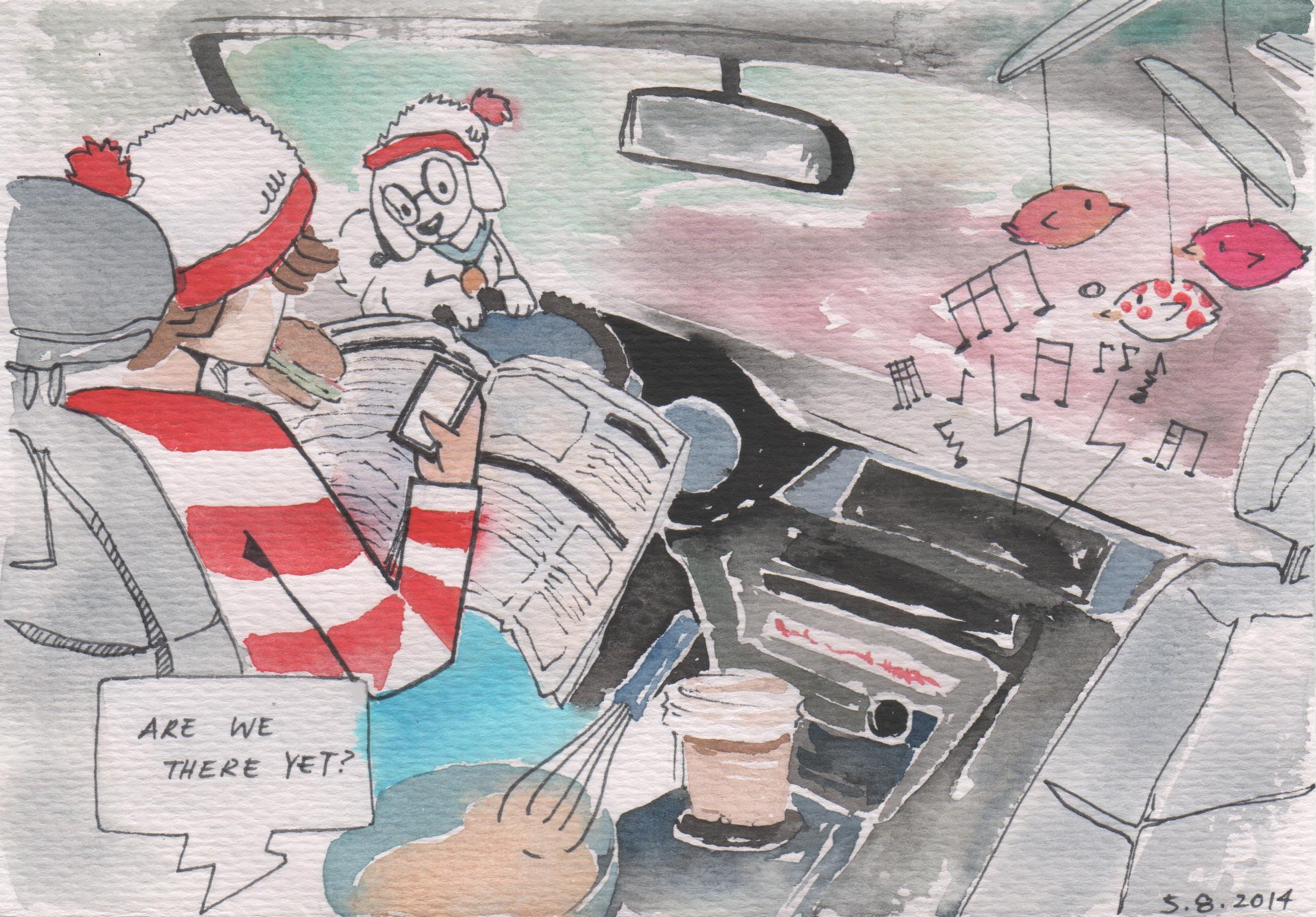
driverwaldo-LilyLiA recent study by SFU researchers John Gaspar and John McDonald has provided new insight into how the brain is able to focus on a single task while at the same time being bombarded with other intrusive and distracting signals.

Gaspar and McDonald have isolated a neural mechanism in the brain as the site which determines how a person is able to block out external stimuli and focus on a task. This is an important step in understanding disorders such as ADHD and schizophrenia.

Researchers have debated for the past 25 years as to whether visual objects grab our attention automatically or whether we are able to ignore these objects. This was difficult to determine because the neural mechanism was not entirely understood. But, thanks to Gaspar and McDonald’s 3.5-year study, we now know more about how this mechanism works.

The study involved three experiments in which 47 students of approximately 21 years of age were given a visual search task, while sensors relayed information about their neural processes related to attention and distraction.

Results provided empirical evidence to show that our ability to ignore intrusive signals is the result of a process called attentional suppression. This describes how the brain will actively suppress signals coming from visual sources that can distract from a primary focus.

Gaspar and McDonald hope this research will broaden the understanding of the most contemporary ideas of attention, which are mainly focused on understanding the neural processes involved in picking out objects in a visual field. Think of a Where’s Waldo illustration; we now understand not only how we can pick Waldo from his chaotic world, but also how we are able to tune out the irrelevant information.

Knowledge of this attentional suppression mechanism is especially important for understanding conditions such as ADHD and schizophrenia. It may help us to understand what these disorders are and whether there are sub-disorders that are currently hidden under these blanket diagnoses.

ADHD is a commonly diagnosed disorder with over six million children diagnosed in the United States alone. It also presents very different symptoms in children and adults. Research concerning how neural mechanisms, such as the one discovered by Gaspar and McDonald, are related to ADHD will hopefully enable us to make more informed diagnoses in the future.

There is still a lot of work to be done in this field because each person’s brain has individual differences in its ability to deal with distraction and focus on tasks. Gaspar and McDonald intend to continue their research on this mechanism to uncover more about how attention works in all its complexity.

The world’s cheapest tablet is good enough!

0
WEB-Datawind Tablet CEO-Flickr-Wordskills International
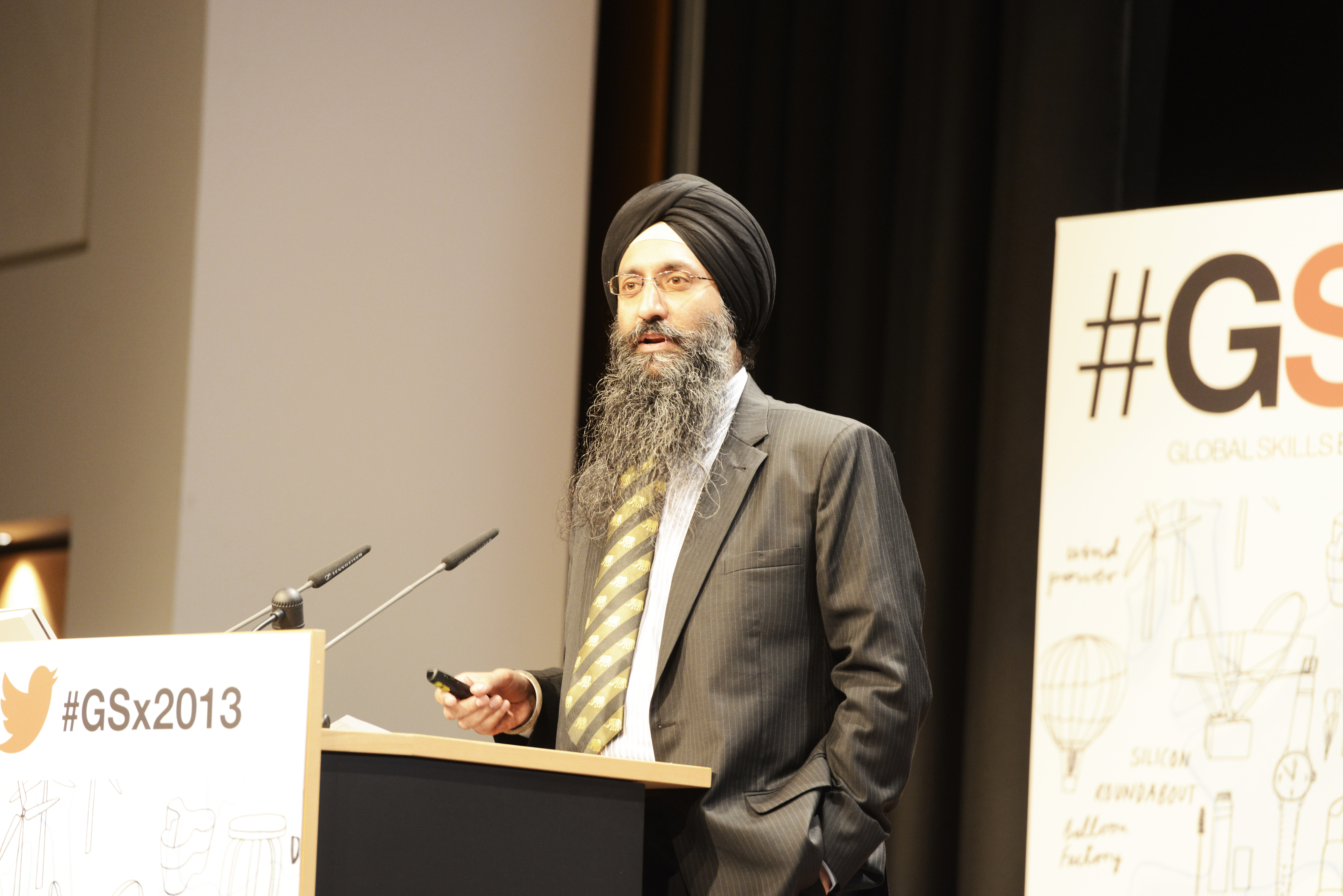
Datawind CEO Suneet Singh Tuli


I love electronics stores. I’m the kind of guy who you’ll find sauntering around Future Shop, staring at all the items I’d already seen when I was in last week. I re-visit so many times, but why don’t I buy anything? It’s because the sight of the bright yellow price tags rips little chunks from my soul.

It’s no secret that Canada has some of the highest rates for electronics in the world. It’s also no secret that our country’s digital divide is steadily increasing. As the poor become poorer, it is becoming more difficult for those less fortunate to purchase gadgets and gain access to the Internet, something that Datawind CEO Suneet Singh Tuli called “a fundamental human right.”

I’m happy to report that this Montreal-based web access development company has recently developed a range of cheap digital tablets with the aim to help bridge the digital divide. Their cheapest product to date, a wireless tablet called the Ubislate 7Ci, ranks as the world’s lowest cost tablet, priced online at $37.99.

“This idea is to bridge the digital divide,” Tuli told the Globe and Mail, “to overcome the affordability barrier.”

Now, I know what you’re thinking: how can a tablet this low in price be of any quality sufficient enough to satisfy customers? The answer is it doesn’t. That is, it doesn’t when you compare it to top-of-the-line Apple products. The Ubislate 7Ci can only hold four gigabytes of memory, and has a screen resolution of 800-by-480 pixels, compared to the iPad mini’s 16 gigabytes of memory and 1024-by-768 display.

To those of us who currently own iPads or high-end Android tablets, the idea of owning a device that can only carry as much data as a DVD seems abysmal. But to those who wouldn’t be able to afford anything else, the opportunity is phenomenal.

Tuli told the Globe that his team is “working on its strategy to sell cut-rate ‘good enough’ tablets.” He knows that his tablets cannot be compared with high-end products, and his aims are not to make them so. He believes there is a strong market of consumers willing to trade performance for low-price.

And Tuli must be right; while the tablet can only provide Internet through wireless connections and has a screen resolution about as good as a screen on the back seat of an airplane, he says that the company initially struggled to keep up with the high volume of orders for it.

Evidently, there is high demand for such a product, and I personally feel it’s about time a company honed in on helping certain individuals acheive their human rights. What’s even better? Datawind recently announced that it plans to create a new tablet that will cost just $20, in pursuit of “mak[ing] tablet ownership possible for anyone and everyone.”

The Internet is meant for all of us, no matter what our financial circumstances are. It is the single, largest informative database which allows people to access and share information, a major contributor in upholding a functional democracy.

Yes, in their reviews, critics have frowned upon Datawind’s products. But these critics are wealthy snobs (comparatively speaking) who have trouble realizing that this technology is not intended for people like them. If Ubislate users have reasonable expectations, then they should be more than happy with a cheap device that gets the job done, affording Internet access to those who thought it inaccessible.


Haida artist combines First Nations and Japanese manga forms

0

Red_CMYK_300

If an author gave you permission to rip out the pages of his book, would you dare? Very few authors write books intending audiences to directly alter or engage in their works; however, this component is frequently seen in visual or situational art installations. For Michael Nicoll Yahgulanaas, a contemporary visual artist and author, this is completely acceptable. 

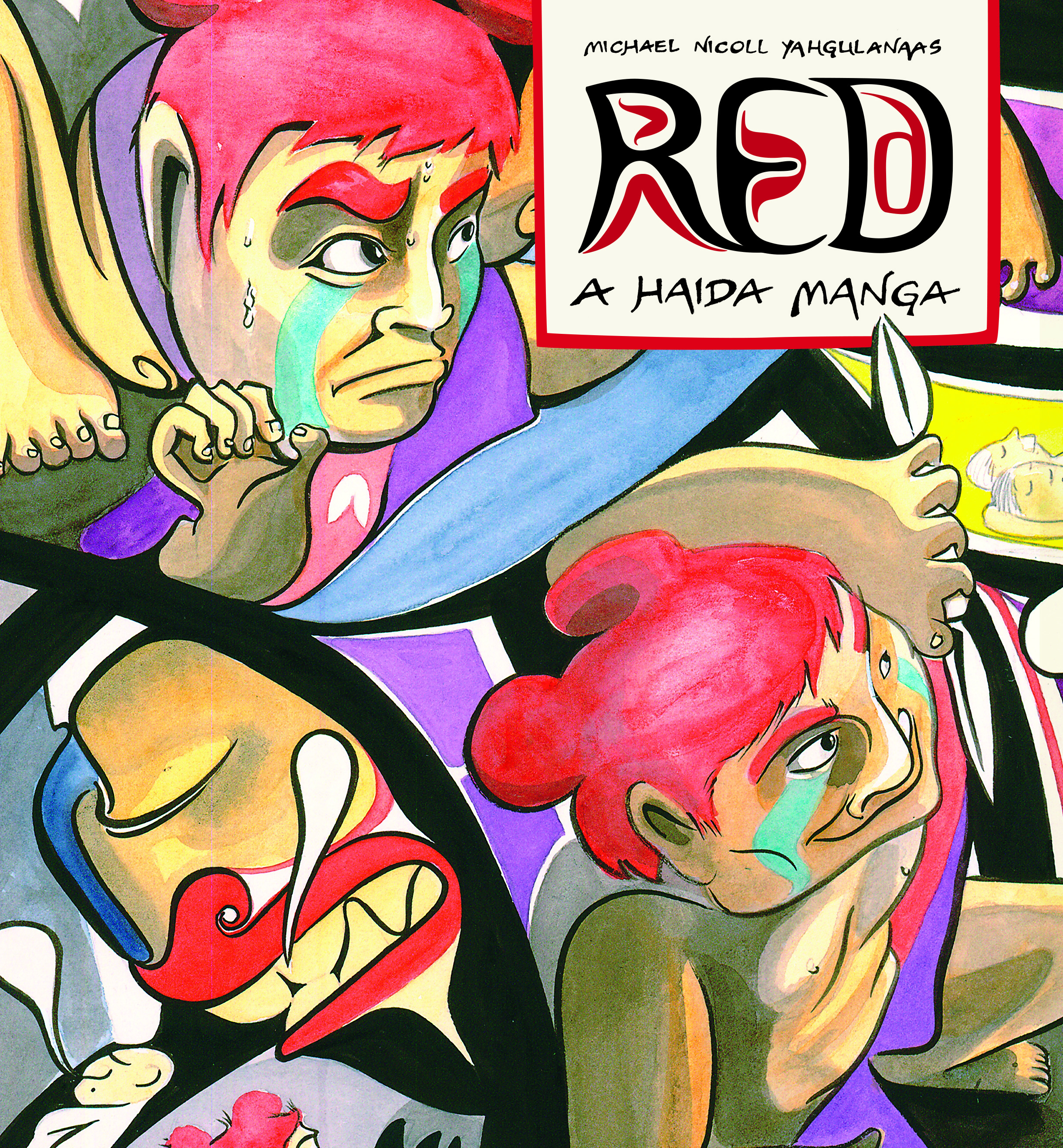
Red: A Haida Manga was created as a single large-scale mural (4.5 metres tall by two metres wide) and later deconstructed to form a 108-page book. So if you want to cut up two copies of the recently released paperback edition to reassemble the original image, Yahgulanaas has given his consent.

Yahgulanaas is the creator of a new style of graphic novel called “Haida Manga” which combines First Nations’ art style and tales with the Japanese graphic novel form of manga. 

Yahgulanaas uses his distinct style of art to give life to the tales of the peoples of Haida Gwaii. He brings the characters to life with minimal realistic detail, yet incredible visual style, using simple iconic forms to express complex meanings. The pages are filled with vibrant colours, including the traditional Haida tri-colour scheme of black, red, and blue-green. 

Red: A Haida Manga, an award-nominated title published by Douglas & McIntyre in 2009, is based on an oral Haida narrative. Red and his sister Jaada are both orphans living in a coastal community not unlike the Haida. Raiders attack their village and abduct Jaada when Red is still a boy. As Red matures into manhood, he becomes the chief of the village, but grows up feeling responsible for the capture of his sister. 

Yahgulanaas uses his distinct style of art to give life to the tales of the peoples of Haida Gwaii.

When news comes that his sister was spotted in a nearby village, Red is filled with rage and blinded by revenge. He leads his community to the brink of war and destruction in an effort to exact retribution on his sister’s captors. 

Thick black outlines — called formlines in Haida art — sweep through the pages, echoing manga comic panels. However, where most comics have breaks and white space between the images, Yagulanaas feels that everything outside those panels becomes blank and vacant. 

For him, it is a more honest depiction to fill up the dividers with a black formline, creating a continuous element in the formerly empty spaces and eroding hierarchy. He frequently incorporates the formline into the story, to create depth, indicate movement and narrative flow, or as a space for text.

The book launch for the paperback edition of Red: A Haida Manga coincided with a gallery exhibit, which opened on May 3. This is Yahgulanaas’s third solo exhibit at the Douglas Udell Gallery in Vancouver, and debuts the latest pieces in his Coppers from the Hood series. The exhibit, entitled SOLO 3, is actually his fourth unaccompanied exhibit for the Udell Gallery, if you include the Douglas Udell Gallery in Edmonton. 

The Coppers from the Hood series was inaugurated in 2007 at the Museum of Anthropology at UBC; its pieces have been internationally exhibited and collected. Yahgulanaas uses metal automobile hoods, covers them in copper leaf, and paints distinctive Haida Manga imagery. 

The latest coppers for the series continue to explore fetishes and embark on a study of the “sacred geography of multiple genders.” The exhibit also includes new works on paper including watercolour and graphite drawings from an ongoing series, as well as the Flappes series, which is similar to the Coppers from the Hood series but based on gas cap lid doors.

Yahgulanaas studied with Haida master carvers as well as a Chinese brush painter and is influenced visually by Japanese wood-block printing, contemporary manga, and ancient Haida panel pipes. He also spent three decades working with First Nations and environmental groups to preserve the Haida Gwaii lands on the former Queen Charlotte Islands, and to maintain the independence of the Haida people. His work frequently incorporates contemporary social issues into mediums that are easy to comprehend by the masses. 

The exhibit runs through May 24 and paperback copies of Red are available for sale at the gallery. Pick up a couple copies of the book, recreate the mural, and see if you can identify the three Haida animals hidden within the formlines.