Home Blog Page 1175

Board Shorts

0

6365127501_a031d8a183_z
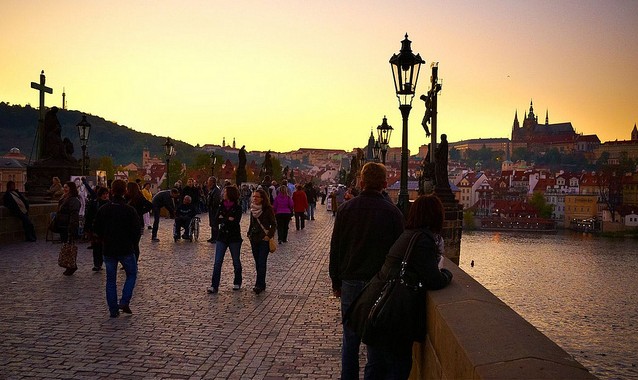
At-large rep off to Prague

Newly elected at-large representative Rebecca Langmead has left for Prague for two months. The board approved Langmead’s leave of absence at their board meeting on May 6. Although the bylaws state that the IRO must approve the leave, board approved Langmead’s request as the IRO position no longer exists.

Given that a board member on a leave is unable to fulfill requirements to receive their stipend (for instance, attending Clubs Days or attending council), Langmead will not receive her stipend. Although she is not receiving a stipend, SFSS President Chardaye Bueckert told The Peak that Rebecca plans to keep up on society matters via email and online by reading meeting minutes, etc.

Student At-Large Nominations

There has been a call for nominations for a student at-large to sit on various SFSS committees. While any member of the student society is welcome to attend all committee meetings, the upcoming elections will be for students who are to formally fill seats on these committees with voting rights. The nomination period is to end on Friday, May 23.

Elections Canada Workshop

VP, External Relations, Darwin Binesh, is to represent the SFSS at a workshop put on by Elections Canada surrounding the issue of low youth voter turnout. The event will take place downtown on May 29 and 30. The focus will be on the declining voter turnout of young people and how it can be improved. “Obviously, this would be pertinent to us, I think, as young people, not just as the board of directors,” said Binesh.

Satellite Signals

0

vancouverHarbour Centre

An event last Tuesday at Harbour Centre, called Brain Food- How to Eat Smart, enlightened students on the effects that eating has on your mood — or, as organizers put it, those “butterflies” in your stomach. The talk discussed how the digestive tract actually contains millions of neurons (just like the brain) which makes what you eat all the more important. Those in attendance learned how to feed their brains for steady energy, which foods improve concentration and memory, which foods “leave you tired and blue,” and five foods to avoid for brain health.


surrey

Surrey

SFU educators (or would-be educators) were invited to kick back and interact at the Central City Pub last Friday afternoon at a Teaching with Technology social event. The event was a follow-up to the Teaching with Technology in Surrey series kick-off, which brings staff together to discuss new ideas and best practices for teaching with technology. Attendees participated in short, fun activities while enjoying light snacks and refreshments.


vancouver

Morris J Wosk

SFU partnered with the NATO Defense College to host their second joint summit last Friday, entitled “Euro-Atlantic Meets Asia Pacific: NATO, Partners and the US Rebalance.” The day-long event invited speakers from around the world to share their own perspectives on the rise of Asia-Pacific as a global economic and security region. The keynote was given by Peter Lavoy, former Acting Assistant Secretary General for Asian and Pacific Security Affairs for the US Department of Defense, and closing remarks were made by SFU professor of political science, Alexander Moens.


SFU Faculty Association votes to unionize

0

SFU faculty members and library staff have officially voted to unionize.

The results of the vote, which were made public on Thursday, May 15, showed a majority of staff members are for unionization. Out of the 800 votes cast, 590 were in favour of becoming a certified union, while 210 were opposed. Voter turnout on the issue was 73 per cent.

The results are similar to those of a vote from the UVic Faculty Association in January of this year, when 82 per cent of the association voted to become a certified union.

The ballot asked voters if they wanted “the Faculty Association of Simon Fraser University (SFUFA) to be recognized as a certified union, under the Labour Relations Code” and to have that body act as representative of faculty members and librarians in collective bargaining with the university.

Now that staff have officially given their go ahead on unionization, the next step is the issuing of a formal certification order by the Labour Relations Board of British Columbia. SFU administration and the newly formed SFUFA will then begin negotiating their first collective agreement.

A public release signed by VP Academic Jonathan Driver and SFUFA president Neil Abramson, stated that “The University Administration and Faculty Association respect the choice made by faculty members and librarians regarding their preferred form of representation.”

The release concluded, “Both the Administration and the Association are committed to maintaining the positive working relationship we have enjoyed.”


This story is currently developing and more details will be added as information becomes available. Please check back soon.

Weekly List: Ten summer movies to look forward to

0

4385687715_037448f749_o

The summer blockbuster season officially kicked off last week with The Amazing Spider-Man 2, which hit the theatres to a collective “meh”. Thankfully, there’s no shortage of upcoming summer releases that are worth putting down the books and hitting the theatre for — even some of the superhero sequels. Here are some of the upcoming summer movies we’re most looking forward to:


Godzilla (May 16): If you’re wondering what Bryan Cranston has been up to post-Breaking Bad, the answer is working as a nuclear scientist and provoking Japanese mega-beasts. That’s right, the original movie monster is back in this much-needed reboot of the 60-year old franchise. It was filmed largely in and around Vancouver — look for uncredited cameos by Canada Place and the Convention Centre.


X-Men: Days of Future Past (May 23): Everyone’s favourite mutants are back for an umpteenth sequel, this time changing the past in order to protect their future. The franchise stays fresh with the addition of new characters like Fan Bingbing as a teleporting mutant and Peter Dinklage as a villain bound on destroying all mutants.


Maleficent (May 30): In the style of Wicked, this live-action Disney flick tells the story of Maleficent, the vindictive fairy who curses Sleeping Beauty. The film stars Angelina Jolie as the titular red-lipped, black-horned villainess, whose icy beauty is sure to inspire the most popular costume of Halloween 2014. This one is worth seeing — even if you don’t have a little sister.


Edge of Tomorrow (June 6): Tom Cruise and Emily Blunt star in this Independence Day-meets-Groundhog Day sci-fi bloodbath about soldiers trapped in a time loop of the final day in a war against an alien civilization. Based on a Japanese graphic novel whose title, All You Need to Kill, is way, way better.


Dawn of the Planet of the Apes (July 11): In 2011’s Rise of the Planet of the Apes, we saw the hyper intelligent primate Caesar go from genetically engineered lab animal to vigilante chimp-on-a-mission. The story picks up 15 years later at the outbreak of a human vs. ape war, with Caesar as the leader of a simian army that has figured out how to use those opposable thumbs to work a shotgun.


Jupiter Ascending (July 18): We have high hopes for the new film from the Wachowskis, their first original sci-fi script since The Matrix trilogy. It stars Mila Kunis as the world’s most beautiful janitor, who discovers she’s actually interplanetary royalty with a bounty on her head. Channing Tatum co-stars as the human-wolf hybrid ex-military hunter whose mission is to protect her. I know, right?


Mood Indigo (July 18): Who better than Audrey Tautou to star in the adaptation of a French surrealist novel about a newlywed who discovers she’s terminally ill with flowers growing in her lungs? This is the perfect film for asking that manic pixie dream girl in your summer session class out on a date.


The Giver (August 15): This is the summer that Lois Lowry’s “unfilmable” young adult novel about Jonas, a boy in a seemingly perfect, pain-free world who is tasked with the job of storing memories, hits the screen. If it’s anything like the myriad other films about teen protagonists in dystopian worlds released in recent years, it’s bound to be a hit.

My grades? None of your business

0

4728093020_de5b2e5dda_b

If you have ever done poorly on an exam, then you will be able to relate to the internal conflicts resulting from the procession of friends asking to hear your mark. Personally, I have been faced with two not so pleasant options: either giving it out and being reminded of my self-inflicted inadequacy, or being perceived as rude, not wanting to share.

After a particularly humiliating experience involving an organic chemistry midterm on which I received a lower mark than all of my friends, I realized that keeping your marks to yourself is not rude. Going around and asking everyone for his or her grades, though, is.

After the exams are handed back and the professor explains the distribution of the marks, there is really nothing to gain by asking other people about their grades. We are simply going through these inquiries to compare ourselves to others. This succeeds only in perpetuating the unhealthy type of stress-inducing competition which so often occurs among university students.

While competition is inevitable in a system in which we are all distributed along a curve, it doesn’t mean that we have to know who is where. Understanding where you fit among your peers is entirely enough information to let you know if you need to study harder or get some extra help. By comparing each other directly we are not accomplishing anything to help one another and we are failing to make university a more welcoming experience.

Perhaps my “bad” mark is your “great” one. But neither of us needs to know what each others’ are.

Furthermore, if you do well on a test, that doesn’t mean that everyone has to hear about that amazing grade. Proclaiming it to the world isn’t necessary. If I didn’t ask about it, I probably do not want to know. Don’t get me wrong: I am not shaming those who succeed. If you think you did well and want to share, then say so! If you didn’t feel that you did well, also feel free to say so!

Marks are, after all, both relative and personal. Perhaps my “bad” mark is your “great” one. But neither of us needs to know what each others’ are. Flashing yours around or prying marks from people, no matter how innocent in intention, isn’t necessary, as yours are yours and mine are mine.

If you need to make small-talk after an exam, here are a few alternatives to putting another student in a possibly uncomfortable position. Say: Are you happy with your mark on the exam? Or, Did you do as well as you thought you did?
In university, let’s change the way we ask about each others’ grades. Let’s take this first step towards making an environment of support, rather than one of egotistical competition.

Me, My Selfie, and I

1

14119417192_92d158b83b_o

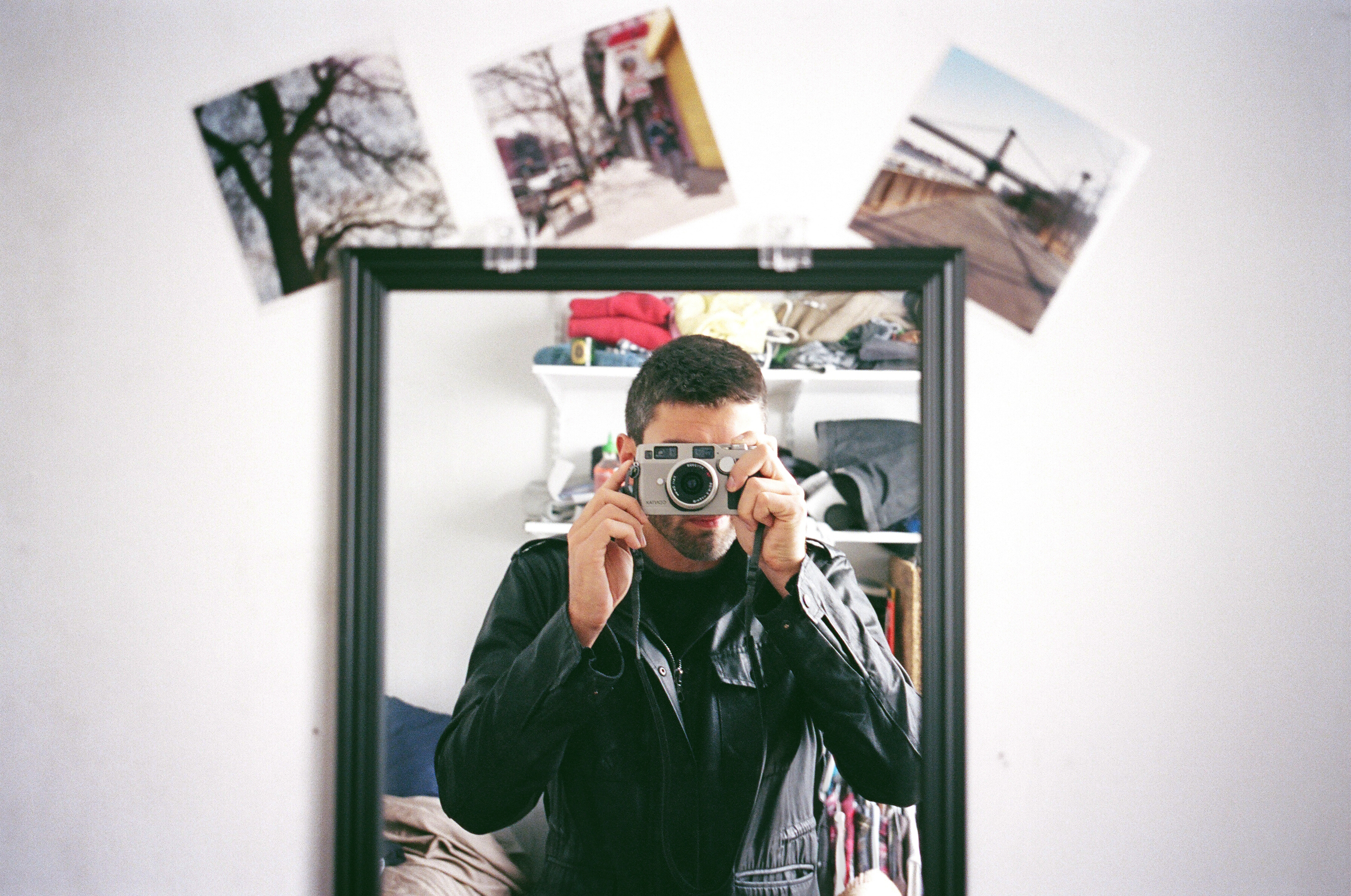
Before anything, check that the room is well lit. That’s the first step. Now take a good look at yourself in the mirror, and evaluate — is your hair tamed? Your shirt sufficiently buttoned, or unbuttoned? Is your lipstick the right shade of red, or your beard trimmed?

Test out a few expressions: silly, serious, flirty, flippant, daring, destitute, casual, classy. Cock an eyebrow, purse your lips, or wink an eye. Try to pick a look that says: I’m taking this seriously, but not too seriously. Make sure your camera phone is tilted upwards to a 45 degree angle — an unspoken but invaluable rule. Take a deep breath, strike a pose, and snap the photo. Choose a filter, pick the right border, tag your friends, and add a couple of hashtags for good measure.

Now press send.

Congratulations; you’ve just joined a league of more than one million people daily who take photos of themselves and upload them to Instagram, Snapchat, Facebook, Grindr, Tumblr, and dozens of other social media networks. Whether you’re looking for attention, wooing potential suitors or just trying to put on your best face for the rest of the world, you’ve become a part of one of the biggest, most persistent trends of this decade: you just took a selfie.

Famously, the selfie reached the zenith of its cultural status just last year, when the Oxford English Dictionary awarded it the honour of being 2013’s Word of the Year, beating out harsh competition from similarly ubiquitous buzzwords such as twerk, binge-watch and bitcoin. When selfie took the title last November, no one could argue that it had earned the distinction: its usage had gone up by about 17,000 per cent since that time the previous year.

35 million selfies have been posted to Instagram — more than the population of Canada.

Unsurprisingly, the most active and vocal members of the selfie movement are millennials. The PEW Research Centre conducted research which concluded about 91 per cent of American teenagers have taken at least one selfie in their lifetime, and Instagram stats prove that about 30 per cent of photos posted by 18–24 year olds are selfies. Of course, there’s also a pronounced and vocal percentage of selfie takers who don’t fit into the millennial generation — look no further than the high-profile snapshots of Barack Obama, David Cameron and the Pope to see just how wide a net the selfie casts.

For the uninitiated, there’s plenty of selfie varieties and classifications, each with its own distinct style and message. There’s the workout selfie, the half selfie, the couple selfie, the no makeup selfie, the graduation selfie, the after sex selfie, the funeral selfie, the breakup selfie, the stealth-ie, the space selfie, the bathroom selfie, the pet selfie, the celebrity selfie, the food selfie, the duckface selfie; even the kicked-in-the-head-in-front-of-a-moving-train selfie.

More and more, casual, spontaneous self-portraits have begun to invade our social networks and Instagram feeds — but what’s behind this burgeoning trend? Is it narcissism, or identity building? Is it a new phenomenon, or just the next stage in an ongoing movement in art and culture? And, perhaps most importantly, will it ever go away?

~

Though the term might be new, the concept behind selfies has been around almost as long as civilization itself. The history of the self-portrait reaches all the way back to, well, Bak.

The chief sculptor for the Egyptian pharaoh Akhenaten, Bak’s self portrait is the oldest one anthropologists have uncovered — though it’s likely that older ones exist. Self-portraits were common practice in the Greek and Roman Empires, but didn’t really hit their first stride until the Renaissance, with the work of Albrecht Dürer, a painter famously obsessed with his public image. (Sound familiar?) Dürer painted dozens of self-portraits, usually painting himself facing slightly to the right — still common practice for selfies today.

Apart from Dürer, many painters dabbled in self portraits as a form of self-expression. Some, like Vincent van Gogh, Frida Kahlo and Rembrandt, have become particularly well-known for their self-portraiture. Eventually, with the invention of the photograph, the camera became the tool of choice to depict oneself: one of the first documented photos of a human is a selfie of Robert Cornelius, an American pioneer of photographic technology.

Since then, selfies have become common practice for photographers, artists, and celebrities. Vivian Maier, Arthur Rimbaud, Edgar Dégas, Paul McCartney, Andy Warhol, Princess Anastasia Romanov, and JFK were all known to snap the occasional self portrait — way before it was cool.

The first known instance of the term selfie actually surfaced in 2002, a full decade before its Word of the Year title. As far as anyone knows, the very first “selfie” on the web can be found in a post on an Australian forum, three years before the word earned its own Urban Dictionary entry. Australians remain the world champion selfie takers — Canada comes in at number three — and the Oxford English Dictionary even recognizes the word as having an Australian origin.

Selfies gained popularity in the Internet age at first as “MySpace pics,” blurry, often sexually charged snapshots posted to the aforementioned website. They began as, and remained, predominantly a teenage phenomenon (because let’s be honest, who else used MySpace?). The trend actually came close to dying out in 2009, when the great MySpace exodus took most self-respecting users over to Facebook. Most users felt that selfies weren’t suited to the new social network, so they were pretty much uniformly scrapped.

If Facebook was the straw that almost broke the camel’s back, the iPhone 4 was the trend’s saving grace. Released in 2010, the new iPhone was the first North American phone to include a front-facing camera, making self-portrait photography easier and more precise than ever before. Suddenly, people could take selfies that didn’t depend on a bathroom mirror or an awkwardly maneuvered arm. It helped that three new social networks — Tumblr (2007), Instagram (2010), and Snapchat (2011) — were all coming to prominence around the same time. Add in a dash of narcissism and a sprinkle of identity crisis, and you’ve got yourself a new and powerful trend.

Nowadays, selfies are everywhere. Hell, if you’re reading this, you’ve probably taken one. I was convinced I hadn’t until I plumbed the depths of my iPhoto to find a few forgotten bathroom portraits from my years as a high school freshman. Predictably enough, the most popular Instagram photo of all time is the now-infamous group selfie taken by Ellen DeGeneres at the 2014 Oscars. And PicMonkey, in a study last year, claimed over half of American citizens had taken at least one selfie.

Overall, in the past four years, more than 35 million selfies have been posted to Instagram alone. That’s just over the entire population of Canada.

~

Think you’re addicted to selfies? Think again.

Danny Bowman, a 19-year old from the United Kingdom, spent 10 hours every single day taking selfies — amounting to around 200 selfies daily — for four years, until his inability to take a perfect photo of himself led him to attempt suicide by overdose. He survived, and is currently in therapy for technology addiction, OCD and body dysmorphic disorder. He’s also become a minor celebrity in Britain, even appearing on the popular talk show Daybreak to discuss his addiction. He was introduced as the world’s first “selfie addict.”

It turns out that Bowman isn’t exactly a special case. Many scientists have spoken out against the perceived negative effects of selfies — Dr. David Veale, an expert on body dysmorphic disorder, has linked a spike in the disease to the rising popularity of the trend. “Two out of three of all the patients who come to see me with body dysmorphic disorder since the rise of camera phones have a compulsion to repeatedly take and post selfies on social media sites,” he told the Daily Mirror.

The disorder is characterized by an unhealthy obsession with one’s personal appearance, often focused on either minor or imaginary flaws. The reason selfies spark instances of BDD might have something to do with our brain’s perception of the way we look. According to Nolan Feeney at The Atlantic, since we’re so used to seeing our inverted faces reflected in mirrors and the like, the sight of your face the way others see it can be destabilizing.

Photographs, especially those we take ourselves, can be pretty deceiving.

He quotes Pamela Rutledge of the Media Psychology Centre: “Looking at yourself in the mirror becomes a firm impression. You have that familiarity. Familiarity breeds liking. You’ve established a preference for that look of your face.” Your non-inverted face, however, is unfamiliar — and much more prone to self critique.

Some have combated this effect by taking photos that are meant to look ugly, strange, and contorted. This trend, profiled in The New York Times, is meant as a reaction to the attempted perfection of selfies taken by celebrities, models, reality TV stars, and that one girl you went to high school with that you haven’t deleted off of Facebook. Some have even gone so far as to post double selfies: one in which they try their best to look flawless, and the other in which they scrunch up their face, muss up their hair, and generally give zero fucks.

It’s meant to make an important point, and it does: photographs, especially those we take ourselves, can be pretty deceiving.

Of course, if you are interested in getting as many views as possible with your selfies, you’re in luck: science has an answer for that one, too. Aditya Khosla, a PhD student at MIT, recently developed an algorithm that can predict which selfies will get the most likes and comments. It’s based on three key factors.

First, try to make your photo as colourful as possible: bright colours, like yellows, pinks, and oranges, fare better than dark blues and greens. Second, amp up the sexiness. It should come as a surprise to no one that, the more skin you show, the more views you’ll get. Third, if you’re one of those people who adds a million tags after every selfie, turns out you’ve got the right idea. Khosla’s research on Flickr stats shows that the more you tag, the more views — and subsequent likes — you’ll get.

~

Beyond the science and statistics of the selfie, there’s plenty of debate over whether or not we should be taking quite as many as we do. A quick Google search will turn up dozens of think pieces on how the millennial generation is self-absorbed and narcissistic which cite selfies as a prime example — and, frankly, it’s a pretty valid point to make. But are selfies just proof of our generational narcissism, or is there more to it than that?

Stuart Poyntz, an SFU communications professor and expert on digital media, seems to think so. To him, selfies are “a way for us to communicate with each other through images. But what’s funny,” he says, “is that it’s just as much about ourselves as those around us — who we are, who I am. They’re our way of looking at the world, but they’re really a way of looking at ourselves.”

Can we use selfies to communicate both with each other and with ourselves? In a sense, selfies do the same thing for us that cameras and daguerreotypes have done for generations previous: to capture a moment, the people that we are at a specific time and place, and to do it in a very personal, direct way. It’s not just an attempt to express our identities or to share ourselves with the people we love — it’s also a tool for us to keep track of ourselves as we change and grow, a sort of visual diary. As Poyntz explains, “selfies extend the way that cameras allow us to organize and think about who we are, and how we are who we are.”

Poyntz also sees the transformative potential of the selfie: “As a form of image communication today, it’s amazing, and it’s significant,” he says. “There’s ase spectrum of images and stories that come to us through selfies which, otherwise, we wouldn’t see or hear.” Looking at it this way, selfies function as a democratization of the images we’re exposed to on a daily basis. People who aren’t often given exposure in the media — those with different racial backgrounds, physical or mental disabilities, LGBT people, and so on — can take selfies and create their own space to be seen and heard.

“There’s a spectrum of images and stories that come to us through selfies which, otherwise, we wouldn’t see or hear.”
– Stuart Poyntz, SFU professor of communications

Selfies have also been lauded as tools for feminism by several writers, much for the same reasons. In an article for Hyperallergic, Alicia Eler calls the selfie “an aesthetic with radical potential for bringing visibility to people and bodies that are othered,” and celebrates the popular hashtag #feministselfie, in which women and others are encouraged to post photos which don’t conform to the usual cultural conventions of “beauty.”

Though they have plenty of potential to make a radical statement about our culture, our society, and who we are as individuals, anyone who’s scrolled through the selfie hashtag on Instagram or Facebook will likely agree that not all selfies achieve this lofty goal. Rather than going against the grain and challenging the status quo, many selfies simply attempt to duplicate the imagery of the mass media: advertising, reality TV, beauty magazines, and the like.

Plus, it’s hard to deny that the selfie trend has more than a few shades of narcissism to it. As much as sex positivity and a healthy body image are important — especially for the development of young people, the majority of selfie takers — the oversaturation of selfies does seem to speak to our societal obsession with ourselves.

It’s a bit of a chicken and egg scenario: do selfies make us self absorbed, or are they simply a reaction to our self-absorption? Where do we draw the line between positive self image and unhealthy obsession with the way we look?

Whatever the case, it doesn’t seem like they’ll be going away anytime soon. As far as Poyntz is concerned, the selfie’s “significance, its uniqueness, will fade. It’ll become a kind of regular thing, but I don’t think it’ll be as surprising to us, maybe three or five years from now.”

One can imagine that, given the limitations of the basic selfie, the creative potential of the medium will inspire photographers to try to break the mould. The #selfieOlympics, an Instagram competition earlier this year where users had to come up with the most creative, unexpected snapshot, is a prime example of the potential of the trend to inspire, provoke, challenge, and subvert expectations.

If the selfie really is here to stay, well, maybe that isn’t so bad. Despite the suddenness of its popularity, it’s pretty hard to imagine a world without a single selfie. After all, how am I supposed to let the world know what a good hair day I’m having?

SFU robotics club gives competition the gears

0

WEB-RGB-Robot-AndersonWang

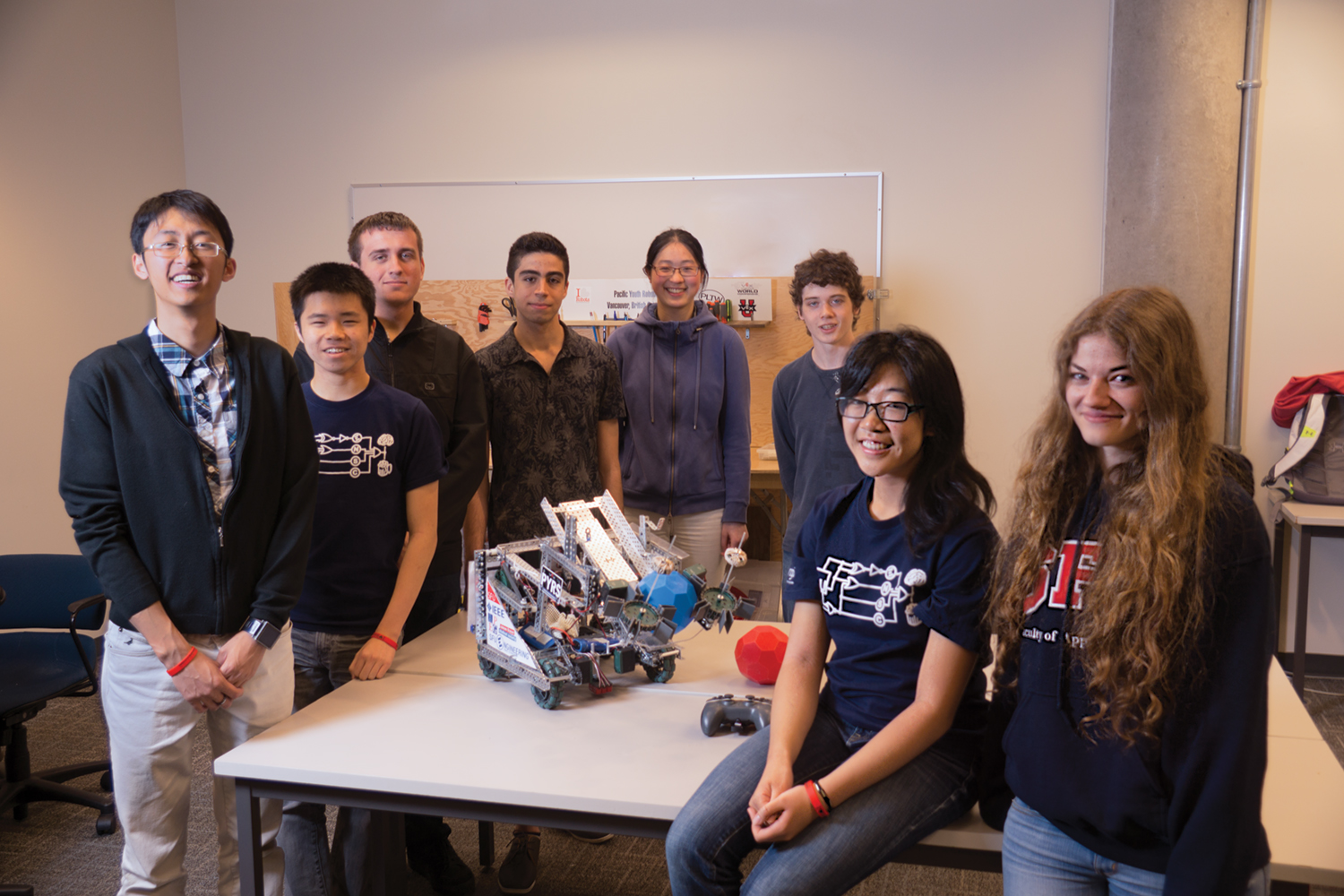
SFU phasers were set to win at the 2014 VEX Robotics World Championship in Anaheim, California earlier this month, which invited top robotics teams from around the world to compete against “the best of the best.” Founded just last year by engineering student Gordon Ho, SFU’s VEX Robotics team was the only Canadian university team to compete.

The VEX Robotics World Championship included nearly 700 teams which qualified during competition tournaments held throughout the year. Midway through the season, SFU’s team was ranked #1 in the world in the skills challenges component and had earned enough points to be included in the top 30 university teams around the world.

Each year, the World Championship presents a different challenge to the competitors. The object of this year’s game was to attain a higher score than the opposing team by moving multiple coloured balls from around a field of play and transporting them to the goal areas. 

The team began working on their robot last September. After many brainstorming sessions and team exercises, the group finally came up with a viable design. After that, Ho explained, “We actually drew the robot in a 3D CAD program called Google Sketchup. Then we printed out each subsection — drive, arm, and the manipulator — then members could pick up a piece of paper and start building it right away.”

The club met once a week in the Applied Sciences wing to work on their automaton, but limited space meant they had to improvise to reach the top. “We don’t actually have a field set up at SFU. We don’t really have a room. We just have a cabinet,” said team member Joanna Che,  laughing. “That proved an extra challenge because we had to go all the way to Gladstone to borrow their playing field just to program our automatons.”

When designing their ‘bots, the team had to be conscious of the fact that they would have to transport both smaller BuckyBalls and Large Balls to different goals of varying heights. All this would have to be accomplished in just two minutes, while avoiding obstacles like speed bumps and going under 12-inch tall bridges.

Midway through the season, SFU’s team was ranked #1 in the world in the skills challenges component.

SFU’s robot was designed with standard four-wheel drive and a flexible mobile arm which can manipulate the different balls. Ho explained, “When the robot starts, it’s really compact because we needed it to fit in the 15 inch [limitation], but once it expands it can reach the full 24-inch goal.” The intake manipulator involves two rollers with rubber flaps which can adjust to the size of the ball to control it, and then another roller on top to adjust to and control the large ball.

“Mostly the balls are away from the goal area, so you have to collaborate with your partner [robot],” explained Che. Due to funding limitations, the SFU team ended up partnering with UBC’s robotics club in order to field the required team of two robots.

For the first minute of the game, a team is not allowed to directly control its robots. Instead, they have to rely on complex programming so that their robots can sense the boundaries of the space, find where the balls are, and drive to their destination. The second minute sees a driver controlling the robot directly.

“If you have a really good programmer, you can really get ahead of the game, because half of the game is programming,” said Ho.

Although the team placed 16th overall out of the 60 programming and driving teams, they dominated in the programming skills challenge. During this portion of the competition, teams have two robots on the field with no opponents and have to score as many points as possible in 45 seconds. The rub: the challenge is completely pre-programmed. With careful and precise preparation, the team took 4th place.

The team is already brainstorming for next year’s World Championship, which will task competitors to move and manipulate wireframe cubes into goals of up to seven feet. However, the team is ready to take off on their own — without UBC’s partnership. “For the next year, if we get enough funding, we’re hoping to have two teams going to the World Championships. So, we’ll have more teams from BC and Canada to represent at the World Championships,” Ho concluded.


Trend shows students return to nest

0

CMYK-Mom rommate

Recent statistics have shown that almost half of Metro Vancouverites in their 20s still live at home — the second-highest rate in Canada.

Barbara Mitchell, SFU professor of sociology and gerontology, explained that “returning home is quite common these days, with one third of Canadian young people aged 20 to 30 returning at least once.”

Mitchell calls this period of life the “Boomerang Age.” The name borrows from the idea that young adults are returning home after leaving for university or college, producing a similar trajectory to that of a boomerang.

According to Statistics Canada, many university students have to work double, triple and in some cases six times the number of hours at minimum-wage jobs to afford tuition costs compared with 40 years ago. On top of tuition, other costs for students include rent, food, and other basic necessities. All these factors considered, for many, it makes financial sense to live at home.

Many young adults quickly discover that even with a university degree, it isn’t easy to secure a job after graduation — especially one within their field with a reliable income.

“The labour market has become more precarious and less stable relative to recent time periods,” Mitchell told The Province. With better healthcare and a longer lifespan, some older employees are opting to remain in their positions for longer periods, as they postpone their retirements.

According to a survey conducted by Harris Poll, employers are hesitant to hire the newly graduated because of three reasons: first, they feel there is too much emphasis on book learning instead of real world learning in post-secondary education; second, the company may require a blend of technical skills as well as the soft skills gained from liberal arts; and third, entry level roles are growing more complex.

Returning home can be difficult, Mitchell explains. Some young adults might feel a lack of privacy and independence — they feel monitored and “subjected to parental rules and regulations,” and feel as if they are developing a dependency on their parents. The difference in personality and lifestyles may also affect day-to-day living, leaving both parties feeling stressed and frustrated.

 Nevertheless, living at home can have advantages. Many people have stated that living in Metro Vancouver is expensive and oftentimes unaffordable. It is therefore cheaper to share the burden of cost by pooling the family resources.

When living at home, money normally spent on tuition or living expenses could be put towards paying off student loans or saving up for future investments, such as a condo. Home can additionally be an environment that is safe and familiar and could help reduce stress and anxiety. 

Despite the stigma surrounding living in your parents’ basement, Mitchell feels that the choice to return home doesn’t have to be shameful. The home-life can be an opportunity for young adults to explore their individual identities and roles, before taking on the full responsibilities of adulthood.

Province shifts funding from liberal arts to trades training

0

Petter copy

Last month, SFU President Andrew Petter addressed the Vancouver Board of Trade regarding the value of traditional university education — specifically, liberal arts degrees — in today’s ever-changing global economy. 

The BC Liberals have recently begun “re-engineering” the education system and choosing which specific post-secondary programs will be funded and which will not according to labour market needs. This motion is currently encouraging students to pursue careers in skilled trades that are faced with a shortage of workers.

Beginning this September, $160 million currently in the post-secondary education system will be redirected toward programs the Liberals feel are important for BC’s economy. In four years, they will have redirected approximately $400 million.

Despite this overhaul, SFU’s president does not believe this “re-engineering” will majorly affect the university.

Petter dismisses the “barista” argument — which claims that every coffee shop has an over-educated university graduate employee — as an urban legend by presenting the bare facts. According to a provincial study, 78 per cent of jobs in the next decade will require post-secondary education, and more than 45 per cent of those jobs will require university education.

In fact, Petter told The Peak that he was encouraged by the Liberals’ announcement, because although their plan focuses on “priority job areas,” it was not limited to the trades. Furthermore, it did not claim that the labour market’s needs should be the only criteria for education. He mentioned that the current education system was already progressing along with the labour market by offering more programs in engineering, health sciences, and business.   

The liberal arts, according to Petter, also plays an essential role in today’s economy. “Liberal arts is not just for liberal arts students. It’s important in creating the writing and creativity and problem solving abilities that inform all students [. . .]” He also believes that the provincial government’s “re-engineering” will reflect this in the coming years.

Petter also noted that businesses are not looking to hire people pre-trained in their industries, but for individuals with intellectual skills, creativity and writing abilities, which are provided by liberal arts education. In the end, he said, it all comes down to striking a balance between filling presently vacant jobs and planning for the future.

Despite this overhaul, SFU’s president does not believe this “re-engineering” will majorly affect the university.

“We’re in a ‘global knowledge’ economy now, where knowledge is the main currency, and what that means is, yes, we can prepare people for jobs that exist today, but in many cases the jobs that exists today won’t exist five years from now,” said Petter. 

“And if we want to be competitive we’re going to have to create new jobs and new opportunities and have people who can think creatively outside the box, and can problem solve, and [who] can create the opportunities of the future.”

Petter used the example of the liquefied natural gas industry to illustrate that an overwhelming emphasis on the trades is not necessarily required. Although such an industry certainly requires skilled trades workers, it also needs scientists, engineers, business people with managerial, marketing, and human resources skills, and those who can assess the industry’s social and environmental impacts. 

Communities built around the liquefied natural gas industry will also require doctors, teachers and a multitude of other service providers, all of whom would require university educations.    

Petter stressed, “To think, even in the natural resources area, that we don’t need people with university education generally, or liberal arts in particular, is simply wrong, and thankfully the labour market studies that have been done validate that.” 

He continued, “It is really important that we remember that university education, as much as it is about getting a job and being successful, it’s also about developing one’s capacities as a citizen. And one of the great things about university education is that it does both.”


Tortorella, what a fella

0

3446290571_b7fc499b5f_o

On May 1, Vancouver Canucks head coach John Tortorella was fired with four years remaining on his contract.

I like Torts, and back when the talk started that he might be fired I was strongly against it. As a matter of fact, I wrote an article called “Canucks face a season of change,” more or less an evaluation of the 2013-14 Canucks, which featured my opinion that Torts should stay (at the expense of GM Mike Gillis — who was fired as well).

Torts’ strengths, as I’ve said before, are quite well suited to where the Canucks are going. He has a good track record of developing prospects and youth during his previous stints on the New York Rangers and the Tampa Bay Lightning. Zack Kassian has already taken strides this season, and with prospects like Bo Horvat and Nicklas Jensen, who shined during the last stretch of games, the Canucks need a coach who can develop youth.

In addition, he took the Lightning from mediocrity to a Stanley Cup during his tenure, and guided the Rangers to four playoff appearances in his five seasons with them, including making it to the conference finals. The year he was let go he took them to the second round, and was only a year removed from the conference finals.

The Heritage Classic Luongo snub was probably the one definite error in Tortorella’s short tenure.

If anything, his season with the Canucks is an anomaly on his resume, and with factors such as injuries, an aging core, and a team that has been down trending since 2011, it would be easy to excuse his performance.

Many players, though, also had a noticeably weaker year. This includes the Sedins, who in hindsight, may have been a mistake to put on the penalty kill, with Henrik breaking his ironman streak of 679 games.

The Heritage Classic Luongo snub was probably the one definite error in Torts’ short tenure. He not only forced Gillis to trade Roberto Luongo, but this also appeared to contribute to the continuing early 2014 tailspin that cost the Canucks the playoffs (although of no fault to rookie goaltender Eddie Lack).

All in all, I probably would have kept the coach at least until the next season, only to consider his dismissal if the Canucks got off to a miserable start.

But I do respect that this is a new regime making new decisions, rather than Gillis just trying to save his job. It seems that with the amount of time it took to fire Tortorella that some serious thought went into it, and with new president Trevor Linden’s prior experience as a player, he can probably pick up things in the dressing room, things that we might not necessarily see on TV.

In addition, whoever Linden picks to be his GM can now truly put his own stamp on the team, starting with a new coach.

No matter what happens, good or bad, next season will be an exciting one for the Canucks. If in the end there is only one winner in this, it will likely be player David Booth, who has probably avoided a buyout on the account of two pricey firings.