Home Blog Page 1170

Ruff sex is hereditary

0

CMKY-ruffbirds-jerryguoCMKY-ruffbirds-jerryguoruffbirds-jerryguo

From one of the world’s largest ruff aviaries perched atop Burnaby mountain, SFU researcher David Lank has come across a crucial discovery that genetics — not environmental factors — drive courtship and mating practices in these unique birds.

Lank, an SFU research associate and adjunct professor of biological sciences, has spent three decades studying the unique mating patterns of the male ruff bird, a type of sandpiper originally from Finland. These birds, bred by Lank in the aviaries at SFU, are the only known ruffs in North America. 

Lank was originally drawn to these birds because of the mating patterns specific to their species. The males are unique in that they belong to one of three distinct groups, each with their own behavioural patterns in regards to mating. However, unlike most animals, these differences in mating are not a result of their environment, nor a result of different stages of development. Instead, they are a result of genetic variants in the three types of the male ruff birds. 

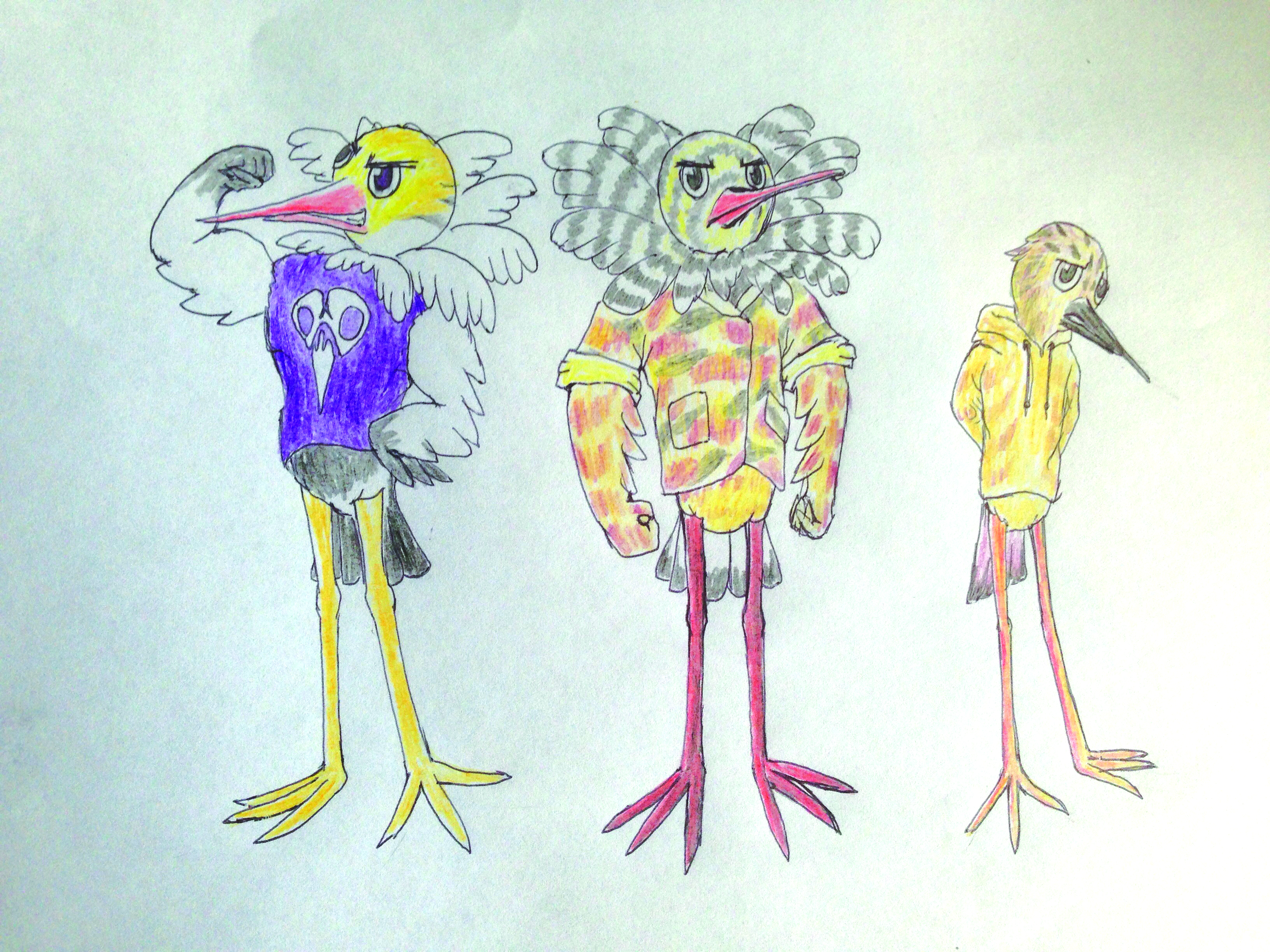
The three types of ruff birds are the territorial, the wingman, and the female mimics. The territorial make up 85 per cent of the population, acting as most birds do when trying to mate; they display their plumage to attract the females, and hope to mate with those that approach their selected territory. 

The wingmen function as their namesake states. They join one of the territorial males, forming a competitive yet helpful alliance to attract the females. However, once a female ruff approaches, the alliance transforms into a rivalry of who can mate with the female first.

Lastly, the female mimics are similar to female ruffs in appearance. They are smaller than the other males, and only form one per cent of the populous. Unable to attract females themselves, they lie in wait by the other males, and try to jump on an approaching female. 

This discovery made about the ruff birds is important because, according to Lank, “major differences in personality [are] attributable to a gene.” In other words, behavioural patterns can be determined before these birds are even born. 

He explained to SFU News, “Ruffs lack developmental plasticity, which means they do not change their mating behavior with social circumstances, or learn from experience.” This has proven very informative to researchers as it proves that behaviour is not always a learned trait, and it is now scientifically proven to be something these ruff birds inherit.

Build SFU presents SUB architectural designs

0

SUB from Freedom Square

Build SFU held a community update at the Think Tank last Wednesday, where architects Perkins+Will presented proposed exterior designs and floor plans for the future student union building (SUB).

The design selected will be built according to the “Terrace” concept — one of three concepts presented in March. The exterior of this model coincides with the original architectural features of the campus, as devised by Arthur Erickson.

The “terracing” effect — involving staggered patios and levels, inspired by Erickson’s original sketches of the campus — will make the SUB as unintrusive as possible. The design will preserve views of the surrounding environment from existing buildings, such as the AQ, as well as views of prominent locations, such as Convo Mall.

Perkins+Will also took into consideration the shadows that would be cast by the building, particularly into Freedom Square. Their studies concluded that the new structure would minimally affect sunlight reaching the area, especially during the summer months.

In order to create a distinct and identifiable building, the exterior structure will be comprised of, in addition to some concrete, glass, wood, metal, and greenery in the form of roof gardens. The idea is to make the SUB an easily recognizable and transparent “wood-glass box.”

Build SFU intends to make the SUB economically, socially, and environmentally sustainable. The large outdoor terrace spaces are meant to encourage stewardship, and they plan to use durable, local, and recycled materials for the construction of the building. LED light fixtures, renewable energy, and control of solar heat gain are some of the other strategies they hope to implement to achieve LEED Gold status.

The interior of the building will also draw on the notion of transparency with the inclusion of multiple open spaces and large windows. These features will allow multiple levels and areas of the interior of the building to be viewed from a single spot, fostering a feeling of a cohesive community when inside.

The designs presented are still not set in stone. Marc Fontaine, general manager of Build SFU, told The Peak, “General blocks of space are set, but things can still move up till mid June.” Fontaine told The Peak they hope to meet with student groups from now until mid June, and that the Think Tank will be open for other students who have feedback. However, he emphasized that the sooner they receive the feedback from students, the more it will help.

Sections of the interior space have been allocated as office space for student organizations and groups, bookable meeting rooms, group study spaces, dance and music rehearsal rooms, multi-purpose event space, a cafe, a cabaret, a community kitchen, a games lounge, and general student lounges. They also plan to extend the existing SFSS food court in the MBC into the SUB.

Fontaine said that his favourite part of seeing the plans progress is “the fact that the building is really designed to work for students who aren’t very involved on campus or who aren’t involved at all.”

“It’s truly a student building,” he continued. “It’s not an administrative building, and it puts the general student spaces like lounges and general meeting rooms that anyone could book in very obvious and convenient places so that every student could come in this building throughout the years that it exists and know that they can find a place to relax.”


Aggression rises in Surrey panhandlers

7

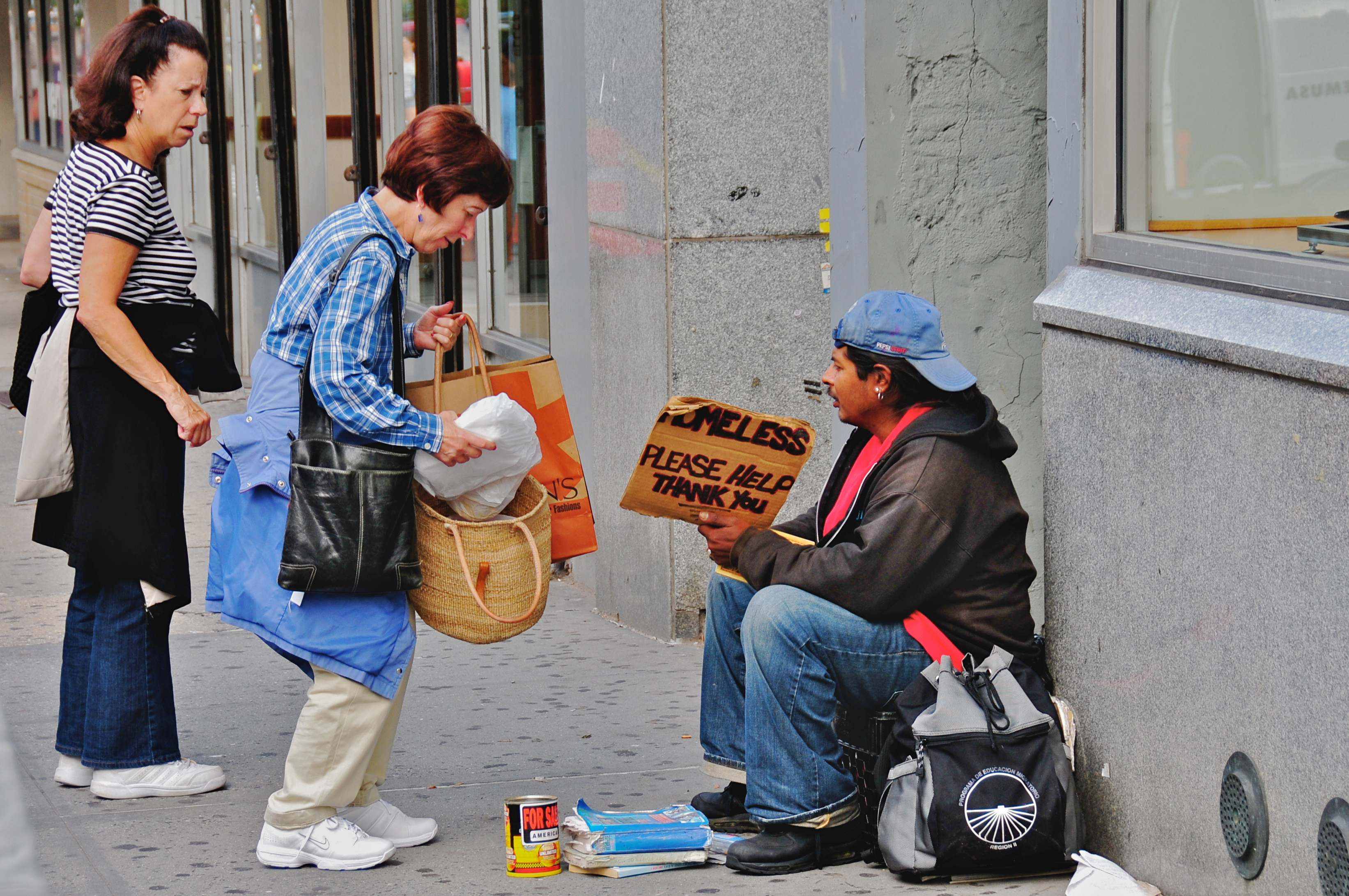
WEB-Panhandeling-Ed Yourdon-Wikimedia CommonsThe downtown Surrey core has been experiencing a rise in aggression from panhandlers. As one of the fastest-growing cities in Canada, Surrey is beginning to experience a level of panhandling that tends to occur in larger cities.

An increased volume of people and more foot traffic in urban areas presents the opportunity for panhandling. The Downtown Surrey Business Improvement Association (BIA) has received numerous reports from businesses that are concerned this trend is detracting from people’s impressions of the neighbourhood and affecting their business.

The organization is now taking action to remedy the problem, employing SFU criminology student, Alex Dibnah, as a summer research intern to look into the matter. “There are people in the community in need,” said Dibnah.

Aggressive panhandling is distinguished by behaviour that causes a person to legitimately fear for their well-being. This can come in the form of making a rude gesture or comment after refusal, or following someone with repeated requests for money.

“It can be an uncomfortable situation for people being panhandled, simply because they do not know how to react. This can be addressed through increased public awareness, which is what we are working on, ” Dibnah explained.

Aggressive panhandling is distinguished by behaviour that causes a person to legitimately fear for their well-being.

As reported in The Province, BIA’s CEO, Elizabeth Model called it “a disruption,” saying that, “When there are panhandlers basically loitering around your business, the perception is not extremely good for inviting customers in.”

Captive audience solicitation — as well as aggressive panhandling — is considered illegal in BC under the Safe Streets Act of 2004; this sort of panhandling involves soliciting people when they are unable to leave, such as at bus stops, ATMs, or traffic lights. People can be issued tickets for this and repeat offenders can be arrested.

Dibnah is collecting data about which areas see more incidents of aggressive panhandling with the aim of gearing initiatives toward those specific places. By reaching out to people through social media, she has learned that people encounter panhandling most frequently in places such as Surrey Central SkyTrain station.

Identifying these “hot spots” will help the BIA target their initiatives. One of their aims is to provide education to the public and to tell people not to give money to panhandlers. The second part of their message is that the better way to help is to give to charities geared towards aiding those in need.

Dibnah will be working on this project for the remainder of her co-op term. She said that her experience so far has been “absolutely fantastic.” She considers herself lucky to have her first co-op placement somewhere she can work on something so closely related to her studies in criminology and that is “right up her alley.

Rob Ford being in rehab vs. still talking about him

3

6201657004_457412698f_b

Woohoo

After months, the man is finally where he needs to be. His blatant alcoholism, substance abuse, prejudice, and all out immaturity make it amazing that he was ever even elected mayor of Toronto.

Not only that, he’s caused one of the biggest stirs in our country’s media history, and has likened our political media coverage to the abysmally sad levels of the American celebrity. When a Canadian politician makes SNL’s Weekend Update, described as “when a Canadian stops being polite and starts getting real,” you know this is something we must shake our heads at (although I’ll admit I found the joke funny).

Now, we must celebrate. This adult/troubled teenager has finally accepted his condition and has checked himself into rehab. Now, he will receive the psychiatric help he needs. He and his family will hopefully be more at peace. He won’t receive as much media attention and have his face pointlessly plastered all over the news! But . . .

Boohoo

Earlier in the month, multiple news outlets across the country reported that Rob Ford had been “spotted” in Bracebridge. That’s right, “spotted.” As if rehab has transformed him into some wild, endangered animal that the press is trying to capture.

CBC reported that he was still in rehab, but that being off-property was considered essential to his continuation in the program. A couple cheerful photos of him have surfaced.

While these may or may not be attempts to show the world the supposed progress he’s been making, I’m irritated that the press is seizing every opportunity to headline Ford.

People, give him a break! The guy is in rehab now, so leave him alone. His story has been stretched to the point of exhaustion. Yes, he’s made some bad decisions, but give him the time to peacefully complete his rehabilitation before you, once again, spearhead him with ridicule, and plague readers with so-called “news” they shouldn’t care to read anymore.

Early playoff exits

0

11351672073_4047655cc1_b

Early losses in the 2014 NHL playoffs make for interesting speculation. Although some teams — such as the Dallas Stars and Columbus Blue Jackets — are content with their early bow-outs, they were not expected to be cup contenders and yet made significant progress.

It was shocking to see other teams, such as St. Louis and San Jose, get let off early, as they were expected to contend for the cup, or at least pass the first round.

The Blues are a team that seem built for the playoffs, and dominate the regular season, but when it comes to the playoffs, for some reason they fold.

There does not seem to be much reason for this. They do have some scoring issues, but that did not appear to be the problem this series (also, teams such as the L.A. Kings have certainly cruised to success without much offense).

Perhaps due to injuries on the team and the fact they were facing Chicago, their losses were seen as justified, and the team will remain largely unchanged, at least behind the scenes. Coach Ken Hitchcock has been kept on, with a one-year extension on his contract, and GM Doug Armstrong is still with the team. It is unknown what they will do player-wise, but it is unlikely they will blow up their core.

This lack of change may not be a bad thing either. They still seem like a strong team and their losses can be blamed on luck. With that being said, a dismal performance in next year’s playoffs will probably mean bigger changes. In this light, Hitchcock’s one-year extension could be seen more as a threat than a legitimate vote of confidence.

Blues coach Hitchcock’s one-year extension could be seen as more of a threat than a legitimate vote of confidence.

A 2-0, home game-won lead, like the Blues’, is fairly easy to blow.

But, a 3-0 lead is not, something us Canucks fans know all too well. Yet this is exactly what the San Jose Sharks did and, although it was against the L.A. Kings, it is an inexcusable loss for them. Year after year, the Sharks have been proven playoff chokers, nearly every year being chosen by many to actually win the Stanley Cup only to be knocked off early, always before the finals.

That makes it all the more surprising that, just like the Blues, neither the coach nor the GM of the Sharks will be shown the door. Without firing these two, not too much can be changed. Their constant failure in the playoffs speaks to a problem larger than a few tweaks, making it seem as though the core is the only thing left to change. However, with their regular season success, they probably won’t do something that bold. It seems likely they will not do anything until it is too late, and miss their chance at success.

Long live the lizard

0

Godzilla


He’s been stomping around pop-culture since 1954. While he may seem like just a giant lizard with atomic breath, Godzilla tells a story much closer to our own reality.

When the atomic bombs were dropped on Nagasaki and Hiroshima in 1945, an entire culture was beyond devastated. Many survivors had to live out the rest of their days with the constant reminder of massive keloid scarring on their bodies. Though Japan recovered, it has never forgotten. Nor should we. 

Emerging onto screen a few years after the bombing, Godzilla’s dark keloid-like skin is a reminder to the world that though Japan was horrifically scarred, it nonetheless rises. Godzilla was first introduced as just a monster rampaging  around Japan (as the violence of the bombing was still fresh in the country’s mind). 

But since then, the King of Monsters has shifted motives. He’s battled and saved us from threats of all kinds: many — like those in the newest installment — are the results of our own scientific arrogance. 

He’s the classic, but inadvertant movie monster. He destroys lives in his wake, but ultimately, he — along with all the other rampaging monsters behind him — is the punishment mankind deserves for our nuclear crimes against each other. This latest Godzilla incarnation definitely lives up to its hype.

The last time Godzilla was adapted into Western cinemas was in 1998, awkwardly starring Matthew Broderick. It was done in an archetypical “monster movie” fashion, with the beast rampaging through New York. To sugar coat it: the movie didn’t do so well.

Now, director Gareth Edwards recreates Godzilla in his largest physical rendering yet, definitely stomping out  the memory of its embarrassing predecessor. 

Even though a full hour passes before the King of Monsters shows more than his spiked back protruding from the ocean, the wait is definitely worth it. Godzilla is magnificently re-interpreted. Standing an impressive 350 feet (with thighs that look like he pushed himself to the max on an elliptical), his look is strikingly faithful to the globally recognized Japanese design. 

Put aside the mediocre story-telling, and just hear that iconic roar as if it were right outside the theatre. The scenes of giant monsters fighting are as eerily intriguing as witnessing unsettling footage on the evening news.

From the Philippines to Hawaii and Japan, then to Las Vegas, and ending in San Francisco, Edwards’ film is more global than the 1998 version, and it really resonates as a what if this really happened? kind of film.

The film is definitely a go-to summer movie (thus far) for stunning visuals. The first full body shot of Godzilla is sure to please your inner child. Don’t go for great storylines, however, as they unfortunately fall flat within the first hour after some emotional lypivotal events. Definitely go for the spectacular monster bashing, and Elizabeth Olsen’s surprisingly talented, but under-utilized acting skills.  

Calling home

0

My dad is from Pakistan. He moved to the United States for school when he was in his early 20s, met my mother — a country girl from Oklahoma — and never went back. I am American, through and through, raised Christian instead of Muslim, raised speaking English instead of Urdu; I’ve never been to Pakistan and I’ve never met my grandmother or my uncle or my cousin. My dad has returned home only a handful of times since I’ve been alive and rarely speaks to his family on the phone.

Unhappily, this communicative ineptitude, this bizarre phone phobia, is something I seem to have inherited.

Last year, my father’s father died. He was an old man, in his 80s, and had lived a full life. His body gave out peacefully as he slept in his chair, I was told. He was something of a legend to me: the soldier, the forest ranger, the stoic, white-haired man in a tunic and horn-rimmed glasses who stared out from the sepia-toned picture in our living room. He was a part of me, and though I’d never met him, I felt an overwhelming, profound ache when I heard of his passing.

News of my grandfather’s death didn’t reach my dad until a month after it had happened. Stay with me for a second and really think about that. My dad’s dad was gone for four whole weeks before he knew anything about it. When the phone call finally came, he was out of town for work and my mom picked up; she ended up having to break the news to my stunned father over the phone.

In pursuing adventure, exploration, and independence, I find myself losing track of the people who make me “me.”

My dad doesn’t talk about Pakistan easily; when I was little, I refused to go to bed until he told me a story from his childhood — my favourite involved him getting chased home by a pack of monkeys. He is the eldest son and he left, he married a white woman and raised his children in the West . . . I know my father’s relationship with his family is strained at best. But I never realised just how disconnected he was until this giant lapse in communication.

I always knew I would leave home and go far away. I grew up just outside Detroit, Michigan and after I graduated college, I immediately moved to Chicago. After two years there, I moved to Vancouver where I’ve been for just over a year. I suck at calling home. If a month goes by, my mom will send me a text which usually reads something like “Haven’t heard from you in a while. U alive?”

It’s not that I don’t love my family, I think about them often, and yet, something always seems to hold me back when I reach for the phone: it’s too late at night, I’m too tired to talk, it’s been so long since we last talked . . .

It’s scary when you find yourself replicating bad habits. I’m all for adventure, exploration and independence, but in pursuing those things, I find myself losing track of the people who make me “me.” It’s a sneaky sort of silence, an isolation that spirals out of control until a phone call to my brother seems like a truly daunting task.

Family is family, this is true, but even relationships bound by blood require maintenance. We are young and invincible and bright-eyed, but at some point, we will stumble, we will hurt, and we will fail. So pick up the phone, now. Keep the lines of communication open and remember how much we all really do need each other. ‘Cause no one wants to be in the dark when it counts.


Stealing your heart

0

CMYK-Art of Stealing Amber Funk Barton


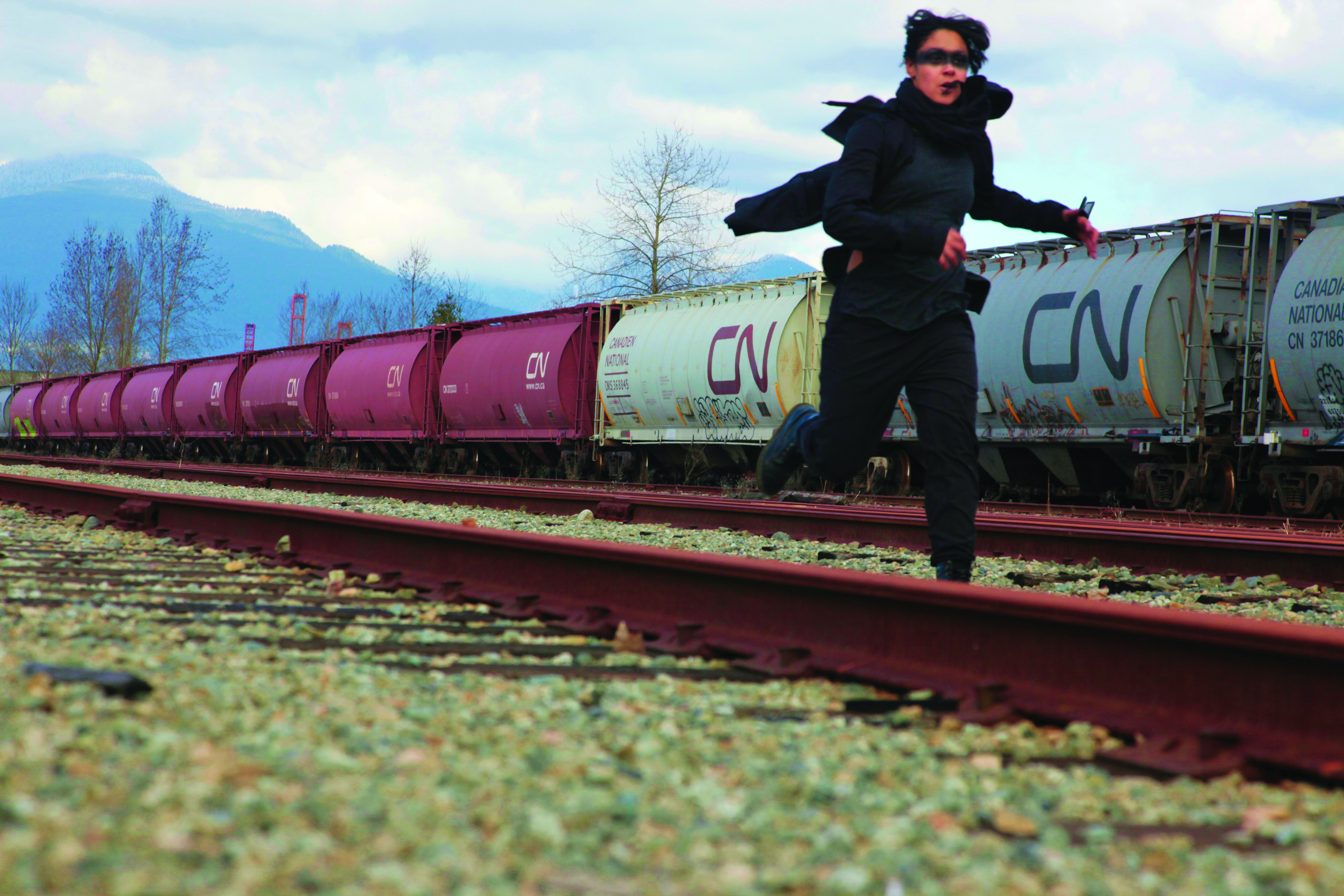
How does a contemporary dance show inspire a Lululemon capsule collection? Amber Funk Barton is still surprised that she can now say she has her own clothing line, and she feels so grateful for the experience. “I feel that both organizations have truly had a collaboration and been inspired by each other,” she said. “They’ve been so supportive and respectful. It’s been a true artistic exchange.”  

This unlikely partnership all began when Barton was introduced to lead designer Jean Okada at the Lululemon Lab during a fit session where she gave feedback on some of their pieces. At that time she was halfway through producing her new dance work, The Art of Stealing, presented by her company, the response, and she was beginning to think about costuming. “I thought it would be so cool to work with Jean,” she said. 

Barton and Okada met for coffee, discussed costuming ideas for the show, and a short time later Okada suggested that they not only collaborate on the show’s costumes, but create a capsule collection inspired by it. “It was the most organic thing that happened. It was being introduced in the right way at the right time,” said Barton. Capsule collections are very small lines, in this case six pieces, inspired by groups in the Vancouver community. 

The right costumes can add so much to a dance. “Sometimes in contemporary dance we don’t put an emphasis on costumes,” explained Barton, saying that tight budgets often lead to hastily put together costumes bought at the mall. For this show she knew it had to be costumed with more thought. The aesthetic of Lululemon really suits this project, with black being the prominent colour.  

“We’ve been working so hard on creating a world that makes sense to us,” said Barton, explaining that each dancer has their own journey within the piece. One dancer said to Barton, after putting on the finished costumes: “Before I just felt like I was in a template, now I really feel like I’m in it.” 

Barton believes in the power of costumes to help transport the dancers to her fictional world: “You can suspend belief better in costume, you have your uniform,” she said. “For the dancers it really helps us forget that we’re dancers and be immersed.” The costume give them another piece of information about their role. 

Barton doesn’t like the word character to describe the different roles in her work. “I create avatars as opposed to characters,” she said, explaining that this leaves room for interpretation. The avatars in this show represent a post-apocalyptic gang of thieves, and there are some identifiable personalities: “There is a power struggle within the gang. There’s the leader, the rookie, the person who challenges authority, etc. It’s more an outline of a personality type.”

Influenced by comics and graphic novels, the loose narrative journey of the show could be described as a moving storyboard. The atmospheric, murky music adds a dark tone to the show and Barton says there’s a sense that “something eminently bad is going to happen.” 

This is Barton’s third full length show, and she explained that after her last work, Portraits and Scenes of Female Creatures, she learned a lot about knowing what needs to be fixed and how to fix it. “It’s just experience. You just have to keep making work and you come to terms with the fact that there’s no way you’ll ever make a perfect piece,” she said. “It’s all connected and every piece leads to the next piece. You don’t get a black belt in choreography,” she laughed. “It’s nice to still feel inspired.” 

The Art of Stealing will be presented at the Firehall Arts Centre May 28 to 31. For more information, visit responsedance.tumblr.com

Five surprising common misconceptions

1

Untitled-1

There are some things that everybody knows — call it common sense. Whether you heard them from your teacher, parent, friend, or one of those public Facebook posts, they’re the facts and figures we take for granted that make up our knowledge of the world around us. Turns out, a lot of the information we’ve gotten over the years may not be all that reliable.

Actually, many of our most taken for granted beliefs may be either partially untrue or total fabrications. Though there are too many to name, here are five of the most persistent myths and legends which still get passed around as indisputable facts.

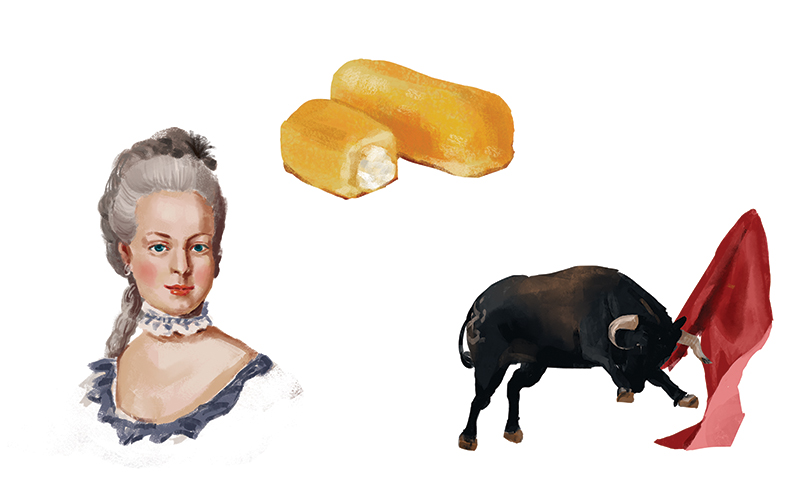
Marie Antoinette said “let them eat cake”

French queen consort Marie Antoinette’s famous quip is often credited as one of the best-known examples of rich people being, well, total dicks. Supposedly uttered at a time when the people of her nation were revolting due to a famine so devastating they could not even afford bread, the statement was used as a symbol of the selfishness and foolhardiness of the French nobility for years to come.

However, there’s no evidence Marie Antoinette actually said this at all. The statement first appeared in the autobiography of philosopher Jean-Jacques Rousseau, published when Marie Antoinette was only nine years old. In the work, Rousseau attributes the phrase to an unnamed princess, which was subsequently misattributed to Marie Antoinette.

There are many theories about how this phrase was attributed to her — most seem to believe it was the work of anti-royalists wanting to tarnish Marie Antoinette’s reputation at a time of extreme discontent with the French monarchy. In any case, Antoinette was known as one of the only members of the monarchy to actually care about the poor, making the statement pretty out of character.

Bulls are enraged by the colour red

This one is surprising. After all, we’ve all seen the absolute ferocity with which a bull rushes at a red cape waved by a matador, completely ignoring the matador himself — well, most of the time, anyway. Due to the popularization of bullfighting, the red of a matador’s cape has been seen as an aggressor to bulls for a very long time. However, not only is red itself not an aggressor for bulls, they can’t even see it.

Cattle, like most mammals, are dichromats, making them colour-blind. The actual reason bulls charge at red capes isn’t the red; it’s that the cape is in motion, which the bulls perceive as threatening. Why they chose to make the cape red instead of any other colour has a more morbid explanation: though modern bullfighting is not lethal to the bulls, historically, the red of the cape was chosen to mask the blood of the bull as it was injured and eventually died throughout the course of the bullfight. 

The Great Wall of China is visible from the moon 

Standing 8,850 km long and nine metres wide, the Great Wall of China is one of the most iconic structures ever built. The idea that this marvel is visible from the moon seems plausible, and has become ingrained in our cultural subconscious. However, this myth has been pretty thoroughly debunked.

The truth of the matter is, as Earth is 384,400 miles away from the moon, seeing the Great Wall of China from that distance would be equivalent to seeing a strand of hair from 20 miles away. Good luck with that. According to NASA, “No man-made object is visible at this scale.” Astronauts agree, and note that the Great Wall also blends in well with the surrounding landscape, making it even tougher to see from a distance.

Deoxygenated blood is blue

Turns out your 3rd grade teacher lied to you; blue veins don’t equal blue blood. In fact, blood is always red, regardless of oxygen content. The red blood cells in your blood contain hemoglobin, an iron-containing protein that aids in oxygen transport which our eyes see as red. Instead of blue, deoxygenated blood is a deeper red than the blood we’re used to seeing, closer to maroon.

This myth is a product of our veins appearing blue to us, which is due to a number of reasons, among them the way light scatters through your skin and the complexity of human colour perception — which you can read about at length in many a scientific paper. Suffice it to say that your blood ain’t blue.

Twinkies never expire

If you’ve ever seen Zombieland, you might hold out hope that in case there’s some kind of zombie apocalypse or nuclear war, as long as we can get to the Hostess warehouse and find the Twinkies, we’ll never go hungry. Why? Because Twinkies don’t expire, of course!

The idea of Twinkies as infinitely fresh arose from the seemingly perpetual sponginess and high volume of these little cakes in grocery stores. Eventually, rumours arose that Twinkies were purely artificial, made up entirely of chemicals which allowed them to stay fresh for years, or even decades, at a time.

Unfortunately, if you happen to open up a time capsule from 1995 and find a still-wrapped Twinkie inside, it would be a good idea to just throw it away. Officially, Twinkies have a shelf life of 25 days, and while this is longer than most cakes, it is nowhere near the multi-year expiration dates attributed to them. We can dream, though.