Home Blog Page 1171

Goodbye, Nintendo.

17

Nintendo Gameboy

It has been 31 years since the release of the Nintendo Entertainment System (NES), the system that revolutionized the world of videogames and helped create the now immensely influential modern video-gaming culture. But unfortunately, after seven home consoles, six handheld consoles, and a boatload of classic games, Nintendo has finally come to the end of its road.

The Guardian recently reported that Nintendo had slashed its Wii U yearly sales estimate from 9 million to 2.8 million. That’s less than one-third of the sales it predicted it would make the year before. What’s even worse is that Nintendo actually sold under its estimates, at 2.72 million consoles.

I’ve always been a fan of Nintendo more than of any other gaming console, mainly because I didn’t have the money to purchase an Xbox or Playstation. Growing up, my first console was the GameCube. Yes, I’ll admit I was a little late in joining the Nintendo crowd, as I was well aware of the explosive popularity brought about by the Nintendo 64, arguably the company’s peak-era.

Before I could finally convince my parents to invest in a Nintendo console, I’d lived the N64 experience through my friends’ consoles. By the time I’d gotten my hands on a GameCube, embellished with Zelda: The Windwaker and Madden 2002, I was well seasoned in the art of racing heavily pixelated Mario Karts, and busting out the jams on my ocarina.

But after the release of the Wii, it was evident to me that Nintendo’s popularity in the gaming community was starting to decline. Yes, the Wii introduced a change in gaming through motion-sensor technology, but as other consoles, like the Xbox and Playstation, were becoming increasingly popular with what were deemed more “hardcore” or mature games, in graphics and story lines, the Wii was struggling to adapt.

Only old crusties will hold on to Nintendo, clinging to childhood through our beloved Mario, Link, and StarFox.

Now, with the Wii U having made its less-than-glamorous debut, it is clear to me that the only thing keeping Nintendo barely running is the release of games with the classic characters that initially made it popular. In other words, Nintendo is running on nostalgic value.

I’ve accepted that, as a Nintendo fan, I have become an obsolete gamer, and have refrained from purchasing a Wii U console. But I will forever remain faithful to those games that played such an important role in childhood life.

However, The Guardian reported that while some analysts (like me) “have suggested that Nintendo may be ready to ditch its troubled machine,” Nintendo plans to “rejuvenate” the Wii U with the release of some new major titles and technologies.

While the company may feel its taking the right steps to boost its profits, I, unfortunately, feel otherwise. The stigma has been placed on Nintendo. With its failure to quickly branch out into modern hardcore graphic games, Nintendo will continue to lose copious amounts of money, and will eventually wither into nothing. Only the old crusties, such as myself, will hold on to it, trying desperately to cling to childhood through our beloved Mario, Link, and StarFox.

Goodbye, Nintendo. It was fun while it lasted. But now you must submit to your own demise in the face of high-definition blood and guts.

 

The meaning of privilege

0

Screen Shot 2014-05-23 at 4.48.51 PM

The “check your privilege” campaign is a social media movement that has been spreading among university campuses in the hopes that it will catalyze change and prevent discrimination. The campaign asks students to question their own privileges.

A lack of a privileged experience can result from discrimination based on race, sex, class, disability, sexual orientation, religious affiliation, age, and others. The generalized implications of the “check your privilege” campaign are brilliant because they cover all of these issues. The problem, though, is that this slogan is too broad to make the desired impact on its targeted audiences, which should include most of us to some degree.

It seems to me that despite the campaign’s attempt to increase the complexity of privilege, we still tend to drift towards the “I need this campaign because I am not a Caucasian, 30-year old, heterosexual, cis-male” argument. Surely, this demographic experiences a lot of privilege over other minority groups, and they need to be aware so that they can learn to mediate that issue. But there is more to understanding what privilege means in all of our lives than just this argument.

If we imagine a privileged experience of the world to be determined quantitatively through a checklist of how many privileges we have, then it is inevitable that there will be those who will score higher than others. However, are some privileges going to carry more weight than others? What score counts as being truly privileged? The issue is too complicated to be categorized into a pass/fail system.

There has been concern that the campaign could be used to silence Caucasian students. However, this shouldn’t be the case. Certain groups are going to feel targeted by the slogan but that is because of the negative perception we have of what privilege means.

 The issue of privilege is too complicated to be categorized into a pass/fail system.

This negative perception of privilege is unfortunate, as it tends to shut down meaningful conversation. We all need to understand that being privileged doesn’t make you a mean and selfish individual; it just means that you have some advantages that others do not experience.

The “check your privilege” campaign is easily interpreted as only targeting the obvious groups. But we have to remember that just because you are part of a minority group doesn’t mean you don’t experience some privilege.

There are wide ranges of contributing factors to privilege. If you step out of Canada and compare our rights and attitudes with different groups in other nations, this becomes immediately apparent.

Examine your own privileges before pointing out someone else’s. That is the only way that each of us can begin to listen to the issues of other groups and to become cognisant of the problems that we may not encounter because of the privileges that each of us possess.

BESTiE delivers No Bad Days

0

CMYK-BESTiE - Garden - 2013 - 2.9MB


Imagine palm trees, warm beaches and piña coladas year round. Imagine the best of vibes and the best of friends. Imagine juicy fruit and nonstop sunshine; imagine no bad days. This is the feeling Vancouver-based tropic pop group BESTiE hits us with, again and again. 

Their infectious energy is compelling and uplifting, with each of their songs a bright burst of warmth more colourful than the last. BESTiE, who list “summer, ice cream, the beach, girls, floating down a river in an inner tube, high fives and heart break” as a few of their influences, have a warm, calypso-surf dream pop sound that catches the ear and the soul and brings you to a place of infinite joy. 

After scoring third place in the 2013 Peak Performance Project, the boys have only continued to impress. Their self-released first album, No Bad Days, came out on April 22, and they are currently grinding through their first cross-Canada tour. If it’s any sign of the spirit of BESTiE, they made time to chat with The Peak following an overnight prairie drive, in between their first gig on live TV, first thing in the morning, and their (much-anticipated) breakfast.

The band consists of Tristan Orchard (lead vocals), Andrew Janczewski (guitar), Rob Cameron (bass), and Daniel Ruiz (percussion). The four besties met at the Vancouver dive bar Funky Winker Beans in 2009, at a night Tristan had put together called No More Strangers. 

Their true collaboration, however, was birthed on a hot summer weekend at a jam space Tristan runs called Goodies. Tristan, Andrew and Rob stumbled into jamming together and were all really excited about the vibe that emerged, so they kept running with it. Daniel “found his way in” later, and the four of them have been seriously (but in a fun kind of way) creating their sound since 2012.

BESTiE’s diverse musical tapestry is characterized by the eclectic mix of the unique styles and influences of each member. Tristan has a DJ background and “likes eclectic mixes of sounds, and earnest pop music.” Andrew grew up listening to a lot of African music and early reggae and is, in Tristan’s words, “almost a historian.” 

Then we have Rob, the “guru of indie rock,” and Daniel, a Columbian native who contributes his Latin-inspired drumming style. The overall BESTiE sound we hear is a smooth blend of these diverse and sounds that compliment each other perfectly: breezy, upbeat, happy, and outrageously fun.

Interestingly so, the popular categorization of BESTiE’s sound as ultra optimistic was unintentional on their end. In fact, Tristan was in a low place at the time of the band’s formation, as his other band was dissolving. The collaboration with new to-be besties was exactly what he needed.

“Getting back into making music with other people was really exciting, we love playing music together. It’s really the best thing, so that joy manifests itself into the songs.” They also credit their geographical setting for their bright, positive sound. Tristan explains, “Being from Vancouver, where it’s dark out most of the time, you have a special fixation with the sun and the short summer.” For BESTiE, “it’s all about the vibe — born out of the mood we are in.”

The resources and experience BESTiE gained through the Peak Performance Project encouraged the release of their debut album, which they had been working on throughout 2013 and up until March 2014. A highlight of the process for the group was working with producer Howard Redekopp (Tegan & Sara, Mother Mother, The Zolas), which “was great, and definitely made us a better band.”

If the idea of summer condensed into an endlessly re-livable half hour sounds appealing, BESTiE’s No Bad Days is definitely an album for you. What’s perhaps the most amazing part of the music BESTiE has created is that when you listen to it, you can truly hear and feel that hot summer weekend that inspired the whole thing years ago. These self-described “young men that like to steer towards the light” are practically magicians, evoking the powerful feeling of joy they experience in doing what they love, a joy that many of us yearn for all year.

BESTiE will perform at Fortune Sound Club on May 30. For more information, visit bbbestie.com.

Off to see the wizard

0

Wicked Munchkinland Tour

 Are you good or evil? What does that even mean? Wicked explores the idea that none of us are really good nor evil, but a combination of both, and how we end up that way is more complex than we probably realize. Matt Shingledecker, who plays the witches’ love interest, Fiyero, explained that the idea of the show is to strip away the labels of good and evil to look deeper into individual character and motivations.

You may think you know the two witches from The Wizard of Oz: there’s Glinda, the sparkly, pure, good witch, and the Wicked Witch of the West who is sheer evil. But what were these two like before they became famous witches, and how did they go from being best friends to worst enemies? 

Wicked follows Elphaba (who would later become the Wicked Witch), and Glinda, through their college years and demonstrates how different societal influences come to shape them.

Shingledecker explained that the relationship between the witches is what people can relate to the most, “Their paths intertwine, they separate, and eventually come together. When Elphaba says ‘You’ve touched my life,’ everyone can relate to that.”

“It’s a different take on The Wizard of Oz, people learn something new,” he said, explaining that with this previous knowledge of the characters, “everyone feels like they’re in on it.”

The book that inspired the musical is quite different, said Shingledecker, but there is one part that stuck with him and seems to sum up the moral of the story: Boq, a munchkin who knew Elphaba as a child, says to her that you don’t have to be weary of people who call themselves evil, you have to be weary of people who call themselves good.

In Shingledecker’s favourite song of the show, “No Good Deed,” Elphaba’s character has a powerful moment when she struggles to figure out the difference between good and evil. “She sort of becomes her persona for a moment. It’s a moment of vulnerability.” 

Shingledecker’s character, Fiyero, is — according to him — best represented by the scene “thank goodness,” at the top of act two when he calls Glinda out. “You see where he’s come; how far he’s come,” he said.

“Every character has a specific arc change in the show. You see him change overnight. He goes from happy go lucky to deeply caring, more than anyone else.” Fiyero is put in a difficult position, caught in a love triangle with Elphaba and Glinda.

After over 100 shows in eight cities, Shingledecker is halfway through this North American tour, and he’s looking forward to stopping in Vancouver, as well as a few other Canadian cities that he has never visited. 

Apart from the magical story of these misunderstood witches, the impressive dancing, amazing music, and stunning sets keep audiences coming back for more Wicked fun.

Wicked will be presented by Broadway Across Canada at the Queen Elizabeth Theatre May 28 – June 29. For more information, visit Vancouver.broadway.com. For tickets, visit ticketmaster.ca.

Bhangra love takes over Vancouver

0

CMYK-City of Bhangra


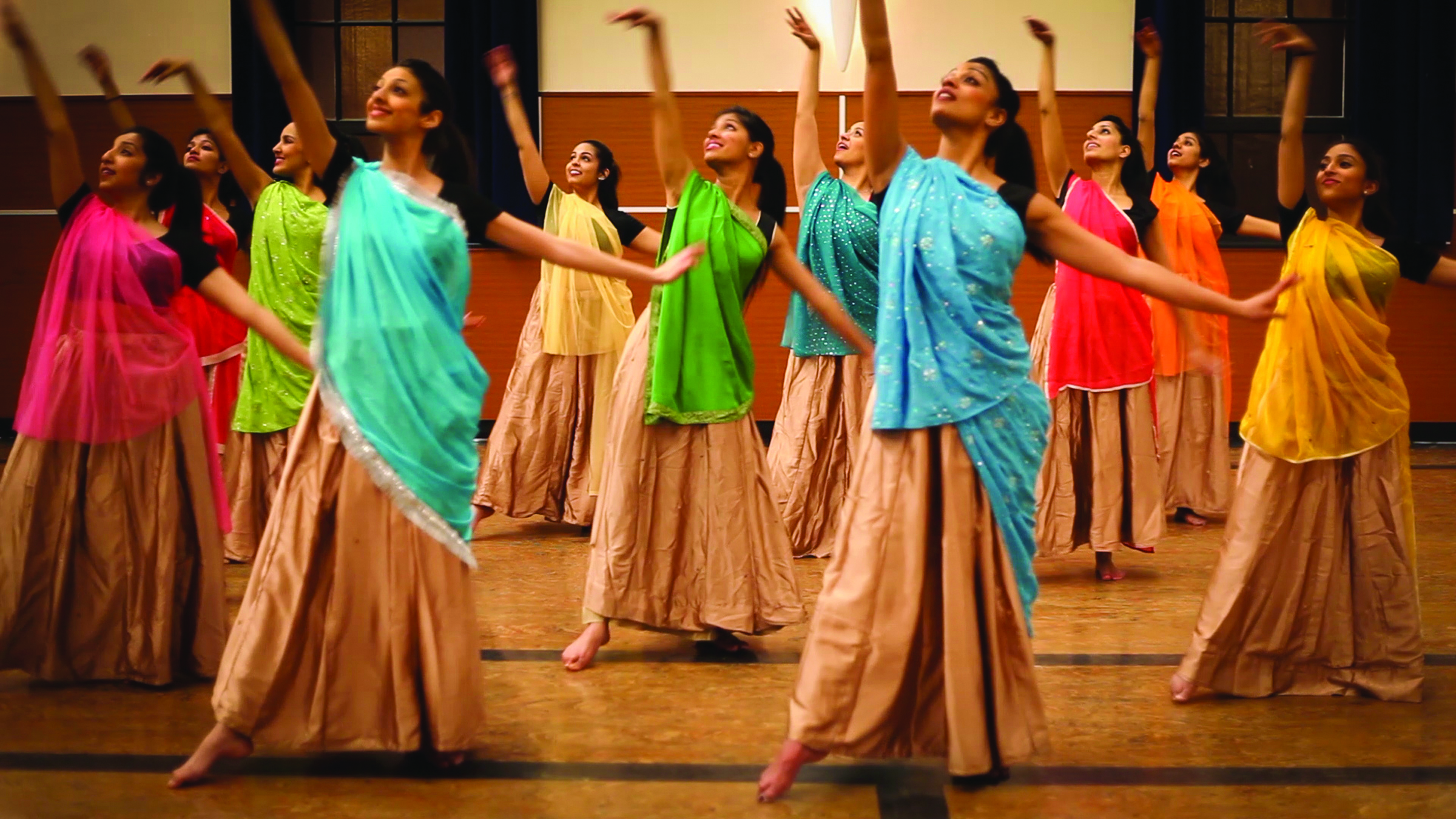
Vancouver, get ready to dance your heart out. The 10th annual Vancouver International Bhangra Celebration is a lively festival that will showcase music and dance from the Punjab region of India and Pakistan. Bhangra is a rhythmic folk dance that incorporates a blend of Punjabi music and Western influences. 

The aim of the event is to connect global communities as the performers each present a piece of their cultural heritage. Several local and international artists will be performing at places such as SFU Woodwards, Surrey City Hall, and the Vogue Theatre, to name a few. 

The festival kicks off with the Transfusion event and reception at SFU Woodwards on May 29. As the name suggests, the diverse range of performers at the event showcase a multitude of cultural and artistic boundaries. Among the performers are Now or Never, a hip hop breakdance crew; JCC Shalom Dancers, a dance group that celebrates Jewish heritage; and the Leela Dance Group which performs Indian classical and folk dance. 

Other performers include First Nations dance group Native Thunder and students from the Royal Academy of Bhangra. The Peak sat down with members of three of the crews to talk about their upcoming performances at the festival. 

The Now or Never crew was established in 1997 by a group of young people who shared the same interests in hip-hop dance. They have performed at a variety of venues ranging from South Asian weddings to the closing ceremony at the 2010 Winter Olympics. 

As for what they wish to take away from their upcoming performance at the Bhangra Festival, member Jhaymee Hizon says, “We are always open to learning and experiencing new things. We want to learn more about the South Asian culture and incorporate their [style of] dance into our show.”

The JCC Shalom Dancers have been going strong since 1981, dancing to showcase their Jewish culture and heritage. Member Marla Simcoff describes the group’s style as “a melting pot of styles. We do Eastern European and Turkish dance and incorporate it into a modern style of dance.” Since performing at the Yom Ha’azmaot (Israeli Independence Day) celebration in 1981, the group have become well known representatives of the Jewish community and history. As for the group dynamic, Simcoff says, “We are all in different stages of our lives. We have mothers, newlyweds, university students, and we are all united because we love to dance.” 

Leela Dance Group is an Indian dance group established by four choreographers who have been dancing together since they were kids. Incorporating a fusion of classical, structured Indian dance with the community oriented fun of folk dancing. Choreographer Monisha Manhas says of the group, “I enjoy the fusion of classical and folk dance as the classical style by itself can get lost on our younger generation.” 

The diverse showcase of cultures at this festival is truly something to celebrate; though the performers are from many different backgrounds, they are all united in their love of music and dance. Manhas characterizes this love well saying, “I think that people can create a deep emotional connection with music. Dance allows people to put a physical presence to that music. Even if people don’t understand the words, we can pull emotion from the music and put the emotions into our movement.”

Satellite Signals

0

WEB-woodward

Woodward’s

Thursday, May 22 to Sunday, May 25 was a busy weekend for SFU’s Arts campus, which hosted the second annual Spur festival. Founded by the Literary Review of Canada and Diaspora Dialogues, Spur offered solution-oriented presentations and debates on issues such as public transit, managing a public political persona, and maintaining a green city. Readings, literary cabarets, and film screenings were also offered.

surrey

Surrey

Surrey students looking to pad their resumes in the extracurricular sphere were in the right place last Thursday, May 22. Clubs Days was in full swing, offering a chance to sign up with groups such as the Aviation Club, BitCoin Club, Game Developers Clubs, and SFU’s Jazz band. Departmental student unions were also out in force, recruiting students to attend their upcoming meetings and functions.

vancouver

Harbour Centre

The unique literary wranglings of poets Phinder Dulai and Kim Minkus found the eager ears of Lunch Poems attendees at Harbour Centre’s Teck Gallery on Wednesday, May 21. The weekly poetry reading occurs at 1:00 p.m. and features Canadian word-smiths who entertain listeners free of charge.


The Last of the Unjust adds to an impressive body of work

0

Claude Lanzmann

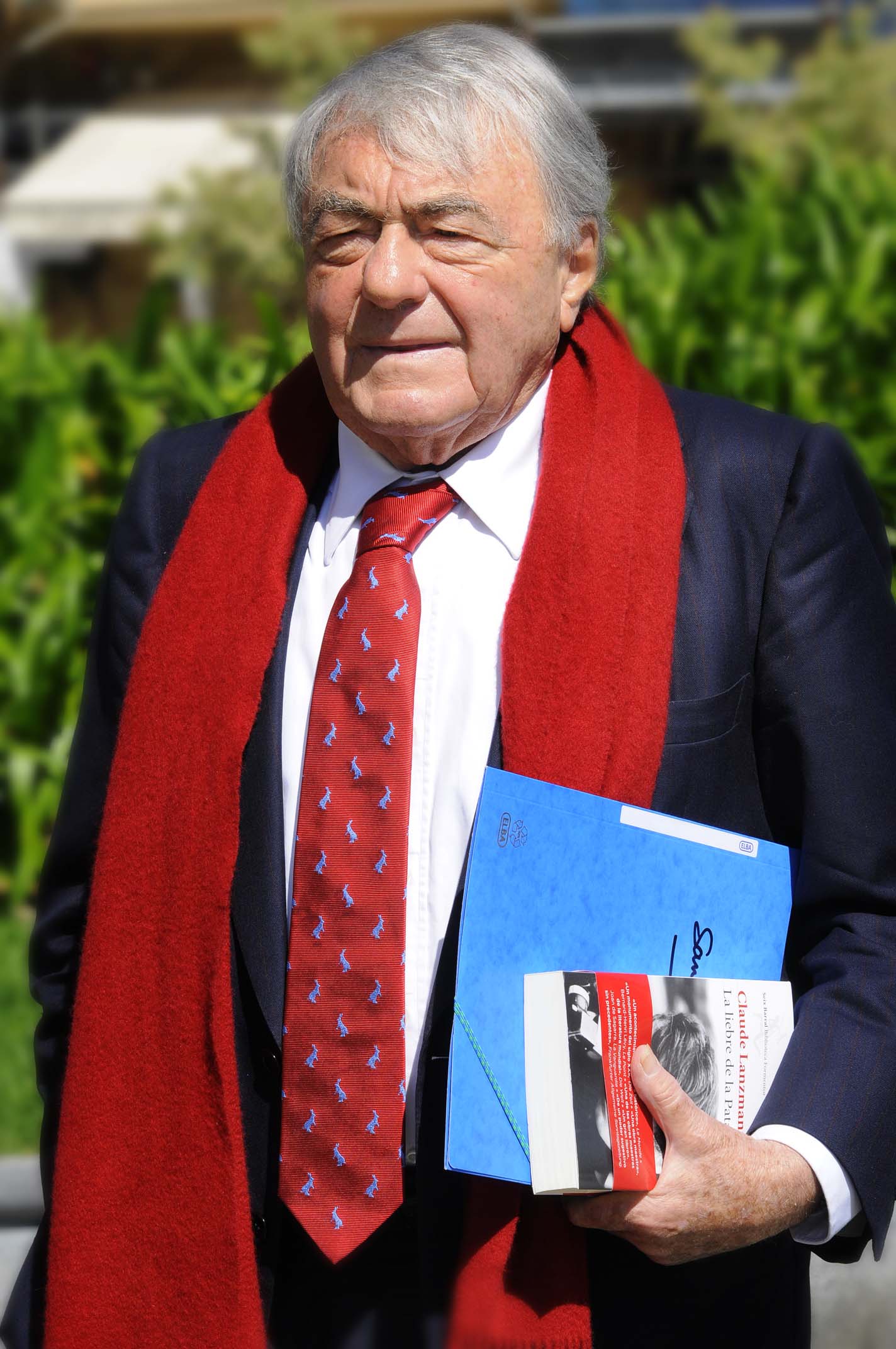
Few filmmakers’ careers are defined by one film as Claude Lanzmann’s has been. His 1985 sophomore documentary Shoah, a nine-hour film on the extermination of the Jews in the 1930s and 40s, is perhaps the most acclaimed documentary ever made. His latest film, The Last of the Unjust, takes a self-contravening step out of its shadow.

Shoah was a monumental film, and justifiably so: comprised entirely of interviews with the bystanders, perpetrators, and above all victims of the Holocaust, the film confronts the way that the obscenities of the past reverberate forward in time. To watch Shoah is to go in thinking it will be too much, and leave realizing that it is not and can never be enough.

No one knows that better than Lanzmann, who accumulated enormous amounts of footage while filming for the project from 1976-1981. He has since used that footage to make four further documentary features; easily the bulk of his remaining filmography. Unlike Shoah’s diverse tapestry of witnesses, each of these films has focused on a single interview subject, and have not broken from Lanzmann’s refusal to depict the atrocities committed, even in archive footage.

In an article dismissing Steven Spielberg’s Schindler’s List, Lanzmann laid out the objections that led to this approach, particularly condemning the obscenity of the relatable image. “Fiction is a transgression, I am deeply convinced that there is a ban on depiction,” he wrote, adding further that if he found footage of a gas chamber execution secretly filmed by Nazis, he would not only not show it, he would destroy it.

Which makes Last of the Unjust, his new (perhaps final) film, a shocking and problematic departure from the Shoah project. A great, deeply moving, and intelligent transgression.

Yes, Unjust centers around 1976 footage from an interview (shot over several days) with Benjamin Murmelstein, the wartime president of the Jewish Council of Theresienstadt, a Czechoslovakian “model ghetto.” That footage reveals the moral incomprehensibility of the Holocaust, as Murmelstein convincingly argues that his actions — which were controversial enough that he was exiled from Israel after the war — were not perfect, but conducted with good intentions under pressures that literally no one can empathize with or understand. He was, after all, the only “Elder of the Jews” who survived the war.

Lanzmann does two things he has never done before. First, he includes newly shot material of himself reading from notes at the pertinent locations; digital footage that shows him 40 years older than the Lanzmann conducting the interview, and long after his subject’s death.

Second, more briefly but more shockingly, he includes in one sequence excerpts from a Nazi propaganda film, made to depict Theresienstadt as a pleasant haven of day-to-day living for Jews. In the upper right of the screen, text disclaims it as such throughout the scene, but there it is, nonetheless: a depiction of the Holocaust, more fictional than anything Spielberg would have dreamed of attempting.

What Lanzmann attempts here is to depict his own relationship to the material, as a chronicler, a witness of witnesses. It’s him coming to terms with the things from his own past that haunt him in his own singular, controversial place in history, reinforced by the bond that visibly forms between him and Murmelstein in the ‘76 footage. In this respect, he succeeds.

He also attempts to examine the difficulty of judging a man like Murmelstein, who is honest: by his own admission, he was not always a perfect or magnanimous leader; he did his best but prioritized his own survival. Murmelstein suggests that his most unacceptable act was survival. “But not all martyrs are saints,” he argues. In this respect, Lanzmann also succeeds.

What’s troubling is that Lanzmann seems to have taken two individually successful but somewhat contradictory ideological approaches. By inserting his modern self, reading from prepared notes and, by implication, reflecting on the interviews, Lanzmann erects a historical distance between us and Murmelstein, permitting exactly what the filmmaker said he opposed: “a consoling identification.”

It’s a problem, but not one Lanzmann is entirely ignorant of, and perhaps there is merit in its inclusion here; perhaps this is the twilight hour when he should bracket his whole career’s methodology by questioning it. It wouldn’t be the first time: Shoah openly shows him lying to subjects for interviews, or cruelly insisting that weeping survivors finish unbearable stories. Perhaps the only way to correctly approach the Holocaust is to at once acknowledge that one cannot correctly approach the Holocaust, and then try anyway.


Some people write for the hell of it

0

C. R. Avery


Admittedly I’m not the most qualified person to be reviewing a book of poetry. (For souring me on the literary form, I blame years of being forced to unpack/dissect poems in the name of academic purposes.) But maybe that makes me even better suited for it. Instead of falling over myself for every stanza I read, my critic senses have been hardened — thankfully, any person who’s not a fan of flowery, over-the-top poems can look to C.R. Avery.

Best known for his work as a rock musician over the last several decades, Avery returns to the game of poetry with his third book, Some Birds Walk For The Hell Of It, 61 pages of unabashed, curt storytelling. Divided into four colourfully named chapters, Avery’s experiences from over the years undoubtedly helped create this myriad of anecdotes, covering everything from apathetic romance and hooking up, to feelings of inadequacy throughout life, along with the overarching tone of not really giving a shit.

There are a ton of poems that deserve mentioning but a few personal favourites are as follows: “Lunch Pick-up Poem,” in all its Velvet Underground referencing glory; “Thin Walls 95.3 FM,” a cup-half-full quip about your neighbours having particularly loud coitus; “Ghost Car & Ragged Glory,” a perfect and brief insight into a sketchy nightclub and its even sketchier patrons; and “Another West Side Girl,” if only for the opening lines of “She gave me a blow job on her sofa / Now my job is to blow in the direction of the black-vestry night.” With 35 different poems included, it’s hard to pick just a few to highlight.

While most of the memorable poems come with at least a tinge of sexual innuendo, they never feel like a shtick or even remotely juvenile. Instead Avery uses sex as a device and a way to make his writing personal and honest, regardless of how unpoetic the sexual encounters might be.

Some Birds also boasts a healthy number of music-related puns that most likely couldn’t have been put together by someone who wasn’t a musician themselves. Take the closing lines from “Do they play Zombie Zoo,” for instance: “You’re not going to believe this, but they joined a Tom Petty cover band, it kinda broke my heart,” and “Well, they’re heartbreakers now.” 

While the shorter poems — most of which are 10 lines or less — offer most of the comedic relief and quick jokes, Some Birds really shines with the poems that run between one and two pages. Avery’s strength comes from his ability to build a whole narrative instead of a brief snapshot into a character’s life and that’s where the payoff lies. The words might not flow particularly nicely, but Avery tells a story and he tells it well. 

Like I mentioned before, I’m not a poetry guy and most likely never will be, but if you’re looking for something light to take with you to the beach or while you’re trapped waiting at the laundromat, C.R. Avery will do just fine. While some readers may be turned off by his non-decorative language and generally sex-centred topics, it’s easy to appreciate Avery’s work for what it is: an entertaining read.

Ts’msyen Transforming shapes the past into high art

0

CMYK-Goomsm Xsgyiik Necklace


Morgan Green shows me a fierce tattoo of an eagle with its wings spread along the length of her right arm. It’s crafted in the distinct formline of Northwest Coast Art. “I’m the eagle,” she says, meaning the crest passed down through her mother’s clan. “This is my cousin’s work. She uses elements that I don’t, such as this” — Morgan points to a red U-shape in the design — “Ts’msyen are strict,” she says. 

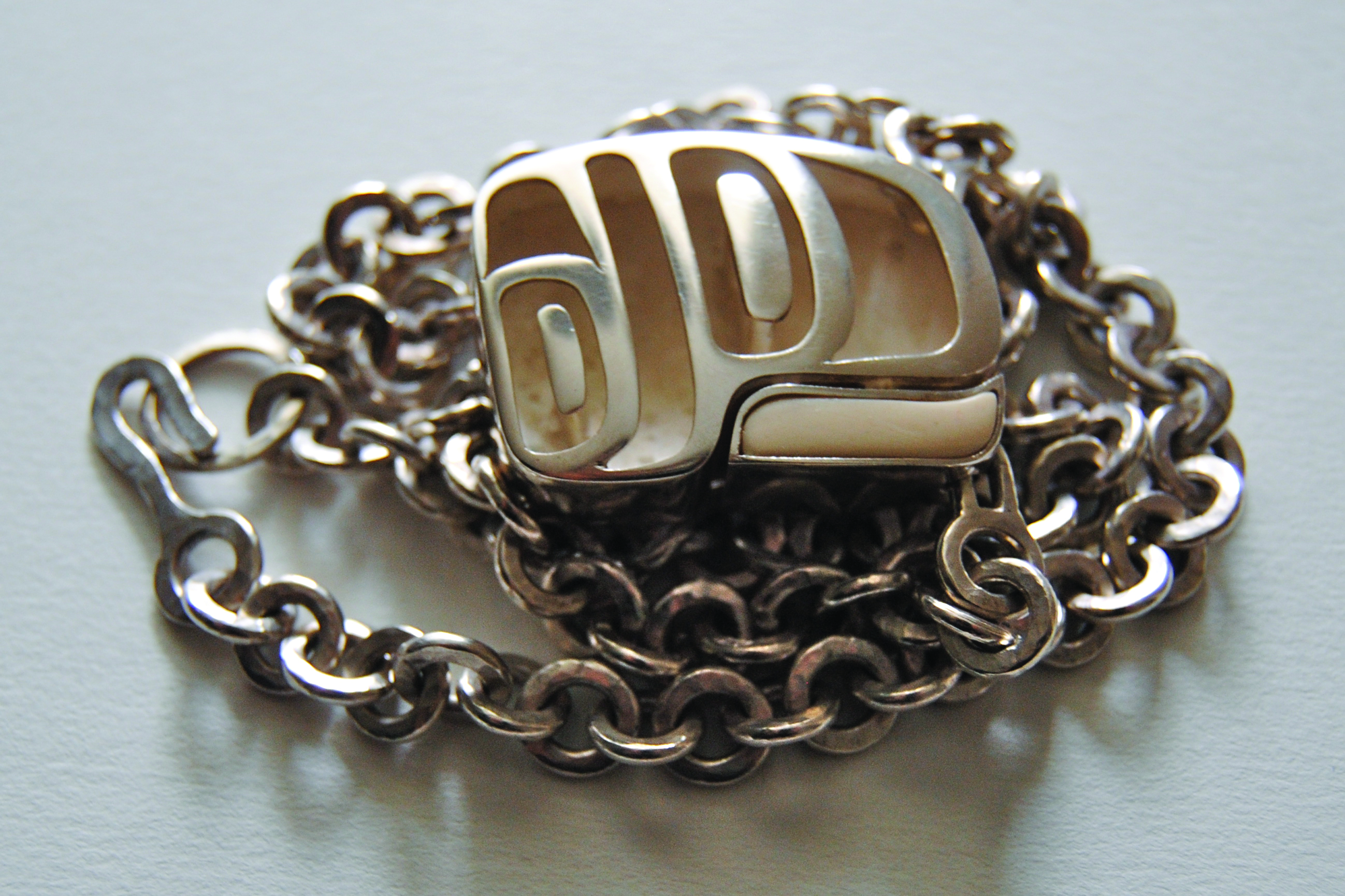
We stop in front of a piece in her jewelry exhibit, Ts’msyen Transforming, at the Bill Reid Gallery. A formline butterfly constructed out of delicate layers of oxidized silver rests on branches that wind together into a circle. Their flow of line is so rhythmic that they seem to dance in the space holding them.

“Yes, I’m also interested in Art Nouveau and Egyptian art,” Green says. “You can see that here. But I have to be careful. Our culture is at the source of Northwest Coast art, so when Ts’msyen come to look at it,” she leans in my direction and nods, “they can be quite strict.”

Born on Ts’msyen lands near Prince Rupert, Green developed her art as a way of bringing her past into the present. It serves as a bridge in the history of her people. “Art was integrated in our life,” she says. “Just by looking at someone’s crest you could tell where he came from and who his people were. Everything people owned was proper according to our law and history.” 

Green is known for her time spent developing both her artistry and her knowledge of her culture. She works in painting, clothing, leatherwork, wood sculpture and jewelry, and yes, she makes her own tools. “I think any artist worth their salt should,” she says. She also teaches and plans to develop a culture centre back home. “All Northwest Coast artists work in the Lower Mainland,” she says, “but our culture comes from our land. It would be nice to return our cultural base there.” 

Kwiaahwah Jones, director of content at the Bill Reid Gallery says, “Morgan works at a very high level. She only started in jewelry three years ago, but when people see her work they ask how old she is. She’s only 30.” Like Reid, Green preserves the art’s legacy, but transforms it in novel ways. 

Reid advanced the use of repoussé in jewelry making; this is a type of sculpture where patterns in relief are shaped into the metal by hammering on the reverse side. Morgan’s techniques extend the sculpture of jewelry into hollow-form construction. “Her work is a perfect example of the high art found here,” says Jones.

Green lets the materials suggest themselves to her. Then she sculpts, solders, and polishes many times to shape the silver, gold, and copper that she works in. “I believe art has power,” she says. “It brings deep structure to the surface, whether it’s an idea or the lost knowledge of a society. It transforms people.” 

Going through the creative process is an emotional experience for Green. “I feel tension before finishing a work,” she says. “It’s because being inside the creative process is important to me.” Most of her pieces stay with her for a long time as she works to perfect them. Then they pass into her community through personal networks, often purchased for use in ceremony. “I like that, though,” she says. “I like that they are danced in the community, have fun and take on a life of their own that has nothing to do with me.”

Ts’msyen Transforming is at the Bill Reid Gallery until September 14. For more information, visit billreidgallery.ca.

History’s Greatest Friendly Political Wagers

0

The “Friendly Political Wager” is one of the great traditions of both sports and politics. Symbolic bets between two rival city’s political leaders is one of the most fun and creative practices in existence and they often eclipse the main event itself. You probably don’t remember who won Game 7 of the Canucks-Bruins series in 2011 but I know you definitely didn’t forget when mayor Gregor Robinson had to go in public wearing a yellow and black jersey! What a fun-loving, down-to-earth and cool guy! Who wouldn’t want to get a beer with him and then vote for him in the next election?

Anyway, here’s a list of some of the wackiest, most outrageous and, of course, greatest friendly political wagers of ALL TIME!

Julius-Caesar-Eleanor-Qu

Event: Ultimate Gladiator Championship 147

Participants: Julius Caesar and Arisnoe IV of Egypt

The Bet: If Caesar’s championed Roman gladiator, Maximus, were to win the big fight Arisnoe agreed to deliver him a jar of Alexandria’s Egyptian Pale Ale, her favourite beer, while wearing a Caesar-style leaf crown. If Arisnoe’s pick, a nameless Egyptian slave and man-eating tiger tag-team, were to win, Caesar promised to erect a Sphinx statue in the middle of Rome and leave it there until the start of the next gladiating season.

Outcome: I think it goes without saying, but Maximus was victorious at UGC 147 and Arisnoe had to deliver Caesar the jar of beer, although Caesar lessened her embarrassment by gracefully choosing not to use this opportunity to have her publicly executed.

british-mayor-Eleanor Qu

Event: 1888 FA Cup Final

Participants: West Bromwich Mayor, Tom Gilroy and Preston Mayor, Earl Tinney

The Bet: If Gilroy’s home club West Bromwich Albion F.C. were to take home the coveted FA Cup, Tinney agreed to wear a throstle’s nest on his head for the remainder of his mayoral term. If Preston North End F.C. won however, Gilroy would have to appoint a sheep as his vice-mayor.

Outcome: West Bromwich triumphed over North End in a 2-1 victory and since that day every mayor of Preston, Lancashire has spent the entirety of their mayoral career wearing a bird’s nest on their head, one of the town’s proudest traditions.

Charles-De-Gaulle-Eleanor Qu

Event: The Battle of France (September 1939)

Participants: Charles De Gaulle and Adolph Hitler

The Bet: If the Allies could prevent the German Army from capturing France, Hitler agreed to wear a french beret for the remainder of WW2. If the Nazis won, De Gaulle promised to wear and be photographed in the opposing side’s uniform.

Outcome: Despite outnumbering their opponents, the Allies just couldn’t handle the German Army’s strategy and were quickly defeated. France was divided into German occupation zones and an embarrassed De Gaulle was forced to wear one of Hitler’s old uniforms for which he received a lot of ribbing from his fellow political leaders.

JFK-Eleanor-Qu

Event: USA/Cuba Exhibition Baseball Game (1961)

Participants: John F. Kennedy and Fidel Castro

The Bet: If the US were to win the game against Cuba, Castro agreed to send JFK a box of authentic Cuban cigars. If Cuba were to win though, Kennedy promised to wear a T-shirt that featured the Cuban Revolution hero of Castro’s choice.

Outcome: Cuba won the game by a score of 7 to 4 and JFK agreed to wear a shirt depicting Ernesto “Che” Guevara. Despite the ironic intentions, the look was so popular that the shirt was mass produced and remains a staple of American mall T-shirt shops to this very day.


Event: 1972 United States Presidential Election

Participants: Spiro Agnew and Sargent Shriver

The Bet: In order to entertain themselves as they waited to see if their bosses would be elected, Richard Nixon and George McGovern’s running mates held a side bet on the results of the election. If Nixon won, Shriver would have to wear a Nixon-mask to the next Kennedy family function while in the case of a McGovern victory, Agnew would have to wear a Republican party baseball cap while serving a month’s service in the Vietnam War.

The Outcome: Nixon won the election and Shriver, who was a member of the Kennedy family wore the mask to their next event which happened to be a soiree dedicated to the 4th anniversary of the passing of Bobby Kennedy. It was the last party Shriver was ever invited to.


Event: 2007 Nathan’s Hot Dog Eating Competition

Participants: George W. Bush and Yasua Fukuda

The Bet: Japanese prime minister, Yasua Fukudu agreed that if world-champion Japanese competitive-eater Takeru Kobayashi lost to any of his American competitors, he would shave the US flag into the back of his head. For his part, Bush promised that if Kobayashi did win, he would have a map of Japan tattooed on his chest.

The Outcome: After six straight victories at Nathan’s, Kobayashi was finally defeated by American, Joey Chestnut. Fukudu would honour his commitment, although some have called foul on the cut which only had 30 stars instead of the traditional 50.

obama-Eleanor Qu

Event: Canada-US Olympic Hockey Semi-final Match (Sochi 2014)

Participants: Stephen Harper and Barack Obama

The Bet: While publically the bet was a simple exchange of beers from each other’s nation, behind closed doors the bet was a little more involved. If Canada won, it was agreed Obama would have to shotgun the 6-pack of beer Harper got him right before speaking to Russian president Vladimir Putin about the Crimea situation. If the US won, Harper was to officially change the Canadian national anthem to Loverboy’s “Working for the Weekend”.

Outcome: Canada came through with a huge win against the US and Obama had to kill six Molsons before getting on the phone with Putin. While he did have a good plan for resolving the situation, he decided instead to let Putin know how he really felt about him for three hours before crying and hanging up.