Home Blog Page 1161

SFU Fashion Week makes it work

0

WEB-fashion-Mark Burnham

Anyone who attended or heard about SFU Fashion Week will know that it was about a lot more than just glitz and glam. What began as one student’s vision to create a tangible SFU identity through fashion evolved into a three-day event, beginning on Wed. March 19, that deconstructed, analyzed, and showcased various facets of the fashion industry.

Kayode Fatoba, creative director and visionary behind SFU Fashion Week, told The Peak the event was really about “showcasing SFU students in their beauty, in their pride, in their fashion, to promote a new sense of school spirit.”

“Recruiting individuals to be a part of the initiative wasn’t easy, given I had nothing but my words,” said Fatoba. However, with just over two months of planning and a limited budget, the core group of student volunteers was able to produce the first university fashion week in British Columbia.

Arjan Mundy, SFU Fashion Week’s director of external relations, explained that the aim was to create an event that catered to various crowds and gave people a reason to stay up on the mountain for more than just class.

“There are a lot of pub events, [ . . . ] barbeques and stuff like that,” said Mundy. “We wanted to have an event that catered to a different sort of crowd who doesn’t really want to come out to pub nights all the time. There’s a real drive to make our campus more fun for everybody.”

According to Mundy, what set this university fashion week apart from any regular fashion week was its emphasis on university life. “We wanted the designers to be [ . . . ] from within SFU and around SFU.”

“There’s a real drive to make our campus more fun for everybody.”

– Arjan Mundy, director of external relations, SFU Fashion Week

“Students are broke,” he acknowledged. “We’re not showcasing stuff that’s really expensive. [ . . . ] It’s good looking stuff that students can actually afford.”

The main fashion show, on Friday March 21, featured pieces from individual fashion students and bloggers, as well as companies such as LavishTee Clothing (founded by a third year SFU communications student), SFU Athletics, and the SFU Bookstore.

However, the highlight of the week for Fatoba was the second day, which was comprised of presentations and breakout sessions on the controversies surrounding the fashion industry and the portrayal of fashion in the media.

“It [was] us coming critically at the issue of fashion, and all that’s been [discussed] within the school of how to increase self-expression,” Fatoba explained. “The keynote speakers were pointing out that fashion was [a] way for individuals to actually be able to communicate their thoughts and emotions to others.”

One of Thursday’s keynotes was a genocide victim, who employed his sense of fashion and creativity to start a clothing brand at SFU. He has since been able to use some of the funds he raised to empower peers in his home country.

In the future, the team hopes to make SFU Fashion Week a sustainable initiative and to engage even more of the SFU community, including the satellite campuses. This year’s event was able to make a small profit, which, in the spirit of engaging and giving back to the SFU community, event organizers donated to the concurrent Relay for Life.

Open letter re: three reasons why you should vote yes for SASS

0

In this week’s election you will have a chance to make history, empower students, and solidify a change in structure that will fundamentally change the way our student society is organized.

The Society of Arts and Social Sciences (SASS) has been operating as the Faculty Student Union for the Faculty of Arts and Social Sciences since 2011. In that time they have created the legendary frosh event SASSquatch, organized over 100 events — both academic and community related, and given hundreds of students opportunities to practice leadership, organizational, and team building skills that result in more community and engagement here at SFU.

SFSS by-laws needed to be changed in order to allow for Faculty Student Unions to officially be part of the structure of student governance at SFU. This was achieved in April 2013, and this year SASS is finally able to take the next step for the students of this faculty and become the first official Faculty Student Union at our University

SASS needs your to vote, here are three reasons why you should vote yes.

1) It will help SFU grow

SASS will be become the first official Faculty Student Union at SFU. This model of having student organization and representation at a department and faculty level is structure widely used across Canada at older institutions. The Faculty of Arts and Social Sciences has over 20 departments with over 10,000 students. Many students cannot declare into their department until after the second year, meaning they have little support and fewer opportunities. Moreover, it is important to have a place where students in the arts can come together, organize, and discuss. The Arts are interdisciplinary by nature, and by building connections with each other we can begin to build a larger, more coherent community.

2) More events

At UBC, the Arts Undergraduate Society (SASS equivalent) is responsible for organizing the largest student organized concerts in Canada. McGill’s Arts Society has brought out world-renowned speakers and owns its own multi-million dollar building. By voting “yes” to SASS, you are helping this SFU student organization grow into something that is able to do much more. Philanthropic, academic, environmental, community-related, SASS will be able to organize both large and small events that will raise the profile of our University and make our degrees worth just that much more.

3) More Representation

The more representation students have, they better off they are. By electing students to represent you at the faculty level they are better able to lobby for specific department and faculty needs. This means that if your department funding is being cut, if you can’t get into classes, if there are just enough professors, there is another organization that is mandated to support you.

I have been at SFU for almost 4 years now and I have watched SASS develop into a reputable organization that has done incredible things for students. Voting “yes” will help SFU to become a more reputable university, will bring more events and a better sense of community, and give more unity and representation to students in the largest Faculty at SFU.


Sincerely,

Kyle Acierno, SFU student, a co-founder and the first president of SASS

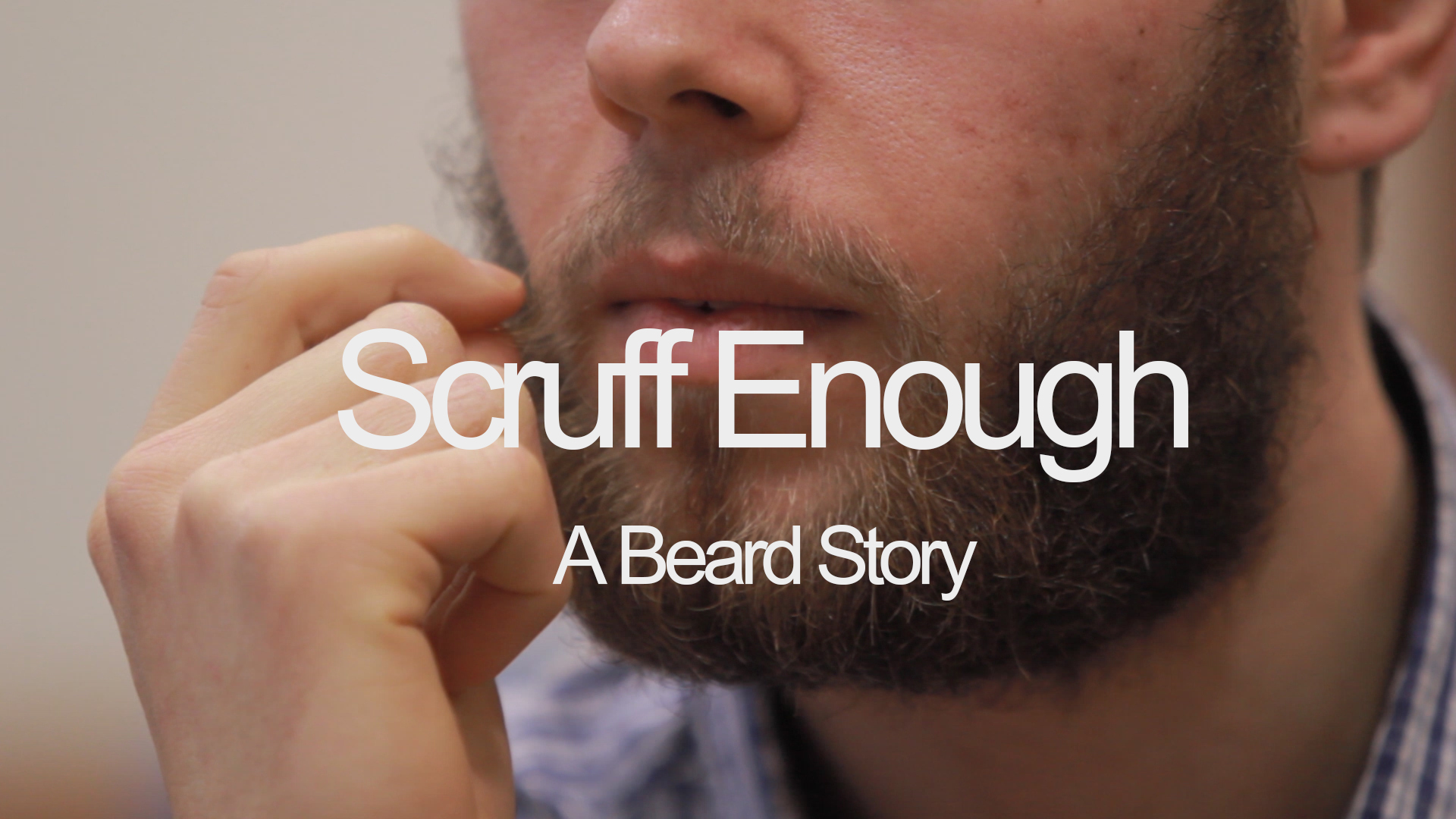
Scruff Enough

1

The Peak met with Joel, president and founder of the SFU Beard Club. We follow Joel in his efforts to be recognized by the SFSS as an official club.

Starring Joel Mackenzie
Created by Brandon Hillier, Alysha Seriani and Brad McLeod

Staying Sharp: Tips for Running A Student Society

0

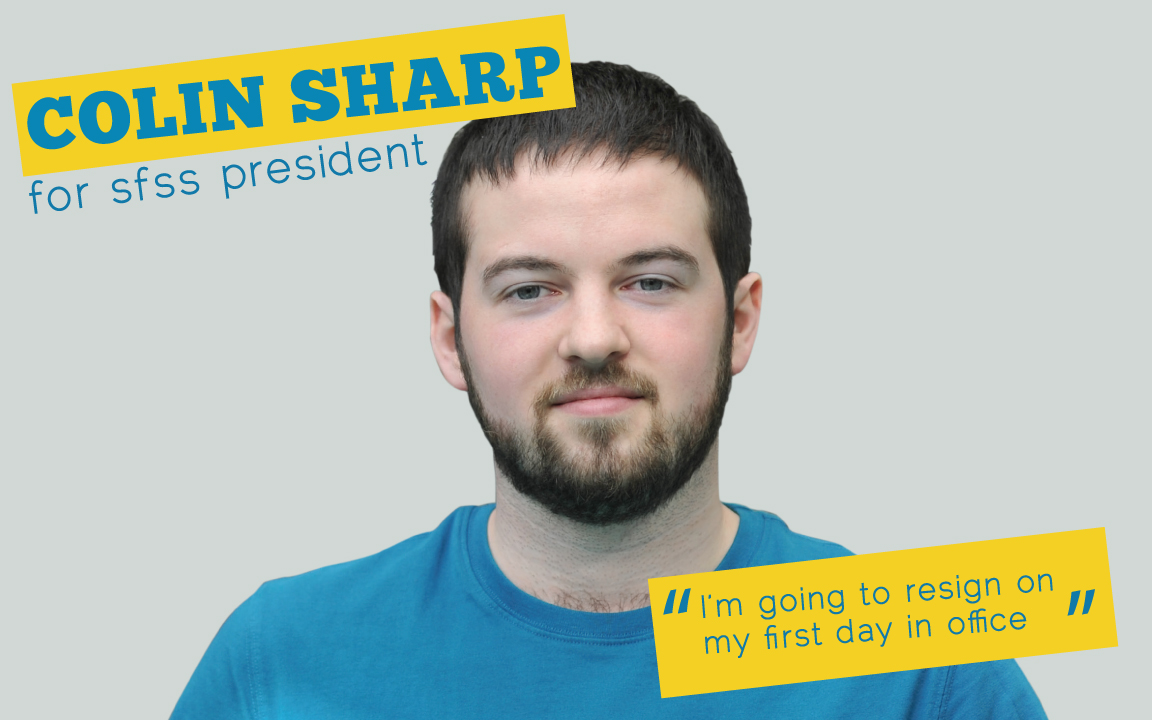
A few years ago I ran for president of the SFSS. I sat where today’s candidates sit and I have heard what they heard. This type of experience is exceptionally rare and has resulted in me carrying a level of expertise that most people can only dream of. It would be a shitty dream, but a dream it would be.

Alright, so maybe my campaign was just an excuse for me to make jokes. And maybe my one and only campaign promise was that I would resign on my first day in office. And maybe one of my posters extensively quoted the inspiring Black Eyed Peas song “My Humps”. That might make my campaign slightly different than today’s candidates, but like it or not, I still have more experience than them. Pretty dumb, right?

Anyways, read away candidates, because I have some dumb tips for your dumb faces.

1. Don’t drop out of the race.


Many pundits consider my decision to drop out the main reason I lost the election. Don’t make my mistake. On that note, don’t decide that “not writing the next essay” is a way to get back at your TA for being unfair: he had less work to do and you failed a class about TV shows. Who won there Colin? Who won there?

2 . Don’t bite off more than you can chew.


Oh, you’re going to throw the sweetest party ever with the most popular and critically acclaimed bands and beers are only going to cost $1 and Fox Field will be full of thousands of SFU students praising the organizational, budgetary, and email-sending capabilities of their fearless SFSS leaders?

Nope. Not going to happen. It’s just not. Start small. That’s how a culture of fun events works. If you throw an event for 300 people, and 400 people show up, that’s good. Now you have 300 people that want to bring their friends to the next awesome sold out event and another 100 that will be dying to get in next time. However, if you try and throw an event for 5000 people and 1000 people show up you just have 1000 people who were at a lame party. Keep your events small and frequent, not big and disappointing.

3. Register in classes.


You can’t represent students if you are not actually registered as a student. It’s the same reason that I, as a young male, can’t be the president of Mothers Against Drunk Driving. No amount of hating drunk driving and loving Ellen DeGeneres will change that.

4. Follow @colin_sharp on Twitter


I mostly just tweet jokes and comments about hip-hop, but I fail to see how this will harm your campaign, so just do it. I probably won’t follow you back.

5. Remember that none of this matters.


Did you know that BC Premier Christy Clark was President of the SFSS? Yeah, neither did the rest of the province. No one is paying attention to you. You could probably moon the crowd right now, go skinny dipping in the AQ Pond, and then go knock on Andrew Petter’s door to personally ask him for a towel and 90 per cent of SFU students would never hear about it. That means you can relax.


Alright candidates, I hope you feel as though you learned something here. To whoever wins this election, I hope you aren’t a complete failure. To whoever loses this election, congratulations! You don’t have to be president. And to the skinny dippers, remember that the AQ pond is super shallow and the bottom is really slippery.

There will be blood

0

3258182065_b219a73767_o

One of the happiest days of my life was the day I realized I had gotten my period for the first time. To me, my menarche was like being initiated into a club that I had been admiring my entire life.

So, naturally, as any excited-beyond-belief 11-year old would do, I went to school the next day fully intending to tell all my friends. Much to my dismay, everyone met my excited whispers of “I got my period last night!” with various levels of disgust and reproach. For many years afterwards, I would conform to the “normal” way of dealing with my period: treating it as a secretive burden.

As a teenager, I found tactful ways of hiding tampons at all times, and began to refer to my cycle as “the curse.” It wasn’t until I turned 19 that the financial strain, social stigma, and inconvenience of tampons lead me to do some digging on how I could make my period a less miserable part of my life.

Why was I spending more than $15 per month on products that didn’t really work for me? Where does that money go? Is there anyone else out there who is struggling with this? What did women do before tampons? And why should I have to be secretive of something that happens to about 50 per cent of the population?

Herstory

I explored the history of the taboo behind the period — I found that in Judaism and Christianity, menstruation is described as being part of the punishment for the disobedience of Eve for eating the Forbidden Fruit. According to the Orthodox Christian Information Center, “These bodily functions are not sins, but they represent and emphasize the consequences of our fallen states.” Some Christian churches even refused communion to women on their periods.

In Nepal, women have traditionally been kept in in “menstrual huts,” or cow-sheds, for days while menstruating. Japanese Buddhism considered menstrual blood to be pollution — women were sentenced to Blood Pool Hell for their “sin.”

Why should I have to be secretive of something that happens to about 50 per cent of the population?

In Western Africa, the Asante considered menstrual blood to be powerful, and used it in harmful supernatural rituals. For them, menstruation was analogous to the inherent danger of the cycles in nature.

Much 19th century writing argues that women should not attend university because menstruation debilitates them and their capacity to learn. In 1883’s Sex in Mind and Education, Henry Maudsley argued that women are “of another body and mind which for one quarter of each month, during the best years of life, [are] more or less sick and unfit for hard work.”

Five years earlier, the British Medical Journal published a report about the chance of meat spoiling when touched by menstruating women, and argued that women may not be fit to practice medicine while menstruating.

While some progress has been made, menstruation remains a taboo for much of the world today, and that makes information on the history of menstrual products few and far between. Yet, there are rumours of tampon-like tools in ancient Egypt, Rome, and Japan made of materials such as papyrus, wool, and paper.

During the 19th century, European and American women may have simply bled onto their clothing or washable menstrual pads which fastened from the waist with a belt. At the turn of the century, though, new products appeared as a result of the industrial revolution.

Patents for products such as menstrual cups (which are reusable and hold the menses to later be poured out), and still-popular disposable tampons, were born during this era.

By the 1930s, the taboo of menstruation had been solidified in the US and Canada: “Advertising such a sensitive topic to a national audience would require just the right touch, a combination of aggressive selling and delicate good taste.” And it did. In 1936, led by Ellery Mann, Tampax boasted 11 million buyers of its new product.

Predictably, advertising has played a big role in popularizing the feminine hygiene industry throughout the 20th century. But many of these advertisements have both euphemized and vilified menstruation, to make it more easily marketable. A 1965 magazine ad from Tampax cites the “freedoms of Tampax [. . .] the swimming, the sunning, the poise, the comfort, the cool, clean, fresh feeling [. . .]” Later ads have involved women running through open fields in white dresses, usually with cheesy adult contemporary chiming away in the background.

All these ads have sent the same basic message: menstruation is unclean and undesirable, and buying menstrual products that can be easily disposed of is the only way to avoid social and cultural transgression.

Things aren’t much better in the Internet age. Tampax’ website includes a storied history of “The First Tampon” on the “About Us” page. It tells the tale of the modern tampon being invented by a man named Dr. Earle C. Haas in 1929, and how Tampax was co-founded by Thomas F. Casey in 1936.

The description reads, “Mann had the good sense to select men with the expertise and temperament to compliment his own special talents and personality.” The subtext here is clear: women are too hysterical to design and sell products they’ll be using. That, of course, is a job only a man can handle.

The feminine hygiene industry

Fast-forward to the present day, where Tampax’s parent company Procter & Gamble controls over 30 per cent of the global market share in the feminine care category. In 2013, P&G made $22 billion on its disposable products, including tampons, pads, toilet paper, and diapers.

Kimberly-Clark, another FemCare conglomerate, reported that its brand Kotex is an over $1 billion business. Energizer Holdings, owner of both Playtex and o.b., came in at over $2 billion in sales in 2013. The best part? The CEO of each and every company I listed is, as far as I can tell, a non-menstruating person.

So, with all this money being made, there must be a lot of products. Where do all those little cotton torpedos end up?

When I used disposable tampons, I generally went through about 25 each month. So that’s five tampons a day, for five days every month, for about 40 menstruating years. That would be 13,000 tampons and about 150 kg of waste in my lifetime. Factor in nearly all other menstruating people on the continent, and about 20 billion tampons, applicators, and pads are sent to North American landfills every year.

About 20 billion tampons, applicators, and pads are sent to North American landfills every year.

If you’re still asking yourself, “what’s the big deal,” consider this: What’s in that Tampax tampon you use every month? These things are going inside your vagina, an orifice like your mouth, ears, and nostrils — if it contained harmful chemicals, wouldn’t you want to know about it? Maybe not. Tampon companies are not required to display or reveal the ingredients of their products to the general public in the way that food products, pharmaceuticals, and cosmetics are.

How are disposable pads and tampons made? Well, they start from wood pulp, which is treated with chemicals such as viscose to create the fiber rayon. The rayon and pulp are further processed with a variety of bleaching agents and other chemicals to render them white, absorbent, and fluffy.

All the major FemCare brands (Tampax, Kotex, Playtex, o.b., etc.) use this method, which combines rayon and bleach. This combination creates dioxins which are proven cancer-causing agents that can disrupt the hormone system and have been linked to endometriosis — a once-rare disease that can cause internal bleeding, permanent scar tissue, and infertility.

The pesticides used to treat cotton for menstrual products have been linked to infertility, neurological dysfunction, and developmental defects. To top it off, the “fragrance” found in some tampons and pads has been known to contain dozens of secret chemicals, which are linked to skin irritation and reproductive harm.

Alternatives to disposables 

How can you avoid harming your bank account, the environment, and your body? Ditch the disposables! There are countless companies all over the world which provide eco-friendly options for menstrual health. For the inside scoop, I sat down with Madeleine Shaw, one of the founders of Lunapads: a natural FemCare company based right here in Vancouver.

“We specialize in natural feminine hygiene products, which is to say reusable alternatives to single-use, mainstream pads and tampons that are sort of ubiquitous in our culture and world,” said Madeleine, when I sat down with her at the East Van Lunapads HQ.

Lunapads makes reusable, washable cloth pads, pantiliners, and underwear, while also selling reusable menstrual cups. “We also have as part of our mission, an obligation to have a positive social and environmental impact,” Madeleine explained.

“It’s all part of a liberation and a truth-telling which leads to empowerment, which leads to healthier lives — because, really, this comes down to health. This comes down to our reproductive health and the health of our planet, which is also a reproductive organ that we need to take care of.”

Whether or not you get your period, menstruation affects everyone economically, environmentally, and socially.

In addition to their products, Lunapads runs a non-profit organization called One4Her, which supports “better access to education for girls in developing nations by providing sustainable, affordable menstrual care products for girls in need, as well as improving menstruation awareness.”

In case you don’t know, millions of girls in the developing world stay home from school during their periods due to lack of access to menstrual products. This can equate to missing up to 20 per cent of their education, making them more likely to drop out, which in turn can lead to early marriage and a greater risk of contracting HIV or dying in childbirth.

This is why we need to change the way we look at menstrual health and hygiene: by advocating a safer, destigmatized, and sustainable system, millions of people’s lives can be changed for the better.

Period power

Reusable products, such as menstrual cups, adhere to the greater societal trend of reusability and recyclability: cloth shopping bags, reusable coffee mugs and water bottles.

Companies like Lunapads also offer a product that recognizes that not all women menstruate, and not all who menstruate are women. “Lunapads users and community members are cisgender, transgender and genderqueer individuals who span the gender spectrum.”

There’s a growing cultural movement aimed towards promoting menstrual health and crushing the period taboo. Toronto-based artist Petra Collins has inspired praise and controversy for her American Apparel T-shirt entitled “Period Power,” which features a line drawing of a vulva, pubic hair, and a manicured hand with watercolour menstrual blood.

In an interview with Vice, she said, “[. . .] we’re so shocked and appalled at something that’s such a natural state — and it’s funny that out of all the images everywhere, all of the sexually violent images, or disgustingly derogatory images, this is something that’s so, so shocking apparently.”

Petra and other artists involved in the Period Power movement help break down the taboos that limit the way we talk about menstruation in our society. How people feel about their periods should be as unique as their bodies — whatever the case, these are conversations worth having, and they can’t happen until we eliminate the stigma that has haunted menstruation since day one.

The truth is that whether or not you get your period, menstruation affects everyone economically, environmentally, and socially. It’s a natural and healthy process, and one that should never be shamed or stigmatized.

So, if someone says to you, as I did to my classmates when I was 11, “I got my period today,” consider opening the discourse about a taboo topic of global health. You’ll be glad that you did.


Take the SFSS logo off the “Silent No More” posters

0

WEB-prolife poster-mark burnham

I could not focus in my class this past Friday. As hard as I tried, my mind could not let go of what I had seen on my way to my lecture hall in the AQ.

“Men and women DO regret abortion,” the poster read, an assertion made by the Lifeline club at SFU in order to promote their upcoming event “Silent No More” on campus. I admit I was a few minutes late to class, taking my time to study the contents of the poster and trying to understand exactly what message was covering the walls of my school.

Compounding my confusion was the presence of the student society (SFSS) logo on the poster. The logo is available for download on the SFSS webpage, welcome to be used on “your sponsored [sic] event poster or flyer,” with the accompanying logo branding guide only stipulating the font styles and colours that can be used with the logo.

It would be as simple as re-posting the posters without the SFSS logo or altering its language.

Rather than aesthetics, however, my concern here is with the implication of the logo. While most club event promotions that bear the SFSS logo are arguably neutral in nature, the message presented by Lifeline’s posters is clearly not.

Lifeline, whose club description on the SFSS webpage refers to abortion as an assault, is a pro-life club on campus. By branding the choice to terminate a pregnancy as a widely-held regret, the poster shames those who have chosen to exercise their reproductive rights.

This message is particularly troubling in the context of a university, a place of higher learning comprised of a predominantly young student population. The presence of the SFSS logo on the poster inadvertently legitimizes Lifeline’s negative, inflammatory message.

While the poster affected me deeply, I cannot imagine the impact it might have on a student or employee of the university who has had experiences with terminating a pregnancy.

The message asserted by the poster targets these individuals and creates an environment in which they are not welcome. The presence of the SFSS logo brings an official sense to Lifeline’s beliefs and is not indicative of a university student society that strives to represent its undergraduate student population.

Though Lifeline is welcome to exercise free speech and organize on the basis of their beliefs, I believe the use of the SFSS logo should be further regulated, ensuring that the logo is not used in situations where assertions that can be harmful to members of the university population are made.

In the context of this issue, it would be as simple as re-posting the posters without the SFSS logo or altering its language: “Men and women share their experiences with abortion,” for example.

Ensuring that the use of the SFSS logo on club promotional material is held to a certain standard of neutrality is necessary in order to prevent the association of club beliefs with the views of our student society.

End unpaid internships

1

CMYK-Interns-Mark Burnham

During an awkward icebreaker game at the beginning of the semester, someone asked me if I planned to take an internship. I laughed nervously and told her no, considering most of the internships in my field of interest were unpaid.

I was taken aback by her response; she recoiled in horror, as if she were going to catch some sort of unemployment plague, and demanded to know how I expected to get a job in the future. My annoyance bubbled below the surface, but I managed to slather on a tight smile.

       I want to know why I am expected to sell myself short because of the precarious title I bare. Not only do I, and many other students, not have the luxury of throwing a whole working summer away, but the idea of selling labour for free because of my status as a student seems ludicrous.

Students should rally together and hold ourselves to a higher standard.

Regardless of the fact that we were raised in this Post-fordist era of experience over compensation, why do students work laboriously to leave empty handed, save for (fingers crossed!) a glowing recommendation? Unpaid internships are not a fair and noble exchange between those in power and students; they are a shady way of extracting cheap or free labor.

When the topic of unpaid internships came up in one of my tutorials last semester, few people recalled good experiences. While some people did mention that completing an unpaid internship for a not-for-profit organization left them with valuable job experience, the overwhelming majority felt like they were being taken advantage of.

The rule of unpaid internships is that interns cannot do the same work as paid employees. Unpaid internship advocates’ solution to potential exploitation of interns is for interns to have a firm awareness of their rights by reading the Employment Standards Act.

Realistically, though, even when interns are equipped with that awareness, they would accept breached rights if it meant keeping their employers happy, and safe-guarding a potential future job.

As one girl in my tutorial put it, “I was so bent on pleasing my boss in order to get a good recommendation, that I never objected to doing the same menial tasks as the secretaries.”

The act itself perpetuates class division. Unpaid internships create a distinction between the privileged who can afford to take them, and the middle class or poorer students who cannot. The privileged are allowed these unpaid “opportunities,” while most students are forced to take jobs outside of their area of interest in order to make money.

This situation begs the question: are those who get unpaid internships really the crème de la crème of intern candidates, or has the competition just been sufficiently thinned out to only include the wealthy? If you ask me, it’s the latter.

Unfortunately, as long as there are students willing to settle for these unpaid internships, the belief that students are okay with this sort of relationship to those in power, and the belief that the wealthy deserve this leg up on the rest of us, will continue to be perpetuated.

Instead of climbing over one another on our race to employment, students should rally together and hold ourselves to a higher standard. I think it’s high time we challenge the status quo. The mindset that perpetuates internships might have had a place in the Feudal era, but not in 2014.

I’m afraid I just blue myself

0

bmgp-671_FinalCrop (3)

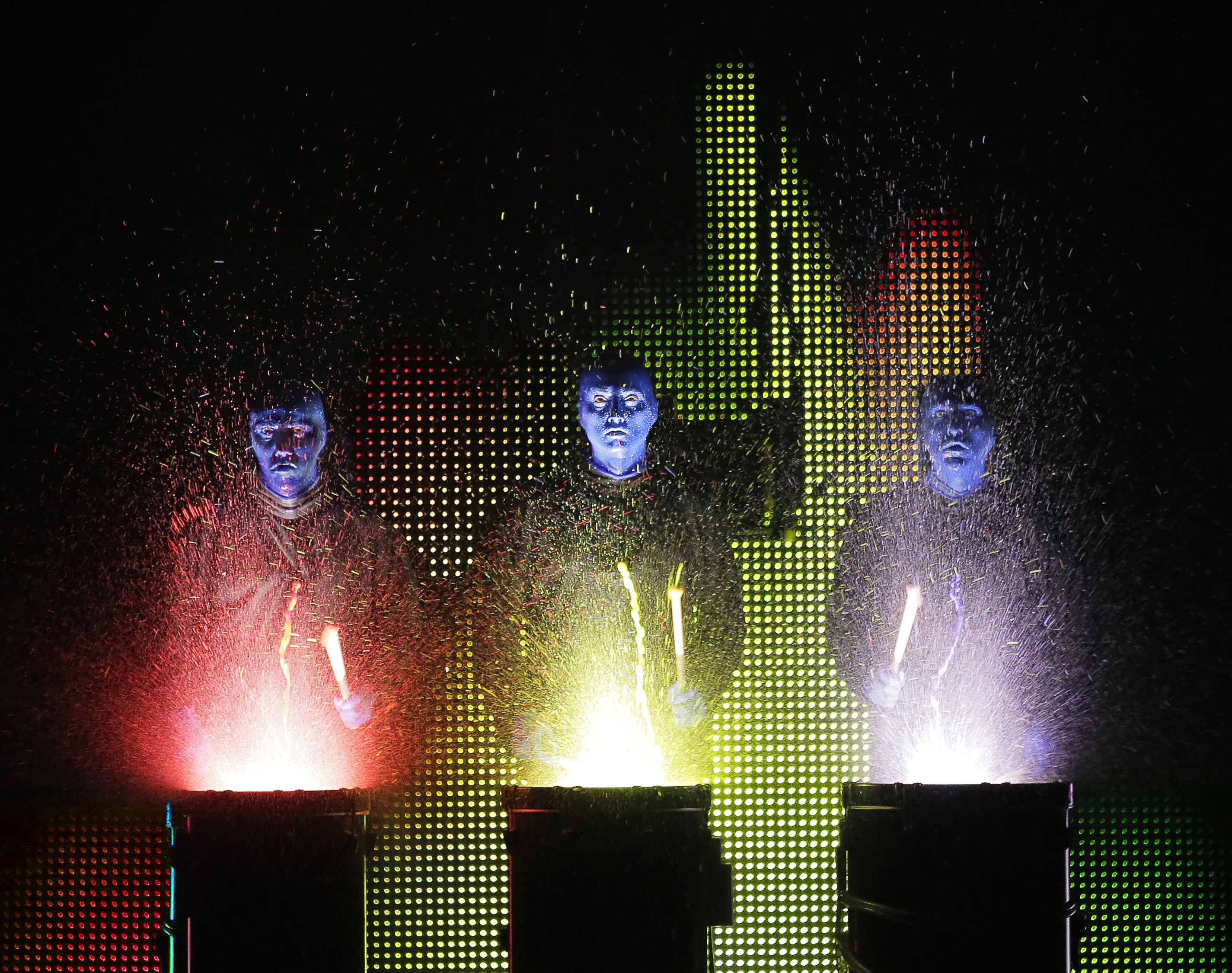
Three years of working on the Blue Man Group show has changed Jesse Nolan’s perspective on the world.

“It has changed the way that I look at everything,” he said. As the show’s musical director, Nolan said his challenge is to create musical accompaniment that outlines the stories and action on stage. He describes it as “painting with sound.”

Working on the show and thinking like the Blue Man character has helped Nolan expand his own thinking. “I’ve been encouraged to think a little bigger about everything,” he said, “I think more creatively in all aspects of life.”

There is something about the mysterious Blue Man character that people are attracted to. Nolan has been interested in the show since he was 12 and saw it for the first time in New York City.

“There’s a sense of exploration,” he explained. “When you watch the Blue Men move and interact, they’re always exploring. There’s a hunger for learning and knowledge.” Nolan said that children find them especially compelling.

The Blue Men also love to involve the audience in their shows. There are a few signature things that they do in every show, including climbing over the theatre seats up the rows. They literally take the show into the audience, and Nolan said that this creates an interesting atmosphere.

“There’s a sense of wonder coupled with tension.”

Jesse Nolan, Musical Director

“There’s a sense of wonder coupled with tension,” he said, as the audience is always wondering what’s going to happen next. “They have a sense of purpose, and the audience is trying to connect and figure out why,” said Nolan.

This show has a very heavy emphasis on technology and the role it plays in our lives. For example, the Blue Men interact with “Gi-pads,” huge eight foot iPads that allow them to comment on the influence of technology. “The outcome is thought provoking or comedic,” said Nolan, explaining that, compared to previous iterations, there is more video content, lights, LED screens, and even some wearable technology.

The great thing about a Blue Man Group show, said Nolan, is that it’s always fresh and new. Their performance philosophy is one of collaboration and an ever evolving show that is never the same from one night to the next. “We’re using the characters and style to tell a different story,” he said, adding, “we’re doing this thing that can’t repeat itself tomorrow.”

One thing that never changes, however, is the mess they leave behind on the stage. Of course there is splattered paint everywhere as they hit drums covered in it, but the Blue Men also play with food. “It ends up being a mixture of paint, food, and sweat,” laughed Nolan.

The content of each show comes together through collaboration, and the founders (Chris Wink, Phil Stanton, and Matt Goldman) are also still involved from their base in New York along with a team of musical directors and designers.

The essence of a Blue Man is a curious, innocent trickster, and Nolan hopes the show can reach out to adults just as much as it reaches kids. He hopes that adults can also “experience life through the eyes of a Blue Man,” saying, “That’s what we want to leave them with.”

Blue Man Group will be presented by Broadway Across Canada from March 25 to 30 at the Queen Elizabeth Theatre. For more information, visit vancouver.broadway.com.

Woohoo; boohoo

0

Woohoo: disagreeing with me

Disagreeing makes the world go around. In fact, there’s nothing more human.

People can’t be absolutely sure of anything, bound to our own perceptions, our senses and memories. How could we trust our experiences to be true to anyone else but ourselves?

Of course, there is merit in striving for truth; it’s what makes relationships and the law, for instance, function. But the absolute uncertainty of reality always remains.

This doesn’t have to be disappointing, though. Not knowing can be freeing. The inability to know anything means everything could be true. There is space to entertain every idea as true or possible, even if momentarily, because it might be.

This is what makes agnosticism so fun.

So, disagree with me. Let’s talk, let’s have a conversation, let’s look at the world in ways we’ve never thought of before.

Boohoo: being a child

Children see disagreement as a personal attack. To not like the colour green is to not like me, every essence of me, because I like green.

I often receive letters that disagree with writers’ opinions. But one I received recently had only a short legitimate claim against the article, surrounded by attacks on the author personally: the letter writer cited the author’s name several times, made sure to call them “foolish,” and repeatedly questioned The Peak’s editorial process, which allowed for such an article to be printed.

Elementary school teaches to argue in a disagreement. Aruge, but know that taking the situation too personally, and having the loudest and angriest voice doesn’t make you more correct.

Letters such as this remind me that I have to be an adult, too. I could throw my metaphorical legos at them, but I’d rather take their nuggets of truth, learn from them, and move on.

Clan lacrosse extends winning streak

0

It was tough for the Clan lacrosse team last weekend, but the Burnaby boys managed to continue their strong season with wins over the University of Utah and Oregon State University. The two wins up the Clan’s winning streak to six games, and improve their record to 5–0 in the conference and 7-1 overall.

The two-game trip started with a neutral site game against the University of Utah Utes in Vancouver, Washington. The Clan got off to a slow start with the Utes going up 2–0 early in the first, but after the rude awakening, the Clan went on a 9–3 run to take control of the game in the first half.

The Clan slowed down a bit in the third, but still outscored the Utes 3–2 to bring the score to 12–7. In the fourth however, the momentum swung heavily in the Clan’s favour, as they outscored the Utes 6–1 over the last 15 minutes to bring the final score to 18–8.

The Clan’s firepower was led by two-time All-American Sam Clare who tallied five goals and two assists, while leading scorer Tyler Kirkby (two goals, four assists), and Ward Spencer (five goals, one assist) both had six points.

The Clan then made their way down to Corvallis, Oregon to take on the Oregon State Beavers who currently sit second in the conference behind the Clan. The Beavers came out fighting, netting the first goal of the game and putting the Clan behind early for the second time on the weekend.

It was an uphill fight for the Clan, but they eventually pulled away and took the game 9–5. Spencer led the way for the Clan offensively with five points (three goals, two assists), followed closely by Kirkby, who had four (three goals, one assist).

Senior goaltender Darren Zwack played both games for the Clan, stopping 10 of 18 for a save percentage of .556 against Utah and stopping 11 of 16 for a save percentage of .688 against OSU. His save percentage for the season is now an impressive .690.

The Clan will slow things down for the rest of the season, with just one game a weekend until the playoffs. Up next for the Clan are two home games against Washington State on March 29 and Portland State on April 5. The Clan remain at #10 in the Men’s Collegiate Lacrosse Association rankings but look to continue their rise in the standings as the playoffs approach.