Home Blog Page 1156

Bull$#!+: Unspecific SFU diplomas and reality TV

0

Unspecific SFU diplomas

David Ly

The end is near. After four years and 37 courses, convocation is just around the corner. Finally, I’ll get to walk the stage in recognition for the immense debt I put myself in. I’ll shake Petter’s hand, receive my diploma, and maybe even shed a tear looking at it. A tear of disappointment, that is.

Don’t get me wrong, I’ve loved getting my Bachelor of Arts. However, my diploma apparently won’t state the focuses of my studies, only the vague title of Bachelor of Arts that encompasses 23 programs, clumping the study of Sir Gawain and principles of economics under the same umbrella.

Further, some friends and I were a bit irked noticing that the diplomas don’t state majors or minors. They’re stated in the program book, but who wants to frame a page with your degree’s specificities in size 10 font, squished between hundreds of other names?

To many, my degree may appear peculiar (i.e. useless in the ‘real world’). With a major in World Literature and an English minor (no, not the same as World Literature), and creative writing courses sprinkled throughout for kicks, I’m proud of the subjects I studied.

Yes, this ‘degree in subjective bullshit,’ makes me proud. University is a time during which people create an identity, or multiple ones, to differentiate themselves from others. Our majors, minors, certificates, or focuses speak profoundly to who we are. It seems a bit ironic that when we leave, we receive recognition to who and what we are in a very vague form, placing us back in an indistinguishable sea.

As prestigious and pretty the script of Bachelor of Arts is, it doesn’t make up for the lack of specificity in what our education results in. Surely, the printers can handle the cost of extra ink . . .

Current television

Katrina Trask

These days I only watch television about three hours a week, and most of what I watch is the news or movies. The reason that I watch so little is because the majority of aired shows are reality shows.

I remember when specialty channels such as TLC and Discovery aired programs relevant to their channels, dealing with science, history, etc. I remember when television consisted mainly of scripted shows with actors and fictional storylines, before it was dumbed down to its current level. 

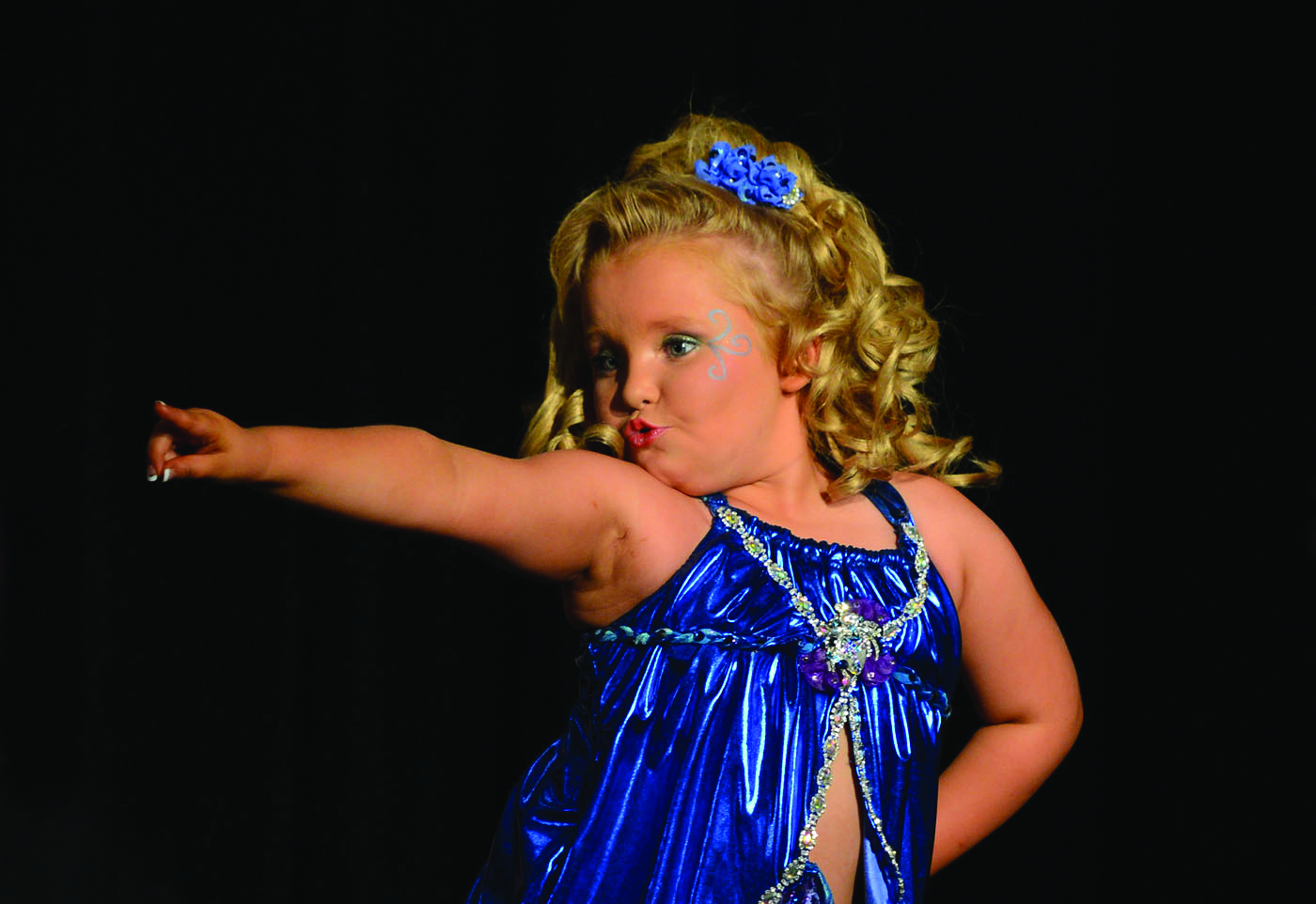
Television executives fail to see the lack of value in these exploitative reality shows. Look at TLC’s Here Comes Honey Boo Boo: it plays on redneck stereotypes for ratings, and its ‘actors’ don’t realize they are being exploited. 

Worst of all, reality shows act as a platform for people’s personal beliefs, which can promote exclusion and intolerance, like the anti-gay Christian rhetoric in Duck Dynasty.

Why are these shows still on the air? It is because of us, the viewers — those who watch whatever is on. 

However, some channels, such as Netflix, AMC, HBO, and PBS, do produce quality programming, consisting of shows such as Game of Thrones, House of Cards, Mad Men, and Downton Abby. These shows, unlike reality television, have huge online fanbases, as suggested by reviews, video art, and memes; the trend of binge watching these shows is also proof of their popularity. 

Fans of these types of shows, make your opinions heard to the execs by refusing to watch reality shows. Tell them that we want to watch more scripted shows. At the very least, they need to change the names of their channels to reflect the reality-based programming that they offer. Give me the chance to avoid seeing a second of a day in the life of Kim Kardashian.

Big impact on a Small Stage

0

CMYK-Tariq Hussain - photo by Wayne Hoecherl_resized

Small Stage Point 5 takes the glamour of interdisciplinary performance to a tiny stage — on July 4 and 5, big names and bigger talents will light up The Emerald with incredible music and dance collaborations. Five performances, each one composed of a pair made up of one dancer and one musician make up the cast. All local artists, these are professionals who record, write, and perform music in Vancouver.

Tariq Hussain is one of these stellar talents, known for his role in the Vancouver-based band Brasstronaut, his Juno nominated album The Basement Songs, and his recent The Moonwalker EP. In Small Stage Point 5, Tariq plays two roles, that of co-curator and performer. This dual role has given Hussain a unique perspective on the performance. In curating the show, his job included finding the performers, and making the contacts. The process involved first choosing five musicians, and then his co-curator Julie-anne Saroyan found five dancers. 

As a performer, Hussain has had to develop a five to seven minute piece that “integrates music and dance on an 8×8 stage.” Seeing the pairings come together and develop their art has been a highlight for Hussain. Working on the piece, and seeing the results has been another, as he said, “you start with nothing and you have to come up with something.” 

Hussain explains that the performance has a broad appeal, as it crosses over into both the dance and music worlds. The artists come from varied backgrounds: from contemporary dance, to pop and indie rock, to hip-hop, and R&B. There is even an electronic musician paired with a burlesque dancer. 

The musicians joining Hussain in this show are Christopher Smith, Tonye Aganaba, Loscil, and Andrea Lo. Paired with Hussain is dancer Farley Johansson, and the other four musicians are paired with Karissa Barry, Stewart Iguidez, Burgandy Brixx, and Jennifer Bishop respectively.

This is ‘round two’ for Small Stage Point 5; the show has been revived because  “it was successful, the performers enjoyed doing it, [and it was] packed every night,” said Hussain. This version takes place in a slightly larger room at The Emerald, one with a different feel. In the last performance there were live dance transitions that were quite the “comedic interludes,” described Hussain. This version has transitions, but they will be presented in a very different way. However, the essence of the show is the same, with the same number of pairings. 

But why the small stage? Hussain explained that it’s purposeful. On a big stage there is a separation, the small space avoids the traditional setup of distance and disconnect. Hussain said that when you “physically force people to share the same space [there is an] interaction, connection between the two people” which develops, allowing them to “create something that allows them to work in the space.”  

The “parameters are good to work with” continued Hussain, as they grant the performance an “intimate, immediate connection between audience and performer,” developing a “special, unique kind of energy.” The Emerald allows this, as it’s a tight, intimate space that gives the curators exactly the kind of feel they want. 

The collaboration process has put the performers to the test, especially figuring out the technical side of it. “In a live context, there’s a lot of logistics you never considered,” said Hussain. They are “learning as [they] go,” and thinking about “staging, sightlines, costume, and lights.” 

Hussain assured that audiences can expect a “bang-up show considering the skill level of the people,” adding, “expect great things.”

Small Stage Point 5 will be presented July 4 and 5 at The Emerald. For more information, visit movent.ca

Potential benefits of Middle Eastern radical groups

0

In recent weeks, the media firestorm surrounding the rise of the radical jihadist group the Islamic State of Iraq and al-Sham (ISIS) has been intense. No surprise. The story of ISIS’ rise has all the right elements to make for sexy headlines to feed the insatiable 24-hour news circuit: an elusive mastermind, an abhorrent ideology, medieval brutality, and a series of rather fantastic victories under its belt. Not to mention, its rise gives opportunity for liberal and neocon pundits to sling blame for the crisis at each other. 

Above all else, though, these stories provoke fear and anxiety, captivating media attention as world audiences shudder at the prospect of a jihadist caliphate spreading its tentacles across the heartland of Middle East.

Indeed, there is a strong basis for these fears. In the chaos of the Syrian civil war, ISIS has emerged as one of the most organized and effective opposition groups to the government of Bashar al-Assad, eclipsing many secular and more moderate Islamist militias. 

But its power has not stopped here. Taking advantage of widespread discontent among Sunni Arabs in Iraq with the bumbling Shia government in Baghdad, ISIS struck across the border bringing broad swaths of the country under its banner. Most stunningly of all, it unexpectedly managed to capture Iraq’s second largest city, Mosul, rich with plunder. The levels of violence administered by ISIS in its captured territories have been extreme, even leading Al Qaeda leaders to condemn the movement for its excesses.

Just as Hitler pushed Stalin and Churchill to work together, so can ISIS with today’s Middle Eastern powerbrokers.

But amidst all this, ISIS’ rise may prove to be a crucial catalyst for peace. It has managed to present itself as a mutual villain to nearly all of the Middle East’s major powerbrokers. The development of common enemies can be critical in bringing together people that would be otherwise hostile to each other. 

Just as Hitler pushed Stalin and Churchill to work together, so can ISIS with today’s Middle Eastern powers. Iran does not want to see its fellow Shias in Iraq fall under intolerant Sunni rule, or its Iraqi ally troubled. America abhors the idea that the Euphrates Valley could become a safe haven for jihadists to launch transnational attacks. Even Saudi Arabia, perhaps the government most supportive of ISIS’ rebellion in Syria, has been alarmed by the group’s destabilizing venture into Iraq, and its expansion to the doorstep of the Kingdom’s own borders.

But as policymakers scramble to push back ISIS, they are realizing their limitations. Few Americans have an appetite for resuming a military role in Iraq. Neither Tehran nor Washington can be seen to be working with each other, lest they face domestic political objections. The government of Iraq has an army with infamously low morale and polarizing leadership detested in the country’s north. Thus ISIS is likely to remain a thorn in many countries’ sides for years to come, sapping the fuel from older rivalries.

However it is difficult to imagine ISIS managing to maintain its rule over conquered territories in the long term. Sooner or later economic malaise, international isolation, aggressive moral legislation, and a poor administrative infrastructure will undermine its hegemony in the upper Euphrates Valley. 

But during its moment in the sun it may do what no diplomatic intrigue has managed yet –— drive Iran and America (and maybe even Saudi Arabia) closer together into a common front to preserve the status quo.

Accepting my introversion

0

WEB - Reading - Vincent Brassinne Flickr

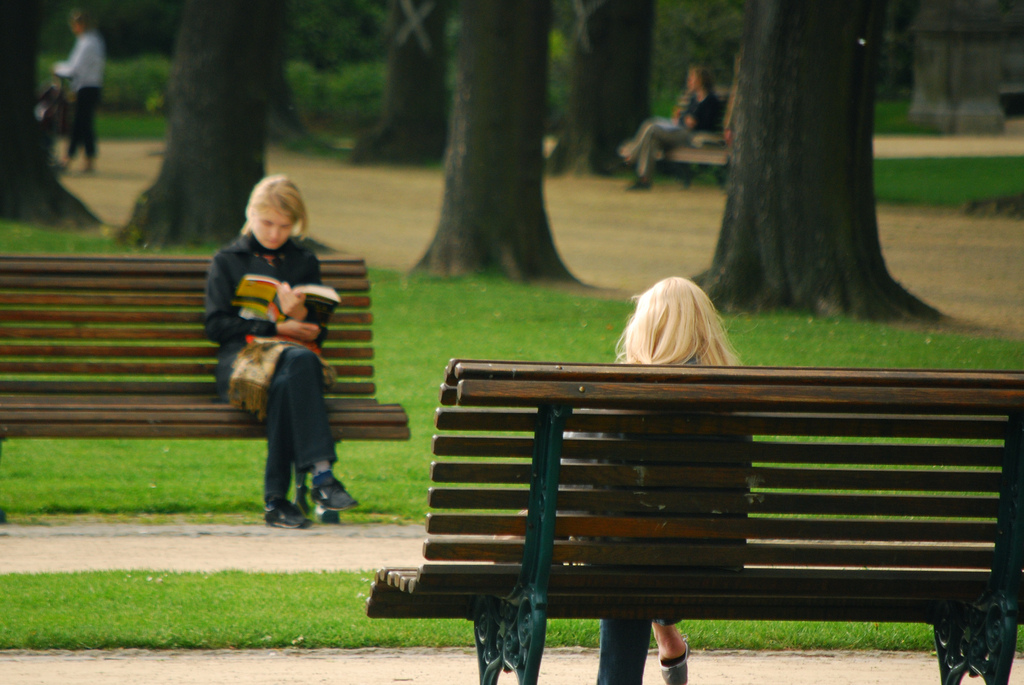
One of the principal differences between introverts and extroverts lies in where they draw their energy from. Extroverts are energized by external sources making them, on the whole, social beings — but this doesn’t necessarily mean they are outgoing. 

Meanwhile, more introverted people, while they can be social, are recharged from within; I find myself fitting into the second category. I need time to recharge my batteries away from others, but, as a fairly social person, I tend to deny myself this time. 

Instead, I opt to fill my social calendar, often feeling the need for company wherever I go. For a long time, the idea of going to the mall or the movies alone truly terrified me. I lived in a peculiar and somewhat sad contradiction — I was an introvert that didn’t want to be alone.

Discovering how to love the time I spend by myself has been one of the most important lessons I’ve learned — a lesson from which anyone could benefit. Coming into my own has been about doing things for myself, by myself.

In our ‘alone, together’ society, you may not be with somebody, but you are never without company.

I still find that I rarely make plans with myself. At this point in my life, I have the luxury of centering my schedule around myself entirely, yet I constantly fill my weeks with plans to meet this friend or that relative — a habit that leaves me exhausted.

But, a funny thing happened when I started to commute a lot by transit. I hated it, but only at first. Then the realization came to me that the many hours a day I spend on the bus is prime ‘me’ time. I could make the most of this.

I hear people cursing our place in time and the lack of unity in our community, something which may seem prominent on the bus. You can stand within a few centimetres of another human being for an hour on the 135 without interacting at all. We live in the great anomaly of being ‘alone, together.’

For some, this is a shame, but I call it a beautiful gift. You can be in a highly social and stimulating environment, but be left entirely to your own thoughts. It creates a sort of liminal headspace. You may not be with somebody, but you are never without company. 

Alone on transit, I think deeper, I look around more keenly. You can get a lot done in your own head on the bus. You could perfect a thesis, make a day plan, perhaps be struck with inspiration for an introspective editor’s voice. The possibilities abound.

If not for my cross-zone travels, I might never have noticed how striking the outline of the North Shore is at dusk. I might not have laid eyes on that rapier duelling school on Hastings St. that my friend and I need to go to in order to fulfill our dream of reenacting the final scene of Hamlet in the style of Kenneth Branagh.

I’ve found that when I’m out and about on my own, the world seems like a place of opportunity and I’m free to make what I want of it.

So, I implore you: don’t let the fear of awkward loneliness keep you from things you enjoy. Take that solo walk around the seawall. Go to that new Tom Cruise movie that you’ve been too embarrassed to ask anyone to come to. Why deny yourself that sweet Tom Cruise action because no one is free on your day off?

It’s about time Archie had a disabled character

0

CMYK-ARchie-LilyLi

Originating in 1939, Archie comics have been beloved by children and people of all ages for decades. Featuring beloved characters such as Archie, Betty, Veronica, Jughead, and Reggie, the comic series has been a presence for generations, though less so now due to the popularity of the Internet and decline in comic book readership.

These comics have been around since our grandparents were children, their values and characters originally written to suit the social norms of that time. However, the beliefs our grandparents had, and those we have today — in regards to marginalized social groups and people who stand out amongst the crowd — are very different.

Archie comics have always pushed the envelope when portraying sexual attraction with their teenage characters, but have only recently begun taking steps to address the acceptance of people with any kind of differences in appearance or sexual orientation.

In 2010, Archie comics introduced Kevin Keller, the series’ first openly gay character. Writer Dan Parent said in an interview, “It shows that Riverdale is in the 21st century.” This character was greeted with almost completely positive appreciation, as readers felt the character signified genuine inclusion rather than a stereotypical addition.

For a comic as popular as Archie, the writers should have paid attention to who their readers really were.

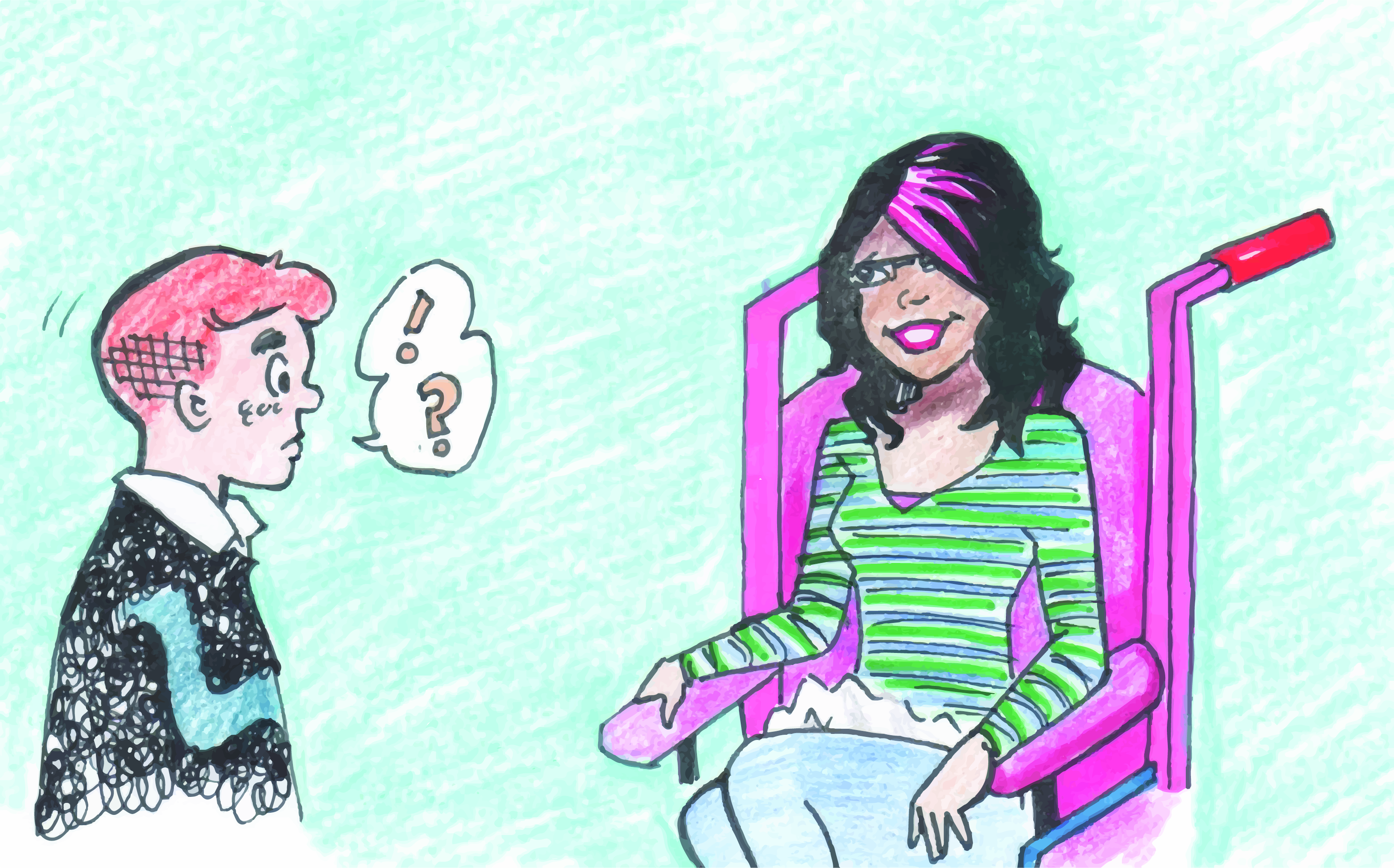
Most recently, Archie comics have come back into the spotlight with the popular addition of Veronica’s cousin, a new character named Harper. Based on Toronto author Jewel Kats, Harper is the first character to appear in these comics in a wheelchair. This new character further illustrates, as Kat said, that “everybody knows someone with a disability, whether it’s a co-worker or a student in your class or your neighbour.” With this newest addition, Riverdale seems to be better representing today’s reality.

Still, this begs the question: why are these changes only happening recently? Sure, when our grandparents were growing up, LGBTQ people were not as accepted, and people in wheelchairs were not always seen as fully-functioning individuals. But, why is a character in a wheelchair only being added this year, instead of 10 or even 20 years ago?

No matter what, people may not be comfortable with the idea of certain types of people — that cannot be changed. But today, it should not be excused. For a comic with as many readers as Archie, the writers should have paid attention to who their readers really were sooner.

Hopefully in the future we will see more diverse and realistic characters appear in Archie and other comic book series. People of varying abilities are part of the diverse and accepting culture in which we live, and it’s time to start illustrating as such.

Notes from this month’s board of governors meeting

0

Community Trust Endowment Fund extension

At the most recent SFU board of governors meeting, held June 26, the board unanimously carried a motion suggested by the Community Advisory Committee to extend the Community Trust Endowment Fund.

The fund, according to the university website, “channels revenue from the UniverCity development into the seven major [research] initiatives outlined in the University’s Strategic Research Plan,”

VP research Mario Pinto said the fund has had “resounding success,” with an, “overall tremendous return on investments.” He continued, “More importantly, it brought together researchers in discussion groups as they formulated their proposals. [. . .] It let them develop more mature proposals than as individuals.”


New responsible investment proposal

The second motion passed by the board during open session was a proposal regarding responsible investment practices, an initiative that is geared towards improving transparency in the university’s investments.

VP finance Pat Hibbits explained that there were two prongs involved in the proposal: the first is that the university joins with the United Nations Principles for Responsible Investment; the second requires all investors to engage in environmental, social, and governance factors.

President Andrew Petter explained that the main effect this policy will have is cultural: “It does provide a forum and a mandate for us to be much more deliberate and transparent in the way we go about oversight of our investment strategy.”

Board Shorts

0

Board extends application period for chairperson

The board voted to appoint Brandon Chapman as board chair for the remainder of the 2014 summer term.

The decision came after an extensive discussion, which concluded with the board going in-camera to discuss the merits of the potential candidates. Candidate profiles were presented by a task force, appointed on June 3, which was comprised of at-large representative Jeremy Pearce, VP student life Kayode Fatoba, president Chardaye Bueckert, and VP external relations Darwin Binesh.

Although the task force officially recommended Harp Palmer be appointed as the external chair, not all members of the task force were in agreement due to Palmer’s unavailability in August.

University Briefs

0

WEB-university briefs-ABCNews


UBC researchers conduct polls on driverless cars


PhD candidate AJung Moon is hoping to gauge public opinion on driverless vehicles through online polls as part of the Collaborative Advanced Robotics and Intelligent Systems (CARIS) lab at UBC.

The concept of driverless cars presents technical as well as moral dilemmas. One such question, presented in the latest polls and developed by philosophy PhD student Jason Millar, asks whether, in a scenario where an autonomous car is entering a tunnel and is about to hit a child, should it keep going, killing the child, or swerve into the wall, killing the passenger?

Since April, the group has been publishing a new poll every two weeks, allowing participants a chance to voice their opinions about the legislation and ethics of driverless cars.


With files from The Ubyssey


Acadia leads the charge against binge drinking


Acadia University has taken a leadership role in a collaborative effort made by institutions across the country to curb student drinking.

Since the alcohol-related death of first-year student Jonathan Andrew in 2011, the university has been on a mission to create awareness about binge drinking as a public health crisis. At a recent conference of the Canadian Association of College and University Student Services, keynote speaker and AU president Ray Ivany said that as a result of Andrew’s death, “Our campus changed forever.”

Ivany’s address called more to action, advocating systemic change as a solution to reduce the harms of high risk drinking. There are 30 post-secondary institutions involved in the collaborative so far.


With files from University Affairs
UofT student charged with high treason in Tajikistan


University of Toronto political science doctoral candidate Alexander Sodiqov is currently being held under arrest in his home country of Tajikistan for charges of high treason against the state.

Sodiqov was arrested on June 16 near the southern border shared with Afghanistan while he was interviewing Tajikistani activist Alim Sherzamonov for his project, “Rising Powers and Conflict Management in Central Asia,” which his supervisor, Edward Schatz, said aims to reduce violence in Tajikistan.

Schatz told The Varsity, “We hope that the professional, fair-minded individuals working in government structures in Tajikistan will recognize Alexander Sodiqov for who he is, which is a talented, young scholar.”


With files from The Varsity


Putting the pieces together with The Other Place

0

The Other Place cast

Like a good film full of plot twists and layered meaning, The Other Place is a play that will leave you wanting to see it again. As star Nick Hunnings explained, it will require another viewing to catch parts and clues you may have missed.

As the play develops, the audience begins to piece together the story. “There’s a moment when people will begin to piece it together,” he said, “but there will still be questions — provocative questions. You’ll have to retrace your steps. There will be moments you missed and clues in the script.”

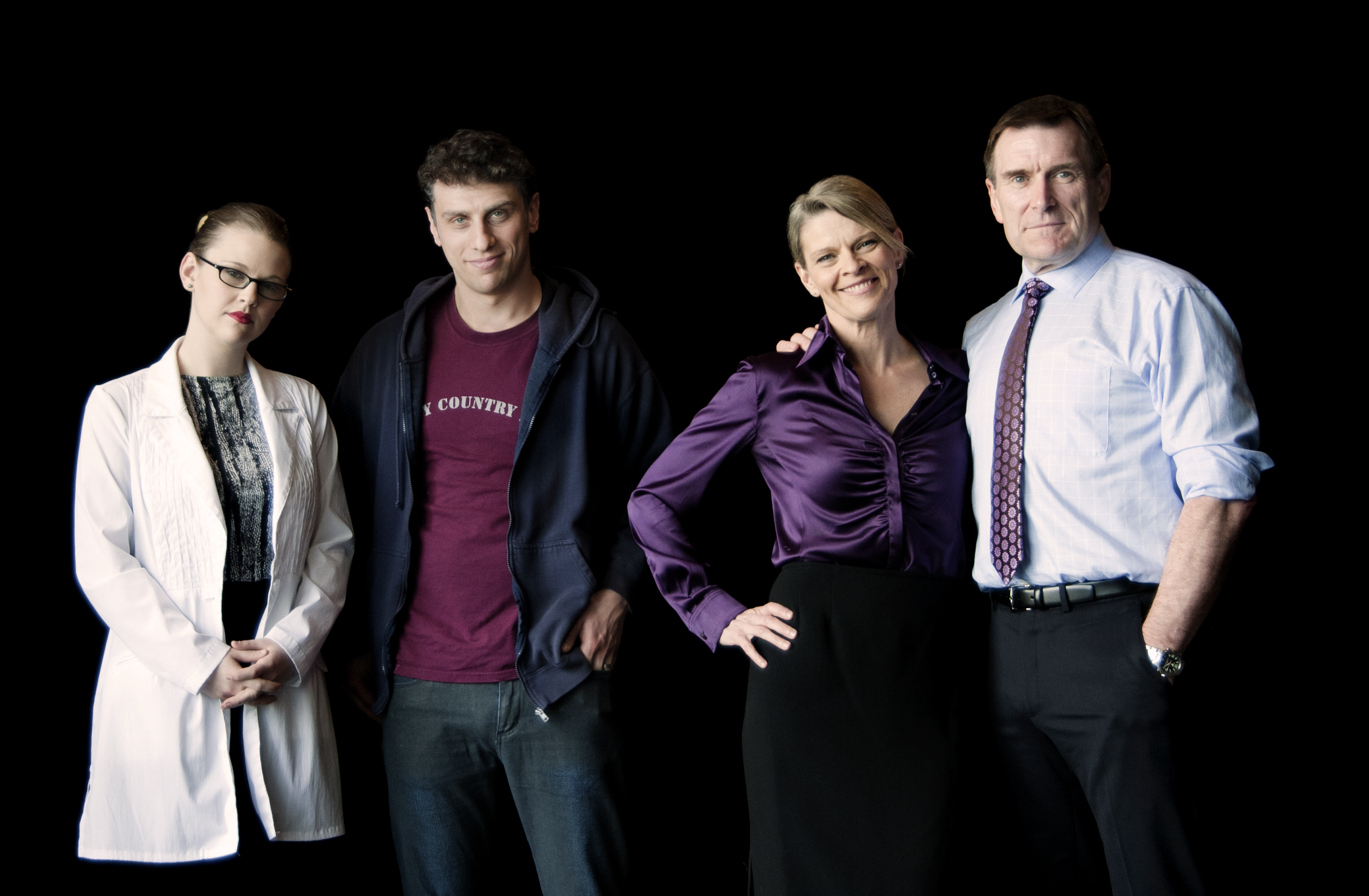
Hunnings plays the male lead named Richard who is very close to the protagonist, Juliana (Chilton Crane). She is a researcher who is on the cusp of a breakthrough when her life takes a drastic turn. Hunnings said that his relationship with Juliana “explores the psychological landscape” and adds to the drama of the play.

Juliana is giving a lecture to colleagues at an exclusive Cape Cod resort when she sees something that sets her on a path to unravelling a mystery despite conflicting evidence, uncertainty and incomplete memories.

“When I first read the script I thought it was a psychological thriller with twists and turns and puzzle pieces that you have to put together,” said Hunnings.” He explained that the story is one that unfolds slowly.

“The first half of the play has a solid pace and envelops the audience in the story — you’re put on a train ride before you know it,” he explained, adding that the second act begins to weave together the story and the pace lightens a bit. This story requires that the audience pay close attention. “Audiences will have to piece it together,” he said. “It’s a really well told story and it will be different for everyone.”

Although this play is a drama, there’s a lot of humour and the script is very rich, said Hunnings. “There is every kind of moment — so it’s very authentic. The dialogue is very rich and little hints are dropped along the way,” he said. “Every character is driven to discover the driving force of the play, and it all revolves around a central driving problem,” explained Hunnings.

The characters are all trying to piece together their own lives as they also try to piece together this mystery of familial fallout. “There are elements of redemption, elements of closure, of wanting to discover truth. They’re all searching for answers,” said Hunnings, adding that there’s also suffering, relief, and old wounds as each of the characters navigates their own path while dealing with the circumstances. Without giving anything away, Hunnings said that central conflict of the play is something that is familiar for almost everybody.

This is the first time Hunnings has been involved with a play written by Sharr White, but he said that he loved the content and structure when he first read it. “The storytelling is so tight and authentic despite all the twists and turns,” he said. “This play forces the actor to do some work and it’s the work that the characters are doing.” The setting changes quite a bit throughout the play, explained Hunnings, saying that these changes mirror the landscape and arc of the story.

Sharr White’s The Other Place has impressed audiences on Broadway and the Vancouver production will be directed by Christy Webb. With so much drama, this play will keep you on the edge of your seat. “It’s really an adventure — a constant state of discovery, and new information always presents itself,” said Hunnings. “The audience will be affected, touched in a way that is not necessarily the heavy cathartic experience, but in a subtle, humane, authentic way. They will find themselves familiar with the people and the story.”

The Other Place will be presented from June 26 to 27 and July 1 to 5 at PAL Studio Theatre. For more information, visit theotherplacevancouver.ca.

Three draft picks the Canucks should choose

0

12112248755_b7fdc2753b_o

If there is one thing that can come out of last season’s dismal performance, it’s that the Canucks get the sixth overall pick at this year’s draft, and therefore a good chance to get a key piece for the future. It should be noted that any pick is a gamble and the further teams get from the top three prospects, the risk of a bust increases. Still, though, the Canucks have a good chance for a key guy.

Considering the Canucks’ offensive woes as of late, one would presume that they would be looking for someone to be a key offensive contributor, especially since last year’s ninth overall Bo Horvat is drawing questions about his offensive game, despite being great defensively.

Obviously, Sam Reinhart and Sam Bennett would be great additions, and will likely be the stars of their future team. However, it is unlikely they will drop past the third spot, and the price for trading up the draft (going from spot six to first overall for example) would be high, in my opinion. Probably too high.

With that being said, I would not be surprised to see the Canucks grab a few extra draft picks, namely in a possible Kesler trade. But I would think they would be later rather than earlier in the draft. That being said, here are some possible draft choices assuming the Canucks stay at sixth overall:

JAKE VIRTANEN – A 6’1” left winger for the Calgary Hitmen who is seventh overall on the International Scouting Services (ISS) Top 30 list of prospects. He is projected to be a power-forward and would bring both the toughness the Canucks want, and with 45 goals and a point per game pace in 71 games, the offensive production as well (at least in junior, which does not always translate, unfortunately.) A nice bonus is that he is from Abbotsford. However, on the negative, power-forwards often take a longer time to develop (see Kassian). He also recently suffered a shoulder injury that could hinder, or at least delay, development.

NICK RITCHIE – A 6’2” forward with the Peterborough Petes who is projected as tenth overall in the ISS rankings. He is also seen to be a tough power-forward in the making, with 39 goals over a point a game last season, and also notching 136 penalty minutes. He is bigger than Virtanen as well, lending well to the big, tough, but uptempo style the Canucks may try to build for. However, as with Virtanen, he may take longer to develop. TSN insider Bob McKenzie has noted that Ritchie has consistency issues, which could become a headache down the road.

NIKOLAJ EHLERS – A 5’11” Danish forward with the Halifax Mooseheads, who produced both the first and third overall picks last year, he is projected at eleventh overall by the ISS. Having scored 104 points and 49 goals in 63 games, Ehlers is equipped with great speed and hands. He would potentially have good chemistry with fellow Danish prospect Nicklas Jensen. However, his point totals may have been inflated by playing on a line with last year’s third overall Jonathan Drouin. As well, his 5’11” frame puts him on the small side, one reason last year’s Hunter Shinkaruk dropped to 24th overall.

In addition to these three, 5’11” center William Nylander Altelius provides a good option, as he will probably fall just outside of the first five picks, and many speculate that Michael Dal Colle, a 6’2” forward who the ISS has at third and generally agreed to be in the top five, may drop places in the draft.