Home Blog Page 1153

Court ruling sets precedent for aboriginal title

0

CMYK-Aboriginal titleThe Supreme Court of Canada made a ruling on Thursday, June 26 on what is being considered a “game changer” in a landmark case for aboriginal rights.

The court granted aboriginal title to the Tsilhqot’in nation over a large tract of land in the southern-central region of British Columbia. This particular ruling is significant because aboriginal title has never before been awarded for so large an area — 1,750 square kilometres. Traditionally, aboriginal title has been given for small parcels of land for specific purposes.

This ruling is being hailed by aboriginal leaders as a great step forward for the rights of First Nations; it will also have bearing on the future of economic development in BC.

A large portion of British Columbia is unceded aboriginal territory, meaning that no treaty has been signed giving the Canadian government ownership of the land. The city of Vancouver itself just formally acknowledged on June 25 that it is situated on unceded Coast Salish territory.

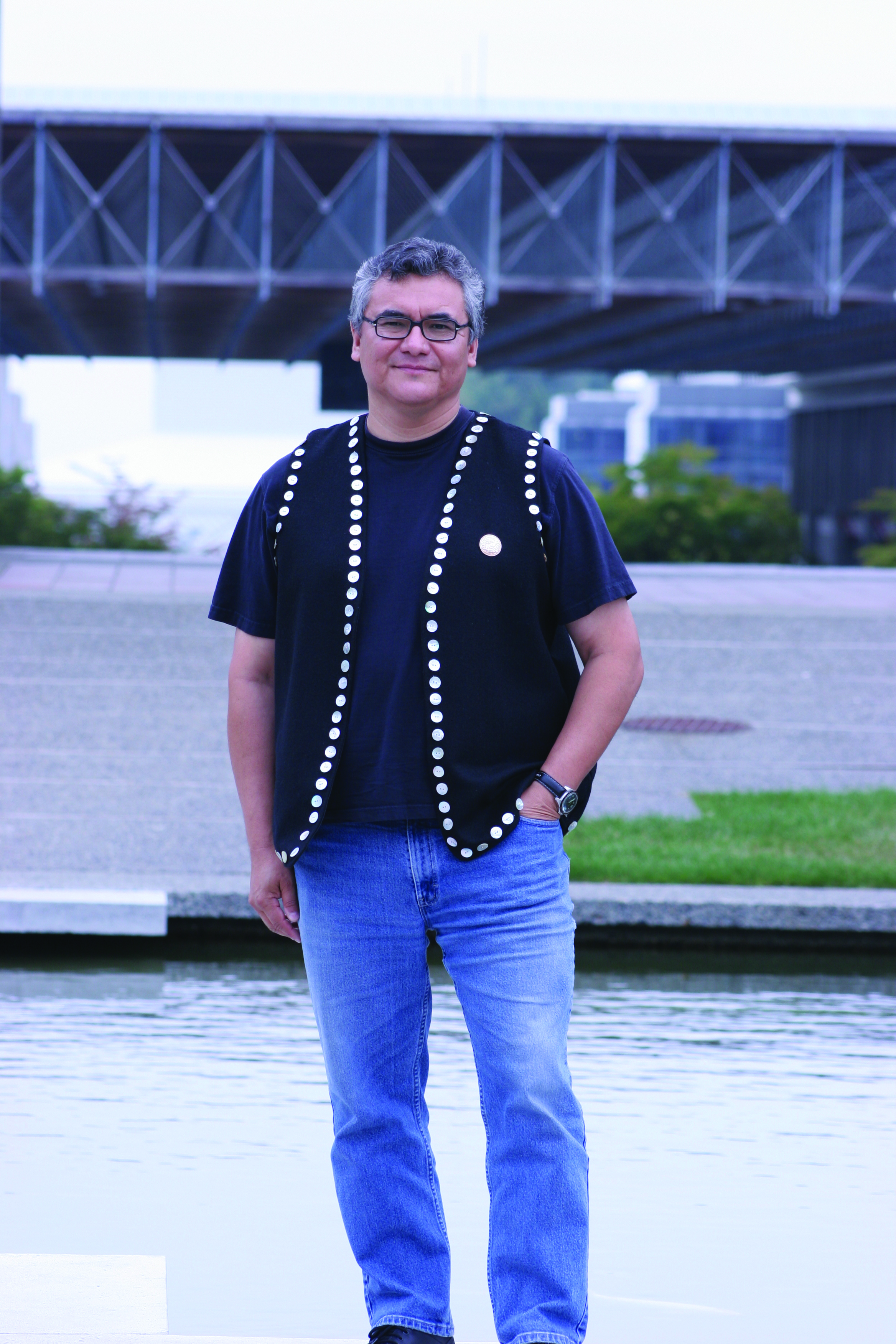
William Lindsay, director of SFU’s Office for Aboriginal Peoples and member of the Cree-Stoney nations, addressed the ruling, explaining that, in his lifetime, he has seen great progress in rights for First Peoples, where there used to be none: “The government came and took their land, took their kids, and then they took their dignity. The first people have got their kids back, they’re getting their lands back, and they’re getting their dignity back.”

The issue of aboriginal title has been an ongoing discussion for decades in Canada, but this is the first ruling in Canadian history to have awarded unceded land back to a First Nation.

This case has set a precedent, and there are now three conditions that determine whether or not aboriginal title will be granted: the First Nations people must be occupying the region; it must be their original ancestral territory; and there must be no overlap in claims.

The ruling will not affect private property, and all federal and provincial laws still apply to the area. The key difference is that the land no longer belongs to the government because official ownership has been passed back to the First Nation.

This means that when it comes to large-scale government projects, approving economic development on aboriginal land will no longer be a matter of consulting with First Nations, but of gaining their consent. This gives them what Lindsay calls “an equal seat at the table” when it comes to development decisions.

However, there are a few conditions to the title: the government has the power to push projects through without consent if they feel the projects are pressing, significant, and in the best interest of Canada. Still, Lindsay feels that there is a greater onus on the government to justify economic development on aboriginal land.

This calls into question the future of the Enbridge Northern Gateway and Kinder-Morgan pipelines, both of which would be built on unceded and aboriginal titled land.

Both projects have been met with First Nations opposition, and Lindsay predicts that this outcry of First Peoples will likely result in civil disobedience. He referenced the flare-up of protest spurred by the Idle No More campaign: “This is something that could happen again if the government decides to push this project through.”

Lindsay believes that this ruling can only bring good things. “The First Nations are going to be insisting that the companies talk about stewardship, talk about looking after the land as part of their projects.”

He continued, “Government and corporations have to sit down now with First Nations, as equal partners, and hammer out agreements that are favourable for all people. Everybody wins then.”

Nice moves, Benning

0

ryan kesler

While there are still some holes in the Canucks’ roster, and it is too early to say whether recent moves will pan out, general manager Jim Benning seems to be making the right moves so far.

In an ideal situation you don’t trade Ryan Kesler. He was arguably the best player on the team and often the hardest working. Any trade you make, you are not going to get a better player, and could only hope for quantity to add up to similar quality.

However, there’s not much a GM can do when a player asks for a trade, which Kesler did. One could hope that he would do the right thing and play the following year, regardless of whether he was traded. Even if he did, though, he would likely play half-heartedly, and perhaps be a detriment to the locker room.

Kesler allegedly only wanted to go to two teams, too: the Chicago Blackhawks and the Anaheim Ducks. This handcuffed Benning even further, as the GMs of these teams were accordingly given a chance to lowball their offers.

Bonino appears to have a good offensive touch, and perhaps has not yet reached his peak.

With that being said, Benning pulled off a pretty good deal with Anaheim. For Kesler and a third round pick in 2015, the Canucks got center Nick Bonino and young defenseman Luca Sbisa, as well as 24 overall pick, which they used to select Jared McCann, and a third round pick this year, which was traded to the Rangers for Derek Dorsett.

Bonino actually had more points than Kesler last year, and will slot in to replace Kesler’s role as a second center, though in an ideal world he probably should be third. However, he appears to have a good offensive touch, and perhaps has not yet reached his peak. His age (26), and the fact that his first full season was the last one raises some questions, though.

Luca Sbisa was originally picked 19th overall by the Philadelphia Flyers in 2007. He was a regular roster player for three seasons until the most recent one during which he only played 30 games. Despite this apparent regression, he is only 24, and a change of scenery may impact his game for the better.

Derek Dorsett should help contribute to a legitimate fourth line, rather than one made up of simply whomever is leftover on the roster.

Benning also traded defenseman Jason Garrison plus the rights to Jeff Costello (who?) and 2015’s seventh round pick, for a second round pick this year, which was traded to LA for Linden Vey, who had a pretty good season in the AHL and is projected to be a roster player.

It was a trade for cap space, and I agree with that, although it is questionable if he needed to throw in more with Garrison, who is a top four d-man.

The free agent frenzy was a bit slower for the Canucks than I had anticipated, however, they made a solid addition in signing goalie Ryan Miller to a three year, $18 million contract. He should provide solid goaltending while mentoring Eddie Lack.

The Canucks still need a top six forward at least, having just missed out on Jerome Iginla, who decided to go to Colorado. Perhaps they will add via a trade, having missed out on potential free agents. However, with Benning’s moves, the pieces seem to be coming into place and things are not looking as dire as they were a month ago.

(A)side jab: Boston Bruins have no cap room, which rendered them unable to re-sign Iginla. Ha! Could this be karma?


Sex and the Suburbs: To eat or not to eat? That is never the question

0

hotel georgia

Every good day should be like an artisanal triple decker sandwich. It begins with a quality piece of glutenous herb-crusted bread, followed by a fabulous and sustaining activity. Cap it off with a bigger piece of bread and then eat and repeat until your body can’t help but beam and overflow with the quantity and quality of goodness in which you have indulged. 

In other words, every good day revolves around and is sandwiched between food. Every good Italian, like ourselves, knows how to make and eat a good sandwich. So this is our perfectly constructed and executed panini of a day.

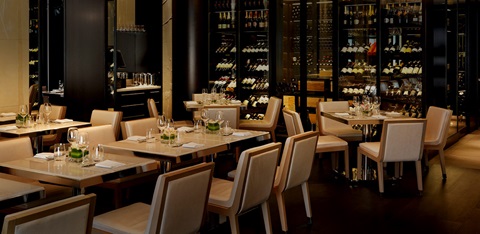
The day began on a wine note. We mean high note. Hotel Georgia’s Hawksworth has taken the soundly seasoned and scrumptious cake as one of Vancouver’s top restaurants since it’s critical acclaim in 2012. Fitting for the finnessed palate or first-time foodie, Hawksworth is the place to see and be seen. 

A light-leaning Beaujolais and a fresh-faced Chenin Blanc accompanied us at lunch where we ventured through the paths of a saliva-inducing pate de campagne and a rustically crisp lemon English pea agnolotti. The winner of Georgia Straight’s Golden Plates Awards for best fine dining, best chef, and best wine list this year — to name a few — dining at Hawksworth is an unparalleled experience. 

If you are going for a full blown meal to impress the in-laws, we recommend starting with the foie gras torchon which is served with beets and pistachios; the pistachios bring out the nuttier flavours of the foie gras. To accompany this masterpiece, indulge in a glass of Sauternes. This sweet wine star of France is balanced with beautiful acidity and, depending on its age, a full bouquet of melon and other fruits and beautiful butterscotch hit the palate. 

As a main, the roasted elk striploin is full of flavour and, as a lean meat, is perfect if you’re trying to zip into that size two. The earthy flavours of the elk combined with the accompanying nettles and gin-berry jus would work beautifully with a full bodied American Syrah which evokes the flavours of blackberry, boysenberry, pepper and cloves.

After having feted ourselves fully at Hawksworth, these two uptown undergrads, fully armed and loaded with post-wine glee, stumbled, or strutted up the steps into the Vancouver Art Gallery for a dash of Douglas Coupland. A Vancity local, Coupland’s exhibit has become a quick favourite in the city. Puzzlingly titled, everything is anything and anywhere is everywhere, Coupland takes you through a tour of his brain — his ideas about the omnipresence of technology in our generation. The experience as a whole is one of intense contemplation of the 21st century condition and what lies ahead of us, but he doesn’t take the topic too seriously, adding elements of colourful and light humour.

A highlight and favourite of ours was the Lego room. This simplistic yet strangely profound element of the exhibit illustrated the relative uniformity of a (sexually) suburban dwelling while juxtaposing it with an impressive and eclectic urban jungle of Lego towers across the room, aptly titled Towers. We were fascinated to discover that the towers had been crowdsourced from groups of both adults and kids. Coupland took these creations and mixed, matched and assembled them into an urban landscape from 2500.

Finally, after wearing out our Prada soles and art-focused pretension, the last bite of the sandwich was nibbled across the street from the Vancouver Art Gallery at Faubourg, Paris. One step into this gem feels like a step into a cafe in the Marais district of Paris! Classic chandeliers, an open and airy room, and ample itty-bitty tables made for just enough room for a quick espresso, two seasonal macarons, a lemon tart, and a pompous post-art gallery debrief.

All the best in making your own sandwiches, and mangia away!  

How to open your banana

0

BW-BANANA-Anderson Wang

From the bottom is best

By Max Hill

Today, I’m going to change your life. Yes, you, reading this article on the bus, in a lecture hall, waiting for your food to arrive in the Highland Pub. You know that feeling you get when you realize you’ve been doing something one way your whole life, when there was a better way out there all along? Well, fasten your seatbelt. Here we go.

You should open your banana from the bottom.

“Open your banana from the bottom?” you may say. “But that’s counterintuitive! It’s countercultural! My mother taught me to open my banana from the top — are you calling my mother a liar?” Now, now. Take a deep breath. Have you ever tried opening a banana this way?

That’s what I thought. Next time you get hold of one of these tropical fruits, give it a try. There are some clear advantages to this method that will make sure you never open a banana from the stem again.

Possibly the biggest advantage of the bottom pinch method: no stringy bits! You know those gross, shoelace-resembling growths that you get when you open a banana the ‘normal’ way? Well, thanks to this method, those stringy monstrosities will peel away along with the banana’s outer skin, leaving the mushy, delicious interior completely intact.

But that’s not all — gone are the frustrations of trying to open a banana and simply pulling off the stem, leaving the inside still encased in its bright yellow shell. As long as you give the bottom a good pinch, nothing can stand between you and your healthy snack. No more sore wrists or stray stems.

This is also the way monkeys, who are certainly bigger banana experts than you or I, open up their fruit of choice. Are you trying to tell me you know bananas better than a monkey?

There are, of course, further alternate methods to opening bananas: some split theirs in half, while others use a knife to slice theirs into quarters. This, of course, is quite all right — everyone should be able to open their banana as they please. But if you’re looking for the fastest, easiest, and objectively best method, the answer is obvious. Bottoms up!


From the top is only natural

By Joel MacKenzie

It’s only natural to open up bananas with the stem, or the ‘open here’ handle, attached to the tip. The purpose of this natural handle couldn’t be more obvious if had a Pull Me sign attached to it (which some, such as my nature-opposed opponent, might require).

This fruit should be, nay, must be opened from this natural point of entry. When pulled away from its curve, the stem easily strips one third of the fruit, and allows for the bottom, the natural bottom, the bottom that nature chose, to rest in the hand comfortably.

A banana’s shape, along with having its own handle from which to open, is the strongest argument that I know of thus far in favour of the world being created by divine coincidence and evolution. The banana was destined for ape-like hands, and destined to be opened at the handle. You’re not going to argue against the logic of atheism and evolution, are you?

Speaking of bipedal mammals, yes, monkeys apparently open bananas from the bottom. That’s okay, for monkeys. That’s not okay for another species entirely. That’s not okay for a species capable of language, of understanding our own lives, our own deaths, and our own fruits. It may be the monkey’s opinion that bananas should be opened from the bottom, but it’s also many a monkey’s opinion that feces are suitable throwing ammunition. Still siding with the monkeys?

But if you still side with this Max character, let’s dissect the main crux of his argument. He says that pulling a banana from the top encourages little strings to conflict with banana nirvana. I say he, and sympathizers, are eating all wrong. If there are tough strings attached to your banana, you’re probably a green banana-eater, as your banana is probably still green. Give it a week to get a couple of brown spots, for its flavour to mature, and for it to be ready, not chalky and slimy.

And try opening up a banana from the bottom. Try and be met with a brown, hard, chalky tab that just screams “Don’t eat me this way!” How much clearer could it be?

Friends, do what nature, science, and evolution want you to do. Nay, do what they need you to. Open a banana from the handle.

Coffee, Tragedy, History: Café Deux Soleils

0

Hip-hop plays over the loudspeakers, the smell of garlic, onions, and coffee hangs heavy in the air, and a mustachioed chef dances as he cooks. Café Deux Soleils has been a fixture on Commercial Drive for as long as I can remember. It has been around for over 20 years, and it is very much a part of the community that comes to mind when I hear “The Drive.” 

The furnishings are simple, but still pleasing to the eye. Large chalkboards display the menu. Long wooden tables sit in one corner, booths and individual tables in the other, allowing for privacy or for a more communal seating arrangement. Paintings by local artists checker the walls and a labyrinth of twisting air ducts and pipes hum on the ceiling, drowned out only by loud, hip music and conversation. 

The atmosphere certainly caters to those in their 20s, though younger and older patrons are not only welcomed, but encouraged. The stage sometimes serves as a play place for children during the daytime, allowing beleaguered parents to sit down to a meal in peace.

Café Deux Soleils is open from 8:00 a.m. to midnight on weekdays and the menu reflects that. Breakfast items are available until 3:00 p.m. with lunch and dinner served after. All dishes are vegetarian with vegan options available. The food ranges from classic egg and potato dishes in the mornings to vegetarian burgers and wraps later on. 

Coffee, tea, and beer are readily available. The prices are moderate, not cheap, but the food is well worth it — the chili, Jemlettes (omelets) and smoothies being items of note. They also do a mean hot chocolate for those too young (or young at heart) to have coffee and beer.

Café Deux Soleils has always been a staunch supporter of the arts. Paintings by local artists are often on display, there is slam poetry on Monday nights, improv by The Fictionals on Tuesday nights, and there are weekly open mic nights on Thursdays. 

Various other events are hosted and all kinds of art can be seen here. If you like good food, coffee, and art, then Café Deux Soleils is the place for you — all three are available in copious amounts. Not only that, but it offers an accessible and vibrant venue for aspiring artists to make their debut. 

It is more than a café: it provides a great spot for breakfast, lunch, and dinner or for a fun night out, and it will always remain one of my favourite places on Commercial Drive.

4 Cool Ways to Stay Cool this Summer!

0

As educated readers know, summer is one of the hottest seasons around and if you believe those crackpot climate ‘scientists’ with their ‘facts’ and ‘overwhelming empirical evidence’ it’s only going to get hotter, so without further ado, here are some good ways to stay cool . . .

1) Set yourself on fire 

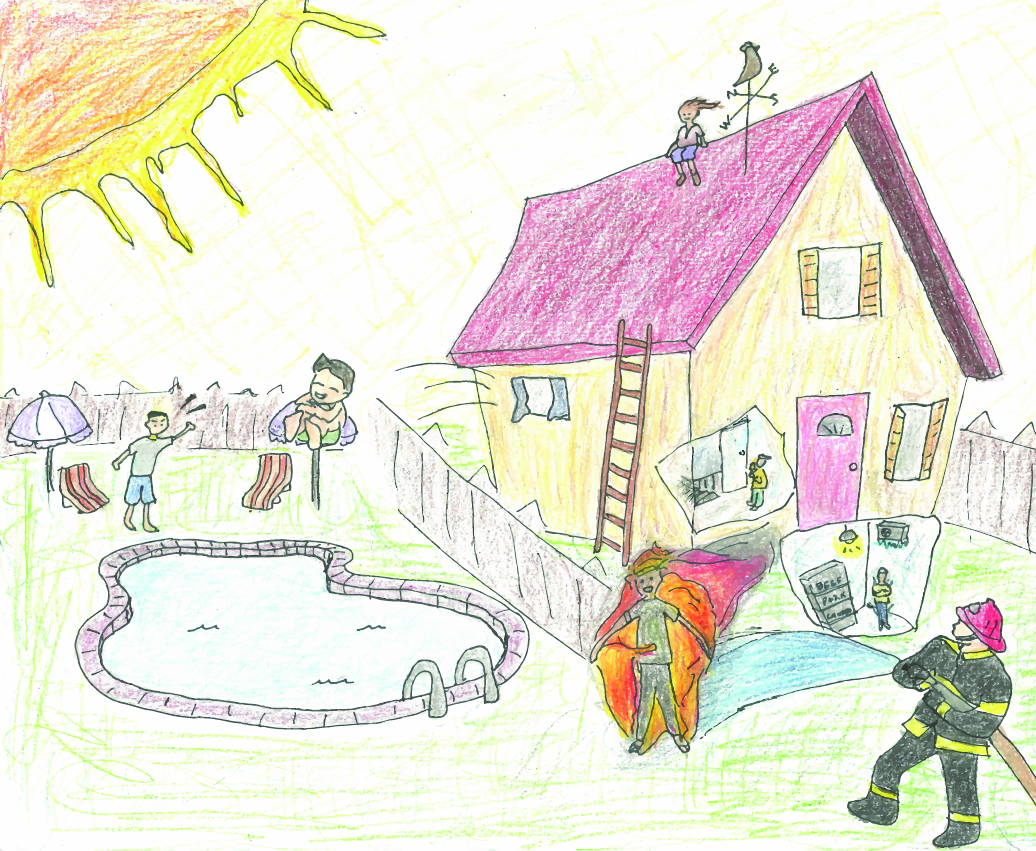
This is somewhat counter-intuitive, as fires can sometimes get quite warm. However, self-immolation is about sacrificing short-term comfort for long-term coolness. Yes, you will feel some discomfort as the flames mercilessly tear through your skin, peeling back layer after layer at an agonizingly slow rate. But, when the fire department arrives and blasts you with gallons of frosty water, a welcome wave of coolness will wash all over what is left of your body. Of course, the real benefit of lighting yourself on fire is that you will no longer feel hot for the rest of the summer: you will only feel pain.

(EDITOR’S NOTE: It is extremely dangerous to light yourself on fire IN PRIVATE. Please do it in a public place, where somebody is sure to call some firemen.)

2) Wait for a cool breeze

This tried-and-true coolness method has been around for thousands of years, and for good reason: sometimes there are cool breezes. The main drawback of the cool breeze is that sometimes there are not cool breezes.

3) Jump in a neighbour’s pool

Though most of us think of our neighbors’ pools primarily as our own personal open-air toilets, they can actually double as a place to keep cool during those hot summer months. As you jump in, try not to think of all the ‘contributions’ that you have made to the pool over the years, and be sure to clean yourself off VERY THOROUGHLY after you get out.

4) Accidentally get locked in a walk-in freezer

Now this a great way to stay cold! Accidentally locking yourself in a walk-in freezer is very easy — first, get yourself a summer job at a cold-storage warehouse, say for example Sharp Base Shipping & Transport Canada Ltd, 3456 Bridgeway, Vancouver, BC. Then fall asleep briefly in the freezer at closing time on a Friday. You will get locked in by your jerk-off co-worker Ricky and be forced to spend an entire weekend freezing your ass off in a bullshit walk-in freezer. Being locked in this icy prison will inspire you to write informative articles for your university newspaper’s humour section, as well as plan an elaborate and painful revenge for Ricky.

BONUS way to stay cool, for my co-worker Ricky: Death

REMEMBER: There is nothing quite as refreshing as the cold embrace of death!!! DO YOU HEAR ME RICKY?!!!!

Weekly Guess Who? Column

0

The ‘bridge column’ is a classic staple of newspapers across the world. But who still plays bridge these days? The only people who still care about that old card game are as old as the game itself, plus that game is just about dumb luck. 

So, with that in mind, I’ve decided to give advice on a game that people actually play and requires real strategy: Guess Who? While it might seem overwhelming to master such a complex and intricate game, there are things to keep in mind that can give you an edge.

CHARLES IN CHARGE

A great opening move in any game is to assume that the other person is Charles. This can give your game a more focused direction than trying to narrow it down at random. Try starting out with “Are you a man?” followed by “Do you have blonde hair” and see where that gets you. If either of these is a “No,” switch your focus as you see fit.

WEEKLY QUESTION 

You have flipped up: Tom, Alfred, Peter, Robert. Your opponent has eight tiles still up. You are Herman.  

What do you ask?

ANSWER: Since you’ve already gotten your search down to blue-eyed men who don’t have blonde hair, the best move you can make is to cut your options in half. Try a double-information style question like “Do you have glasses or a mustache?” While you may be tempted to isolate one attribute in hopes of getting lucky and picking the right one, with your opponent still at eight tiles, it’s smarter to go with a safer question that guarantees you will narrow it down to at least two characters. That way, no matter the answer, you’ll only be one guess away from figuring out who the other player is. 

If on your opponent’s next move he somehow asks something like “Are you bald?” and knocks over all his tiles except one, a good move is to pick up your board, put it in the box and say you don’t want to play anymore, can we watch cartoons instead? That way you’ll finish with a draw and get to watch cartoons. It’s a win-win (well, a tie-win).

Extreme climate engineering strategies will not work

0

A new study indicates that climate engineering may not be as effective as previously believed, and that the only way to combat climate change is to reduce the amount of carbon being released into the atmosphere.

A recent report conducted by Canadian and American researchers from six universities, including SFU assistant professor of resource and environmental management Jonn Axsen, analyzed several climate engineering strategies and their potential for minimizing climate change.

The team found that some climate engineering options were decidedly poorer choices than others, given the assessment of other criteria, such as ecological risk, public perception, and the abilities of governments to control technology.

They looked at the advantages, disadvantages, and limitations of some approaches already widely in place, such as forest and soil management, as well as more controversial ideas, such as ocean fertilization and solar radiation management.

The proposed climate engineering strategies use direct, large-scale actions to reduce the carbon already present in the atmosphere or actively lower the Earth’s temperature by reflecting the solar energetic input — better known as the heating effect of the Sun.

On the other hand, these approaches may bring about undesirable consequences. In one approach, misplaced forest regrowth in high altitude, snow-covered regions could potentially darken the Earth’s surface. In another, reforestation of previously non-forested locations, could change the surface roughness and increase water transpiration into the atmosphere, thereby altering weather patterns.

One example of an ‘extreme’ solution is solar radiation management, also called ‘global cooling.’ This strategy aims to reduce solar energetic input by increasing albedo through the use of technologies such as stratospheric aerosols, outer-atmosphere reflectors, and whitening of the surfaces of cities, oceans, and deserts.

Axsen told The Peak that such an extreme solution “paints a pretty dreary picture of a future world,” continuing, “I really hope that the negative impacts of climate change don’t become so extreme that solar radiation management becomes a desirable option.”

“In light of the limitations and risks, climate engineering strategies would be best served as a complement — rather than replacement for — abatement, and the latter should remain a focus of climate-change policy for the foreseeable future,” explained the study.

Presently, several climate emissions abatement strategies serve to aid in reducing carbon emissions made by human activities. These strategies include turning off the lights upon leaving a room, using energy efficient light bulbs, or switching to hybrid vehicles, all of which attempt to decrease energy consumption.

Other abatement strategies that are still under debate include policies surrounding low-carbon fuels, including the possible implementation of emission limits and taxes on carbon or fuels.

“Emissions reduction should remain the primary efforts. More extreme strategies should be avoided, such as ocean iron fertilization and solar radiation management,” said Axsen.

According to Axsen, the only solution to climate change would involve a massive rejection of toxic fossil fuels, vastly improved energy efficiency and substantially altered human behaviour.

“We need stringent climate policy,” Axsen stated. “As much as we can get.”

Satellite Signals

0

WEB-woodward

Woodward’s

On July 4, SFU’s Woodward’s campus hosted CreativeMornings/Vancouver, an international breakfast lecture series for the creative community. The event featured Charles van Sandwyk, an award-winning author of the limited edition book, A Selection of Neighbourly Birds. He advised attendees that, “If you are after some sense of meaning in your work, then your true character will shine through regardless of how hard you are trying to copy someone else.”

vancouver

Vancouver

From July 2 to 4, the 9th Imaginative Education Research Group (IERG) Conference on Imagination and Education allowed teachers, parents, academics, and others to collaborate on what motivates children to learn. 

The conference, hosted by the faculty of education, addressed “the real power of the imagination to equip students to learn, understand and apply knowledge to real-world problems.”

Downtown

On July 1, the Indian Students Federation in collaboration with UBC’s Ustav Club partook in the 6th Annual Canada Day Parade. Their dance performance included around 30 students from both SFU and UBC. 

The performance hoped to communicate the idea of “indulging in the spirit of the day and showcasing cultural diversity.”

University Briefs

0

WEB-university briefs-ubc
UBC requests liquor license for concerts

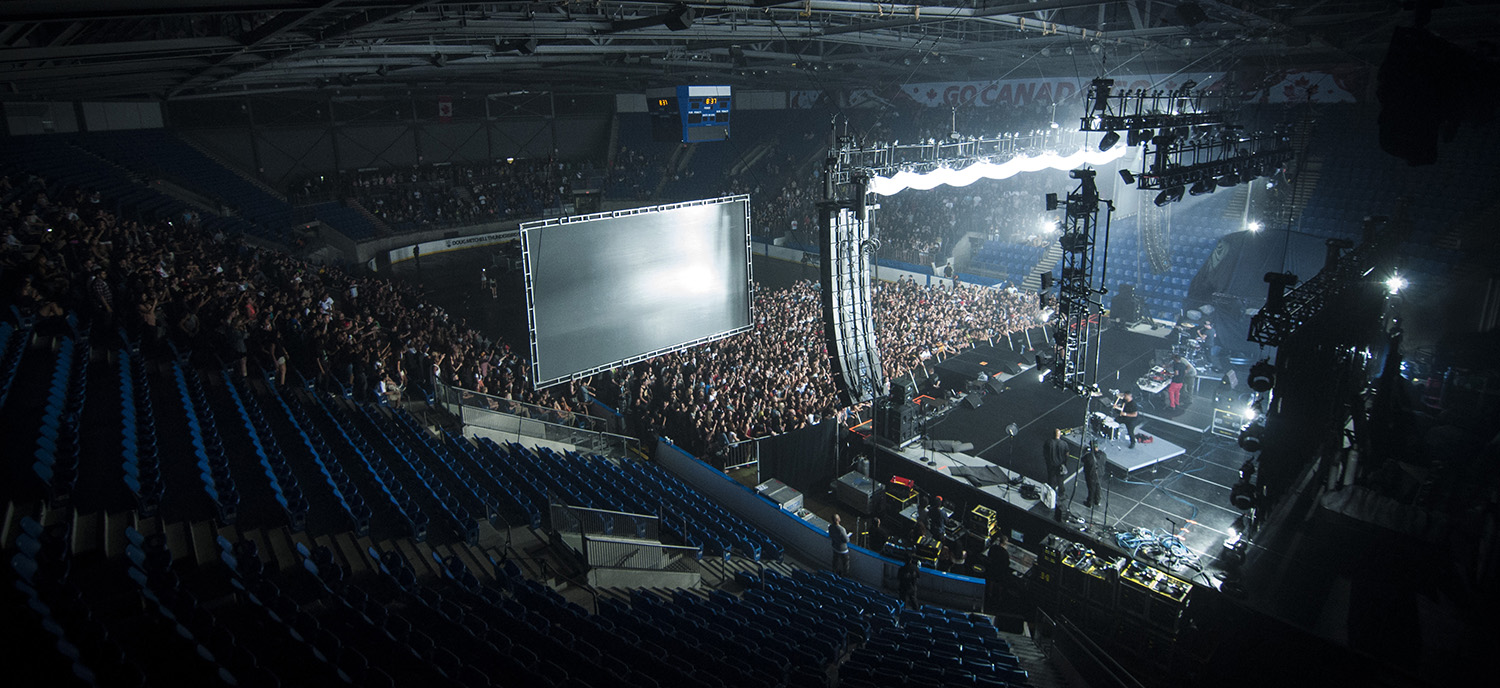
UBC has requested an amendment concerning their liquor license in order to provide alcohol at concerts in Thunderbird Arena. This request was approved on June 27 by the Metro Vancouver board of directors.

UBC Athletics’ Kavie Toor told The Ubyssey that this change would greatly increase the popularity of concert events. He explained that not being able to serve liquor is a deterrent for promoters looking to host events at the university.

Based on the recommendation of the Metro Vancouver board of directors, the final approval will be considered by the BC Liquor and Control Licensing Branch and announced by the end of the summer.


With files from The Ubyssey


U of O men’s hockey team still suspended

The University of Ottawa’s men’s varsity hockey team will remain suspended over alleged misconduct of some of its players. Their head coach and program manager, Réal Paiement, has also been fired after failing to report the incidents, which he attempted to deal with internally.

Members of the team allegedly engaged in excessive drinking and sexual misconduct while in Thunder Bay for two games on Jan. 31 and Feb. 1, 2014. While there were isolated incidents, a private investigation concluded that “the behaviour of some players was unacceptable and failed to meet university expectations for varsity athletes.”

With files from The Fulcrum

Canada takes the gold in wheelchair basketball

At the end of June, Ryerson University hosted the 2014 Women’s World Wheelchair Basketball Championship at the Mattamy Athletic Centre. This tournament, which occurs every four years, was hosted in Canada for the very first time.

After winning four straight championships in a row, from 1994 to 2006, team Canada finished third in 2010. This year, they redeemed themselves and took the gold on home soil.

Tracey Ferguson, who has been with the team for 23 years, welcomed the experience of being the home team. “I like the pressure,” said Ferguson. “I also love the fact we got our family and friends [here to support us].”

With files from The Eyeopener