Home Blog Page 1152

Liquor law changes stir up dissent

0

BW-Unhappy Hour-Nurzhan Kabdrakhman-The Peak

Recent changes to liquor laws in BC in response to a government report have drawn mixed reactions, particularly with regard to the clause that allows establishments to change liquor prices during the day for happy hour, as well as minimum pricing on beer.

The changes, with the most recent having been rolled out June 21, include allowing minors inside pubs — provided the pub is properly certified, and they are accompanied by an adult — as well as allowing restaurants to serve alcohol to customers who have not ordered food.

Most notable of these changes, though, is that licensed establishments are now allowed to change the price of alcoholic beverages throughout the day, allowing them to have happy hours, during which drink prices are lowered at a certain time of day. Although liquor prices were previously permitted to change by the day — hence, daily drink specials — changing the price of an alcoholic beverage during the day was illegal. 

“If [a restaurant] lowered prices, [they] actually had to keep prices down for the entire day,” explained Ian Tostenson, the president of the BC Restaurant and Foodservices Association (BCFRA). “It gives the business owner some flexibility.”

Happy hour deals could attract customers looking for cheaper drinks and potentially be placed during typically slower hours. “I think it will be great for tourists to come into Vancouver, and they come from a culture of happy hours. I think it will help increase and make business for us,” Tostenson stated.

However, not everyone is pleased with the recent changes. Along with new rules allowing happy hours came laws forcing a minimum price for happy hours, including a minimum pricing of $0.25 per oz of beer; this would place a 60 oz pitcher of beer at $15, a price higher than what can be found at many places currently selling pitchers. This has caused some pub owners to balk as they will have to raise prices.

Adam Chatburn, president of the Campaign for Real Ale (CAMRA), stated that although he is “happy to see things like the happy hour, [. . .] the execution leaves quite a bit to be desired, particularly [that] the minimum pricing is too high.”

He added that he was actually in favour of a minimum price but that $0.25 per oz is too high, much higher, in fact, than other provinces such as Alberta where it is set at $0.16: “We expected them to pick a minimum price that was a lot closer to what we did in the rest of Canada, rather than government mandated beer that is the most expensive in the country.”

John Flipse, general manager of the SFSS Food & Beverage Services, who runs the Highland Pub, does not foresee these laws having much of an impact on the Highland. He stated that the new rules are “confusing,” as the minimum pricing only applies to happy hour specials.

“We charge less than $15 regularly for our [60 oz] jugs of beer, but that’s alright because it’s our regular price.” He explained, “This has created a lot of confusion, it’s like, ‘Oh man, prices of jugs are going to go up everywhere in the country,’ [but] that’s not necessarily true.”

Flipse speculated some of the uproar may be an excuse for pub owners to raise prices and blame the new liquor laws. “That might be a strategic move by some people to raise their pitchers to $15: ‘It’s not me, it’s the government.’”

He also mentioned that the law that would permit minors in a pub does not necessarily mean that the pub can just let in people under 19; there must be approval, and the minor would probably need to be accompanied by a parent or guardian, which makes minors being allowed at the Highland unlikely.

For now, you can still buy a pitcher for under $15, and you will still have to be 19 to sit in the Highland Pub. Sorry, kiddos.

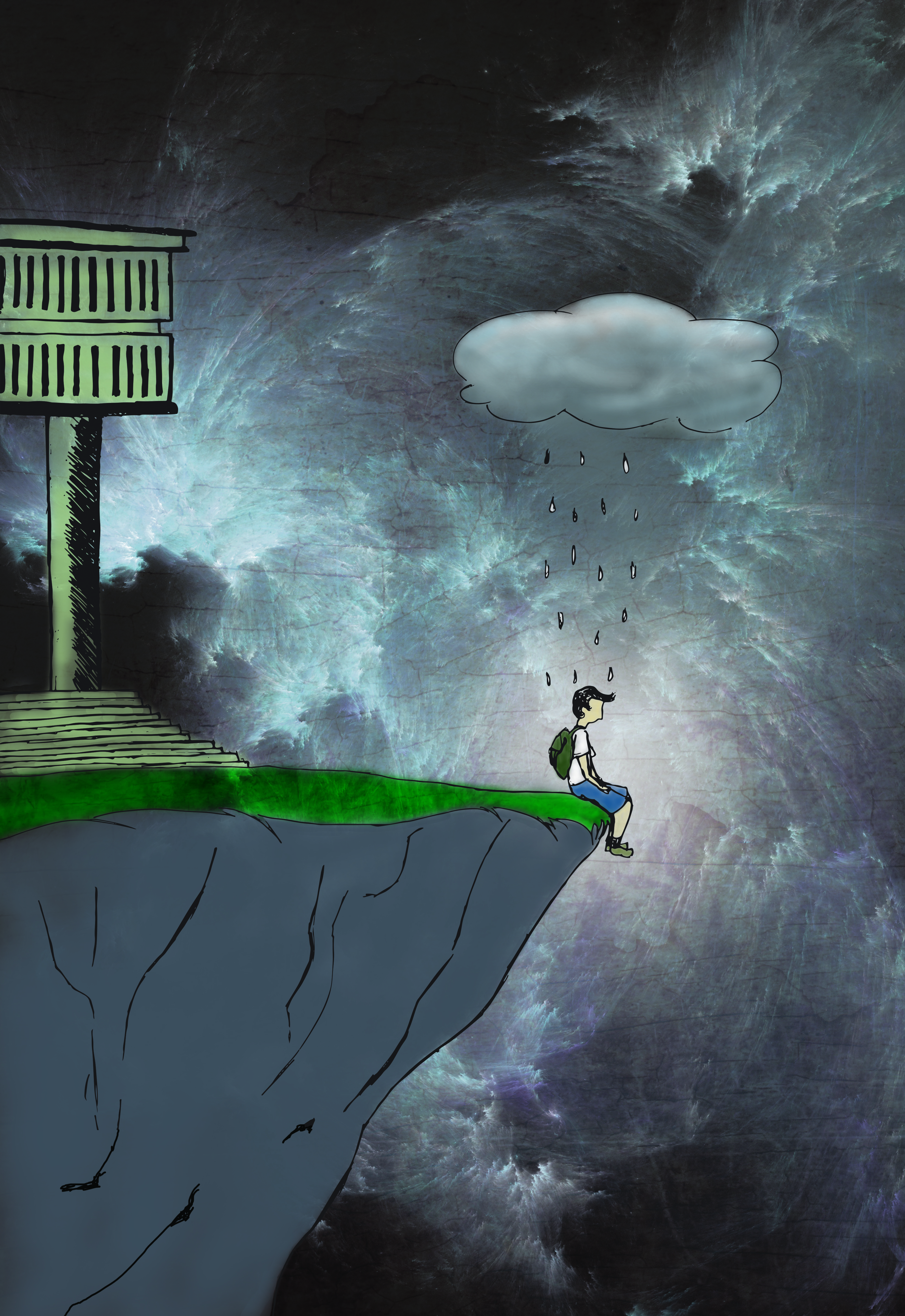
Solitude at SFU

0

COVER

College: the most fun time of your life. Or so you thought.

Whether it’s the boisterous frat boy shenanigans of Animal House and Old School or the stylish escapades of the Legally Blonde series, we’re taught to expect college to be one of the best times of our lives. Through movies, TV shows, books, and other media, we’re repeatedly told that university is the place where we’ll meet our best friends, have nonstop parties while inexplicably acing every class, and ultimately come out richer for the experience.

At least, that’s what university is supposed to be like. But for many, whether at Simon Fraser University or elsewhere, post-secondary can be one of the most challenging, stressful, and lonely times of one’s life. The worst part? Most feel unable to share their feelings with anyone around them.

At universities across the world, more and more students have admitted to feeling isolated and lonely than ever before.

This isn’t just a small minority of students feeling this way. In Canada, 64 per cent of post-secondary students surveyed by Stats Canada reported feeling “very lonely” within the past year. Another 55 per cent cited a combination of several factors — including school work, trouble with interpersonal relationships, and living alone for the first time — as the main cause of their struggles with isolation and, in severe cases, depression.

The majority of students who responded to The Peak’s anonymous survey about loneliness on campus reported feeling “sometimes” or “most of the time” isolated or lonely at SFU; the most commonly cited reasons for their feelings were “bleak weather and/or architecture” and having “not enough friends or acquaintances.” Other cited reasons included a “lack of interest in coursework and/or student community,” and “a lack of romantic and/or sexual connections.” 

Overall, almost no students responded that they had “never” felt lonely on campus.

In conversations with friends, several also mentioned SFU’s status as a commuter campus as being a potential factor in fostering loneliness among students. Those who’ve been on campus during weekends will know what a ghost town SFU Burnaby and Surrey become without classes — especially in the summer semester, when SFU’s student body is only at two thirds its regular size.

Greater Vancouver in general has been noted for its association with loneliness. Twelve per cent of residents surveyed by the Vancouver Foundation said they associated the city with “loneliness and unfriendliness.”

For students, staff and faculty across SFU’s campuses, loneliness and isolation can pose a very real threat to their health and mental well-being. Though the school offers free and confidential counselling services for students feeling overwhelmed, many are unwilling to admit that they’re facing these problems, or find the time to seek the help they need.

Dr. Gordon Flett of York University terms this “self-stigma” — rather than just fearing the judgement of others, students who feel lonely and socially disconnected also have to contend with their own judgement. More often than not, it’s harsher than anyone else’s.

This problem isn’t limited to one school, one area, or one particular type of student. In myriad universities across the world, more and more students have admitted to feeling isolated and lonely than ever before.

An article in The Guardian noted that “heavy workloads, lack of support, and isolation are the key factors contributing to mental illness” self-reported by post-secondary students.

“The issue isn’t just social, it’s a public-health crisis in waiting,” wrote Elizabeth Renzetti in an article for The Globe and Mail. “If you suffer from chronic loneliness, you run the risk of illness, and premature death [. . .] It is the great irony of our age that we have never been better connected, or more adrift.” Loneliness and social isolation is especially common among those aged 18–34 years, and can lead to a number of health problems down the road, including depression, heart disease, and elevated stress hormones.

CBC also reports that women are more likely to suffer from loneliness than men, making female students particularly at risk.

Though feelings of loneliness and social isolation on university campuses aren’t always linked to thoughts of suicide and self-harm, both remain prominent issues among the post-secondary community. Studies in the United States have identified feelings of detachment as a serious mental health risk for many students.

As reported by The Huffington Post, “the [John Hopkins Centre] study’s findings suggest that a number of common risk factors may make students more prone to suicidal tendencies. The greatest of these factors is a feeling of being unloved or detached from friends and family.”

In the United States, reports of suicidal thoughts on campus have been rising for years. The same article noted that, out of 1,000 students surveyed in the US, 12 per cent “admitted they had thought about committing suicide,” and “10 of [that percentage] claimed to have planned or attempted suicide during college.” 

Here in Canada, reports of stress, anxiety, and suicidal thoughts in universities are seeing similar upturned figures; a report by The Globe and Mail showed that “more than 50 per cent [of students] said they felt hopeless” during their time at school.

The report also cited “9.5 per cent of students saying they had seriously considered taking their own lives in the past year, [and] 1.3 per cent said they had attempted suicide.” Apart from motor vehicle accidents, suicide is the most common cause of death for Canadians aged 10–24, many of whom are balancing university careers with part time work and the maintenance of social relationships.

Almost no students said that they had “never” felt lonely at SFU.

So why are we feeling more lonely than ever before? It’s easy to cite issues limited to university life — high stress levels, tougher job prospects, drug and alcohol abuse, and the like. But there’s also a clear connection between the increase of social isolation on campuses throughout Canada, and a similar sentiment spreading across all of North America.

John Cacioppo, one of the world’s leading researchers on loneliness, cites a move away from traditional collective values such as religion, nationalism, and community, and one towards individualism, as one reason we’re feeling more lonely now than ever.

“One of the things we’ve seen is a movement away from a concern for others,” he told The Globe and Mail. “There’s more division in society, more segmentation; there’s less identity with a national or global persona, but rather on the family or the individual.”

In many countries across the world, an increased focus on individualism — self-actualization, consumerism, self-image — has led to a gradual severing of social ties. We’re increasingly told to focus on building ourselves, while failing to build solid relationships with others.

In recent years, nothing is more indicative of our move from collectivism to individualism than social media. Networks such as Facebook and Twitter promise to keep us tied more closely together, but many users end up only feeling more disconnected by our increasingly networked world.

The Innovation of Loneliness, a short film based on the book Alone Together by Sherry Turkle, explores the reasons why social media may make us feel lonelier and more isolated; the video explains how the indirectness of digitally mediated communication doesn’t measure up to the interconnectivity of a direct conversation, complete with body language, vocal tone, and the inability to plan what you’re going to say. According to the film, and Turkle, social networks may give us a larger number of acquaintances, but in turn, they limit our number of actual friends.

“Human relationships are rich and they’re messy and they’re demanding,” Turkle writes. “And we clean them up with technology. Texting, email, posting, all of these things let us present the self as we want to be. We get to edit, and that means we get to delete, and that means we get to retouch, the face, the voice, the flesh, the body — not too little, not too much, just right.”

Social networks and texting are commonplace among college-aged students, and the generation currently in post-secondary is the first to have grown up with the Internet and digital communication at their fingertips. We’re technologically savvy but socially adrift, trying to navigate a world of texts and tweets while ignoring those around us.

But it isn’t just the influence of technology that’s making us lonely. Cacioppo also cites genetics, social phobia, and low self esteem as potential contributors to loneliness and other similar mental issues at school and elsewhere. Some seem more predisposed than others, but all of us run the risk of feeling lonely, adrift, and isolated, especially under the pressure of a dwindling job market and a demanding course load.

Thankfully, there are many resources which students can seek out to help alleviate stress, loneliness, and anxiety — one of which may just change the way we think about the way teachers and students interact at SFU.

Tara Black, the associate director of health promotion, sits across from me with as sunny a disposition as the summer day outside her office window.

For years, she and a team of professionals from SFU and the Canadian Mental Health Association have worked together to design the Health Campus Community (HCC) initiative, an award winning strategy to increase interconnectivity between students and promote mental and physical health among students. “We’re concerned with fostering student well-being,” Black says. “Social connectedness is a fundamental part of well-being, so it’s a huge part of what we’re interested in.”

“All of us have a role to play in reaching out to other students, to make connections with others.” – Tara Black, Associate Director of Health Promotion at SFU

Part of the HCC plan is to give staff and instructors the necessary tools to help students feel less isolated and more a part of the academic and social community at SFU. Some of the program’s tactics include suggesting study groups for students and encouraging dialogue and discussion in tutorials and lectures. “These can be simple things that instructors can do,” Black says. “It could be as easy as encouraging students on the first day of class to get to know the person sitting next to them.

“We see the classroom as such a central part of the student experience, and a part of helping students to create a foundation of social connectedness for years to come,” she continues. To Black and her team, lecture halls and seminar rooms are battlefields, and the prize is a sense of community and belonging that many students at SFU seem to sorely lack. But like many, she’s aware that the problem of social exclusion — and mental health at large — go far beyond the concrete walls of our school.

“I think all universities have this same issue,” she says. “This is not an SFU-specific problem; it’s one that is affecting all post-secondary students.” She hopes that other schools will adopt HCC’s hands-on approach to combating isolation in the university setting, and it’s not unlikely; many universities have recently increased their focus on mental health resources and tools for students, noting the alarming rise in student loneliness and disenfranchisement over the past decade.

Ultimately, Black tells me about the positive outcomes of increasing social connectivity — namely, an increase in overall well-being, as well as better educational performance and overall satisfaction with university. The project has already begun to make waves with professors and students, both of whom benefit from an increase in participation with class material and with the feeling of connection it offers them.

So how do we solve the loneliness crisis at SFU? There’s no concrete cure, but there are steps you can take to tackle your symptoms. The Health and Counselling Services website cites the usual tactics: get more sleep, drink less coffee, take time between study periods to destress. They also encourage visiting their offices at the ground floor of the Maggie Benston Centre, where the school’s team of counsellors can help struggling students to find ways to further alleviate their isolation.

Health professionals also suggest a healthier diet, regular exercise, and focusing on developing interpersonal relationships as potential ways to combat loneliness.

But this is also a problem that can be made better by working together to foster a campus community that offers encouragement and inclusivity to each and every student. “All of us — including staff, students, instructors — have a role to play in reaching out to other students, to make connections with others,” Black says. “Having SFU as a welcoming, supportive and inclusive space is an important piece of the puzzle.”

So whether or not youare struggling with feelings of loneliness and isolation, log off that Facebook page and try striking up a conversation with someone in a tutorial or sitting next to you in a café. Join a campus club, group, or society, or start one of your own. We’re all responsible for helping to make SFU and other universities less lonely places to be — and it all starts with us. 

Alumni make space for Surrey entrepreneurs

0

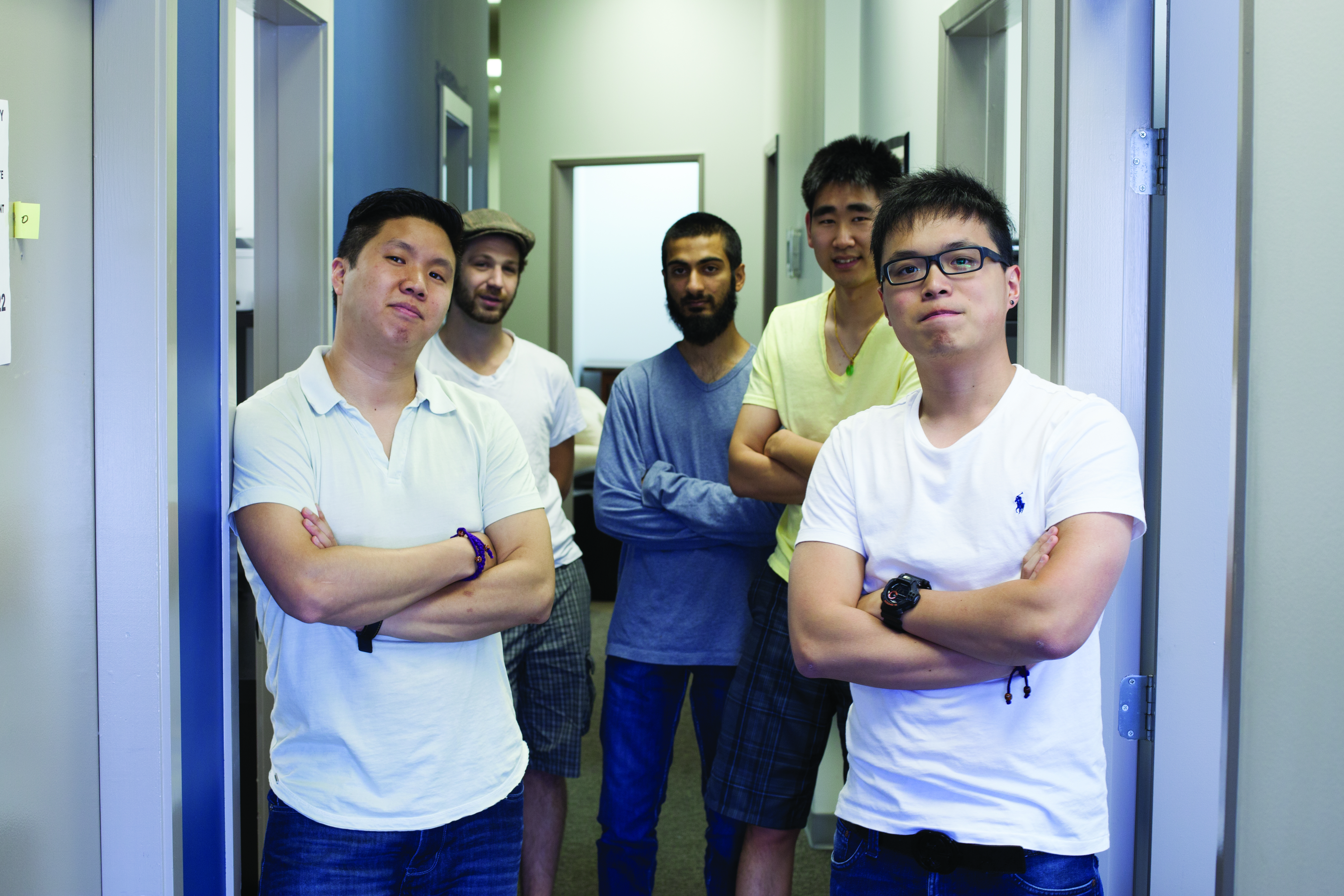
CMYK-Beta Collective-Anderson Wang

A team of SFU alumni have launched Surrey’s first co-working space, the Beta Collective, which invites young entrepreneurs out of their basements and coffee shops to work in a professional environment surrounded by their peers.

Jason Wong, along with business partners Elvin Cheung and Michael Cheng — all SFU graduates — have launched a unique shared office facility in the heart of downtown Surrey’s Innovation Boulevard. The space offers an affordable option for self-employed individuals and small teams who are looking to take their businesses to the next level — albeit, on a budget.

Many startups do not have the financial resources to rent their own office space, which often involves lengthy contracts and additional costs that can stifle growth. Beta Collective offers small business owners desk rental packages at a discounted price so that entrepreneurs “really have a space to call their own that they can work out of and collaborate in,” said Wong, co-founder and chief project evangelist of Beta Collective.

Wong and Cheng, co-founder and chief mission control officer, first came up with the idea for a co-working space after collaborating on the 2011 TEDxSFU conference. They had seen similar ventures in places such as Toronto, Northern California, Kuala Lumpur, and even Metro Vancouver, and were inspired to partner up and create their own. 

After spending four years at the Surrey campus as an SFU student, Cheng felt convinced that he was looking at Vancouver’s own ‘Silicon Valley.’ “Everything pointed towards [the idea] that Surrey has the potential to become an entrepreneurial hub for Vancouver,” Cheng said.

Based on current projections by the city of Surrey, the city’s population is expected to increase by more than 300,000 people over the next three decades. This growth is mirrored in its economic sector, as, according to Mayor Diane Watts in BC Business, about 2,000 small businesses open in Surrey every year.

Since opening its doors in late April, Wong explained that the company already has a variety of customers, including event planners, immigrant consultants, web developers, and tech experts. “What’s magical about a co-working, collaborative space is that those people often mingle, network, connect, and eventually work together,” Cheng added.

The Beta Collective has seven private offices available for rent, each of which can fit one to three employees. The 2,600 square foot working space also includes a ‘big room’ with rows of individual desks and tables for 20 people and six permanent desks with filing cabinets. For those who do not have a private office, the space includes a board room which they can use to meet with clients. 

The space is available to the entrepreneurs 24/7 and features a kitchen, a lounge area, and a private shower.

The team said that they distinguish themselves from other businesses by maintaining a balanced atmosphere that feels like a melange of a professional workspace and a community hub. “We encourage a collaborative environment, [a sense] of community,” explained Wong. “We put the TV on in the lounge, we’re watching the World Cup together, having a few beers on a Friday, or pizza, little things like that that you wouldn’t expect to see at a business centre.

“You’re not going to have full floor-to-ceiling glass windows with a nice view of the river, but like I said, you can have beers and pizza with us on Fridays,” Wong concluded.

SFU alumna to play hoops in Germany

0

CMYK-Raincock-The Peak Flickr archiveNayo Raincock-Ekunwe, a former member of the SFU women’s basketball team, has signed in Germany to play with Friendsfactory Baskets Donau-Ries of the Damen-Basketball-Bundesliga (DBBL), a German professional women’s basketball league.

“She is very athletic and has a lot of natural talent. She can jump out of a jam, and she has very good hands,” said Bruce Langford, head coach of the SFU women’s basketball team, describing the 6’2” forward from Toronto.

Raincock-Ekunwe, who last played with SFU in the 2012-13 season, is not new to professional basketball, having spent the 2013-14 season playing with the Espérance Sportive Pully of the Swiss Ligue Nationale de Basket (LNBA). She was fourth in the league in scoring with an average of 20 points per game, as well as being first in blocking and rebounds.

“My first season in Europe was good. It was different than playing at SFU but I enjoyed every minute of it and I learned a lot,” she told The Peak.

Her transition to professional basketball was “quite easy” due to her experience at SFU, said Raincock-Ekunwe: “Our practices were always intense, our training was intense, we went hard every day. In Europe, you’re practicing every day, you’re shooting in the morning, practicing at night. It was really no different from me being at SFU in terms of the level of competitiveness and level of intensity.”

However, after a year in the Swiss league, Raincock-Ekunwe felt that she needed to play at a higher level in the “much better” German league. “I chose the team because I’ve heard lots of good things about the German league. I’ve heard they’re a competitive, strong league [. . .] and [it’s] an even bigger challenge.”

She explained that she was told that the DBBL draws in more “quote-on-quote professionals [. . .] with lots of girls from around the world coming to play in Germany.” Langford added that the league she’s going to will provide her with “some pretty good competition, for sure.”

“In Europe, you’re practicing every day, you’re shooting in the morning, practicing at night.”

Nayo Raincock-Ekunwe, SFU alumna

As for her own play, Raincock-Ekunwe plans to work hard to get to that next level. “This season, I just have to get physically stronger because you go up in the leagues where the women are just so much stronger and so much more skilled,” said Raincock-Ekunwe. “You’re playing against 28-, 29-year olds who’ve just been playing for so long and are just really smart about the game.”

Langford, her former coach, attested to her motivation saying, “When she came [to SFU] she was just a raw athlete and she needed some refinement in her offense. She wasn’t a very good shooter, she wasn’t a very competitive defender, [but] she could just naturally block shots and get rebounds. I think she became really motivated throughout her career to try and improve those skills.”

However, the coach stated that she needs to “hone all of her basketball IQ pieces” to get to that next level, a statement Raincock-Ekunwe agreed with. “I think that will really help me get a future in better leagues,” she said.

Nevertheless, her main focus this season will be helping Friendsfactory Baskets Donau-Ries win: “I would like to achieve a winning season. In Switzerland, we didn’t have a winning season at all so I just want to help this team have a good record and make the playoffs.”

Looking forward to next season and what she can bring to her new team, Raincock-Ekunwe concluded, “I think I can contribute a defensive intensity. I enjoy defense [. . .] so that’s what I think I’ll contribute.”

Marriage isn’t the key to a happy life

0

Diamond_engagement_ring_on_woman_hand_6313

It seems the moment after you graduate high school, you begin to catch wind of friends who have tied the knot. I would be lying if I told you that I’ve never dreamt of my ‘big day.’ The dress, the flowers, the cheesy home videos on a loop — for some, it’s a dream come true.

At the same time, I know that a trip down the aisle won’t guarantee me happiness, nor will it make parenthood any easier. So why do we still assume that all good relationships have to end in marriage?

There has been a major shift in the attitudes of Canadians towards marriage over the past 30 years. As Statistics Canada reports, the number of common-law couples has nearly quadrupled, and premarital cohabitation has, by and large, become the norm.

Yet couples who have vowed to never marry are still met with disbelief by many. Though the norms have changed, the expectation is still that if two people love each other, they ought to tie the knot sooner or later.

Why do we still assume that all good relationships have to end in marriage?

Marriage is a legal contract between two people that signifies both commitment and unity — but getting hitched isn’t the only way to express these sentiments. Some couples are satisfied with demonstrating their fondness for one another by helping out with chores around the house or giving a backrub at the end of a long day, not inviting hundreds of people to a church to watch them pledge eternal love to one another.

In this day and age, marriage shouldn’t be considered a prerequisite for love and monogamy. But stereotypes over common-law unions and other alternatives to marriage are still prevalent in society: expect to hear terms such as ‘flaky,’ ‘naïve,’ and ‘unfaithful’ when bringing up unmarried couples and polyamorous relationships.

Deciding not to marry is just that — a decision. It isn’t in any way indicative of a couple’s loyalty or love for one another; if anything, it’s indicative of a need for confidence and security. Many couples who live together with no intent of marriage don’t feel that they need an institution to validate their level of commitment or feeling for one another.

If a couple doesn’t share the same last name, it does not imply they don’t share property, children, and a life. If they don’t have a certificate, it doesn’t mean they don’t intend to be together for the rest of their lives. Not all good and happy relationships need to end in marriage to be considered successful — and not all marriages are built on positive relationships, for that matter.

Those in favour of marriage usually argue that weddings are rituals or rites of passage that have religious or ancestral traditions woven in. But marriage hasn’t always been pretty. The legal contract mentioned above was originally an agreement between the father of the bride and the groom — the ring was used to symbolize possession of the bride, not exactly the most romantic gesture. With the messy, patriarchal history of marriage in mind, it’s not hard to see why many modern couples opt out.

However, those who do will find the law has yet to recognize the equality of marriage and its alternatives in Canada. Each province has a distinct set of criteria and different benefit systems worked out for unmarried, long-term partners, making consistency a marital perk. Once a couple is married, no provincial government doubts the validity of their relationship — but with common-law unions, it isn’t so simple.

Some provinces, such as the Yukon, only require permanent cohabitation while others, such as Newfoundland, require one year of cohabitation and a shared child. The lack of legal consistency indicates that there’s plenty of work to be done to put different unions on the same level.

Unmarried, cohabitating couples also tend to be seen as less likely to succeed in the ‘real world.’ For nearly 20 years, the National Marriage Project in the United States has been releasing studies that suggest that unmarried couples are more likely to suffer from depression and raise children in poverty. But I am hesitant to believe that if couples suffering from financial woes were to tie the knot, all their problems would disappear.

These studies are inherently misleading: they push variables such as education and age to the back burner, while letting marital status drive the results. Like the anti-gay marriage pundits who argue that the institution of marriage is under threat, these studies don’t just ring false; they’re designed to attack anything and anyone that doesn’t conform to the expectation of a traditional marriage, something that’s becoming less and less common with every generation.

Marriage doesn’t have the capacity to make couples richer or happier — a trip to the altar won’t save your relationship, and it won’t make it worse, either. Our culture and society attribute plenty of meaning to marriage, but it’s ultimately what you make it, and no two are the same.

More than ever before, our generation tends to cohabitate before marriage and experiment with premarital sex. As we continue to break the norms, the idea that marriage is needed to validate a good relationship should fall to the wayside. Couples that choose to show their devotion in new and different ways shouldn’t be subject to criticism or prejudice.

There is no one way to love. The sooner we learn that, the better.

Karen Jamieson is flying solo

0

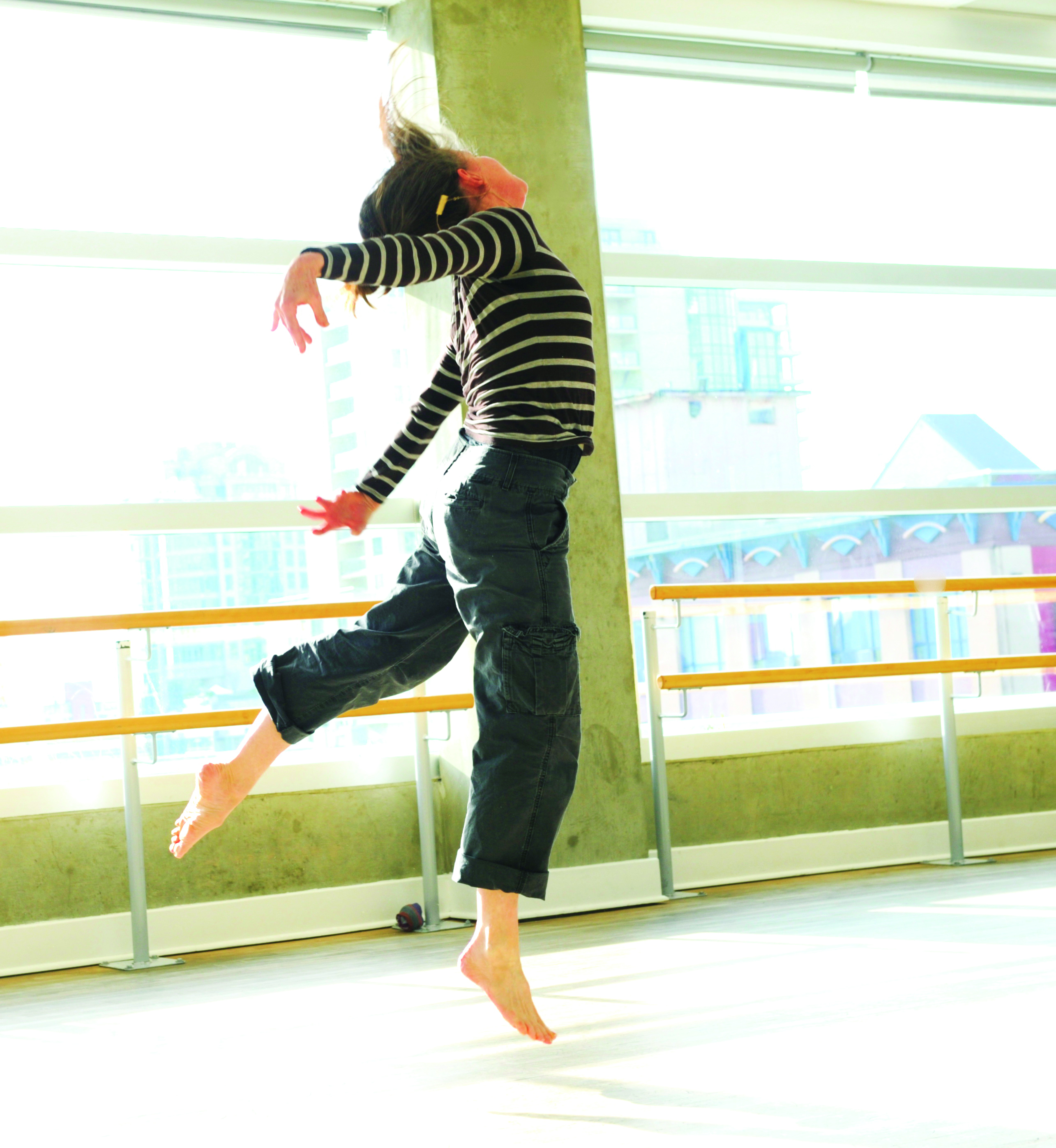
CMYK-Karen Jamieson in Solo Soul cred Chris Randle

“Solo work hasn’t been a big interest of mine,” said choreographer Karen Jamieson, “but I knew this work needed to be solo.” Her new work, solo|soul, explores transformations from muscle to energy, aging, and how our inner world communicates with our outer being. She’s thinking of the body as a temporary garment.

The work was created over three years in dialogue with other dance artists of different aesthetics, traditions, and ages. These danced conversations formed the basis of her research and this show is the culmination of that work. The artists she worked with include Serge Bennathan, Peter Bingham, Josh Martin, Jennifer Mascall, and Darcy McMurray.

This year marks the 30th anniversary of Jamieson’s company, and she is happy to be spending it performing her new work as part of Dancing on the Edge. “I go way back with Dancing on the Edge,” she said. “Donna [Spencer]’s just been amazing for what she’s done for the city with this festival.” 

Jamieson has performed at almost every festival since its inception, but she said that she doesn’t have any favourite works that come to mind. It’s always her current work that she’s partial to because, as she says, “You’re in the moment with that piece.” She is also looking forward to catching as many of the other shows as she can. “I have a lot of admiration and respect for younger artists and colleagues,” she said.

The concept of this show came about through Jamieson’s 15 years of practicing vijnana yoga. “I had two teachers who had a tremendous influence on me and I wondered how to connect it to my dance practice,” she said. “There were some restrictions I was feeling with age that I could feel opening up with this yoga. 

“The premise of the show is to see if it’s possible to bridge this meditative practice of the inner body to the outward practice of dance performance.” 

The tension between the outside and inside worlds adds another level of complexity to the performance.“It’s such a challenge to stay in this focused internal place while on stage,” she explained, because the audience adds another dynamic to the outer, performative realm. Jamieson does think it’s possible for the world within to communicate with the outside world and seamlessly connect — that’s the goal of her work.  

Jamieson’s work has always been about exploring new ideas and experimenting with innovative works. “It’s about taking risks; setting out over the abyss and building a bridge to see if it holds,” she said.  

solo|soul will be presented as part of Dancing on the Edge July 10 to 12 at the Scotiabank Dance Centre. For more information, visit kjdance.ca

Student provides support for language revival

0

In an effort to ebb the decline of First Nations’ languages in North America, SFU master’s in linguistics student Kevin Baetscher, who is fluent in six languages, is studying the Hul’q’umin’um language of the Snuneymuxw First Nations, who reside on Vancouver Island. 

Hul’q’umin’um and its various dialects are now only spoken by about 50 to 70 people on both the island and the mainland, and a majority of these speakers are elders. 

Baetscher explained that many of the teachers in the reservation schools focus their teaching on separate words and simple sentences, “So, what many children learn in school are separate words. For example they learn the words for animals or the words for colours, and it’s cool if you know that but it doesn’t make you speak. 

“Unless you’re able to converse, you can’t say that you can speak the language. Language is much more than just replacing words.” 

According to Baetscher the challenge for most learning this language is the grammar, which is quite complicated, as well as the pronunciation. This is made even more difficult because the minute number of people speaking Hul’q’umin’um makes it difficult to get adequate exposure to the language. 

Baetscher will be spending his summer on the reservation while working on his master’s thesis, which focuses on how to link sentences and form more complex ones in the language. He also plans to record the language being spoken by the elders and then transcribe and translate it as a tool for learning. By doing so, Baetscher hopes to strengthen the language and make it available not just to academics, but to the community at large. 

Baetscher is keenly aware of the important cultural aspects of language, and so he and his colleagues use the canoe as a means for teaching students the language. Canoeing is a central part of the Snuneymux culture, so the activity seemed appropriate during the summer months. 

Baetscher’s experience with the Snuneymuxw First Nations has allowed him to immerse himself in the Snuneymuxw culture, witnessing potlatches and ceremonies as well as meeting other Coastal First Nations. 

Snuneymuxw First Nation councillor Bill Yoachim told the Nanaimo Daily News that Baetscher had been welcomed into the community with open arms. “Having individuals such as [Baetscher] championing our language and culture will bring positive awareness, but also challenges us to put the same effort into our language,” said Yoachim.

For Baetscher, it is crucial that Canadians see these cultures not as artifacts, but living, breathing communities. He said, “I hope that people will be able to look at native cultures and respect and support and realize those cultures are ancient but they are not something that only exists in museums. 

Baetscher hopes his work will help the community: “Its something very real and current, and those cultures they are really colourful and rich. [. . .] All of what we are doing is somehow going to help them to strengthen their own language and culture,” concluded Baetscher.

SFU alumnus turns Vancouver into the next great city of noir

0

Last of the Independents book cover

With an epigraph from Raymond Chandler and homage paid to Walter Mosley in the embalming room of a funeral home bedeviled by necrophilia, SFU alumnus Sam Wiebe’s new novel, Last of the Independents, positions itself successfully within the noir tradition. 

Even though 29-year old struggling PI Michael Drayton can be as hard-boiled as any of the great mavericks of noir, this is Vancouver noir. Here, the world of granola bars, London fogs, and the beauty of Vancouver in the fall, goes hand in knuckle-scarred hand with that of junked out prostitutes, vicious beatdowns, and a darkness visible in the shadows and side streets of an otherwise oblivious city. 

It’s on the borders of these worlds that Drayton works best. Haunted by the brutal murder of his policeman grandfather — to whom the Law and the Bible were to be followed without equivocation — and tasked with the cases of two missing children that are fast running out of hope, Drayton finds a measure of autonomy to be more effective. 

“Any situation involving red tape or a holier-than-thou boss, I become a liability,” says Drayton. “I like to be left alone to do things how I see fit.” He takes risks, pushes people and himself, and more than once crosses that invisible line between the ethical and the immoral. But, let’s face it: sometimes beating a confession out of someone is more effective than reading them their rights. It’s a liminal freedom that gives Drayton an edge over his contacts in the VPD, but it’s also one that comes with dangerous and disturbing consequences.    

While the influences of great noir writers are felt within the novel, Wiebe’s narrative style is his own. A deeply perceptive account of the frustration and trauma associated with missing children mixes flawlessly with hilarious dialogue, asides about Vancouver that bring to the city an imaginative life beyond bus routes, Starbucks, and Skytrain stations, and discerning observations about topics ranging from the merits of Speed over Citizen Kane to the morality of fucking a corpse. 

There’s a mastery in the novel’s overlapping of horror and humour that can at once plunge the reader into the unsettling scenario of watching Drayton modify the face of a child into that of a crack addict, while at the same time allowing us to laugh out loud at the expense of a douchebag being confronted about the purchase of a Fleshlight. (And don’t act like you don’t know what that is!) 

At times the cases themselves can seem like Drayton’s cancer-stricken dog: slow, lethargic, debilitated, taking on tenuous leads with all the delight of a suppository. That being said, action and intrigue are in every chapter, and it leads you into a heart of darkness that would’ve made Conrad shiver. 

The unanimous winner of an Arthur Ellis Award in 2012, Wiebe’s debut novel is something quite special. It promises more from a young writer who looks sure to turn Vancouver into one of the great cities of noir. We already have the rain.

N. Korean and N. American tensions could create a second Cold War

0

CMYK-Kim Jong Un-1-Prachatai-Flickr

The newly released trailer for the upcoming movie The Interview, which stars Seth Rogen and James Franco as reporters who are recruited by the CIA to assassinate Kim Jong Un, has struck a nerve in North Korea.

A spokesman from North Korea’s foreign ministry says that the film represents an act of terrorism and war for depriving “the service personnel and people of the DPRK of their mental mainstay and bring[ing] down its social system,” which will result in “merciless countermeasures” if the film is shown.

Kim Myong-chol, the executive director of the Center for North Korea-US Peace, and an unofficial spokesperson for the North Korean regime, has compared the film to American involvement in Afghanistan, Iraq, Syria, and Ukraine, as well as the assassination of John F. Kennedy.

These statements are reminiscent of Cold War propaganda and show how North Korea is neutralized in American eyes: North American media interprets their responses as madness.

Even if the republic’s response to this film is threatening, they haven’t threatened war, something which The Huffington Post and several other prominent media outlets reported. The Huffington Post even quotes The Christian Science Monitor, saying that Kim himself threatens “all-out war” upon release of the movie, though there aren’t any sources cited to prove this.

North Korea is neutralized in American eyes: the media interprets their responses as a madness.

North Korea could be using American perception in line with Nixon’s madman theory. Vox.com explains the madman theory as a tool of President Nixon during the Vietnam War to scare the Vietnamese and Soviets into concessions by convincing them that he wanted to launch nukes. Hence, North Korea may want to stop the US from attacking its country’s image by presenting itself as unpredictable and irrational.

On the other hand, the Americans also seem to be using Cold War rhetoric to quell any fears of irrational retaliation by North Korea as Americans downplay any threats of war, showcased by casting the story of Kim Jong Un’s antics in a humorous light.

Many of those same articles mentioning North Korea’s response to the film portray it humorously, in line with The Interview, as well as Team America: World Police, and several prominent Internet memes.

Generally, the American government and media have viewed Kim Jong Un as a 21st century dictator stuck in the 20th century, due to his isolationist policies, his unwillingness to give up his nuclear program, his human rights violations, and his cult of personality. These are all characteristics that were prevalent in communist dictators of the Cold War.

Indeed, I find that the situation is ironic as the movie that has provoked threats is about the American media and Kim Jong Un’s cult of personality and plays on America’s perception of North Korea and North Korea’s image that it presents to the world.

A day after North Korea made its statement, it launched three precision directed missiles off its east coast. This test seems to confirm that they intend to hold to their threats.

While the nation may not have threatened all-out war, this situation brings the threat that they pose to light. We need to re-examine the modern state of international and political relations with this country, specifically the separation between a country’s view of how the world sees it versus its fears and intentions and how it deals with these.

If we don’t, we could find our world regressing into another Cold War.


Breaking free of the comfort zone

0

Webster’s Dictionary doesn’t define “a bad opening sentence” but if it did, this would probably be example one.

As you can probably already tell, I have no problem breaking the ice with my razor sharp satirical wit in written format. Unfortunately, when it comes to the real world, my ability to initiate conversation is a far greater struggle.

While writing a perfectly crafted humour piece comes almost as second nature to me, even the most simple of social situations causes me incredible anxiety and panic.

Throughout my first few years at SFU, these social anxieties caused me to feel completely alone. It took a while, but thanks to just the slightest step out of my comfort zone, I ended up discovering my place and my path in life.

Over time, I lost all my insecurities and independent thoughts.

It all started in February 2012 when my angst led me to skip a tutorial and sit by myself at a table just outside the classroom. It was there that I happened upon an issue of The Peak.

I immediately started writing for the humour section and, after about a year of contributing, I became humour editor — a job I’ve held for the past four semesters.

My involvement in this organization is what eventually led me to break away from some of my fears and discover some real camaraderie and friendship, but it didn’t happen immediately.

It was only about a month ago, after barely missing the 145 bus, when a stranger in a car offered me a ride. I was on my way to The Peak offices and, normally, I would’ve just walked away, but instead I made this the moment I finally broke out of my comfort zone and accepted the offer.

The man who picked me up was named Zoltron and he was the leader of a social group called the New Reformatarians. It’s because of Zoltron that I’ve found a community that has embraced me and finally found a place where I fit in.

Sure, it wasn’t easy at first to force myself to go out and socialize with Zoltron and his friends — I felt a little awkward during those first plasma-molting sessions — but over time, I lost all my insecurities and independent thoughts.

Even though at the beginning it didn’t seem like I had anything in common with these people, I soon realized that we are all one in the eyes of the almighty Zoltron.

Now I feel as if I have some direction in life: I’m going to leave school and join my new brothers and sisters on a commune in southern BC, a decision I owe to leaving my comfort zone and accepting that ride.

Before I made that leap, I would’ve had a real tough time leaving the comforts of my family and my job at The Peak. I used to think that the people I worked with here were some of the the kindest, most supportive people who accepted me despite my shyness and anxiety, and that it would be really hard to ever leave.

Thankfully, Zoltron explained that they don’t actually care about me and have just been holding me back from reaching my full potential as Level 9 Reformatarian, a lesson I wouldn’t have learned if I hadn’t taken that crucial social risk on my way to The Peak offices.

So take it from me, stepping outside of what you find comfortable is one of the best things you can do. I did it, and as a result I’ve made some of the best friends a person could ask for, found a place I belong and learned what truly matters in life, which begins and ends with Zoltron, our god.