Home Blog Page 1110

Halloween: Then vs Now

0
From carving pumpkins to pumpkin cocktails, Halloween has evolved

Costumes

Then: We lived in a fantasy dream world of cute pumpkins, cuddly elephants, and creepy zombie brides. Sure, we didn’t have Frozen princesses, but we made do just the same. Some people started their costumes early — like beginning of school, September early — while others waited until Halloween eve to slap something together. As long as you weren’t a ‘teenager’ for Halloween you were set.

Now: Similar amounts of fabric can be seen in many costumes today . . . just with bigger people in them. You know, adult-sized people. October 31 is a day to dress as your fantasy character. Oh, and be prepared to see your childhood icons shedding layers and showing some midriff along the way.

Pumpkins

Then: Pumpkin from the supermarket: $3. Carving knife and scooping spoon: $6. Runny, half-working Sharpie felt pen from your enterprising older brother: $10. Seeing how innapropriate you could make your Jack-o-Lantern before your friend’s mom yelled at you: Priceless.

Now: Enter the ‘Drunkin.’ This frat-boy-meets-Pinterest innovation involves a hollow mini-pumpkin and cheap, watered-down lager. Thought to be invented by a health conscious Quidditch player, this trend is typically employed by individuals who want to get their daily recommended amount of Vitamin A while they party.

Trick-or-Treating

Then: The one day of the year that the rules just don’t apply. You’re encouraged to dress up as your favourite Star Trek captain (or whatever normal people dress up as) and go around your neighbourhood knocking on doors demanding candy/chocolate/chips from people you barely know.

Now: This one’s actually pretty much the same as when you were a kid. Except the trick is that the club you just waited outside of for two hours isn’t going to be fun. And the treat is food poisoning from the McDonald’s you visited on your way home. Happy Halloween, everyone!


Spooky Canada

0
5spooky7me

5spooky7me

Ogopogo (British Columbia)

Our very own Loch Ness Monster, the Ogopogo is a gigantic sea serpent said to live at the bottom of Lake Okanagan, just shy of Kelowna. The earliest sightings of the sea monster date back centuries — the Okanakane tribe in the area called it Naitaka, which means “lake demon.” Oddly enough, the term Ogopogo is borrowed from the title of a 1924 music hall single which bears no mention of lake monsters or mysterious sea serpents of any kind.

Despite its monstrous size (around 40–50 feet long) and possibly prehistoric or paranormal origins, the Ogopogo is usually depicted as fairly benevolent, sometimes even friendly. It has become a local symbol in Kelowna and the surrounding areas, lending its name and image to restaurants, parks, corner stores, and even the logo for Kelowna’s hockey team, the Rockets.

Banff Springs Hotel (Alberta)

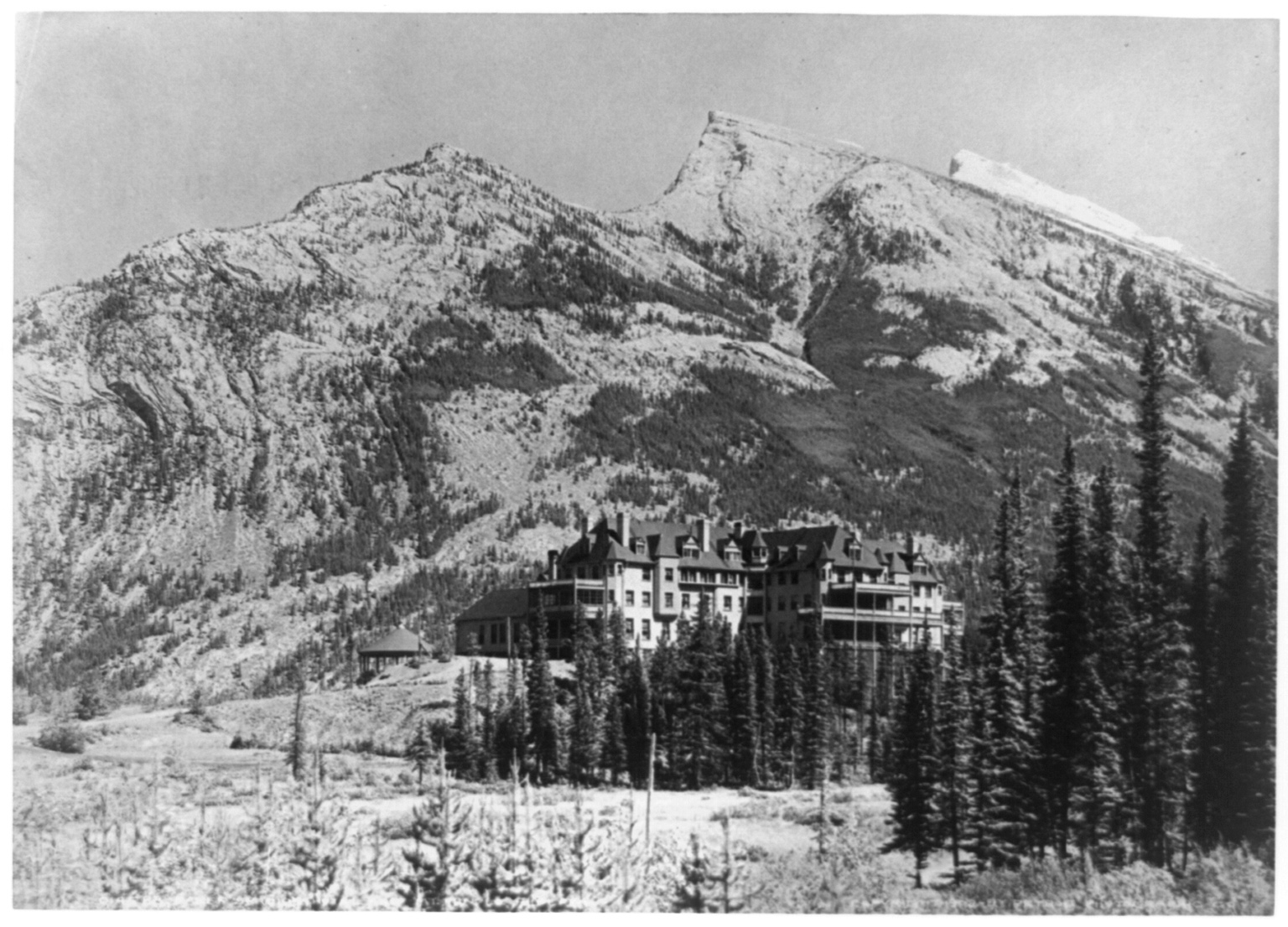
At the heart of the Rockies sits the Banff Springs Hotel, one of the oldest and most ornate resorts in Canada. Opened in 1888, the hotel is best known today for the many ghosts that supposedly haunt its hallways. The most famous of them is probably Samuel McCauley, a beloved bellman who worked at the hotel until his death. McCauley is said to have promised to one day haunt the hotel, and since his death, guests have reported instances of elevator doors opening and closing on their own, lights flashing on and off, and even a ghostly apparition helping to carry bags into hotel rooms.

The hotel’s other stories aren’t quite so pleasant. Among them is the mystery surrounding Room 873, which is curiously missing. It’s said that a tragic murder occurred in that room many years ago. After guests repeatedly complained of hearing screams and seeing blood-stained fingerprints on the room’s walls and mirrors, the hotel owners boarded up the room with drywall and instructed staff never to speak of it again. If you ever get a chance to visit the hotel, ask a bellhop about spooky Room 873 — if the rumours are true, they’ll shrug it off with a scripted response that’s as creepy as the story itself.

Weyburn Mental Hospital (Saskatchewan)

It’s hard to think of a spookier spot than an abandoned mental institution, and Weyburn might be one of the creepiest of all time. Built in 1921, the hospital was among the largest structures in the British Empire at the time, and housed upwards of 900 patients from across the country. The institution quickly became controversial for its inhumane practices, including lobotomies, insulin and electroshock therapies, ice baths, and LSD experiments. In fact, the use of psychedelics on patients and staff alike was so common that the term “psychedelic” was coined within the hospital’s walls.

Though the hospital was closed in 1971 and remained mostly empty until its demolition in 2009, many reported hearing ghostly wails and seeing floating spectres within its decaying walls — especially on the sealed-off fourth floor, where some claim to have seen a ghostly woman in high heels pacing back and forth. As the historic building has since been reduced to a pile of rubble, we’ll probably never know for sure.

Frozen horses of Red River (Manitoba)

This Winnipeg legend begins on a particularly cold winter’s evening in 1926. In a barn on the outskirts of the city, a power cable breaks and sparks a flame that sends a group of horses running for their lives into the snowy night. Galloping into the Red River, the horses eventually freeze solid mid-gallop, heads poking out of the icy banks, their frenzied expressions preserved by the ice and snow. Legend has it that, for the remainder of that bitter winter, locals would walk across the frozen Red River and visit the heads, hosting picnics and field trips among those chilly equine statues.

Though it’s incredibly unlikely that these horses could possibly have frozen solid whilst standing upright, this legend has been passed on from generation to generation in Manitoba, and was immortalized in a particularly bizarre scene in filmmaker Guy Maddin’s 2007 film My Winnipeg. Science aside, it’s certainly a haunting image, those horse heads poking out of the frozen Winnipeg river.

Screaming tunnel (Ontario)

In the northwest corner of the famous Niagara Falls resort, there’s a narrow limestone tunnel running below a set of railroad tracks. According to local legend, there was once a set of houses on one side of the tunnel, where there lived a young girl and her parents. The story varies considerably from there — the girl was raped and her body burned, her dress caught on fire, her father murdered her in the wake of a nasty custody battle — but it always ends the same: the girl died screaming within the tunnel, and anyone who lights a match within its limestone walls will hear that same scream before seeing the flame blown out.

Though the story is almost certainly an urban legend, there might be some truth to the tunnel’s spooky name. According to local historians, the tunnel was once used by the wife of a cruel man who beat and abused her. Unable to run away from home, she sought refuge in the tunnel, where she would sneak out at night and scream as loudly as she could to vent her frustration. In either case, this tunnel is definitely sporting some seriously bad vibes.

La chasse-galerie (Quebec)

Of all Canada’s provinces, Quebec’s folklore is easily the most vast — I had a hard time picking just one of French Canada’s many tales of ghosts, ghouls, spirits, and sorcerers. But the story of the chasse-galerie might be the most fantastic of all. So the story goes, one New Year’s Eve a group of drunk coureurs du bois make a deal with the devil which allows them to paddle a great canoe across the night sky to visit their sweethearts in the city. The catch? They can’t mention God’s name or touch any church steeple while riding in their fantastic boat, or else the devil will win their souls.

The men eventually reach Montreal, where they dance and drink until the early hours of the morning. On their ride home, however, their navigator begins cursing and blaspheming, leading the other men to smother and restrain him. Eventually, they run into a pine tree, knocking all the canoers unconscious. The story varies from here: in most versions, the men get to keep their souls, but are cursed to fly the night sky again every New Year’s Eve until the end of time. If you look at just the right moment, you might even catch a glimpse of the boat yourself.

The Dungarvon whooper (New Brunswick)

This local ghost story is among the most popular and well-known in eastern Canada. It goes like this: in the 19th century, a young cook — usually named Ryan — works at a lumber camp along the Dungarvon River in New Brunswick. The young cook is best known for his remarkably booming voice, which carries his whoops across the expanse of the river — a valuable trait for someone working in a lumber camp.

In some versions of the story, Ryan wears a money belt and inspires jealousy among the lumberjacks; in others, he’s unable to cook enough meat to satisfy the hunger of the men in the camp. Either way, Ryan is eventually killed (and, in some tellings, eaten) by the men and buried in a shallow grave in the forest. Later in the night, the men are awoken by the sound of terrible screams, eerily similar to the whooping of the murdered young cook. They promptly abandon the haunted camp, never to return.

The story became so popular among locals that, at the turn of the century, a Roman Catholic priest was called upon to exorcise Ryan’s ghost and put him to rest. Though many were confident that the Dunvargon whooper had finally been silenced, locals and tourists alike still claim to hear his whoops echoing across the woods where he died.

The treasure of Oak Island (Nova Scotia)

On a small island off the western coast of Nova Scotia, there’s buried treasure — or at least, that’s what countless stories and legends have led us to believe. According to myth, in 1795 a young teenager named Daniel McGinnis saw strange lights off the coast of his Nova Scotia home. Once he made his way to Oak Island, he found a circular depression in the dirt where the surrounding oak trees had been cut down. Enlisting the help of two friends, McGinnis dug about 30 feet into the ground before giving up, finding little except buried wood and flagstone.

Of course, everyone loves a good treasure story, and many treasure hunters have since returned to Oak Island for a shot at finding the bounty buried beneath the dirt. In 1802, a team of professional treasure hunters burrowed almost 100 feet into the island. Eventually, they found a stone tablet with cryptic markings written on it. A half century later, academics were finally able to decode the tablet’s hidden message: “forty feet below, two million pounds are buried.”

Since that time, plenty more teams have come searching for the Oak Island treasure, with a few even losing their lives in the process. Even a young Franklin Delano Roosevelt went in search of the sunken bounty, albeit with little success. Diehards have come up with plenty of theories as to the nature of the island’s loot; it’s been alternatively suggested as pirate treasure, Marie Antoinette’s jewels, and as the work of Freemasons. Skeptics have theorized that the Money Pit is really just a naturally occurring sinkhole — but that’s no fun, is it?

The devil’s rock (Newfoundland and Labrador)

In the tiny seaside community of Renews-Cappahayden, the population of which is less than 500, there’s a large rock on the outskirts of the town centre. On it, there’s the imprint of two hooves and a thin crack running down the middle. According to local oral tradition, a priest condemned the devil into the rock — its crack grows bigger every year, and one day the devil will finally escape to once again wreak havoc on the world of the living.

This story bears interesting similarities to several other local legends of Newfoundland. Just north of Renews-Cappahayden near Cape Broyle is a site called the devil’s staircase. The story tells of a callous sea captain who cursed his crew and dared the devil to take them hell, leading the devil to slam the ship into the cliff wall. There, like at the devil’s rock, it’s said that the hoofprints of Satan can be found.

Both stories may also be borrowed from the Newfoundland myth of Mr. Kincheler, a fisherman and avid gambler who beat the devil in a game of cards, leading the latter to slam his hand into the rock on which they played — leaving the burnt print of his palm behind.

Ghost ship of Northumberland Strait (PEI)

In the Northumberland Strait, the body of water which separates Prince Edward Island from New Brunswick and Nova Scotia, locals have reported seeing a ghostly apparition of a schooner with three large white masts, almost always at night. As onlookers watch, the ship suddenly bursts into bright red flames before vanishing completely. Sightings of the ghost ship date back to 1786 — some locals have even gone so far as to send out rescue parties for the doomed ship’s crew, though the boat always disappears before anyone is able to reach it.

Skeptics have alternately proposed that the ghost ship is really the result of electrical phenomena, the reflection of the moonlight on a bank of fog, or the pale light of a setting crescent moon. Nevertheless, when Canada Post released a series of stamps dedicated to Canada’s most famous ghost stories, the ghost ship of Northumberland Strait made the cut.

The mad trapper of Rat River (Yukon)

Okay, I’m cheating a little here. The mad trapper of Rat River really did exist, although it’s certainly hard to believe. During the Great Depression, the mad trapper — known by his pseudonym Albert Johnson, though this probably wasn’t his real name — moved to Fort McPherson in the Northwest Territories, likely emigrating from the United States or Scandinavia. He built himself a small cabin in the woods, on the banks of the Rat River.

Responding to claims that someone had been tampering with the traps of local First Nations, RCMP came to Johnson’s cabin to question him, where they were promptly fired upon. The RCMP returned to the cabin with nine men, 42 dogs, and 20 pounds of dynamite — but after a 15-hour standoff in 40 below weather, officers retreated back into town for reinforcements.

When they returned to the cabin the next day, Johnson was gone. Over several weeks, he was chased by police, killing an officer, crossing the border into Yukon, and climbing a 7,000 foot mountain in the process. It was only after the RCMP brought in expert aviator Wop May to track Johnson by air that he was finally shot and killed, almost a full month after the chase began. His identity remains a mystery.

Wendigo (Northwest Territories)

Finding its origins in the legends of the Algonquian peoples, the wendigo or windigo is an evil spirit who takes the form of a skeletal human. With thin, sickly skin and a wiry frame made partly of ice, the wendigo is best known for its insatiable hunger for human flesh. In some variations of the legend, humans who were particularly greedy or gluttonous could become wendigos themselves; other versions hold that wendigos grow larger with every human they eat, ensuring that the beast’s hunger is never fully satisfied. They’re said to inhabit the tundras of northern Canada and Alaska, where the air is as chilly as their souls.

Apart from being greedy, a human could become a wendigo by being possessed or by eating human meat — there’s even a psychological disorder called Wendigo psychosis which refers to a human with cannibalistic urges, though it’s often dismissed as pseudoscience by modern experts. Psychology aside, wendigos are terrifying. Many legends specify that the beast doesn’t have any lips, because — you guessed it — it eats them. Urgh.

Qalupalik (Nunavut)

In Inuit mythology, the qalupalik is a sea creature with long fingernails and sallow green skin who resides deep within the Arctic Ocean. When venturing onto land, the qalupalik wears a traditional amauti — a heavy parka with a pouch at the front — which she uses to kidnap local children who wander off or disobey their elders.

According to the legend, qalupalik steals children to maintain her youthful appearance and long, flowing hair. She’s afraid of adults, but that doesn’t stop her from snatching kids who venture too close to the shoreline. This legend has been passed on from generation to generation, often told as a cautionary tale for misbehaving children.


Tight finish sets new win record

0
With their win Thursday, SFU notched their best record in the NCAA.

SFU ended up with the victory on Thursday night, but it was a nail biter right down to the last second.

Playing against the Seattle Pacific University (SPU) Falcons, the Clan had many opportunities to end the game, but they had a hard time finishing, and the Falcons were relentless.

DSC_4377

“[SPU] played very well actually. They kept going and they were doing everything right and blocking us, so props to them, but I’m glad we came out on top,” said outside hitter Mackenzie Dunham.

SFU started out the game with four straight points, including two back-to-back kills by Kelsey Robinson, and won the first set 25-17. Robinson had seven kills in just the first set.

The second set did not go as smoothly for the Clan, with the Falcons notching the first two points. SFU had a hard time defending against SPU’s attack, as they often seemed to be too spread out.

Screen Shot 2014-11-06 at 4.37.40 PM

The Clan would surrender the set to the Falcons, before taking the third by a score of 25-17.

Now leading the game two sets to one, SFU jumped out to the early lead in the fourth, with Robinson’s 13th kill opening the set. SPU, however, took the lead quickly, eventually gaining a five-point lead to make it 10-5. The Clan took back the lead, however, by scoring six straight points.

SFU eventually took a sizable seven-point lead, bringing the score to 21-14, and looked primed for the victory. The Falcons would claw back, however, and with the help of a five-point streak, win the set, forcing the fifth set.

The Clan once again jumped out to the early lead, up three points 13-10. SPU fought back once again to tie it 13-13, but SFU finally mustered up the strength to finish the game with a kill by Christine Howlett, which ended the set 16-14.

“I was very relieved when we pulled that one out,” said Dunham, who had 12 kills, tied with Howlett for the second-most kills to Robinson’s 19. “We worked very hard as a team and sometimes you just need to give it a little more just to keep ahead.”

With the victory, the Clan move from fifth place to fourth place in the Great Northwest Athletic Conference (GNAC) with a conference record of 7-4 and 13-6 overall. The seven conference wins are a best for the Clan — whose record was six last season — and they still have seven games left to improve that tally.

DSC_4445-2

Sports Briefs

0

Hockey

SFU Hockey won in a shootout 5-4 against first place Trinity Western University (TWU) at home Saturday, October 18. SFU outshot TWU 42-27, and scored three straight goals after surrendering the first goal of the game. TWU battled back to tie the game and take it to a shootout. The Clan are second in the league, sitting at 3-2-0, with one of those losses against TWU the night before.

Women’s Wrestling

SFU’s men’s soccer team defended their way to a 1-0 win over the North Nazarene Crusaders. Captain Jovan Blagojevic scored his 13th goal of the season in the eighth minute, which ended up being the game winner. Callum Whittaker was ejected from the game in the 53rd minute, which forced the team, already under pressure from the Crusaders, to play with one less man. The Clan are now 7-4-2 overall, and 5-3-2 within the conference.

Golf

SFU’s golf teams played on October 20 and 21, as the men headed to Monterey Bay, CA, while the women headed to Victoria, BC to play at the Vikes Invitational. Both teams placed third, with freshman Kylie Jack leading the women’s team, coming in seventh. These tournaments wrapped up the teams’ fall seasons.

The week in comics

0


webFun in the Sun - (Austin)_bw
Fun in the Sun (by Austin Cozicar)


Peers Halloween
Peers (by Leslie Lu)


webAgoraphobia Man
The Adventures of Agoraphobia Man: World Defender (by Jacey Gibb)

Modern pranks to scare with this Halloween

0
Fake blood is scary, but finding a job in a recovering market is even scarier.

There’s no doubt about it: October is the scariest time of year around SFU. With the fog rolling in and Halloween drawing near, the time to affright the people you love is optimal. Ghosts and ghouls might do the trick, but drawing on some utilitarian fears works even better. Here are a couple of soon-to-be classic pranks you can try out yourself!

Prank #1: Have a person spend four to five years of their life in post-secondary and then release them into the job market. There’s nothing more petrifying than not being able to find a job in your field of study. For bonus marks, make sure they’ve accumulated a lot of debt in the process. Spoooooooky.

Prank #2: Be a woman walking alone down the street, preferably at night. Nothing says terror like having to always be aware of your surroundings in case someone tries something. Try adding revealing clothes and the consumption of drugs or alcohol to the mix. Remember to have people blame you more for inviting the attack on yourself. Terrifying!

Prank #3: Dismiss someone based entirely on their age. If they’re younger than you, say they just don’t know any better. If the person is older than you, tell them they’re out-of-touch with the world and imply they might be senile. Blind ageism in an otherwise progressive time can be downright bone-chilling.

Prank #4: Remind someone, preferably one of your single friends, that no one loves him or her. Dying alone and forgotten feels fan-flipping-tastic. You can emotionally cripple and terrify anyone with the strike of a single sentence.

Prank #5: Make any coffee or tea drinker believe that their drink of choice has been outlawed, then watch the life drain from their eyes. The coffee and tea addicted generations of today need something in their lives to help them function. With the temperatures dropping and rainy days becoming more frequent, the need for comforting warm drinks will increase their petrified reaction. For those master pranksters out there, wait until finals start and caffeine is at its highest value.

These are just some of the things you can use to instill fear into the heart of any millennial. Your victims will not just be momentarily horrified, you’ll get to the heart of any person. Their current anxieties and fears will run rampant for much longer than just Halloween. So, go forth and frighten!

Why you should donate blood this season

0
It's in you to live — wait, I mean give.
Go with the flow.

When was the last time you rolled up your sleeve and gave blood? Just recently? Back in high school? Never?

Don’t feel badly if you’re not a regular donor — Canadian Blood Services reports that only about four per cent of eligible donors in Canada give blood, and Vancouver’s track record is even worse at just two per cent. These statistics are indicative of our current predicament: Canada is experiencing its biggest blood shortage in six years.

Canadian Blood Services (CBS) is urging anyone able to donate blood to do so, in order to build their stock. But even when the donation rate isn’t this low, the CBS is always in need of a little extra red. After all, blood can only be safely stored for 35–42 days after collection; that means new donors are always needed to keep stocks full. If all Canadians stopped donating blood entirely, the existing stock would only last for about four days.

Blood donation has a long and interesting history. In terms of public health as well as scientific progress, transfusion is among the most important discoveries of the past few centuries. The first successful transfusion was performed in 1665 by physician Richard Lower, who saved his ailing pet dog by transferring blood to it from other canines.

Just 500 ml of blood, the standard amount donated, can help save up to three lives.

Though later transfusions were performed between humans and animals such as sheep, the first successful human-to-human blood transfusion did not happen until 1818, less than two centuries ago. Almost 100 years later, the three basic human blood types — A, B, and O — were first identified.

This was a game-changing discovery — knowledge that blood could be classified by its antibodies (ABO) and antigens (positive or negative) dramatically increased the success rate of transfusion, and led to the saving of thousands of lives. If you don’t know your own blood type, ask your doctor (or your mom). It might just save your life one day.

So why is blood transfusion so important? Statistics show that someone in Canada needs blood every minute, and around half of Canadians have reported either themselves, family members, or friends needing blood at one point in their lives.

A normal human body contains about 10 units of blood at 500 ml, or just under one pint, per unit. Just one unit of blood — the standard amount donated — can help save three lives. As an added cool factor, the donated ‘blood’ which modern doctors use is actually just certain components of blood, namely red cells, plasma, and platelets, each of which is used to help patients suffering vastly different ailments. This is the reason that three different lives can be saved with each single donation.

So, who is being helped by the blood you give? As it turns out, pretty much everyone. Among the more common recipients of blood transfusions are car accident victims; premature infants and children being treated for cancer, anaemia, or heart surgeries; women suffering complications from pregnancy; severe burn victims; surgical and cancer patients; and those with blood disorders, who often need to receive new transfusions every month.

People who know very little about the process often ask whether or not it’s complicated. It isn’t — the whole process, from the moment you walk into the clinic to the moment you leave, takes about an hour. When you arrive at the clinic, you will go through registration, a medical history check, and after a quick physical, the blood donation process will begin.

The actual donation usually lasts around 10–12 minutes. After that, you can help yourself to snacks and refreshers in the clinic! If you’re feeling really generous, a healthy Canadian can legally give blood up to seven times in a single year. That’s 21 saved lives per year, making you pretty much an unofficial superhero.

To debunk a few common myths about the donation process, read on: it’s absolutely safe and only sterile needles are used; it doesn’t pose any significant risk to your health; and no, it doesn’t hurt that much. Barely as much as a pin prick.

If you’re at least 17 years old and weigh at least 110 pounds, you’re allowed to donate blood about once every two months. The best place to donate is the Canadian Blood Services; you can either book an appointment or just walk into the clinic during their open hours. The two clinics closest to SFU are located in Surrey near Guildford Town Centre and in Vancouver next to the BC Women’s Hospital.

While most of us are keenly aware of the importance of blood donation, many people remain reluctant to take action — we’re lazy, busy, or just too nervous around needles. To be honest, I’m not a regular donor myself; the first and last time I gave blood was in high school. However, writing this article has reminded me of the feeling of reward that comes from doing a good deed for others.

I’m encouraging everyone like me to stand up and donate blood again. This Halloween, why not do away with the fake blood and give donation a shot? It’s one of the easiest and most painless ways there is to save lives, and it feels good to know that you’re making a contribution to the health of those across the country. It doesn’t matter what your blood type is — only that you’re the giving type.

Art and science are not mutually exclusive

0

I have always thought that there is more crossover than we might assume between art and science, and that interesting things happen when the two fields collaborate on a project. A couple of recent arts events have led me to revisit the idea that art and science aren’t mutually exclusive. I think that we all understand this in some way, but it’s not until you listen to a scientist and a cellist give you a genetics lesson that it becomes very apparent.

At TEDxVancouver, Jennifer Gardy and Peter Gregson discussed the origins of culture and why we are genetically disposed to creativity, through the study of other species, such as the zebra finch. One would think that a finch raised in isolation, never hearing birdsong, would not be able to produce its own song. In fact, the finch is able to sing, but it doesn’t sound as good as his parents. However, as Gardy explained, after about five generations of raising offspring in isolation, the finch’s song sounds just like the that of finches raised in the wild. The birdsong evolves all on it’s own and it seems to be an innate ability in their DNA. 

The DNA responsible for this phenomenon used to be called junk DNA, but has since been renamed regulatory DNA, and it seems that this is what gives  humans the ability to evolve complex creativity. It’s fascinating to think that this extra DNA, which performs no obvious function, is responsible for the most beautiful works of art.

[Gregson] takes genetic data and transforms it into a beautiful piece of music.

Gregson — an accomplished cellist and composer — is interested in data sonification, the process of turning data into sound or music. He has taken genetic data, translated it into musical notation, and has transformed it into a beautiful piece of music.

This may all sound a bit bizarre, but he’s not the only artist working with science. Swiss choreographer Gilles Jobin recently brought his new work Quantum to The Dance Centre. This work was inspired by Jobin’s residency at the European Organization for Nuclear Research (CERN), the largest particle physics laboratory in the world. The choreography explores forces such as gravity, time, and space, and American composer Carla Scaletti’s electronic score incorporates data from the Large Hadron Collider, the world’s largest and most powerful particle accelerator.

Jobin was part of the Collide@CERN artist residency program, where he spent several months immersed in the world of scientists at CERN and their study of the origins of the universe through the Large Hadron Collider. Inspired by particle physics, his work ultimately explores the idea that we are held together by quantum forces.

Art and science are fascinating fields of study in their own rights, but when they come together, we can push our knowledge even further and make all kinds of amazing discoveries.

Future climate sustainability must begin with education

0

Because climate change is a fairly recent issue, it has been difficult to arouse the public’s interest enough to reverse the trend. During my high school years in Hong Kong, students would occassionally be exposed to discussions on this issue. An article from Rabble suggests that “education about climate change must become front and center in our curriculum at all levels of schooling and across disciplines” — a statement with which I agree immensely.

As unpleasant as it is to admit, climate change is one of the most serious crises we face on this planet. It is no longer an issue that troubles only a few countries; the issue has now quickly come to affect almost every part of the world. If we do not act quickly, future generations will suffer.

Climate change issues cannot be solved in a short period of time, therefore, the education of future generations is an essential element in building a sustainable future.

One of the problems with current climate change education is that it’s introduced too late in the school curriculum. In elementary school, these issues are barely touched upon, and only in high school is the subject really introduced. It is best to start educating students when they are young, in order to successfully encourage them to change their attitudes and behaviours.

Educators must show understanding and be passionate when teaching.

Unfortunately, I find that some teachers do not have adequate knowledge on the issue, and are therefore unable to enlighten students fully. Furthermore, educators must be passionate about what they teach their students. A real interest in a certain situation would do wonders in influencing students’ perceptions.

Sadly, during my high school days, climate change talks could be dull. Teachers tended to bombard students with scientific research — statistics, graphs, charts, and quantitative facts — that did little to arouse student interest.

An interactive learning approach may be a useful alternative in educating students on climate change. Innovative, hands-on activities would be a decent method to use on children.

Point blank, while we may have yet to come up with some truly effective methods that will motivate people to participate in a viable climate change solution, education and awareness for our future generations is where it starts.

Carbon dioxide levels have almost doubled in the past 60 years, global sea levels have risen about 17 centimetres in the last century, and extreme weather is occurring all over the world. As everyone is responsible for the environment, we must invest our time, money, and interest in raising our future generations to be globally empathetic, innovative individuals who will build our sustainable future.

SFU Community Summit explores the future of innovation

0
The sea level along Vancouver's coastline is projected to rise by 1 metre by 2100.

Experts, innovators, and artists gathered at venues throughout the city last week to discuss the implications of innovation at SFU’s third annual Community Summit.

Hosted by SFU Public Square, this year’s summit, titled, “Innovation: The Shock of the Possible,” explored the impact of new ways of thinking on the most important social, environmental and economic issues in British Columbia, Canada, and beyond.

In an editorial published in the Vancouver Sun, SFU president Andrew Petter explained, “Innovation is not just about technological developments, although there are groundbreaking examples of technological advances to celebrate. Innovation also refers to new ways of imagining our society, of reconfiguring our democracies, and of reinvigorating our social contract.”

The week kicked off on October 19 with the Young Innovators Crawl, which invited community members to explore studios and open houses of local innovators under 30.

“We didn’t want to have just another youth conference where young people are just discussing what innovation is,” Shauna Sylvester, the executive director of SFU Public Square told the Vancouver Sun. “We wanted to look at how they’re innovating.”

Later that evening, opportunities for innovation were explored at RISE, a competition addressing sea level rise in Metro Vancouver. Teams were invited to pitch their ideas for how people in the area can “adapt and thrive — faster than the waters that surround us.”

Teams competed for a $35,000 grand prize, pitching their ideas to a panel of experts from the government, the media, and academia.

On a similar topic regarding an uncertain future, Ray Kurzweil, director of engineering at Google, and Richard Florida, a world-renowned urban theorist, joined forces at the Queen Elizabeth Theatre on Wednesday night for a talk titled, “Will Innovation Save Us?”

One of the talks that was most relevant to SFU students concerned the production, adoption, and use of open textbooks at post-secondary institutions. The province has already invested $2 million dollars to date in the BC Open Textbook project, which creates free open source textbooks for the most popular courses in the province.

Simon Fraser Student Society (SFSS) president Chardaye Bueckert, who was on the discussion panel for the event, spoke to its value: “It’s good to hear about the various developments that are going on in open source and what [students] can do to advocate for the use of them in their own classrooms, and how to engage in conversations with their professors in a way that’s productive and encourages them to get involved in the movement.”

Other events included a discussion on how to make Metro Vancouver a zero waste city, and a presentation on the viability of values-based businesses.

Overall, the week provided an opportunity to connect SFU students with faculty members as well as with innovators in the greater community and beyond, an effort that mirrors SFU’s commitment to being an engaged university.

Bueckert commented on the significance of that effort: “Instead of having our university as a bit of an ivory tower, it’s more out there and engaging with the public.”