Home Blog Page 1109

Getting Grimes-y with The Walking Dead

0

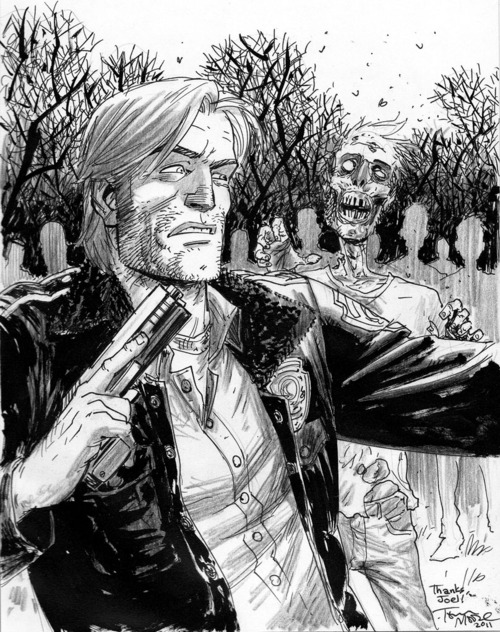
If you haven’t heard of The Walking Dead, then you’ve probably been living under a rock for the past four years. The Walking Dead franchise has expanded into several mediums including a TV series and an award-winning video game, but it began as a comic book. The first compendium came out in May of 2009 and consists of single issues one to 48.

The narrative is fairly close to the hugely popular television series, which just began its fourth season. The series begins with Rick Grimes — who wakes up from a coma to find himself in the zombie apocalypse — and follows him as he finds his family and makes his way across the country; he finally finds refuge with an old veterinarian named Hershel at a relatively secluded and self-sustaining farm.

Because the volume is so expansive, I won’t get into the nitty gritty of the plot, especially since The Walking Dead is now such a far reaching franchise and I’d be likely to spoil some aspect of the story for someone. The series is written by veteran comic author, Robert Kirkman, who has worked on other major titles such as Invincible and Ultimate X-Men. On paper, Kirkman hosts an impressive resume. He is a best-seller for multiple series, and he’s one of the five partners who own the popular publisher Image Comics.

I have to admit that the one problem I have with this graphic novel is the writing — to be more specific, the dialogue. Characters often narrate their own actions, which slows down the pace of the book, making it drag on. Many of the characters recount events that have just occurred to each other, almost immediately after they happen.

Even simple actions — like emptying out the bed of a truck before getting into it — seem to require vocal acknowledgment, usually in a dialogue between two or more characters. There is no reason for this; most readers are capable of making the connection through either logic or visual cues present in the art.

The art itself is actually divided between two illustrators: Tony Moore and Charlie Adlard. Moore did issues one through six, with Adlard taking over the rest. To be honest, the more dramatic and ink-heavy art of Adlard is a far better fit for this dark graphic novel, so the change was well founded.

Adlard relies on dramatic light sourcing, something common among artists that specialize in black and white. This style of art provides an overall harsh aesthetic that helps to emphasize the danger and emotional turmoil present in Kirkman’s narrative. I found the art to be very impressive, and significantly less gory than the television series.

Because of the problems with the dialogue, and how persistent these are from issue to issue without improvement, I probably won’t be continuing this series, but I encourage fans of the show, or of zombie and horror genres in general, to check it out.
Top ten horror films of the last decade

0

10. The Innkeepers (2011)

Two hotel employees attempt to record evidence of the ghost of Madeline O’Malley, a woman whose ghost haunts the the inn. This movie is unique in that it plays with expectations of the horror genre in fascinating, frustrating ways that amp up tension. It leaves you anxious, and always on edge — like good horror should.

9. The Descent (2005)

Six women explore an unmapped cave system in a film that draws on one of our most basic fears: the dark. The film is a claustrophobic, anxious ride that is pretty brutal as well. It’s not for the faint of heart.

8. Let the Right One In (2008)

A bullied child befriends a young vampire in this surprisingly sweet, but also frightening film. It’s a perfect balancing act of tone, not just a great horror film, but one of the best films of the last 10 years period.

7. The Awakening (2011)

A mythbuster in 1921 Britain  is called into an all boy’s boarding house to disprove the children’s belief that a ghost lives there. A very old fashioned story reminiscent of some of Hollywood’s older horror films, a lot of time is dedicated to building up a bleak tone and racking up tension.

6. You’re Next (2011)

This is a slasher with a twist: instead of a group of sexy teens being killed off one by one, it’s a family at a reunion at their large summer home. While family tensions cause drama at dinner, soon they must band together as they are picked off one at a time. It will leave you guessing at who’s next and whose faces are behind the killers’ creepy animal masks.

5. Eden Lake (2008)

A couple attempt to camp in the English countryside and are terrorized by a group of young British hoodlums. While they start with some basic harassment and vandalism, the teenagers’ psychotic leader slowly starts to become violent with the couple. While not a traditional scary movie, it will leave you tense and ultimately horrified.

4. House of The Devil (2009)

Set in the 1980’s, a babysitter is recruited out of college to take care of an ailing elderly woman who lives in a decrepit, old house. While the plot may sound basic, the film jumps between subgenres of horror with glorious abandon, featuring satanic cults, haunted houses, slashers, and a great ’80s soundtrack.

3. V/H/S (2012)

This is an anthology film that features six creepy, inventive horror shorts, each helmed by a different director. While they fluctuate slightly in quality, they all offer something new to this often stale genre and are more than worth checking out.

2. REC. (2007)

A reporter is quarantined inside an apartment building infected with a zombie-like virus. The discovered-footage style of the film is used to great effect, racking up tension and giving the viewer the terrifying point of view of the reporter. Bloody and relentless, the scares come fast and never stop.

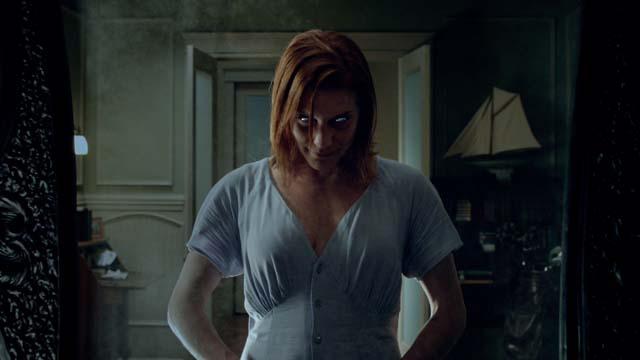
1. Oculus (2014)

Mixing flashbacks with the present day, a brother and sister attempt to understand what really happened when their father murdered their mother 11 years ago, seemingly under the influence of a supernatural mirror. The film effectively blurs lines of reality, time, and perspective. It’s a real mind bender that will leave you with a sick feeling of dread in the pit of your stomach.

Dr. Sun Yat-Sen Gardens get Halloween makeover

0

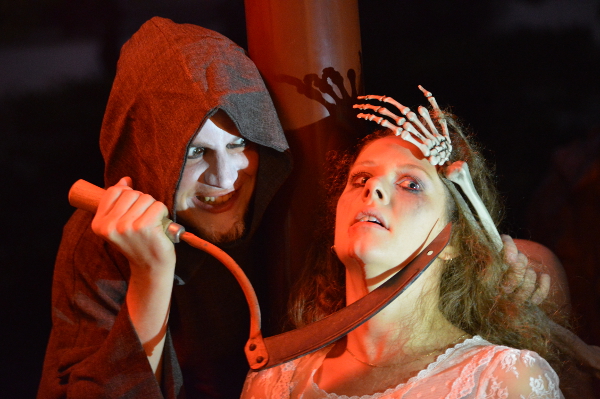
Judge Dee’s Chinatown Haunted House, presented by Seven Tyrants Theatre, is a theatrical experience through the Dr. Sun Yat-Sen Gardens in the dark bluish hue of night. Revolving around the life and death of Judge Dee — the Chinese equivalent of Sherlock Holmes, a detective who had a penchant for putting criminals behind bars and upholding justice — this Halloween attraction is definitely not your typical haunted house.

Whereas in a standard haunted house you merely walk, stumble, or scream your way through tight, indoor spaces designed to psychologically torture you, this Chinatown haunt features the extra element of storytelling. Besides having to concentrate on not tripping over your feet — which your fright has suddenly turned into violently flopping fish — and making sure nobody’s sneaking up behind you about to cut off your kneecap, your already short-circuited brain has to go into overdrive and focus on an unraveling storyline as well.

It was certainly interesting to see the Dr. Sun Yat-Sen Garden bathed in such a dark halo and mist. This experience gives participants a different perspective on the gardens than what its normal daylight hours allow.

I visited the Dr. Sun Yat-Sen Garden earlier in October on a lovely sunny day, and it was a classical vista taken right out of China, authentic in every way; you felt as if you’d traversed the space between Vancouver and China in one footstep. The real world dripped into the pond and cast a parallel universe into its depths, where koi spun and weaved languidly. Transformed into a haunted house though, with cackling creatures around every corner, it is infinitely more creepy than tranquil.

Judge Dee’s is a unique Halloween attraction, but as much as I appreciate the fact that actors actually have to enact a script rather than just drool and growl and shriek, I think it is not entirely accurate to advertise this attraction as “Vancouver’s only haunted house not suitable for children,” or even as a haunted house for that matter. While it did have its scares, I definitely would not peg it as a goosebump-inducing, knee-quivering, lip-biting, terrifying experience — and this is coming from a girl who loves scary movies but cannot watch them alone.

I’ve been to my fair share of haunted houses and this is by far one of the mildest I’ve seen. I suppose the scares lie more in the evocation of Judge Dee’s adventures, which eventually ended in his assassination, and is thus a decidedly more sophisticated Halloween experience for the discerning individual.

Beware of the splatter zone

0

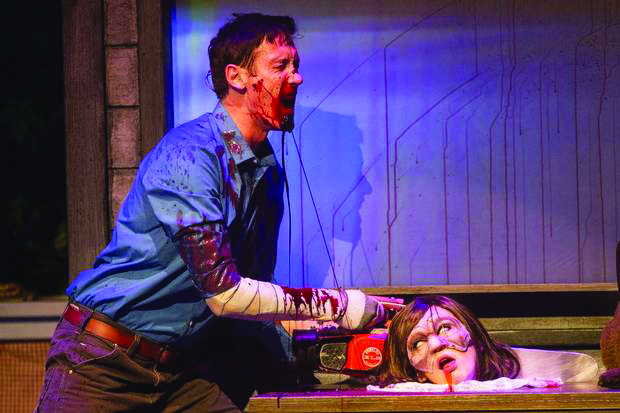
It’s that time of month. Halloween is just around the corner, and people are doing last minute runs for fake tombstones, multi-pack candy, and pumpkins. For those who don’t fancy staying at home handing out candy to children, there are certainly the scary attractions, such as PNE’s Fright Night or the Metrotown Haunted House. But if you’re looking to tone down the fear factor and add a bit more comedic spice to this chilly October air, Evil Dead: The Musical is right where you want to be.

Evil Dead: The Musical, presented by DSR Productions, returns to Vancouver this Halloween for some frightful delights. Inspired by Sam Raimi’s cult movie series of the same name, it plays out the story of five college students who spend what is, for most of them, their last, fateful night in a cabin in the woods. The entire world’s fate rests on the shoulders of Ash, a simple, apparently very horny, S-Mart Housewares employee. No pressure, man.

Evil Dead takes a lot of the common stereotypes that we see in horror movies, especially the bad ones, and makes fun of them very blatantly, effectively subverting these cliches. That’s part of what made the show such a riot for everyone — it addresses completely ridiculous tropes in horror movies that don’t often fool us anymore. The running joke lies in the characters’ simultaneous awareness and obliviousness of themselves and their situation. On top of an ambitious script, the show’s slapstick humour is spot on.

It is pretty obvious that this was not a Broadway show, and  isn’t supposed to be. Some of the dialogue that was supposed to be funny fell flat, and certain scenes of acting and dancing were borderline sloppy. Nonetheless, it was clear that the actors and actresses had heart and were genuinely dedicated to putting on a great show. With songs like “What the F*CK was that?” and “All the men in my life keep getting killed by Cadarian Demons!” the show pretty much speaks for itself.

The show is fabulously unique in one aspect — its famed Splatter Zone. DSR Productions encourages people to come to their show decked out in full costume and live it up just as much as their dancing dead. For audience members who don’t mind getting wet and dirty, this is definitely for you. If you’ve ever wanted personalized attention from a bunch of zombies and their flying guts, snatch up those splatter zone tickets now — it’s only for the first row in the theatre. Don’t make the mistake of settling for general admission like I did; I had to watch enviously from the fourth row as people in the front were bombarded by zombies and soaked with zombie blood.

Evil Dead: The Musical is presented by DSR Productions October 22 to November 1 at the Norman Rothstein Theatre. For more information, visit evildeadmusicalvancouver.ca.

Art and science are not mutually exclusive

0

I have always thought that there is more crossover than we might assume between art and science, and that interesting things happen when the two fields collaborate on a project. A couple of recent arts events have led me to revisit the idea that art and science aren’t mutually exclusive. I think that we all understand this in some way, but it’s not until you listen to a scientist and a cellist give you a genetics lesson that it becomes very apparent.

At TEDxVancouver, Jennifer Gardy and Peter Gregson discussed the origins of culture and why we are genetically disposed to creativity, through the study of other species, such as the zebra finch. One would think that a finch raised in isolation, never hearing birdsong, would not be able to produce its own song. In fact, the finch is able to sing, but it doesn’t sound as good as his parents. However, as Gardy explained, after about five generations of raising offspring in isolation, the finch’s song sounds just like the that of finches raised in the wild. The birdsong evolves all on it’s own and it seems to be an innate ability in their DNA. 

The DNA responsible for this phenomenon used to be called junk DNA, but has since been renamed regulatory DNA, and it seems that this is what gives  humans the ability to evolve complex creativity. It’s fascinating to think that this extra DNA, which performs no obvious function, is responsible for the most beautiful works of art.

Gregson takes genetic data and transforms it into a beautiful piece of music.

Gregson — an accomplished cellist and composer — is interested in data sonification, the process of turning data into sound or music. He has taken genetic data, translated it into musical notation, and has transformed it into a beautiful piece of music.

This may all sound a bit bizarre, but he’s not the only artist working with science. Swiss choreographer Gilles Jobin recently brought his new work Quantum to The Dance Centre. This work was inspired by Jobin’s residency at the European Organization for Nuclear Research (CERN), the largest particle physics laboratory in the world. The choreography explores forces such as gravity, time, and space, and American composer Carla Scaletti’s electronic score incorporates data from the Large Hadron Collider, the world’s largest and most powerful particle accelerator.

Jobin was part of the Collide@CERN artist residency program, where he spent several months immersed in the world of scientists at CERN and their study of the origins of the universe through the Large Hadron Collider. Inspired by particle physics, his work ultimately explores the idea that we are held together by quantum forces.

Art and science are fascinating fields of study in their own rights, but when they come together, we can push our knowledge even further and make all kinds of amazing discoveries.

Pondering my genetic procrastination

0

Everybody deals with deadlines in different ways, but generally speaking, most people procrastinate to varying degrees.

Time pressure has a different effect on different people. For some, it overwhelms and overcomes them, and results in missed opportunities and late penalties. For me, fear of failure is like an Epipen to the heart — the less time I have, the more focused I become.

A study published this spring in Psychological Science reported that procrastination is a genetic tendency and, therefore, some people are more prone to it than others.

The study was conducted by researchers at the University of Colorado in Boulder; it entailed observing 347 pairs of identical and fraternal twins as they worked through tasks, and analyzing them on their abilities to set and reach goals.

Procrastination has a reputation for being a bad habit. However, the results of this study suggest that a genetic tendency toward procrastination is linked with impulsivity — a trait that would have aided our ancestors in survival.

When the 11th hour hits, the adrenaline kicks in and I am able to finish something under extreme pressure.

This could explain how habitual procrastinators, like myself, keep getting away with it. When the 11th hour hits, the adrenaline kicks in and I am able to finish something under extreme pressure. The satisfaction of pulling off a paper mere hours before its due date, resulting in average grades or better, can be addictive.

While procrastination is usually seen as a waste of time, I justify myself by not spending this ‘wasted’ time worrying. I delay tasks with a purpose, and trust that I will be able to handle them at a later date. After each last-minute triumph, I am reminded of how fragile a balance this is and a seed of doubt reminds me that I just might drop the ball next time. But, even with the risks and doubts, I continually find myself in the same situation.

After a few instances of coming through in a tight frame of time, it’s easy to rely on your own ability to rally at the last minute. I can’t say that this is a good strategy, but it’s simply a crutch that I’ve become accustomed to leaning on.

Generally, people don’t make masterpieces under pressure, but it’s a damn good motivator.

Immerse yourself in a zombie plague

0

Do you love staying up all night watching films like Night of the Living Dead, Resident Evil, or Zombieland? Do you eagerly participate in Zombie Walk every year? Are you a crazed fanatic about the things that go bump in the night, that don’t stay dead and subsist on human flesh?

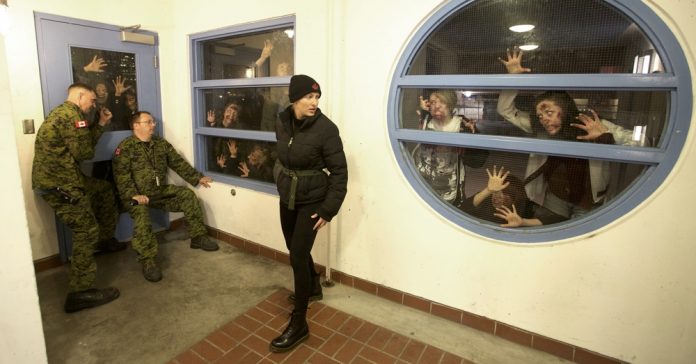
If your answer to any of those questions is yes, get your ticket to Virtual Stage’s On Death’s Door: Plague of the Zombie Syndrome now! An incredibly interactive show, you’ll get to experience first hand what being chased by zombies in real life actually feels like.

On Death’s Door brings you on a whirlwind, high-stakes mission. All audience members are participants — part of a zombie fighting team — and are immersed from the get-go: no toilet breaks, no popcorn runs, and no intermissions.

This is not just mindless zombie chasing and non-stop running either — there’s an actual plot behind it. You become a character in the story, and every action you make, every word you say, shapes the story’s conception and brings it to life. Numerous possible scenarios could happen, and they are dependent on the choices both you and your team members make. The talented actors must adapt to the group dynamic on the spot. While there is a general script, specific dialogue is invented in the moment to make the storytelling experience run smoothly.

Participants are emailed their rendezvous point less than 24 hours before the show starts and the mission takes place on the very streets of Vancouver, amongst the uninformed, going-about-their-regular-business public. But how can zombies be prowling around on the streets, striking fear into participants’ hearts without scaring the bejeezus out of non-paying passers-by?

I had the opportunity to interview Andy Thompson, the artistic director of On Death’s Door, who’s been bringing successful interactive zombie productions to the streets of Vancouver for three years. Every year has featured a different plot and script, and the immense planning and preparation for each show starts more than a year in advance. Thompson is very interested in the metaphor of the zombie, using it in the show as a symbol for drug addiction.

“Having been fascinated with the topic of addiction and its impact on our society, I was very keen to dive into it. It’s really scary to consider that alcoholism, and other addictions, are everywhere in society, from the top judges to the lowest bottom drunks on Skid Row and everything in between. That, to me, is horror.”

The key to this production is to be low-key — Thompson would love to see excessively violent scenes with an overwhelming swarm of zombies, but such a scene would call too much attention to itself. As it already stands, each zombie actor has a bodyguard or other cast member in the near vicinity to make sure that they are protected in case they’re attacked.

Additionally, permits are needed to reserve sections of public space for the settings, and as always, safety for everyone — the performers, the audience and the public — is top priority. Thompson has to strike a balance between theatrical creativity and realistic limits, and from what I’ve seen, he’s a master at it. The show’s been a huge success, with participants showering the company with praise and requests for a bigger, better, and more badass show each year.

On Death’s Door runs until November 2. For more information, visit thevirtualstage.org.

Women’s soccer lose 2-1 to Central Washington

0
Midfielder Devon Kollmyer battles for the ball.

The women’s soccer team suffered a 2-1 defeat last Thursday night, at the hands of the Central Washington Wildcats (CWU). The Clan were looking to improve on their 2-8 conference record, seventh in the GNAC; they were up against a Wildcat side that was 5-3-2 in conference play so far this season, good for fourth in the conference.

Needless to say, it was an important game for SFU, as Central Washington is one of the teams that they are chasing to get into the top four and qualify for the year end GNAC championship tournament.

DSC_4017

The first half started off great for SFU. In the fifth minute, Sierra Leung had a perfect chance at the side of the six-yard box to give SFU an early lead, but missed the net.

It would be Central Washington who would get on the board first on a strange play. Goalkeeper Priya Sandhu charged out to play the ball, but as she did, it bounced off of her and right to Wildcat midfielder Mackenzie Nolte, who easily put the ball into the back of the net.

DSC_4121-Goal

In the 30th, SFU’s Mikaela Guerriero was left unmarked near the penalty spot, and had a glorious chance to tie the game, but her shot just missed the right post.

The second half started off well for the Clan, courtesy of midfielder Elishah Jilling, scoring within the first 10 minutes, with a great shot from just outside the box that curled into the top left corner.

There was hope at this point that SFU could muster a draw, or even a win, but it was short lived. Off of a long free kick, the ball sailed towards CWU’s Nolte, who got a free header that hit the right post. She then collected the rebound and shot it into the empty net for a goal that turned out to be the game winner.

DSC_4167

You can chalk this loss up to SFU’s lack of composure with the ball, which was needlessly passed right to an opponent too many times. In addition, the ball was also kicked up the field to where the Clan were outmanned when the easy pass was available, far too often.

Assistant coach Lee Tregonning believes that this can be fixed, but it will take time: “[Composure] comes with confidence. We’re a new coaching staff and almost half of a new team. The season is only three months long and it’s going to take a lot longer than three months to get [the team] set. The more they play together, the more they train together, the composure comes then.”

DSC_4185

Men’s basketball aim for first conference tournament

0
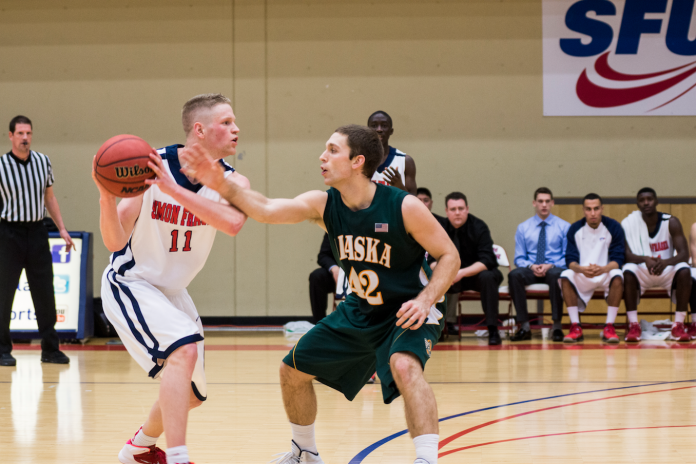
The men's basketball are focused on making the conference championship before even thinking about nationals.

A recurring theme in SFU athletics is that of a team steadily working to become championship contenders, after having to rebuild for the NCAA; the men’s basketball team can be counted among them.

However, according to head coach James Blake, they are not looking to recapture past glory, as many other SFU teams are, but are looking towards new territory —  simply to make the playoffs.

“Our journey has been different than [that of] a lot of teams at Simon Fraser; we’re a program that in 50 years has never won a conference title,” explained Blake. “So our goals are maybe not that of the swimming team that has won national titles, or of the softball team that has won national titles, our goal is to get to that conference tournament.”

The coach notes that this is not a fast process, and must be approached with patience: “What people do a lot of the time is skip steps, and we really haven’t skipped steps. We take little steps and make sure we’re competing, and evaluating our talent properly in the offseason.”

Those steps include recruiting, especially as the team only has three returning seniors this year. Blake hopes to continue to develop the Clan’s offensive game, having been outscored on average by 2.3 points per game last year.

“We [want] to bring in other players who are able to close that gap, that point differential, we had two losses last year by one point,” he said, referring to losses to Western Washington University and University of Alaska-Anchorage, who were first and second in the conference. “We’re right there, we’re two points away, and this year’s job is to close that gap.

“The emphasis in recruiting this year was that we need to shoot the ball a little bit better from the perimeter, we’re really going to speed the game up, shoot more three point shots, spread the game out even more.”

Returning seniors and team captains Sango Niang and Justin Cole will help drive this offensive shift. Niang led the team in scoring with 392 points last season, averaging 16.3 points per game, while Cole led the team in both field goals attempted and made, making 135 out of 279 attempts.

“Their primary roles this year as seniors are to be leaders, as captains, not only in scoring, but [. . .] they’ve got to do all the things in practice, in the weight room. They need to show they can [. . .] lead this young team to where we need to be, to get to that next level,” said Blake.

Rounding out the team is a sizable number of freshmen and sophomores, making for a notably younger team than last year. Joining them are a number of Division I transfers, including Hidde Vos and Michael Harper.

The team will look to improve on their conference record, in which they went 3-15 last season. Despite the low number of conference wins, they performed well outside of conference, losing only one non-conference game, excluding their exhibition games against Division I teams.

Meet the Marauders: Da Huang

0
Da Huang plays chaser for the SFU Marauders, and although he’s kind and courteous in person, he is a force to be reckoned with on the field.

When you think of quidditch, you probably think of the fictional game in Harry Potter, with magic and flying brooms — a difficult, if not impossible, game to play in reality.

Screen Shot 2014-11-06 at 4.52.30 PMBut it’s real, having been adapted into an ac sport sometimes referred to as muggle quidditch. Although it deviates slightly from the game in the books and movies — primarily in that you can’t fly and that the snitch is carried by a person, a snitch runner — it’s actually fairly faithful. Players still carry around broomsticks, for instance (even though they are clearly not used to fly).


For some, the game’s basis on Harry Potter and the whole running around carrying a broomstick between your knees thing scares them off, or they dismiss it as ‘nerdy.’

Da Huang initially had some of these reservations: “At first I saw their club days [booth] in the AQ and I thought that this might be some kind of Harry Potter fan club, because there was [. . . a] guy carrying a broom and walking around.

“I do really like Harry Potter myself, but at the beginning, to be honest, I was kind of worried about how my friends [would] look at me because it sounds a little bit nerdy.”

However, it didn’t take him long to get into the game, and see it as a legitimate sport: “After a scrimmage, at the end of practice, this idea was just wiped out of my mind, as [I thought], ‘Oh damn, I’m almost dead from that game.’ I was taken down to the ground by another bulky player, like in rugby [and] the broom I was using back then broke into two pieces.

“It may look silly at first, when you’re running around riding a broom, but later people realize how intensive and competitive it is.”

He explains, “Fifty per cent of the reason I play this sport is because I’m a Harry Potter fan, the other 50 per cent is that, as an athlete, I really enjoy competing with my teammates and other schools.

“[It’s] competitive, it requires a lot of teamwork and that’s why I like this sport.”

Da admits to some difficulty when explaining the sport to his friends, saying, “A typical conversation would be like: ‘I have a practice today,’ ‘What practice?’ ‘Quidditch,’ ‘What’s that?’ ‘I just told you last week!’ ‘Oh yeah, that Harry Potter thing,’ “You should come with me,’ ‘Alright, I’ll try [sometime] later.’”

Despite the initial challenge of encouraging his friends to try the sport, after actually watching him play, their attitudes changed. “I convinced some of them to come and watch our game against UBC in the summertime and after that they were all like, ‘Wow, that’s way more intensive than I imagined.’”

In the game itself, Da is a chaser — the quidditch equivalent of a forward. His job, more or less, is to score. He describes himself as a high energy player; he refers to his intensity on the field, saying that he “yells all the time” to help motivate the team. He explains that his teammates sometimes say that another ego comes out of him when on the field.

He fits into SFU’s balanced game plan — in contrast to that of UBC, which he alleges focuses more on size and tackling — as a more agile and sneaky scorer, who uses speed to outwit the competition and put the quaffle (the ball) in the hoop.WEB-Meet the Clan Oneline-Nurzhan Kabdrakhman

Da’s athletic interests are not limited to quidditch, though; he enjoys playing many sports, in particular soccer and basketball, and these games often seep into his quidditch play: “I found that I can use my experience from other sports [. . .] to use in quidditch.

“[For example] I use the post move from basketball in quidditch to get rid of a defender,” he explains. “The overall size of the [field] in soccer [helped me realize] that I need to be aware all the time where my teammates are, where the defenders are, where the golden snitch is.”

Although he was not one of the founding members of the SFU’s quidditch team, the SFU Marauders, he is now one of the more senior players on the team, and in a position of leadership. Looking at the team, which started only one year ago, he sees a bright future.

“We are a new club compared to other universities in North America and in Canada, such as UBC — they all have longer histories than us, but we have been improving very rapidly,” he said. “We’ve been to several tournaments and actually did not bad.

“I’m proud of my team and happy to be a part of it.”

FUN FACT:
FAVOURITE HORROR MOVIES:

Da is a fan of horror movies, both from Asia and America. He lists The Shining and Silent Hill as two of his favourite Western horror flicks, while his favourite horror movie from Asia is one he calls “The Crazy Rabbit.” He says, “It’s actually a children’s movie, but I consider it to be very horrifying.”