Home Blog Page 1108

Satellite Signals

0

Woodward’s

Last Wednesday, October 22, SFU Woodward’s hosted a panel discussion on the book, Red Skin, White Masks: Rejecting the Colonial Politics of Recognition, written by Glen Sean Coulthard, an assistant professor in the First Nations Studies Program and the Department of Political Science. According to the event description, the book challenges the “now commonplace assumption that settler-colonization can be reconciled through a process of cultural recognition and accommodation.”

Surrey

SFU Surrey hosted its 7th annual Diwali event at Surrey’s Crown Palace Banquet Hall on Tuesday, October 21. The event celebrated Indian culture and attempted to engage with the local South Asian community.Over 300 South Fraser business, government and community leaders, as well as SFU alumni, faculty, students, and staff attended the dinner.

Harbour Centre

A lecture by Brown University’s Rebecca Schneider on October 22 discussed contemporary performance-based art alongside Paleolithic cave art, exploring performance as a historical artifact. Schneider asked questions such as: How long is the live? How live are the dead? And why are these questions surfacing now?

The NDP’s childcare plan may not be easily accessible

0
The NDP hasn’t shed light on how the plan will reach out to those impoverished.

Last week, Leader of the Opposition Thomas Mulcair announced a proposal to launch a nationwide childcare program that would seek to provide affordable and quality childcare services to families across Canada. Mulcair’s announcement looked to set up what will be the NDP’s key platform issue come election time next year.

While the promise of affordable and universal childcare is an obvious boon to the Canadian economy and serves to only further gender equality, the true accessibility of this plan remains unclear.

The issue of childcare is, at its heart, a gender equality issue. Too often, families are unable to either find or pay for daycare, and too often, women are expected to assume the responsibilities of primary caretakers due to patriarchal cultural norms; thus, the government’s inaction to provide such care disproportionately burdens women.

This is of particular concern considering the staggeringly high number of women pursuing post-secondary education and poised to take on leadership roles in all industries in Canada. However, the realization of gender equality will be stagnant until systemic barriers to employment and career advancement for women can be negated by an effective childcare system.

Most importantly an effective  childcare policy would be self-sustaining. The surplus of women who would be able to enter the workforce would not only significantly grow the economy, but their income would also provide crucial tax revenue for the government.

The blind nature of such a policy will not help the most vulnerable people in our society.

In Quebec a similar childcare policy has been in place for quite some time and the outcomes have been encouraging. Economist Pierre Fortin argues that “[the] ripple effect of [women’s] employment pumped an additional $5.2 billion into the Quebec economy, boosting the province’s Gross Domestic Product by 1.7 per cent” which easily pays for the “$1.6 billion annual child-care costs” the province incurs to pay for such a plan.

One thing remains abundantly clear; the current status quo of childcare in the form of the Universal Child Care Benefit makes no economic sense. One hundred dollars per month is not nearly enough to cover the exorbitant price of childcare (which on average can surpass $1,000 per month).

The NDP’s policy will cost $5 billion dollars a year  by 2023. This policy not only subsidizes the cost of daycare to $15 a day, but also involves providing a million additional care spaces for just double that amount.

However rosy universal childcare may seem, I remain concerned that the NDP policy will, like the troubling majority of social policies, only be enjoyed by the most privileged groups in our society. The policy seems to invoke a universal language but I am doubtful that such language is appropriate given the starkly different economic realities that Canadians face.

An OECD study found that in Canada “low-income, single-parent families[. . .]pay, on average, 48 per cent of their net income” on childcare services. What has the NDP said as to how these families are to benefit under this new plan? Nothing. The waiting lists for these care spaces will give no preference to families who need such subsidized services in order to subsist.

The blind nature of such a policy will not necessarily help to ameliorate the conditions of the most vulnerable and impoverished people in our society, which is what a truly socially minded social policy ought to do. If it fails to do so, it takes its place as just another empty political gesture and we have plenty of those in Ottawa, Mr. Mulcair.

Genetic engineering takes steps towards building superhumans

3

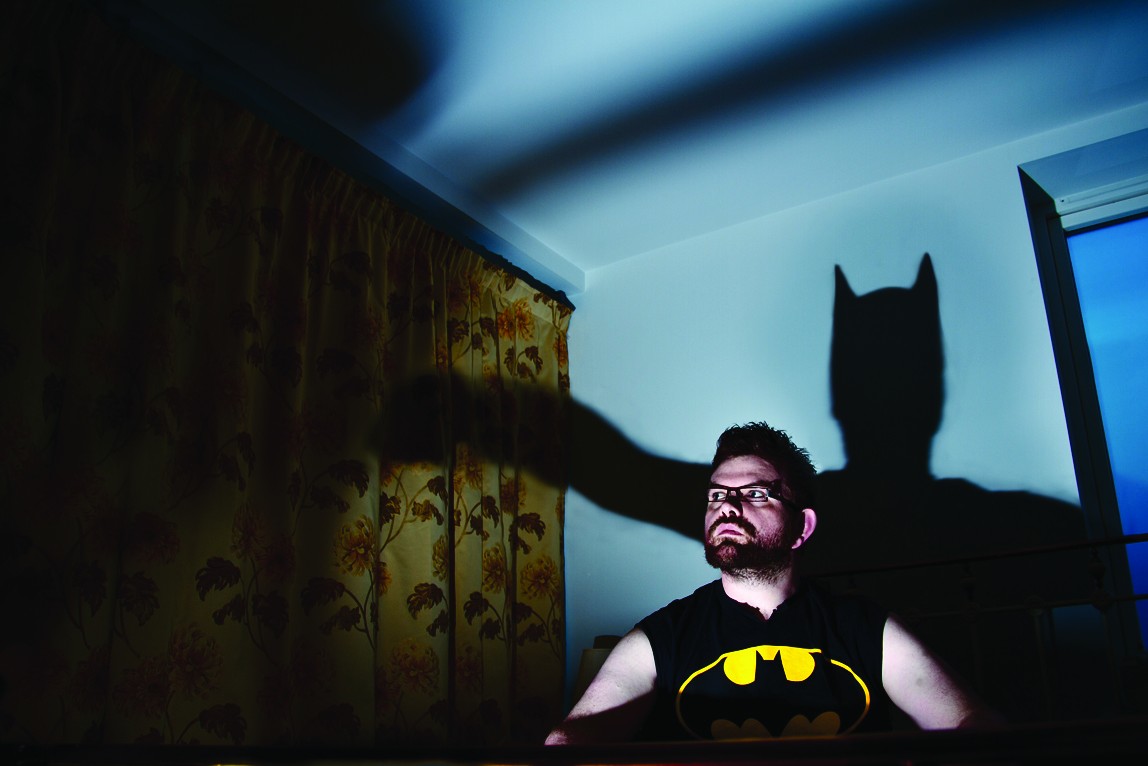
The superpowers of heroes such as Spiderman, Captain America, and the Hulk have become a frequent sight in movies and TV shows, but new technology may mean that you could see them in your day to day life, sometime in the near future.

A paper recently released by Stephen Hsu, a professor of theoretical physics at Michigan State University, asserts that by tweaking our genomes, we could make humans drastically smarter. He explained that by modifying gene variants, human intelligence could be increased to 10 times what it is now.

The paper has inspired renewed discussion in the academic community around the issue of genetic modification and how it might be used to give people ‘superhuman’ powers.

Last week, a man who had been paralyzed for two years walked again following a transplant to his spine. The treatment involved the injection of olfactory ensheathing glial cells (OEGs) into the man’s spine, which were able to create new nerve cells and repair damaged ones.

Michel Leroux, professor in SFU’s Department of Molecular Biology and Biochemistry, acknowledged the uses of stem cell technology: “It’s simply basic biological principles that multicellular animals, such as us, employ to grow from a single cell to an adult.”

However, he speculated that, “we will require 50 plus years to get closer to really understanding mechanisms at the molecular level inside our cells.”

Human engineering is not just limited to comic books anymore. John Gurdon and Shinya Yamanaka, who won the Nobel Prize in Physiology or Medicine in 2012, discovered that adult cells can be reprogrammed back into stem cells.

These stem cells can then be pushed to develop into a huge variety of adult cells: skin, bone, muscle, or even nerve.

The technique, called induction of pluripotency, has made previously impossible therapies a reality. A short list of examples includes repairing damage to the heart after a heart attack, creating new insulin producing cells for diabetic patients, and even constructing a kidney from scratch.

Human engineering is not just limited to comic books anymore.

Such advances in the use of genetic engineering are reminiscent of a ‘healing factor’ that allows superheroes like Wolverine and Deadpool to heal their injuries supernaturally fast. When asked whether reprogramming a human’s body like this would ever be possible, Leroux suggested that it represents a logistical challenge.

“The main issue there is delivery,” he said.

Currently, there are many methods for modifying cells’ behaviour, but most involve somehow getting foreign genes into the cell. There is even a ‘gene gun’ currently on the market, which fires DNA-coated gold particles into cells. Despite the innovation, physically getting DNA into many cells in a living organism is extremely difficult, at least for now.

Gene editing tools like CRISPR — clustered regularly interspaced short palindromic repeats which take advantage of natural DNA repair machinery to engineer the genome — might mean that scientists are that much closer to giving humans supernatural healing or amplifying the abilities that we already have. For instance, infants under a year old that have lost a finger tip can regenerate the finger, much like how a salamander can regenerate a lost limb.

Leroux explained that the excitement behind CRISPR is due to its incredible versatility and that “remarkably, it works in everything that’s been tried.”

However, with these powerful tools also come ethical challenges. Leroux had his own opinions on the matter. “Personally, I could say that if you know that your children will have a particular genetic disorder and you’re able to fix that, I think that’s ok,” he said. “So is that where you draw the line? You can pre-fix problems but you can’t enhance existing traits.”

For good or bad, Marvel or DC, the capabilities to engineer superhumans are already here.

SFSS AGM results allow SUB plans to continue

0
This SFSS AGM was the first to make quorum since 2008.

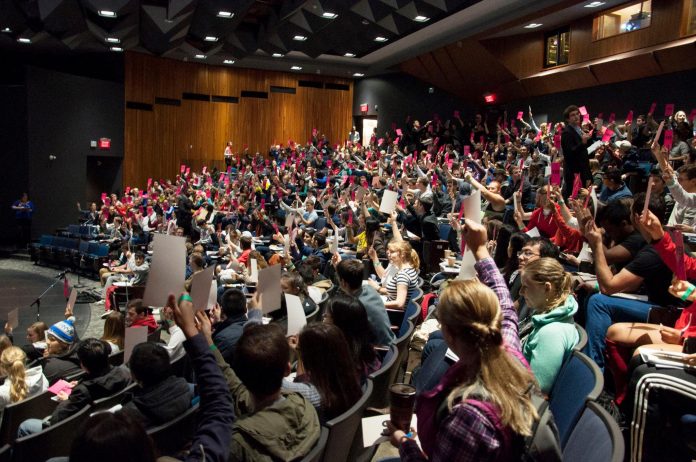
At the Simon Fraser Student Society’s (SFSS) Annual General Meeting (AGM) last Wednesday in the SFU Theatre, students voted in favour of a special resolution which will allow the society to obtain a loan for the Student Union Building (SUB).

The students also approved an addition to the by-laws that will ensure that the Build SFU levy, which will be used to pay back any loan related to the project, will not be cancelled before the loan is repaid.

The AGM was the first since 2008 to reach the necessary quorum of 250, with over 400 students present and many more lined up outside the theatre. “It’s a huge accomplishment,” Chardaye Bueckert, SFSS president, said of the turnout. “I just want to thank all the students who came out. That was really fantastic to see.”

This AGM was particularly important because, under the Society Act, the issuance of any debenture by the SFSS must be approved by its membership. If the AGM had failed to meet quorum, or if the motions hadn’t passed, the SFSS would have had to hold a Special General Meeting (SGM) in January to ask the same questions of the membership, delaying the construction of the SUB significantly.

Students had the opportunity to voice their opinions about the Build SFU special resolution and the addition to the by-laws. Most of the students who spoke asked for clarification regarding the student levy to be used to pay for the building, as well as how space will be allocated inside of the building.

Clayton Gray, a fourth year criminology student, raised concerns that the finished SUB will be owned by SFU and not the SFSS. “I’d just like to make sure that everybody here is aware that, if it’s analogous to taking on a mortgage, then we’re taking on a mortgage for the university,” he said.

After the discussions, students voted in favour of the special resolution with 328 votes in favour and 26 in opposition. They also voted in favour of the addition to the by-laws with 283 votes in favour and nine in opposition.

The AGM addressed other regular business, including the receipt of reports from the board of directors, VP finance Adam Potvin on the society’s finances, and the auditor, as well as the appointment the same auditor for the following year.

Former SFSS president, Jeff McCann, the proud father of the SUB and Stadium projects which began in 2012, had this to say: “The AGM turnout and margin of yes votes cast is an incredible demonstration of support for Build SFU. Credit to the current board and Marc Fontaine for their efforts and success at this pivotal moment in SFU history.”

Smiling, Bueckert summed up how she felt the AGM went: “We’ve set a high bar, and we’re going to need a bigger room for next year.”

No one should dictate how I dress on Halloween

0
To take on the identity of another person or character should be fun and creative.

Halloween, the best holiday in existence, is officially upon us. As children, we would dress up, shout at people’s doors, and demand chocolate from strangers. Now that we’re older, dressing up for Halloween has changed ever so slightly.

For many who wish to dress up, Halloween costumes are a source of body stress. There is so much pressure to have the perfect costume, and to have the perfect body to execute it. ‘Body policing’ is prevalent during Halloween, and can be very destructive to a person’s well being.

Surprisingly, Urban Dictionary provides the best definition of body policing, calling it “[t]he practice of policing one’s physical appearance because it does not conform to social norms, or is not deemed appropriate for a particular setting.” Body policing happens constantly, especially to women.

My first experience with body discrimination occurred while I searched for my current Ginger Spice costume. Without the tightest mini-skirt, the costume would not be perfect, and the search was much more difficult than I had anticipated. After searching two malls worth of stores, I still hadn’t found what I was looking for.

My stress-levels were already a little too high, when I received a comment from a random stranger with regards to my body. The moment was quick and I smiled, nodded, then swore not so quietly under my breath.

Thank you random woman for implying that I am too fat to pull off my favourite Spice Girl.

When a stranger tells someone that they are a little too chunky to be Ginger Spice, their implications are clear. Thank you, random woman, for implying that I am too fat to pull off my favourite Spice Girl. Thank you for ruining this costume for me. I have witnessed my body change over time, and I know how much chocolate I have consumed in my life. But, this does not give anyone the right to tell me how my body looks, or what parts of it I can show off.

This practice is prevalent across today’s culture, and the fact that beauty is so narrowly defined does not help matters. To take on the identity of another person or character should be fun and creative. But, depending on the costume, Halloween has consistently shifted ‘dress-up’ from fun to unnecessarily critical.

Nothing beneficial comes from the expression of unproductive and abusive opinions. With the potential to cause mental and even physical illness, comments such as this are an enormous issue for anyone who does not fit into mainstream ideals of beauty.

My body is not on display for random strangers, or even the people I love, to comment on. I understand what is right for my body and others should not feel so entitled to their opinions on it. While everyone has personal preferences as to what they find attractive, these preferences should not be forced upon individuals as the ‘proper’ way to be.

Sooner or later, these ideals are internalized and become destructive. People become damaged, which causes them to monitor or change their beliefs about who they are. Halloween is about dressing up, being silly, and having fun, and isn’t about changing who we are and what we look like to appease others. I am confident with who I am, so please, let me let me rock my mini mini-skirt without feeling guilty about it.

Students catch z’s in Build SFU nap zone

0
Although Marc Fontaine was not present to read bedtime stories, students were able to stop in for quick naps throughout the day.

Build SFU offered students the opportunity to take a nap on couches, hammocks, and actual beds in a makeshift ‘nap zone,’ which was set up in the Forum Chambers during the afternoon of October 20.

Entitled Build SFU’s Nap Zone, the event was held in order to give students “a taste of what’s to come in 2017.”

The Student Union Building, slated to finish construction in 2017, will contain a so-called ‘napping room.’ Build SFU has regularly referenced the planned space in their project documentation and promotional materials.

“Students are one of the most sleep deprived demographics of the population,” said Ross MacMillan, consultation coordinator for Build SFU. “Part of our mandate for the [SUB] is to facilitate overall health and wellness, and students have been very interested in the idea of the nap room.

“It was not us that proposed [the nap room]; it was SFU students. They have been bringing it up during consultations ever since we started the project,” MacMillan said.

Adam Potvin, VP finance for the SFSS, acknowledged that the event was designed to promote the planned SUB space, but added that it was also a mental health initiative.

“The idea had stemmed from an initiative about getting enough sleep,” Potvin said. “We ended up collaborating with a bunch of people like HiFIVE and Health and Counselling. It was appropriate to pursue something, and what better way to do so than to create a nap room.”

The napping space in the Forum Chambers during the event was unlit, with a projector displaying visuals of oceans on the wall. Relaxing music played quietly in an otherwise silent room. Build SFU personnel were on scene to manage the nap-takers.

Although the room was configured as such for this event, the SUB nap room will be a little different. “The nap room in the SUB will have furniture that is comfortable, but [it] will not be beds,” Marc Fontaine, general manager of the project, said. “They will be more like comfortable couches or day beds.”

Despite the differences, Fontaine emphasized that the event reflected the spirit of the future napping space.

“Today’s event serves two purposes. First, to indicate that there will be a napping space in the SUB. Second [. . .] to promote the fact that sleeping and proper rest is important for wellness,” said Fontaine. “The space in the SUB will be a bit different from today, but the motivation is the same.”

Despite indications that the event was well received, some concerns were raised by students. Amelia Hill, a third year political science student, brought up the issue of hygiene.

“I’m concerned that it will not be sanitized enough [. . .] People drool, they smell, and they don’t shower. It could be gross,” said Hill. “It could be wonderful; it has potential to be really great. But it has got to be clean.”

On these concerns, Fontaine responded, “Just like lounges on campus are cleaned regularly, the nap room will be maintained by the custodial staff. I cannot comment on the details since the project is still under development, but it is something we are keeping in mind.

“The space will not have sheets or pillows, which will help with this. Beyond hygiene, we are also determining how to promote safety. These
decisions haven’t been made yet, but we know that they are really
important decisions,” Fontaine concluded.

Genetic engineering takes steps towards building superhumans

0
The enhanced abilities of beloved superheroes could become a reality.

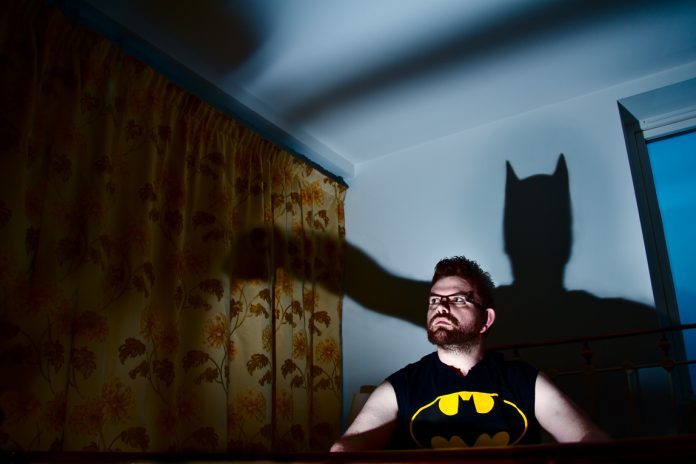
The superpowers of heroes such as Spiderman, Captain America, and the Hulk have become a frequent sight in movies and TV shows, but new technology may mean that you could see them in your day to day life, sometime in the near future.

A paper recently released by Stephen Hsu, a professor of theoretical physics at Michigan State University, asserts that by tweaking our genomes, we could make humans drastically smarter. He explained that by modifying gene variants, human intelligence could be increased to 10 times what it is now.

The paper has inspired renewed discussion in the academic community around the issue of genetic modification and how it might be used to give people ‘superhuman’ powers.

Last week, a man who had been paralyzed for two years walked again following a transplant to his spine. The treatment involved the injection of olfactory ensheathing glial cells (OEGs) into the man’s spine, which were able to create new nerve cells and repair damaged ones.

Michel Leroux, professor in SFU’s Department of Molecular Biology and Biochemistry, acknowledged the uses of stem cell technology: “It’s simply basic biological principles that multicellular animals, such as us, employ to grow from a single cell to an adult.”

However, he speculated that, “we will require 50 plus years to get closer to really understanding mechanisms at the molecular level inside our cells.”

Human engineering is not just limited to comic books anymore. John Gurdon and Shinya Yamanaka, who won the Nobel Prize in Physiology or Medicine in 2012, discovered that adult cells can be reprogrammed back into stem cells.

These stem cells can then be pushed to develop into a huge variety of adult cells: skin, bone, muscle, or even nerve.

The technique, called induction of pluripotency, has made previously impossible therapies a reality. A short list of examples includes repairing damage to the heart after a heart attack, creating new insulin producing cells for diabetic patients, and even constructing a kidney from scratch.

Such advances in the use of genetic engineering are reminiscent of a ‘healing factor’ that allows superheroes like Wolverine and Deadpool to heal their injuries supernaturally fast. When asked whether reprogramming a human’s body like this would ever be possible, Leroux suggested that it represents a logistical challenge.

“The main issue there is delivery,” he said.

Currently, there are many methods for modifying cells’ behaviour, but most involve somehow getting foreign genes into the cell. There is even a ‘gene gun’ currently on the market, which fires DNA-coated gold particles into cells. Despite the innovation, physically getting DNA into many cells in a living organism is extremely difficult, at least for now.

Gene editing tools like CRISPR — clustered regularly interspaced short palindromic repeats which take advantage of natural DNA repair machinery to engineer the genome — might mean that scientists are that much closer to giving humans supernatural healing or amplifying the abilities that we already have. For instance, infants under a year old that have lost a finger tip can regenerate the finger, much like how a salamander can regenerate a lost limb.

Leroux explained that the excitement behind CRISPR is due to its incredible versatility and that “remarkably, it works in everything that’s been tried.”

However, with these powerful tools also come ethical challenges. Leroux had his own opinions on the matter. “Personally, I could say that if you know that your children will have a particular genetic disorder and you’re able to fix that, I think that’s ok,” he said. “So is that where you draw the line? You can pre-fix problems but you can’t enhance existing traits.”

For good or bad, Marvel or DC, the capabilities to engineer superhumans are already here.

Bahamas play to packed house at The Vogue

0

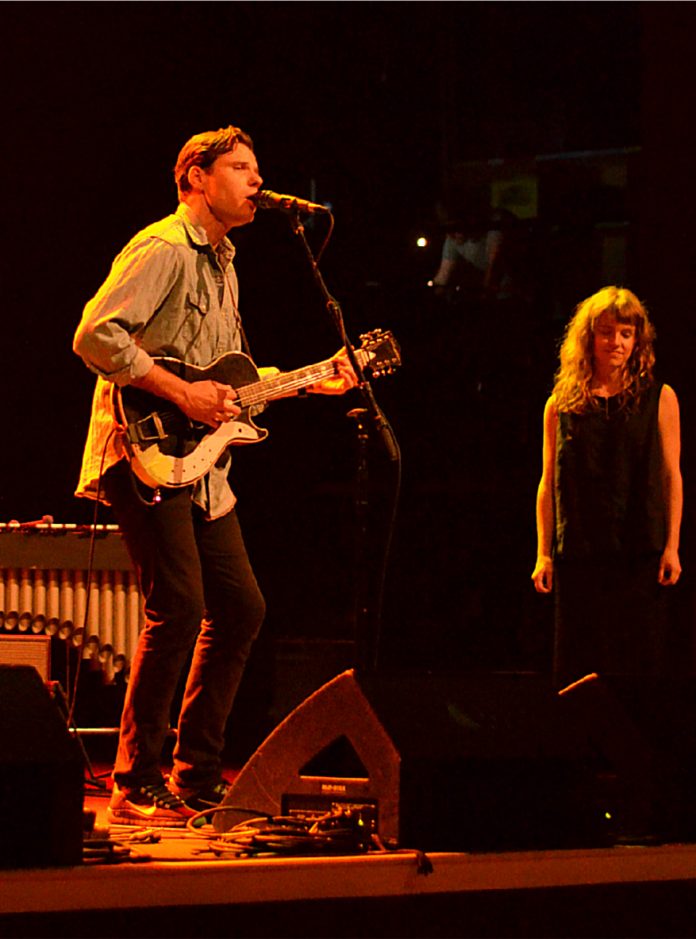
It still surprises me how many people have never heard of Bahamas. This Toronto musician, whose real name is Afie Jurvanen, put out his first record in 2008, and 2012’s Barchords included a few popular, radio-friendly tracks. Listening to his music is like putting on clothes that just came out of the dryer or taking that first long-awaited sip of your latte. Along with his band, his clear, crisp sounds filled The Vogue with warmth, and Jurvanen’s calmness washed over the crowd like a soft blanket.

The Weather Station opened the show with her similarly calming folk rock, and she also joined Bahamas on a few songs later in the show. On the bare black stage with only their instruments, the music was the focus, and it spoke for itself. Joined by Carleigh Aikins and Felicity Williams, the vocal harmonies that were created were beautifully soothing.  Jurvanen’s dry, witty sense of humour was also refreshing as he humbly chatted to the audience between songs.

As the first chords of popular songs such as “Lost in the Light” and “Caught Me Thinking” from Barchords were heard, a flurry of applause and cheers rose from the crowd. Bahamas also played songs from the 2014 album, Bahamas is Alfie, and his first record, Pink Strat. The pink strat guitar also made an appearance as Jurvanen explained that he wrote his first album on it and only recently began playing it again.

The atmosphere in The Vogue was one of quiet contemplation and respect, as we soaked in the music. As Afie sang “That’s ok, that’s alright, I’m alive,” it struck me that that’s exactly how his music makes you feel.


TEDxVancouver has its biggest year yet

0

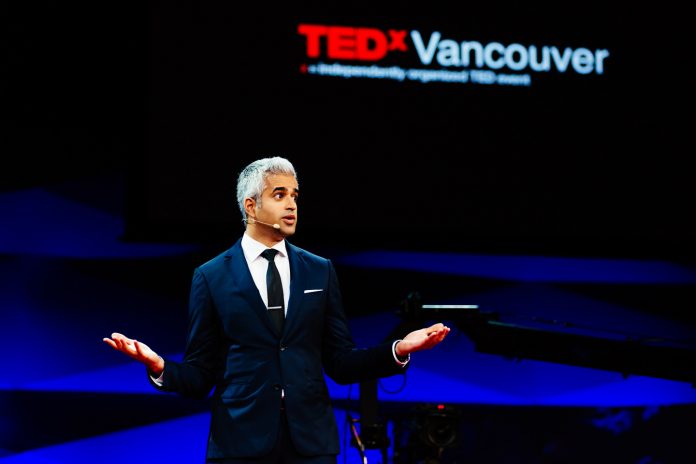
This year’s TEDxVancouver conference, with its theme of Tilt, aimed to tilt perspectives on all kinds of ideas. Even the exotic afternoon snacks of camel, crocodile, kangaroo, and mealworm tacos made the crowd think about food in a new way. Taking over the Queen Elizabeth Theatre with art, ideas, and innovation, TEDxVancouver was a unique experience that offered the audience plenty of food for thought.

Host Riaz Meghji introduced each speaker with entertaining anecdotes about their “most important conversation” and filled the space between speakers and entertainers with thoughtful comments to keep audiences engaged. Adding flare to the event were many performers such as the Kingsgate Chorus, Vitaly the magician, and an impressive breakdance group. Also filling in the spaces between speakers and during stage resetting were some inspiring videos from the recent TED conference held in Vancouver.

The first session of the day dealt with tradition, the second and third were simply titled Tilt, and the final session of speakers focused on triumph. Covering topics from science, to art, to sex, to solving the identity of Jack the Ripper, these speakers each had unique perspectives and ideas to share.

Dr. Terry Pearson, a professor in the Department of Biochemistry and Microbiology at the University of Victoria discussed his research in biomarkers. His talk, “Your World in a Drop of Blood” was an interesting look at the way we can predict disease and imbalances in health through systematic analysis of drops of blood. As he explained, some people may fall within the ‘normal’ range for many health indicators, but not for the range of their own body. With more personalized data and diagnostic testing, we would be able to see when small changes occur and detect diseases such as cancer much sooner.

Staying in the realm of science, but also melding it with the world of music, Dr. Jennifer Gardy, senior scientist in molecular epidemiology at the British Columbia Centre for Disease Control and TV host on The Nature of Things and Daily Planet, gave a genetics lesson with cellist Peter Gregson. Gregson is interested in data sonification — the process of turning data such as a genetic code into music. Their discussion of the idea that the origins of culture and creativity are written in our genetic code was fascinating.

Jeff Mudgett is the great great grandson of Dr. Herman Webster Mudgett, also known as H.H. Holmes. He was a man of pure evil who murdered countless victims while operating the notorious Murder Castle in Chicago during the 1893 World’s Fair. Mudgett has made it his life’s work to uncover the truth behind this man’s actions and he is on a quest to prove that H. H. Holmes was Jack the Ripper. He presented a compelling case with many pieces of evidence, and the audience responded to an online poll to indicate whether they found him guilty. This instant polling of the crowd was used during a few of the talks, and it was a fun way to engage the auidence and get them involved in the discussion.

Lesley Kim’s inspirational talk, “Gaining Vision,” shared her experience over the past year of having a miscarriage, finally having the courage to go out and celebrate Halloween with her friends, and losing her eye to a firework. Her perspective on forgiveness, generosity, and self image were inspirational and moving. Similarly, Treana Peake’s talk about her Obakki Foundation, and a childhood act of kindness that has affected her to this day and shaped her idea of the circle of giving was a very powerful story.

One of the more provocative talks of the day was sexologist Jessica O’Reilly’s discussion of monogamy, and her idea of a more modern form she’s calling ‘monogamish.’ She argues that in order for marriages to last and stay happy, it’s important to open up the idea of monogamy and allow for a spectrum of indulgences from flirting to swinging. If we can redesign and innovate marriage, she thinks we can save this institution in crisis. Her talk was a crowd favourite.

Another optimistic talk was about how to make our cities happier through design. Charles Montgomery, author of Happy City, spoke about the design of our cities and how it affects our moods and behaviours. Living in the auto-dependent suburbs of a large city makes citizens less likely to vote, participate in their communities, or be social with neighbours. Green space and lively, active storefronts are also key in creating happy areas for people to live and work. Highlighting the importance of being connected to others and working together in order to solve our world’s problems, Montgomery’s talk was a resounding example of why the design of our physical world is so important.

In the Triumph session, athlete Jay Demerit told his story of perseverance. After not making it into a professional soccer league in the US, he moved to England and worked his way up to playing for the premier league and his national team during the 2010 World Cup. He has recently retired from his term as captain of the Vancouver Whitecaps FC, and his talk tilted the perspective of saving for a rainy day to preparing for your day in the sun.

The final speaker of the day was Chip Wilson, who was interviewed by TEDxVancouver curator Sharad Kharé. Wilson talked about his entrepreneurial experiences with Westbeach and Lululemon. His philanthropic projects through his charity, imagine1day, are also quite interesting, and he seems content to focus on these ventures while mentoring his wife and son with their new clothing company, Kit and Ace.

And just when we thought the event was over, comedian Graham Clark strolled onto the stage to leave us roaring with laughter; it was the perfect end to a day of mind-bending new ideas.

 

Fun, colourful visuals animate The Book of Life

0

Death is not the first subject that comes to mind for an animated film, yet Jorge R. Gutierrez’s adventure-comedy, The Book of Life, presents the dead (and also the living) in a manner that is appropriate and fun for families to watch.

The film’s fascination with death makes sense in its Mexican setting, where people honour their dead ancestors on a holiday called the Day of the Dead. The movie opens on the Day of the Dead; the two rulers of the dead — La Muerte (Kate del Castillo) and Xibalba (Ron Perlman) — are wagering as to which of the two leading male characters will marry Maria (Zoe Saldana). The two young men in question are Manolo (Diego Luna), who wishes to become a musician rather than follow the traditional path in his family of becoming a bullfighter, and Joaquin (Channing Tatum), a dashing hero with a cache of medals.

Maria falls for Manolo, but the plot takes a turn when Xibalba cunningly gets Manolo killed in order to win the bet, prompting Manolo’s journey through the Land of the Remembered and the Land of the Forgotten. In the living world, Maria faces the hard choice of whether or not to marry Joaquin, who would protect their town from a group of bandits threatening to invade.

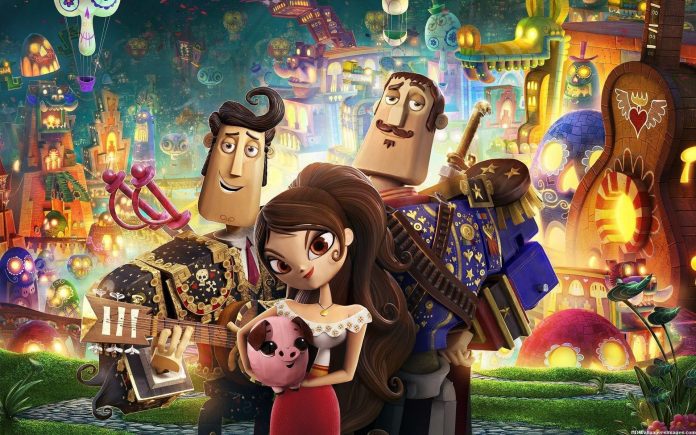
One of the most impressive things about the film is its visual presentation. Every character or object in each scene is drawn with such incredible detail and vibrant colours that it truly looks as though there is a Mexican fiesta taking place on the screen.

The depiction of the world of the dead is particularly noteworthy. While the Land of the Remembered is even more colourful and elaborate than the world of the living, the Land of the Forgotten provides a striking contrast with its grey colour scheme and lack of detail.

The lead characters, specifically Manolo and Maria, are unlike the archetypes historically presented in animated films. Maria’s character is refreshing in its disruption of gender stereotypes. She is not a damsel in distress, but is often shown to be even more courageous and physically adept at fighting than the male characters. Manolo is not a macho hero; he wishes to win the heroine’s heart through music rather than demonstrations of strength.

That is not to say that there are no problems with the film. The American accents of some characters sound a bit jarring in the Mexican setting. The plot also seems to be filled with too many conflicts, such as the question of who will win Maria’s heart, Manolo’s journey through the afterlife, Manolo’s desire to choose his own life path, and the threat of invasion lingering over the town. Children, who make up a significant portion of the film’s audience, might have a difficult time following the film’s storyline.

Despite these issues, The Book of Life’s focus on Mexican folklore and its colourful visual presentation offer adults and children something unique and enjoyable to watch on Halloween.