Home Blog Page 1059

Having the courage to embrace my vulnerability

0
Image credit: Brandon Hillier

During a recent youth leadership retreat with my church, I had the opportunity to participate in a team-building exercise that each person take turns sitting on a stool as the rest of the group would say words of encouragement to that person. When my time came around, I sat on the stool and nervously jiggled my foot.

It can be nerve-wracking to be in the spotlight and listen to what others’ impressions of you are. And while I knew this exercise was meant to be encouraging, I was still surprised and deeply moved to hear the warm, understanding responses by my friends and mentors. While I left that stool feeling loved, affirmed, and grateful, there was a part of me that thought perhaps it wasn’t all true.

One thing that different people had mentioned was that they admired my ‘vulnerability.’ But despite the fact it had been described as a positive thing associated with strength and genuity, I couldn’t help but feel like a hypocrite. Because although I truly believe vulnerability is essential for the relationships we have with others, I usually place myself in an invulnerable state.

In a society where emotion can be simplified to an emoji, I often succumb to the temptation to escape one of life’s greatest experiences: to have deep and meaningful relationships. Whether it be at work or school, the fear of getting hurt or rejected has influenced my many excuses to not put my relationships first.

In different ways, I’ve tried to outsmart vulnerability. When I first began having suicidal thoughts, I was so overwhelmed by guilt that I began to open up to people I didn’t know very well. I took comfort in confiding in someone –– relieving a bit of the shame –– and because I knew the person didn’t know me well enough to keep me accountable, I could continue living with my secret thereafter.

The fear of getting hurt has influenced my many excuses to not put my relationships first.

Putting yourself in a vulnerable position is hard, and even harder with the people that are closest to you. It makes you susceptible to pain, rejection, loneliness; my mind races to all the times I’ve felt these feelings, and all the ways I tried to numb them. But on the other hand, vulnerability can lead to positive feelings like intimacy, joy, empathy, belonging, and many more.

It can be daunting to reveal those parts of myself that I think are too gritty or too raw, and it takes courage to leave your heart so exposed. But in the end, I have more often than not been met with the kindness and support from my closest friends and family, as well as counselors and mentors within my church community. They keep me accountable, and likewise, their vulnerability with me inspires me to do the same for others; sharing my own burdens, so I can share the burdens of others.

Now, as a youth leader, I get the chance to mentor and develop relationships with the teens at my church. I try my best to be vulnerable and open in who I am and what I do in my life, so they know it is safe for them to do so as well, and that they are not alone in their struggle.

Fostering a culture of vulnerability and openness takes a lot of work, but the fruits of a strong community based on intentional relationship definitely outweigh the labour.
Humans are wiping out the caribou, not wolves

0
Photo courtesy of Wikimedia Commons

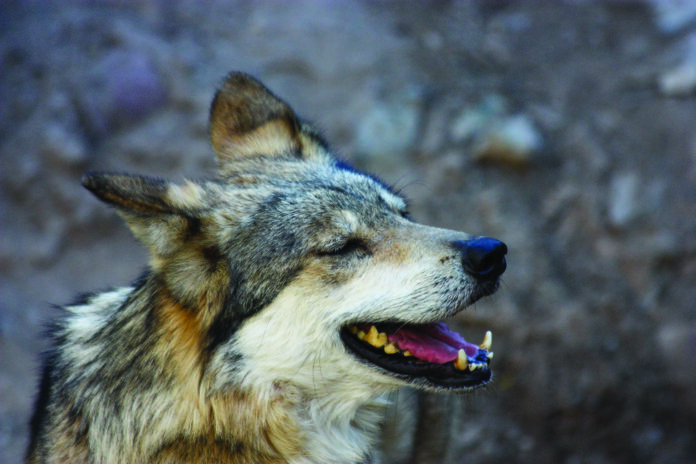
A five-year wolf cull is currently taking place in British Columbia, with approximately 180 wolves being shot from helicopters this year alone. The BC government is arguing that this is a necessary evil needed to enable the recovery of the woodland caribou population. I see it as a temporary and gruesome solution that won’t solve their problems in the long run.

There is certainly a problem with increased wolf populations in BC. As Chief Roland Wilson of the West Moberly First Nation told CBC News, “A typical pack would run between six to 10 wolves. We’ve had reports of 35 [wolves] up there. And they have to eat.” However, we must remember that the reason the populations grew to be so large in the first place is our fault.

With increased rates of deforestation resulting in boreal forest habitat fragmentation there has been an increase in wide open spaces. These swathes of land left by clearcutting have subsequently enabled a boom in moose and deer populations. Their thriving has enabled an increase in wolf populations that, in turn, target the threatened caribou. Wolves are extremely intelligent animals, and have learned to use the roads and pipelines to access caribou populations in the woods.

The same deforestation and habitat degradation that enabled the increase in wolf populations has been devastating for the caribou. The woodland caribou, Rangifer tarandus, do not migrate long distances with the changing seasons, and instead remain in the forest all year round.

The government’s priority of fiscal gains over conservation efforts is clear.

To thrive they require wide areas of undisturbed boreal forest; in particular, the forest needs to have had time to accumulate the amount of ground lichen to sustain the populations through winter months and diverse varieties of flora in the summer. Furthermore, there must be an appropriate number of predators that won’t threaten their overall population sizes.

A 12-year study led by Dave Hervieux, a biologist at the Alberta Environment and Sustainable Resource Development ministry, found that the wolf control program stabilized the caribou populations but didn’t lead to a significant increase. He concluded that without predator management the caribou populations would be finished, but that it needs to be done with effective habitat management and long-term planning.

The government does plan on decreasing the impact on caribou habitat. “All economic activity will be done with a mind to caribou,” assistant deputy minister Tom Ethier told CBC News. “We’re focused on having a light footprint in that area.”

However, it has been argued by some that these efforts will do little to counter the habitat loss that has already taken place, for it would take decades of dedicated conservation efforts.

Frankly, I am not very optimistic about that taking place. It is not as if the repercussions of habitat fragmentation and degradation were a complete surprise. It was understood that there would be negative consequences for the caribou, and yet the government went ahead with its invasive projects anyway. The ultimate priority of fiscal gains over conservation efforts is clear, and that trend hasn’t shown any promise of stopping.

Dan MacNulty, a wolf biologist at Utah State University in Logan, accurately laid out this situation’s ethical quandary to Nature: “What is better, killing off these wolves or watching these caribou blink out because of our appetite for cheap oil and gas?”

We shouldn’t lie to ourselves and argue that the wolves are the menace that is going to wipe out the caribou population; it has been us all along. Humans are not the caribou’s saviors. Humans are their foe.

BC’s ‘balanced budget’ is costing ordinary citizens

0
Photo credit: Images Money

While BC residents deal with exorbitantly high living costs and public services that lag behind the rest of Canada, the new provincial budget recently tabled by the Liberal majority shows a clear lack of understanding of current needs for improvements to funding in British Columbia. Premier Christy Clark remains obsessed with balancing the province’s books at the expense of ordinary British Columbians.

Instead of putting its $879 million surplus to make desperately-needed increases to areas like education or poverty reduction, the province is paying off its ballooning debt — BC’s total debt is predicted increase from $64 billion to over $70 billion in the next two years.

With natural resource industries in Canada suffering, returns from capital investments, made by taking out loans, may not yield sufficient returns. It would be a naive to label the budget as strong financial stewardship on the government’s part: they simply have not been responsible at managing their debt.

In light of the upcoming transit referendum, this budget is even more erroneous. Lower Mainland residents will be taxed even more to pay for a service the government has now shown itself capable of paying for. Instead of applying a budget surplus to meet the growing need for better transit, those who want improvements from TransLink will have to pay out of pocket.

Daycare costs have priced many families out of receiving affordable childcare and yet, unlike Quebec, the province has no plan to take action on this epidemic problem. This is despite the fact that this lack of childcare might be costing BC business over $600 million annually.

The province has, since 2008, cut down its public services by 25 per cent, and this readily explains why the Liberals have been so ‘effective’ at producing what could best be described as a faux surplus. In fact, while our services have decreased, the cost to regular British Columbians continues to climb: with the new budget, MSP premiums will rise by four per cent, BC Hydro premiums will increase by six per cent, and there will be increases in fees for using transport infrastructure like ferries as well as ICBC premiums.

It would be a naive to label the budget as strong financial stewardship.

Middle- and low-income earners in BC who rely on these services and must grapple with high living costs will no doubt be hit hard by this increase, but the budget ignores their needs. Instead, the government has chosen to end a temporary tax hike on high-income earners, without any such breaks for lower-income earners. British Columbia is currently the only province without any plan to reduce poverty.

What would Premier Clark say to the many impoverished children who live in BC, barely subsisting on the government’s measly social assistance payments (which have been frozen at the same rate for seven years now)? Chad, Afghanistan, and the Central African Republic are all countries with a life expectancy rate higher than the life expectancy of homeless people in BC, who, according to CBC, on average die between the ages of 40 and 49.

How will Premier Clark defend her budget to these individuals, who ought to matter as much in the political process as anyone else?

It is clear that to the BC Liberals, the homeless, the impoverished, and even the middle class are not individuals worthy of benefits, tax breaks, or special consideration in the political process. With even the economic benefits of their budget remaining dubious at best, it remains unclear why the Liberals continue on this path. If it is to persuade the wealthiest British Columbians to support them come election time, then it will be the obligation of ordinary citizens to show the government that we matter too.

Lorne Davies, founding SFU athletic director, dies at 84

0
Photo courtesy of SFU Athletics

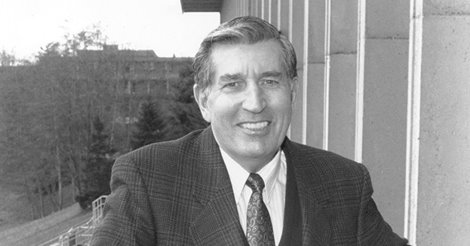
Lorne Davies, SFU’s first athletic director and inaugural football coach, passed away last night in St. Paul’s hospital from illness related to his heart and kidneys.

“Lorne meant everything to SFU athletics — it was his life’s work,” said Milton Richards, SFU’s senior director of athletics and recreation in a statement by SFU Athletics. “We will forever carry his spirit in our hearts every time our student athletes put on the Clan uniform to enter competition.

Davies was picked to head SFU’s athletics program during the school’s inaugural year by chancellor Gordon Shrum, a position he held for 30 years until 1995. Davies was instrumental in making SFU the first Canadian university in the NAIA, which allowed Canadian athletes to stay in Canada but compete against American competition. It also enabled the school to hire full-time coaches and offer athletics scholarships at a time when Canadian universities did not typically allow it.

Davies also chose the original Clan colours — blue, red, and white — and said they represented loyalty, courage, and honesty, respectfully. “Our crest will always be a tribute to Lorne, his values, and his vision,” commented Richards.

As head football coach, Davies led the SFU football team for its first eight years and achieved a 34–21–1 record and .616 winning percentage.

He also spent six years as a special assistant coach to the BC Lions.

Davies was to be recognized in April with the SFU Distinguished Community Leadership Award, which recognizes individuals for distinguished community service and impact on the community.

Davies is survived by his wife of over 60 years, June, and his two sons, Lorne Jr. and Glyn.

Satellite Signals

0
Image credit: Eleanor Qu

Woodward’s

To raise awareness of First Nations culture and history, “Validating 500 Years of First Nation History” came to the Talking Stick Festival held at SFU’s Goldcorp Center for the Arts on February 22. The unique, experimental-learning theatre piece was created by Métis artist Suzanne Keeptwo. This unconventional production required each audience member, or “participant,” to bring a blanket to the show in order to take part in the story.

Surrey

Designed to give SFU pharmacist-hopefuls more information about how they can build their career in Canada, the BC Pharmacy Association and Skills Connect for Immigrants Program held an info night at SFU’s Surrey Campus on February 24. In addition to presentations from distinguished speakers in the pharmacy industry, the event provided SFU students with an opportunity to network with representatives from local pharmacies and hospitals.

Harbour Centre

What is the true nature of the United Nation’s Security Council? Paul Heinbecker, former Canadian Ambassador and Permanent Representative to the United Nations, shed light on the inner workings of Canada’s role in the Security Council in a lecture, entitled “Canada and the Security Council: Good Times and Bad.” SFU’s School for International Studies and the Canadian International Council presented the public lecture on February 19 at Harbour Centre.

Mountain Shadow Pub to close its doors

0
The Shadow has been a hotspot for SFU students and alumni for the past 31 years. - Brandon Hillier
The Shadow has been a hotspot for SFU students and alumni for the past 31 years. – Brandon Hillier

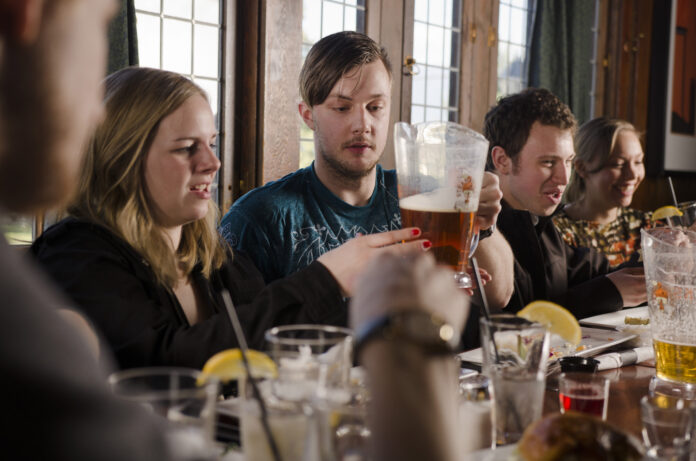
On March 28, SFU students’ local haunt, the Mountain Shadow Pub, will close its heavy wooden double doors for the last time.

A frequent favourite of SFU students and the North Burnaby community since its establishment on June 23, 1984, the pub — fondly referred to as “the Shadow” — no longer fits into its neighbourhood.

Just a block away from the Hastings at Duthie bus stop, the Shadow was intended to be a part of the commercial corridor that would connect Hastings Street to SFU’s flagship campus.

According to the Shadow’s current owner, Michael Anastasi, the fact that the pub’s location ended up being a highly residential area was “the demise of the Mountain Shadow.”

Anastasi, who has owned the Shadow for over 10 years, said that this ‘demise’ has been a slow process. “The area grew residentially and the pub grew as well, but when the pub grew it caused many complaints by neighbours,” he explained.

Anastasi went on to say that the City of Burnaby, local police, and even SFU Security were involved in incidents of complaints on many occasions.

“If we would have a band [. . . or] a DJ, even though we bolted all the windows shut and pretty much made it soundproof, the neighbours would still call the police,” said Anastasi.

These complaints often resulted in the pub being fined, which lead Anastasi to conclude that the pub was no longer viable in its current location.

“We met with the City of Burnaby, all the councillors and the mayor, and tried to work out a deal,” said Anastasi. “Their only solution was moving the pub to a commercial location, meaning Hastings. Meaning somewhere else.”

Upon its closure, the pub will be demolished and the lot used to build condos. However, Anastasi will continue to hold the pub license, and predicted that the Shadow may be reincarnated at a different location in Burnaby in the next couple of years.

When asked if he would like the new pub to maintain a connection with SFU, Anastasi responded, “Of course that would be ideal. I think pretty much everywhere in North Burnaby is accessible to SFU, so that’s the priority, for sure.”

Colin Sharp, an SFU alumnus and former Residence Orientation Leader (ROL), recalls that the Shadow was an integral part of an annual residence tradition.

“As an [ROL], you are required to stay sober during the multiple days of training and multiple days of actual orientation,” recounted Sharp. “You were considered an ROL until Sunday at 5:00 p.m. Every year, by about 5:20 p.m., the Mountain Shadow was full of us.”

The closure of the pub doesn’t only mark the end of an era for SFU students, but for the wider community as well. In the ’80s, the Shadow was a favourite haunt of Canucks players. Anastasi explained, “This is where they would come every Saturday or a couple times a week to hang out after games.”

He continued, “They didn’t go downtown. They came to the Mountain Shadow.”

Anastasi said that the number of patrons and former patrons of the pub who have reached out since hearing of its imminent closure has been overwhelming.

Those patrons are also eager to get their hands on a physical piece of the pub’s history, coveting everything from the iconic stained glass windows, to the original wooden furniture, to the signed, game-worn Canucks jerseys that line the walls. The Shadow will be holding an auction from April 1–4 to allow people to bid for their favourite pieces.

“There are millions of alumni from SFU who are really sad, and they’re coming on a weekly, daily basis right now to say farewell,” said Anastasi.

“It’s going to be sorely missed.”

Students tackle organ transplant question

0
KidneyBuzz.com

Human organ transplant

Would you donate your organs? Should you be able to choose where they go after you die? These tough questions and others were discussed at a talk given earlier this month by BC Transplant at SFU, coordinated by the SFU Health Ethics Club.

Held in Blusson Hall on Burnaby campus, the event featured speakers that brought up the benefits and also the issues and concerns around organ transplantation.

One of the biggest logistical issues facing organ transplantation is the limited supply of donor organs. Longer life spans and lower accidental death rates mean that, as the population ages, the need for organs may far outstrip supply in the coming years.

In its most recent general report, the Canadian Organ Replacement Register states that there were just over 3,400 patients on the kidney transplant waiting list in 2012.

BC residents can register on the BC transplant website to opt to donate their organs when they die. The organ donor registration form includes options to allow only certain organs to be used, as well as an option to opt out of donation altogether. Currently, the most commonly transplanted organ is the kidney, and it is consequently the organ in highest demand.t

Along with the process of organ donation, BC transplant coordinators explained the complications that surround transplantation. The buying and selling of organs on the black market creates an environment where those of lower income may put themselves into dangerous situations in order to make money.

Perhaps an issue closer to home is the decision on how to rank potential organ recipients on the waiting list. In recent news, a 45-year-old mother of two and patient at Vancouver General Hospital, Alice Zhang, was removed from the kidney transplant waitlist after having reportedly exhibited signs of mental illness. Zhang contended that she was removed because of complaints she made regarding her treament in the hemodialysis unit. As of time of press, Zhang is set to appeal the psychiatrist’s decision at a review board.

Speakers also discussed the controversy durrounding the process of organ donation. In England as recently as the mid-1800s, it was regarded as blasphemous to mutilate a dead body.

However, advancements in modern medicine have shown that for those with end-stage organ failure, organ transplant is often the best option.

Responding to the concern that BC transplant staff would deny patients life-saving care in order to use their organs, Jennifer Payandeh, vice-president of the Health Ethics Club explained that, “The staff from BC transplant are not even involved until two doctors have declared that a patient has succumbed to brain death.” The separation of the health care staff and transplant staff protects the interests of the potential donor.

Payandeh ended the discussion by mentioning that the subject of health ethics is far reaching, and will likely affect everyone at some point in their life: “Being informed will help you make better decisions about your own health care.”

Student-led event raises awareness around diverse experiences

0
The event featured a screening of the satirical film, Dear White People. - Washington Post
The event featured a screening of the satirical film, Dear White People. – Washington Post

Have you ever experienced discrimination because of your race or ethnicity? If so, you are not alone, as was made clear at an event on campus this week called “Pardon Me For Being ________.”

On Tuesday, Feb. 24, the Black Awareness Student Initiative Network (BASIN) provided a screening of the satirical film Dear White People at Halpern Centre. The film draws on the experiences of African-American college students in the United States.

At the conclusion of the screening, participants contributed to a dialogue regarding the issues addressed in the film and their own personal experiences regarding racism and discrimination.

BASIN is an SFU student-led organization that works to provide a support network for people of African and Caribbean descent. It also provides education and awareness regarding the diversity of black experiences.

According to the event description, “Pardon Me For Being ________.” was put together as an initiative to “unite Black, Biracial, Coloured Caribbean and African diaspora students and our allies within the SFU community,” in order to bring to light to the experiences of those community members.

“The event was made to offer the SFU community a platform to discuss issues of race and discrimination with others as a means to share ideas and concerns we have as well as to share solutions,” said Robyn Bloomfield, president of BASIN. “Our hope is to provide our community with a physical oneness and presence on campus, offering support to whomever is in need.

Bloomfield emphasized that issues concerning race and discrimination need to be discussed rather than internalized. She explained, “Many of our experiences are silenced rather than voiced. This event provides us with the opportunity to think critically about our experiences and how these issues still exist.”

While the month of February is officially recognized as being Black History Month, the identity and character associated with these experiences are not confined to a month alone. “While Black History Month is a great way to learn from the experiences of my ancestors, people need to realize that being black is a constant, everyday experience,” explained Miriam Sise, an at-large member of BASIN’s executive team.

She continued, “It is hard to be in a classroom or walk through the halls and see nobody who looks like you.”

Bloomfield and Sise also pointed out that the often one-dimensional portrayal and tokenization of black people’s experiences in the media does not fully encompassing the full range of experiences; while many people share a skin colour, this does not necessarily mean that they come from the same place and cultural background.

“Our project is not about merely being ‘black,’” said Sise. “We are acknowledging that racism is an inherent part of modern society. Being aware of [the multitude of] experiences allow people from many different countries to feel included in our initiatives.”

TSSU confronts SFU admin over international health plan

0
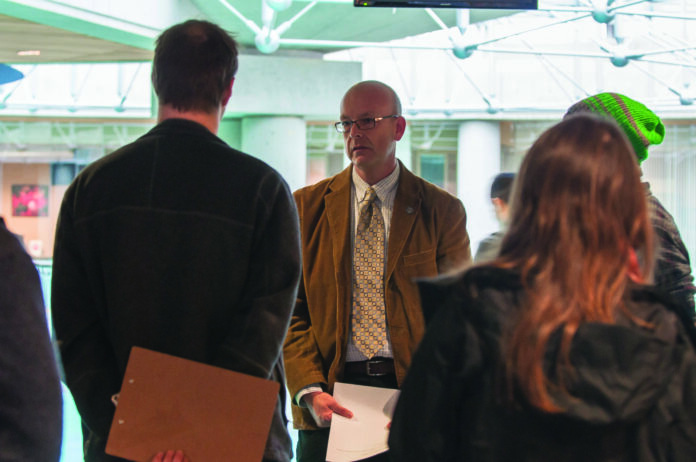
Students presented SFU's associate vice-president, student services, Tim Rahilly, with their petition in the halls of MBC. - Leah Bjornson
Students presented SFU’s associate vice-president, student services, Tim Rahilly, with their petition in the halls of MBC. – Leah Bjornson

Concerned members of the SFU Teaching Support Staff Union (TSSU) presented their petition against the international student health and dental plan, Guard.me, to the SFU administration on the morning of Feb. 25.

After collecting approximately 600 signatures from international students and community members, the group marched through campus to rally support before delivering their petition to SFU’s associate VP student services, Tim Rahilly.

“We’re just going to reiterate our demands, which we’ve been telling him for quite some time, and really just hope that they finally say yes,” explained Orion Kidder, TSSU organizer. “The ultimate goal is essentially to give students back the choice of whether or not they want that two months of health insurance when they first arrive in the country.”

The Guard.me plan has come under considerable scrutiny over the past few years. All new international students are automatically enrolled in Guard.me, which offers health and dental care to international students, as they aren’t eligible for a Canadian health care plan for the first two months that they are in the country.

The TSSU is particularly concerned that Guard.me automatically re-enrols students in the plan, which costs over twice the amount of the previous insurance plan. The group is also upset with the fact that SFU receives a five per cent return out of every fee collected.

“This is clearly an unreasonable plan,” said Kidder. “It’s more expensive than it needs to be, it doesn’t actually solve the problem it set out to, so [I ask students to] help us.”

The TSSU did just that when they toured campus on Wednesday morning, knocking on doors to ask students to join them in presenting the petition to Rahilly.

Reagan Belan, the TSSU chief steward, spoke with The Peak as the group walked around campus. “[This is] an issue that’s close to our heart,” she said. “Even though we are a workers’ union, we are also students.”

Upon entering the Maggie Benston Centre (MBC), the students encountered Rahilly, who happened to be in the building at the same time. Kidder seized the opportunity to present their petition to him in a public space.

“The very simple nature of it is, we think our members deserve a choice,” Kidder told Rahilly. “If it’s that important to get them medical coverage, there are better ways to do it.”

Rahilly replied that he has been following the matter closely and is familiar with the concerns of students. “I would like to find a way that, with the GSS and the SFSS and other stakeholders, that we can make sure we’re taking care of our students. That’s our main concern.”

Rahilly went on to say that the university has not yet renewed its contract with Guard.me, but that they cannot remove or switch providers immediately due to logistical issues.

Kidder said after the meeting that he was mainly pleased with how the conversation went. “We feel like we made an impact,” he stated. “We’ve really made it clear to the university, and Tim Rahilly in particular, that [the situation] can’t stand the way it is.”

However, he felt that there were still many steps to be taken towards a solution: “In the future, we really need to have full, meaningful consultation.”

University Briefs

0

Snowballs fight midterm blues at U of T

Two University of Toronto students initiated a snowball fight event to help lighten the spirits of their fellow students during midterm season.

The event was primarily promoted on Facebook and brought a crowd of approximately 400 students to U of T’s Front Campus.

Jonathan Cassin, a student who participated in the snowball fight, commented:  “Everything was fun, but the spontaneity of it is what really made it special. It brought all kinds of students together, from arts [and] science to engineers.”

With files from The Varsity


Carleton students profit from “Roll Up the Rim” losses

Student-owned Rooster’s Coffeehouse at Carleton University is offering 20 per cent off any size coffee, tea, or hot chocolate to anyone who brings in the “please play again” tab from their Tim Hortons’ cup.

Carleton University Students’ Association president Folarin Odunayo said, “We’re hoping this can build up the attendance at Rooster’s [and] get people more excited about their coffeehouse. We want students to come to our business.”

So far, students have responded positively. A second year “Tim Hortons regular” commented, “It’s like a consolation prize. I mean, I’m worried Rooster’s won’t have enough coffee to keep up with the demand.”

With files from The Charlatan


UBC students petition for referendum on divesting in Israeli companies

UBC’s branch of Solidarity for Palestinian Human Rights (SPHR) is petitioning for a referendum on the Alma Mater Society’s (AMS) divestment and boycott of companies that support Israel’s occupation of Palestine.

In order for the proposed referendum to be part of the upcoming AMS elections, “the petition needs to reach 1,000 signatures from students who are currently enrolled at UBC.”

Policies in line with the global BDS (boycott, divestment, sanctions) movement have been passed in the student societies of various North American universities, including York, Ryerson, and branches of the University of California.

With files from The Ubyssey