Home Blog Page 1058

Sports Briefs

0

Football

On Thursday, SFU Athletics hired former BC Lions player and running backs coach Kelly Bates to be the head coach of the Clan football team. Bates replaces Jacques Chapdelaine, who left the team in December to become the offensive coordinator with the Saskatchewan Roughriders. He beat out BC Lions receivers coach Khari Jones, with whom he worked last season.

NFL bound?

Former SFU wide receivers Lemar Durant and Bobby Pospischil tried out at the NFL regional combines in Denver, CO on February 21. If successful, they will be invited to the NFL Super Regional Combines on March 21 in Tempe, AZ, where they will be watched by NFL scouts.

Whitecaps

The Whitecaps announced last Tuesday that they have signed former Clan forward Jovan Blagojevic to play with the Whitecaps FC 2, where he will play for former SFU coach Alan Koch. Former Clan teammate defender Alexander Kleefeldt will also join the team’s pre-season roster.

Women’s Basketball

Women’s basketball senior Katie Lowen was named to the Great Northwest Athletic Conference (GNAC) Academic All-conference Team for sporting a 3.29 GPA in Business Administration. This is her second straight year achieving the award, and she joins 20 other SFU student athletes who have received the honour this season.

Swimming

On February 21 and 22, the SFU swim teams hosted the University of Tokei, Japan. Clan freshman Adrian VanderHelm broke an SFU record for the 400-metre individual medley. “Adrian is swimming well. The [individual medley] is not an event we have prepared him for, and he set the school record,” head coach Liam Donnelly told SFU Athletics.

Softball

An SFU-UBC softball matchup that was supposed to serve as the home opener last Tuesday was postponed by SFU Athletics last Monday. In addition, it was announced that a previously-postponed doubleheader against UBC, originally scheduled for Tuesday, March 31 will be played on Wednesday, April 6 at North Delta with the games starting at 1 p.m. and 3 p.m.

Basketball

Both men’s and women’s basketball finished their regular seasons last week, with both playing Western Washington — the men on Thursday and women on Friday. While the men’s season has ended, the women’s team will continue on to the NCAA playoffs, with the GNAC tournament starting March 4 in Billings, MT.

With files from SFU Athletics

Study calls for safe spaces to smoke crack

0
VANDU operated a safe smoking space on the DTES until it was shut down in 2013. - Saida Saetgareeva
VANDU operated a safe smoking space on the DTES until it was shut down in 2013.  - Saida Saetgareeva
VANDU operated a safe smoking space on the DTES until it was shut down in 2013. – Saida Saetgareeva

For three years, a small, ventilated washroom located in the Downtown Eastside (DTES) was a safe haven for crack cocaine users to smoke in, until it was shut down by health authorities. However, a new paper by SFU and UBC researchers is advocating for the benefits of such a safe space.

Ryan McNeil, an SFU postdoctoral researcher, and William Small, an SFU assistant professor of health sciences, conducted a study on safer smoking rooms (SSR) with the cooperation of the Vancouver Area Network of Drug Users (VANDU).

Titled “We need somewhere to smoke crack,” the study explored how these rooms shape smoking practices, public crack smoking, and related harms. Their findings indicate that SSRs are sought after by crack cocaine users for many benefits.

“Our findings underscore how the [SSR] emerged in response to social violence experienced by people who smoke crack in the local drug scene, and minimized the potential for health and social harms by reshaping the environmental contexts of crack smoking,” said the authors of the study, who represented not only SFU but the BC Centre for Excellence in HIV/AIDS, UBC, and VANDU.

The latter, a social justice group comprised of almost 1,000 drug users and former users, works to improve the health of people who use illicit drugs through user-based peer support. They operated a small, unsanctioned washroom on the DTES, where crack cocaine users could smoke in private.

The study stresses the need to scale up intervention practices and emphasizes how integrating SSR into public health systems, along with social support, has the potential to improve the health and safety of crack-cocaine users.

In December 2013, Vancouver Coastal Health ordered VANDU to shut down the washroom because the organization was operating without an exemption from the Controlled Drug and Substances Act. This forced crack cocaine users to go without the benefits of the SSR.

The president of VANDU, Hugh Lampkin, said in a video for The Province that the SSR provided a safe haven for crack smokers. “It’s our creed, you know, saving lives. And we want to make sure people [. . .] feel safe,” he said.

The SSR allowed users to get off the street while using, offered health care services such as clean smoking devices, and protected them from potential violence and police harassment.

Lampkin explained that the alternative is that people will still use drugs, but in a public or unsafe place.

He continued, “If that person [smoking crack] happens to be a small female or small guy, the chances of the violence occurring goes up exponentially.”

Thomas Kerr, one of the study’s authors, echoed these thoughts in The Province’s video. “By providing an environment where people who use drugs can inhale crack, it’s good for drug users. It protects their health and it’s good for the broader community by bringing people out from public spaces into a healthy environment where we can address their health needs and simultaneously address community safety issues,” he stated.

Acclaimed journalist speaks at President’s Dream Colloquium

0
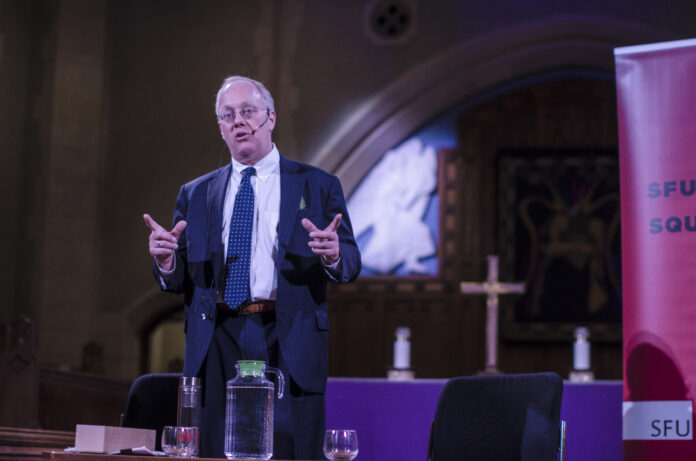
Hedges spoke as part of this spring’s President’s Dream Colloquium speaker series. - SFU
Hedges spoke as part of this spring’s President’s Dream Colloquium speaker series.  - SFU
Hedges spoke as part of this spring’s President’s Dream Colloquium speaker series.
– SFU

Noted academic and journalist Chris Hedges spoke to a sold-out audience and numerous webcast viewers on Feb. 19 as part of SFU’s spring 2015 “President’s Dream Colloquium on Obedience and Disobedience.”

Hedges is a Pulitzer Prize-winning author, known for covering wars and conflict in the Middle East as well as in the Balkans during his career as a foreign correspondent for The New York Times. He has written numerous books on war, imperialism, religion, and society.

He sat down with The Peak before his lecture to touch on topics frequently discussed in his works.

The Peak: With reference to the idea of the “Rules of Revolt,” how should citizens, especially students, go about revolting against institutions? Does tying yourself to trees or bulldozers work anymore, or do people need to go higher up and try new things?

Hedges: Well, I mean this is the dilemma. [. . .] The bottom line is that those [problems] won’t stop unless you blow them up. But if you blow them up, you’ll spend the rest of your life in prison. And that is the dilemma, and you have it with the tar sands.

[Seeing] the corporate coup d’état which has taken in place in Canada as it has in the United States, they could care less what citizens want. They do what the corporate exploiters want.

And that creates a real problem for those of us who want to resist because appealing to the centres of power no longer works. Acts of mass civil disobedience [are] all we have left.

P: Regarding radical groups like ISIS, what should religious communities in places like Canada and the US, especially Muslim communities, do to counteract radicalization within their communities and bigotry from the outside?

H: Well it’s the bigotry that creates the radicalization.  [When] you render a people voiceless and when you dehumanize them — which has happened I think towards Muslims, certainly in the United States — then they are going to be driven in the arms of groups like that.

I saw that in the former Yugoslavia. People were driven in the arms of ethnic nationalists because of abuse by the dominant Serb majority, [or] the dominant Croat majority. If you can’t get justice within a particular system of power then you are inevitably going to be drawn to those groups that are fighting back against the dominant power. I think that is the danger of ISIS.

P: So to follow up on that, how should governments and institutions approach relations with Muslim communities, or do they even have an interest to stop radicalization?

H: ISIS is kind of a gift to the American war machine. [. . .] Extremism always plays off of extremism. And as western societies become more extremist, they need extremists who are really the mirror image of themselves.  And what happens is that the same middle or majority [. . .] is silenced, marginalized, and finally shut out of the debate.

And that’s where we’re headed.  So I’m very worried because when we suffer another catastrophic terrorist attack, the ideological, cultural, and social ground has already been set — [that] Muslims are inhuman, basically — for violence against Muslims. I’m very worried about it.

P: I think we’ve seen a lot of discussion around free speech lately. I’ve read that you’ve been disinvited to speak at the University of Pennsylvania. I’m wondering in your experience as a journalist how have you seen free speech undermined in various ways, by the media and institutions?

H: The parametres now of acceptable debate [are] so narrow. It is ridiculous. [. . .] I mean like, the debate over ISIS is should we just bomb ISIS, or should we bomb ISIS and send troops? That’s a debate.

[The media] lock people who offer a radical critique out, or at best they put on for three or four minutes and that is to make you speak in clichés. [. . .] So it’s effectively made actual debate impossible.  It’s a kind of ‘faux debate.’

And so that has become a very good mechanism for perpetuating corporate global imperial power, because it is never questioned by either side of the supposed two sides of a debate. [. . .] It’s kind of frightening what’s happened.

SFU prof wants to close high seas to fishing

0
Oceans that lie 325 kilometres from the coastline are under international law. - Esther Chang
Oceans that lie 325 kilometres from the coastline are under international law. – Esther Chang

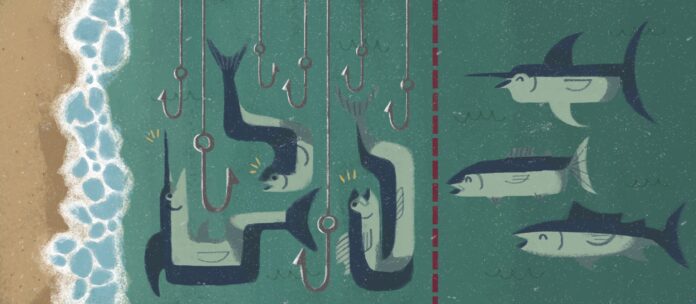
In a move that could leave the fish of the high seas breathing easier through their gills, one SFU instructor is advocating for international waters to be closed to fishing.

Isabelle Côté, a professor of marine ecology and conservation who was recently selected for the prestigious Leopold Leadership program at Stanford, has co-authored a new study in Journal of Scientific Reports.

“Intense fishing in the high seas has resulted in habitat destruction and declining stocks of fish such as tunas and swordfishes,” said Côté in her study.

The high seas are defined as those which do not belong to any country. Under international law, areas of the ocean that are within approximately 325 kilometres of any coastline — also called exclusive economic zones (EEZs) — are considered within the domain of that country, and they have economic rights over that land.

Outside of that area, however, the oceans fall under international jurisdiction. Thus, large swaths of the ocean are considered to belong to humanity as a whole.

According to Côté’s study, fishery practice around the world would be minimally affected by closing the high seas. It states that less than one per cent of fish caught globally are caught in areas outside of domestic control. “Under realistic assumptions, closing the high seas would result in no loss in fish catches or landed value of them on a global scale,” she wrote.

As part of the study, the authors also did an analysis of the economic impacts on individual countries. “People have been talking about this for a while,” she said in an interview with the Vancouver Sun. “What had been missing was an economic analysis. It’s fine to say, ‘Let’s close the high seas to fishing, there are likely to be some great ecological benefits to doing this.’ But at the end of the day, what’s going to happen economically to the countries no longer allowed to fish there?”

She notes that a few countries would be affected negatively, but most would actually gain, including Canada. “Once you allow the fish populations to recover, fish start spilling out of the no-take zones into the EEZs, and actually increase the catches there,” she explained.

“Given various assumptions, [Canada] would stand to gain in the ballpark of $100 million to $125 million.”

Côté hopes that the study will help spur national and international laws to protect the seas. “I hope our research increases understanding of the need for this,” she said. “I am delighted that the high seas are starting to be recognized as a valuable resource that deserves protection and stewardship.”

Non-humans of SFU

0

WEB

Americans condemn Human Rights Watch for publishing profanely-titled report

0
Photo by Momo Lin
Photo by Momo Lin
Illustration by Momo Lin

International research and advocacy group Human Rights Watch has come under fire for its most recent report: a 350-page document on the treatment of African-Americans in the United States titled “America officially still doesn’t give a fuck about black people.”

In the aftermath of the police killings of Ferguson resident Michael Brown, Staten Island resident Eric Garner, and countless African-Americans across the United States, the Human Rights Watch’s report says there is a lack of empathy towards black loss of life and an overlying sense of racial discrimination in the country that “seems to only be getting worse.”

However, many organizations and media outlets have condemned the report for its explicit language, saying it crosses a line when it comes to presenting objective research.

“The report to which you’re referring to is rudely titled and, quite frankly, inaccurate,” said White House Press Secretary Josh Earnest, when asked if he agreed with the urgency suggested in the report’s name. “Besides, last time I checked we have a black president. If the country’s so racist, than how do you explain that?”

The Republican Party has also issued a similar statement of dismissal, referring to the report as “absolute garbage” and “nonsense we should not have to worry about.” American news source Fox News — which has in the past been accused of misrepresenting news stories centred on black people — referred to the report as a “pinko commie Liberal lie that is defamatory against Americans.”

“We elected a Kenyan as President, so we’re clearly the most tolerant nation on the planet,” commented Fox News pundit Shane Flannity. “Too tolerant, if you ask me! Especially of people using the F-word in a report where children might hear or read it.”

Meanwhile, Jimmy Hodges Sr., Chairman of the Human Rights Watch, has defended the organization’s decision to say ‘fuck’ in the middle of a report’s title, arguing that it is in response to “the total lack of care for the plight of African-Americans by the government, media, and general public.

“It has the potential to grab people’s eye and actually make them look at the issue for once instead of simply ignoring it,” continued Hodges. “Honestly I think the overall reaction to the report is a clear indicator of where people’s priorities are [cough] not on the lives of black people [cough].”

Hodges’ response has done little to sway the opinions of the public, with some political opponents going as far to say that Hodges and the organization as a whole are promoting hate speech with their report.

“What the Human Rights Watch is doing is promoting hate speech,” commented Flannity. “Hodges and his cronies are encouraging people to use hateful language, like ‘fuck.’ Therefore, they’re promoting hate speech.”

Woohoo, Boohoo

0

Wooboo: Rebooting a franchise

Let’s face it, folks: Hollywood doesn’t have two original ideas to rub together. Reboots are about all you’re going to get until the next New York Times Bestseller gets adapted.

That being said, what is wrong with a rebooted franchise? Why are we so quick to grab our pitchforks and torches when one gets announced?

Reboots are a reinvigoration of stories for a new generation. They allow directors to take familiar tales in bold and different directions. They allow new and upcoming actors a chance to prove themselves and gain exposure. All franchises become dated after a while, and really should be placed in a more modern context.

Movies are reflective of the times we live in, and are a means for us to reflect on the world around us — especially as we become more intuitive towards things like sexual identity and ethnicity.

Boohoo: Rebooting your computer

It’s been a long week for you and Friday could not have come sooner. This morning, you found coffee grounds in your medium roast, and you got your midterm back. It turns out that skipping the club last week had little effect on bumping up that percentile. The bus broke down on the way home and the members of your group keep ignoring your messages. This week has been a total write-off.

But hey, you survived the week and that is a means for celebration. So slide on the bunny slippers and that comfortable snuggy you bought off Amazon. Grab some wine and open that laptop up. It’s time for Netflix, baby! And you are behind on that Friends marathon.

Nothing can stop you now — except for that untimely computer reboot you’ve postponed until this day. Better luck next time, kid. Pour yourself another glass of Bollinger, because this is going to take a while.

Letter to the Editor

0

Dear Editor,

The article “Nobody pays attention to your workout clothes,” written by Willie Kamawe,  argues that we don’t need a bunch of fancy, high-priced fitness apparel in order to pursue fitness goals. But his argument is flawed for several reasons.

First, Kamawe claims that certain fitness companies work to prove that your old pair of running shoes or T-shirt aren’t enough for your fitness routine. While products by Nike, Adidas, Lucas Hugh, and Trimark often enhance your physical activity, none of these fitness companies try to prove that you couldn’t work out without their product. They simply produce and advertise a reasonable product that potentially enhances your workout regime.

Secondly, Kamawe argues that people don’t pay attention to what you wear at the gym. Though, if they don’t, why does one see high-end fashion in the gym? Fancy, high-priced apparel sells because most people care about what they look like, regardless of whether they’re sweating. Fitness companies merely capitalize on making a product that is not only functional, but also aesthetically pleasing.

Another point brought up is that we shouldn’t have to look good while we exercise. He believes that wanting to look good while exercising is a “tad shallow.” But what’s the difference between looking good while exercising and, say, looking good while at work? It seems absurd to say that because I am sweating while working out, I can’t look good. Football players sweat and become dirty as they play, but this doesn’t mean that both teams should take off their fancy jerseys with eye-catching logos and replace them with tattered sweats.

People who want to excel in their sport want apparel that enhances their abilities, and if this apparel happens to be eye-catching as well, that’s a benefit, not a problem. Imagine choosing between two cars that performed equally well, but one was faded and scratched. Which would you prefer? Moreover, there’s nothing wrong with wanting and purchasing both a functional and aesthetic product.

The article claims that we’re victims of western consumerism. And sure, a lot of us are. I believe an argument can be made for individuals who spend what little money they earn on expensive, aesthetic products. But, that’s an argument about being financially irresponsible, which has nothing to do with buying a product that is both functional and aesthetically pleasing.

Sincerely,

Anthony Bianco

Petter’s “neutrality” means disengagement

0
Image credit: Brandon Hillier

Academia is political. So is industry. But despite his focus on public-private partnerships, SFU President Andrew Petter strives to avoid acknowledging his — and SFU’s — place in Canada’s political landscape.

Petter’s “Statement on Rights of Free Speech and Peaceful Protest,” published last November, proclaimed SFU’s neutrality in the face of “legal matters that are before the courts.” This statement, in response to Kinder Morgan’s SLAPP suit against Lynne Quarmby, Alan Dutton, Stephen Collis, Mia Nissen, and Adam Gold, has prompted a near-ubiquitously negative response from SFU’s student groups. 

As part of the Graduate Student Caucus at SFU’s School for the Contemporary Arts (SCA), I helped pen an open letter to Petter condemning his statement and calling for its revision. The letter from the SCA grad caucus supported open letters already sent by  SFU’s undergraduate and graduate student societies. In our small way, we at the SCA helped affirm the SFU student body’s conviction that Petter’s statement was wrong, and more specifically, that it demonstrated a widening rift between SFU’s Office of the President and its student population.

On January 8, the president issued us a reply, stating that “having explained my position in my November 7 statement and at two open sessions of Senate,” there was nothing further to add to the debate. At the December Senate meeting, by way of explanation, the President asserted that, “in the Chair’s view, it is not the role of the University to take [political] positions except where public policy bears on the core functions of the University and its operations.”

SFU has no stated mandate to remain politically neutral.

Petter is propagating an ideal of academic neutrality that has no basis in fact. SFU has no stated mandate to remain politically neutral. Petter can cite no documents, constitutions, laws, or even administrative convictions except those of his own formulation, emphatically repeated until their rhetorical force approaches verisimilitude.

Furthermore, even stated neutrality is not actual neutrality. SFU invests in oil companies and calls its art school the Goldcorp Centre for the Arts. When an official such as the university president claims impartiality, what they really mean is that they favour the political action of rejecting explicit political action. Petter’s is a politics of money, not words.

But it is not the only  form of politics. After all, Simon Fraser does have a core mandate: it’s called the Mission Statement, and it’s posted on the Office of the President’s website. Unfortunately for Petter, it declares an agenda different from his own: Engaging students, engaging research, and engaging community. During the past year, Andrew Petter appears to have prioritized his special interest over all of the above, in the service of a misguided belief that it would not “be appropriate for the university to comment on legal matters that are before the courts.”

I, and many of SFU’s student representatives, believe that it is utterly appropriate for SFU to comment on legal matters, especially when they are before the courts. These are the matters that will shape SFU’s community, research, and ultimately, its students. These are the matters that SFU trains us to participate in. And, most importantly, these are the matters that SFU’s government already engages with by allocating its endowment money.  If it is appropriate to invest, it is appropriate to comment.

What we have in Andrew Petter, then, is not an apolitical administrator. There’s no such thing. Instead, we have an administrator with an agenda bifurcating from that of the school he claims to represent.

Small wonder Mr. President doesn’t like talking politics. Bigger wonder why he still likes talking “engagement.”