Home Blog Page 1057

Transgender professor named women’s literary organization’s Critic-in-Residence

0
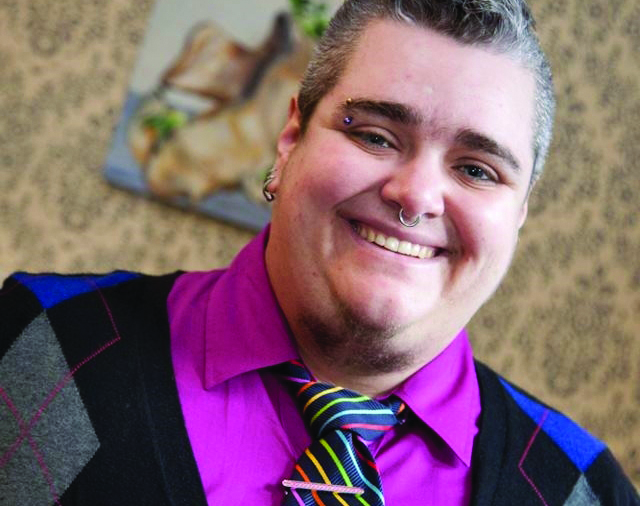
Lucas Crawford holds the position of Ruth Wynn Woodward Lecturer at SFU, serving from September 2013 to August 2015.

SFU Gender, Sexuality, and Women’s Studies (GSWS) professor Lucas Crawford has just been named the Canadian Women in the Literary Arts’ Critic-in-Residence for 2015.

The honour of being selected as the Critic-in-Residence has been awarded to one researcher each year since 2013.

In the past, Crawford has focused much of his research and presentations on fields such as fat studies, queer politics, and transgender architecture. During this virtual residency, Crawford’ goal is to “[bring] implicit gender biases in the literary industry out of the closet and to help rectify these biases by publishing reviews of literature written by women.”

The Canadian Women in the Literary Arts is a unique literary organization, in that it not only welcomes but actively encourages both queer women and transgender people to apply for the position. This is still a fairly uncommon practice, and something that Crawford feels is incredibly important in the Canadian literary landscape.

As a transgender man himself, Crawford hopes that people will gain a larger awareness of the categories of “woman” and “transgender” through his work.

According to the organization’s website, the residency aims to “foster criticism that promotes public awareness of women’s literary and critical presence in Canadian and Quebecois letters.”

Crawford’s goal is to “[bring] implicit gender biases in the literary industry out of the closet.”

For Crawford, one of the major aspects of being a Critic-in-Residence is the fact that people in the literary community who identify as “genderqueer/non-binary transgender often experience many barriers”  — both in positions of writing and critiquing.

Lucas explained that in 2013, the number of men who reviewed literary pieces by other men was skewed to a disproportionate ratio of about three to one compared to the reviews of women’s literary work. By including female and transgender researchers in these residencies each year, CWILA aims to shift these skewed statistics within the Canadian literary scene.

During his time as the Critic-in-Residence, Crawford plans to focus on reviewing works that are either written by or feature transgender people and styles. Crawford hopes that, from his critiques of others’ pieces in the field, people will grow to question why “we tend to regard non-transgender [cisgender] modes of life as universal or ‘relatable’ in literature, when they are not.”

Ultimately, Crawford hopes his residency gives him a chance to “intervene in the national conversation about where our literature is headed” in what he sees as a vital time in our history — a time when a better representation of all genders is starting to emerge in literary and societal circles.


Students should get out and vote in this year’s federal election

1

We’ve now entered the year 2015: federal election year. On October 19, Canadians will once again have the chance to choose the people who will govern our nation for the next four years. That date is now about 40 weeks away, so it’s time to start thinking about what our plan is for that seemingly-distant date. Will we bother to exercise our democratic freedoms, or will we sit at home and complain endlessly about the results of an election we opted to take no part in?

I know most of our readers hope that the Conservative government will taste defeat this year, if for no other reason than to believe it will stop me from singing their praises. This result, however, is far from certain, as early polls show all three major parties (sorry, Elizabeth May) are scoring relatively tight numbers overall.

Based on the numbers, it appears that we university students may have the power to influence the result of this election and the future of our nation. While the Big Three remain neck and neck in most areas, there is one demographic that is overwhelmingly Liberal: 18–29-year-olds, many of whom are university students.

And yet, as a member of the Conservative Party, I am not concerned by this. You may wonder why this is, but the answer is really quite simple: this age bracket, where Trudeau appears to be receiving the majority of his polling support, has repeatedly been the one with the worst voter turnout come election day. According to Elections Canada, the previous federal election featured a mere 38.8 per cent turnout for those aged 18–24, and a slightly better but still terrible turnout of 45.1 per cent for the 25–34-year-olds.

By failing to vote, we give our elected officials justification for not listening to our issues.

While the Conservative in me is content with the election win, the rest of my 29-year-old brain wonders what the heck is going on, especially since those two demographics tend to be the ones from whom I receive the most comments about how Harper is ruining this country.

I understand that many Canadians justify their lack of participation in democracy with the claim that politicians don’t care about youth issues. While I won’t dispute this claim, this turns into a bit of a cyclical argument, especially because youth tend not to have much of the standard currency that gets politicians to listen: actual currency.

The only thing we have is our voice, and if we don’t bother to use it on the one day when it really matters, politicians have no reason to listen or care about youth issues. By failing to participate, we give our elected officials justification for not listening, as such a small turnout is hardly going to influence the results.

Irish dramatist George Bernard Shaw once famously noted that “Democracy is a device that ensures we shall be governed no better than we deserve.” If you think you deserve better, it’s up to you to follow the political decisions made this year, and to participate and elect the government you think we deserve. Otherwise, you and all those who failed to do their democratic duty are to blame for the results.

I know what I’ll be doing on October 19. Do you?

Woohoo, Boohoo

1

Woohoo: Being sorry

It’s an incredibly valuable and genuine thing to truly feel sorry. What’s even more genuine is when you express these feelings with sincerity to another person.

Sincere apologies build connections, mend close relationships with loved ones and friends, and help one to develop both personally and interpersonally. Many times, giving a sincere apology can be a difficult task, but imagine what a terrible world we’d live in if no one felt apologetic towards one another.

Those who give sincere apologies are put at odds with their own beliefs — they must examine and reflect on their actions, and then internalize their situation so that they can learn about it for next time. I find that this is one of the most valuable lessons a person can learn.

Boohoo: Saying sorry

A couple days ago on a fairly crowded bus, I accidentally brushed up against someone — and by “brush up,” I mean I barely touched her as I shifted past. She immediately turned to me and said “sorry!”

Returning from a restroom on campus yesterday, I opened the door just as another person approached. He stood to the side and waited for me to exit. “Sorry,” he said.

I find myself a little frustrated by how we tend to apologize to other for really no reason at all. No harm was done in either of these situations, so these instant apologies aren’t justified and seem, frankly, a bit ridiculous. I find that anxiety propels our “sorry” culture, as people are afraid to come off as rude while in public. The use of “sorry” now occurs so often that it’s been ingrained into our psyche to use in even the most meagre of situations.

So please, folks, give an apology when the situation actually requires one, and when you say “sorry” to someone, make sure you mean it.

Everyone Hates a Vegetarian

0

My foot squished with water when I stepped into the shoe repair shop. I was looking for waterproofing spray. My shoes were old leather ones that I had bought second hand, and I didn’t think they’d be half as spongy as they were in wet weather.

Holding a can of mink spray, I asked the friendly owner if it was made of real mink. He jutted his head out. “Of course,” he said, and delved into the many benefits of real mink.

I shouldn’t have said it. “Hmm, I don’t really like using animal products,” I admitted, in a store that smelled like leather to a man who smelled like leather. He looked down and shook his head very slowly and deliberately, like I had told him he worshipped a false prophet.

“The artificial stuff is made from chemicals,” he said. “It’s not good for the Earth. Sure, the mink spray isn’t too good for the minks, but it’s natural. It’s . . .” he went on. I was now one of the many hippies who had confronted him to belittle his cruel and unusual business.

It really had nothing to do with him. Vegetarian ethics have been a part of my life for the last six years; it’s something that’s about myself, not anyone else. It’s been a process that’s helped define who I am, even if my eating habits are continuously changing.

I still can’t decide on exactly the best diet, one that blends health and ethics. With the same thought process I had as a teen, I am still upset at the fact that we have to kill to exist. At the same time, I recognize that this is true for every living being, vegetarians included.

“I’m gonna keep looking. Thank you!” I said. The tanner turned around fast enough for me to see.

Bean Awhile


When I was a teenager, ethics were simple. If I didn’t eat meat, I wasn’t killing or harming anything, I was consequently allowing more food to be produced, and I would be the healthiest I could possibly be. If everyone did the same, we would probably have less health issues, less global hunger issues, and less animal abuse. I didn’t expect everyone to do the same right away . . . but I kind of expected everyone else to do the same, eventually.

After years of consideration, I’ve realized that these ethics aren’t so simple. I’m not perfect, and no one else is, either. Also, the more I judge and try to control others, the less they want to listen to me.

For myself, I was able to eat only plants, and it did good, so I did it. I stepped up to a vegan diet for about three quarters of a year a while ago, which felt even more in line with my beliefs.

But I didn’t do it properly. I mostly ate beans. Gratuitous amounts of beans. Eventually, I felt so unusual that I went back to eating a meat-based diet, to try to feel healthy again.

What’s funny is that most often I hear people say they do the opposite: they try vegetarianism to feel healthy. Usually because they’ve watched some documentaries. There’s a good chance that vegetarianism can lead to good health, and there’s a good chance that one can find an overwhelming number of writers or speakers who support this idea. But the same goes for eating a healthy meat-based diet. It’s pretty easy to make your claim either way.

Pesky-tarian


“Are you eating this now?” is the standard line of questioning I hear from my mom every time she brings out a platter of cheese. Last time, she held oysters. Every time I visit, she’s tried to guess what new restriction or allowance I’ve created for the season.

I currently eat pescetarian, which is vegetarian except for the inclusion of fish; I’ve found reasons for justifying eating this way. I feel healthiest eating higher amounts of protein and fat, with lower amounts of carbs. I’m also more convinced that the fact that humans have evolved while eating meat-based diets has made our bodies best suited to doing so.

But, I still prefer to not eat animals that have the high cognition level of pigs or cows, along with the damage to the Earth that often comes with raising such large animals on a large scale, if I can avoid it.

Of course, there are problems with the pescetarian rationale, as well. The food that we eat now is not the same that prehistoric humans ate. There are high levels of mercury in fish, and there are hormones, steroids, or genetic manipulations in them and other animals; the fruit we eat is sweeter than it ever was before; we have plants and chemicals that never before existed. We live in a different world, and we eat different food.

But what else can we do, other than try our best? I feel healthiest eating my current diet, perhaps due to biological factors, but also maybe due to psychological ones. Still, I feel like I boycott many of the problems of large-scale, factory farming. My diet is not perfect, but neither am I.

I hope that people can eventually work together to make a better world through diets, but to make a better world would mean agreeing on what a good diet entails. I can’t even agree for myself which path is best.

But we don’t have to agree on eating ethics. What we do need is to keep talking about these issues, and adapt ourselves to what feels right without closing our minds to new or old ideas. Let’s not stick with an idea because we’ve told ourselves we have to, even after it’s stopped making sense.

Let’s listen to each other, to our bodies, and to our ethics. Eating will always be a personal experience, but it can also be made a personal journey.

Meet the Clan: Brit Townsend

0
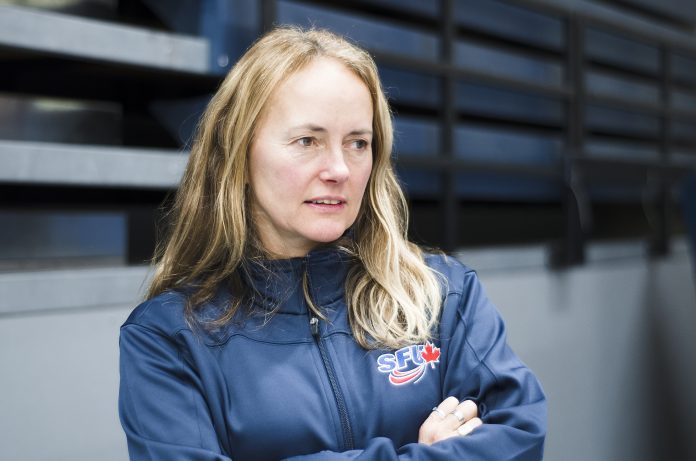
Brit Townsend has coached the both the cross country and track teams since 1998; before that she was a student at SFU.

Screen Shot 2015-01-09 at 8.03.35 PM“Everything has changed here over the years,” cross country and track head coach Brit Townsend reflects on her time at SFU. “The facilities have changed. I would even say the students have changed, the type of students.”

Townsend has had a firsthand view of the changes over the years, having begun at SFU not as a coach, but as a student — she graduated in 1986 with a degree in communications and kinesiology.

“It was pretty small when I went here,” she continues. “It was pretty easy to get in, and now it’s one of the best in the world. It’s kind of neat to be a part of that.”

Now, as coach, she has the chance to give students the opportunities and guidance she received here as a student.

“I came from a family with no money at all,” the longtime coach explains of her humble beginnings at SFU. “The head coach at the time, Hal Warner, was watching me run at a meet and came up to me and said, ‘How would you like to come to SFU? I’ll offer you a scholarship.’”

At the time, Townsend had already committed to UBC — but the lure of a scholarship proved too much to resist, and the rest is history.

“I didn’t know anything about university. I was the first kid in our family to have gone to university, so I said sure.”

As time went on, Townshend became an established runner. At one point she held the Canadian records for seven different events, and was invited to compete for Canada in the Olympics — she suited up for the 1984 Olympics and ultimately made the team in 1988, but missed the event due to an injury.

“I feel that I’ve had a really successful career, but it’s really motivating to help others enjoy that same experience.”

She got her chance to do just that when she was named the new head coach of the cross country team in 1998. At the time she was hesitant to take the job, and was hired on an interim basis.

“I was asked to be the head coach, and I was sort of torn because I was working in real estate at the time, and I had a three-year-old and a one-year-old, but I ended up taking the job and said I would try it for six months. And now I’ve been here 17 years,” she says.

“I always wanted to coach, I just didn’t know if I wanted this kind of commitment that early,” she recalls. “But you start recruiting really good athletes, and then they become a part of your life.

Here at SFU, she pushes students to succeed both on the track and in the classroom. “I want to have a high-performance environment up here — academically and athletically — and make sure that we give every opportunity for the kids to succeed in both.”

However, the job is certainly not without its challenges. The nature of university athletics means that the team is constantly changing, and that the coach has to find new runners to fill the gaps of those who graduate or become no longer eligible.

“I find that to be the most challenging part of the job, recruiting. You spend a lot of time recruiting the athlete to come here and they have a lot of options — a lot of options south of the border, we lose a lot of kids there — and find it challenging to replace my stars,” she notes. “You develop them for four years, and they’re fantastic — and they’re gone.”

Townshend is also limited in who she can recruit.

“The challenges are always financial. Being able to offer scholarship money to kids and keep them in Canada [is a challenge],” she adds. “Academics are a challenge. The academic level at the university is tougher and tougher, and you get high school students that have been great in community service and have been working really hard at their sport, [but] sometimes they don’t have the level of academics they need to get in here. That’s a shame.”

The school’s transition from the NAIA (a lower-level American college athletics league) to the NCAA has also proved a challenge in recent years.

“Transition is hard but good,” she says. “However, we’re not going to win the championships that we did in the NAIA. We won five consecutive national titles in cross country [. . .] we hold so many records in the NAIA.

Screen Shot 2015-01-09 at 8.02.55 PM“The level of competition is so much higher and so much tougher.”

However, this year was a milestone year for both the men’s and women’s cross country teams. The women’s team captured the conference and regional titles — both firsts — while the men qualified for the national champions for the first time while in the NCAA. While five straight national titles might not be in the cards, both teams seem destined for continued success under Townsend’s leadership.

Ask Professor Peak Week 2

0

Help! If I drop out of university, I’ll be shaming my parents!

DEAR PROFESSOR PEAK: I feel like I’m in university to please my parents. Being an only child from a wealthy family of university graduates, my parents expect me to continue the family ‘legacy,’ graduate with some important degree, and be some important title. I’ve never really been interested in university, and I’ve told my parents this, but they insisted I attend this institution that I don’t really care about. I’m in a bachelor of arts program without a major because I can’t decide on one that interests me. Instead, I’d like to do carpentry or something similar, but I’m scared that if I fight my parents over it, they’ll see me as a huge disappointment or some dud that doesn’t have a life. Why can’t they just understand that you don’t have to be in university to be successful? ––– CONFLICTED CARPENTER

DEAR CONFLICTED: You’re the one who has to spend eight-plus hours a day (at least) doing whatever job you end up in, so you’d better darn well enjoy doing it! But I suspect you already know that. As for your parents, remind them success comes not from your fancy job title or your impressive degree, but from your accomplishments and how you make an impact on the world. In other words, success comes from what makes you happy! It wouldn’t hurt to let them know the opportunity prospects for trades jobs (carpentry included!) are ranked extremely high in BC, and trades tend to pay quite well. Sure, you may have a few tough conversations with your parents right now, but it’s safe to say the rest of your life is worth those momentary rough patches. ––– PROFESSOR PEAK

| | |

Darn! SFU just isn’t evil enough for me!

DEAR PROFESSOR PEAK: I am a 22 year-old science student. Believe it or not, I’m in my fourth year. However, the last few months I have become worried that I’m not getting the best out of my education at SFU. It’s not that I don’t study hard — it’s SFU itself. In all my time here, I have not handled one death ray. There are no classes on how to use neuroscience to brainwash people to do my bidding. How will I become a mad scientist if I have no experience in these essential areas? Does UBC have death rays? I just have a feeling I’d be getting a better education in evil elsewhere. ––– ASPIRING MAD SCIENTIST

DEAR ASPIRING: Well, it looks like you’re in a bit of a pickle, as SFU doesn’t (for legal reasons) overtly offer any courses in mischief or merrymaking, let alone evil-doing or world domination. But fear not: there are workaround ways to learn sinister skills at our hallowed institution! Engineering Science 470: Optical and Laser Engineering Applications will give you a great way to develop your death ray building skills! Just work on that evil laugh and you’re set. ––– PROFESSOR PEAK

Women have nothing to fear from pursuing a career in cinematography

3

A moving image and its impact on viewers has always fascinated me. I love to create, I love to work in an intense environment, I love being surrounded by passionate people, and I love film. All these factors combined lead me towards an education in cinematography.

As an aspiring cinematographer, I study light, framing, and lens choices in hopes of one day being the head of the camera and lighting department on a film set. As a cinematographer, I would be responsible for making all the artistic and technical decisions in relation to the film image.

Currently, I am studying in the SFU film program in order to reach this goal, and though I am currently in a supportive and inclusive environment, I know that as a woman I will face discrimination that my male classmates will never have to deal with as aspiring filmmakers.

In 2013, women accounted for less than three per cent of cinematographers working on the top 250 domestic grossing films. No female cinematographer has ever been nominated for an Academy Award, and those females who have succeed in the field — such as Ellen Kuras, Mandy Walker, and Maryse Alberti — are not very well known or celebrated.

While the film industry has its own unique problems regarding sexism in both the content it produces and the treatment of its own working members, I believe it originates from something deeper in our society. Starting from a young age, women are not encouraged to pursue technical careers in general, and instead are pushed towards more traditionally female-occupied fields. This phenomenon is commonly spoken about with regards to jobs in the sciences and maths, but also applies to other technically-based careers such as cinematography.

No female cinematographer has ever been nominated for an Academy Award.

I’ve heard several different excuses for why there is an underrepresentation of female cinematographers: it’s too technical, the equipment is too heavy, women can’t handle the brutal hours.

But I feel cinematographer Claudia Raschke put it best by stating, “When you go to an interview or onto a set, as a woman you are incompetent until you prove you know your stuff. As a man, you are considered competent until you are proven totally incompetent.” Too often, women aren’t trusted to execute this kind of work.

When I first developed an interest in cinematography, I was quite intimidated by the technical knowledge that seemed to be required. This type of ‘shop talk’ can make it hard for already isolated aspiring female cinematographers to break into the field. I know that without the mentors I had teaching me along the way, I would still feel very lost, and might not have pursued cinematography at all.

Unfortunately, many women haven’t been lucky enough to find the support and encouragement I have. The boys’ club mentality is still going strong, and many continue to use the physical, technical, and leadership aspects of the job to justify the lack of females in the field. Existing female cinematographers have proven that these are falsehoods, and that women are just as capable cinematographers as men.

My talent, style, creative choices and skills as a cinematographer are not dictated by my gender, and it is extremely important that women continue to develop an interest in cinematography. We need female cinematographers for the same reason we need female writers, directors and editors: cinematographers are storytellers. Through all the equipment and technology, they are telling a story. They bring their own style, story and perspective to their work. To shut women out of this field would be a profound loss for the film community and its audiences.

New dining options to open on SFU Burnaby

0
Jugo Juice is ready to open for business.

Plans for a new food venue in Discovery 1 are now complete, with an expected opening this summer, pending final budget and permit approvals.

Ancillary Services at SFU will also unveil a Jugo Juice in the next week, which will be located in the Academic Quadrangle right next to the Renaissance Coffee.

Located in the Fraser International College (FIC) building, the Discovery 1 dining hall will be renovated to enhance the dining experience for students attending the college.

According to Mark McLaughlin, executive director of Ancillary Services, the existing services aren’t enough to support the growing FIC student population. “Right now we have a little food cart down there that really just kind of a stopgap measure for those students,” he said.

The new design will offer international cuisine and coffee, among other items, and will likely run five days a week. “I guess you could call it a mini Mackenzie Cafe,” said McLaughlin.

In previous years, students attending FIC would have to travel up the hill to get food from either venues at Cornerstone or Mackenzie Cafe, braving sometimes frigid weather conditions. According to Ancillary Services, the new dining facility is meant to remedy that.

“I guess you could call it a mini Mackenzie Cafe.”

Mark McLaughlin,

executive director of

SFU Ancillary Services

For McLaughlin, it’s important to not just focus on what SFU students on campus need, but what is necessary for the community as a whole — FIC, UniverCity, Cornerstone — to thrive and grow. “When we look at the campus, we just don’t look at [SFU],” he explained. “For us the campus is the entire mountain, because the campus does not stop at Strand Hall.”

The SFU Board of Governors also announced in November that planning is underway for the possible construction of a new dining hall at UniverCity, to open in 2017.

He continued, “UniverCity is part of our community, and so we look at what opportunities and what services we could offer students over there. You know, we really do try to think long-term, and [. . .] about sustainability and future generations.”

Though space on the mountain is limited, McLaughlin explained that Ancillary Services is constantly looking for new and innovative ways to enhance the dining experience here at SFU. As part of their mission, McLaughlin said that they hope to provide students with a dining experience that includes both big name brands, such as Starbucks and Tim Hortons, and the local, such as Mackenzie Cafe.

In particular, Ancillary Services is looking to support big name brands that adopt sustainable food options for students at competitive prices. “In Ancillary Services, we use what’s called the triple bottom line,” said McLaughlin, “it’s just not about the money, it’s about creating community, about social values as well.”

Structure and routine are crucial when getting over a holiday hangover

0

According to an SFU adjunct professor, quickly getting back into a routine can lessen the difficulty of returning to the classroom after weeks of holiday feasting, socializing, and general merrymaking.

Psychologist and SFU adjunct professor Joti Samra explains why returning to the daily grind in the new year is so tough, and what you can do to make the transition easier.

Samra said that the month of December is different for most people in regards to their day-to-day activities. They change their sleep patterns, their diet, and their exercise habits, which can make returning to a regular routine jarring.

“If we go weeks with having our usual structure and routine off, it’s quite hard for us to get back to it,” Samra stated. “We’re creatures of habit, as human beings, and we like structure and routine. When that routine is off, it’s hard to get back into the flow of things again.”

After the break, people typically experience an excess of fatigue and a lack of motivation. “A lot of people feel this kind of let-down after Christmas.” she said. “They’ve been a lot more social, seeing people that they like and love, and they really enjoy that.”

Samra continued, “All of the sudden, it’s back to responsibility, back to bills, back to usual routine.”

She went on to say that the post-holiday blues is often not only the result of indulgement, but also the stress of the season: “It can be a difficult time of year. There might be stresses that come along with the holiday season, with family and financial stresses being at the top of the list.”

Combining those stresses with the fact that days are shorter and the weather is consistently bleak makes for several factors that contribute to a sort of slump after the break.

Samra offered The Peak some pointers on how to minimize the holiday hangover and to ease yourself back into work or school. “An important thing is to manage your expectations and to remind yourself that most of us usually feel like this every year,” she advised.

She encouraged people to take “good measures for self-care” and also warned to be “mindful of the usual suspects” that can interrupt your healthy lifestyle, such as sleep, exercise, diet, and alcohol intake.

“Remind yourself that the semester will go fast, and if you’re taking good measures for self-care — eating healthy, exercising, managing your stress levels — all of that can help make it go smoother,” she said.

Samra’s last piece of advice was to incorporate what was enjoyable about the holidays into your regular routine. She concluded, “Scheduling in rest breaks [and] social activities that give you a kind of reprieve from the usual grind of school can just recharge you, and help you feel a bit more rejuvenated for more studying.”

Satellite Signals

0

Surrey

To ring in the new semester, SFU Surrey students feasted on free pancakes last Wednesday, January 7. The SFSS Surrey Campus Committee hosted the annual free breakfast to welcome students back to school for the spring semester.

Surrey Council Chambers

While most SFU students have returned to lecture halls this semester, the students of Business 361 are now attending class in the Surrey City Hall council chambers, which neighbour the Surrey campus. The popular project management course will be taught by business professor Kamal Masri.

Woodward’s

Last Saturday, January 10, SFU Woodward’s hosted the 130th annual Modern Language Association convention. The event included an evening of presentations from various artists and academics in the field of Asian diaspora studies. Among the speakers were several authors, including Lydia Kwa, past SFU writer-in-residence Madeleine Thien and incumbent Rawi Hage.