Home Blog Page 1051

Tampons shouldn’t be taxed. Period.

0
Photo Credit: Talha Qadir

Let me start by saying that I understand that debating taxes can be difficult. I do think that taxes at their basis are good because they keep society functioning, and it’s important that things such as education and infrastructure are properly funded. However, there are certain individual products that should not be taxed, as access to them should be a basic human right.

In the UK, exotic meats and helicopters aren’t taxed, and in Canada incontinence products and many kinds of food are not taxed. All of these products are considered to be essential, but for some reason menstrual sanitation products do not make the cut. Maybe it’s because periods are icky.

I know that not taxing food products seems fair; every human needs food, so this should be a no-brainer. In Canada, fruits, vegetables, meat, fish, poultry, breakfast cereals and some dairy products are not taxed, and this seems logical; however, there is actually debate over the types of food that fall into these categories.

Wedding cakes and cocktail cherries are considered part of this list, and CBC reported that Twinkies and Pop-Tarts also fall in line with what is considered essential. I’m no nutritionist, and I love a slice of cake as much as the next person, but I’m fairly sure my well-being wouldn’t be jeopardized if I didn’t have proper access to these products.

There isn’t a woman out there who would consider her menstrual sanitation products a fun treat. They aren’t a splurge and they aren’t for cocktail parties — they are a basic female human necessity. Period.

Why are some exotic foods tax exempt while feminine sanitation products aren’t?

Over half the world’s population will need regular access to these products throughout a large portion of their lives, and yet they aren’t considered a need. Let me just put it out there that the Merriam-Webster definition of the word ‘need’ is “a physiological or psychological requirement for the well-being of an organism.” How is it even possible that a debate exists about whether or not products like tampons fit this definition?

But that is the tragedy of the matter; this is an ongoing debate with governments around the world. The UK, France, Australia, United States, and Canada are all petitioning federal governments to eradicate this tax that unfairly impeaches on the female population. In Canada, the movement is called “No Tax on Tampons,” and there are over 57,000 out of the 75,000 needed signatures on the Change.org petition.

The individual GST charged on each product we buy seems insubstantial and most Canadians don’t notice it in the short run, but Statistics Canada estimated that approximately 17,876,392 Canadian women between the ages of 12–49 spent over 500 million dollars on menstrual hygiene products in 2014 alone. That’s a lot of money coming from products that females have literally no choice but to buy.

Most importantly, this debate is about defending the rights of the lower-income women who do feel the effect of every dollar spent. If tampons become an extra expense, these women may either choose to forego other necessities, like food, or push their limits and risk ill health from lack of sanitation. This just isn’t fair.

If you agree that tampons and all other menstrual sanitation products shouldn’t be taxed, make sure to check out the No Tax on Tampons campaign. Tampons are a necessity that Twinkies simply can’t compete with.

Platforms that would get me excited about the SFSS election

0
Photo courtesy of Wikipedia

A sustainable gondola from the top of Burnaby Mountain directly to my apartment

More bursaries for people who always forget to apply for them

Every second Monday off . . . from everything

Improved public awareness about my Internet Broad City/Bob’s Burgers fan fiction

Increased accessibility for people who want a seat on the bus but also don’t feel like walking to the upper bus loop

More transparency on why the soups I make at home never taste as good as the ones I buy from The Ladle

A total ban on reminder emails about upcoming field school deadlines

Healthier, more affordable beer options for me to guzzle down at the Highland Pub

A cap put in place on how many courses beyond second-year can involve icebreakers on the first day of class

A permanent puppy room instated on campus

Plans to just rip down SFU’s confusing, user-hostile website and start over again from scratch

Proposal for a bylaw fining people who walk and text at the same time

Equal opportunity between those who buy burritos at school regularly and those who want to but can’t afford it

Abolish the 8:30 a.m. tutorial

Netflix on every computer in the library

Mandatory name tags so you never have to worry about forgetting someone’s name again

Fewer rainy days

Zero tolerance on people who eat egg salad sandwiches in class

Extend every Orange is the New Black season episode count to 50

Schools Building Schools reflects SFU’s interests and values

0
Photo Credit: Jennifer Aldridge (Flickr)

SFU champions the idea of “engaging the world,” and at Schools Building Schools (SBS), we live those values. We engage the world, engage students, and engage communities. We’re trying to bridge the gap between two different worlds, so that we can learn from and support each other.

Unfortunately, it seems the Simon Fraser Student Society (SFSS) does not fully understand how our mandate coincides with that of the university. The continuation of our funding has recently come into question due to the belief that our mandate does not reflect student interests.

Let me explain how this is incorrect. Over 100 students have participated in our SFU-based club since 2010. Whether they’re on co-op positions, fundraising for a new project, leading awareness campaigns, or planning events, the students in SBS at SFU are gaining the skills and experience they need to kickstart careers in competitive fields.

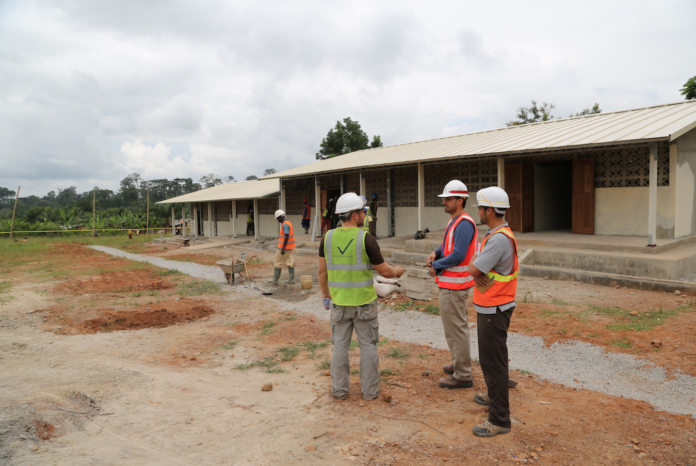
In the summer of 2012, SFU student Stacey Bryant took a co-op position at a SBS development project in Mbarara, Uganda. While local teams built a vocational school to teach practical job skills to youth in the community, Bryant helped the school plan to be sustainable for years to come.

SFU student Rasheed Ahmed took a similar co-op position with SBS in 2013. For him, being immersed in the community and the culture was an essential part of learning about development work.

“SBS gave me the rare opportunity to plunge into the development sector and do incredibly meaningful work while in the field,” he said. “It has been an immensely empowering experience and one that motivated me to continue my education and make a tangible difference in the world.”

We only found out about the motion via Facebook less than 24 hours before the SFSS vote.

I’m now in my fourth year of studying International Studies and Political Science at SFU. I’ve been involved with SBS at SFU since my first year, and I’m now the group’s president. As I’ve watched my colleagues grow and succeed in their time here, I’ve realized SBS has been instrumental in providing career-related experience for SFU students.

In 2012, former SBS at SFU executives Lauren McCarthy and Suleyman Salmanov, backed by a team of committed volunteers, helped lead a successful campaign to garner support for a one dollar levy on tuition. The money raised through the levy has funded SBS projects in Uganda, supported communities in need, and given SFU students a wealth of experience.

Over 1,500 SFU students recognized the benefits of SBS at SFU when they signed a petition in our support in 2012. However, these benefits were less apparent to the SFSS, who initially voted to pass the referendum question by suggesting that students should discontinue our support.

As phrased, the referendum question misrepresented our mandate and inaccurately assumed that SBS does not represent the interests of SFU students.

As we only found out about the motion through informal contact via Facebook less than 24 hours before the SFSS vote, we were not able to attend the meeting at which this decision was made. Even the public agenda for the board meeting did not include this motion, as it was filed after the deadline.

At the following SFSS Board Meeting we argued that, based on the unfair process, the question be postponed until the next General Election. As a result the Board overturned their previous decision.

The referendum question will remain in limbo for another year, and in next year’s election, I encourage you to vote to continue funding SBS, to help us continue to engage the world. Since voting to contribute to SBS, SFU students have been funding education initiatives and changing the lives of youth both at home and abroad.

Join our team. We are SFU students, and SBS represents our values.

SFU Student Presidents: Where are they now?

1

INTRODUCTION

Almost a year after SFU opened its doors on September 9, 1965, student president Tony Buzan penned a letter in the university’s yearbook addressed “To Future Presidents,” in which he implored his successors to continue fighting the good fight.

“Mr. President, do not take time to roam through other hills, or to watch waves make waves of sand,” he wrote. “Spend your time shaping the destiny of this tiny world, this terella, for we shall have succeeded only if you succeed.”

Almost a half-century later, we decided to take a look at how the former presidents of our student society have upheld this mandate. Did they too face “a council born of conflict and dreams?” How did they protect the society against Buzan’s fears that the “educational system may soon be bastardized by the cementing process of time?”

Although we tried to ask these questions of the over 70 presidents in our history, tracking them all down turned out to be an impossible task.

By spending many hours tediously searching names on Google, sending emails, and tweeting at people who often turned out to not be who we thought they were, we found out what some former SFSS presidents accomplished after graduating.

Tony Buzan (‘66)

SFU’s first student council president went on to have a notable career as the self-proclaimed inventor of “mind-mapping.” A grad student from UBC and considered a “ringer” as the first president, Buzan went on to become an author and educational consultant in the UK focusing on ideas surrounding “mental literacy.” According to his website he was “named as one of the world’s top five speakers by Forbes magazine.”

John Mynott (‘66) on…

JohnMynott

Getting into student politics:

“[I started in] high school, just a little bit with the general student council, I think I was a class representative . . .  [When] I got to Simon Fraser, I looked around for something to do, other than going to classes.”

His time as President:

“I found it challenging to keep everybody focused [. . .] and if you look through The Peak archives wayback when, second year, I eventually gave up.”

Life after graduation:

“That’s my big accomplishment, I didn’t graduate. I stayed at Simon Fraser until ’67, went to Expo and fooled around in Montreal, then came back. Sixty-eight I think I went back a little bit, and someone tried to convince me to run for the council again, but I was becoming wise.”

His career:

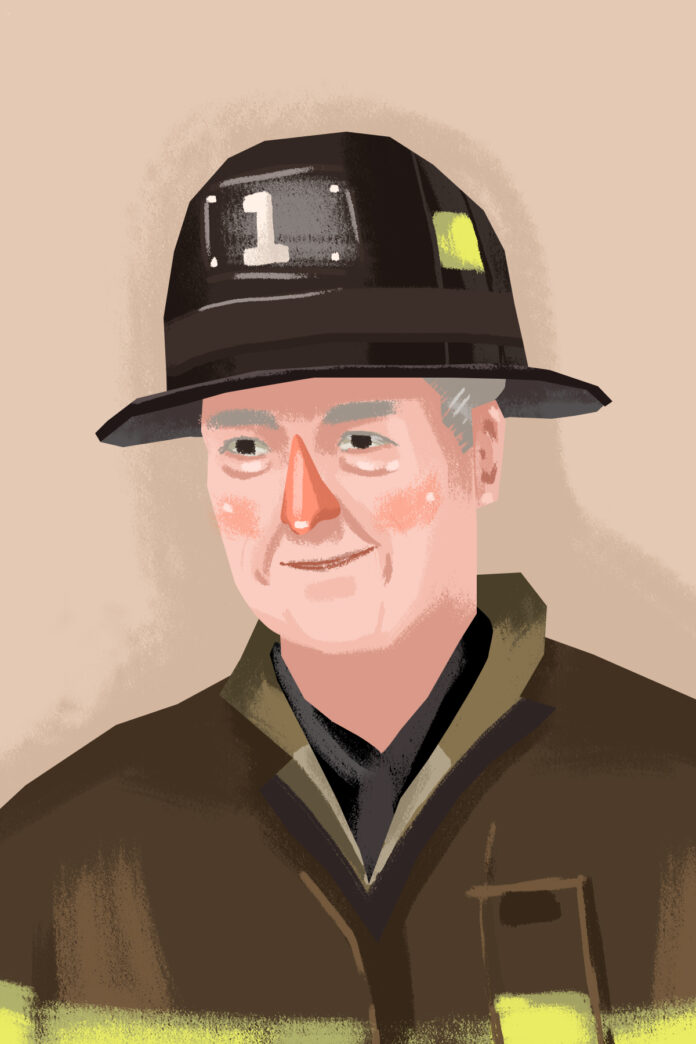
“I went back to Quebec, I worked in a language school, I built a sailboat, and then that same language school sent me to Ottawa . . . I went gold mining for a summer, and then I said ‘well, I gotta have a little money, I have a young child and a wife.’ So I joined the fire department in Ottawa, just for a couple years to get some money. Twenty-seven years later I retired.”

His peers:

“I don’t even know who came after me, sort of turned off I guess. Or I tuned in. Dropped out. I did drop out.”

Rob Walsh (‘68)

Walsh served as the  House of Commons’ chief legal expert from 1999–2012, where he acted as adviser to MPs, the Speaker and the Board of Internal Economy. Although he had planned to retire to a quiet life of dog-walking and piano-playing, Walsh was dragged back into the political sphere following the Mike Duffy cheque scandal that year. Walsh quickly became the media’s go-to guy for matters concerning the legality of the issues, and has since appeared as a parliamentary expert and panellist on CBC’s The National” and other political programs.

Lena Dominelli (‘68)

The first female president, Dominelli went on to accomplish a great deal in her professional career. She is a professor of Applied Social Sciences and Academician in the Academy of the Learned Societies for Social Sciences at Durham University. According to her staff page on Durham’s website, “her current research interests include: climate change and environmental social work; globalisation; social and community development; social change; women’s well being and welfare; motherhood; fatherhood; child well-being and children’s rights.” She has published a number of papers and books concerning these subjects.

Michael Hoechsmann (‘85) on…

MichaelHoechsmann

Getting into student politics:

“I guess I was a bit of an active student, and some people encouraged me to run for IRO. I didn’t become president through an election process, right? I stepped in when another president had to step aside. [. . .] So I don’t know if I’m a bona fide president. I was president for four months, after 12 months as IRO.”

His time as President:

“We negotiated a union contract the year that I was in the position, negotiated with the different campus constituencies. There’s a pretty good democratic roundtable there that I thought functioned very well, but it involved vigorous debate and argumentation to try to work all those constituencies together.”

Life after graduation:

“The actual experience [of being president] and how that prepared me for other experiences in life was incredible. . . specifically, I was once an executive director of a non-profit organization, [Young People’s Press]. It was a youth advocacy-type organization. Youth advocacy was what being the SFSS President was all about.”

His peers:

“The reporter at The Peak that used to cover us, his name’s Jeff Buttle he works for CBC in Toronto, I see him from time to time.”

Paul Mendes (‘88) on…

PaulMendes

Getting into student politics:

“I might have been on student council in grade eight, but [Langara]’s where I got an interest in it, and when I started at SFU there was quite a bit of apathy. I started in ’86, and I was elected by acclamation to an executive position, and then I think we managed to stir things up, and then there were heavily contested elections after that for a few years.”

His time as President:

“We certainly managed to increase the interest of the student body in student politics. We really held the government’s feet to the fire on a whole bunch of issues, and we did that through organizing a whole bunch of rallies.”

Life after graduation:

“I went to law school at Osgoode Hall, in Toronto, to study abroad, as they say, and then I came back here in ’94 and I’ve been practising law ever since.”

Political aspirations:

“I was interested in politics, but it is cut-throat. . . I mean, Christy Clark was my opponent, and she is a tough customer. . . My recollection of her is exactly the same as how I see her now, she is someone you don’t mess with easily, let’s put it that way. Having experienced that, that gave me a clear message that politics isn’t for me, because it’s too personal, it’s too hard, it takes a lot out of you.”

His peers:

“I really look at myself as being probably among one of the ones that’s accomplished the least out of that group. You had Kevin Falcon, who almost was the premier of BC . . . Ryan Beedie, who donated all of that money to the university for the Beedie school of business. I look at him and I think, holy cow, if I’d known that guy would have that much money I would have been way nicer to him in university.”

Christy Clark (‘89)

Now the Premier of British Columbia, Christy Clark had a brief foray into politics at SFU when she was elected president in 1989. However, she was quickly removed from the position after the electoral commission ruled that she had violated election bylaws by leaving her posters up past the end of campaign period. Clark left SFU without finishing her degree and went on to serve as a Member of the Legislature from 1996 to 2005 and as the Deputy Premier from 2001 to 2005. In 2011, she returned to politics and won the leadership of the British Columbia Liberal Party, taking over from Gordon Campbell as Premier.

Tim Plommer (‘91–‘92) on…

Getting into student politics:

“I was the business student rep on student council from April of ‘90 to April of ‘91. And at the time the student council was controlled by a group called ‘Grassroots’ and I was kind of marginalized on student council, so I formed my own little political party.”

His time as President:

“We were going to build a 3,000 seat domed stadium with a 400 metre running track around it and a soccer field in the center of it. . . All that had to happen was that the Socreds had to win the fall election and they got killed [. . .] It was a term where we just got politically interrupted. But, it was a good time.”

Life after graduation:

“I was going to go into politics [. . . After my graduation however,] it was a very, very bad time to go into politics. So I ended up getting a part-time job working as a trader, trading stocks and bonds. And then I went into full service brokerage business in ‘94 and I’ve been doing it ever since. Now I’m a portfolio manager and fairly successful. ”

His peers:

“I wonder what happened to a guy like Rob Zanatta. . . He’s the reason that I won, because he kind of took me under his wing and taught me how important pub night is for getting elected.”

Dave Crossley (‘99–‘00) on…

DaveCrossley

Getting into student politics:

“Towards the end of my time at SFU, I was encouraged by a friend of mine who was involved in the student society to join one of the committees, and foolishly I volunteered and said yes, and that’s how I got involved.”

His time as President:

“After I served on the committee, I served on . . . I think it was called the finance committee, for about a year. Then I first got elected as treasurer of the student society for one term, and then after serving a year as treasurer I ran for president the winter after that. So that’s sort of the path I took.”

Life after graduation:

“When I left SFU, I worked in the public sector for a very brief time, and then I was hired by the organization I work for now, which is the Planning Institute of BC. Strange as it may sound, the current job I have working with the planning institute was the result of responding to a job ad in the newspaper, which is very old-fashioned nowadays.”

His career:

“I head up a small nonprofit association now, so obviously there’s a lot of similarities there to the student society. So I guess my experience in having a certain amount of management responsibility in a nonprofit organization for a few years when I was involved in the student society definitely helped lead me to where I am today working for the Planning Institute of BC.”

Political aspirations:

“I was fairly involved in municipal politics when I was younger, and certainly enjoyed that. Partly because I had an interest in urban studies and urban planning at the time, so there was sort of a natural fit there between what goes on in municipal politics and urban planning. But since I left the student society, no, I wouldn’t say I’ve had any burning aspirations to seek elected office elsewhere.”

Britta Jensen (‘01–‘02) on…

Getting into student politics:

“I first dabbled in student politics back in high school, in grade 12, when I was voted onto the graduation committee. A few friends of mine and myself decided that the group was too socially homogenous and conspired to get me onto the committee — it worked and I became the writer and publisher of the grad class newsletter. I called it “Filthy Lies and Sick Propaganda” like any good rebellious teenager would have.”

Her time as President:

“My presidency coincided with the election of the Liberals, which resulted in many impacts on students, most obviously the lifting of the tuition freeze . . . I learned what I had always suspected but hoped wasn’t entirely true — that governments often rule by ideology and you can work 70 hours weeks coming up with all the facts and numbers possible to prove that some process is flawed, but if that goes against the pervading belief held by the government, it doesn’t matter.”

Life after graduation:

“My mentor at SFU, Dr. John Clague in the Department of Earth Sciences, had a post-doctoral fellow at the time I worked for him. This individual went on to a faculty position at the University of Alberta and asked me to come along as his first MSc student. I did and ended up doing my PhD there as well. I have stayed in academics since then and am just completing my post-doctoral fellowship, which has been based in Belfast, UK.”

Her career:

“I learned an amazing amount about effective communication, negotiations, being tactful, writing and reading, and maintaining a calm facade in the face of adversary [from my time as president]. I think that helps in any career, and I find that the lessons I learned at the SFSS have come back to help me in all sorts of situations.”

Her peers:

“Tangentially because of mutual friends I know what some of them are up to, but haven’t really stayed in direct contact with them. I do know that the graduate rep at the time is now a professor! Way to go Mike!”

Chris Giacomantonio (‘04–‘05) on…

ChrisGiacomantonio

Getting into student politics:

“I was involved in a dispute with the SFU Athletics department [in 2002] and so I looked to the SFSS for support. This eventually put me in touch with Brynn Bourke, who was then a director with the SFSS, and after getting to know her and what she was about I joined her slate as a University Relations candidate.”

His time as President:

“I spent a year as University Relations Officer from 2003–04 and then ran for president and won for the 2004–05 term. I actually ran for Chancellor of SFU at the end of my term as president, in 2005 — that was the first election I’d ever lost.”

Life after graduation:

“After finishing my undergrad degree at SFU I got completely out of politics and advocacy, and became a dishwasher on the Drive. I spent the next two and a half years working in the service industry – I actually managed to become sous-chef of a casual dining restaurant in Halifax, my hometown, and then later helped a friend start up a burger-and-poutine joint called Willy’s. But while I was doing that I was also applying for grad schools.”

His career:

“I found a good opportunity at Dalhousie’s Sociology and Social Anthropology department. I completed an MA there under a professor named Chris Murphy, doing an ethnographic study of public police work in Halifax, and from there I was basically hooked on policing studies. I next went to Oxford to do a DPhil (what Oxford calls a PhD) in Criminology, and then found a job at RAND Europe when I was finishing my thesis. I’ve been there two years, and it’s amazing work.”

Political aspirations:

“In my final year with the SFSS, I realized that if I ever got involved in public policy, government, or politics on a larger stage, I wanted to have deeper area knowledge about specific policy issues outside of higher education policy, and as that last year went on I knew more and more that I just didn’t yet have that. knowledge . . . my time with the SFSS really made me want to know more and develop my own expertise.”

Clement Apaak (‘05–’06)

Born in Ghana, Clement Apaak came to SFU to pursue a PhD in Archaeology to supplement his M.Phil. in Archaeology from the University of Bergen, Norway and BA degree in archaelogy and history from the University of Ghana. While teaching classes at SFU, Apaak became the first international student to be elected to a university board of Governors in British Columbia, Canada, and the first African valedictorian of his graduating class. During this time, Apaak also founded Canadian Students for Darfur, a partner of Oxfam Canada. He has since gone on to become a presidential staffer for the government of Ghana.

Jeff McCann (‘11) on…

JeffMcCann

Getting into student politics:

“[I felt like in] my first year at SFU, [the student body] was really disengaged, really slow. I didn’t meet a lot of people, and I didn’t really have any reason to be on campus, so I really wanted to get involved. I saw that there were a lot of opportunities to make changes and make it a better environment for students.”

His time as President:

“It was definitely challenging because we had a great board who really wanted to accomplish a lot in one year, so we created a lot of projects that we wanted to get out of the way because we were tired [of] hearing about years and years of systemic issues with the society.”

His career:

“In the role that I’m in now (an account executive at Shaw Sabey & Associates), it’s very similar to being in the student society where you can take on as many projects as you can come up with . . . You’re not really afraid of much after you’ve sat down with the CFS lawyers, sat down with the CUPE national representation, or when you’re dealing with the university for Build SFU.”

Political aspirations:

“I personally haven’t put a lot of weight into the political future. I think it’s definitely possible, I’m definitely interested, but I wouldn’t say that, as a result of being on the SFSS board, I am in any way am prepared for, or am more or less interested in, politics on a larger scale.”


This week in comics

0


CMYK_updatedPeersPeers (Leslie Lu)

DaylightsavingsSpring Forward (Jacey Gibb & Elizabeth Pau)

CMYK_Pun 2 3 Issue 10Pun 2 3 (Sarah Walker)

OnlineagoraThe Adventures of Agoraphobia Man: World Defender (Jacey Gibb)

CMYK_Seagull SquareSeagull Square (Jill Mandrake)

Meet the Clan: Rebecca Langmead

1
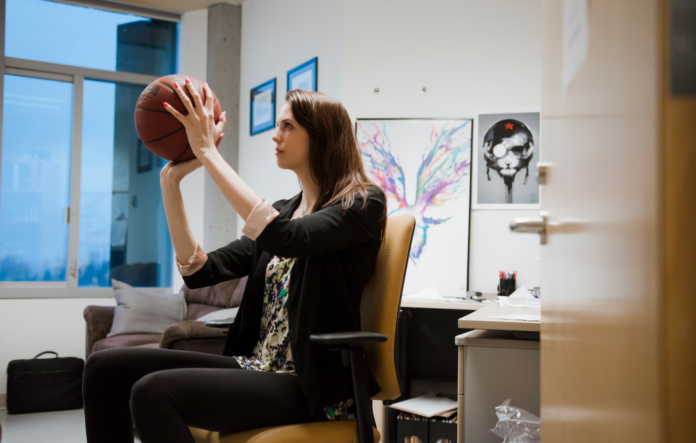
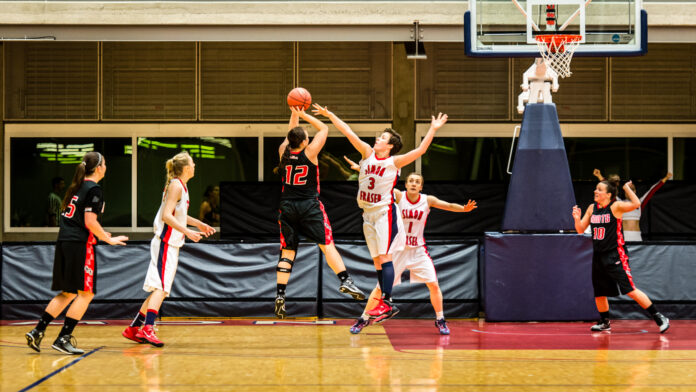
Rebecca Langmead traded in her basketball shoes for a seat on the SFSS. Image Credit: Brandon Hillier /The Peak

Screen Shot 2015-03-13 at 8.00.43 PM“I have no idea what I’m going to do, so it’s pretty crazy. My whole life, since I was young, I always knew what the next step would be — and I think that’s the way it is for most people,” Rebecca Langmead reflects as she nears the end of her final year.

“This is the first time I’ve been unsure, and it’s kind of relieving in a way to not know and not have your agenda specifically laid out. But at the same time, it’s pretty frightening.”

Before becoming an at-large representative for the SFSS, before playing forward on the women’s basketball team, Rebecca came from a small town in Newfoundland, about 20 minutes north of St. John’s. She spent a good portion of her childhood alone, as her two older brothers had already moved out — which made it that much harder to leave home.

“It is tough, going home only once a year, not being able to see your family at Christmas time, missing pretty important events in your family [. . .] you want to be there for those things, but you can’t,” she muses. “It’s especially difficult when people get sick. In my final year, before basketball started in September, my grandmother got diagnosed with cancer, and to not be there with her through all of that was incredibly hard.”

However, moving to the big city for the first time, Rebecca was excited for the change. She also had a chance that most Canadian university basketball players don’t get.

“My experience was incredible: I had a chance to compete in the NCAA — which was my dream as a kid growing up — and still stay in Canada. I met an amazing group of women that are my best friends, that I consider to be my family. My coach is nothing short of a father figure to me.”

At first, “I wasn’t a very good player,” she remembers with a laugh. “I played three years [where] I warmed the bench. It was really hard.”

It was a tough transition for Rebecca, who had spent much of her high school career as a starter and one of the team’s elite players.

“One of the things you realize coming to university, when you start playing basketball at that level, is that it’s not just about doing well and being a good person — you have to produce,” she says. “You’re getting paid to be here, for most of us with athletic scholarships — so if you don’t produce, why would they give you money? Why would they help you out?”

In her second year, she asked Langford if she could take the next year off without losing a year of NCAA eligibility.

“He said, ‘I don’t want you to [. . .] because I don’t know if I want you back next year; I don’t think you’ve worked hard enough. I need to reevaluate your position. You have the potential to be a really great player, but I just don’t think you’re giving me what I need.’

“That coming summer, I said to him, ‘Give me another chance, I’ll come back next year, and I’ll be one of the better players on the team.’ And I came back in my third and fourth year, I had gotten a lot better, a lot stronger — I gained about 25 lbs — and I just went and worked so hard those two summers, and in my fourth year I ended up becoming a starter.

“It as a tough road to get there, but worth every hour I put in,” she reflects.

When her four years of NCAA eligibility were up, she had two choices: to continue her basketball career professionally in Europe, or to hang up her shoes and focus on finishing her degree. She chose school.

“It’s not something that I felt came too quickly. It was like, ‘You know what, I’ve been playing basketball for half my life, it sucks that it’s over, but I’m ready for it to be over for a little bit,’” Rebecca says. “But I really wanted to finish my degree, I really wanted to get involved at SFU, so I just said, ‘This is my last year [at SFU] and I’m going to make the most out of it.’”

After that, it looked like Rebecca might simply focus on classes and cruise towards her degree — but that didn’t last for long.

“[I thought] after finishing basketball, ‘I’m not going to do anything, I’m going to focus on school, I’m going to get A’s and it’s going to be amazing’ — and then I joined the student society.”

Rebecca got involved with the SFSS in her final year of basketball because of the recommendation of a friend; however, she credits much of her political career to current president Chardaye Bueckert.

“I had an opportunity to sit down and meet Chardaye [. . .] and I just saw something in her that I hadn’t seen in anything other than athletics. I had always seen people passionate about athletics, and I’d never seen anyone passionate about anything else because that was my bubble,” Rebecca says. “To see somebody who was so passionate about improving student life and advocating for students really sparked my interest. And then I just saw all the places I thought I could help.”

Rebecca now finds herself even busier than she was playing basketball.

“It’s a busy life — I played basketball for four years, and we had 20 or 30 hours a week of training or travelling, and this is a completely different realm of busy. I’ve never been this busy before,” Rebecca notes.

But that’s the way she likes it.

“I’m love the fact I’m busy, I couldn’t imagine what it would be like if academics were my whole life, because it’s not my whole life. I’m not an academically driven person, I’m a people-driven person.”

FUN FACT:
Hobbies:
“I read a lot,” she says. “[A friend] came over to my house one day for dinner, and came into my room, and [there were] books everywhere. He said, ‘I was really thinking there would be more posters of cute boys, but you’ve got a lot of books!’”

Sports Briefs

0
Image Credit: Austin Cozicar /The Peak

Swimming

Freshman Adrian VanderHelm became the first SFU male swimmer to earn All-American status at the NCAA Division II national championship last Thursday. He achieved second place at the 200-yard freestyle, after being disqualified for the individual medley for a uniform logo violation the previous day.

Lacrosse

SFU Lacrosse finished their five-game road trip with a three-game losing streak in Arizona. After dropping a 14–8 result to the University of Arizona on March 5, they lost back-to-back games on March 8 and 9 to Colorado State and Chapman University. The 11–2 loss against Chapman was SFU’s lowest scoring game this season.

Women’s Basketball

Women’s basketball forward Erin Chambers was named to the West Region First Team. The honour was voted by the NCAA Division II Sports Information Directors Association (D2SIDA). This marks the second consecutive year Chambers has been named to the team.

Men’s Golf

Men’s golf placed third in their first tournament of 2015. At the Notre Dame de Namur Argonaut Invitational held in Livermore, CA on March 9 and 10, the Clan placed first among GNAC competitors. Sophomore Kevin Vigna led the team, while freshman Chris Crisologo shot the Clan’s best individual round with a score of 71 (-1). Vigna was named the GNAC men’s golfer of the week for his efforts.

With files from SFU Athletics

Women’s basketball ends after heartbreaking three-point loss

0
Image Credit: Hamed Yaghoubi Shahir /The Peak

The SFU women’s basketball season came to an end Friday, March 6, when they lost 59–56 to the Alaska-Anchorage Seawolves in their second playoff game. The Clan held the lead much of the game, but with three minutes left, the Seawolves got the upper hand.

With 40 seconds to go, SFU was down by only three, but despite three-point attempts by Erin Chambers and Katie Lowen, nothing would go in. The season was over.

“We had two open looks [for a three-pointer] at the buzzer, and [the ball] felt good coming out my hands, but it just didn’t go down,” reflected Chambers. “I’m pretty sure I’m going to have nightmares about that shot.

“But it’s part of the game, and how it goes, [and] I love to play and I love that competition, so it will subside soon.”

Aside from the heartbreaking finish, it was a good end to an inconsistent season. The Alaska-Anchorage Seawolves were ranked first nationally, and for much of the game the Clan maintained a solid lead.

“We gave them their toughest game this year,” said head coach Bruce Langford.

This year was a difficult one for the Clan, who suffered their first three-game losing streak since 2011 and had a record just above .500 — a contrast to their previous two seasons, where they went 20–10 and 25–6, respectively.

“There were some frustrating times,” admitted Langford. “I thought we were less consistent this year than we’ve ever been. I think that inconsistency hurt us. We weren’t as deep as we’ve been in the past and that may have hurt us a bit.”

Perhaps a part of that challenge this season was the inexperience of the team. Only two of the players were seniors, and two juniors — and of those four, only three are returnees to the Clan program.

“It’s a very young team. We really only had three seasoned players, and I think that that was a bigger factor than I thought it was going to be,” Langford said. “I think that we’re entering a crucial offseason, where it’s really important that [the players] look at where they want to get to, and work really hard to get there.”

However, he noted that the team got better as the season went on: “We played better in the last few weeks, we tightened up defensively, and I thought that was nice to see.”

This season saw two key milestones: Langford became the winningest women’s basketball head coach at SFU when he won his 364th game on January 17 — Langford is now up to 370 — and Chambers became the all-time highest scorer in the Great Northwest Athletic Conference, passing the previous record of 1,831.

Chambers, in her fourth and final year of NCAA eligibility, finished the season with 1,946 points.

“I’ve enjoyed my four years here, I’ve made lifelong friends, and enjoyed playing basketball up here, so I’m okay with it,” she said of wrapping up her collegiate career. “It’s one chapter of my life that’s done, and there will be new things to come.”

Board Shorts

0
By Mark Tallman

Schools Building Schools referendum withdrawal

Representatives from the non-profit volunteer organization Schools Building Schools (SBS) took issue with the manner in which the board approved the referendum question to discontinue their levy.

Stacey Bryant of SBS explained that since their report to council last semester, the group had not had any correspondence with the SFSS until March 3 — the day before referendum questions were due — leaving them little time to make their case in favour of the levy.

One of her concerns was with the wording of the question being “misrepresentative of what Schools Building Schools does as an organization.”

The board ultimately moved to revoke the question from the referenda. President Chardaye Bueckert commented, “I don’t think it’s appropriate or kind of us as a student society to make them scramble,” and suggested that the issue be put to referendum at a later date.

Health and dental plan review

The undergraduate health and dental insurance provider, I Have a Plan, presented a report of student usage for the past year.

The report showed that 73 per cent of students were enrolled in the enhanced plan, while two per cent chose the basic plan and 25 per cent opted out of the coverage completely.

I Have a Plan’s representative shared some of the contrasts in usage of the plan from previous years. There were more dependents and spouses enrolled in addition to an increase in claims related to mental health care in comparison to past data.

The board was assured that people were taking full advantage of the plan’s offered coverages, and that costs would not go up for the next year.

CEO Stipend Increase

Chief electoral officer (CEO) in the upcoming SFSS election Oscar Sanchez put in a request to increase his number of billable hours, as he had already billed 143 of the 150 hours available to him.

With the voting period just under two weeks away, Sanchez made the point that he would need to work over seven more hours to “actually finish this election.”

The board unanimously agreed to increase his hours by 50 so he can continue to work in his capacity as CEO.

Satellite Signals

0
Image credit: Eleanor Qu

Woodward’s

Director Janine Hosking screened the award-winning film Australian film 35 Letters at the SFU’s Goldcorp Centre for the Arts on March 11. The film explored young woman Angelique Flowers’s struggles through the last months of cancer. This documentary, followed by a panel discussion with Flowers’ sister, invited viewers to examine difficult questions of living with terminal illness and wanting to die with dignity.

Surrey

Surrey Campus welcomed guests to an information session for SFU’s Occupational Health and Safety Diploma on March 11. Those interested in safety professions had an opportunity to learn more about the importance of health and safety management in the workplace, and its relationship to productivity, worksite operation, and workers’ health.

Harbour Centre

SFU’s Latin American Studies program introduced a public lecture titled “Lecture Civil Society, Public Policy, and the Quality of Democracy in Latin America” on March 10. Using Argentina, Bolivia, Brazil, Chile, and Peru as examples, professor Gabriela Ippolito-O’Donnell explored the influence of civil society organizations on democratization in those countries.