Home Blog Page 1046

Nice try Vancouver, but our garbage won’t be food-free any time soon

0

The idea of having a ‘garbage police’ strikes me as a tad bizarre. That someone is now patrolling my trash, on the lookout for the banana peel I threw away last week, seems slightly reminiscent of a dystopian novel. George Orwell, your vision for a future based on extremities seems to have further come to fruition.

What I reference is Vancouver’s new Organics Disposal Ban, which was implemented at the beginning of the month. The municipal bylaw states that Metro Vancouverites must separate their food waste from regular garbage in an effort to put restraints on greenhouse gas emissions. Our regular garbage will then be delivered to a disposal facility, where the ‘garbage police’ will survey our trash for any organic matter. If our food waste is found to exceed the 25 per cent limit, garbage will be tagged and fines will be administered to haulers.

Let me be clear: I applaud any attempts to curb greenhouse gas production. I understand that Canadians throw away tremendous amounts of perfectly good food, which is then left to produce methane as it decomposes in a landfill. Our ever-melting climate is the biggest challenge we face as a planet, and if left unchecked, it will quickly worsen with time. However, this new food waste plan seems only to be a hasty, clumsy attempt at responding to our global crisis — a plan bereft of logic or realism, intent on exploiting our city’s ‘green’ image. In other words, the plan isn’t really going to work.

We do not write our names on our garbage. This is invasive and slightly creepy.

Apart from criticisms from concerned residents claiming the law to be unconstitutional, or the restaurant-owners who find it to be a hassle for their businesses, I’m struggling to see how this law will be enforced systematically enough to be effective.

As an apartment-dweller, my garbage, along with everyone else’s, is carelessly thrown into a sizeable dumpster near the basement of the complex. We do not write our names on our garbage — that would be pointless, invasive, and slightly creepy. If trash inspectors find a violation, yes, they will know the region from which the trash was hauled. However, to find the individual unit responsible for food waste will be virtually impossible and incredibly time-consuming without having sorted through the trash for clues leading back to the culprit.

Which brings me to my second point. Most trash bags are not transparent, and trash inspectors will not be opening them, but simply judging by what they survey from afar — an enforcement method that seems a little less-than-thorough. Large amounts of food waste, concealed behind plastic, are liable to slip under the radar, and render this bylaw impotent.

So, what’s the alternative to this hastily inefficient plan of action? While it would cost more time and money, it would be much more practical to set up facilities that can detect organic matter and separate it from our other garbage. It’s unrealistic to assume that every Vancouverite is going to comply with this food waste ban — yet another example of a law that’s blind to human nature — and it’s even more unrealistic to think that this current system will be efficient enough to curb greenhouse gas emissions.

Good effort, Vancouver, but you’ll have to iron out the crinkles in your food waste management before my garbage becomes completely climate change-free.

Sex and the Suburbs: Where to enjoy of taste of European cuisine in Vancouver

0

Vancouverites tend to have an eclectic palate for cuisines; Mexican-style eggs for breakfast, sushi for lunch, and homemade Indian food for dinner is not abnormal here. Reading break is fast approaching, and if you can’t afford a trip to Europe for the week, here are a few gems in Vancouver that offer a European vibe, even if just for a few hours.

Both of us have been fortunate enough to visit Europe a couple of times, and it’s hard to argue with the fact that walking down a cobblestone street in the morning into a quaint bakery with the fresh smell of bread and pastries is the best thing in the world. The combination of fresh gluten-laden goods and crisp espresso is a perfect expression of the slow-paced European lifestyle.

In Vancouver, Faubourg is the quintessential Euro bakery, and they’ve got the artisanal goods to prove it. Their ambiance takes this place over the top: it’s stylish and open, while maintaining a casually European feeling. We recommend it for a relaxed pre-shopping fuel-up, or if you’re in the mood for people watching.

Anthony Bourdain once said, “if you’re not eating well in Spain, there is no hope for you.” We’d have to agree. Life in the Costa del Sol, the southern Spanish coast, is all about eating, drinking, and siesta-ing, the three pillars of the good life. Thankfully, tapas, one of Spain’s most famous culinary creations, can be enjoyed right here on the West Coast.

Espana is a Spanish-style tapas restaurant on Denman street in close proximity to English Bay. They boast seasonal market picked dishes — think warm vegetables, marinated meats, and addictive cheeses with a divine wine menu. Going with a few friends and sharing about 10 different small plates with some sherry or wine would make the Spanish proud.

Via Tevere is a true homestyle Italian pizzeria. Although there are many mouth-watering, wood-burning pizzas cooking in this city, this is our fave. The owners, who grew up in Napoli, imported their oven from the homeland and made a new home for it on Victoria Drive. The vibe inside feels like you’re in a small Italian village. When you’re there, order your pizza of choice and the arugula salad; if you’re a pro, wrap them up together.

Looking for a place that screams old country and ‘I just won the lottery’ at the same time? Cioppino’s Mediterranean Grill is the spot to see and be seen at. Frequented by stylish Vancouver magnates like Joe Segal, Cioppino’s is a family business headed by master chef Pino and managed by his older brother.

The kitchen is populated with various relations of Pino’s, and both the Tuscan-style ribeye and the rack of lamb earn our highest praise. This place also has arguably the best wine menu in Vancouver — if you can afford it.

But Brix may just be the best-kept secret in the city. Walk through the wine red-coloured curtains into an oh-so-European piazza. With exposed brick, high ceilings, and green draping vines on the walls, this restaurant will transport you to the French courtyard of your dreams. Aptly named after the unit of measurement for the sugar content of grapes harvested and turned into wine, Brix is all about just that — the wine.

With one of the best selections in Vancouver, Brix has everything from stern Super Tuscans and sultry pouty Borolos to bouncing Bordeauxs and lavish Burgundians. To eat, we highly recommend the maple bourbon duck breast, which is packed so full of flavours you’ll spend the first bite falling in love and the last wishing for more.

Cinephilia: don’t be too quick to judge The Boy Next Door

0

Peer through the curtain and watch as a young stud moves in next door. In the distance, you catch a glimpse of his six-pack abs and underwear bulge. He’s muscular, perfectly toned, and drives a giant truck. When he’s not taking care of his ailing uncle, he spends his spare time repairing dirty, oily cars and broken things around your house. The women in the audience ask themselves: “Could he be any more perfect?”

Claire Peterson (Jennifer Lopez, in a horrendously hilarious performance) is a middle-aged woman living in the suburbs as a single mother to her awkward teenage son. Her husband, Garrett, had an affair with one of his workers in San Francisco. Just as Garrett is trying to patch up his marriage, Noah, the quintessential ladies’ man, moves in next door. Claire becomes enchanted with the handsome young man, despite him being 20 years old and still in high school.

Claire has a lapse in judgment after a few too many glasses of wine, and sleeps with Noah. Afterwards, she ignores that it happened, but Noah becomes obsessed with her and begins to stalk her. What begins with female fantasy ends with female fears.

In The Boy Next Door, Claire is a complex character, while the men that surround her are objects to be looked at; she is the driving force of the narrative, and the men are horny scoundrels who can’t control their libido.

Feminist extremists like Laura Mulvey and radical Marxists like John Berger have proposed the Freudian idea of the male gaze, which satisfies through scopophilia — obtaining pleasure from voyeurism. According to this train of thought, whenever a (heterosexual) man looks at a woman, there are sexual motives and superficial judgments behind the gaze. Mulvey and Berger use this concept to analyze mainstream movies and classic nude paintings. They conclude that women in these art forms are merely objects to be looked at, while the depth and driving of the plot is left to the men.

Certainly there is some truth to what Mulvey and Berger are getting at (think of the women in James Bond movies), but their problem is they take their ideology too far and they forget to recognize the flip side — movies designed for the pleasure of female viewers.

Depending on how you choose to interpret it, The Boy Next Door is either really stupid or a clever reflection on its own stupidity, a cheesy B-movie or a fascinating critique of voyeurism and female fantasy, a family melodrama or a satire on the collapse of suburban life. The material may be trashy, but its unexpected profundity is oddly fascinating. It might even be viewed as a female version of Vertigo, wrapped in the clichés of cheap exploitation films like those of Russ Meyer.

Smartly, the film may be unabashedly using the tropes I think it’s criticizing to manipulate the target audience — certainly the shoddy camerawork and preposterous plotting would naturally lead to this interpretation, yet it may be poking fun at audiences’ willingness to gobble this up.

Whether it’s a clever subversion or a cheesy exploitation film, I was most certainly never bored during The Boy Next Door. Perhaps the best way to describe it is to borrow Michael Dare from Film Threat’s description of a similar film, Beyond The Valley Of The Dolls: “simultaneously the best and worst film of all time.”

This article was previously published in the The Tri-Cities Now.

Love Letters is a raw and diverse love story

0

Staircase Theatre is presenting AR Gurney’s play, Love Letters, this February as a Valentine’s Day special. According to the playwright, it is “designed to be read aloud by an actor and actress of roughly the same age, sitting side by side at a table.” The play covers 50 years of communications between Melissa Gardner and Andrew Makepeace Ladd III.

Through a half-century, the couple shares passion, tragedy, and heartbreak. More than half the play takes place before the two reach adulthood, and invites the audience into a written journey of the lifelong friends.

The choices of casting and rehearsal style make this play unique and guarantee its authenticity. There are few things more touching than a handwritten message, and this play sounds like an ideal date for Valentine’s Day.

This production by Staircase Theatre is unique in that different actors will be used for every performance — each pair of actors are also couples in real life.

This brings a sense of authenticity and freshness to the play that is rare in the world of theatre. Director Ryan Gladstone spoke to The Peak about the production.

The Peak: Since the play is set at a table with the script, how different was it for you to put together?

Ryan Gladstone: We will be doing rehearsals the day of the performance. This is instead of being highly rehearsed over a long period of time like a normal play. It’ll be very raw.

P: Why did the company choose to switch players each night?

RG: It’s part of the idea of rehearsing the day of. Repeats in casting will make it less fresh.

P: Was it difficult to find and cast four couples?

RG: All were previously known by Maryanne Renzetti [Staircase Theatre Artistic Director]. They are all working actors so finding four was not easy.

P: Which love story, if any, would you compare Melissa and Andrew’s to?

RG: Maybe Forrest Gump, because they are friends as kids, they have a special connection, they come in and out of each others lives, and they face their hardships separately.

P: Do you feel this play speaks to couples of all ages?

RG: Yes, because of the beauty of it. The act of love is the same for all ages. When hormones take over, you become a child again no matter your age. You experience the same emotions, the same feelings, and the same fears.

P: Will singles be able to enjoy it, too?

RG: Yes, for the performance alone. It’s worth it.

Love Letters is presented by Staircase Theatre from February 11–14 at The Shop. For more information, visit, staircase.org.

Past and present collide in Musqueam First Nation exhibits

0

A joint project between the Museum of Vancouver, the Musqueam First Nation, and the Museum of Anthropology, c̓əsnaʔəm, the city before the city is an exciting and important series of exhibits. An exploration of the historical and living culture of the Musqueam peoples, this three-site project is a groundbreaking exercise in cooperation between the academic and First Nations communities.

The continuity and uniqueness that each of the sites brings to the overall project is astounding. Each site by itself plays an important role in the community, showing the belongings, the voices, and the experiences of the Musqueam peoples.

The portion of the exhibition at the Museum of Vancouver (MOV) primarily shows the ancient artifacts of the Musqueam First Nation. In an attempt to dismantle the cultural barrier, the belongings have been organized by the Musqueam, with each artifact identified by its use along with its name in the Musqueam language, hən’q’əmin’əm’. At each display, an interactive screen with the faces and voices of living Musqueam peoples discuss the belongings in the case and highlights the importance of oral history in their culture.

The use of multimedia in the MOV exhibit adds to the exhibit’s visual and cultural appeal, with an animation projected on the back wall depicting the Musqueam founding story. This modern-day portrayal of the ancient story is only one example of the seamless joining of the present and the past in the exhibit, showing that, as asserted by Councillor Morgan Guerin, spokesperson for the Musqueam First Nation, the “Musqueam are not gone; we never went away.”

The MOV display also depicts the region’s history of colonialism, and the part the museum itself played in this history. A series of maps, a detailed timeline, and community photographs show the effect of colonialism on the Musqueam First Nation.

Before this exhibit, the museum had a history of claiming First Nations artifacts, and displaying them without the permission of these groups — in some cases, misrepresenting them. Susan Roy, co-curator of the MOV exhibit, says the museum is now attempting to “bring back objects that are in different museums around North America and the world.”

At the Musqueam Cultural Centre Gallery, the display focuses on the comparison between ancient and modern knowledge, and the continuation of the culture into contemporary times. Councillor Guerin led the tour, saying “there is a connection between past and present, a working knowledge of how it was.”

This connection can be seen in the displays, shaped like Coast Salish looms, with ancient belongings in the top of the case and their contemporary equivalents at the bottom. The collection is completed with the traditional stories of the people engraved in the windows overlooking the river delta, giving a narrative to the land and highlighting its connection to the Musqueam peoples.

The final portion of the exhibit is at the Museum of Anthropology (MOA) at UBC, with a focus on the voices of the people and the sharing of cultural knowledge. This experimental exhibit has no belongings, only the oral tradition of the Musqueam written on the walls, and interactive multimedia centres to encourage learning. The entrance of the exhibit is styled like a contemporary longhouse, inviting all who enter to learn about the connection between past and present, and “what it means to be Musqueam,” according to Jordan Wilson, co-curator of the exhibit.

This series of exhibits is a breathtaking example of cooperation between museums, and a triumphant return of autonomy for the Musqueam First Nation. A learning experience like no other, these exhibits display the historical and ongoing struggles and successes of the Musqueam peoples. As Guerin says, “we are very much a sharing people. Welcome, with arms open wide.”

c̓əsnaʔəm, the city before the city is on display until January 28, 2016. For more information, visit thecitybeforethecity.com.

An intimate portrayal of Roger Ebert in Life Itself

0

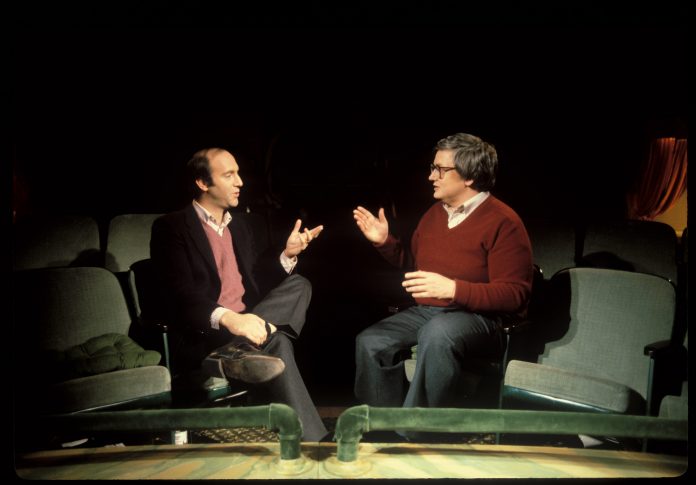
Never before has a film so thoroughly captured the essence of life itself. Based on Roger Ebert’s memoir of the same name, this biographical documentary is directed by Steve James, a personal friend of Ebert’s. Well-researched and emotional, Life Itself brings to life the different chapters from Ebert’s autobiography, and captures the nature of who he was as an individual. 

Ebert, who passed away in 2013, is among the most influential film critics of all time. He began writing at an early age; “I can write, I just always could,” he later said. He became a reporter, then the editor-in-chief of The Daily Illini during his time at the University of Illinois.

Later, he landed a job at the Chicago Sun-Times; when the paper’s longtime film critic retired, Ebert was given the job, and this became his entrance to the world of film criticism. He appeared with fellow critic Gene Siskel on the television programs Sneak Preview and At the Movies, and near the end of his life became an avid blogger. 

Ebert had a way with words that, coupled with his extensive knowledge of films, allowed him to see the details of films and the intentions of their directors. He also had a heart that seemed to accept everything, including life as it is. The film’s footage from Ebert’s 2013 hospital stay showed how, despite losing his lower jaw to cancer, he maintained a positive outlook. 

The film spends much of its running time on Ebert’s love-hate relationship with Gene Siskel. The two were polar opposites of each other; Ebert was a control freak, and the disorganized Siskel was his source of madness.

Siskel also knew how to push his buttons, and their arguments were well-known among their friends to go on behind the cameras. For example, the order for their names on the show — Siskel and Ebert or Ebert and Siskel — was decided by the flip of a coin, a common compromise between the two.

However, they eventually grew to respect each other. The day Siskel died, Ebert spent the day tweeting shared memories between the two. “I’ve never felt closer to a man,” he said. His relationship with his wife, Chaz, is also a prominent aspect of the film. “Chaz really liked him for who he is, not what he is,” says Siskel’s wife. “[Meeting Chaz] was life-altering for Roger; she changed his life and his personality dramatically.”

Ebert is portrayed in the film as intelligent and talented, but also a flawed human being. As one interviewee says, he was nice, “but not that nice.” He was known for socializing with the artists he criticized, and this behaviour elicited controversy for how it might influence his reviews.

Ultimately, the film maintains that Ebert was able to balance his professional and personal relationships, without challenging his writing.

The films depicts Ebert, with all his passion and dedication, trudging on despite the physical limitations caused by his cancer; it’s an inspiring portrait of courage. “People are interested in what you have to say, not how you say it,” Chaz tells him.

The documentary is well put-together, and does, in essence, capture life itself. While it is about Roger Ebert, Life Itself also reflects the conditions of life in general — what it means to live, to have lived, to die, and to be remembered.

Near his death, Ebert posted a blog entry titled “A Leave of Presence,” and the movie ends with this quote from the entry: “on this day of reflection I say again, thank you for going on this journey with me. I’ll see you at the movies.”

Life Itself is available on Video On Demand and iTunes on February 3, and on DVD and Blu-ray February 17. For more information, visit ebertmovie.com.

Mid-season NHL Draft checkup

0

Back in October, I pointed out some players to watch out for (not named McDavid and Eichel.) These two players were positioned to battle it out for the top two spots, and that hasn’t changed. Now with the season at the halfway point, it’s time to re-evaluate our draft predictions and see how right  — or more likely, wrong — I was.

Image Credit: Anders Henrikson

Oliver Kylington (Färjestad BK, SHL): Back in October, I said his draft stock would depend a lot on his performance in the World Juniors (WJCs). Unfortunately, he missed the tournament due to injury, so he wasn’t able to make an impact on a Swedish team that was eliminated in the semifinals. Now he risks being buried under a strong crop of US defencemen. Kylington has regressed; however, I figure he’ll still go in the top 10.

October Prediction: 4th Overall
Mid-season Prediction: 7th to 9th Overall

Image Credit: Matt Mead Photography

Dylan Strome (Erie Otters, OHL): Playing on a line with McDavid, the question was: can he score without McDavid? Well, McDavid’s injury may have been the best thing for Strome, as he was able to show he is an elite talent in his own right. Even with McDavid out, he was able to produce a pace of over a point per game, and sits on a ridiculous 85 points in 45 games. I said in October that there’s too much uncertainty in where he will be drafted, but now I’m almost certain he will be in the top five.

October Prediction: 7th to 11th Overall
Mid-season Prediction: Top 5


Mitch Marner (London Knights, OHL): Marner is putting up incredible numbers so far this season, with 93 points in 45 games (as of Tuesday, January 27) for the London Knights. In fact, since the end of the WJC, he has actually outscored Connor McDavid in the OHL. This season, Marner has had plenty more ice time, and has shown no sign of slowing down his torrid scoring pace. Marner is an elite offensive player, and will surely make it in the top five this year.

October Prediction: 8th Overall
Mid-season Prediction: Top 5

Image Credit: Valerie Wutti

Travis Konecny (Ottawa 67’s, OHL): Konecny may be the player whose draft stock has dropped the most since October — so much so that TSN expert Craig Button has him ranked 30th. One year after winning the OHL rookie of the year, Konechy has had a rough season, and is on pace to end up with fewer points than he had last year. However, he did have a good Ivan Hlinka Memorial Tournament, which is usually a good indication of future point production. He had six points in five games, and while he probably won’t be a top 10 pick, I don’t believe he will drop as far as Button is predicting. He could be a good consolation prize for a team bounced out in the first round of the playoffs.

October Prediction: 5th to 8th Overall
Mid-season Prediction: 16th to 22nd Overall

noah hanifin
Image Credit: John Quackenbos

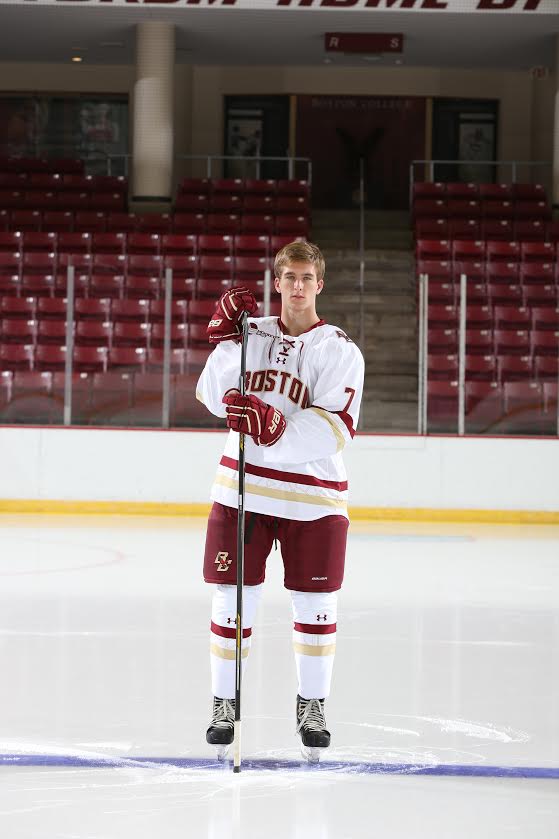
Noah Hanifin (Boston College, NCAA): Hanifin has had a great start to his collegiate career, with 14 points in 24 games for Boston College as a defenceman; he also had a solid WJCs. Originally thought to be the bona fide number three pick, his position may have fallen because of the solid play of Marner and Strome. He could slip to fourth or even fifth if a team has a more pressing need for a forward than a defensemen.

October Prediction: 3rd Overall
Mid-season Prediction: Top 5

Image Credit: Kingston Frontenacs Hockey Club

Lawson Crouse (Kingston Frontenacs, OHL): Crouse wasn’t included in the October list, but he deserves to be discussed this time around. One would think his 6’4” and 220 lb frame would transfer nicely into the NHL, but his relatively low point total (23 points in 32 games) leaves some questions. He should be a quality NHL player, but not good enough for him to be picked ahead of guys like Strome or Marner.

October Prediction: Not ranked
Mid-season Prediction: 10th to 12th Overall

Hollywood’s North Korea?

0

The stark concrete architecture, the ominous fog, the spotty WiFi — if you ever wanted to recreate the feeling of North Korea in the greater Vancouver area, SFU would be a prime candidate.

Though for obvious reasons, transforming our mountaintop campus into a totalitarian, extremist republic will never be a popular idea, the possibility of turning SFU into North Korea has been talked about. . . for a movie, at least.

When Vancouver natives Seth Rogen and Evan Goldberg came back to their hometown to film their new North Korea-based comedy movie The Interview in 2013, they had their hearts set on filming at SFU.

While the dispute that eventually led Rogen and Goldberg to recreate North Korea elsewhere in Vancouver certainly wasn’t the biggest struggle the duo faced in releasing their highly controversial movie, even when it came to shooting scenes at our school, their refusal to play by the rules caused problems for the film.

Super Mad


“We wanted to film more at the SFU main campus and they wouldn’t let us.” This was the message that Evan Goldberg wrote in reply to a fan during a live tweet of The Interview on December 28.

The comment was in response to a follower named ‘Judy Geek’ (@thepopcultural), who commented that “the grey expanse of stairs perfectly encapsulate the totalitarian regime of NK & SFU’s design.”

Even after all that happened with the movie — the reported threats of “merciless” retaliation against the United States if the film was released, allegedly from the North Korean government; the Sony Pictures hack which legitimized the possibility of violence; the cancellation of the film’s theatrical release which had relegated it to streaming services like YouTube and Google Play — The Interview filmmakers were still upset about not getting to film at SFU.

From an outsider’s perspective, Goldberg’s complaint seems reasonable. SFU is rarely featured in any big movies. Instead, the campus only shows up in episodes of sci-fi television shows such as Battlestar Galactica and low-rent CW shows like Hellcats. How could SFU possibly refuse the call of some of Hollywood’s biggest stars?

The answer, according to SFU, is quite simple: they didn’t refuse anyone.

“We never did say they couldn’t film here,” John Briggs, Supervisor of Client Services at SFU’s Facility Services told The Peak in response to Goldberg’s tweet. “The door is open. They were perfectly welcome to film here. It was their choice not to come here.”

Agreement Disagreement


Anything that has to do with filming at SFU, whether it be feature films, television shows, or student projects, goes through John Briggs’ office. According to Briggs, who has been in his position for the past seven years, a member of The Interview’s team first contacted his office in late July 2013 to inquire about filming on campus.

The initial inquiry came when Briggs was off on sick leave, and a now-retired building technologist took the first phone call. Although he was not coming into work, Briggs followed the early conversations through email.

“There was a whole lot of back and forth, and it’s very confusing,” Briggs explained concerning The Interview’s request to film at SFU. While he did not go into specific details, Briggs made it clear that the problem came down to the filmmakers’ refusal to sign SFU’s film location license agreement.

“SFU’s policy is that this is our licensing agreement for you to come on our property and film here. It protects our interests. We make no changes to the agreement,” Briggs stated. He explained that this situation happens occasionally with requests from feature films.

“We wanted to film more at the SFU main campus and they wouldn’t let us.”

Evan Goldberg on Twitter


“I tell them that up front, in the initial phone call. I make that very clear.  And they say, ‘okay, I understand,’” Briggs continued, explaining the routine process. “Nevertheless, when it [goes to their] lawyers, the lawyers often will say, ‘I want to change all these things,’ and we’ll get a copy back with a bunch of red pen marks with things they want changed. And we just say, ‘no, we don’t do that.’

“In this case, they decided to make a big issue out of it,” stated Briggs.

“[They] essentially refused to come here unless t hey could make changes to the agreement. It’s that simple,” he explained. “And SFU’s policy is that we don’t make the changes. We can’t be making changes for everybody that wants to film here.”

While Briggs could not recall any of the specific changes that were requested by The Interview filmmakers, he said that they were “such minor, insignificant things” that he couldn’t understand why they would be an issue. He explained that it is not worth SFU’s time or effort to make a different agreement for every film, and it’s rare that anyone ever has a problem with.

“If 98 per cent of filmmakers can come here and sign it without any question and go on and make their film, then what’s wrong with you guys? Why do you have an issue with it?” Briggs questioned. “There’s nothing in here that threatens the film. So why is there an issue?”

Recourse, Of Course


“Some people want to make it sound like SFU is, I don’t know, somehow confrontational with the film industry, and it just isn’t,” Briggs told The Peak during his interview. He said that SFU has a simple agreement which is based on 50 years of films being made on campus, and that it simply protects the university’s interests.

Based on the finished product, however, The Interview was clearly able to come to agreements to film at other public institutions in Vancouver. Scenes of the movie were filmed at both the Robson Square Court Houses and the Vancouver Art Gallery, although the details of these agreements are kept closed by the City of Vancouver, who do not disclose this sort of information.

While not used as a filming location in this particular movie, the University of British Columbia also does not seem to keep as stringent of a policy as SFU.

According to UBC’s Events and Film Liaison, Arlene Chan, although “a standard UBC Contract for Filming is required for all commercial and documentary productions,” she told The Peak that “from time to time, requests are received for minor contract changes.”

“Protocols have been established to manage the requests, and in conjunction with UBC Legal Counsel, UBC has approved changes to the Contract so long as UBC’s interests are not compromised,” Chan explained.

Briggs, on the other hand, was firm in his belief that the benefit of films using SFU as a location is not big enough to ever consider making even minor changes for Hollywood productions.

“We charge $2500 a day to be on campus,” he said, explaining that as an educational institution, SFU is not in the business of making money off movies. “That $2500 has been our charge for longer than I have been here. I think it’s the original price set back 40 some years ago.” 

“[Rogen]’s got a big ego and he was willing to go an awful long way with this.”

John Briggs


Whether it be a toothpaste commercial or a potential Oscar-winner, everyone gets treated the same, according to Briggs. The publicity behind a movie with Seth Rogen-level star-power is not an incentive, either.

“SFU doesn’t get recognition in the movie. We don’t want that,” he explained. “The only way SFU is identifiable in the film is, people who know SFU, they might recognize it.”

While Briggs admits that social media has changed their chances of remaining undetected, this portion of the policy is the result of past mistakes.

“The reason we don’t want recognition is, it goes back years ago [to] movies made here that people misrepresented [. . .] And they turned out to be controversial issues and SFU was dragged into it, and [we] don’t want that.”

Briggs also said that while SFU asks for a script of all movies that are to be filmed on campus, there are very few unacceptable choices when it comes to the subject material.

“We’re making sure it’s not something like pornography,” he explained. “There have been pornography movies made here. They weren’t intended to be, as far as we knew . . .This goes back a long time ago. Really, that can’t happen here anymore.”

“And that’s why we have these agreements now. So that if something does happen after the fact, SFU has a recourse with the filmmaker.”

So, while Goldberg’s tweet may be interpreted as SFU being against the film because of its controversial nature, according to Briggs the only issue was the license agreement.

Major Ego


Since the changes that were requested were apparently so minor, for Briggs, the refusal to sign the standard license agreement was the result of one simple issue: ego.

“If you’re going to take a few words and sentences in this agreement and insist that they must be changed to suit you, that makes no sense. From a practical business point of view, it just doesn’t make any sense,” Briggs explained. “Some people in the film business [though] have really big egos, and if they don’t get what they want . . . let me tell you, in the film business, ‘no’ is not a word in many people’s vocabulary.

“They’re not easy people to deal with, in a lot of cases [. . .] they believe, probably, in their mind, that we told them that they can’t film here, and that’s just not true.”

Briggs later explained the situation more clearly.

“He really, really wanted to come here and film at SFU. But for some petty little thing that people wanted to make changes to, he wasn’t getting his way. He being Seth Rogen,” Briggs said. “He has a pretty big ego. There’s lots of newspaper articles where he was being interviewed and quoted at the time he was making the movie here.

“So he wasn’t getting his way, so like always, it was ‘what is it going to take to make this happen?’ And he kept going up higher and higher and people were being told ‘go up higher and higher and higher until you find that person who’s going to say, never mind the agreement, you can come here and make the movie.’”

While the situation should not have been dragged out at all, according to Briggs, instead of signing the agreement or just moving along The Interview filmmakers tried to push their changes by going over his head, but to no avail.

“It even went to the President’s office and the President said, “well, is there something wrong with the agreement?’”

As a relatively new president, Briggs said that Andrew Petter had never encountered this situation before.

“[Petter] said, let’s get the legal department, the outside lawyers that they use, to take a look at it and see if there is something wrong with it. And they took a look at it and they replied back with ‘No, there’s nothing wrong with it.’”

Apparently, this was as far as Rogen and his team got. According to Briggs, they finally sent a note cancelling their plans to film at SFU on November 17, 2013.

Is this the End?


While Briggs says that all his contact with Rogen and his team was through phone calls and emails, tweets and photos posted on Twitter show that Rogen did make some visits to SFU at the time, although what he was doing here cannot be confirmed.

Twitter user Steven Hoang (@stevenvhoang) tweeted about Rogen being at SFU on July 30 2013, which coincides with their initial request time. He posted again on October 1, just prior to the start of principal photography on The Interview, with a picture of himself and Rogen near the water fountain in Convocation Mall.

Another photo of Rogen taken on that day by student-athlete Alex Iezzi created a fair amount of buzz — it was retweeted by the SFSS’s official Twitter, and a couple of local celebrity sightings websites.

Although Iezzi told The Peak via Twitter that he was too starstruck to ask why Rogen was on campus, his story implies that the comedy star was not trying to be secretive.

“One of his crew saw me and my teammate in awe of being 20 feet away from Seth Rogen, so he asked if we wanted a picture,” Iezzi remembered. “After the photo, that was the end of that. Though I heard through some friends or others, that I think he may have been looking for a location.”

Although Briggs says he was not aware that Rogen had visited campus, he told The Peak that “he may have come on campus to try and knock on somebody’s door to do a drop-in, and maybe try and talk somebody into making the change.

“He may have done that, I don’t know. I didn’t even know he was here. It doesn’t surprise me that he would show up to do that — like I say, he’s got a big ego,” Briggs speculated.

Briggs was adamant, however, that SFU stood its ground no matter what happened.

“[Rogen] was willing to go an awful long way with this. And the president of the university wasn’t enough,” he explained. “He still didn’t get his way. And so I’m not surprised that there’s comments coming out in places like Twitter saying ‘SFU refused to let us film here,’ and that is not the truth of it. It just wasn’t. But I get that that’s how they see it. People see things different ways, from whatever agenda they live by.”

The Peak also reached out to both Seth Rogen and Evan Goldberg for statements regarding the situation and the tweet, but at press time have not received any replies. However, Shawn Williamson, who worked as an executive producer for The Interview, was able to provide a brief comment.

“Evan is correct, and so is the university, but the university’s contract was the problem,” Williamson explained in a phone call on Friday. “SFU made it clear in a meeting we had with them that they were going to decide whether [ . . . ]they were going to become a film destination or not. And if they were going to they would have to change their contract, and they obviously didn’t, so I don’t think you’ll see many studio movies filming there.”

While Williamson said that SFU’s film location license agreement included “a major legal issue with all film studios in Hollywood,” and that he “knew every detail [of the changes which were requested]”, at press time he stated he could not get into any further details before talking to Sony publicity.

Briggs however made no-indication that SFU was the source of the problem.

“We welcome [filmmakers] to come here and make [their] film[s]” Briggs said. “We aren’t in the business of filmmaking, we are in the business of education, so we comply with peoples’ requests to film here when we can.”

At one point, Briggs even extended SFU’s openness to the film industry even further.

“If he wants to come film a sequel here, he’s welcome to come . . . we’d be happy to work with him,” Briggs said near the end of his interview. “It’d be the same thing though, [Rogen] has to sign the agreement.”

While a sequel to The Interview is fairly unlikely, it seems as though our campus could still be featured in a Seth Rogen movie someday. It just won’t be Hollywood’s North Korea anytime soon.


Cluttered with memories

0

No longer living with my parents, I’m surprised that I haven’t yet moved past the concept of having “a room.” In my entire rented suite, only my room seems suited to holding my mass collection of life-relics. It’s surrounded by countless items that only mean something when I tell stories about them. And I tell these stories to myself.

Four years ago, in a construction yard in east Maple Ridge, I found a license plate that expired in 1978. It now leans on my wall.

I used to walk my golden retriever around that huge construction yard. Her name was Buffy, and she had fear issues. You couldn’t get close to her if she was chewing anything, or she claimed a spot to lie in. She would growl and snap at us in a way that looked like aggression, but it would be better described as fear. She was taken away from her mother too early, and seemed to live in fear of anything being taken from her. She bit my foot hard once when I was 12, and it bled from two dark red punctures.

We walked in the construction yard because the exercise would make her sleep. We also walked in the construction yard because it made me feel like I was in a novel. It seemed like the place to reflect. Buffy and I would sit on the highest hill, we would breathe in dust and cedar needles, and I would look on the hill out at the blue-grey tops of buildings, trying to guess which city was which.

My dog Buffy and I would sit on the highest hill, and we would breathe in the dust and cedar needles.

Now, the license plate is a relic of Maple Ridge for me, the place that I loved as a kid, and that was like wet sand to get out of every morning as an adult. The license plate is also a relic of Buffy, the dog that our family told ourselves we could love enough to fix if we just kept her longer, if we just walked her more, or if we just got along better ourselves. It took us seven years to decide that she wasn’t right for us, and to give her to a shelter that found a family that would be right for her.

I and my whole family still feel guilty about Buffy. We’re guilty because we kept her for so long, and we’re guilty because we gave her away so soon.

I’m in a similar situation with the things in my room. If I give my old guitar away, if I erase pictures on a whiteboard, if I take down the pamphlets from the temple I visited, I’ll lose the past, and those points from which to grow. I’ll forget the calm of holding the ancient license plate, of walking home from high school dancing to Defiance, Ohio on CD, or how I used to keep an emergency kit with me everywhere. I can’t forget the few weeks in my young adult life that felt hopeless, and the drive I found to carry on despite them.

Every time I revisit the past, it’s hazier. I used to give out books and expect them back. Now I make a conscious effort to do so without that expectation. I love the idea of passing on a story that made me happy without memorizing it, and seeing if it’s important enough that I’ll remember it.

I would love to tell you to give away your own relics, and I would to tell you that I planted my license plate in another construction yard somewhere, and that I hope it ends on someone else’s wall.

But it’s still in my room, and I’m not ready to let it go.

Meet the Clan: Rachel Fradgley

0
Although the London, ON native was homesick at first, a trip home gave her the perspective needed to carry on.

Screen Shot 2015-01-30 at 10.48.09 PM“During Christmas, it’s weird because there’s not as much snow,” muses London, ON native Rachel Fradgley about her new home in the Lower Mainland. “But the weather here is so much nicer than Ontario. It feels like spring. I really like that.”

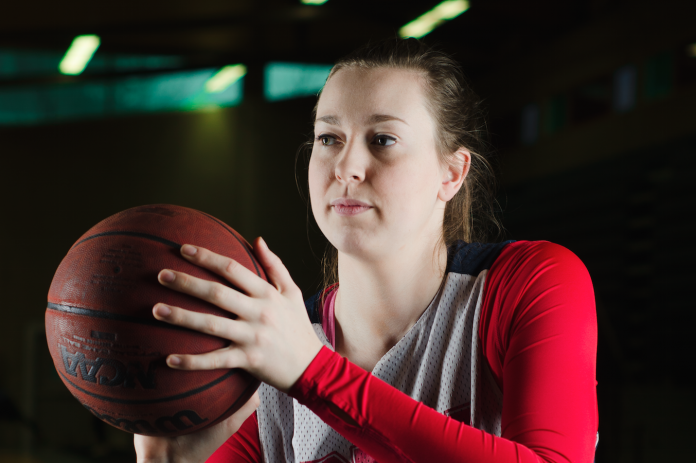
The 6’2” forward seems to have adjusted to her new surroundings quite well. Only in her first year, she is already a starter on the women’s basketball team — often playing with senior star Erin Chambers. Notably, she led the team in scoring once this season, in a game against Saint Martin’s University.

However, despite her strong start in SFU athletics, it was tough for the young athlete to make the trip across the continent. “First semester I was really homesick — I didn’t think I’d be as homesick as I was,” she admits.

It took a trip home to give Rachel the perspective she needed. “Once I went back for Christmas and I came back, I just felt a lot better because I realized that this is where I want to be.”

Being so far from home was hardly the first hardship that she had to endure, and overcome. In her grade 11 year, Rachel tore her ACL, which some thought could be career-ending for the high school junior.

“It [was] a challenge,” Rachel says about having to watch her teammates play without her. “It made me really upset a lot of the time, but my teammates were really good about it. They all tried to include me and they tried to make it a super positive experience, rather than a negative one.”

Her injury did end up having a silver lining — it gave her time to think about the sport she loves, and what it means to her.

“I learned a lot about myself, tearing my ACL. I think you learn how much you like the sport and how much adversity you’re willing to go over to get back.”

The idea of turning this negative into a positive, and persevering through it, also influenced Rachel academically, causing her to study the mind. “When I got injured [. . .] there’s a big mental part about it, so I think getting over that mental aspect drew me into psychology.”

In truth, she admits that she’s still “keeping her options open” academically and “trying to explore a bit.” But athletically, there is no question — basketball is her sport. Having started playing in grade five, Rachel says she initially chose basketball because of a family friend.

“One of my dad’s friends ran a basketball program in London, and I have always been really tall, even as a kid. So he noticed that and was like, ‘You should come out to our house leagues and just see what it’s like,’ and I just really enjoyed it.”

However, it wasn’t until later that she became a full-time basketball player, having initially split her time between two sports.

“For three years I was doing both dance and basketball,” she explains. “Then in grade eight, I decided to quit dance and focus solely on basketball.”

Was it a tough decision to quit dancing?

“No,” Rachel says bluntly. “Towards the end of my dance career, my heart wasn’t in it anymore. I wasn’t practicing. I wanted to focus more on basketball.”

This focus on one sport soon paid off for Rachel. Her talent was quickly recognized, and even though she missed a significant portion of prime playing time with her injury — missing the initial tryouts — she made the Canadian national team in her senior year.

She represented Canada at the FIBA Americas U18 Championship for Women held in August 2014, facing international teams from both North and South America. The team finished with a silver medal.

Although she struggled with the distance away from home, her international experience made the transition to university basketball relatively easy.

Screen Shot 2015-01-30 at 10.49.39 PM
“The jump from high school to national was a big jump, [but] from the national level to university was a bit of a smaller jump, because I was already used to playing at a bit of a higher level,” she notes.

Still in the midst of her first year, Rachel is looking forward to where she — and her team — can grow. “I think there have been points where we can be a little bit better, but we’re a young team.”