Home Blog Page 1041

Cleaning out custodial contempt

0
Photo courtesy of Scott Ehardt (Wikipedia)

While my fingers fumbled over the keyboard one lonely evening in The Peak office last week, an unexpected visitor stumbled through the door. I’d never seen him in my life — a small, frail, elderly man with his head down, eyes to the floor.

He had a key to our office; this fragile stranger, whom I barely noticed until I heard him grunt as he finally managed to wiggle his key free from the door. The Filipino man teetered slightly as he turned to survey the office as if for the first time. He squinted at me for a mere second before reaching back through the doorway to drag in his reluctant companion: a mop.

And then he began to work, sloshing his mop into a small bucket before plastering it to the floor. That was that. There was no greeting from either of us; no “hello.” In fact, this elderly man, adorned in his rusty-blue uniform and cap, barely seemed to notice me.

I racked my brains for the last time I’d actually acknowledged a custodian, and quite honestly these memories were hazy.

“Hello there!” I stated rather loudly. The man did not reply; his thin arms continued to swing back and forth. I tried again, “Hi there, sir!” Still nothing. I stood from my chair, walked the few steps, and planted myself in front of him. “Excuse me, sir!” The man continued to mop, his moustache twitching, his eyes rooted to the floor. Maybe his state of hearing isn’t the best, I considered.

I leaned forward slightly and waved my hands (not unkindly) in the man’s vision. He jumped back, completely startled, the mop slipped a little. “Oh, hello! Yes?” he stuttered through a slight Filipino accent, a combination of shock and confusion on his face. After declining my attempts to help him clean a few things around the office, a conversation then ensued, though it seemed at first as if this custodian had seen a ghost.

That evening I learned about the life of a janitor. Our conversation wasn’t at length, though by the end the man seemed delighted to have been able to relay these aspects of his life. He then whistled for the 40 minutes it took to clean the rest of the office, pausing intermittently to hobble through the door and cheerfully ask me questions about my life.

After my first memorable encounter with a custodian, I must say that a custodial job does not seem like an easy one. Janitors must engage in rigourous shift-work at odd hours, subject themselves to some incredibly unsanitary environments, and have little to no contact with anybody, all for a much smaller salary than one might assume. This is all done with the intent to keep ‘the rest of us’ healthy and happy in our squeaky clean surroundings.

Unfortunately, while custodians work diligently, much of their work goes unacknowledged, especially at SFU. While brandishing their bright-yellow gloves, they sweep and mop away, unseen amongst countless students and staff, all of whom go about their daily lives without saying so much as a “thank you.” Our subconscious disrespect for janitorial work has these employees isolated in a mental bubble of Rubbermaids and sanitation chemicals — silent, eyes averted, phantoms to their social surroundings.

After all, very few members of the public will actively acknowledge the important work that they do, so they might as well get used to it. Right? What an unfortunate situation we’ve landed ourselves in.

My new custodial acquaintance announced that he’d given our office sink-space an extra scrub. I thanked him before he shuffled away with his mop, grinning as he locked the door behind him.

Vote Ally Baharoon

0

BW-poster

Orangutans adapt to their human-altered environments

0
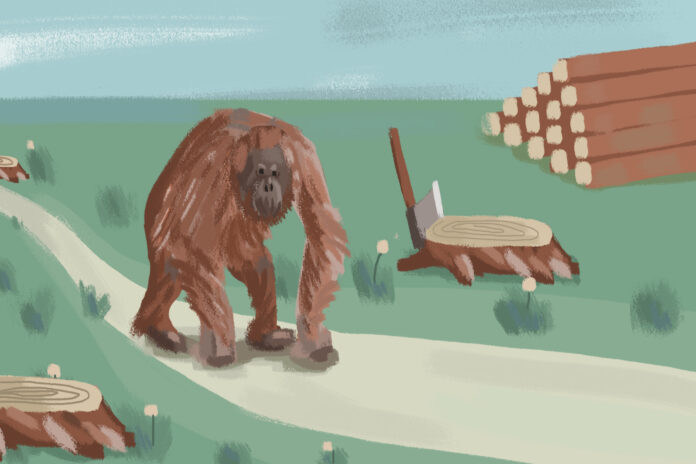
Orangutans are shifting from a predominantly arboreal life to one on the road. - Chen Chen
Orangutans are shifting from a predominantly arboreal life to one on the road. – Chen Chen

A new discovery by SFU doctoral student Brent Loken demonstrates that orangutans may be even more adaptable than originally thought.

His research reveals the orangutan population of Borneo may be in the process of adapting to the rapid and unprecedented loss of their tropical and subtropical habitat. Their forests have been increasingly eroded by timber plantations, agro-forestry, and mines.

Loken has been conducting research in Borneo since 2011, and began studying orangutans shortly thereafter.

Originally Loken was doing research on clouded leopards when he noticed that a surprising number of camera trap photos were of orangutans. Upon further investigation, he discovered a lack of previous studies on orangutan terrestriality — that is, their behaviour on the ground. Loken published his first paper on orangutan terrestriality in 2013, which, to his knowledge, was the very first paper published on this topic.

This study is unique in that it indicates that orangutans are not only arboreal, but that they are terrestrial under many circumstances. They seem to walk on the ground in logged forests and take advantage of newly-built logging roads.

They also walk on the ground in primary forests, where one would think to only find them in trees.

Great apes are very intelligent animals, and share approximately 97 per cent of the same DNA with humans.

“Orangutans are incredible animals to study,” Loken stated. “Their name literally means ‘man of the forest,’ and when you see them in the forest, you feel that you are looking at a long-lost cousin.”

He continued, “getting to study this amazing animal is truly a gift, and I’m happy to be able to share some interesting findings about orangutans with people around the world.”

Ultimately, Loken’s findings indicate that orangutans are very opportunistic and possibly even resilient to some level of human disturbance. He noted that this “is important because of the potential role of sustainably logged forests for orangutan conservation.”

For now, orangutans may be making use of the newly-created roads, but the threshold is still unknown for the level of disturbance they can survive. Despite their adaptability, Loken maintains that these forests should take into account orangutan conservation strategies.

“We must be careful not to reinforce the notion that orangutans can survive in any human-altered landscape,” he concluded. “Orangutans still need trees, and lots of them, and protection of Borneo’s remaining forests should continue to be of highest priority for both Indonesia and the global community.”

Scientist maps Vancouver’s hot spots

0
EPSON MFP image
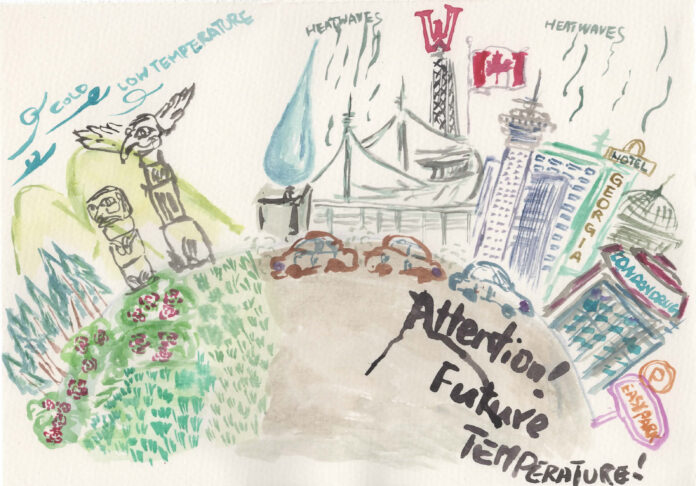
Knudby says these cooling strategies will become even more important in future years. – Momo Lin

Mapping the temperature differences across Vancouver could be key to preventing heat-related mortalities in the future, and SFU research is at the forefront of this endeavor.

This project was undertaken following the heatwave in 2009 that was linked to the deaths of over 100 individuals in Metro Vancouver, according to the BC Centre for Disease Control.

Anders Knudby, SFU assistant professor of geography and project leader, explained, “I started looking into what [local scientists already] knew about the actual heat and how it’s distributed, and we didn’t actually know a lot about that.”

To map these hot spots, Knudby utilized sources including satellite data as well as web stations run by both Environment Canada and Weather Underground. The satellite data revealed detailed thermal images showing temperature variations throughout Vancouver of up to 4–5°C.

By bringing together this data, Knudby was able to make predictions about which areas of Vancouver would experience the most extreme variability in heat.

The warmest regions were those containing large areas of asphalt and concrete, such as parking lots, because of their ability to absorb high quantities of heat. Cooler regions were associated with green spaces such as parks, or areas close to large bodies of water. Stanley Park, for example, is an exceptionally cool location.

“There is an unanswered question, which is whether you are more susceptible to getting sick or dying from hot weather if you live in one of these hot zones,” said Knudby. Based on his findings, he predicts that these mapped hot spots can be linked to mortalities associated with the 2009 heatwave.

While this prediction may seem intuitive, it has not yet been studied in Vancouver. However, research in cities such as Montreal and Paris have already shown that local temperatures do seem to matter in regards to health in the context of a heatwave.

With the information from his project, Knudby hopes to be able to provide guidance for city planners in order to make improved decisions about urban design with temperature in mind.

“[Particularly] with a changing climate, what seems to be happening is that the area becomes hotter overall, and we see a greater frequency of extreme heat events,” Knudby explained.

The next step would be to look into ways to cool down a neighborhood in order to decrease future heat-related mortalities. This could be accomplished by increasing green spaces by planting more street trees or building green roofs. Other options include increasing the reflectivity of roofs by painting them white, and increasing open areas of water.

SFU students selected for Next 36 entrepreneurship cohort

0
Sidhu and Watkins advise students to take calculated risks and to not be discouraged by failure. - Gursher Sidhu and Lauren Watkins

After reviews of 630 applications, two SFU students have been chosen as part of the 2015 cohort of The Next 36 initiative, a national entrepreneurial leadership program.

Gursher Sidhu and Lauren Watkins are two of the 38 students who were chosen for The Next 36 program at the National Selection Weekend held in Toronto in early January. Over the next six months, they will be mentored by some of Canada’s top business leaders to expand their own entrepreneurial endeavors.

The Next 36 program is the leading undergraduate entrepreneurship development program in Canada. It provides not only mentorship for participants from notable business leaders and entrepreneurs, but also the chance to access funding from venture capitalists.

Through a series of venture-building workshops, hands-on classes, investment and networking events, the program is designed to support these participants in their entrepreneurial efforts. Both Sidhu and Watkins aim to develop successful business start-ups upon their completion of the program.

Sidhu is a fourth year Mechatronic Engineering major who initially became interested in pursuing entrepreneurship through his work with the Tech Entrepreneurship@SFU program, in which business and engineering students collaborate to create innovative technological products. Sidhu gained an entrepreneurial mindset through participating in workshops, panel discussions, and networking events.

Sidhu said of his experiences, “I have learned that leadership starts with self-awareness. A successful leader is an individual that communicates effectively, believes in realist optimism, respects diversity, and is a ‘doer rather than delegator.’”

Watkins was the project manager of an initiative called Banner Bags, a sustainable program that took banners from companies that were no longer using them to high school sewing classes where they would be made into reusable bags.

During her time as project manager, she launched the first Beyond the Bag showcase at SFU, where high school students showcased their clothing and accessories that they had created.  Winners of the design contest won scholarship money for the post-secondary institution of their choice.

“I [don’t want to do] the same thing every day,” said Watkins. “I want to solve real problems and make a difference in people’s lives. The thought of creating a sustainable business makes me excited to wake up and work every day to make it happen.”

When asked what advice they had for aspiring entrepreneurs, Sidhu replied, “I believe that in order to create your own luck and be a successful leader and entrepreneur, you have to be curious about the opportunities available, show persistence on your journey, and take calculated risks to reach your goals successfully. [Making] the most out of low-resource situations should drive you as an entrepreneur.” 

Watkins also offered some wisdom:  “My advice would be to [not] get discouraged by failure. Learn quickly from your mistakes and be prepared to pivot until you get it right. Take risks, work hard, and enjoy it.”

The week in comics

0


CMYK- Seagull #1
Seagull Square (Jill Mandrake)

CMYK-Agoraphobia Man Prof 3 copyThe Adventures of Agoraphobia Man: World Defender (Jacey Gibb)

CMYK-PeersPeers (Leslie Lu)

CMYK-Pun 2 3Pun 2 3 (Sarah Walker)

University Briefs

0

UBC sex assault reports differ from police statistics

In a response to a CBC News survey, UBC stated that 16 students had reported a sexual assault between 2009 and 2013, a number which heavily contrasts with data from the RCMP detachment, which showed over 70 sexual assault reports.

UBC vice president of students says the school needs to be focused on making sure students get the help they need.

“I think what’s most important, not about the report itself or about the number that’s published, but that UBC as a campus culture [. . .] holds a space where the intention of care and inclusion are very much present,” she said.

With files from CBC News


Cristiano Ronaldo studies offered at UBCO

The University of British Columbia Okanagan is currently offering a fourth-year sociology course studying Portugese soccer player Cristiano Ronaldo’s impact on social and cultural trends.

“What makes Ronaldo so special is his football skill and his football prowess,” sociology professor Luis Aguiar said. “But what also makes him special is that he has visibility beyond football world. He has cultural appeal.”

The course will not focus on Ronaldo’s celebrity status, but rather on the player’s reputation to examine how social phenomenon is used to construct identity and nationality.

With files from UBC News and CBS Sports


McGill students and faculty call for divestment

Both faculty members and students at McGill University are calling on the board of directors to divest its endowment fund from fossil fuel companies, with an urgent focus on companies concerning the Canadian oil sands.

“McGill’s students are asking the university to take a leadership position in the transition to more sustainable energy practices,” said Darin Barney, Canada Research Chair in Technology and Citizenship at McGill.

Beginning in the fall of 2012, the petition for divestment has over 1,500 signatures from students, staff, alumni, and faculty, along with endorsements from three major student associations.

With files from Global News

Woohoo/Boohoo

0

Carpooling

Are you travelling somewhere with your friends? Why take your own car when you carpool? Apart from the many jovial songs you and your buddies can sing together along the way, carpooling provides for some other heartwarming benefits.

Firstly, you’ll make friends with your wallet: carpooling is cheap. Because you’ve crammed yourself into a tiny car with all your pals, you and your beloved money can be together for longer. Secondly, you’ll make friends with the environment. In using only one vehicle, you’ll be reducing greenhouse gas emissions. A carpool will probably allow you to make more new human friends, as well.

Let’s face it: carpooling is a way for you to make friends with practically everything; a mode of transportation that lets everyone be warm and fuzzy, rich, and environmentally friendly. Carpooling is the key to saving the planet!

Car-pooling

A few years ago an acquaintance of mine, after a glorious night of heavy intoxication, drove his poor ‘98 Toyota Corolla into his swimming pool. Needless to say, the aftermath wasn’t a pleasant experience.

After escaping from the vehicle unharmed, he was then charged with driving under the influence, and his vehicle, after having flooded, didn’t ever work properly again. Unfortunately, it was an incident many of us will never forget.

Lesson learned: when driving, watch out for swimming pools, folks! They’re a good way for you to divorce your wallet, lose friends, damage a perfectly good vehicle and destroy a nice swimming pool. It would be wise to not risk your life, or anyone’s else, by car-pooling.

SFU’s Got Talent showcases student performances

0
Kevin Liu took the second place title with his creative dance moves. - Jose Eduardo Olivas Caro
Kevin Liu took the second place title with his creative dance moves. – Jose Eduardo Olivas Caro

On a rainy Friday night just before reading break, a few hundred people packed the SFU theatre to watch SFU’s Got Talent, a talent competition organized by the Simon Fraser Student Society (SFSS).

The event had been two months in the works, and the 10 contestants who performed were cherry picked from over 60 performers who auditioned.

Thea Loo and Kellen Jackson, a duo who had never performed together before the event, stole the show, first with a jazzy acoustic cover of Britney Spears’ “Toxic,” then with a rousing rendition of Sia’s “Chandelier.”

They eventually took home the first place title, a cash prize of $1,000, and the chance to record their very own single with professional production with Compound Recordings.

“We were just excited to perform everything we prepared,” said the winning duo. Loo explained that the nerves before the final performance were intense. “To be honest, I was on the ground stretching my back because it hurts from the adrenaline.”

The scale of the event was much larger than in years before. Shery Alam, the sponsorship officer, said that there was a 300 to 400 per cent increase in ticket sales from the last SFU’s Got Talent.

The second-place winner was Kevin Liu, a first year business student, who impressed the judges with his dance moves. Said Kevin about his talent, “When I dance, I just get really happy. When I get into my own feel and do my own thing I can just do it for hours.”

Chanel Viner, one of the three local artists who served as judges for the event, said of the night, “I thought it was a great way for students at SFU to get together and share what they believe in, and what they’ve been working so hard for.”

The show was filled with spectacle and spontaneous moments, such as when host Ally Baharoon decided to dance and lip synch to disco classic “I Will Survive.”

Other highlights of the show included Jessie Tran, who wowed the crowd with a dance performance done in a cheetah onesie to songs like “Eye of the Tiger” and “Anaconda,” interspersed with audio clips from a nature documentary.

Tran won the fourth-place prize, and was invited along with the other top four contestants to perform at SFU’s Relay for Life.

After the show ended, many attendees moved to the Highland Pub for a lively afterparty, during which the winners were presented with their prizes.

Karan Thukral, the logistics officer, was pleased with how the show went. “I see this as the beginning of appreciation of talent at SFU,” he said. “This will be a strong foundation for building community at SFU.”

Graduate student society AGM discussed elections, term limits

0

The GSS held their Annual General Meeting (AGM) on Wednesday, Feb. 4. They discussed issues concerning executive elections, council speaker appointments, and limiting executive committee members’ terms.

When the meeting began at 1:30 p.m., only 83 members were present, failing to reach quorum of 100. As such, the GSS was only able to consider regular business, such as the reports from executives and the auditor.

In the auditor’s report, he singled out the Guard.me Health and Dental Plan as the greatest expense for the society. Students have repeatedly raised concerns over the plan for over a year now. The society also had a budget surplus of $58,426, which was allocated to the organization’s Contingency Fund.

Approximately 45 minutes into the meeting, the AGM met its quorum of 100 members and began discussing its special resolutions.

The first motion up for discussion concerned changing the council speaker appointment from semesterly to annually. According to the presentation, this would allow “for more stability for the speaker and [reduce] administrative burden on council and the society.”

Members voted in favour of the change, despite some concerns that should a poor speaker be appointed, they could not be removed from the position for a year.

Those present then discussed the possibility of synchronizing the GSS executive elections in a single spring election, instead of two separate elections as it currently operates. Arguments against the motion noted the difficulty of training an entirely new team all at once.

PhD candidate Jeffrey Zurek countered the argument that a single synchronized election would reduce costs, stating that there were more important reasons for holding multiple elections periods. “More elections, within reason obviously, is a good thing for a democratic society,” he advocated.

The motion ultimately failed, with 39 in favour, 44 opposed, and 12 abstaining.

Graduate students in attendance also discussed limiting executive committee members’ terms to two years. Mike Soron, the AGM chair and executive director of Sustainable SFU, jokingly asked if members wanted to end the “reign of terror.”

Some in attendance raised concerns that this might result in vacancies on the board should the only candidate running be a returning executive. However, others countered that limiting terms would open the space for new candidates.

Members ultimately voted to limit executives to two terms in the same position, and four terms total.

The GSS AGM concluded at 3:15 p.m., with members invited to the Highland Pub for burgers and drinks at an afterparty.