Home Blog Page 1038

Course puts student DNA under the microscope

0
The test will also tell students important clues about their ancestry. - .K. Uzodinma
The test will also tell students important clues about their ancestry. -  .K. Uzodinma
The test will also tell students important clues about their ancestry. – .K. Uzodinma

SFU genomics students are taking a closer look at their DNA than they’ve ever been able to before.

As part of MBB 462, students can opt to send in their DNA in the form of cheek cells in their spit to 23andMe, a private American company that offers genetic testing for $199.

The tests reveal genetic predispositions to certain diseases and the ancestry of the client, as well as statistics on the amount of their DNA that may have come from Neanderthals.

Ryan Morin, an assistant professor of MBB who has taught the course since Spring 2014, said that “in the context of a course like human genomics, it’s a good opportunity to offer [the 23andMe testing].” As part of the course, students learn about the complexity of human DNA as it relates to the immune system and diseases like cancer.

This isn’t the first time SFU students have investigated their own genes. This semester, students in HSCI 442 analyzed the part of their DNA that interacts with their immune response. They have been studying how forms of a certain gene, HLA, affect immune cells’ reactions to other cells that are infected with a virus. Zabrina Brumme in the Faculty of Health Science is researching how that variability affects people with HIV.

The use of genetic testing for treatment has been making headlines in provincial news. Recently, a BC woman named Trish Keating received treatment for her cancer with consideration paid to the specific genetic makeup of her tumour. She was treated with a drug normally used for treating high blood pressure and it proved to be effective, rendering her cancer undetectable.

This type of tailored approach to treatment is referred to as ‘personalized medicine,’ and has been a long-standing goal of genomics research.

However, the results of 23andMe testing aren’t meant for diagnostic use, leading critics to question the results’ accuracy. Morin acknowledged that in any test like this, “We usually can only capture a small fraction of where the genetics are in the genome [. . .] we are missing part of the story.”

There are also other hurdles that genetic testing must go through in order to become widespread practice. In 2013, 23andMe did not receive approval from the American Food and Drug Administration (FDA) due to the fact that their test would count as a “medical device.” As such, it was warned to stop offering their test in the United States.

Despite these setbacks, the potential for 23andMe looks promising. In February of this year, the FDA changed its position and granted approval for a test to detect whether a patient was the carrier for the gene that leads to Bloom syndrome. The gene is very rare in the normal population, but has a much higher incidence in Ashkenazi Jews.

As genetic testing is already a typical part of checking an infant’s health, more widespread applications may be the next logical step. Morin agreed that the future of medicine lies in part with genetic testing, adding that “in some patients, this is going to be the only way we can treat them.”

NHL Playoffs: Separating the contenders from the pretenders

0
While the Boston Bruins are just pretenders, the New York Rangers are real contenders. Image courtesy of NBC Sports
While the Boston Bruins are just pretenders, the New York Rangers are  real contenders. Image courtesy of NBC Sports
While the Boston Bruins are just pretenders, the New York Rangers are real contenders. Image courtesy of NBC Sports

The Stanley Cup playoffs will soon be upon us, as 16 teams will battle it out over four best-of-seven rounds for the Stanley Cup. As of right now, the playoff matchups are far from set — the battle to get into the final spots in the Western and Eastern Conferences probably won’t be decided until the final day of the regular season, but the contenders have pretty much all locked up their playoff spots. Here are a couple of teams that could make a serious run, and ones that just don’t have what it takes to be champion.

Contenders: New York Rangers

Last year’s Eastern Conference champions and runners-up, the Rangers have catapulted themselves to the top of the Metropolitan division. Goalie Cam Talbot should be in the conversation for team MVP, as he posted a .926 save percentage when Henrik Lundqvist was down with injury. Rick Nash has also had a resurgence this year, with 40 goals as of March 29, one shy of his career high. Head coach Alain Vigneault may have a goalie controversy on his hands come playoff time — where have we heard that one before?

Pretenders: Boston Bruins

Boston — if they even make it into the playoffs — would be easy prey for teams such as the Montreal Canadiens or New York Rangers. The Bruins are a shadow of their former selves. The bruisers that won the Stanley Cup against the Canucks back in 2011 just aren’t a dominant force anymore. They are usually one of, if not the top team at even strength, but this year they’ve been just average, scoring only 128 goals and letting in 121. In comparison, last season the Bruins scored 175 and only let in 110. If these trends continue, there is no chance the Bruins make it past the first round.

Contenders: Minnesota Wild

The Minnesota Wild looked down and out just a few months ago. On January 15, the day they traded for Devan Dubnyk, they had 41 points in 42 games, and were just five points up on Arizona. They have won 26 of the 34 games since then, and have catapulted firmly into a playoff spot as a result. It doesn’t hurt that they do have a pretty good team behind Dubnyk, with NHL superstars Zach Parise — who is currently 11th in the league for goal scoring with 30 goals — and Ryan Suter. At the end of the day, the Wild will go as far as Dubnyk takes them, and if he remains the hottest goalie in the NHL, the team could make a serious run.

Pretenders: Calgary Flames

A popular target for a while now, the Flames are simply punching way above their weight. Their advanced metrics are just terrible, with their Corsi for percentage at a paltry 44.7 per cent, 28th overall — behind even Toronto. They are 28th in Fenwick for percentage, and despite this, they’re in a tight battle with LA for one of the final playoff spots, a spot they are far from guaranteed. Whoever is paired with them first round, if the Flames even make it that far, should consider themselves blessed, as playing this team is pretty much like getting a first round bye.

Peak Sports Roundtable: Our Stanley Cup Picks

0

Austin Cozicar, Sports Editor
Screen Shot 2015-04-03 at 10.14.34 PM

Finals Prediction: Vancouver Canucks vs. NY Rangers
Victor: Vancouver Canucks

To tell you the truth, I don’t see one clear winner this year. The juggernauts of last year, Chicago, LA, and Boston, just don’t seem like the same teams this year. Though Anaheim have made an impression, head coach Bruce Boudreau has had troubles in the playoffs, with many of his teams succeeding in the regular season only to suffer early playoff losses. I think the Ducks will find a way to leave the playoffs early. And though teams like Nashville and St. Louis are contenders, they have no real record of playoff success. The Canucks may be a longshot, but I think that against the right team, they could have some success. It’s open season.

Brad McLeod, Features Editor

Screen Shot 2015-04-03 at 10.18.42 PM

Finals Prediction: Montreal Canadiens vs. Chicago Blackhawks
Victor: Montreal Canadiens

Although it’s been 22 years since their last cup win, as the most decorated team in NHL history, you can never count out the Canadiens. Goaltending is crucial in the postseason and Montreal has the best goalie in the league in Carey Price, who has been especially phenomenal this year. Much like Price, PK Subban, and Max Pacioretty have been great young players for years, and have accumulated the experience to take the team to the next level. They may not have any superstar forwards with the name recognition of Sidney Crosby or Patrick Kane, but the Canadiens’ talent pool is unbelievably deep. I think 2015 is the year they finally bring Lord Stanley back to Montreal for a 25th time.

Nick Bondi, Peak Associate

WEB_Nick Bondi

Stanley Cup Final: Tampa Bay Lightning vs. Chicago Blackhawks
Winner: Tampa Bay Lightning

A good indicator of future success is 5v5 close, defined as when the game is tied or within one goal in the first or second periods or tied into the third period. Tampa Bay and Chicago are two of the top teams in the league in this regard. Chicago will likely have Patrick Kane back at this point in the playoffs, and reports indicate he could return earlier than the 12 week period originally estimated. But it’s the abundance of young talent that I believe give the Lightning the edge. Along with Steven Stamkos, they have Ondrej Palat, Tyler Johnson, and Nikita Kucherov. If Ben Bishop or backup Andrei Vasilevski can get on a roll, Tampa Bay will be taking home their second Stanley cup come June.

Mike Lazar, Peak Associate

WEB_silhouette

Finals Prediction: Montreal Canadiens vs. Nashville Predators
Victor: Montreal Canadiens

I’m thrilled that there are more Canadian teams in contention this playoff season, but if I’m being realistic, I’d put my faith in the Canadiens. I’m not as big of a hockey fan as my fellow contributors (I’m a soccer guy), but from an outsider’s perspective and as a goalkeeper myself, I predict Carey Price will be vital to the Habs’ success this time around — he’s got a ridiculous save percentage and a proven track record in the postseason. For this reason, I’d put the Preds in the final as well, with the reliable Pekka Rinne between the pipes. Montreal’s attack will also be buoyed by Max Pacioretty and his clutch finishing, who’s notched 10 game-winning goals throughout the regular season.

Ryan Woo, Peak Associate

WEB_silhouette

Stanley Cup Final: Pittsburgh Penguins vs. Anaheim Ducks
Winner: Pittsburgh Penguins

The firepower of both the Ducks and the Penguins should allow them to battle through any offensive cold streaks throughout the playoffs, but the biggest variable for the two teams will be goaltending. Marc-Andre Fleury has proven to be incredibly clutch at times, while Frederik Anderson is still unproven in the playoffs. In order for Pittsburgh to reach the finals, they need to stay healthy and keep the duo of Malkin and Crosby at top form. This matchup would be a high-scoring affair, and this bodes well for both teams — but the volatile factors of health and goaltending sway my prediction. I believe Pittsburgh will win it all.

BC’s new liquor laws fail local retailers

0
Photo courtesy of Thomas Williams (Flickr)

As April showers roll into Metro Vancouver, students are likely to roll out some extra cash when purchasing a six pack or a bottle of red for their end-of-term parties.

The Liberal government’s initiative to increase taxes on wine and allow certain liquor retailers to move into grocery stores has local bar and liquor store owners wondering how they are going to keep their heads above water.

According to Business in Vancouver, markups under the old, two-tiered tax system created a retail price for each bottle of wine, which was then reduced by different percentages to create a of variety wholesale prices depending on the retailer. The new system, which began on April 1, offers a similar set of markups, but instead of the formula adding up to different retail prices, it now adds up to a universal wholesale price that applies to all wine retailers, public and private.

According to Minister of Justice Suzanne Anton, “the new wholesale pricing model is about enabling more competition in the marketplace,” meaning that privately-owned and government-funded retailers will be forced to compete with one another.

This is definitely more problematic than it may seem. Vancouver wine lawyer Mark Hicken suggests “government stores will likely lose money system-wide with the new margin structure if end consumer prices stay the same.” If government stores can no longer compete, then the Liberals’ plan will result in a weaker public system that may eventually lead to full privatization — something that I feel isn’t in the best interest of British Columbians.

This system contradicts the idea that changes were made to enhance the billion dollar industry.

Another major change is that grocery stores will soon start to phase in liquor. The BC Liberals have created a lottery scenario that will select liquor stores to relocate to grocery aisles, guaranteeing the success of those lucky businesses but likely taking down other retailers in the area.

The Tyee states sheds light on Suzanne Williams, a very unhappy local bar and liquor store owner. She feels the government has not adequately explained the complexities of the new system to her, and has put forth an unfair timeline for the lottery application, as she received her application a mere day before the lottery began. Moreover, its exhaustive list of requirements has her shaking her head at the lack of communication the government has had with liquor retailers.

We are moving into a system rife with complication and inequalities that will affect consumer prices as well as liquor store operators and employees. This seems to contradict the idea that the changes were made to enhance the billion dollar industry.

Without a doubt, vendors will do everything in their power to keep their prices low. This may not be difficult for small private businesses that are willing to relocate and cut wages, but the fact remains that the government is failing a whole lot of stores, bars, and private retail owners. Anton has justified this initiative to the public by suggesting that it will “level the playing field,” but you don’t have to look hard to see how unfair, unjust, and deceitful these changes really are.

The BC Liberals have unveiled a confusing and chaotic system that appears to have no real winners. Anton suggests that it’s impossible to see how the change will affect businesses, and that the government should not be blamed for any future inflation. But it seems clear to me that these supposedly ‘modernized’ regulations do nothing but add stress and disarray to one of BC’s most lucrative industries.

Clan softball earn twin doubleheader victories over Crusaders

0
Image courtesy of SFU Athletics

On a brisk Thursday evening at SFU’s Beedie Field, the Clan women’s softball team won back-to-back games over Northwest Nazarene Crusaders in their Great Northwest Athletic Conference (GNAC) doubleheader — a first for the team this season.

The Clan got a rather slow start in game one, as the Crusaders built a 6–1 lead after four innings of play. SFU held strong until the bottom of the fifth inning, where they pressured their opponents into a calamitous series of errors and notched a staggering 11 runs.

Freshman pitcher Alia Stachoski maintained her strong throws to prevent the Crusaders from changing the scoreboard and secured the comeback victory. A stunning double play from third baseman Stefanie Sheard at the top of the seventh was enough to seal the deal, as the Clan won the first game 13–6.

With momentum in their way and a boisterous crowd behind them, the Clan went on to take game two. Junior Jessica Goulet took over the mound and threw five strikeouts in the rematch.

The Crusaders did not back down, and stole home base in the fourth inning to push ahead of the home side by a single point. But sophomore Robyn Mogavero made a strong response and smacked a long drive out to centre field in the bottom of the inning to help junior Nicole Ratel score her run and draw the scores even.

Crusader batter Whitney Carlton smashed a home run to damper the mood and put the away side ahead again in the fifth inning. After loading bases up, SFU quickly regained composure, going two points further thanks to standout batter Alex Baylak. The Regina native notched her fourth run, batted in at the crucial moment to help Mogavero hit a run home.

At one out away from taking the win, the Clan conceded a two-run single by Crusader batter Kendra Day. But the short-lived comeback was vanquished by an even more defiant Clan side, as Danielle Raison scored the valuable game-winning point with bases loaded in the bottom of the seventh to finish 6–5.

“I’m proud that we worked hard to the end to get the win. I think that shows really what we can do and how we battle right to the end,” said Raison after the victories. “Of course we still have things to work on, but it’s a nice feeling to see it all come together.”

Ancient artifacts investigated in SFU’s classrooms

0
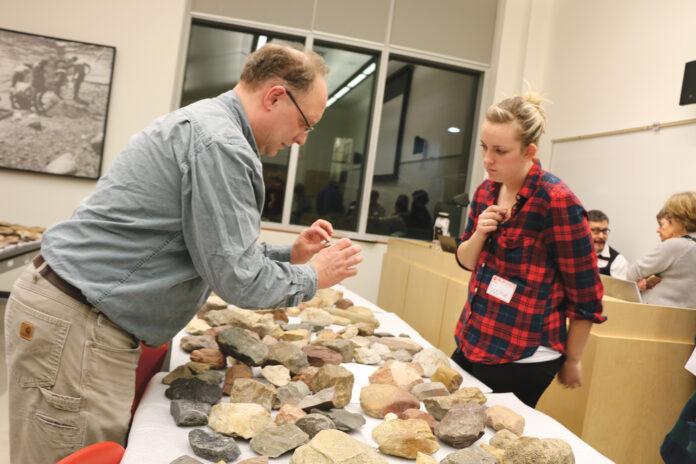
The class examined over 900 stone tools. - Mandy Nilson
The class examined over 900 stone tools. – Mandy Nilson

An SFU archaeology class has been given a one of a kind opportunity this semester to oversee a project of over 900 stone artifacts collected from a farm near Fort St. John.

Under the guidance of Barbara Winter, a class of 18 students identified, catalogued, and photographed artifacts dating back 7,000 to 10,000 years.

The collection is being curated by students through the resources of the Museum of Archaeology and Ethnology, and will be returned to the Treaty 8 Tse’K’wa Interpretive Centre, which is being built to house this collection.

The artifacts come to SFU courtesy of Len Donaldson. Donaldson collected these artifacts whenever he found them scattered over the land he owns and manages, gradually developing an impressive collection.

The artifacts in the collection provide influential information can be gained, from an area where archaeological evidence is scarce and migration theories are still hotly debated.

“A wonderful opportunity presented itself when Len Donaldson offered the collection to SFU last year,” said Winter. “It is both a hands-on project in museum curation for the students, giving them experience in the development of a collection, and a wonderful way to support First Nations communities in the north.”

Jan Anderson, a research assistant with the SFU Archaeology Department and member of the class, says that this collection means a lot to her and to the other students in the class.

“To be able to get hands on with all these super cool lithic tools [. . .] ties together all the things that I’ve worked on,” said Anderson. “I love archaeology because I like knowing that somebody else used these.”

These tools led Anderson to hypothesize as to the life of early humans: “What would someone have done with this? Would they have been butchering an animal, tanning a hide, woodworking? I wonder what their life was like. That’s a neat connection with people who were just going about their daily lives like we were,” she said.

According to Anderson, this collection provides a physical connection to the Treaty 8 First Nations’ important ancestral heritage. This collection allows these peoples to hold objects originally used by their ancestors.

“Here’s something that is a teaching collection, and you can connect with the people that were your ancestors and have something that is known that they held in their hand,” stated Anderson. “That’s kind of what I’d like us to give back to the Treaty 8 People.”

Winter is also advising the Treaty 8 First Nations in their plans for Tse’K’wa, a centre to be built at the site of Charlie Lake Cave. The cave was excavated years ago by SFU professors of archaeology Knut Fladmark and Jon Driver, the latter of whom is SFU’s current VP Academic.

In 2014, the Treaty 8 bands purchased the site, which has since yielded information on early people and animals in BC at the end of the last Ice Age.

Winters and Anderson hope that the return of this collection will assist the Treaty 8 First Nations communities to gain material from their cultural heritage, building on and solidifying the narration of their own history as well as that of British Columbia as a whole.

Boohoo, Woohoo

0
Photo courtesy of Wikimedia Commons

Boohoo: Exercise

Exercise? Ain’t nobody got time for that! You have last-minute essays and finals to procrastinate on. There is no time in your already busy schedule to go work out at the gym. Do you really want to part with more of your hard-earned cash? You already have one membership digging into your wallet on a monthly basis, and you can’t expect those episodes of Unbreakable Kimmy Schmidt to watch themselves.

Moreover, exercise is hard work; it makes you sweaty and disgusting. The only way you’ll start to see results is if you eat healthier, too. And be honest: You are not ready to give up that BBQ Bacon Roller value box with optional chocolate lava cake anytime soon. Sure, beach season is on the horizon and you want to look good for everyone. But do you know what’s sexier than a six pack? Confidence in who you are.

Woohoo: Jazzercise

Are you looking to tone that gluteus maximus but find yourself intimidated by Crossfit and P90X? Well, look no further, friends. I have just the thing you’ve been searching for. Slip into some comfortable neon spandex and dust off your parents’ old videotape collection. It’s time to Jazzercise!

Get those quads squealing with delight as you dance your way to a better bod. Embrace the workout sensation that has lasted over 40 years. Get up and boogie with Zumba’s aerobic arch nemesis and shed those unwanted pounds away. Follow a workout by instructor Judi Sheppard Missett, a woman so eccentric and sexually frustrated that you’ll continue working out just to hear what she says next.

Above all, revisit a time when group fitness classes didn’t take themselves so seriously, but instead focused on making things fun and accessible for everyone.

I found my ambition at this newspaper

0
Photo Credit: Brandon Hillier

When I graduated high school, I wasn’t a particularly decisive person. I decided to go straight to post-secondary from high school because I didn’t know what else to do with myself. I ended up going to SFU because it’s where my friends weren’t going, and my small rebellious streak resented the idea of following everyone else to UBC.

I also wasn’t overly ambitious. I enjoyed doing well in school and in my menial teenage jobs, but I didn’t push myself in the same way that my overachieving pals did. I wandered through my first year of university, trying a little of this, a little of that. I was the princess of non-commitment.

When I found The Peak, I changed.

Writing for this newspaper kindled a personal drive that I didn’t know I had. To see my byline in print gave me a thrill I’d never experienced before. To be able to approach brilliant, influential faculty and administration members as a snot-nosed 18-year-old and having the power to ask them whatever I wanted was intoxicating. Here was something I loved to do, something that I didn’t just want to do well; I wanted to be the best. 

Over the past four years, I’ve worked my way up The Peak’s limited totem-pole, eventually taking the newly-created position of Editor-in-Chief. Yeah, I’d say there was some ambition behind that.

This workplace has been my training ground, my friend group, my livelihood.

Here’s where things get cheesy. If I hadn’t gone to that first meeting on a Wednesday in my second year, I could still be wandering around aimlessly. When you find something that awakens that competitive drive in you, it becomes your baby. The Peak is my baby, and I am a tiger mom. Whenever this little student newspaper faces a threat, my immediate instinct is to take no prisoners.

This newspaper has been my training ground, my friend group, my dating service, my livelihood. Now in the last week of my undergrad, I can say without any hesitation that it’s the best thing that I’ve done during my time at SFU. The Peak has given me the opportunity to travel and meet students like me from all over North America. It’s allowed me to take chances and print things that make people extremely angry. It’s let me mess up. Everybody should be so lucky.

Find your Peak, your training ground, while you’re still here. Don’t wander through your education, or worse still, rush through it. Your passion may be part of your curriculum, but it may be elsewhere. Never again will you have as open, fluid, and safe a space in which to learn and grow. With the ever-growing pressure, competitive nature, and difficulty of the world outside academia, that is an opportunity none of us should ignore.

Student injury revives campus accessibility conversation

0
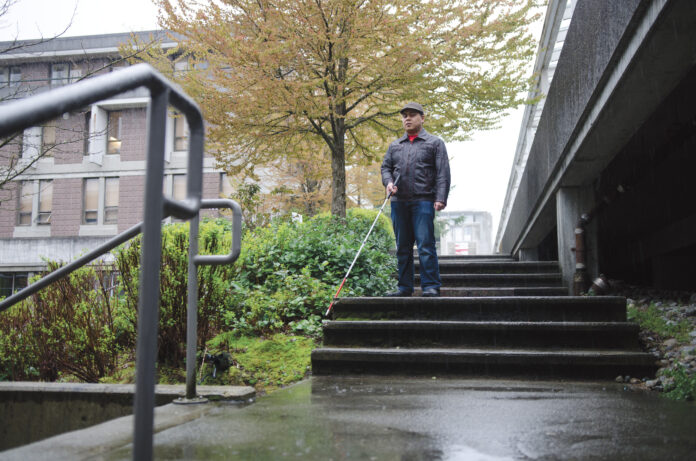
Anthony Janolino fell on these steps on January 26. - Talha Qadir

Anthony Janolino, a blind SFU student who has been navigating the university’s campus for years, recently suffered a fall that left him with a severe concussion.

The incident occurred on January 26 at the Burnaby campus, on an outdoor staircase between the West Gym and Shell House residence.

This area has a number of staircases in different directions and the set in question was without a railing.

Janolino has long been an advocate for accessibility at SFU, sitting on the Simon Fraser Student Society (SFSS) council as a representative for Students United for Disability Support (SUDS) as well as serving on the society’s Accessibility Fund Advisory Committee (AFAC).

SFU’s 50-year-old flagship campus has proven on more than one occasion to be an accessibility challenge for students with disabilities.

Last summer, SUDS led an accessibility walk across Burnaby campus with the help of the SFSS. Participants were blindfolded, given a few strategies, and led across campus in the dark to demonstrate the dangers visually impaired students encounter on a daily basis.

The reflection pond bridge in the AQ gardens posed a great challenge for the blindfolded walkers. Janolino told The Peak that he himself has fallen off the bridge twice in his post-secondary career. He added that each time he sustains an injury, he files a report, but rarely hears back from the university.

Following the walk, the student groups filed a report with recommendations to make the campus safer, which was presented to SFU president Andrew Petter. In a letter to the university, Janolino referred to the meeting with Petter, saying, “We even went as far as discussing ideas of making non-obtrusive modifications so as the safety measures would not disrupt the design of the buildings and landscape.”

Since then, Janolino noted that he has yet to see sufficient improvements to campus accessibility. “I am disappointed in the lack of change on campus regarding the elimination of hazards at SFU,” he wrote.

In light of Janolino’s most recent accident, which has necessitated his withdrawal from a course, the SFSS has written a letter to reiterate its concerns around the issue of accessibility.

The letter states, “We, the Simon Fraser Student Society, are worried about the recurrence of such an incident. We therefore repeat our request submitted in September 2014 that the University endeavour to increase campus accessibility for all students.”

SFU administration issued a statement on April 3, with the assurance that accessibility issues are important to the university. SFU stated, “the safety and well-being of all students on campus is a top priority. The University is looking into this matter.”

At the latest SFSS board of directors meeting on April 1, board members approved the creation of a temporary accessibility projects assistant position. The hired assistant would work in conjunction with AFAC to assess need and implement improvements to society accessibility.

SFSS president Chardaye Bueckert motivated in favour of the motion to approve the position, saying that AFAC members feel “quite maxed out” and would benefit from additional aid.

Bueckert emphasized a serious need for assessing society accessibility: “We don’t even know in what ways [students with disabilities] are inhibited from participating in the student society.”

She concluded, “I think our job as a board of directors is to support those students and to address the needs that they are articulating to us.”

’Daye dreaming

0
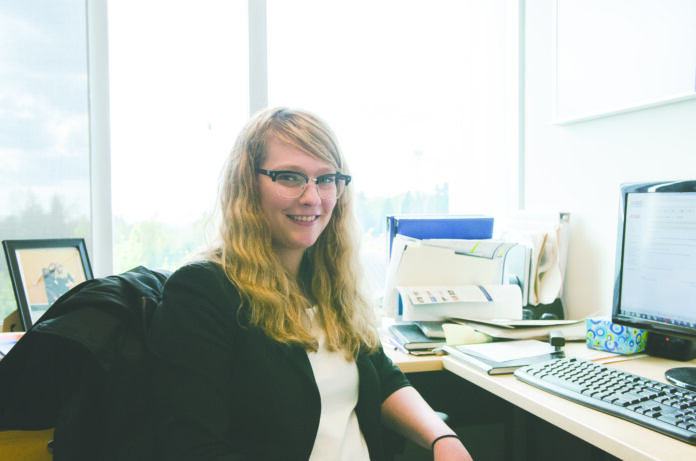
Chardaye Bueckert spent a year as the society’s External Relations Officer before being elected President. - Talha Qadir
Chardaye Bueckert spent a year as the society’s External Relations Officer before being elected President. – Talha Qadir

With the end of the spring semester in sight, the Simon Fraser Student Society’s (SFSS) 56th president, Chardaye Bueckert, is preparing to make way for number 57.

From the successful negotiation of two collective agreement contracts to the failure to pass the Build SFU debenture question at the January Special General Meeting to the Freedom Square plaque being returned to its rightful home, Bueckert’s term has been punctuated with highs and lows.

We spoke to the outgoing SFSS president about her time in office and what she plans to do next.

If you had to describe your term in one word, what would it be and why?

“Accomplished? For two reasons. I think for one, our board has really accomplished a lot this year. And then, for myself, I’m quite proud to say I’ve fulfilled almost all my campaign platform promises, and [for] the two that are outstanding, substantial work has gone towards, and I’m confident that in the next year they’ll be fulfilled.”

What specific campaign promises are you proud of?

“The expansion of the food bank. We now have long-term sustained funding for the program, it’s been expanded to the Vancouver campus, it’s soon to be ready for the Surrey campus, and that was a big thing in my platform. Another thing that I’m proud of is we completely changed the society’s child care policies, so now there’s a lot more funding for students who have children, if they wish to participate in the society as a councillor, as a member of a committee, or as a member of the board of directors.”

When you were elected, you came into a board where the majority of members were from the opposing slate. Did that affect how the board functioned?

“I think definitely at the beginning it did. There were some tensions there. But as the year progressed, we kind of came to see that our areas of agreements and mutual interests certainly outweighed any differences in priorities that we had. I think [. . .] we all really realised that we’re all here for the same reason, which is to make SFU a better place for students, and while we had different ideas about how to exactly go about doing that, it’s also not a zero-sum game.”

How does your experience on this board compare to your experience on the 2013/2014 board as the External Relations Officer?

“I felt this year a lot more engaged with the board itself, simply because I was on campus a lot more and I was doing more of the internal work [. . .] I just felt a lot more cohesion with this board, particularly with the at-large and faculty representatives. You look out at our office, they’ve become really good friends, and there’s a lot of camaraderie there, which is really unique and not something I saw to the same extent in the last board.”

Was there any one moment this year that made you think, ‘This has all been worth it’?

“There’s been a lot of them. It’s been a really great year. But I think my kind of moment [. . .] was this year at the debates when, throughout, people were talking about the BC Open Textbook Program, supporting students from Louis Riel House who have been displaced, issues of transit and student loan interest rates; these are issues that, less than a year ago, weren’t really salient. These were not the big topics of conversation. And for me, to have all of that advocacy work that I’m so passionate about and got involved to do, become this valence issue that everyone gets on board with [is] very exciting.”

Moving forward to this year’s election results, most students elected were members of the REAL slate; however, the student elected to President was the only independent presidential candidate, and someone who has not previously worked on board. Do you think this has any meaning behind it?

“I think that Enoch had a very well-researched platform and he clearly knew what he was talking about, even though he wasn’t a quote-un-quote ‘insider;’ so I think that, my hope anyways, was that it was at least partially the quality of his platform that contributed to his electoral victory. [. . .] I think that the fact that he was an outsider and not as experienced as others was mitigated by the fact that he had such a knowledge of what the priorities for the next year should be.”

How does it feel to be moving on?

“Good. I’m really excited to just be able to take my elected official hat off for a while and focus on some other stuff. But it’s also scary! I’ve been doing this for two years, so it will be a very big change of pace.”

What are you doing this summer?

“I’m hoping to take the summer to learn French — I’ve applied for the Explore program — and then I’m going to be going on to graduate studies in political science. I don’t know where yet; I’m also going to be taking the summer to apply to grad schools. And then I also was accepted into the BC Legislative Internship program, starting in January 2016, so I’ll be in Victoria doing that for six months.”

What advice do you have for the incoming board of directors?

“Always come with your listening ears on, because even if you disagree with someone, everyone has got into this and has taken the time and effort to run for a position because they care. And so, I think listening to those different perspectives and trying to amalgamate them into something better than your own individual position is really valuable, [. . .] that’s why we have 16 people elected and not just one.”