

By: Noeka Nimmervoll, Staff Writer
Content warning: graphic descriptions of bodily harm, death, miscarriages, and sickness.
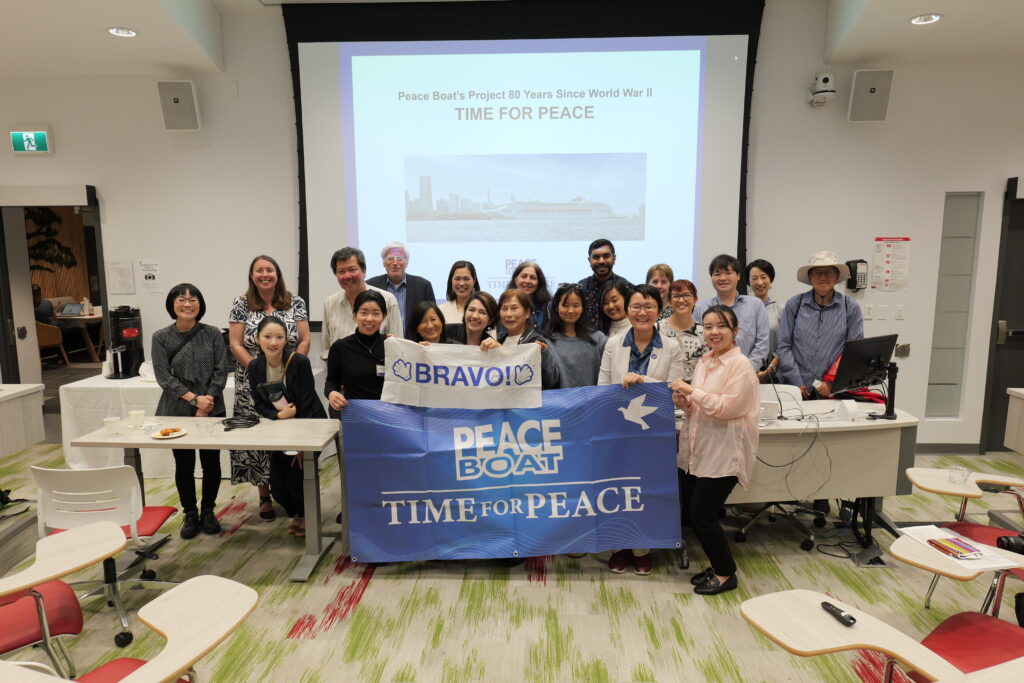
On July 21 at the Harbour Centre, SFU International Studies hosted a lecture on building a future free of nuclear weapons. The event highlighted the collaborative efforts of Peace Boat and Mines Action Canada to educate people on the realities of nuclear war and push governments to choose peace. The lecture featured a speech from Nagasaki atomic bomb survivor Kuramori Terumi, who spoke on her experiences from the time of the devastation and its ongoing aftereffects. The Peak attended the event to learn more.
Rika Watanabe, the international coordinator of Peace Boat, explained that they are a Japanese non-governmental organization that uses a 2,419-passenger boat to promote peace internationally. Their global voyage allows hibakushas (atomic bomb survivors) to share their stories. Mines Action Canada is a non-governmental organization who works to end the use of weapons that cause sweeping damage, including nuclear weapons.
Paul Meyer, adjunct professor at SFU, also provided context for the event. “There are approximately 12,000 nuclear weapons still extant in the world, any one of them with a capacity for devastation far greater than the bombs that were dropped on Hiroshima and Nagasaki,” he said. The death toll for the Hiroshima bomb was approximately 80,000 from the explosion, with thousands dying shortly after from radiation poisoning. This bomb, dropped by the US on August 6, 1945, killed approximately 140,000 people by the end of the year. Three days later, the Nagasaki bomb was dropped, taking another 74,000 lives.
The Bulletin of Atomic Scientists notes that “any nuclear explosion creates radiation, heat, and blast effects that will result in many quick fatalities.” Nuclear weapons can cause extensive damage, including severe burns, the disfigurement of skin, and organs that hang out of the body. Exposure to nuclear bombs is also characterized by prolonged suffering from “radiation-related cancers and other illnesses” across generations.
Terumi shared a personal testimony as a hibakusha, translated from Japanese to English by Kaya Nagayo. Although she had no memories of the bomb itself, being only one year old when the bomb dropped, she was surrounded by the aftereffects long after the explosion.
“I do not want anybody else to experience the suffering, the sadness, the tragedy of atomic bombs. We hibakushas know the horrible nature of radiation. I want to continue to tell the world about the truth of this awful radiation.” — Kuramori Terumi, Nagasaki atomic bomb survivor
Terumi shared how her father came home safely on the day of the bombing. However, in the following days, he helped clear the debris and aided many injured people at the epicentre of the bomb. “Ten years after the bombing, my father contracted a lung disease,” she shared. Her father was later diagnosed with cancer and passed away.
Following his death, Terumi and her family suffered through poverty. For Terumi’s older sister, the physical effects of the radiation and the societal stigma of being a hibakusha affected her significantly. “She repeatedly went through miscarriages. Her body was unable to produce children, and unbeknownst to me, this older sister had been forced to get a divorce,” Terumi said. Their father’s same symptoms from the bomb later befell her older sister and Terumi’s older brother, and they passed away.
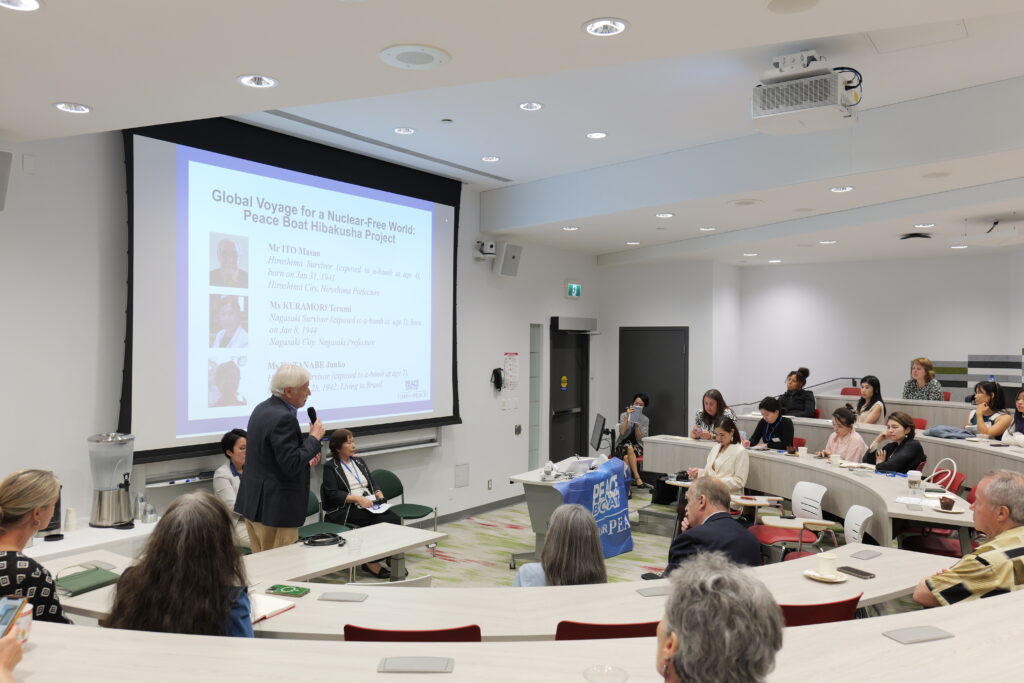
“I do not want anybody else to experience the suffering, the sadness, the tragedy of atomic bombs. We hibakushas know the horrible nature of radiation. I want to continue to tell the world about the truth of this awful radiation,” said Terumi, in the final moments of her speech.
Meyer highlighted that due to the current “upsurge in geopolitical tensions,” it is crucial to illustrate the devastation of these events to the public, especially the younger generation. “80 years after those terrible events, memories are faded from public consciousness.”
Peace Boat and Mines Action Canada have worked together for around “eight years as part of the International Campaign to Abolish Nuclear Weapons,” which works for the implementation of the Treaty on the Prohibition of Nuclear Weapons, shared Erin Hunt, executive director of Mines Action Canada. In 2017, this treaty was adopted by the United Nations. However, neither Canada nor Japan are currently part of it.
Terumi called for everyone in the audience to help “advocate so that nuclear-armed states will get rid of their nuclear weapons so that the governments of countries like Japan, like Canada, will sign the Treaty on the Prohibition of Nuclear Weapons.”


