
Go back

Japanese horror movies: the essentials (and some hidden gems)

These five films will have you spooked for life

By: Lester Leong, SFU Student

Japanese horror movies are a different beast than their Western counterparts. While most Western horror movies usually employ cheap scares encased in clichéd narratives, East Asian films emphasize dread, atmosphere, and slow-building tension within supernatural tales. Just in time for Halloween, here are some essential Japanese horror flicks you can watch to spice up your movie marathon.
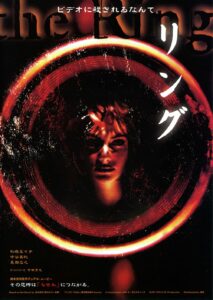
1. Ring (1998)

Image courtesy of Basara Pictures

This entry is probably the most synonymous with the J-horror (Japanese horror) genre. Ring is about a cursed videotape that kills the viewer after seven days. With its iconic antagonist Sadako, inspired by the Japanese legend of onryō (a vengeful spirit), and a slow-building atmospheric dread, this is the best and most accessible movie to start with.
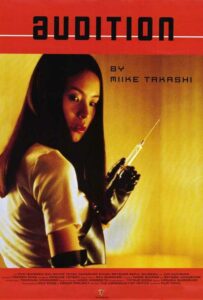
2. Audition (1999)

Image courtesy of Omega Project

Audition is a deceptive movie. It starts out with a rom-com premise: a widower, Aoyama, searches for a new partner under the pretense of a casting audition and he manages to find his perfect lady in Asami. However, things soon take a turn for the worse when Aoyama goes digging into Asami’s past. A relatively normal love story quickly devolves into a cornucopia of disturbing imagery and sickening violence, all leading to a gruelling finale that relies heavily on soul-penetrating sound design.
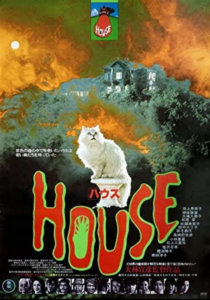
3. House (1977)

Image courtesy of Toho Company

A schoolgirl and six of her classmates visit her aunt’s house for vacation. However, odd events start occurring and the girls are slowly picked off one by one. House is virtually indescribable. It takes a simple haunted house tale and dials everything up to 11. It’s a wild rush of colours and sounds, all accompanied by surreal visuals and dark humour that will make you feel like you’re on an acid trip. This movie is the definition of an unforgettable experience.
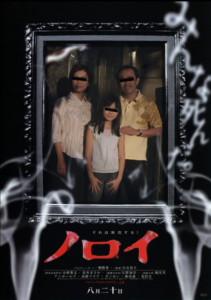
4. Noroi: The Curse (2005)

Image courtesy of Xanadeux

Noroi: The Curse is a found footage movie about a paranormal investigator looking into a mysterious curse plaguing a small town in Japan. The mention of “found footage” might turn some viewers off due to an oversaturation of the market in the early 2010s, but Noroi is the best showcase of this storytelling format. It is composed mostly of documentary footage from the investigation and is supplemented with B-rolls of variety shows. The movie presents a few disparate elements at first, but it slowly builds to the bigger picture, which connects everything. There is a pervading sense of dread throughout the runtime, contributing to its suffocating and daunting atmosphere. Noroi is slow burn horror at its finest.
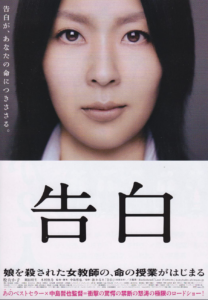
5. Confessions (2010)

Image courtesy of Toho Company

Confessions is a revenge thriller/horror about a high school teacher seeking retribution against the students who caused the death of her four-year-old daughter. Although this is more of a psychological thriller, it has many horrific scenes that will leave the viewer visibly shaken. Directed like a mid-2000s postmodern music video, it is a hyper-stylized movie with more twists and turns than it might have led you to believe at first.


Was this article helpful?
0
0

Leave a Reply

spot_img

Block title

SFU announces changes to parking policy on campus

By: Niveja Assalaarachchi, Staff Writer and Noeka Nimmervoll, News Editor On September 1, several revisions to SFU’s parking lots and service areas policies took effect. The university made notable changes, including designating separate areas for permit parking users and visitors, hourly parkers, and Flexpass users in the north and east lots. SFU also increased parking spaces for users of the EVO Car Share app in the east lot for greater accessibility.  The university noted that the revisions targeted increasing “parking availability for permit holders during the busiest weeks of the term,” according to a statement on their website. The Peak spoke with Maddy Mowat, an SFU kinesiology student who drives to campus. She shared she had gotten her first permit pass for the fall semester, but...

Read Next

Block title

SFU announces changes to parking policy on campus

By: Niveja Assalaarachchi, Staff Writer and Noeka Nimmervoll, News Editor On September 1, several revisions to SFU’s parking lots and service areas policies took effect. The university made notable changes, including designating separate areas for permit parking users and visitors, hourly parkers, and Flexpass users in the north and east lots. SFU also increased parking spaces for users of the EVO Car Share app in the east lot for greater accessibility.  The university noted that the revisions targeted increasing “parking availability for permit holders during the busiest weeks of the term,” according to a statement on their website. The Peak spoke with Maddy Mowat, an SFU kinesiology student who drives to campus. She shared she had gotten her first permit pass for the fall semester, but...

Block title

SFU announces changes to parking policy on campus

By: Niveja Assalaarachchi, Staff Writer and Noeka Nimmervoll, News Editor On September 1, several revisions to SFU’s parking lots and service areas policies took effect. The university made notable changes, including designating separate areas for permit parking users and visitors, hourly parkers, and Flexpass users in the north and east lots. SFU also increased parking spaces for users of the EVO Car Share app in the east lot for greater accessibility.  The university noted that the revisions targeted increasing “parking availability for permit holders during the busiest weeks of the term,” according to a statement on their website. The Peak spoke with Maddy Mowat, an SFU kinesiology student who drives to campus. She shared she had gotten her first permit pass for the fall semester, but...
