


“Facts show the project should be rejected.” So said economist Robyn Allan of the Trans Mountain Pipeline expansion project on September 7 at SFU’s Diamond Alumni Centre.
She made the statement at a public forum organized by Burnaby North-Seymour MP Terry Beech, the most recent in a series that began in July. Allan and a panel of experts from pipeline-related fields spoke to the over 250 citizens who came to voice their concerns about the pipeline expansion.
During the introduction to the event, Beech made it clear to the attendees that the experts were invited in response to public feedback from previous events, and that their presentations were not vetted by any approval process.
Allan appeared to take full advantage of the freedom, explaining emphatically to cheers and applause that not only the pipeline, but the pipeline approval process was flawed. She questioned the arguments supporting the pipeline’s construction, accusing the National Energy Board (NEB) of “betraying” Canada by recommending conditional approval of the project on May 19.
Vancouver alone could lose up to $1.2 billion in the event of a spill.
The Trans Mountain Pipeline transports oil from Edmonton to Burnaby, and the proposed expansion would triple its capacity. During the NEB hearings, many environmental and community groups criticized the project for posing a risk to the environment and public safety, and tabling aboriginal rights.
There was also criticism of the NEB itself, which reportedly did not consider some environmental impacts in its assessment, and had a former oil industry consultant appointed to its ranks by the Harper government.
A common argument against the pipeline is that a catastrophic oil leak or spill would cause billions of dollars worth of damage to British Columbia’s economy, impacting fisheries, tourism, and local water supplies.
Michael Lowry of West Coast Marine Response Corporation explained that there are many resources in place to rapidly combat an oil spill, but critics insist that the measures are insufficient. The local environmental group Stand argued in a media statement that “the best way to prevent oil spills is not to increase tanker traffic.”
The NEB report on its decision explains that $1.3 billion has been set aside by various oil companies and international bodies, but a UBC study said that Vancouver alone could lose up to $1.2 billion in the event of a spill. There was also some controversy during the forum about whether spill responders could clean up the diluted bitumen in the same way as conventional oil.
Another recurring theme of the evening was the sentiment that the Liberal government has already struck a very different tone from its predecessor since its election in October 2015.
Canada-Asia expert and UBC professor Paul Evans explained that “[former prime minister] Joe Clark often talks about our new Liberal government [. . .] as, he’s never known a government that has tried to do more things more quickly and with more consultations.” Beech was also praised widely by MPs Joyce Murray (Vancouver Quadra), Joe Peschisolido (Steveston–Richmond East), and audience members for organizing the public events.
However, attendees voiced concerns throughout the evening that the Trudeau government’s approach to the environment and energy seemed to be out of sync. “I don’t think we yet have an energy strategy,” Evans said, explaining that Canada’s relationship with China is currently undergoing rapid change. The capacity increase to the pipeline has been marketed as a way for Canada to sell more oil to the Asian superpower.
This past August, in Montreal, protesters marched into the NEB meeting room for the Energy East Pipeline that would carry tar sands oil from Alberta to New Brunswick. Two NEB meetings were cancelled in response.
During the response period, some members of the audience expressed that same defiant attitude, with one explaining that the government could choose to not approve the project in December, or things would have to be done “the hard way.”





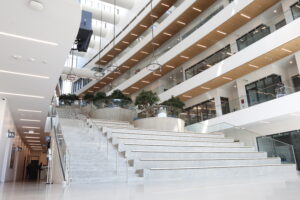



[…] Burnaby, BC, September 7, 2016. Public forum hosted by Terry Beech, Member of Parliament for Burnaby North-Seymour and members of Pacific Caucus on the proposed Trans Mountain Expansion project and an evidence-based discussion on Canada’s energy futu…. […]