Home Blog Page 984

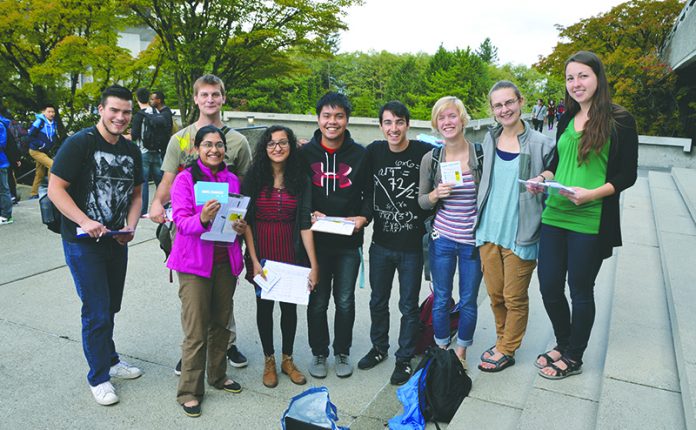
Storm the Dorm event encourages students to vote

0
Student volunteers inform peers of the importance of voting. - Lisa Dimyadi

In the last federal election, youth aged 18–24 turned out to vote at 38.8 per cent compared to the general population’s 61.1 per cent turnout. The “Storm the Dorm” campaign aims to change that.

The initiative, championed by the Council for Canadians as part of their “Game Changer” campaign, has garnered support from the Simon Fraser Student Society (SFSS) to help get the message about the upcoming federal election out to SFU students.

SFU student Deven Azevedo, an organizer for the campaign through the SFSS Advocacy Committee, said that the “basic idea is to just talk to them, [and] remind them there is an election. [. . .] Then we can get their email, [and] remind them on the day of, or a few days before.”

One of the components of the campaign, which began canvassing work in the spring, is pledge drives during which student volunteers approach students, ask them if they know about the upcoming federal election, and hopefully get them to pledge to vote. In addition, students can receive pamphlets courtesy of Elections Canada that explain how to register to vote, as well as email reminders closer to the election date.

Said Azevedo, “Students, especially ones at the time of the elections, during midterms time, get so focused in their own world, they don’t know there’s an election going on. They don’t know where to go.” 

Leena Hasan, another one of the SFU student organizers, commented on the feedback from students whom they approached for their first drive of this semester, which was held during the 50th Anniversary Kickoff event on September 9 at the Burnaby Campus.

“Most people seemed like they were interested in voting and everyone that I talked to knew that there was a federal election coming up,” said Hasan. “I think that is a good sign that this is becoming a more prominent issue that people are paying attention to.”

She elaborated, “We told them about the benefits of signing the pledge, not just saying that you’re going to vote, but to be able to provide resources on how to register, and where the parties stand on youth issues so that it would also give them something useful.”

According to Hasan, many students (herself included) are concerned about issues such as Bill C-51 and the erosion of civil liberties in the current government. Said Hasan, “There’s definitely a lot of people who aren’t happy with current government for a lot of different reasons.”

Hasan was motivated by her own dissatisfaction with the government to get involved. “I voted in the last election and was really disappointed with the results and it felt like people were not really engaged with Canadian politics and they didn’t really realize what the consequences would be,” she said.

“But now that we’ve actually seen them and experienced what it’s like to have a Harper government, I think people are starting to wake up and pay attention to democracy being affected and falling apart.”

In the coming weeks before the election, the organizers hope to do more pledge drives, run a poster campaign, and hold a debate on October 1 for all the candidates running for the seat in SFU Burnaby’s riding, save for the Conservative candidate who declined to attend.

Said Azevedo, “The idea is that youth can be game changers in this election.”

Taxing soft drinks won’t fix our health crisis

1
Photo Credit: Talha Qadir

This article has been corrected from a previous version. The original headline was “Taxing soft drinks won’t fix our obesity crisis.” The headline was revised for accuracy to the writer’s actual argument and opinion presented in the piece.

One of the sweetest things anyone’s ever done for me is provide bottomless soft drinks at their restaurant. Indeed, the delightful sweetness of a glass of cold Mountain Dew is undeniable; unfortunately, this fine flavour is a double-edged sword.

As election time approaches, the Canadian Diabetes Association (CDA) implores candidates to consider the health of Canadians and make an addition to their platforms: the promise of a tax on sugar-sweetened beverages (SSBs). To clarify, this category includes soft drinks, fruit juices, energy drinks, and many other prized refreshments.

Following the lead of countries like Mexico and France, the CDA hopes that the tax would promote healthier lifestyles on two frontiers. Those who’d shy away from boosted prices would be discouraged from high-sugar beverages, while those whose sweet teeth cause concern for their wallets would provide additional health-care funding.

I won’t pretend that soda epitomizes nutrition; drinking too much has its consequences, and I agree that our government should invest more effort into fighting diabetes. But is this Pigovian proposition really the right way to go? It might sound effective, but I question whether taxing SSBs is the best way to ensure Canadians’ wellbeing.

In fact, Canada appears to be rapidly shedding the soda craze already. As the ‘healthy living’ ideal grows increasingly attractive, people are swapping soft drinks for less sugary choices. Spreading awareness of health issues seems to be the path of least resistance — and really, trying to railroad people into a choice that they’re making of their own accord seems superfluous.

Taxation won’t do much without awareness anyway. Soft drinks aren’t the only high-sugar, high-calorie substances out there, and most Canadians have easy access to many of those. Raising prices seems no more effective a barrier than a locked door surrounded by open windows; many would substitute soda with equally problematic replacements.

Sugary beverages are a luxury, and nothing prevents us from buying different luxuries should the need arise.

After all, one must also consider differences between Canada and countries where soda taxes have succeeded. For instance, Mexico saw decreases in diabetes, obesity, and related illnesses after introducing the tax. However, there are many reasons for this. For instance, pre-tax, soft drinks were actually significantly cheaper than clean water sold at under 10 litres, making them favourable for low-income families. Furthermore, in 2000, Mexico’s elected the former President of Coca Cola Mexico to be President of the country. Post-tax, the gap has shrunk, making purchasing water or other healthier options more justifiable than before.

But Canadians already have an abundance of clean water; SSBs are a luxury for us, and nothing prevents us from buying different luxuries in their stead should the need arise.

While whatever money might be gathered for healthcare funding certainly wouldn’t hurt, I’m just not convinced that this is the optimal way forward. The tax’s scope is narrow enough that a number of equally unhealthy foods are left in circulation, making actual change in Canadians’ overall health less likely. If Canadians move on to these untaxed options, the end result is minimal financial benefit for healthcare and minimal health benefit for the populace.

It’s always good to consider multiple routes for achieving your goals, and perhaps exploring other possible avenues to improve our average citizen’s health wouldn’t hurt in this case. In the meantime, I’m sure we could all stand to pick water as our beverage of choice a little more often. But that doesn’t mean you have to feel too guilty about loving that sweet, sweet carbonated goodness, either, as long as you don’t get too crazy.

Ben Harper brings college radio sounds to Vancouver

0
Photo courtesy of Kevork Djansezian/Getty Images.

Ben Harper and the Innocent Criminals brought the sounds of late ’90s and early ’00s college radio back with a vengeance on September 4 at Malkin Bowl. Describing their music as such doesn’t sound like the highest praise that could be given to this multi-talented artist, but it fits with the vibe of the concert perfectly. While the majority of the crowd was the right age to have gone through college listening to Ben Harper, there was still a youthful feel in the air that was underscored by the equally youthful music being played on stage.

Harper opened his set with “People Lead,” and it was a good transition from the folksier musical stylings of Benjy Ferree, the opening act. Harper followed immediately with a song that should be familiar to most, “Diamonds on the Inside.” It was non-stop music until he took a short break to explain the story behind the next song that he was to perform, “Don’t Take That Attitude to Your Grave/Concrete Jungle,” and to thank members of his family and the families of the members of the Innocent Criminals for being present at the show.

This dedication to performing was a refreshing change from some artists who choose to spend a significant amount of time talking about anything that seems to come to their minds.

But it was not more than just the dedication to the music that made this an interesting concert. It was also the interaction that Harper had with the audience when he did choose to speak — these interactions were very organic in nature, and gave the concert a certain feeling of intimacy. Whether it was listening to a song request from a group of concertgoers or ad libbing a chorus with a few chords based on a comment from someone in the crowd, these interactions added to the feel of the show being inspired by the college music scene of the late ’90s.

The only criticism that could be made about this concert was the ballad-heavy encore. Yet by performing three ballads in a row acoustically, Harper was able to keep the audience engaged with his performance. The Innocent Criminals returned to the stage to bring back the pre-encore energy for the finale of the show.   

Overall, this was one of the best concerts that I have attended, and I would highly recommend that everyone should see a Ben Harper show. The focus on the music was refreshing, and the vibe that his music gives off is perfectly suited to summer nights in Vancouver, indoors or out.

Opposites attract in Chloe and Theo

0
Photo courtesy of Arctica Films.

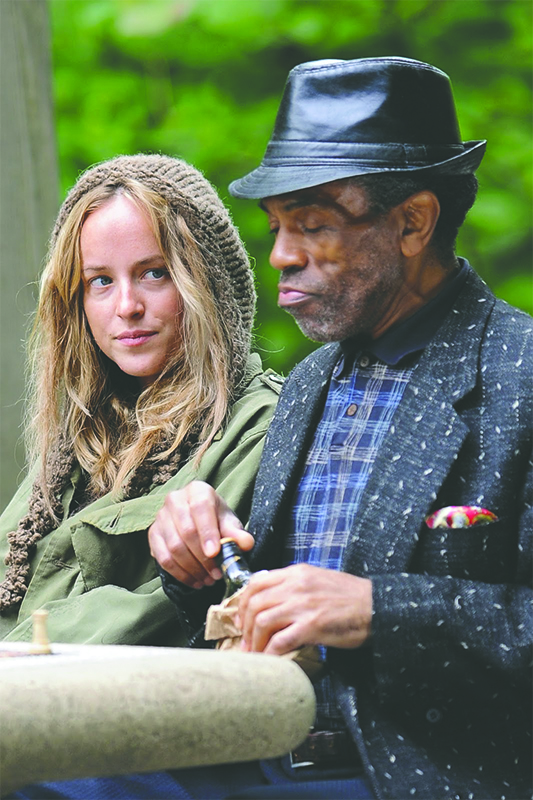
At its heart, Chloe and Theo is a movie about symbiotic relationships — friendships that encourage both parties to be better versions of themselves. But on the surface is the film’s all-too-clear message on climate change, and it all begins with Theo’s journey from Nunavut to New York.

After receiving orders from his village elders, Theo flies to the big apple. He is selected as the chosen one because he speaks English, the second language having been acquired during his time at a residential school.

The film takes various stances on humanitarian issues, but its view on the residential schools is left on the melting ice of the Arctic. Instead, Monica Ord and Ezna Sands (both newcomers to the film scene) set their focus on the future, and tell a would-be heartwarming tale with the hopes of inspiring the world out of their apathy and indifference. 

To encourage this international goal, producer Ord and director-screenwriter Sands tell the story of an unlikely friendship forged between an Inuk man and a homeless New Yorker. While their friendship is sweet, and their fight for environmental salvation is worthwhile, their story does little to support the greater issues that the film tackles.

A scruffier and more blonde Dakota Johnson does her best to shake the leather tethers of Anastasia Steele as Chloe, but she doesn’t quite pull off the chip-on-her-shoulder street kid she portrays. Nor does the script combat the shallow character development, as it lamely supplies “I can’t remember” as Chloe’s reason for leaving home and braving the streets of Harlem.

Audiences are left with two characters unsure of why they’ve ended up in their current state, but who fight for their cause nonetheless.

That is precisely what this film has going for it. The storyline, however vapid, doesn’t detract from the film’s key objective: promoting action to tackle climate change. Chloe and Theo is part of Connect4Climate’s film branch, Film4Climate. The organization, which connects people from the media, academia, youth groups, civil society groups, and the private sector, sees film as pivotal in the fight for environmental protection. While this film broadly and overtly posits the environment as its concern, it also points subtly to the harsh living conditions of the Inuits living in northern Canada.

Theo Ikummaq, making his on screen debut, is from the Nunavut hamlet Igloolik. Climate change threatens the lives of the Inuit, and the film acknowledges this as Theo’s primary on-screen objective. But Igloolik is thriving in other ways, and is known as the cultural epicentre for the Inuit people. Previously known for Atanarjuat: The Fast Runner, Igloolik can continue to boast of its cinematic talent. Indeed, Ikummaq’s subtlety and honesty provide the necessary subdued tone that the film otherwise lacks (and that Johnson never achieves) when discussing an issue of grave importance.

The film’s message is delivered with as much grace as a figure-skating hippo, but it’s hard to deny the validity of its cause. But is a film’s moral obligation strong enough to withstand the weight of mediocre storytelling and subpar acting? Maybe Theo’s northern tale was enough to inspire change, and all the attempted Hollywood flourish could have been left out west, ready to distract us another time.

Craft Education: craft beer choices at The Highland Pub

1
Photo courtesy of Lisa Dimyadi.

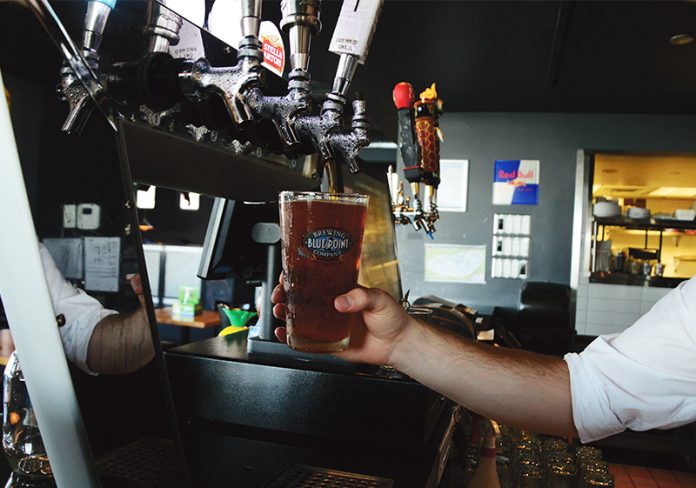
The Student Pub at university evokes images of academics discussing the merits of the Doha Round of the WTO meetings over a snifter of brandy… then again, it also evokes images of grown men and women scantily clad in neon clothing drinking yellow corn-based adjunct-lagers straight from plastic pitchers.

If you think your evening is more likely to resemble the latter, you should at least up your beer game so that when you inevitably email your prof about missing lecture, you can justify your hangover with the smug self righteousness that it was caused by seven artfully produced ales hand-crafted by a bearded man in East Van.

Luckily, the Highland Pub has a selection of craft ales to numb the self-loathing after you fail to make your Friday night 4 p.m. tutorial for the fifth time. Heads up: you don’t have to be self-loathing to drink these beers. You could just be, hypothetically, thirsty.

Big Rock Traditional Ale

Big Rock is a mid sized regional brewer from Alberta who makes decent yet unexciting beers. Traditional Ale is brown ale with a touch of toasted malt providing a great entry point into the craft world.

Big Rock Pale Ale

This is not a west coast pale ale, so expect a muted hop profile relative to west coast beers like Fat Tug, but a well-balanced and more malt forward pale ale.

Driftwood Fat Tug IPA

India Pale Ales are brewed with higher ABVs around six to eight per cent as well as a heavier helping of hops. The extra hops help to create floral, fruity, and bitter flavours, and this IPA has those qualities in spades. Fat Tug pours a blonde colour and instantly emits an aroma of grapefruit. A taste will lead you to note additional fruit flavours like passionfruit and mango. This IPA comes with a heavy bitter punch, but it’s well matched by a nuanced malt flavor that balances the bitterness nicely.

Driftwood Crooked Coast Altbier

So the first time I had an Altbier I thought it was “alternative” beer — one for steampunk goths, maybe? But in reality, “alt” is just an old world way of saying old, and thus this is an old style beer. Crooked Coast is made with German hops and malts giving this almost amber-ish ale a clean malt profile with relatively subtle earthy flavoured hops providing a balanced and pleasant mildness.

Driftwood Farmhand Saison

Saisons were traditionally made with the harvest in Europe throwing whatever in malts were available, and then kept until following summer to be consumed. Today the Farmhand makes a wonderful light-bodied beer with fruity esters, a hint of spice, and a bite from a high carbonation.

University is a place where you will spend a lot of money studying and expanding your mind — only to quickly forget what you’ve learned with the first pub night.

So if you are going to drink away your education, at least do so with a well crafted lager or ale in hand. Or both.

Cinephilia: diversity captured at VIFF

0
Photo courtesy of Well Go USA.

You won’t need to get in a plane or a time machine to view the notably diverse films playing at the 34th annual Vancouver International Film Festival, just a dark cinema. Within a day, you can spend time in an Iranian taxi, follow the lives of Sri Lankan immigrants in France, and go to a world where singles are shipped to an island to be transformed into animals. Here are six films that capture the festival’s varied selections.

6. I Saw The Light (October 9, 6:30 p.m. — Centre For Performing Arts)

Tom Hiddleston’s performance in this biopic on the country music sensation, Hank Williams, which is the closing gala film for the festival, is already garnering comparisons to Joaquin Phoenix’s tour de force portrayal of Johnny Cash in Walk The Line. Like Phoenix, Hiddleston does the heavy lifting of singing many of the artist’s staggering 35 Top 10 singles, as he also tries to capture the heartbreak of a life short-lived.

5. Louder Than Bombs (September 28, 3:15 p.m. — Centre For Performing Arts)

Joachim Trier’s follow-up to Oslo, August 31st chronicles the story of a father and his two sons who confront their feelings about their recently deceased mother. Trier has a deft and light hand. His characters and stories slowly unveil without obtrusion or manipulation. The emotions may be as explosive as bombs but Trier makes quiet, sympathetic films.

4. Jafar Panahi’s Taxi (October 1, 4:15 p.m. — Playhouse)

Banned from making cinema in Iran because of his critiques of the country’s government, Jafar Panahi has been rebelling against that censorship in films like 2011’s This Is Not A Film where he tackled the nature of life and art, and 2013’s Closed Curtain, which was a narrative feature set entirely in an apartment. Sneakily, yet not-so-discreetly, Jafar Panahi’s latest masterpiece, which is already being considered one of the best films of the year, takes place entirely in a taxi as he captures the oppression of the state’s firm ban on self-expression in this documentary-fiction hybrid.

3. Dheepan (September 29, 6:15 p.m. — Centre For Performing Arts)

When Joel and Ethan Coen awarded Dheepan the Palme d’Or it raised eyebrows. However, when comparing the director Jacque Audiard’s (Rust and Bone, A Prophet) track record with the recent Palme d’Or winners, it might be easy to decipher why so many were skeptical of the Cannes Jury’s choice. In the past couple of years, the prize has been awarded to plodding over-three-hour opuses that teemed with hollow artiness devoid of depth or emotion. Audiard never makes boring films, so the controversy behind its victory at the Cannes Film Festival excites me.

2. The Lobster (September 30 9:15 p.m. — Centre For Performing Arts)

The Lobster takes place in a future where singles are taken from the city and transferred to a hotel where they have to find a mate in 45 days; otherwise, they are turned into an animal of their choosing and released into the woods. If it weren’t for the critical acclaim and boisterous enthusiasm for this film, I might be skeptical. But The Lobster looks like it has one of those crazy ideas that somehow may still confound all expectations.

1. The Assassin (September 30, 6:30 p.m. — Centre For Performing Arts)

The Taiwanese filmmaker Hou Hsiao-Hsien’s recent masterwork seems like an odd departure for the director of languidly dramatic art-films like The Puppetmaster. The Assassin marks his first turn into fantasy swordplay with this visually stunning and dramatically subdued winner of Best Director at this year’s Cannes Film Festival. The melding of Hau-hsien’s distinct pace and quiet melancholy with the loud fervor of martial arts action is sure to make for a compelling and awe-inspiring experience.

The Vancouver International Film Festival runs September 26 – October 9. For more information, visit viff.org.

Nicola Tesla has become a household name

0
Photo courtesy of Pioneer News.

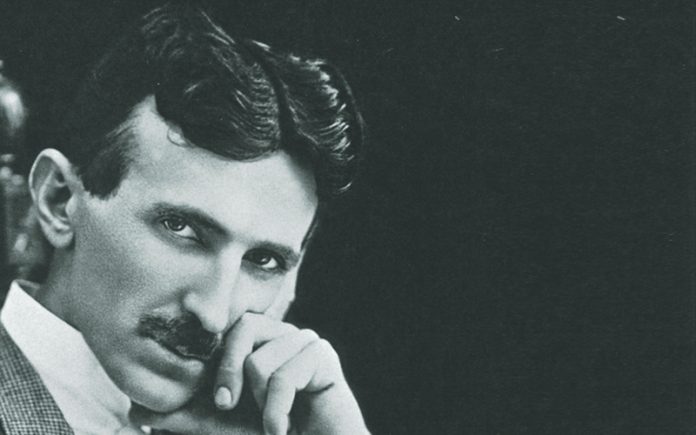
W. Bernard Carlson’s book Tesla: Inventor of the Electrical Age recounts the amazing life of Nikola Tesla. The book is written in a biographical format, yet delves into more than just Tesla’s life. Carlson manages to dive into other inventors of the time, such as Thomas Edison, and even provides accurate descriptions and drawings of Tesla’s electrical inventions.

The book begins by describing Tesla in 1894, when he was at his height of popularity. He had been widely admired by scientists and engineers of his time, having been awarded medals and honorary degrees. He was also popular among laymen due to his amazing electrical demonstrations in which he would take as much as 250,000-volt shocks through his body.

Soon after grabbing your attention, Carlson describes Tesla’s upbringing. Tesla was born in 1856 in Smiljan in the province of Lika, which is now Croatia.

Tesla’s father, Milutin Tesla, was a priest, and Tesla was supposed to follow in his father’s footsteps. However, as his son showed great aptitude in math and science and had a keen interest in engineering, Tesla’s father eventually supported Tesla’s original interest in attending school for mathematics and physics.

After a bumpy road through school, a fight with depression, and a few odd jobs, Tesla eventually made his way to New York where he began creating many inventions in his laboratory. He paired up with prominent businessmen to promote and sell his inventions. At this point in his life, he was competing with Thomas Edison over whether Tesla’s alternating current system or Edison’s direct current was better.

Carlson has truly written an amazing biography on Tesla. As you read through the man’s highs and lows, you get to see his inventions and understand his motivations. This book is not only for someone who wants to understand Tesla’s life, but also  those who have an interest in the history of electrical engineering.

The story of Tesla goes beyond Carlson’s book, as he seems now to be as popular as ever. Not only does he have a car company named after him, but he has also inspired a wacky new gadget.

Recently, ThinkGeek has come up with a Tesla watch. The watch looks like a nerd’s dream. It features a brown leather strap and two small light-up vacuum tube-style LEDs which protrude out of the side of the watch.

I believe that Tesla’s continued popularity is not only due to his inventions which furthered electrical engineering, but it is also due to the history of his eccentric personality.

Through his inventions, outrageous demonstrations of showmanship, and eccentric personality, Nikola Tesla’s popularity seems to be on the rise again.

Comic Connoisseur: ALEX + ADA is an uninventive sci-fi romance

0
Photo courtesy of Image Comics.

There have been some exemplary science fiction works in comics over the last few years, the most notable being Saga and Black Science, two fine works which pay homage to classic stories such as Romeo & Juliet and Lost in Space while retaining originality by bringing something new to their pages. Aside from well-crafted characters and compelling storylines, these comics excite with their depiction of worlds and places that cannot be seen anywhere else.

Then there is ALEX + ADA, a graphic novel which misses the mark on all these qualities and manages to be, at best, a viable option for sleep aid.

ALEX + ADA follows the cliche-ridden story of a socially awkward recluse who comes into the possession of an attractive service android. What follows is a boring, snooze-ridden chain of events hardly worth mentioning in a paragraph. Suffice it to say whatever deviations to long-standing tropes the story did contain were replaced with all the more the monotonous scenes in which absolutely nothing happened.

Alex is a mundane character. Readers will feel more inclined to hit him over the head with a mallet than emphasize with him. He is a lackluster lead who feels like background art in his own story; it often feels like the character himself does not want to be present. Readers who insist on reading this comic to the end may find themselves connecting with android herself though. It could be argued that this was cleverly done to juxtapose the two characters, however it still fails to invigorate the narrative in any way.

The story’s heavy focus on dialogue is one of the reasons it fails to entice. While great dialogue can help stories which lack explosive action or altercations, it does not help to liven the experience of reading ALEX + ADA. More often than not, the dialogue is unimportant to the story, just taking up space. A majority of the casual conversations in the story is are disguised as less than subtle social commentaries which contribute to more eye rolling than philosophical pondering. Worse, the abundance of dialogue increasingly becomes an invitation to skip ahead to the next page.

To artist Jonathan Luna’s credit, the artwork is fine. While simplistically rendered, there is a smoothness to it like the matte glaze of a photograph. However, it is also as stale as week-old bread and about as interesting to look at as paint drying. The majority of the scenes drawn are characters sitting and talking with one another. However, there are scenes which push the envelope in exciting ways: sometimes characters can be seen standing when they talk.

ALEX + ADA tries to be a pensive science fiction drama, but only succeeds in boring its audience with excessive dialogue and dull artwork. It is a piece of regurgitated ideas which fails to differentiate itself in genre or medium.

Golf team rises from the ashes

0
Photo courtesy of SFU PAMR (Flickr)

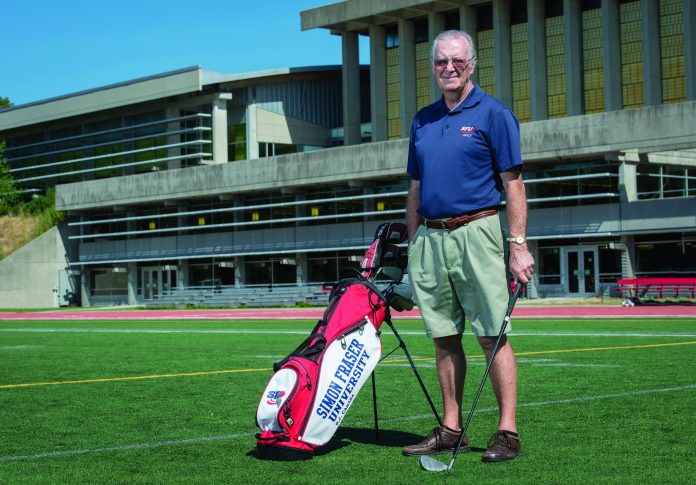
Last season was a highly successful one for both the men’s and women’s golf team. The men finished sixth nationally and won its first ever GNAC title, while the women finished third in the GNAC championship. All of this after having to restart the program six years ago, when the program was reinstated.


“The first three years, we could not go to postseason play as per NCAA Division II rules. So we’d get walk-on players, guys that by today’s standards were poor players, none of them would make the team,” explained head coach John Buchanan.


“We had no money. We weren’t getting any scholarship money, we hadn’t raised any money. [It was] just like reinventing the wheel. But it was a matter of give us some time, just to get traction again. Then when we got into our third year, the kids could see within a year or two they got a chance to go to postseason play. We became more attractive offer [to recruits . . .] and once we turned that corner, then the quality of player coming in just rose accordingly.”


The men’s team in particular has been a great example of the rise of the program. It all culminated last season when the team won the GNAC title, a first for the program.


“We set a tournament record [for largest margin of victory]. We beat the perennial champions, Western Washington [. . .] hopefully you can repeat it, but everyone recruits same as us. I’m quite sure there will be some changes in some of the teams.”


The women’s team had a terrific season last year as well, finishing third in the GNAC championship, with all four of the team members placing in the top 16. Despite this, it may be harder for the women’s team to eventually reach the same heights as the men’s team. “Relative to men, there aren’t that many women playing golf [. . .] if you are an A or A+ [recruit], you are probably going to go to on a full scholarship to an American university.


“As we gain traction with the women’s team, then we’ll probably end up getting some athletes who maybe for a variety of reasons don’t really want to leave home [. . .] but if a girl’s really good, then she’s liable to be snapped up by one of the major schools.”


Coach Buchanan has brought in three new recruits to try and solidify his position within the GNAC and Division II. Mitchell MacLeod is the only male recruited this year, and despite being only being 18 years old, made the Ontario Willingdon Cup team. “To have a player who was good enough at that young age was a find, and he elected to come to SFU.” Emily Leung was the top ranked junior lady from Hong Kong, and Belinda Lin attended Semiahmoo Secondary and has a lot of potential.
The men’s first tournament is the Saint Martin’s University Invitational from September 18th to 19th, while the women will compete in the same tournament from October 9th to 10th.

Shrum Bowl on Ice

0
Lisa Dimyadi

Thursday night was the annual preseason showcase between the UBC and SFU men’s hockey teams. With a Shrum Bowl unlikely this year, it was a rare occasion to see sports teams from the province’s two biggest universities go head to head. While the first period was a tight, gritty affair, the doors blew wide open in the second, as the Clan surrendered five goals on route to a 6–0 defeat. It was the exact same score that the Clan lost to the Thunderbirds last time out.

The scoreline was not that flattering, and head coach Mark Coletta knows that there has to be improvements before the team starts its regular season in the BCIHL in a month’s team.

“I think [we have to improve] the mental part of the game. Being aware of situations, making sure we know when to go and not to go [on attack], and being better prepared to play in either a defensive posture or an offensive one. UBC is a very skilled team, tons of WHL experience, so you have to recognize they’re good. We should have played a more containment [style], and we didn’t do that.”

Indeed the Thunderbirds came into this game with eight new recruits, all of which had some sort of experience in the WHL. While an SFU win would be considered a huge upset, it looked somewhat possible to start the game. UBC missed a number of great chances, as Jordan Liem made a few great saves to keep it scoreless. SFU had a long five on three midway through the first, but weren’t able to capitalize; a huge wasted opportunity. The period was a very physical one, and had a large scrum in the corner near the end.

Perhaps the highlight of the first was the student contingent from UBC who were determined to try and get in the heads of the SFU hockey players and coaching staff. “It’s fun,” said head coach Coletta. “We been experiencing that the last couple years playing the NCAA teams over in Boston and Ohio. We love that, and I think the players embrace that. It’s better than playing in front of an empty building.”

The second period is where it all fell apart for the team. The speed of the game was “a little higher than what we were use to,” said forward Mike Sandor, and it showed. Two quick goals by UBC seemed to suck the life out of the team, the second goal a backhand right along the ice that snuck behind Liem. He was pulled after that, and in came Lyndon Stanwood. He didn’t fare any better, letting in three goals. The third period had a number of chances for SFU to break the shutout bid, the closest coming when the puck just squeaked past the post. UBC scored one more to make the final score 6–0.

“We should have played a more containment [style], and we didn’t do that.”

The team isn’t letting a large defeat get morale down for what should be another run at the BCIHL title. “We’re taking all positives from this,” said Sandor after the game; “It’s good to get this kind of matchup to start us off. It’s a good measurement to see [what] we have with the new guys in here, and see where we measure up to them, because obviously there’s a little bit of a rivalry.”

UBC seemed to be playing at a different gear for parts of the game, keeping SFU pinned in their own zone at even strength for extended periods of time. “The biggest difference is their puck movement.” explained Sandor. “Their transition game is a lot better than our regular competition, and I think especially with the first game of the year, a lot of the new guys aren’t use to our style of play. So this is just completely different to what they’re use to.”
“You clear the mechanism, and go back to work,” explained head coach Coletta. “We’ve got to get used to playing at the pace we played at tonight, even in our own league.”