Home Blog Page 918

CINEPHILIA: Norm of the North’s weak attempt at satire falls flat

0
If the film weren’t so dubiously methodical, I would consider it clinically insane.

The ineptly paced, written, and animated Norm of the North is a cinematic defecation left to be flushed in the month of January.

It’s an evil film masquerading as liberal commentary, a cynical, post-modern grotesquery, devoid of any authentic feeling, message, or characters. The derivative narrative beats, the use of pop songs, the randomly inserted dance numbers, the marketable character designs, and the annoying sidekicks that speak only in gibberish, are all meticulously designed to sell action figures, McDonald’s toys, and a couple of sequels, not to make a compelling or good film.

That’s fine. Marketing teams have been making atrocious movies for decades. What makes Norm of the North particularly aggravating and fascinating, though, is that it is about evil marketing, and is that very thing itself; it’s an anti-consumerist film that uses this idea only because it’s now fashionable and also up for sale.

The film’s lazy self-reflexivity stems from a plot where Norm, who, of course, is a fuzzy polar bear from the North, becomes the poster-boy for Mr. Green’s housing complex that will destroy his arctic habitat. Vera is entrusted with raising demand for the pointless project by “using the North to sell the North.”

If the film had any actual interest in considering the effects of human pollution on the environment, or how big business uses images to fuel consumerism, it might pass off as weak satire. But, in its current state, the film plays like a hollow version of The Lego Movie, where pop songs are used earnestly without the subtle subversion of “Everything Is Awesome” and where the narrative openly rips off elements from Madagascar, Despicable Me, Ice Age and The Lion King — music cue and all.

There is deep-rooted irony in a film that indulges in the very thing it pretends to hate, like a telemarketer who doesn’t like being called at home, or an illegally parked police officer who gives you a ticket for being parked illegally.

For example, when Norm arrives to Vera’s office for an audition to be the face of the project, she remarks how the lemmings would make great marketing, winking at the audience as it fully embraces what it’s pretending to criticize. These supporting characters are superfluous to the story and are blatant rip-offs, riding on the success of past films to sell new toys.

This self-loathing has become an epidemic in Hollywood cinema. Jurassic World continually mentioned how the dinosaurs in the park needed bigger teeth to rouse the audience, as the film embraced more hollow spectacle; Steve Jobs has moments where the characters stop to apologize for the Sorkin-isms while indulging in them; and countless horror movies make self-aware jokes about not going into the basement.

Norm of the North takes this to groundbreaking extremes: it’s like an Aaron Sorkin film where the characters never stop talking about how they’re talking, or a horror movie set entirely in a basement that constantly pokes at itself.

In Norm of the North, there are instances where a filmmaker mentions how “everything can be fixed in post,” where Norm explicitly calls the villain “one-note,” and where he mentions how he hates randomly dancing for the human tourists. If the film weren’t so dubiously methodical, I would consider it clinically insane. It says one thing, and does another. It seems to hate itself to the very essence of its genetic makeup.
We’ve become too aware of convention, too conscious of how images are used to encourage consumption, and too skeptical of the entire system. Now the only way left to market is pretend to detest the very thing being embraced: to use the cynical to sell to the cynical, if you will.

I will always want to believe

0
They’re back! Gillian Anderson and David Duchovny reprise their roles.

As an unashamed X-Files fanatic, I had high hopes for the all new six episode mini-series reboot. And it almost met my hunger for a new episode. Almost.

The X-Files has been off the air for over 10 years. But like most fans in their early 20s, I never watched the show when it was on TV. Rather, I spent my semester breaks and days off bingeing the series like a grade-A hermit. The original series, for me at least, is still fresh in my mind. And this could be one reason why I was underwhelmed by the first episode in the reboot.

Like all die-hard fans, though, I wanted the new mini-series to be true to the original nine season-long science fiction drama. The monsters, the mystery, the companionship, and the blurring of myth and reality is what got me addicted to this show, and was what I hoped the show would replicate.

The first episode, however, fell mildly flat with me.

Now don’t get me wrong: the first episode of the reboot was true to the original series. However, it was almost too true. There were moments in the first episode that felt like a copy-paste job from the series’ past iconic episodes. This is always the biggest obstacle for any show’s revival — they risk producing a cookie cutter episode that does nothing but serve one’s nostalgia.

Ultimately this is what holds the new season back. For this revival to be successful, it will need to find its new stride.

The reboot is not without its victories, however. The rough patch experienced by the show’s two star characters, Mulder and Scully, is very raw, and believable. Their recent separation is heartbreaking. I spent hours watching them fall in love, but never find the right moment. The revival is true to that struggle, and adds levels of complexity never touched on in the original series. This alone is enough to have me hungry for more.

The addition of Joel McHale as a part-time hyper-conservative talk show host and full-time conspiracy theorist, adds a new dimension that the original series never fully developed. We’re left with many questions, and few answers about who this new character is, and how he fits into the latest season. This role is very different from all the others McHale has played to date, but he does not disappoint. He delivers the crazy, the sass, and the balance the show needed to land on its feet.

With a few episodes left in the miniseries, I am not yet ready to say the reboot was a wasted opportunity. As any diehard fan knows, when it comes to this show you must be patient — something bigger is always on its way down the pipes.

After all this time, I still want to believe.

Dine Out Vancouver’s Winter Beer Hall made for a great night out

0
Big Rock Urban Brewery transformed into a replica beer hall.

Dine Out Vancouver held its first ever Winter Beer Hall this month, and given its success — being a sold out event — it’s unlikely to be the last. Big Rock Urban Brewery and Eatery hosted the event, turning their restaurant into a replica of beer halls past.  

Long tables and Hogwarts-esque seating arrangements added to the camaraderie of the event. The lineup for the featured casks went right by the stage which featured live music. Dim lighting finished the effect; you felt like you were in Germany, the birthplace of beer halls.

The $40 ticket provided five seven-oz. tasters of local craft brewery magic, and a 3-course meal to accompany them.

Big Rock’s contribution was their traditional ale; an English mild with a Canadian twist. It was the best beer to start the night, as it was the gentlest in terms of hops, yet rounded in flavour.

Next was Storm Brewing, whose beer was heavy on the honey in the nose, but had no vestiges of honey on the palate. Instead, there was whiskey and vanilla bean, with a tart citrus finish.

Bridge Brewing offered a brown ale, with a twist. Brown ales as a category aren’t hoppy. But, Bridge Brewing added New Zealand hops to give it a grapefruity flavour unusual for the beer type. It worked well, actually, and fans of hoppy beers would have been especially pleased.

Real Cask also offered a traditional ale. It was really dark, like a stout, with a hint of espresso at the beginning of the sip. Moderately hoppy, it was a good choice for the period between the main course and dessert.

Finally, Doan’s supplied their American-style rye stout, which was super dark and roasty with a hint of chocolate and rye spice. A little hoppy, this was the perfect second dessert to the evening.

For an extra few bucks, you could try the Dine Out Van Fest Ale, specially brewed for the festival. It was an English mild ale with hints of plum and roasted cocoa.

Now for the food! There were two choices for each course, and I got to try them all. The smoked oyster chowder, made with Citradelic IPA, fennel, and miso was smoky and chowdery, but not phenomenal.

The other starter was a dish with three roasted beer meatballs. They were about the size of a bouncy ball and there were only three of them, so that was disappointing. They were also slathered in tomato sauce, which, alas, tasted like it was straight from a can.

The main courses were the highlights. The lamb and rapini pizza was highly original. The crust was crisp and the fennel béchamel was a delicate balance to the strong flavours already in flux.

I was a bit surprised to find a bento box in a brewpub, as cauliflower tempura, tuna nigiri, and gomae aren’t usual pub fare. But it was well executed, apart from the batter on the cauliflower not being tempura.

To finish, the first dessert I had, the mango cheesecake, was fluffy, light, and delicious, but it wasn’t really a cheesecake. It was deconstructed, and the filling too whipped and fluid to really be called a cake. More of the mango sauce would’ve lifted it up, but it was still a good finish.

Seadas, which are Sardinian fritters, were the other dessert choice. These small dumplings with a squeeze of lemon, a drizzle of honey, and shavings of asiago and romano made for a surprisingly delicious, savoury dessert.

So, when you come across the Dine Out ads in a few months’ time and you see one for the Beer Hall, do yourself and anyone you like enough to take with you a favour and buy tickets — the VIP ones, if you can afford it. It’ll be a night of fun, making new friends, and amazing beers that you won’t regret.

Grizfolk produces music that is anything but grizzly

0
Grizfolk drops first full length album following successful EPs.

Grizfolk is an alt-rock band from LA which has just released its debut album, Waking Up the Giants. Their hard work and determination shows through in their song-writing and flawlessly executed tunes.

Although the whole album is amazing and endlessly quotable — “The struggle you are up against makes you what you are” from “The Struggle” — there are some songs that stand out more than others.

“Hymnals” is my favourite, and one that has found a permanent home on Waking Up The Giants after having been on both of their EPs — From the Spark and From the Road. It’s got a wicked beat, amazing vocal melody, and is just really well put-together.

Another track that’s been around since before Waking Up The Giants is “The Struggle.” The song is really easy listening and perfect for belting out in a rainstorm.

In the same vein, “Troublemaker” is super catchy, with an epic bass intro. It’s perfect for when you’re feeling badass or want to feel badass and maybe a little sexy. I dub it worthy of shower karaoke.

The title track — “Waking Up The Giants — is well-crafted, and it builds into this really full-sounding song. If you were watching Grizfolk live, this is the one to which you’d whip out the lighters and soulfully headbang.

If you’re looking for something up-beat and overflowing with happy vibes, “Waiting for You” is the one for you. With Valentine’s Day coming up, passionately serenading your significant other with this tune can only score you big bonus points.

“Vagabonds” tells the story of an outlaw desperately needing validation, and has a majestic sound reminiscent of the soundtracks to The Lion King or Titanic. “Bounty on My Head” continues this outlaw theme with a toe-tapping beat and great guitar riffs.

Finally, the perfect finish to the album is “Wide Awake.” A little rockier than the previous tracks, it has a harder feel while at the same time being musically optimistic in a way that will lift you out of whatever funk or rut you’re in. 

The whole album has this way of making you feel epic, which makes it the perfect soundtrack for any journey into a battle for which you need to be extra psyched. Midterms, job interviews, essays — they’ll all crumple before the awesomeness of you and Grizfolk.

SFU Quidditch wins first trophy in short history

0
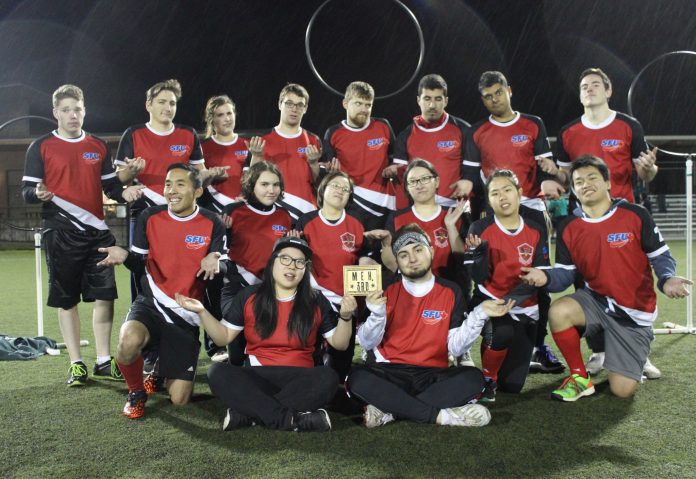
The team finished in third place, winning the “Meh” trophy.

It has taken a few years and a trip to America, but SFU Quidditch now has their first trophy for finishing in the top three in a major Quidditch tournament.

The team took home the “Meh” third place award in the Subdued Excitement tournament, behind the Rain City Raptors and the UBC Thunderbirds, who won the “OK” first place and “Yep” second place trophies, respectively.

The tournament, which took its namesake from Bellingham’s nickname as “the city of subdued excitement”, was held on January 23, and featured teams from British Columbia, Alberta, Washington, Oregon, and Idaho.

SFU Quidditch lost their first match against UBC, but then went undefeated the rest of the way, taking down the British Columbia Quidditch Club (110–30* asterisks here and onwards indicate which team caught the Snitch), Western Washington University Wyverns (80*–70), and Emerald City Admirals (140*–60) in round-robin action to secure their spot in the third place match. From there, they went on to defeat the Vancouver Vipertooths by a score of 160*–50.

Team captain and keeper James Champion noted that there are so many new faces on the team, and that has really contributed to the rise in success that SFU is currently seeing.

“I feel like we’ve got more people than we’ve had in the past,” he said. “We’ve got a lot of young people who are new to the school and want to be rambunctious with their friends and want to carry that energy onto a Quidditch pitch. I feel like we’ve got a really good atmosphere here.”

Champion also went on to talk about the offensive depth this team has, which is potentially the deepest it has ever been. He pointed specifically to the game against BCQC, in which SFU kept them from scoring until BCQC caught the Snitch to end the game.

“I was able to look at the scoresheet after and see that six different chasers had scored and nobody had more than two goals, which I thought was a really good example of what our teamwork is, what our practicing has done, and what good offensive depth can do against another program [. . .] we can [win] when we have people working as a team and when we have everyone stepping up and contributing,” Champion said.

Avery Herbert, keeper for the team, is a first-year player who contributes to the aforementioned depth. While he and the rest of the team know when to take practices and games seriously, he is also a part of that rambunctious attitude that helps keep the team’s morale high and make it something the athletes want to be a part of.

“I’m just blessed I can wake up everyday and play the sport I love,” said Herbert. “There are some people who dream of playing in the big leagues when they toss around the quaffle on the weekend, but I get to make that dream a reality.”

“To be able to play on a team like this and then take home a trophy on top of it, it’s just surreal. It’s the kind of stuff movies are made of.”

Next up for SFU Quidditch is regionals, which will be held in Abbotsford on Feb. 27. According to Champion, the goal isn’t about coming home with any recognition but to keep improving as a team.

“What we’re looking for is to build as a team as a result of the regional tournament rather than to win,” he said. “We want to establish this program strongly and establish a spirit of competitiveness that we want to characterize of [SFU] Quidditch.”

Disclaimer: Nathan is a member of the SFU Quidditch team.

HUMOUR: Canadian government confirms existence of Jehovah’s Witness Protection program

12

On our daily commutes, there is one group of people who work tirelessly to gain the attention and likewise affection of the masses. Day in and day out, these extraordinary individuals weather BC’s most egregious elements, standing diligent to their development amidst a sea of skepticism, or worse: an abundance of ridicule. Unwavering in their belief that they can bring absolution to the tired and fed-up transit goers, they are nothing short of tenaciousness incarnate, worthy of a thousand praises.

I am of course referring to the Jehovah’s Witnesses. (I certainly hope you didn’t think I was talking about Translink.)

While Jehovah’s Witnesses have been all too commonly disregarded at transit stations and bus stops for years, breaking news from Parliament Hill has left many craning their necks to observe the passed-up apostles like never before.

Shortly after Friday afternoon, Prime Minister Justin Trudeau spoke to news outlets in regards to a long-gestating rumour about the Jehovah’s Witness Protection program, which he confirmed to be true.

“There is no sense denying it further to Canadians: this program has existed for some time. It was conceived as a cost effective alternative to our current witness protection program. I assure the public that the cuts continue to be a necessary venture. Without them, the installation of my Olympic size swimming pool in 24 Sussex Drive would not be a reality.”

Further questioning on the subject was cut short when the prime minister cannonballed into his newly installed pool.

Rumours surrounding the existence of the Jehovah’s Witness Protection program first surfaced six months ago. The hearsay was originally conceived over a game of Dungeons & Dragons as a joke by members of the Mom’s Basement Conspiracist Society (MBCS). One can only imagine the shock they were in for when the program was revealed to actually be true.

The Peak contacted the MBCS by landline for further comment but only procured one three-word statement repeated to near infinite (“No fucking way!”), followed by a chorus of laughter.

With the government program now declassified, the future of the program is left in a very uncertain place. Those working the angle are unconvinced that any big changes will ever emerge, though, given people’s aversion to having their spiritual views challenged.

“Whether they know we’re doing it for real or not, as sure as the sun sets and the moon rises, people are still going to pretend to look at their phone every time they walk by us,” said David Clark, a faux-proselytizer in the program. “Which is fine by me, because God’s honest truth, I don’t want to really talk to them either.”

Julia Howley runs for the right reasons

0
Howley won the GNAC championship in her first season as a cross country runner.

Being a new student at a school is tough, no matter the situation. Now imagine being over 7,000 kms away from home, having to adjust to new surroundings and a higher level of competition.

This is what faced Julia Howley, a native of St. John’s, Newfoundland, in her first year as a cross country and track and field athlete. Despite all these challenges, she has taken them in stride and has become a regular member of both teams.

“I always wanted to go away for university,” says Howley. “My singular goal in high school was to go away. I’ve been a very adventurous person my whole life, and I didn’t really start track until grade 10. So I never really thought about going away for track, that wasn’t even a possibility.”

“In grade 12, I [said to myself], ‘What do I have to do so I can go away for school?’ So I thought, ‘track is going really well for me right now, maybe if I focus on that it will be possible.’ So I talked to my coach, who knows Brit [Townsend, Head Coach] really well [. . .] He talked to Brit and basically asked her what I needed to do so that I could come out here and get a scholarship.

“It just worked out really well. Everything has been smooth sailing. It’s pretty much worked out the best way it could.”

Howley points to fellow teammates as another reason why she was able to adjust to SFU.

“One of my teammates from home actually came to SFU one term before me. So that was nice, to have a familiar face around. And then my recruiting class was a very big class, so there were a lot of freshmen from all over who were kind of in the same position. So we just bonded really quickly.

“I think sometimes when you’re not doing well, it can be easy to get caught up in what other people are doing.”

“I made some really good friends right away, like Miryam Bassett and Sophie Dodd — [they’re] two of my best friends [now] and we met right away at training camp. And we kind of formed a little family on the team, and we’re really close.

“We’re there for each other for anything, and I know they would drop anything in a heartbeat if I needed it.”

Things worked out really well for Howley’s first semester here at SFU. As a member of the cross country team, she won the GNAC championships and the team qualified for the NCAA Division II Nationals.

“It was more than I could have expected coming into the school,” shes explains. “I didn’t really know what to expect coming into cross country [here]. Because I’m from Newfoundland, and [there’s] not a big running community there, there wasn’t a lot of competition for me. So coming into a very big running community out here on the West Coast, and just being immersed in it right away and doing really well right away was so cool. It was such a good experience.”

Not only a cross country athlete, Howley competes in track and field as well, running in the middle distances — 1,500 and 800 metres. This means she is constantly running all year, as cross country competes in the fall, and track and field (both indoor and outdoor events) runs from January to end of May. She elaborated that practice in cross country means running long distances every week, and short sprints for track and field frequently.

So what are the main differences between track and field and cross country?

“Track is definitely an individual sport. Sometimes you can feel a bit isolated because you are competing against your teammates. But in cross country, the way it works is that the top five runners on a team get a score, and you want to get the lowest score possible. You’re all working together and you want to run well with your team so you can make it to the next meet. It’s very encouraging, and it’s not as stressful on yourself because you’re running for something bigger than yourself, rather than track where it’s just all on you and your time.”

Howley still has a few more years left of NCAA eligibility and has some definite goals set, both for herself and her fellow teammates.

“I definitely would like to see the team make it to nationals again as a overall team goal,” she explains.

“But personally, I just want to continue to run for the right reasons. I think sometimes when you’re not doing well, it can be easy to get caught up in the times, and get caught up in what other people are doing, and kind of forget why you’re running and why you’re here. And that’s because it gives you so many cool opportunities and it makes you grow as a person, and you push yourself.

“It’s really easy to lose focus on that. I want to keep that in my mind over the next few years. I think if I do that, then I’ll definitely have some good seasons and do really good things with the sport.”

Why isn’t codeine a prescription drug?

0

[dropcap]I[/dropcap]f there’s one thing that every authority figure I’ve known since my infancy has been quick to remind me, it’s that doing drugs would ruin my health, destroy my prospects, and give me bad teeth. They may have been worried about crystal meth and crack cocaine, but, surprise: not one of them thought to be suspicious of the innocent little bottles of Tylenol-1 in their nightstands.

Now, the drug codeine isn’t quite as scandalous or dangerous as the drugs your parents warned you about. However, it does have the extra-spicy distinction of being one of the most addictive painkillers available without a doctor’s note — except in Manitoba, which is set to debut on February 1 as the first Canadian province to necessitate a prescription for it.

Robaxacet-8, Tylenol-1, Calmylin, you name it: if it’s got codeine in it, you’ll need your doctor’s permission to take it, and the pharmacist will have to confirm that you’re not already taking another medicine before they can give it to you. It might seem like these are unnecessary hoops to jump through for your pain relief, but many members of the medical community both praise the change and advocate for other jurisdictions to follow the leader on this one. Considering just what codeine is and what it does, I can’t help but agree.

Aside from its addictive nature, codeine just might decide to give you some fun get-well presents after the first few dates, such as slowed heart rates, liver failure, and hallucinations. Yeah, no thanks. While potentially harmful side-effects in medicine are hardly a rarity, there’s a difference between a necessary risk and masochism.

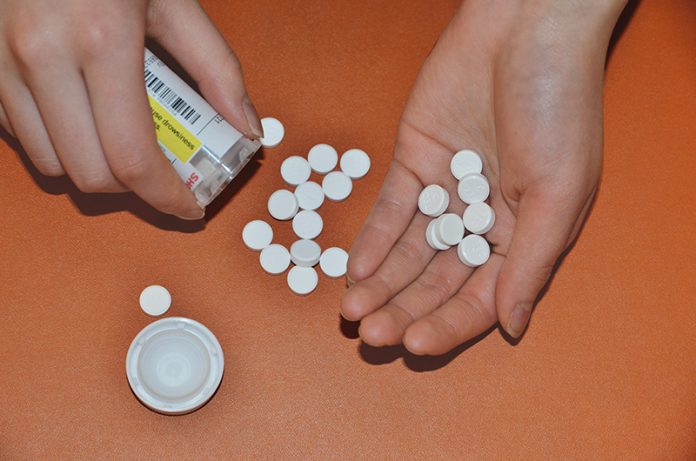
See, not only is codeine terrible for you, it’s not even a good drug. Despite its use as a painkiller, Oxford researchers recently found that people generally got more pain relief out of a sugar pill than out of 60 milligrams of codeine. This is about equivalent to what you would find in seven tablets of Tylenol-1.

In other words, codeine on its own is only really stellar at one thing: getting people hooked. And generally, the only people who would want codeine who can’t get a prescription for codeine are people who don’t actually need codeine.

A number of doctors agree that relegating codeine to the ‘prescription-only club’ is in the public interest. “The idea you can get a drug without a prescription that turns into morphine is foolishness,” says toxicologist and drug safety researcher David Juurlink.

“Every good drug has its risks as well. But a not-so-good drug with risks? It’s pretty hard to justify,” asserts Ross Tsuyuki, a professor of medicine at University of Alberta.

These new restrictions might seem like a pointless inconvenience at first glance, but ultimately nobody would really be hurt by them — on the other hand, a great number of people would be protected by them. Recreational codeine is a poison that we cannot hand out like candy, and every person rushed into an emergency room because they popped too many painkillers is a person that might have been saved with proper regulations on what we sell in pharmacies.

At the end of the day, the medical field is supposed to be about helping people; we need to stop promoting substances that do quite the opposite.

Humans of SFU

0

Shinelle and Melanie were performing as a part of SFU’s International Festival on Friday.

Shinelle: A lot of people don’t know about Sri Lanka. A lot of people don’t know that Sri Lanka exists. That’s something we continuously run into. People think we’re Indian or Fijian, which is ok, but it would be nice if Sri Lanka were better known.

Melanie: It would be nice to identify, for Sri Lanka to be known in a more global sense. It’s a very beautiful country, a lot of diversity there. Within our own community outside of the university, we do have a huge population of Sri Lankans here, we do have local events, and there was never really an opportunity for younger students to get together and promote their own youth, so we thought it was a great idea if we had the school to back us up here and we thought: there are so many people around us, why don’t we get together and form a club? We actually ended up meeting so many people, so many Sri Lankans, not just Sri Lankans, but all these different types of people.

S:  When we first started, we didn’t have a lot of problems, because the school was very supportive of the idea.

M: Getting people interested in the club was a big challenge we had right from the beginning. A lot of people would come up to the club table and say “Oh hi, we don’t want to join the club but you’re cool.” Like today, we see a lot of people that we know by name, like they’re friends, but they don’t want to join. That’s the biggest challenge.

S: It’s also difficult keeping members interested in the club, keeping them active. Sometimes responsibilities fall on other people more often than they need to. We’ve been pushed to our limits a few times.

M: She’s the calm one when everybody else is stressed out. I’ve seen her managing to keep calm and I know how stressed she is and she still manages to get the job done. That’s pretty amazing.

S: It’s taxing because sometimes I don’t even get to talk about that with my parents either.

M: A lot of our parents are really traditional, so for them obviously they love seeing us doing all these things in school, but their main focus is for us to do school, not to get distracted. I recover by dancing, or performing.

S: I sing, that’s the only way that I can define relaxing for me. I do overthink a lot and I get stressed out a lot and then the club stuff, which I enjoy doing, and there’s a lot of event planning I would love to do but I wouldn’t say that was relaxing, so that’s my kind of secret outlet.

M: I used to perform a lot, but now I’m in school, with work, it’s hard. Dancing is like an outlet, and especially with this club, meeting all these new friends, within ourselves is like a stress reliever.

The Peak: What’s something most people don’t know about you?

M: I don’t talk about this much, but I’ve been to a lot of countries and I’ve seen a lot of cultures. One of the main reasons […] is my dad. He loves to travel, so he takes us with him wherever he goes, and just taking bits and pieces of that from everywhere. I don’t like to boast about it, it’s just something personal. Learning about these things and seeing it, like in Rome, life is such a crazy experience, and I value those experiences.

S: I would say a lot of people don’t realize that I also get stressed out and I also go through a lot of emotional issues. I’ve had a few people come experience and say “You have problems? I didn’t know you were going through so much.” I’m very careful about filtering it out.

WEB-Melanie and Shinelle


Celia was waiting in the AQ, reading.

Celia: I don’t see myself on par with a lot of my other classmates; they’re really, really dedicated and I go through phases of “Man I’m so dedicated to this this week!” and then I work my ass off on a million other things and I lose my enthusiasm every once in a while.

I just really, really hope that I stay committed and I try and involve myself in being a part of the research community here at SFU or any other institution that I find myself at. I need to find a job between now and finishing graduate school. I hardly see myself jumping from my undergrad to my graduate degree. I hope maybe I’ll find a co-op and find I’ll be able to smooth talk my way into a job in what I have studied, so then if nothing else works, then I would be more than happy to keep studying and be a doctor.

When I was little I was like ‘I want to be a dermatologist,’ and it was so weird. Until I was about 13, I wanted to be a dermatologist and work as a GP. Then I started realizing what doctors and dermatologists did and I was like, “What the hell? That sounds awful.” And now I’m back on that train [laughs].

I think my parents told me that word, ‘dermatologist,’ and I was like, ‘wow, so many syllables!’ [laughs]. And they look at skin, like, ‘So cool!’ [laughs]. And then I kept learning about it and I’m open to anything. I don’t know, it’s just once you learn it, my knowledge will be applicable to all streams of things, as I mould myself to be what the world needs. . . maybe?

The dream is, when I do get to a position where I’m not compromising finishing my degree for a career [. . .] The dream is I’m not going to have to try and make a spot for myself to be in.

I don’t want to be a server for the rest of my life. It’s not gratifying to be really good at your job for somebody, it’s just so meaningless. You’re not really making a difference. It’s just food and booze.”

P: What’s something most people don’t know about you?

C: People know I don’t take very good care of myself, like they know I really like bourbon and I really like cigarettes and I really like to pull all-nighters for three days straight, and then sleep for a couple days. What nobody knows that I have this immune system of diamond, it’s impenetrable. I only get sick when I let myself get sick, when I choose to go sleep for a couple days, then I’ll go to sleep for 12 hours and I wake up, can’t even function, and go back to sleep. So it’s very hidden when I let myself deteriorate, and obviously why would I let anyone see myself at my worst?

I’m trying to get back into gear so people can see me being good at life. Good at being an adult who takes care of themselves. That’s like my weekly routine, actually. [. . .] Tuesday’s like most productive day of the week, absolute favourite. That’s not a secret though, everyone knows that.

[. . .] I do checklists; I don’t do itineraries. If you give me a strict schedule, like 8 o’clock be here, 9 o’clock be here, and you won’t see me.

They just terrify me. I’m the [. . .] tardiest person you will ever meet, and I think it’s probably my absolute biggest weakness, like the weakness that probably ruins everything about what I believe in and what I want to do and stuff. I feel humiliated when that happens. Like what could possibly be so important that you wasted 10 minutes for you to disrespect for other classmates and your prof?

If I don’t feel like I know all the material well enough to write my assignment, I will not even start it, because I’m not about to try to half ass it, I would rather do that than fail [. . .]. I would rather straight up just get a 0 [instead]. Are a lot of people like that?

I just don’t know how I’ll ever work hard enough to put myself in a situation where being above average is noticeable or makes a difference, [. . .] I want to be an awesome MBB student or an awesome science student. It’s just like sad when that’s a compromise, when I compromise my energy to do petty things, like something that would change my path.

Yeah I’ve been deep in thought about it so thanks for bringing it up, my friend.

WEB-Celia


Two new FIC students, Pradhyman and Rahul, who came from India, were taking turns taking each other’s picture in front of the pond.

Pradhyman: We aren’t used to this ambience. Before we met you, we were taking it in. There are quite a few new things out here. The education pattern is quite different. Like here there’s a lot of use of technology, like electronic devices, like computers, projectors, and emails.

Rahul: Teachers here expect you to know everything before you come to class, so that’s new too.

P: There is more emphasis on the practical things than theoretical. There’s a lot of exploring stuff in computing as well. It’s mostly hands-on. Sometimes I find theoretical knowledge is a bit lacking here, because we have been used to first learning the theory, understand how it works, and then you do the practical application. In a new place, when you see the practical application first, you don’t understand what’s going on. Different style.

R: Orientation was excellent here. Exciting.

P: Fun activities. It’s mostly the orientation where you make friends.

R: Because we don’t have the same classes. Only one common class, but still we know each other. And many other friends that don’t have classes with us.

P: Friends is just, we meet at school time, and. . .

R: At home, we are alone.

P: Which is why I talk with my parents often.

R: Same here, I talk for hour, hour and a half.

P: We hope to stay in Canada but there is no telling for sure because it’s a totally new culture. The only thing is that we should complete our graduation in four years.

R: First thing is we should transfer into SFU. That’s our first goal, after that completing our graduation. Seriously. We are a little bit depressed with our studies right now. We are not able to manage our timetable right now actually. Wasted our whole day today.

P: Sometimes it happens, it’s not every day.

P: What’s something most people don’t know about you?

P: I played drums. We had a band in high school. We used to go to different Indian universities and perform and win prizes. So I was a drummer and this is what my friends don’t know about me.

R: I was selected as best artist in my school. I’ve left drawing for one year, I haven’t made any paintings or drawings for one year, but I’m a good artist and my friends don’t know. I love pencil sketches. It’s my favourite.

WEB-The pond guys


Victoria was drinking coffee, and giggling constantly.

Victoria: As an elementary school student, my favourite class was science, because everything else, English, social studies. . . was dull and sort of repetitive. And science was a place where I could learn something new in each class, find out how things work.

[. . .] I have siblings so I don’t control the remote, I just watch what they watch and then I got stuck watching forensic TV shows. I heard that season 10 [of Bones] could be the last one. There are so many episodes and I still haven’t caught up with everything.

I thought it was fascinating how they could clue together a situation like that and then come up with a scenario and actually catch the murderer with just tiny pieces of evidence. I’m interested in forensics, so I’m not sure how to go about studying that, but I will [laughs].

I moved from Las Angeles to Vancouver but I’m still living with family. I was born there, and then I moved here for university. I have relatives here. The biggest part was the tuition cost. In Las Angeles, in California in general, the university costs even, if you’re already living there, [are] sky high.

Despite the extreme melting pot that you’ve got going on here, there isn’t any good Mexican food. There is not. I had to go back to LA and gorge myself during winter break. It’s good and cheap.

P: What’s something most people don’t know about you?

V: Usually, if I’m alone or just walking somewhere, out of nowhere I get these little freak outs in my head and it just, the stress sort of just goes up. And by the time I get home or something it just flattens out. It’s just sort of a tight knot. And then everything just sort of goes crazy in my head, sort of feels like I can’t handle everything, and then the moment I see someone or something, it just gets shoved into a corner.

I just take a good long shower to relax, [laughing] a really wasteful amount of water long. Like an hour. Because in the shower it’s just me, and there’s nothing but steam and it’s just relaxing. Not only but physically but mentally.

WEB-Victoria


Daphne was waiting in the hallway for some friends.

Daphne: “I was in grade 11 and there was a cute boy I was sitting next to who was a year older and he was like I’m going to kinesiology at SFU I was like oh. And I kind of just ended up here. I knew I wanted to go into sciences beforehand, but I guess he kinda decided that before me. We were friendly, and he was cute and I liked being around him. Since he was a year older he actually transferred to [the university of] Guelph when I just got here and I was a little disappointed, but I would have come here regardless so it’s ok.

Since then I’ve definitely matured, I’m definitely quieter, in the hallways I mean. I feel like it’s really easy to pick out first year students kind of. You can tell with their attitude, right? So I feel like I was probably once sort of there, but I’m not anywhere like that now. I’ve definitely actually learned how to study since I didn’t do that in high school.

The wakeup call was getting my grades back [laughs] because honestly high school was just a breeze. First year, working at the same level as I was at high school, so bare minimum, I realized that doesn’t work here. And it’s hard to make friends, but people are less judgmental here. I think everyone’s more independent kind of, there’s less cliques in the classroom. It’s hard to make a friend because you might talk to someone one day and you’ll never see them again.

P: What’s something most people don’t know about you?

D: I feel like I’m really open about everything. My friends know a lot, I don’t know.

Any hobbies?

D: No, I just like to nap. I just come to school and I go home and I nap. And then I just come back here the next day [laughs]. If I was on vacation at home, I wouldn’t sleep all day, but I would just stay in bed [and watch Netflix]. Or spend a lot of time on my phone. Like on Sunday I was in bed until maybe 5:30.

WEB-Daphne

I met this gentleman who had a peculiar way of introducing himself.

Nicholas: My name is Woo, Nicholas Woo.

I watched the James Bond movie twice, and I got the poster. I was watching Goldfinger, but I’m leaning a little more to the new ones. There are always exceptionally well-cut suits. They aren’t unrealistic; if it’s tailored right, you can still move well. What I’ve heard is that if you make the arm hole tight, it lets you move easier.

I have three [suits], and three tuxedos. My navy blue one is my favourite. Timeless suits are best. When you buy a suit, be sure that the shoulders fit properly. You can’t change the shoulders after.


WEB-Nicholas

My Soapy Scandal

0

[dropcap]G[/dropcap]rade five was one of the high points of my life: I had great friends, a great teacher, and I let out my inner rebel.

This story begins with the ‘hot lunch’ in elementary school. My forgetful friend Bronwyn forgets her chocolate milk in her locker. Partner-in-crime Brietta suggests we conduct an “experiment.” The milk is to stay in Bronwyn’s locker until it grows mould.

Weeks pass, and wheelchair-bound Bronwyn, who was unable to even reach the top shelf where the milk sits, continued to endure the rancid smells emanating from the drink in her locker. Sinister Brietta and myself frequently check in on our creation, but we soon realised our experiment needed to go in a much different direction.

Brietta and I often broke the rules. We ran through the hallways, frequently adventured out of bounds, skipped pointless assemblies, and often hid in the girl’s bathroom during rainy recesses. One of these bathrooms eventually became our clubhouse.

Throughout the school year we’d been trying to concoct a mighty prank, something that would distinguish our rebellion against our draconian grade five institution. Our previous ventures included stealing the class butterfly to set it free, and crawling across classroom floors after being purposefully separated in order to pass very important notes to each other.

Months after that initial hot lunch, Bronwyn was still unable to reach the likely toxic dairy product, and Brietta and I finally discovered the perfect prank: we’d fill the soap dispenser in our bathroom-clubhouse. Brilliant.

So, we took the milk to our clubhouse, laughing maniacally as we ran. We pumped all the fresh, pink, clean soap out of the dispenser and poured the thick, chunky, discoloured milk in. Now all our perfectly innocent female classmates were going to get rancid milk on their hands. This would show ‘the man.’

Days passed; we soon forgot about our prank and moved on to bigger and better rule-breaking endeavours, until the teacher took me out of class. She frowned at me and asked, “Paige, did you put milk in the soap dispenser?”

I shook my head in fear. She asked again, adding, “Paige, tell the truth. You will be in less trouble if you tell the truth.” I sighed, and admitted to my horrendous crime, and was swiftly taken to the principal’s office, while my partner in crime sat innocently in class.

After a very frightening lecture from my principal where I was told this would never be expected of such a “well-behaved, good student,” and a call home to my dad to set up a parent-principal meeting, I was sent back to class shell-shocked, assuring Brietta I hadn’t ratted her out.

My dad was informed of my wrongdoing, and, completely underwhelmed, didn’t punish me at all. So, other than a firm scolding from my principal, we got out scot-free. But there was one lingering problem: which culprit had snitched on us?

Our first thought was Bronwyn, since she knew all about the crime and we had basically forced her to suffer with stinking milk in her locker for months, but forgetful Bronwyn was forgetful and easily ruled out. We tried to find the culprit for weeks, interrogating classmates from all around the school, but the mystery was never solved.

To this day, we still don’t know which of our grade five classmates turned me in. All I can say is this: we’re not sorry that whoever snitched got a soapy surprise. They got what they deserved.