Home Blog Page 906

SFU Women’s Soccer gets a high five in the off season

0
Carmen Brown spent the last two seasons playing in the ECNL.

Hoping to build on their first winning season in five years, the SFU Women’s soccer team has added five new players to their roster this offseason. Coach Annie Hamel, in her second year in charge of the program, has added three midfielders, one striker, and one defender in an attempt to bolster the team in time for the season in the fall.

One of the midfielders, Kaely Biring, already has experience playing at the university level, though not in the NCAA, but rather the Canadian CIS league with the Calgary Dinos. With the Dinos she made it to the CIS Championships in 2015, and hopefully that success will rub off onto SFU. In a press release, coach Hamel spoke to how Kaely will contribute to the team, stating, “we will look to her to bring experience and leadership to our young squad. She can be utilized in various defensive roles and is a player who possesses all the right intangibles to be successful.”

Carmen Brown is another midfielder who was signed by SFU, and she has spent the last couple of years playing in the United States. She played in the ECNL, an American league which concentrates on building up future female superstars, and Carmen played in this league when she lived in Arizona. The Clan will be hoping that all she can adapt quickly to the change of scenery, and become a vital cog for the team.

The final three players signed all played for the same BCSPL youth team, Mountain United FC. While playing for that team, they won the Provincial Championship three times, and won the national title once. With a long history of success, the local girls will surely be an integral part of any future successes for the Clan.

Lauren Fuerderer is the lone striker signed by SFU, and will be looking to start right away. Coach Hamel spoke very well of her in the release, saying, “Lauren is a player who possesses remarkable athletic abilities. Her skill-set will transfer very well to the NCAA game. Her size, speed, and strength are qualities that will help lift our team.  She will create havoc in the final third and we look forward to her contribution in front of goal.”

When looking at the final two players signed by SFU, it is fascinating to see the many similarities they share. Emma Lobo and Emma Pringle not only have the same name, but they played for the same club team (Mountain United FC) and went to the same high school (Windsor Secondary).

Coach Hamel had high praise for both, saying that Lobo “brings a rich combination of technical skills, soccer IQ and pure speed to our back line,” and that Pringle “is a highly disciplined person and has demonstrated an unwavering desire to succeed on and off the field.”

With all five of these new additions to the squad, it looks like there is a real chance at SFU continuing their winning form in the 2016 season.

COLUMN | GUESS AGAIN, GRANDPA: Why does my grandfather dislike millennials?

0

[dropcap]W[/dropcap]hen I got home after school the other day, my grandpa was talking to my mom in the kitchen. The words “no respect,” “authority,” and “irresponsible” were flying around while the wok crackled. It was fried rice night at my house. When they noticed that I was in the kitchen, he turned to me and said, “I had the rudest encounter with some millennials today at the pharmacy. I certainly hope you’re not like that.”

This made me bristle, because he and my grandma raised my mom and her sisters, and in turn those traditional values were passed down to me and my sisters. They have seen me in public, and I would like to believe that I respect authority and treat others with kindness.

So when I went to go ask my grandpa what on Earth the kids of today did to him, I was given an extensive list: “Obnoxious to the people behind the counter. Making a mess of everything. And when asked to leave by one of the workers, they taunted the workers until they finally did leave.”

Okay Grandpa, that makes my blood boil too. But, in my (and our) defense, not all of us are like that. In fact, some of us want nothing to do with our generation at all.

Millennials can get a bad rap for being rude, rule-breaking, anti-authority kids. But let’s face the facts: we millennials are the ones who are moving into the workforce. We are your future doctors, lawyers, news anchors, and politicians. We are slowly invading your life, and we have no problem sharing it with the world via Twitter.

As millennials, our favourite question is “why?” Why are things structured this way, and why is this person my superior? Barnabas Piper, a blogger for Lifeway Leadership, says that “[millennials] resist the type of authority that originates in a ‘because I said so’ attitude.” Or, simply put, we “resist authoritarianism.” In the past our parents and grandparents relied on the older generation — the ‘authority’ — to be their window to the world because they knew much more.

But, according to blogger Jon Summers, “the power has shifted.” With the Internet, we don’t need authority to provide us with answers if Google can do it faster. And maybe this is where the problem lies: the tide has turned, and we don’t need to rely on our parents for information. In fact, as recounted by Summers, our parents are coming to us for help. Maybe this flattened playing field has made us a little cocky.

Through my upbringing, I have come to shrink at the sight of titles and important people. I understand that some of my fellow peers could care less that they are meeting the police chief or a very important university official, and because of this, I feel like we are suddenly in a time where hierarchy doesn’t matter as much. In the case of technology, the older generation may have a lot to learn from us, but as millennials we have a lot to learn from them as well. The relations between generations shouldn’t be filled with resistance; they should be reciprocal.

So Grandpa, I hope you see that in reality, only a small fraction of my generation fits your description of a millennial. But I urge all my fellow SFU students to really consider the importance of respect, regardless of age or title.

I support Apple’s decision to maintain user privacy

1

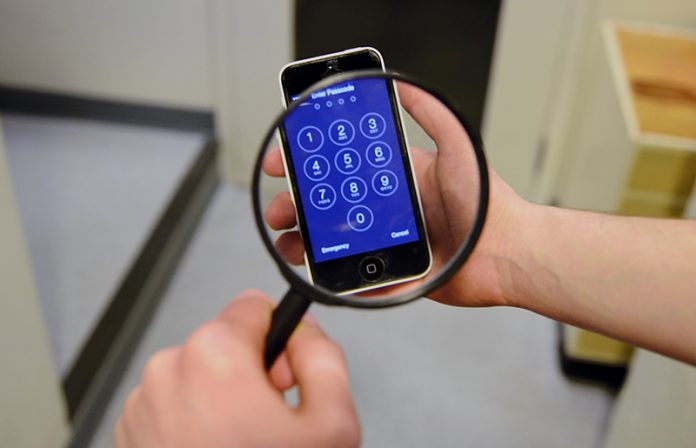
[dropcap]T[/dropcap]he FBI and Apple Inc. have been locked in a heated legal dispute for the past several days over the iPhone 5c of San Bernardino shooter Syed Farook. The FBI wants to gather intel from Farook’s phone that could aid investigation. The problem? Farook left a passcode on his iPhone (you know, that four-digit password thing) that they can’t bypass, and Apple refuses to help.

This legal battle between the two parties has evolved into more than just a case of unlocking an iPhone. It has become a fundamental dispute between two diametrically opposed ideals — privacy vs. security. Put simply, Apple’s decision may not be popular with everybody, but it is the right thing to do.

Here’s an extremely simplified version of the two sides’ wishes.

FBI: Hey Apple, we need to access this phone’s contents. Here’s a court order citing the All Writs Act (1789).  If we guess incorrectly 10 times we’ll be locked out forever, so just build us a new iOS that will unlock the phone. We’ll only use it this one time. Trust us.

Apple: Nope. We won’t do that. We value all our customers’ privacy. We will not build a ‘backdoor’ into the iPhone with a new OS that could be used on millions of other people. This sets a dangerous precedent and there’s no way to guarantee it will be used only once.

The government’s demands could open the doors for anybody else to exploit.

It is easy to see the US government’s position. This data could help track accomplices in the San Bernardino shooting, as well as prevent future attacks from occurring. However, this isn’t simply information that’s being requested. The FBI is demanding Apple create a backdoor that could be exploited by others.

In his open letter to customers released Wednesday, February 17, Apple CEO Tim Cook defended his decision to maintain the privacy of an iPhone’s contents. “Ultimately, we fear that this demand would undermine the very freedoms and liberty our government is meant to protect,” he writes.

Many groups and individuals from Silicon Valley have echoed Cook’s position. The industry group Reform Government Surveillance, comprising of Apple, Facebook, Google, Microsoft, Twitter, and other tech giants, stated on its Tumblr blog that “technology companies should not be required to build in backdoors to the technologies that keep their users’ information secure.”

John McAfee, libertarian presidential candidate and developer of the first commercial anti-virus program, recently offered on a CNBC video to hack into iPhone with his team as a means of avoid the “end of America.” He went on to say that “there has never been a backdoor that has not been hacked by bad hackers or foreign nations [. . .] We’re on the verge of cyber war with China [. . .] it is nonsense to ask [for a backdoor into technology].”

These backdoors will be exploited by the bad guys if they exist — oppressive regimes, terrorist groups, malicious hackers, and anybody else who is not your friend. Your personal information, trivial and important, is very valuable and can be used against you. How much data would you like to keep private on your phone? Contacts, messages, photos, your GPS trackings, purchases, credit card info, health info, account information, and yes, your Internet browsing history.

We students living in one of the most peaceful countries in the world may not fear the U.S. government, but sadly, many other countries do not have good government. The government’s demands could open the doors for anybody else to exploit. This isn’t only about this one case, this is about the future of our security. And that is why I support Apple’s decision to maintain user privacy.

SFU student tracks chocolate with Instagram data

0
Saif Charaniya (pictured) was inspired by his sweet tooth to look at chocolate for his study. - Photo by Lisa Dimyadi

One SFU student is using his skills with managing big data to find out how chocolate is posted about on Instagram, especially when analyzing the content of posts and how it relates to geographical data.

Charaniya began the project as part of his CMPT 732 course about “Big Data.” He collected 9.4 million posts using the hashtag “#chocolate” over a one year period. It took him around five weeks to gather all his data.

Charaniya used an application processing interface (API), provided by Instagram, to mine data from the app. An API, according to Charaniya, is “a set of commands and tools that someone designs for a specific task.” The interface allows for the user to input a simple command and have the data returned without having the user go through the process of doing the complicated steps themselves.

Why look at chocolate? “I have a bit of a sweet tooth,” he said with a laugh. But Charaniya’s interest in chocolate extends beyond his tastebuds: “Chocolate is used everywhere. In every festive location, religious or secular, there is gifting or receiving of chocolate or of some kind of sweet or confectionary and it’s a global phenomenon.”

Among the significant findings were ones found by narrowing the 9.4 million posts in the data set to around 1.2 million that had geolocation data through location tags. The city with the most posts about chocolate in the world was not Brussels or Los Angeles, as Charaniya had predicted, but Üsküdar, a municipality of Istanbul. Rounding out the top three was Sao Paulo in second place, and New York in third.

His study also returned interesting results about what brands were talked about most. “By far, Nutella is the most talked-about chocolate in the world,” said Charaniya. Also in the top three are Mars and Oreos, however these brands are talked about much less than Nutella, which Charaniya estimated possesses a third of the “market share.” He said about the data, “[It] only tells you which chocolate people like to talk about. It doesn’t tell you which chocolates are inherently more popular.”

Charaniya used word clouds along with geodata to analyze how social media posts about chocolate differ by location. He noted about North America and Australia that city tags are very popular, while in Brazil, oftentimes the type of chocolate being posted about is in the hashtag. However there are several challenges with this. Many non-english speaking countries use non-english hashtags which were not included in Charaniya’s data.

The research on chocolate could have significant real world implications. Charaniya talked about how information on which brands people talk about the most and where they are located can help companies better reach consumers in those locations. He also mentioned that by analyzing the performance of social media posts about chocolate, chocolate makers can find out how to better “engage their users.” Charaniya used the example of Snickers, which, while possessing a relatively small market share, averages more comments per post about the brand than its competitors.

Said Charaniya, “for someone who is using Instagram for the purpose of monetization they need to understand when the best time and [what] the best use of words is to get their post to become optimal.”

Woohoo, Boohoo

0

Woohoo: Mike’s Hard Lemonade

Ahh, the sweet bliss of lemon-flavoured sugar. It reminds you of your beloved Gran, since it tastes like all those microscopic lemon drops she’d always be giving you, and also because of Gran’s drunken escapades at family reunions. (You always felt like you were the most like her. What a perfect woman.)

Mike’s Hard Lemonade is truly a revolutionary drink, blossoming the romance between sugar and vodka. The two commingle in the most obscene and grotesquely erotic way that you’d never admit to enjoying. It goes down easy and lets you get down easy on the dance floor. It coats all your regrets in that sweet, un-opposing artificial lemon flavor that you’ll get to enjoy again while puking it out the next morning. Was that a hint of lime?


Boohoo: Mike’s “hard lemonade”

He sits across from you in a dimly lit and stale-smelling bar, drenched in the meat sweats and masculinity complexes. He offers you his “hard lemonade” when really, at best, that shit is barely zinc on the Mohs scale of hardness. You decide to bite, though, since nothing could be as sour as the acidic self-loathing you’re already full of.

You two commingle the most obscene and grotesquely erotic way which you’re already working on suppressing the memory of. You’ve made mistakes before — but this may just be your masterpiece, and you’re actually kind of proud of yourself in a twisted way. As you desperately search the floor for your clothes, hoping they didn’t find their way into the pile of old Doritos and crusty socks, you feel like you deserve a Mike’s harder punch in the mango for the sins you have committed.

A city of lights

0

What is neon?

[dropcap]N[/dropcap]eon stands out in broad daylight, and for kilometres at night. It draws us in and captures our attention. There’s just something about that glow.

In a very strict, material sense, neon signs are created by filling a hollow glass tube with a low-pressure noble gas. The tube is capped at both ends with electrodes, and then connected to an electric current. The gas turns into a plasma and begins to conduct electricity and starts to glow.

The incredible popularity of neon led to creation of more colours. Pure neon by itself only gives off reds, oranges, and intense pinks. The development of an argon and mercury mixture allowed for a greater variety of colours. The mercury in these new tubes produces ultraviolet light, which, when interacting with a fluorescent coating on the glass tube can produce a full array of colours.

Increasing popularity

[dropcap]N[/dropcap]eon signs first became popular for their novelty and bright assertiveness. They became an icon for the modern world, and remain tied to our perceptions of progress and commercial success. From diners and barbershops to cinemas and morgues, neon became ubiquitous within a couple decades and just as fast began sliding out of fashion.

Advertising is a fickle industry, and new developments in plastics led to new trends in signage. As larger businesses strove to maintain their air of modernity and success, they replaced their neon signs with new alternatives. Neon was left in the hands of smaller businesses, the working class, and the poor — none of whom could afford replacement, or in many cases even repairs.

Signs in disrepair remained that way for months or years, with their owners unable to afford the pricetag. Neon, with its familiar flicker and crackle, furthered a sense of decline in troubled neighbourhoods. The stereotype of the run-down highway motel with the sputtering neon sign was born.

heights

In Vancouver

[dropcap]V[/dropcap]ancouver’s neon landscape was unique in this respect. Local manufacturers didn’t sell neon signs, but leased them. The signs became a manufacturer’s long term investment. Their products were a source of pride that joined a network of everlasting advertisement spread across the city.

By 1953, Vancouver boasted 19,000 signs, most of which were owned by Neon Products which manufactured and maintained them at a warehouse on Terminal and Main. Leased out, the signs were kept in working order sometimes outlasting the decay of the businesses they stood over.

Vancouver’s neon market was strong, and in its heyday, was second only to Shanghai. This environment allowed local manufacturers to prosper and multiply by taking developments in neon manufacturing and combining them with practice and experimentation.

Our signs came in all shapes and sizes and were designed by art school graduates who combined modernity with art on the assembly floor. Vancouver’s neon scene was a marriage of technical and artistic skill that produced unique neon signs of high quality.

These neon signs framed a broad culture of being in the public realm. Cherished by businesses attempting to catch the eye of customers and motorists, neon signs became animated, more colourful, and more intricate.

In such a crowded and busy environment, everyone tried to be different and there was space to do so. This was the era of the bustling downtown street scene. This was before the advent of suburban shopping malls and alternative town centres. From across Vancouver and the surrounding suburbs, downtown was where you went.

Neon was found across the city, but was concentrated in the areas of Chinatown, Hastings, and Granville. The cityscape of the  ’50s and ’60s sold everything under neon. From cameras, to seafood, to Jesus, neon framed the destination.

W copy copy

Where did it go?

[dropcap]F[/dropcap]alling into decline across the world as new trends replaced it, the decline of neon in Vancouver was of our own kind of politics. By the mid ’60s, neon was subject to a faltering popularity, and became subject to the kind of urban improvement campaign which rattles the city every few decades.

Though our neon signs were in a good state of repair, their air of modernity and progress nevertheless fell out of vogue. A public campaign attacked neon on aesthetic terms, as  both gaudy and ugly, and as a visual menace. Vancouver’s cityscape had become cluttered beyond belief by the accumulated stresses of urban pollution, billboards, signs, and neon. It was spiralling out of control, seemingly without any regulation in the public sphere.  

Garishly bright, and now associated with the working class, neon was blamed for all manners of social problems. It became the centre of a civic disagreement about Vancouver’s future and identity. Threatening not only the fabric of our society, neon also infringed upon the natural environment that surrounded the city, distracting the viewer from our natural utopia.

With the power of the system at their disposal, the anti-blight campaign convinced the city to rein in neon. Through several bylaws, neon was legally restricted to decline in the city by 1974. Bans on animated signs were followed by bans on new signs. Eventually, old signs couldn’t even be taken down for repair, necessitating costly and complicated on-site repairs of damaged signs. Decay was inevitable.

Neon lost that fight for the city’s soul; however, neon was only one manifestation of the issues at hand. The city has long been a battleground for character, blight, and aesthetics. From neon, to the squeegee kids of the 2000s, to the view cones and height restrictions of the Downtown core, Vancouver has a long and storied history of policing its own appearance.

The crusade against neon is part of the broader trend in the city to clean itself up, and structure the urban landscape according to perceived ideals. It is a symptom of Vancouver’s constant attempts to hit above its weight and appear world-class.  

What’s left now?

[dropcap]H[/dropcap]aving lost the fight, Vancouver retains only a few dozen of those historic signs today. The passage of time, restrictive bylaws, and declining business prospects have driven a lot of of neon signs into the garbage.

Recently, the City of Vancouver has shown a renewed interest in supporting new neon signs in Granville, Chinatown, and Hastings. They’ve assisted businesses in the renovation of historic signs, like that of the Hotel Pennsylvania on Hastings Street. This shifting interest suggests that neon will remain a part of our cityscape in some way, though it will never attain the ubiquity of the ’50s.  

The preservation of historic neon signs is difficult. Like all old creations, they break and decay, especially considering some are over 60 years old. With neon signs being the marriage of technology and artistry, new replacement parts and tubes can still be made but new neon tubes shine differently than old ones. Even refurbished, there is always change.

Raising awareness about the vitality of neon, the Museum of Vancouver does its part with a permanent exhibit titled Neon Vancouver | Ugly Vancouver. As the original businesses close, historic signs lose purpose. With limited resources the MoV can’t accommodate all orphaned signs, so they are often trashed.

Occasionally, they are saved and repurposed even when they change hands. For instance, the neon sign for Helen’s Children’s Wear which features a young girl on a swing, was repurposed to advertise the Burnaby Heights neighbourhood. It has since become a symbol of the region.

old-chinatown2 copy

Moving beyond neon Vancouver

[dropcap]W[/dropcap]ith neon, it’s easy to get caught in a nostalgia about Vancouver’s lost past. Hastings Street, Theatre Row, neighbourhood corner stores, and neon signs are all elements of a changing city. Elements caught in the eventual slide to decline.

Every look at Vancouver’s historic past is part appreciation and part limitation. Tomorrow’s Vancouver will always be different than yesterday’s, and the sugar-coated gaze of nostalgia, as tempting as it might be, negates the possibility for us to improve our tomorrow.

Looking through Fred Herzog’s photography, it’s possible to get a comprehensive look at the lost Vancouver of the neon days. Herzog is amongst the pioneers of colour photography as an art form, and prolifically recorded the Vancouver of the ’50s and ’60s. Amassing 100,000 negatives, he focused on what is now termed “street photography.”

His eye for capturing the everyday and the working class shows a cityscape that’s a turbulent mixture of chaos, energy, and nostalgia. This is a city with a bustling street scene and public sphere. Yet it’s also a city full of smog, clutter, and grime.

Neon Vancouver was gritty, with an ecological underbelly that’s often overlooked through the sugar-coated lens of what is now lost.

What neon means

[dropcap]N[/dropcap]eon is more than advertising. It is a statement of character. Momentarily ubiquitous in our urban landscape, neon shapes the environment with its bright lights and characteristic noise. Seared into our collective imaginations through film, music, literature and our own experiences, neon is part of the city life. Part fantasy, part modernity, it exists in both a future cosmopolitanism and a nostalgia for decades long gone.

Mixing technology and art, neon is the hustle and bustle of city. Straddled between advertising and identity, neon isn’t just a sign — it’s a story.


Technology disconnects us from our real lives

0

Technology — in any form — is the kryptonite of most students I know. It’s the fertile breeding grounds for procrastination, fraught with click-bait, buzzing notifications, and constant stimulation.

I feel myself fall prey to it all the time, and time is exactly what it preys on: a five minute break on Facebook can easily put the brakes on the rest of my homework for the afternoon; a quick peek at Chitter before bed can destroy my carefully-allocated seven-and-a-half hours of sleep for the night. As we continuously choose to fritter away time in the virtual world, despite the overwhelming real-world tasks and responsibilities we face as students, it is as if we’ve become addicted to the distractions our technology provides.

And as technology continues to encircle every part of our lives, the illusion that it can solve all our problems and enrich all our experiences becomes increasingly problematic.

While getting acclimated to university life this year, I ran through the usual freshman shebang — acquainting myself with as many of my new peers as possible. Some friendships blossomed as normal, from meeting in class to planning hang-outs after school, and others never quite made it past the initial introduction stage, which is also to be expected. But still there were others, a new type of friendship, which led me to broach both new and disturbing frontiers in my virtual existence.

“Just-for-texting” friends is a concept my exasperated friend had to laboriously explain to me a few months ago. Apparently not all friends are those that you hang out with on the weekends or even physically talk to in class; some friendships exist solely over text, Snapchat, and Instagram. Friends with whom you instantly think to share a funny picture with over Instagram, but could never share a smile with in class because that would be weird, right? Friends whose voices you may not even be able to recall. As absurd as this concept seemed to me at the time, when I looked back I started to — horrifyingly enough — recognize such dynamics in my own life.

My most memorable example would have to be the time I had an entire virtual relationship in my first term at university. The entire three month debacle witnessed maybe two dates and only a handful of real-life interactions; the rest ensued over a boatload of daily texting and Snapchatting. It was all justifiable at first — we were too busy with school and work, our schedules didn’t mesh, we didn’t have any mutual friends — but, despite any chemistry we may or may not have had, the illusion of the sustainability of a dominantly-virtual relationship inevitably shattered in due time.

Forming real intimate connections takes more than just exchanging banter.

For me, that relationship perfectly encapsulated the allure of virtual friendships. When you’re lounging around at home on a Thursday evening, or waiting for the bus to reach your stop, there’s something undeniably comforting about having a contact or two who are always ready to strike up a conversation. Reaching out to someone that you know will respond when you need a distraction or are bored is the main niche virtual friends fill. With friends literally in your pocket, we can ensure that we never truly have to spend a moment alone. But how healthy can this really be?

In all the ways technology is already embedded into our lives, and constant connection peppered through our days, the harsh reality is that friends like these only serve to entangle ourselves further with virtual obligations.

Forming real intimate connections takes more than just exchanging banter — an entire physical dimension to relationships is lost in translation over text, leaving us with nothing more than mere words on a screen at the end of the day. And to boot, all these nightly chats dragging on for hours certainly aren’t doing wonders for your productivity, progress towards your personal goals, or beauty sleep.

Our desire and willingness to invest in hollow, ultimately unfulfilling relationships speaks to an issue deeper than simply addiction to technology — it also hints at out need to form real and meaningful connections with our peers and significant others. As is typical of technology and all its apps and functionalities, the promises of Chitter, Facebook, Snapchat, Instagram, and WhatsApp to further connect us create a strong belief and attachment, but there are some things that simply cannot be obtained through a screen on the comfort of our couch at home.

Real, meaningful, healthy relationships require time and presence — of mind and body — and while social media may seem to be solving all our problems when it allows us to effortlessly connect with everyone, even people that your “real” life would never be able to accommodate, the multitasking really just left me missing the best of what was around me in reality.

When I finally began to put the pieces of my ‘virtual’ relationship together, and understand that it would never move beyond my cell phone screen, I knew I couldn’t sacrifice any more of my time and personal well-being to sustain the endeavour. Our obstacles of having enough time or enough opportunities to meet up were real life problems, and the magic hand of social media could never interfere to help solve them. Additionally, the text conversations that lasted for hours on end were slowly starting to erode my sense of solitude and well-being, as well as my productivity. And at the end of the day, all I knew of him was words on a screen, and it was undoubtedly the same experience in the other direction.

There are a lot of neat things our technology can do for us — provide instant directions to the nearest Timmies when you’re in the middle of nowhere, Google a picture of a young Pierre Trudeau to see if he was from whom our dashing PM got his good looks, and yes, share a funny meme with your friend — but at the same time, there are definite pitfalls we can fall victim to if we continue worshipping our tech as the end-all be-all solution to our life’s problems.

It may seem like our entire life is perfectly laid out in our smartphones, but there are certain experiences and problems you can never fully embrace until you lift up your head from your phone screen and face them head-on.

Board Shorts

0

U-Pass referendum

With the current agreement between post-secondary institutions and Translink set to end, a referendum question is being posed to students during the SFSS Spring 2016 General Election Ballot.

It proposes the fee for U-Pass will get up $1.50 next year and another $1.50 after that, meaning that in the 2017–2018 school year, students would pay $41 dollars for their U-Pass instead of the $38 they do now. The SFSS motioned to endorse the “Yes” side of the referendum.

Sexual Assault Centre

Speaking of referendums, another could be coming to officially gauge interest in a sexual assault support centre coming to Simon Fraser University. According to Council Liaison Anjali Biju, SFU is one of the only leading universities in Canada to not have a support centre like this, if not the only school.

The Council has approved going forward with a referendum, but now the decision has to go through Chief Commissioner of the Independent Electoral Commission Vanna Lodders before it can officially be a part of the election ballot.

Student appreciation week

This week is student appreciation week! To say thank you just for being students, the SFSS is hosting events all throughout the week to reduce stress and have some fun.

Monday will be Disney Monday, and there is no sign who pushed for that (hint: Ohana means family). The next day will be Treat Yo Self Tuesday, followed by Carnival Wednesday complete with “an inflatable surprise.” Thursday doesn’t have a fun name, but there will be a barbecue and a dunk tank where you can potentially dunk your (least) favourite board member.

University Briefs

0
The University of Manitoba is specifically setting spots in its education faculty for the purposes of diversity,

U of Manitoba to implement affirmative action

[WINNIPEG] – The University of Manitoba’s Faculty of Education recently announced the introduction of affirmative action to their admissions process. As of Sept. 2017, 45 percent of places in the program will be reserved for members of marginalized groups.

Niigaan Sinclair, head of the university’s Department of Native Studies, said in an interview with CBC that the lack of diverse teachers is not benefiting Manitoba, because they bring a diverse spread of knowledge from their personal histories.

With files from CBC

New molecule helps monitor brain signals

[EDMONTON] – Scientists at the University of Alberta have developed a molecule that uses red light to detect and showcase signal transmission in brain cells.

Titled FlicR1, researchers hope to use the invention of PhD student Ahmed Abdelfattah to monitor brain activity and identify brain cells more effectively than what has been possible via the traditional approach.

With files from Edmonton Journal

Brock scientists research Zika outbreak

[ST. CATHERINES] – Scientists at Brock University are conducting research on Canadians’ risk of contracting the Zika virus, recently branded a “global health emergency” by the World Health Organization, from our native specimens.

Many medical authorities have deemed the danger to Canada to be minimal, as the mosquitoes most notorious for transmitting the disease cannot survive in our climate. However, due to rising temperatures in the Ontarian climate, entomologist Fiona Hunter notes that possible transmitters could arrive in Canada within “the next decade.”

With files from Toronto Star

Cult movie close-up: Matt Hannon

0

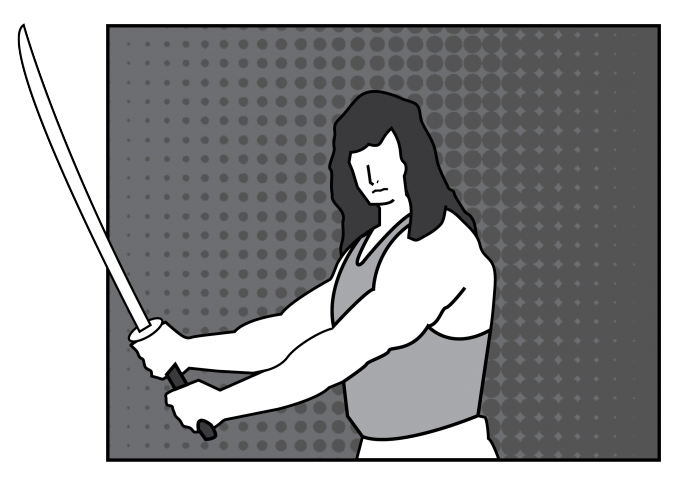
In the realm of film, there are four kinds of movies: great movies, good movies, okay movies, and bad movies. But within the realm of bad movies there are two types: those that are ostensibly unwatchable shit and those that are so bad that they are actually good. Samurai Cop is the latter type of film. Directed by Iranian expat Amir Shervan, the film focuses on a police officer supposedly trained in the ways of the samurai (and is essentially a low-budget Lethal Weapon). The Peak sat down with the Samurai Cop himself, Matt Hannon, to talk about his experience in cult film.

The Peak: How did you first get involved with the production of Samurai Cop and how much experience as an actor did you have before the film?

Matt Hannon: I stopped working with [Sylvester] Stallone as a bodyguard in November ’89 and did a movie in December of ’89 called American Revenge. I grew up in Portland, Oregon and did theater, the usual acting route. Samurai Cop was the first major film I did. A friend from my bodyguard days recommended me to Amir to get tape, and I walked in and Amir said “you’re the star of my movie.”

P: At what point did you realize the film was going to turn into an absolute trainwreck?

H: I saw how A-list movies were made working with Sly. With Amir, we would film five days and take a week off. I thought this is how it goes, but when it hit the three-month mark, I realized something was wrong. He called me back after original filming, when I had cut my hair so that’s why you see the stupid wig. He told me we had more filming to do. After that moment, I just started messing around on set for about three or four months.

P: Do you honestly believe Amir Shervan actually knew how to make a good film, or was he really bad at his job?

H: Amir was a businessman primarily and he was an Iranian who was lost in translation. He saw American action movies and thought that’s what American movies were like. He was very profitable and he knew how to sell the movie overseas. He knew that he had to finish the film and he was a shrewd businessman. He thought movies should be made a certain way. He was limited by finances and compromised artistic integrity because of it.