Home Blog Page 867

Out with the mould, in with a new plan

0
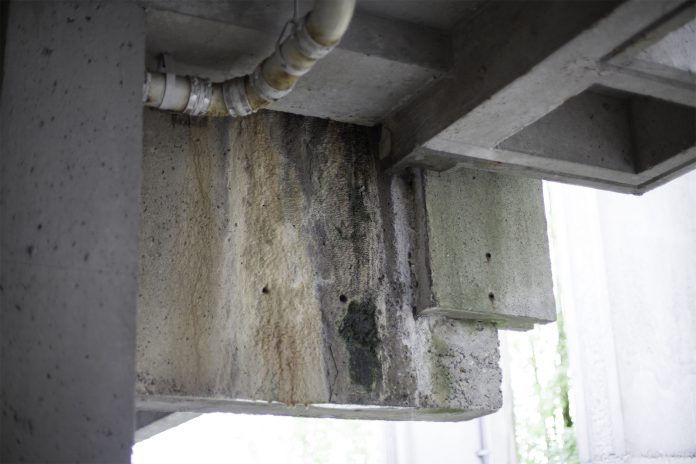
Mould is a rampant issue at SFU, but hopefully not for much longer.

In light of recent issues with mould in buildings on campus, SFU has developed a new Mould Control Program to combat the issue and its associated health risks.

An informational meeting was held on June 1 to discuss the revised regulations and procedures for handling mould, while providing an opportunity for questions and feedback from attendees. The team in charge of developing the program consulted a wide variety of “best practices” resources, including the CCA Mould Guidelines for the Canadian Construction Industry, as well as the NCCEH Mould Remediation Recommendation, a “summary of all the [mould remediation] literature up to 2014.”

According to Lesley Clements, an occupational hygienist hired by the university to assist in tackling this problem, the program seeks to “formalize a process” for effectively dealing with onsets of mould and mildew. It involves both a concentrated effort to respond to reports of pre-existing cases and administration of stronger preventative measures against future outbreaks.

People on campus are encouraged to report cases of mould or intrusive moisture in their residences, offices, and the like. From there, SFU representatives will perform inspections on the building in question, look into its history, and conduct interviews with occupants. As a result of the large number of buildings on each of SFU’s campuses, the project aims to ensure that the order in which mould cases are handled is prioritized based on how urgently intervention is required.

Meanwhile, building envelope engineers will be involved in “larger, more complex [construction] projects” on SFU’s campuses. They will verify that all building codes are being followed to the letter, identify and neutralize any potential mould-related health concerns prior to commencing construction, and approve the materials used.

The Mould Control Program will also be subject to an audit one year following its implementation, and once every two years after that. Though attendees of the meeting raised concerns that SFU’s internal auditor did not appear to be involved in the audits outlined in the program, presenters suggested that they could “bring it up with him” at a later date.

Mould has been an enduring issue at SFU over the past few years, especially in the controversial shutdown of the Louis Riel House residence last year.

Former SFU prof introduces gender equity bill to Parliament

0
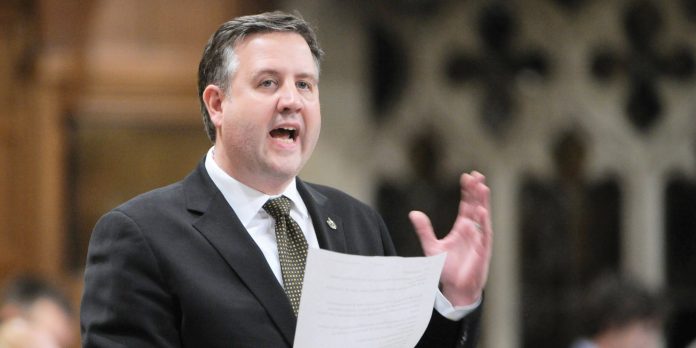
NDP Kennedy Stewart (pictured) believes that financial incentives can encourage parties to field more female candidates.

Last October, a record number of 88 women were elected to the House of Commons in Canada. Despite this new record, women still only comprise a mere 26 percent of the House’s 338 members.

NDP Burnaby South MP and former SFU political scientist Kennedy Stewart condemns these numbers: he noted that this percentage ranks Canada at 61st out of 191 countries, behind nations like Iraq, Afghanistan, and El Salvador. Even more upsetting, the country ranked at 21st in 1991, meaning that while other nations are progressing, Canada is falling behind.

In response to these numbers, Stewart is sponsoring a controversial bill, the candidate gender equity act, to bring gender equity to Parliament. First put forth in February, the bill would, according to Stewart’s press release, introduce “a financial incentive for political parties to run more women candidates and move towards parity in their nominations.”

In particular, Stewart criticized the Conservative party for running female candidates in only 19 percent of ridings. He compared this to the NDP and Liberal parties, who ran female candidates at 43 percent and 31 percent, respectively.

According to Liberal MP Anita Vandenbeld, “[l]egislative solutions [. . .] including financial incentives or penalties to encourage political parties to nominate more women, are considered by UN Women, UNDP, the Inter-Parliamentary Union, and other major international organizations, to be commonly recognized methods to achieve greater gender parity.”

The bill was drafted with advice from “numerous prominent female scholars,” according to The Vancouver Sun, and was endorsed by Green Party leader Elizabeth May; however, the bill also faces many opponents. Included in this group is Prime Minister Justin Trudeau, despite his move to appoint a gender-balanced cabinet upon election.

Also in opposition is Conservative Surrey MP Dianne Watts, who called the bill “truly offensive,” according to a transcription of the Parliamentary debates. Watts agreed that having more women in politics could have a positive effect on government, recalling her days as the first elected female mayor of Surrey in 2005. Having a female majority on council when she became mayor was “influential” in the success of dealing with issues such as child development and homelessness, she said.

However, rather than implementing quotas, she believes politicians need to do more to encourage and mentor young women. Watts pointed out that Surrey had no such quotas when they achieved a female majority.

She also expressed her belief that men who identify as feminists, such as Stewart and Trudeau, should focus on issues related to “their own gender,” such as domestic violence and sexual assault. “To have a guy stand up there and offer to give me something he thinks I need is not OK,” she stated.

Despite the controversy surrounding the bill, it will be debated again after the summer break.

Should Marvel give Captain America a boyfriend?

3
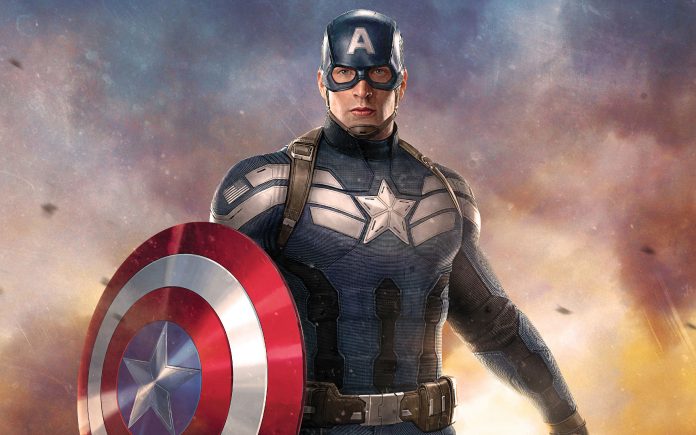
The Twitter hashtagging campaigns continue with Marvel's Captain America at the centre of the latest one.

Sexuality is fluid and Captain America’s should be too

By Tamara Connor

Giving Captain America a boyfriend in the next Marvel film would be one of the best decisions made by the franchise to date.

#GiveCaptainAmericaABoyfriend started trending on Twitter soon after #GiveElsaAGirlfriend started, highlighting Disney’s — who own Marvel Entertainment — problematic representation of LGBTQ+ characters. And by problematic representation, I mean no representation at all. There has since been a considerable amount of support for a queer Captain America. Fans of the comic books and movie adaptations alike were quick to point out the franchise’s lack of diversity, and saw the hashtag as an opportunity to remind everyone that queer representation is important no matter your sexual orientation.

Personally, I am all for giving Captain America a boyfriend. Here’s why.

1. Captain wasn’t always a little bit gay, but who cares

Anyone leaning on the excuse that Captain America never had a boyfriend in the comics, and should therefore not have one in the movies, needs to pull their head out of their ass. None of the movies are perfect recreations of the comic books, nor should they be. The comics should offer a starting point for plot. But writers should be encouraged to change things up for the movie adaptations. There wasn’t nearly this much opposition to any other of the changes made for any Marvel films, so this difference shouldn’t be a big deal either.

2. The Hydra double agent plot twist makes no sense

Anyone staying up to date on the latest Marvel news will know that a new comic was released where Captain America is revealed to be a double agent for Hydra, a terrorist organization in the Marvel Universe.

Wait, what? Captain America as a terrorist? What a needless plot twist. Captain America is meant to embody Western ideals, like freedom and independence; not be some pawn in a terror plan. To try and weave that into a film at some point would result in the destruction of a beloved character. Having a boyfriend, and exemplifying love and acceptance, would be much truer to Captain America’s nature than the Hydra arc.

3. His current love interest is the niece of his old love interest, and that’s super creepy

So in the last movie, Captain America: Civil War, the Cap was locking lips with Sharon Carter, niece of Peggy Carter. . . his ex-girlfriend. Do I really need to go on? It’s a weird relationship. Having the Captain explore his sexuality would be a way better plot, and way more relatable.

4. Why the fuck not?

How is Captain America having a boyfriend such a big deal that it merits me writing this article?

5, Representation is important

As my girlfriend puts it, if you don’t think representation is a problem, it’s probably because you are already being represented in movies and on TV. As one of the most influential franchises around the world, the Marvel Cinematic Universe could help change how the world sees the LGBTQ+ community, all the while giving those from the queer community a reason to feel acknowledged, valued, and empowered. Having diverse characters shouldn’t be something we quibble about. It should be an expectation. Excluding demographics will, in time, prove to be a mistake.

When it comes right down to it, queer kids need superheroes too, and they deserve to be represented. The #GiveCaptainAmericaABoyfriend conversation is about so much more than just having Captain America explore his sexuality. It was meant to draw attention to the fact that, as it stands, Marvel and Disney are making little effort to include all of their fans in the experience. It’s time for some proper representation.

Creating a new character would better serve the LGBTQ+ community

By Justin Stevens

As a comic book fan for the better part of two decades, I’ll be the first to admit that I struggle with the idea of change. However, I also recognize it’s necessary and natural to surrender to change. As we grow as a more diverse and inclusive society, it becomes increasingly necessary for us to evolve our ideas and predispositions. The inclusion of strong LGBTQ+ characters in the Marvel Cinematic Universe is certainly one of the strong ways to further this sentiment, as it enhances our viewpoints and makes us more empathetic of those with whom we share the world.

To that end, it might surprise you to hear that I am arguing against the trending Twitter movement, #GiveCaptainAmericaABoyfriend. I acknowledge the argument has just merits in regards to the downright ambiguous dialogue between Bucky Barnes and Steve Rogers — not to mention that lacking spark of vibrancy in his relationship with Sharon Carter. Ultimately though, I cannot help but disagree with the idea of making Steve Rogers gay or bisexual.

This is mostly due to the fact that I don’t think it brings anything all that enthralling to the character in terms of his ongoing development. I’d even go so far as to say that Marvel’s recent decision to make Captain America aligned with the evil organization, Hydra, is a more compelling change to the character’s mythology. The exploration of Steve Rogers’ sexuality could arguably go hand-in-hand with his constant struggle to integrate into modern society; still, I can’t help but feel it would be more captivating  and emotionally charged to explore the idea of one of the most iconic heroes turning against his fellow compatriots.

On the other hand, why not develop a new character to explore the idea of a time-displaced hero rediscovering his sexuality in the 21st century, instead of changing one that already exists? After all, it wouldn’t be the first time a new character was created based on a previously popular one.

Consider DC’s Apollo and Midnighter — regarded as interpretations of Superman and Batman, respectively. Their storylines explore the idea of the world’s finest as a gay couple. There are ways to explore ideas from different perspectives which not only incite discussion, but also bring something new and different to the existing universe.

More than anything though, #GiveCaptainAmericaABoyfriend showcases a lack of creativity on the part of those who push for representation of the LGBTQ+ community in film. The inclusion of a gay, lesbian, bisexual, or transgender character should not come as an afterthought to be applied to an already pre-existing character who has spent 75 years on newsstands. Especially with such a richly diverse cast of LGBTQ+ characters that exist and continue to be created in comics today.

While the idea of giving Captain America a same-sex lover is a commendable notion with genuine intentions, it’s sadly no more than damage control to a more prevalent issue. I wholeheartedly believe we owe it to the LGBTQ+ community to have gay, lesbian, bisexual, or transgender characters integrated into the Marvel Cinematic Universe — but with some forethought instead of reconsideration.

Dwarf Fortress lacks strong visuals, but that isn’t a bad thing

1
The complex gameplay makes up for the fact that it looks like a five-year-old puked on a calculator.

By: Vincent Justin Mitra, Peak Associate

Dwarf Fortress is one of the most open and ambitious video games out there.

Players can build complex structures that stretch high into the sky or far below ground. They can be a wandering adventurer, taking quests from villagers to slay bandits and dragons and vampires. They can pulp their own paper and have the dwarves write procedurally generated books. Or they can dig into hell itself and unleash the infinite and nigh-unkillable monsters beyond imagination.

Each new game is set in a randomly generated world. And when the game generates a world, it doesn’t just generate land and trees and people and towns, but histories as well. The stories that players can share after just one game are often surprising and absurd.

Visually, though, it looks like a five-year-old puked on a calculator.

First released in 2006, Dwarf Fortress is a labour of love made by brothers Tarn and Zach Adams, after years of closed development. Dwarf Fortress is funded entirely by donations, and the creators aim for the final product to be as close to reality as possible — or as real as a world filled with dwarves and goblins can be. It is one of the first video games to be featured in the New York Museum of Modern Art.

The biggest failing of the game is its incredibly steep learning curve. The graphics fall into the category of “ASCII Art” where alphanumeric symbols are used in place of pictures. In this game, a picture of a horse is instead a brown lowercase “h,” a goblin is a green “g,” and so on. The game also does not do a good job of explaining how things are done, with even experienced players needing outside assistance.

The game’s motto is “Losing is fun!” and it makes that crystal clear.

What makes the game amazing are its complex systems: how they connect and, more often, collide. For example, the game tracks the individual organs and layers of skin, fat, and muscle for each entity to determine health and damage.

I remember hearing about a dwarf who, in a fight with some goblins, got his torso cut open. The other dwarves were able to rush him to the hospital and patch him up. Later, however, while the dwarf was moving around the fortress, the player noticed two red tildes trailing behind. Investigating, it turned out that the doctor who performed the operation was good enough to save his life, but not good enough to remember to push his intestines back inside him.

I, too, had my own experience of comical tragedy. In one of my first games, a particular dwarf was super unhappy because he lost all his pets in a goblin attack. He was very sad, but he was able to soldier on. A few days later, however, he ate a bad meal, and that was the last straw.

He flew into a rage and ran down the hall, punching two or three of his fellow dwarves before calming down. These two dwarves, still also sad from the loss of their own pets and now with the added trauma of being punched, flew into a rage as well. This escalated to include their friends and family, who were now furious that someone they knew had been punched.

This, I learned, is what is known as a “tantrum spiral.” Soon, everyone in my fort was dead except for one dwarf who happened to be in the basement at the time and hadn’t made friends with anyone.

I limped along, trying to run a fortress with just one pair of hands, until a new wave of migrants arrived and brought things closer to normal. I named the sole survivor as the Captain of the Guard, to honour his experience, and continued running my settlement without incident.

Months later, a random dwarf snuck into the Captain of the Guard’s chambers, chopped off both of his legs, and merged back into the population before I could determine who did it.

The survivor was rushed to the hospital and successfully stabilized. But this was an earlier version of the game, before crutches were functional. So he lay sleeping in his hospital bed for years.

Later, after the game was updated, he woke up, grabbed a pair of crutches, and went back to work.

The game is still far from where its creators want it to be. Currently it stands at version 0.43.03, which is their way of saying it is only 43 percent complete, with a projected 20 years of development remaining. Even in its unfinished state, the game boasts a thriving fan community that has made game mods, tile sets (to replace the letters with actual pictures), and the aptly named Lazy Newb Pack, which is stuffed with tools and utilities to help beginning and experienced players alike.

And stories. Countless stories ranging from humour to horror about astounding things in a game nowhere near complete. Imagine the stories it could tell when it gets there.

Dwarf Fortress is available for free at www.bay12games.com/dwarves

The Boy and the Beast is anime meets Disney

0
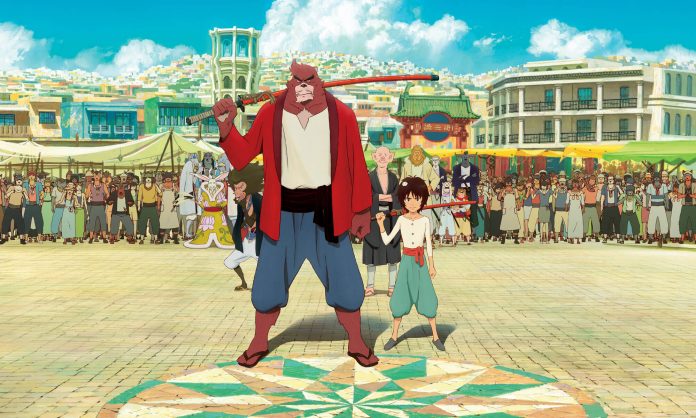
Even though the pacing at the end is off, Hosoda’s latest film is filled with well-crafted characters.

With over 16 years of animation and directing experience, Mamoru Hosoda knows how to churn out an anime classic.

The Girl Who Leapt Through Time, his first non-franchise film, came out 10 years ago and won Animation of the Year from the Japan Academy. His subsequent films, Summer Wars and Wolf Children, won the same title in 2010 and 2013, respectively. It’s easy to see why Hosoda has such an illustrious track record from watching his films: his characters and their relationships are expressive enough to sweep anyone up in a wave of feels.

His latest instalment, The Boy and the Beast, does just that. Perhaps this is why it upheld Hosoda’s legacy at the 39th Japan Academy Prize last March.

The movie first introduces its protagonist, Ren, immediately after losing his mother to a car accident at age nine. With his father estranged and his extended relatives acting coldly towards him, Ren decides to run away. In the streets of Shibuya, he crosses paths with a mysterious individual who asks him to become his apprentice.

In the beast realm of Juutengai (i.e. land of the furries), the Grand Master has decided to retire and become a god — an ability exclusive to those in his position. He has two prospective successors: Iozen, the wise, popular, and responsible obvious choice for the position; and Kumatetsu, the brash and violent dark-horse candidate who’s tough to get along with.

Despite the odds stacked against Kumatetsu, the Grand Master has an affinity towards him, allowing him to compete to succeed him if he takes on an apprentice. When Ren follows him and accidentally stumbles into the beast realm, Kumatetsu makes the controversial decision to take him on, despite him being a human.

The bulk of the film focuses on the relationship between Ren and Kumatetsu. Their characters and relationship dynamic are the crux of the plot and what makes the film evocative. Their arguments and brawls are oddly cute and fun to watch. I thought Ren was a particularly well-developed character. Other high points include how the beast realm is fleshed out: the anthropomorphic characters and their society are very interesting and well conceived.

Animation-wise, it is flawless. Hosoda’s Studio Chizu did another excellent job, particularly with the characters’ movements and fight scenes. The soundtrack was also excellent, matching each scene.

Unfortunately, the story tries to balance too many elements, and is less cohesive as a result. I’ve also noticed a trend in Hosoda’s films where the final third throws pacing completely out the window. The final segment of the film could have been much better foreshadowed. The biggest downfall of this film is that it never explores the force of antagonism. Simply stating that “all humans have darkness within them” feels like a cop-out for not having any better ideas.

The ending was bittersweet, and beautiful despite its flaws. The Boy and the Beast is definitely worth the watch, especially if you’re looking for an anime that feels a little like a Disney movie.

Peak Comics: APPLE ST

0

comic-feedthefish (1)

Cannibal Student Union gets snubbed by SFSS

0

After many bloody and agonizing weeks, it was announced last Friday that the Cannibal Student Union’s (CSU) application for official registration as a sanctioned club was denied by the Simon Fraser Student Society (SFSS). With the club being dubbed “the worst piece of nonsense since the rise of the White Student Union,” the CSU’s rejection of club status has left the majority of students feeling safer in classrooms and hallways.

However, while the issue may seem dead and buried to the SFSS, CSU members are in agreement that this is only first blood in a series of lawsuits to come.

“A lot of people think cannibals are just mindless flesh-eaters, similar to zombies, but that’s only half the picture,” said CSU co-president Nick Carrion.

The club, formed by self-proclaimed student cannibals Nick Carrion and Aaron Karkas, claim that the Cannibal Student Union is dedicated to providing representation and a safe space for self-identifying cannibals on campus.

Carrion has called foul in the past on campus security profiling and fears that he might attempt to murder staff members and students for food.

Karkas took time to reassure The Peak, “I always wait at least until the human being has died of illness or natural causes before I consume them.”

However, the SFSS questioned whether cannibalism was in any way worthy of being condoned. Carrion argued, “Cannibalism has been practiced by cultures in Oceania, Africa, and the Americas — who are we to argue with the morals of ancients?”

When it was pointed out that ancient cultures also approved of human sacrifice, pedophilia, and slavery, Carrion said, “Exactly! That just shows they weren’t confined by today’s prudish social conservatism.”

Needless to say, the CSU’s planned lawsuit will be more of a bloody mess than a meal of liver and fava beans.

Peak Comics: The Crapside

0

crapsidetree

Peak Comics: Pun, 2, 3

0

Translink

Netflix ‘border hoppers’ are nothing but self-entitled

2

[dropcap]T[/dropcap]his past March I cut my extravagant cable bill and purchased, for $20, something on Amazon many of you probably didn’t even know existed: a digital television antenna. I know, old school, right?

Now, while I basked in the illegal freedoms of accessing a cheap and extensive American Netflix library through Hola, my virtual private network (VPN), I could fill in the TV gaps with free, pristine-definition CBC, Global, and CTV, among other channels. It’s only the smartest route for today’s cheapskate television viewers, said my rationale.

However, a month later I fleetingly wished I’d never left cable in the first place. Netflix suddenly betrayed my bountiful programming choice for an empty screen that said “Whoops!” and a virtual wall that left me and the other ‘immigrants’ permanently blocked from accessing the American library.

Crushed and dismayed, I accepted my fate as a Canadian viewer and turned to Twitter for consolation. There I found other VPN users angry “AF” that Netflix had finally acted upon last year’s statements on ensuring illegal Canadian users couldn’t joyride through the American abyss of seemingly endless choice.

Yeah, I was peeved. Now I’d have to torrent the rest of American Horror Story. But I’ve since had a chance to collect myself and see the light.

The truth here is that Canadian Netflix users still angry that they can no longer skirt the American border to watch illegal programming are a small but vocal group of self-entitled babies. I understand that many Netflix users are still upset that the company seemingly had no problem with these illegal practices for years, and this sudden change in business model has left border hoppers feeling mistreated. But I’ll confidently state that as unfair as this crackdown may seem, it simply isn’t.

Sit down, hush up, and be happy that you at least have access to a half-decent version of Netflix.

The Canadian Netflix library is significantly smaller than its American counterpart. That doesn’t discount the fact that Netflix is a multinational business that sets its boundaries in a contract we, the customers, readily agree to when we fork over our monthly $10. And while we snivel that our customer service experience was below our standards because ‘Canadians are people too, and we should have access to everything everywhere because that’s freedom of choice,’ we have to remember that we’re still subject to whatever Netflix gives us.

End of story. That’s the business agreement, plain and simple.

Last week, CBC published an analysis on the issue, citing fresh comments and labelling the arguments a border hopping “battle.” But there is no war to be waged here. Netflix has spoken, and it’s decided the time has come to respect Hollywood’s country-exclusive licensing agreements.

Thankfully, CBC also shed light on those who agree with me, feeding me morsels of hope for today’s greedy consumer base. These commenters are similarly fed up with all the first-world “whiners” who feel disadvantaged.

Sorry, Northerners. It’s a shame that Americans won’t share their treasures, but we can’t get everything we want in life for $9.99, even if we knowingly break laws to do so. So sit down, hush up, and be happy that you at least have access to a half-decent version of Netflix. And if you’re a cheapo like me, who’s cut the cable for good, perhaps it’s time to invest in a $20-antenna to replenish the cracks in your abused television soul.