Home Blog Page 861

My first gay bar experience

0

[dropcap]C[/dropcap]ontinuing the conversation on the Pulse massacre is important. By letting these atrocities be drowned out from news cycles, they simply become a footnote, instead of a moment for change. This event wasn’t about gun control or religious radicalization — it was about loss. There was a loss of lives, of community, and of protection.

A loss of safe spaces in these clubs we had turned into our refuges. By sharing our experiences, such as those who’ve turned to Twitter to share #MyFirstGayBar stories, we can begin to heal and reclaim some of what was lost. So, I’d like to share mine.

It’s been many years since my first gay bar experience, yet I’ll admit, there are still elements I remember as if it were yesterday.

I felt a lot of trepidation as I walked up to “the gay street,” as my cousin called it then. I’d been there during the day, and now at night, alone, knowing that I was going to go to my first gay bar, things suddenly seemed very loud and vibrant. I stood in line as regulars greeted each other around me.

There was a dull bassline coming from inside the bar. It may have been blood pumping in my ear, but whatever it was, it was making people around me sound like the adults on the Peanuts cartoons. “Whhaa whhaaa whaaa,” the very large muscular man in front of me broke my trance, and I handed him the ID he asked for.

One guy winked at me when they caught me staring and, even in the dark bar, I was sure I was bright red.

The thumpa-thumpa of the club track hit me, and the hair on the back of my neck stood on end as I stepped into the building. I checked my coat as my eyes adjusted and I looked ahead into the dark bar. At first, I saw nothing but swirls of lights from the dance floor as they washed across the patrons already well on their way to oblivion.

Then I saw the sign. Bright, neon, and a purple that was trying to be pink — it read “Gay Establishment.” Underneath it, two boys were making out. One guy winked at me when they caught me staring and, even in the dark bar, I was sure I was bright red.

The rest of the night is a blur of dance, lights, vodka, and the echo of deep bass thrumming in my ears. I left late and had kissed two boys I didn’t know by the time I did. It was glorious. It was liberating. It was safe. I was sound.

I was home.

Much of the night is a blur. I couldn’t tell you what the guys looked like or any of the music that was playing. But I remember the feeling that I left with: this sense of self -worth, the affirmation that I was OK.

We joke that the club is our version of going to church. In a way, it is. Like a church, these are sacred places. Even in today’s social media world, gay bars help those who don’t have an outlet to connect with their community. They give those who are still in the closet a chance to find others like them; you can flirt with someone and only fear rejection, not a beating. It is a place free from outside criticisms, fear, and misunderstandings.

This tragedy will not take these safe havens away from us. The thumpa-thumpa will keep going. We’ve lost a lot, but we won’t lose our souls too.
Recent blackouts caused by campus-wide pre-crime system

0

By: Vincent Justin Mitra, Peak Associate

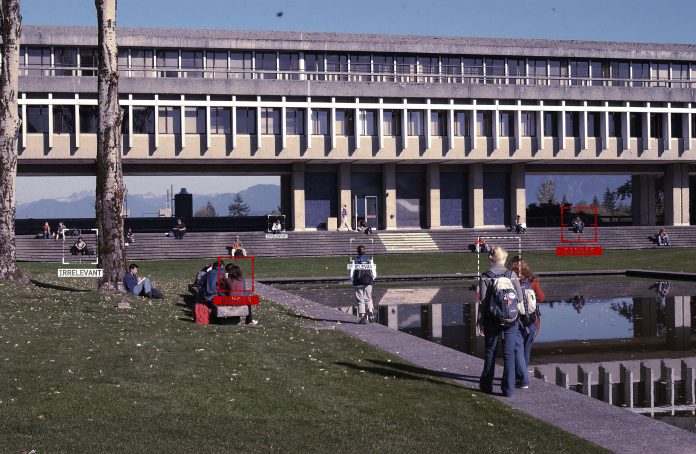
The Father’s Day blackout — which occurred at 4:30 p.m. and affected the electrical systems and phone lines across Burnaby Mountain — has been determined to have been caused by the installation of a campus-wide crime prediction software, reports say.

Details are scarce, but one witness reports seeing large server racks being wheeled into the Bennett Library after regular hours. The witness, who asked to remain anonymous, guessed that the final destination of the servers was likely the little-known boiler room located beneath the Burnaby  library. The boiler room, off-limits to the general public and staffed at all times by at least a single guard, supplies water to both the student dormitories on the west side of campus as well as all the buildings on the east side of campus, using an intricate series of tubes.

The rumoured SFU crime prediction software is reportedly the result of a recent joint project between the computer science, criminology, and artificial intelligence departments of SFU and headed by Michael Ostrich, professor of theoretical computing.

When asked about the blackout, Ostrich replied “That was me, yes. You’re welcome.”

The now-confirmed SFU Crime Prediction Software is described by Ostrich as a response to rising levels of crime around key areas of campus. “You are being watched,” Ostrich said simply. “The administration has a secret system, a machine that spies on you every hour of every day that you are on campus.”

According to Ostrich, the system is able to predict crimes seconds before they happen by cross-referencing each student’s social insurance number, bank balance, credit score, GPA, Twitter popularity, work history, and race. “Mostly race,” emphasized Ostrich. “It’s super racist. We probably shouldn’t have let it on Twitter.”

Crimes predicted by the software include overdue library books, fishing for koi at the AQ reflection pond, parking in president Petter’s reserved parking spot, late tuition payments, and cutting in line at the bus loops. “Literally only those,” added Ostrich.

When asked about the history of the project and how he achieved his position, Ostrich was surprisingly forthcoming. “I’m very highly educated,” he said. “They came to me and asked if I had a degree in theoretical computing and I said I had a theoretical degree in computing and, boom, end of unemployment. When they wanted me to build the machine, I realized that computers are much more powerful when they have more monitors. Currently we’re at five monitors and three whole keyboards.”

The system itself is described as having “four whole Ks” of memory and 17 “sticks” of ram in “a pile in the corner.” When asked how the system was programmed, Ostrich explained that “all [he] needed to do was create a GUI interface using Visual Basic to track the perpetrator’s IP address. Afterwards it was just a matter of shouting enhance loud enough at [his] five monitors.”

When the interview concluded, Ostrich swallowed several red pills, donned a leather jacket and a pair of sunglasses, and proceeded to slowly ‘limbo’ his way out the door.

The system is predicted to be operational on all three campuses no later than November 15.


Board of Directors meeting: June 23, 2016

0

Peak Publications Society Board of Directors Meeting Agenda

June 23, 2016

The Peak offices

Chair: Max Hill

In Attendance:

  • Maia Odegaard (Board Secretary, non-voting)
  • Max Hill (Editor-in-Chief)
  • Tamara Connor (Collective Rep)
  • Kevin Rey (Collective Rep)
  • MuhammadQasim Dewji (Employee Rep)
  • Thadoe Wai (At-large Rep)


  • Call to Order


  • Approval of Agenda


  • Approval of past minutes from May 26, 2015


  • Financial update


Maia to present the state of the Society’s finances through May 2016.


  • Continuation of Kevin’s proposal


Discussion and decision on proposal to divest companies that derive their income from the extraction or transport of fossil fuels


  • Tamara to present proposal about restructuring the contributor pay policy


  • Contributor Pay Policy


Maia to propose a review of some aspects of the Contributor Pay Policy as it currently exists, including adding a deadline for invoices and discussing payment/non-payment for unpublished pieces.


  • Tamara to present proposal about buying a one year subscription to an infographic creation website


  • Adjournment


Peak Publications Society Board of Directors Meeting Agenda

May 26, 2016

The Peak offices

Chair: Max Hill

In Attendance:

  • Maia Odegaard (Board Secretary, non-voting)
  • Max Hill (Editor-in-Chief)
  • Tamara Connor (Collective Rep)
  • Kevin Rey (Collective Rep)
  • MuhammadQasim Dewji (Employee Rep)
  • Jess Whitesel (Guest)

Regrets

  • Thadoe Wai (At-large Rep)


  • Call to Order


  • Approval of Agenda


  • Approval of past minutes from April 21, 2015


  • Financial update


Maia to present the state of the Society’s finances through April 2016.


  • Discussion of Proposal to Divest from Fossil Fuels


Kevin Rey to present his proposal.


  • News and Associate News stipend (tabled last board meeting)


Tamara to present the proposal on behalf of the news team.


  • Infographic subscription proposal


Proposal written by Nathan Ross, presented by Tamara Connor.


  • New couches for the office meeting area


Maia to present proposal to purchase new couches for the meeting area.


  • Summer workshops in Minnesota


Some editors have expressed interest in attending the ACP/CMA summer workshops in Minneapolis, MN. The Board will discuss the feasibility of budgeting for this event.


  • Adjournment


Approved by ________________________________ & __________________________________ on May 26, 2016.

COLUMN | LIST BITCH: Six things that don’t make you a ‘nice guy’

0

List Bitch is a new web-exclusive column featuring feisty, unapologetic listicles on life. Click here for more, and check back each week for new content!


[dropcap]A[/dropcap]s a fairly young university student, I constantly hear people fawning over guys for things that are either unimportant or the bare minimum. In case you were wondering whether or not that frat bro or protein snorter are actually real “nice guys,” then read on.

1. Not having sex with drunk girls


Now listen carefully, because apparently this is a difficult concept for some to grasp. Too many guys I have come across seem to expect a pat on the back for this. Congratulations for not being a fucking rapist, would you like a round of applause?

2. Being cordial about the friend zone


If, God forbid, you are one of those whiny manipulative men who can’t stop complaining about the ‘friend zone’ then please, do us all a favour and stop talking. It’s not cute, it’s not funny, and it’s not necessary. If your kindness has baggage or an expiration date, then I (and most of my fellow females) don’t want it anyway.

3. Dressing nice


I get it, you clearly have access to a shower and a Gap catalogue. Unfortunately for you, even your most pristine Sperry Topsiders fail to distract from the fact that you reek of douche.

4. Opening the door for people


Granted, this is a nice gesture we all appreciate — despite being common courtesy. Just please leave your misogyny out of it. If you have a penis and I open a door for you, please walk through it without any huffing and puffing. I get it, I can smell your testosterone from here, but please make it easier on both of us and walk through the fucking door.

5. Tipping


Look, everyone should tip. Waiters do not make a living wage. Tipping is polite, expected, and not at all a mechanism for peacocking in front of your date. Chill.

6. Being a self-proclaimed ‘social’ liberal or democrat


Nothing is more ironic than listening in on guys who openly voted for Harper, and yet magically identify as an ally, feminist, environmentalist, and the like, when talking to certain girls. This is an age-old cop-out. Take responsibility for your political actions, and realize you cannot have it both ways.

SFU Advocacy for Men and Boys hosts open discussion of alleged gender bias in the Canadian legal system

7
The four panelists from left to right: Diana Davison, Don Dutton, Georgialee Lang, and Carey Linde.

The SFU Advocacy for Men and Boys (SFUAMB) club hosted a free event, “The Accusation is the Verdict: Is Canada’s legal system anti-male?on June 17 at Harbour Centre. The event was sponsored by the Canadian Association for Equality (CAFE) Vancouver, and hosted a four-person panel to discuss anti-male legal biases in Canadian society.

The panel included two lawyers: Carey Linde, a lawyer with 40 years of experience who pushed  for shared parenting in Canada; and Georgialee Lang, with 25 years of experience and the winner of the 2010 Best Canadian Legal Blog award for her blog, Lawdiva.

Also on the panel was Dr. Don Dutton, PhD in Social Psychology and a tenured professor at UBC. Dutton has researched and reported on the need for police to be trained in dealing with domestic disturbances,  and has published more than 120 peer-reviewed articles. Legal activist and YouTuber Diana Davison, who has focussed on gender equality and feminism in the legal system, was also on the panel. The panel was moderated by lawyer George Balabanian, whose specializations include gender and political theory.

The discussion focused primarily on family law, including custody disputes, divorce proceedings, domestic abuse cases, and disparities in legal aid resources provided by the government. The panel also tackled men and crime, gendered violence, and how men are treated by the courts.

When asked, “Is Canada’s legal system anti-male?” Dutton remarked, “I don’t know, but I have my suspicions.” He challenged what he saw as the misconception that men are always perpetrators and women are always blameless victims in domestic abuse, saying it is “not supported by research data.”

He also pointed out that men face 63 percent longer prison sentences in the US than women for the same crime. “Everything is perceived differently” when different genders perform the same criminal act, he said.

Davison focused primarily on public perceptions of the legal system, and the “court of public opinion.” She noted more high-profile cases are becoming subject to media opinion, regardless of what courts decide, exemplified by the cases of Jian Ghomeshi and Brock Turner, where calls for extrajudicial punishment have resonated on Twitter. She said that public faith in the legal system is very important, warning the audience of the emergence of “journalists [who] decide they’re cops” not reporting real facts because they “don’t make for good headlines,” in her opinion.

Lang discussed the challenges men face in family courts. Many fathers are “lucky to see their kids four times a month” following divorces, she said. When accused of domestic violence in family courts, “the burden of proof is on the accused [men],” a point echoed by Linde.

Linde challenged gender biases in Canadian society and the legal system. There is a general misconception, Linde claimed, that fathers are innately worse caregivers than mothers. This belief that a father is a passive bystander in childcare is reflected in the Supreme Court of Canada, when in the case of Young v. Young (1993), Justice Claire L’Heureux-Dubé wrote, “men as a group have not yet embraced responsibility for childcare.”

SFUAMB president Jesse Velay-Vitow thanked the SFSS for their support in hosting the event, as he said that SFU administration had requested the event be cancelled or postponed, although did not elaborate why.

He expressed his hopes for future collaboration with other SFU groups, like the Women’s Centre, who were invited but it seemed that none attended. He argued that both groups work to promote equality, and that gains for men are not losses for women. Both groups have “so much in common,” said Velay-Vitow.

Overwatch is the perfect online multiplayer for casual gamers

0
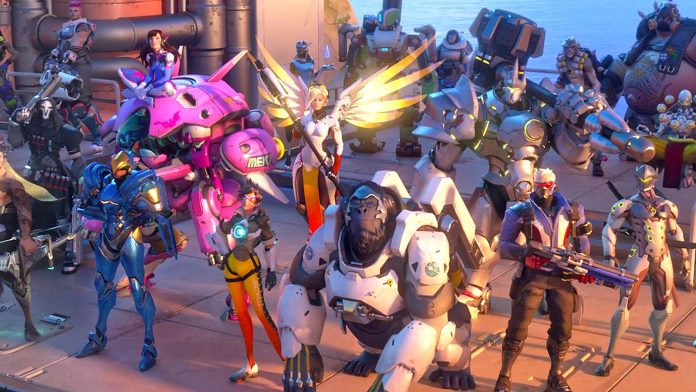
Much of Overwatch’s appeal comes from its fantastic cast of characters.

Overwatch has only been out for a month, and it’s already a phenomenon.

The online first-person shooter, developed by Blizzard Entertainment of World of Warcraft fame, is that rare video game that has managed to find its way into the pop culture mainstream. Even non-gamers will likely have considered shelling out 80 bucks for a game with no single-player campaign, which in itself is a small victory. But where Overwatch really succeeds is its accessibility: this is truly a game that almost anyone can enjoy.

Much of what makes the game so approachable to gamers both diehard and casual is its delightfully diverse cast of 21 different characters, or “heroes,” each with a unique set of weapons and playstyles. Though ostensibly separated into four distinct classes, no two characters are alike: each one has its own strengths and weaknesses, meaning that players from a variety of different backgrounds are sure to find at least a few heroes whose playstyle gels with theirs.

It doesn’t hurt that each hero is also insanely likeable, to the point where Overwatch has already inspired more fanart and fanfiction in one month than most games accumulate in years. There’s the game’s mascot Tracer, a peppy Brit who can teleport and go backwards in time; Reaper, a sullen, ghostly shooter with a gruff vocal delivery; and D.Va, a Korean gamer who pilots a pink mech straight out of the Gundam series and even pokes fun at the game’s mechanics. (During her final move, which can destroy near every enemy in sight, she boasts: “Nerf this!”)

The other 18 heroes are all equally magnetic and near-perfectly balanced. The fact that Overwatch allows you to switch between them mid-game allows players to constantly update their strategies. This also gives the game a sense of endless replayability: even though there’s only three different modes, no two matches feel alike.

All of this complexity can seem pretty intimidating to casual gamers, especially those who aren’t used to online multiplayers like Call of Duty or Halo. But where those games emphasize individual achievements, Overwatch instead encourages players to do something almost unheard of in modern games: work together.

Helpfully, the game’s character selection screen includes gentle hints on how to build a balanced team that will lead you to victory, all of whom must work in tandem rather than going it alone. Teams that are well-balanced with cohesive game plans tend to be more successful, while lone wolves are quickly picked off.

Where a lot of modern online games trumpet team building and collaboration, Blizzard has truly built it into the DNA of their newest title: players who help their team the most will get a shoutout at the end of the match, and their teammates can vote to give standout players special rewards. This also means that players who contribute by blocking damage or healing get as much attention as the heavy hitters.

It’s this emphasis on positive feedback and team dynamics that makes Overwatch the kind of game that players of all backgrounds and skill levels can enjoy. And it’s the same reason that I’ve barely been able to put it down since I first picked it up.

Five reality shows that deserve a comeback

0
Even years later, these shows would be able to bring a freshness to a stale genre.

By: Vincent Justin Mitra, Peak Associate

Reality shows tend to get a bad reputation. They’re called repetitive, vapid, self-indulgent, and inauthentic; shallow popularity contests for the simple-minded. 

While that may be true of some or many of the reality shows that have come and gone, there is the occasional outlier: a show that turns the genre on its head, or avoids the clichés, or just has a fascinating premise.

Sadly, these shows are often short-lived, so here is a list of five reality shows that desperately deserve a comeback.

1. The Joe Schmo Show (2003–2013)

A fake reality show wherein all the contestants but one are actors playing clichéd reality show archetypes.

As much a social experiment as reality show, it was initially planned to focus on mocking the one ‘real’ contestant. However, the showrunners quickly realized that the audience would feel sympathy for the contestant because he was a genuinely nice person, and the plan for the show was altered in his favour.

This show is the rare breed of reality show that knowingly deconstructs and mocks the idea of reality shows, drawing attention to the artifice and the repetitiveness of the genre.

2. True Beauty (2009–2010)

A fashion/modelling reality show which (secretly) focused on inner beauty rather than physical beauty.

Each episode the contestants were made to participate in a largely irrelevant modelling challenge while also unintentionally participating in a challenge that judged their kindness, generosity, and so on.

The show was far from perfect. It still put a lot of focus on traditional beauty, and the contestants were as cut-throat and backbiting as those on any other beauty reality show.

But the acknowledgment of the hostile attitude seen in both reality television and the modelling industry — and the attempt to work against that trend — was refreshing.

3. Kid Nation (2007)

Forty children, ages eight to 15, were set up in an abandoned ghost town in the deserts of New Mexico, to work and live there for 40 days and create a functional society.

The children were given jobs around the town while also participating in team challenges to win either a fun or useful prize to be added to the town. One successful challenge had them deciding between television sets and additional outhouses, for example.

This show was notable in part because of the controversial premise — which prompted a number of legal investigations — but primarily because of the optimistic idea of gathering children from around the United States of various ages and of diverse racial and cultural backgrounds to work together and support each other as a community.

4. The Colony (2009–2010)

Ten strangers with various skills are forced to live together in a warehouse while experiencing the struggle to survive in a (simulated) apocalypse.

Participants needed to provide for themselves in a lot of basic ways that most take for granted in contemporary Western society: collecting clean water and generating power, sourcing and rationing food, personal hygiene, and security.

The depiction of using practical skills to solve potential problems was compelling. It was also fascinating to see how invested in the scenario the participants became, with every member of the group literally and honestly devastated when one participant mysteriously vanished during a supply run.

5. The Mole (2001–2008)

In The Mole, contestants competed in challenges to add money into a prize pot, if completed successfully.

One was the Mole and secretly working against the team, sabotaging the challenges. At the end of each episode, the contestants were asked questions about the Mole’s identity to test their deductive and observational skills. The player with the lowest score was removed from the game.

The audience also did not know the identity of the Mole, allowing those at home to play along. Each episode would give clues which, if correctly interpreted, would hint towards the true Mole. Some of the clues were bullshit.

Gang Signs strike it rich at Fortune Sound Club

0
Tapping into passion and outside inspiration hasn't held them back despite not going to school for music.

With their fresh new record, Geist, the band tapped into their horror movie knowledge and paid homage to classic films such as David Croenenberg’s The Fly. The songs smoothly transition from one to the other, with an electronic/new wave sound and a laid-back vibe.

Gang Signs features Peter Ricq, Adam Fink, and Matea Sarenac. On the record, the three musicians grasp at the darkness surrounding the album and bury their sound in it. When playing live though, this trio likes to take things to a slightly happier, more dance-friendly club vibe. The only real exception to their theme is “Tonight,” which was Sarenac’s turn at writing lyrics and melody.

It was a fan favourite at the show, and is also one of the group’s favourite tunes to play in front of an audience. Their live set is a happy mix between their self-titled EP and Geist, which satisfies fans’ cravings for either one. According to Ricq, “Fans ask which one we’re playing that night [and] I reply ‘both,’ so you’ve got to buy both CDs.”

Not a bad business strategy.

All three members have been involved in music from a young age. Ricq grew up learning how to play piano, which he hated, before trying out the bass in high school; Sarenac joined an all-girl pop group named Mystique; and Fink toured around the world after learning to play the drums in his teens.

Although none of the members sought structured training in music — Sarenac remarked that the closest she came to taking music classes was vocal training during her Mystique days — the crowd that came out to support them at Fortune Sound Club proves that you don’t need to have a degree to do something well.

Despite not having gone to school for music, they all agree that it’s not a bad route to take. “[Touring is] like a different kind of music. It’s different when you’re playing in a band for a very long period of time. Especially when you’re on tour because you’re playing the same material all the time for a couple years, and so it doesn’t feel like you’re really growing as a player. Like, the band gets better, I think, but as an individual player, no . . . unless you have time for that,” Fink said.

“Anybody who’s gone to school for music producing, they learn everything about queuing and mastering and sound and how to not make a mix muddy and all that. For me, I’ve been producing music for, I don’t know, 15 years now, and some kids who just did school for like two years are producing way cleaner music than I could ever do. So I would’ve gone [to school for music] if I could [have],” Ricq added.

Fink’s drumming was spot-on during their hour-long set, as were Sarenac’s harmonizing vocals and lead work on “Tonight.” Ricq’s purposeful monotone wove in and out of their sound seamlessly.

They’re currently on tour across Canada, but once that wraps up, they’re heading back to the studio to start work on their next release. Ricq already has some ideas floating around, and is just itching to see what they evolve into.

If they sound like your style, catch them at the Khatsahlano Street Party on July 9.

Album Reviews

0

By: Courtney Miller and Tessa Perkins

Michael Franti & Spearhead – Soulrocker

This ninth album from Michael Franti & Spearhead is a collection of socially conscious tunes and upbeat danceable tracks that will make you want to get up and groove — and make the world a better place while you’re at it.

The first single, “Crazy for You,” is a joyful track written for Franti’s wife Sara, about love keeping us grounded amidst a crazy world. “Good to Be Alive Today” is another standout that has a more sombre tone with direct references to the tragic events we hear about in the news, climate change, and the general state of our world. Despite this, the song promotes gratitude for all the good in the world and presents a hopeful message for positive change.

“We Are All Earthlings” reminds us that we’re all in this together and we need to work together and love each other. With its dance beats and build-up to a nice breakdown, this song would be at home in a nightclub or your next house party. For a sunnier summertime track, “Summertime is in Our Hands” does the trick for backyard barbecues or lazy beach days.

Full of infectious rhythms and thought-provoking, political lyrics, Franti’s rhymes roll naturally off the tongue. When he sings about important issues, you feel compelled to listen and care. –TP


Keith Urban – Ripcord

Ripcord is Keith Urban’s latest country offering, and features his signature chill guitar licks. However, the eclectic combination of featured artists such as Carrie Underwood, Pitbull, and Nile Rodgers makes for an odd creation.

The album’s entirely formulaic — Urban’s been using the same method for years now.  At the same time though, Ripcord’s enjoyable, and even seems to branch out a bit despite Urban maintaining his style. There’s an electronic and sometimes pop-like undercurrent to the new album. I’d call it his most experimental record to date: an upbeat collection that’s got energy to spare.

“Gone Tomorrow (Here Today)” is a tribute to Urban’s late-father. Pitbull’s collaboration, “Sun Don’t Let Me Down,” has the rapper shouting “Mr. Worldwide” in the midst of the song and, well, it’s good that Urban also recorded a Pitbull-less version. If we wanted rap, we’d get some.

All in all, it’s another great addition to Urban’s discography that’ll satiate country fans until the next one arrives. –CM


Tegan and Sara – Love You to Death

It’s hard to believe that Love You to Death is Tegan and Sara’s eighth album. They’re still cranking out the electro-indie-pop we know and love, but there is a sophistication and maturation that shines through.

Like most of their work, the ups and downs of relationships past provide the fuel for their music. Though some casual listeners may complain that they always write about the same things, I think it’s important that they write about their experiences and that there’s a sense of honesty in their work.

Take “Boyfriend,” the only official single from the album thus far. Anyone — queer people especially —  who has served as the experimental relationship or “test drive” of a questioning person can identify with it. Finding that recognition is never a bad thing.

However, “That Girl” might be the best song on the album. There’s a playful tone to the keyboard, a majesty to the bridge, and an intelligent discussion lyrically. All in all, it’s a mature, nuanced pop album. –CM

SFU athlete will chase Olympic gold

0
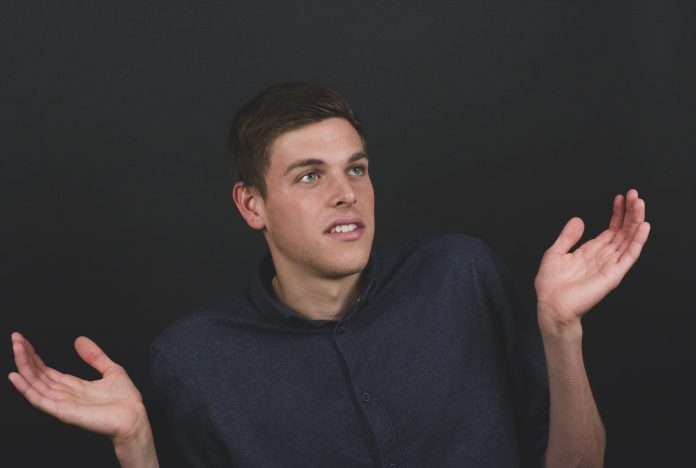
While looking indecisive here, Cameron Proceviat is committed to chasing Olympic gold.

For Cameron Proceviat, the dilemma isn’t “Olympics vs Med School”, as other sources have reported. He intends on attending medical school once he’s “done with running”.

SFU’s track and field captain and Molecular Biology and Biochemistry (MBB) major could pursue both options.

Proceviat was an 2015-2016 NCAA All-American in the indoor 800-meter and also has a 3.90 GPA (out of 4.33), earning him the 2016 Great Northwest Athletic Conference (GNAC) Scholar-Athlete of the Year, making him the first SFU athlete, male or female, to receive the award.

The self-described “late bloomer” started as a walk-on with SFU’s track and field team five years ago. His personal drive and encouragement from his family pushed him to always aim higher. Proceviat’s season best 1:49.28 in the 800 metres is No. 2 on the GNAC all-time list and his 1,500-metre best of 3:46.47 ranks No. 4.

“Breakthroughs happen at different times for different people”, Proceviat told The Peak. “Focus on your own improvement, even if you’re a late bloomer. [Success] won’t be as sudden or as big.” This spring, Proceviat was also named by SFU as the recipient of the Bill Devries Award for all-around male athlete of the year.

Proceviat said he would encourage students to “not give up, but there was a time when I did give up.” He said after being a good runner in elementary school, he tried it again in grade 9 and he “wasn’t very good and wasn’t enjoying it.”

“I never really gave [running] a try until grade 12, mostly because my mom pushed me.” She suggested he try running again, after playing seven different sports like soccer and rugby for his high school, Moscrop Secondary.

“I never really focussed on a single sport before track,” he just played for fun. “My favourite thing to do is play sports.” Proceviat thinks his success in track was partly thanks to his focus on a single sport once he attended SFU.

“The either or [reports] were misleading”, said Proceviat . “My plan right now is to compete for one more year and try to make the World University Games next summer… and assess whether the [2020] Olympics is an achievable goal [. . .] I don’t know if ‘or’ was the right word.”

Medical school had always been Proceviat’s goal since he was little. Not only would he love the opportunity to be a doctor and help people but it’s also a personal goal. “I’ve always looked at myself and tried to achieve the highest thing possible.”

Proceviat said that with the ability and the opportunity to attend medical school SFU has given him, if he didn’t attend then he would be “letting [himself] down.”