Home Blog Page 848

The best sports endings of all time

0
Sidney Crosby’s golden goal will go down as the best-ever ending in sports history.

3) Canadian Football: Saskatchewan vs Montreal, 2009 Grey Cup

The “best sports ending” label might not apply here if you are a Saskatchewan Roughriders fan. But, like it or not, the final scenes of the 2009 Grey Cup will go down in infamy as one of the most ridiculous endings to any event, ever.

The Riders dominated the Alouettes throughout the game, and with 10 minutes left led 27–11. Montreal got two quick touchdowns to make it 27–25, and had chance to win with a last second field goal. Damon Duval missed, and Rider nation cheered as they thought they had won the Grey Cup. Except they hadn’t.

The referees announced that Saskatchewan had too many men on the field, and everyone in the prairies collectively cursed the sports gods. Duval was given a second chance, and he sunk it, giving Montreal a 28–27 victory.

2) Soccer: Manchester City vs QPR, 2011–2012 EPL Season

The 2011-2012 EPL season was one of the tightest on record, with rivals Manchester City and Manchester United duking it out for the league title. Going into the last game, City and United were tied on points, but City were ahead in the tiebreaker. Manchester United won their final game, meaning that City had to beat QPR to win the title.

City were the odds-on favourites to win the game; however, QPR were determined to play spoilers. After City took the lead, QPR stormed ahead 2–1, and it appeared that United would win the title. In the 90th minute, Edin Dzeko tied the game off a corner, and then history was made when Sergio Aguero dribbled past a QPR defender and scored in the 94th minute to give Manchester City their first title since 1968.

1) Hockey: Canada vs USA, 2010 Olympics

It was February 28, 2010. Canada Hockey Place was the location. The teams were Canada and USA. And the prize on the line was Olympic Gold. The stakes couldn’t be higher.

USA had established themselves as the best team in the tournament, beating Canada in the round robin and embarrassing Finland in the semifinals 6–1. Canada had learned from their first American incursion, though, and started the game guns blazing. Toews scored in the first, and Perry in the second to make it 2–0 for Canada.

The Americans, channeling the spirit of Rocky Balboa, fought back and made it 2–1 going into the third. Then the unthinkable happened: with 25 seconds left, Zach Parise tied it up, sending Americans into hysterics and the game into OT.

All of Canada held its collective breath as the puck dropped to start the extra frame, and both teams fought like gladiators to try and gain the gold. The deadlock was finally broken when Iginla threaded the puck to Sidney Crosby, who shot it five hole past Ryan Miller, giving Canada their greatest win in Olympic history.

NEW MUSIC FRIDAY

0

By: Sarah Finley, Courtney Miller, Zach Siddiqui, and Jessica Whitesel

Follow The Peak on Spotify to stay up to date on New Music Friday.

“Raging” – Kygo feat. Kodaline

Jessica Whitesel: The vocals are strong but not overwhelming and, given that this is a song about partying, it’s a good thing. Also the upbeat but chill feel to this song makes it perfect for pre-gaming.

Sarah Finley: Gentle but quick guitar strumming begin this folk-y track, adding in some shakers, some keyboards, and then about a minute in, electronic instrumental manipulation. In this way, Kygo and Kodaline create a perfect blend of their unique and distinctly separate styles of music.

Courtney Miller: Starts off almost indie folk, then adds a poppy bass drum and keyboard riffs. Lyrics were sweet, though (“I can brave it all for you”), so it’s actually pretty good and never a dull moment.

Zach Siddiqui: I won’t lie: I’ve officially grown completely bored of the multitude of love songs that talk about how willing the singer is to wait forever and go through so much for the sake of their relationship. I won’t take it out too harshly on this, though — it’s a decent piece, with special props to the guitar and the beginning and the versatile vocals near the end.

“Inside Out” – The Chainsmokers feat. Charlee

JW: This song is kind of a let down after “Roses.” It’s not a bad song it just is kind of meh. It is a pretty song and better than “#SELFIE” but it isn’t really a great party song.

SF: I’m not really a fan of The Chainsmokers, and this track doesn’t change that opinion for me. Charlee’s gentle singing of romantic lyrics is the only appealing part of this track; Chainsmokers take it over with their sad attempts at bass drops, drowning her out in the process.

CM: It’s decent synth-pop, albeit a bit repetitive, but the vocals are pretty good actually. The chorus doesn’t make me want to sing along, but I don’t mind having it in the background.

ZS: Me, at 1:09 PM: it involves the makers of “#SELFIE,” so I mean, it’s already probably perfection. Me, at 1:46 PM, because I listened to the song and then got distracted for the other 34 minutes: Well, nothing can compare to the masterpiece of “#SELFIE.” However, it’s a soothing piece with a sweet, if similarly clichéd, message.

“Dreamland” – Wild Belle

JW: I could see this being the main track for an indie romantic drama. That doesn’t mean it’s a bad song because it is a good song it just feels like it needs a movie to go with it for it to be truly great.

SF: Wild Belle’s Natalie Bergman sounds a bit like Lana Del Rey in this song, featuring Eliot Bergman’s classic saxophone which makes it appearance in the chorus. Chicago natives, this sibling duo is a group to keep your eye on in the future.

CM: A little trancey, a little hypnotic, it’s a little too mellow and slow for my taste.

ZS: I’m really enjoying the immersive imagery in the lyrics, and the tune is sweet and steady. Hearing, this, I envision a romantic late-night encounter at a café with the recent object of your affection. Very nice.

“Come and See Me” – PARTYNEXTDOOR feat. Drake

JW: Sad Drake is sad, and the feeling is catching. He managed to make PARTYNEXTDOOR sound like the only party they would host is a pity party. But if you are feeling bad because your crush doesn’t ever come to you, then this is your song.

SF: I think if there’s one factor that will keep me from being a Canadian citizen, it’s that I don’t like Drake. That being said, this isn’t the worst one I’ve ever heard. Drake’s slow and almost monotonous singing is accompanied by closed hi-hat percussion. Aside from the same chords in the background over and over again, that’s pretty much it.

CM: I’m not sure what all the hype about Drake is for, because this was lukewarm at best. The song is autotuned, never really goes anywhere, and sounds as bored as I feel.

ZS: I think the chorus is actually me when I see people from high school and they ask why I haven’t stayed in touch. . . All kidding aside, it’s a rad — if slightly basic — rap with a very tranquil feel. Give it a listen!

“Efter festen” – Laser & bas

JW: I have zero idea what the words are since it is in Swedish but that doesn’t matter this song is catchy as hell and super fun. It just makes you want to dance around and maybe twirl in a dress that has a super full twirling friendly skirt. Go Sweden!

SF: Just because I have absolutely no idea what Laser & bas are saying doesn’t mean I don’t enjoy this adorable track. Although, admittedly the first ten seconds of the track sound a bit like how the minions from Despicable Me sound when they’re arguing. The rest is entirely adorable with beautiful piano playing and cymbal heavy percussion.

CM: Has a “Footloose,” 1980s feel, music-wise. Other than that it’s pretty unmemorable.

ZS: It’s got a fun and festive flavour, and it’s probably one of the songs I’ve enjoyed most this week. I won’t pretend to understand what’s happening in the song, but I’m almost motivated to learn Swedish now, and well, that should tell you how much I think you should try this out.

“If it Ain’t Love” – Jason Derulo

JW: Does anybody else miss when Jason Derulo sang his name at the beginning of his songs because I do. It allowed me to know who was singing the pretty darn mediocre song and be like ahhh this is why it sucks, and then skip it.

SF: Jason Derulo is always so impressed with women’s bodies in his songs — it makes great cardio music, and this is no exception. Upbeat percussion, plenty of “babe”s, and Derulo’s signature head voice complete this track that seems factory made for a cardio playlist.

CM: I kept waiting for him to say his own damn name. I dunno, it was upbeat, he hits the notes, but I’m still not feeling it-something about the track turns me off.

ZS: Crazy and dance-y, I find this to be quite likeable! The brevity makes it difficult for me to come to an especially strong opinion on it, but hey — this is definitely decent for any party-like event.

“Butterfly” – Twin Peaks

JW: The lo-fi fuzzy sound to this track works with this tune’s slight rockabilly, southern rock vibe. It feels like modern AM radio, catchy as hell dad rock.

SF: Honestly, I’m not that much of a fan. The lead singer’s nasally voice is too distracting for me to gain anything from the song. The guitar chords aren’t overly appealing, and just overall bleh.

CM: Oh my word. This song is trying to do too many things at once — it has like a country/classic rock and roll music-base, and then the vocals are like wannabe grunge or something, and it’s just overall unpalatable.

ZS: Very different and out-there, to the point that I have trouble placing it into a genre. I like it. . . I think? It’s certainly intriguing and I love anything that makes me feel confused and internally unprepared about what’s going on. Sort of like capitalism. Wait. Um. I’m just going to leave now and tell you that this is fun and listening to it will be much more fun than listening to me.

“No Money” – Galantis

JW: So the weird ass album art aside this is a pretty catchy song. If it were in the club, I would dance to it and relate to the “I’m broke but fuck that’s it’s ok I’m gonna do me” vibe.

SF: I identify very strongly with the title of this track. Luckily, it’s also catchy with child-like vocals and a heavy bass drop at around two minutes.

CM: This sounds like Kids Pop has decided to try doing original songs. I mean, I share the sentiment — I ain’t giving anyone a dollar, but I can’t overlook the sad Kids-Pop-Tries-Too-Hard vibe.

ZS: Feels very futuristic and devil-may-care. I can see this playing in the background of the end of the first episode of a show’s new season, when all the new plot points start rolling through and fun character development happens. Worth checking out!

“Black Man In A White World” – Michael Kiwanuka

JW: Love the hand claps in this song and the semi-gospel/soul vibe. The social commentary is also pretty solid, but it an catchy not preachy way. I would definitely listen to more of Michael Kiwanuka’s music.

SF: Emulating the slave spiritual style of music from American 19th century via clapping, repetition, and echoing vocals with sad lyrics, Michael Kiwanuka paints a very clear picture of what it’s like to be a minority.

CM: A beautifully uncluttered song, with lyrics from the soul, though he does repeat the title way too much and I’m not a fan of fade out endings.

ZS: My definite favourite this week. An intense beat, nice vocals, a distinct sound, and it doesn’t feel like the same portions are being recycled throughout. It feels almost-retro-but-not: timeless. I’ve not heard of the artist before, but I wish I had earlier. Great work.

“Kiss Me When I Bleed” – White Lung

JW: 15-year-old me is freaking out, but 25-year-old me? Not so much. I do appreciate that the lead singer is female and, given that there aren’t that many female rockers that I can name off the top of my head, that is awesome, but it’s just not my current aesthetic.

SF: Maybe it’s that I listened to this at eight in the morning, but this song is just too heavy for me. Heavy electric guitars and loud angry vocals aren’t really my jam at any point in the day. But if that’s your thing, White Lung is the band for you.

CM: Bless. A nice, guitar-ridden rock song with lots of kick drum. It’s a little closer to thrash rock than I’d like, but it’s still good listening.

ZS: Hits its stride immediately and doesn’t let up once. Not much else to say, really — I like the power here and I think the song capitalizes on it well to create an engaging experience.

“Sleep on It” – Zealyn

JW: It isn’t really the best song out there. It is kind of just another disappointing electronic song. The vocalist has a lot of potential but it just get overshadowed by the boring been done before electronic backing track.

SF: This super angsty track isn’t really vibing with me, despite how much I love to sleep. Breathy vocals just aren’t my cup of tea, and the instrumentals aren’t redeeming enough to make up for that.

CM: I wish I could say it’s amazing, but I can’t. It’s good, and it’s well done, but it’s also nothing I haven’t heard before.

ZS: A heavy song that encapsulates the stress of difficult decisions well. It has a softly melancholic sound to it that draws you in and keeps you listening for some catharsis without being irritating.

“I Wanna Know” – Alesso feat. Nico & Vinz

JW: This is a dancing friendly song that wouldn’t have you in an awkward grinding session with your weird neighbour from down the hallway. It is light, fun, and worth a listen and dance — or two.

SF: Nico & Vinz bring their signature sound to this track, intermingling with Alesso’s DJing. Upbeat percussion, piano chords, and catchy rhymes are well combined with the kind of music you’d hear on Jamaican tourist commercials — not that I’m complaining.

CM: Groovy, spot-on vocals, and makes me want to sing along despite knowing absolutely none of the lyrics. Fun, feel-good tune.

ZS: I don’t really feel that the track needed to be as long as it was. I wouldn’t really listen to this for the sake of listening to it, but I can see it being amazing background music for some sort of video game dungeon, depending on the aesthetic of the game. . . It’s got that nicely ominous yet unoppressive feel to it.

FOOD FIGHT: New eats and sweet treats for summer

0
Field and Social's food is just as amazing as the interior.

Food Fight is dedicated to highlighting the differences between vegan and omnivorous cuisines. By reviewing restaurants in Metro Vancouver, our columnists Yelin and Bart show that you can have the best of both worlds.


Field and Social:

This beautifully laid-out restaurant found its niche by bringing nutritious, well-balanced, ‘fancy’ salads to Vancouver. The owners opened the restaurant with the goal of taking the boring out of salads, and offering a unique, modern, and trendy social eating experience. Critics are raving over their stylish marble-interior and their carefully curated salads. Ther carnivore-friendly options that complement the protein packed, flavour filled vegan options make this a win-win lunch spot on Dunsmuir Street.

MeeT in Gastown:

Main Street’s popular vegetarian/vegan comfort food restaurant, ironically named MeeT, has opened another location on Water Street and people can’t shut up about it — myself included.

Go and enjoy the social environment, sit down in the refurbished school chairs, and feast your tender soul on cruelty-free mac and cheese burgers, buffalo ‘chicken’ wings, and chili cheese fries. It’s as good as it sounds. I loved the tofu rice bowls because of the perfectly cooked tender tofu and incredible sauces.

It was amazing to see so many people waiting in line to have their dinner at a local vegetarian restaurant instead of opting for elsewhere. MeeT proves that compassion for health and animals is relevant in our time.

Choco Coo:

This relatively new café in Lougheed has a beautiful, well-lit interior that doesn’t outshine the high quality cakes crafted by a French trained South Korean pastry chef. Their matcha-inspired desserts are to die for.

My personal favorite, the matcha mousse, is chilled and layered with chocolate crisps that give it the appearance of a cake: it is a sweet and sinful must-try. Their dark chocolate mocha was great, but my only complaint is that they have no dairy substitutes. Being an up-and-coming business in the food industry and not catering to common dietary restrictions could become a problem, given that so many other business are doing so. However, rumour has it that they are opening another location in downtown Vancouver soon, due to the overwhelming success of their current location.

Laduree:

You’ve probably heard of this place before. If you haven’t, where have you been that you could ignore the fantasy-like trend of macarons and Parisian culture for the past decade? The aesthetic of this tea parlour is reminiscent of the film Marie Antoinette, and has been making people chatter all over the world with their decadent sweets. This month they opened their first store in Canada on Vancouver’s iconic Robson Street. After the swarms die down, definitely go give their world famous macarons a try.

720 Sweets:

Recently opened in Kitsilano, this ice cream shop has become a must-visit. Their unique flavour combinations and dry ice presentations make it worthwhile. The ice cream is rich and silky, but not overdone in any way. The classic flavour I thought would be quite plain and irrelevant proved to be the best soft ice cream I’ve ever had.

720 Sweets reminds us that dessert should be a novelty not only in taste but in experience. It will be ready to remind the rest of Vancouver soon by opening up to franchise offers in the future.

Eva Butterly “overwhelmed” at Game of Thrones casting

0
Look for this face as a mummer in the newest season of Game of Thrones.

With the trailer for the highly anticipated sixth season of Game of Thrones garnering over 27 million views and showrunners David Benioff and Dan Weiss proclaiming “this is the best [season they’ve] done,” the hype-o-meter for the premier date on April 24 has reached critical levels. The new season promises answers to last season’s cliffhangers, sexual encounters, deaths, and a slew of new faces.

On CJSF’s The Arts Show with Jacob Gradowski this past October, I had the pleasure of interviewing one of those new faces, Eva Butterly, on her upcoming role in season six of Game of Thrones. Having moved from Ireland to Vancouver to pursue acting, Butterly’s life was turned upside down when she heard the announcement that she’d been cast as a “mummer” (member of a performance troupe) in the newest season of the massively popular HBO series.

“When I first found out about [the casting], it definitely overwhelmed me — I had trouble sleeping at night and I was kind of out of balance. It just took me a little adjustment to get myself back to normal.” Butterly remarked. Despite the initial shock, she managed to bounce back, performing in The Virtual Theatre’s annual Halloween performances of Alien Contagion: Rise of the Zombie Syndrome.

Despite its extreme popularity, auditioning for Game of Thrones was, according to Butterly, “a pretty standard audition process. My agent got me the audition and it was just a video, so that was about it.”

Though the audition was standard, the filming of Game of Thrones sounded far from it; Butterly filmed her part of the show in Spain. Even though her days there were undoubtedly grueling, she had the chance to catch up with fellow Ireland-natives while on set: “We got some free time. We got a day off and me and some of the Irish boys who were also in Game of Thrones had some drinks. We had a pretty fun night — went to an Irish bar — it was fun.”

When questioned about how it felt to be an actor acting out being an actor, Butterly’s reply was: “I can’t really answer that, sorry.” It seemed we had reached the 700-foot wall in our conversation. This, however, was hardly surprising — the cast and crew of the show have been notoriously tight-lipped regarding potential spoilers.

Be that as it may, book readers can likely gander a guess at how her character’s role as a mummer fits into the storyline, especially given the fact that Girona, Spain is the filming location for a certain canal-filled city in Essos — (cough) Braavos.

Prior to auditioning, Butterly had always been an avid fan of the series: “I do have a huge picture of Khaleesi up on my bedroom wall,” she admitted, laughing. She and the rest of the Game of Thrones fandom will be eagerly awaiting its premiere on April 24.

CINEPHILIA: Chi-Raq’s vignettes are filled with human worth

0
Lysistrata (Teyonah Parris) unites the women on both sides of a gang war by starting a sex strike.

In the opening minutes of Chi-Raq, a title card informs us that since 2001, more Americans have died on Chicago streets than in the Iraq War, the results of gang violence perpetuated by poverty and a government that has neglected a ghettoized part of the city.

Spike Lee has never been known for subtlety. If his films are overly didactic, they make up for it in passion, energy, and earnestness. They’re angry only because tears are too passive to motivate change.

Spike Lee’s latest joint is a sermon, a comedy, a tragedy, a musical, a poem, and a modern adaptation of Aristophanes’ play Lysistrata. Nearly the entire film is written in verse with the majority of the dialogue delivered as couplets — “This situation is out of control / ‘cause I’m in front of an empty stripper pole.” The film is structured as a series of vignettes — some funny, some sad, some both at the same time — that revolve around all the parties involved in a gang war.

On the southside of Chicago, firefights and stray bullets from the Trojans and the Spartans kill innocent bystanders along with the young black men initiating the violence. Chi-Raq (Nick Cannon), the nom de plume of the Spartans leader, is in a war with Cyclops (Wesley Snipes), the one-eyed commandant of the Trojans.

Following the death of an innocent teenager on a botched drive-by shooting, Chi-Raq’s girlfriend Lysistrata (Teyonah Parris) unites the women on both sides in a sex-strike. “No peace, no pussy!”

This may make Chi-Raq seem like a bore, a passive exposure to Lee’s ramblings on gun culture and racial inequality in Chicago and America at large. Chi-Raq is motivated by beauty and sympathy; its luscious widescreen frames transform the underbelly of Chicago into a stage decorated with life and colour. Human worth is implicit in nearly every film, yet so few feel quite as alive as this one.

Most of Lee’s films are theatrical, and in Chi-Raq the screen often feels like a proscenium. The compositions and blocking often place the viewer at the other end of the dialogue, as if we’re sitting at the front row of a play. The audience is always the most important character. During a sermon at a local church, the camera sits in the pew. A peace accord in the denouement faces the spectator, as though we too are signing the contract. And as is customary with ancient Greek plays, the film has an omniscient narrator who addresses the audience directly — played by, of course, a very funny Samuel L. Jackson.

Chi-Raq functions under a similar, albeit more erratic, mode as Lee’s 1988 masterpiece Do The Right Thing. It glides between disjointed scenes, characters, and scenarios with no narrative momentum but an internal logic, which in the case of Chi-Raq is a no-rules kind of consistency.

Lee’s preaching has rarely felt as organic, because by wrapping his lessons in a sheen of elaborate artifice, he has made a film as stunning to look as it is politically engaged. It’s a dance of conflicting forms where somehow all the movements feel just right.

A dream come true: Jason Hayward’s road to professional musicianship

1
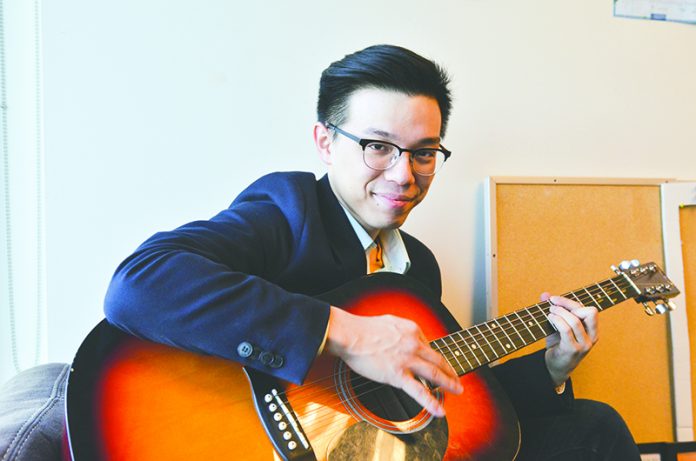
SFU student Jason Hayward looks to channel his passion for music into further studies to become a music professor.

The allure of music had always given Jason Hayward something to dream about. Little did he know that his life journey would take him across the country and even to the other side of the world in the pursuit of something once described by him as a “fantasy.”

Initially, Hayward’s cards pointed in a completely different direction. Growing up in Newfoundland, he was raised in a household that was by no means musical, though he took private saxophone lessons in his youth. Despite his dreams of becoming a musician, lack of insight into the world of the music industry influenced Hayward to not pursue his passion. Instead, he studied business, something that he decided to study through a process of elimination.

“It seemed like a viable choice, since I knew I didn’t want to be a doctor,” Hayward said with a laugh.

But music called to him throughout pursuing this degree in business. Hayward recounted how he would always pass by the music wing of his school during first year; it was then he realized that music could be studied professionally, and he yearned to be there with the other musicians and artists. Despite how long it took for him to get to that point, Hayward appreciated the time he had to explore who he was. It was also then that he learned “business was not for [him]” and that it was time to dive head-first into something about which he had always dreamed.

After his undergraduate degree, Hayward went to Toronto for two years to study jazz music before returning back to St. John’s to focus on performing, teaching privately, and composing music for different jazz combos in the city. It was during this time that he also tried out graduate music studies at Memorial University. But Hayward said that the more he added to his plate, the more “disillusioned he felt with the music scene.”

“It was a time of crisis, on two levels,” Hayward said, describing his return to St. John’s. “I felt like I was trying to do too much and then burnt out, but I also felt like I didn’t fit in. I was too classical for the jazz world and too jazzy for the classical world. I wanted to do my own music and experiment with my own creativity.”

Instead of staying in St. John’s, Hayward packed up everything and went to Korea with the intention of staying for a year to teach English. Hayward took that time to channel his creativity and experiment with electronic music, which led him to remain in Korea for three years before returning back to Canada.

With a newfound sense of enthusiasm for music, Hayward brought his experiences and electronic music back to Canada. Upon his arrival, however, he experienced what he described as a “reverse culture shock” and felt like he once again “did not belong.” Hayward then packed up his bags and went to Calgary, where he met up with a ska reggae band and toured with them across Canada as a keyboard player. This, according to Hayward, was one of his fondest memories performing.

Hayward returned back to St. John’s one more time, this time meeting his current partner in a writer’s group. With her by his side, they went to stay in Belgium for six months before moving to Vancouver, where they currently reside. Hayward is finishing up his post-baccalaureate diploma in contemporary arts, set to graduate after this semester.

Throughout his travels and experiences, Hayward has come to call himself a jazz and contemporary classical musician, experimenting with different genres and being influenced by artists such as Sonny Rollins and Charlie Parker.

Hayward also enjoys the singer-songwriter genre, citing musicians like Paul Simon and Sting as influences that have pushed him to try something new and to write his own music and lyrics. With his post-baccalaureate diploma, however, one of his group projects requires him to compose music for a short film. For this type of music, Hayward looks to the likes of John Adams for influence, while taking some of his own elements of creativity to add to the sound.

When it comes to finding inspiration, Hayward says that he draws on many different sources, such as literature, poets like Sylvia Plath and Charles Bukowski, and visual art. But beyond these muses, Hayward is a strong advocate for “doing the regular work.”

“I am a firm believer that doing the work is the most important part of anything,” Hayward said. “The inspiration will come when you do the work and see what comes out of it.”

Most importantly, Hayward is a big believer in passion and creativity.

“My main muse is my creative drive,” Hayward replied. “Creativity is most important to me, and definitely what gets me going every day.” It is this love that Hayward feels for his music that he hopes other people feel every day for their own passions, regardless of what they are.

Looking ahead, Hayward would like to continue his studies in hopes of one day becoming a professor of music while composing and performing his own works professionally. With his passion, experience, and creative drive, Hayward most certainly is someone to watch out for in the Vancouver music scene and beyond.

Enoch Weng reflects on his year as SFSS President

0

The Peak: Reflecting back on the year you’ve had as SFSS President, what is the thing you are most proud of?

Enoch Weng: I think its really living up to the whole “Ohana means family” quote. The biggest thing I wanted to change was the culture and the way people interacted both within and outside of the SFSS. I’m really proud, not really [of] what I did, but what I and my team and the staff were able to do. We created a whole culture change and we did a lot of restructuring with staff and the with organization, with policy changes — we completely revised our governance, we’re creating a new strategic plan. And all of these are huge things that are going to make our organization such a better place.

P: Okay, so now for the opposite of that question: What’s one thing that you would’ve done differently?

EW: I’ve sacrificed so much for this place: friends, family, my time, my health, all to just make sure this place is running, to make sure that students are going to get the best, and that we live up to those standards. And along the way too, because I’m always investing in people and investing into this place I’ve given them so much. There’s times where I could’ve got something for myself or I could’ve, you know, pushed forward an idea, but I gave those up to help the team along, for unity, all that jazz. So sometimes I feel like if I pushed a little bit harder for my own agenda I could’ve done more.

P: One of the big issues of your presidency was the Build SFU project. Do you have anything to say about how the project was handled, if things could’ve been done differently or how things are going to be done differently from here on out?

“For me it’s all about seeing how I can help the world” – Enoch Weng

EW: I think it’s definitely something that needs to be changed. Not just our elections or AGMs or whatever, but our entire organization is antiquated. Were running on policies 30 or 40 years old. Were running on infrastructure 20 or 30 years old. Heck, even the way we run our meetings are decades old. And that’s kind of why I wanted to do governance change to look into ways to fix things up because past practices are not reflective of our modern day needs.

Our issue was that we were faced with so many constraints. We were faced with time constraints, monetary, budgetary constraints, and even just in infrastructure [and] resources needed to support it. One thing I do encourage next year is to [find] how to get more students [. . .] involved or how to make sure everything is more fair. It is legitimate process that we have now because it is outlined, its detailed and everything. At the same time it’s not best. [. . .] It needs to change. And unfortunately in our year we weren’t able to tackle that because we were dealing with so much more.

P: Going right off of that, we have a newly-elected board. What are your hopes for them?

EW: Well one thing that is exciting is that the VPs are all returning members. They’ve all been with us through thick and thin. [ . . .] They have actually been part of the change. They’ve been actively engaged whether its governance or strategic planning and so they are the ones who have institutional knowledge and they’ve done the work. So I’m really happy and I’m really excited to see what they’ll do to continue that work.

P: What is one lesson you’ve learned during your time as president that you’ll take with you?

EW: One of them is to take care of yourself. To make sure that you have self-care, make sure you have the work life balance. For me, I put in 50–60 hours plus a week. I burnt out many times, but you hide it, you don’t let it show. So I go days with two hours of sleep and just grind through. And so people would be like, ‘Wow Enoch, you’re so energetic today,’ and I’m like ‘Yeah, cause I’m running on empty.’ So that’s one of the lessons: to find balance and spend time with family.

P: So what are your plans now?

EW: Well, the first thing I’m going to do is spend some valuable time with friends, family, and God. Like these three things have been neglected and I’ve sacrificed them so I’m really looking forward to spend time with my important ones. I’m going to be doing maybe one last co-op. I’m going to try to get through school. And really going to look for the next challenge. For me it’s all about seeing how I can help the world. Whether it’s to help one student at a time or help many. I just wanna find something I can help with. [. . .] I’ll be helping out with some non-profit music groups but at the same time near the end of school I want to do more. This is just a start. So that’s kind of where I am at

P: If you could pick a Disney song to summarize your last year as president, what would it be?

EW: I knew you were going to ask something Disney-related! Oh man this is hard. Shoot! Do you mind if look through my song list?

[Weng looks through the collection of Disney songs on his cellphone and chooses “Go the Distance” from Hercules.]

I like that one. Because it defined my year you know like I’ve dreamed about this, I’ve went on the road, and yeah, it’s an uphill slope.

SFU should become a smoke-free campus

0

[dropcap]T[/dropcap]here is a growing trend among university and college campuses in North America to ban cigarette smoking completely, and as far as I’m concerned, SFU should follow suit.

About a dozen Canadian campuses, such as Memorial University in St. John’s, Dalhousie in Halifax, and the University of Alberta in Edmonton, have already implemented bans on smoking, and according to the American Nonsmokers’ Rights Foundation, at least 1,475 campuses in the United States are now smoke-free. So why hasn’t SFU joined them?

From 2013–2014, a campaign was underway on campus, Tobacco-Free SFU, supported by the Faculty of Health Sciences. Over the course of about six months, the group started a petition, held some events, and lobbied the administration to make SFU smoke-free. Their goal was to change the current university policy to ensure that there would be no cigarette smoke or cigarettes on campus, and to add clauses relating to the divestment of tobacco company assets and the refusal of funding from the tobacco industry.

That initiative seems to have fallen by the wayside, but it’s time to take up this cause again and clear the air once and for all on our campus. 

While some may say that banning an activity will only make people want to rebel against the regulation, with the right enforcement and education, this could easily be overcome. Smoking is also on the decline in Canada, which might beg the question of whether a ban is necessary, but there are many places on campus where you can be met with clouds of unwelcome secondhand smoke simply when trying to get from point A to point B.

A 10-metre smoke free zone simply isn’t enough, and isn’t currently well enforced.

The walkway above Convocation Mall is notorious, as are the areas outside many of the main entrances to campus buildings. A 10-metre smoke-free zone simply isn’t enough, and it isn’t currently well-enforced, either. 

There is plenty of research showing that second-hand smoke can be hazardous to our health, and for this reason smoking has been banned in a multitude of public places such as restaurants, patios, beaches, parks, and bus stops. I don’t see why our public university campus should be any different.

It’s true that smoking remains a legal pastime, and it is a personal choice. If people choose to smoke, that’s their business. However, that business happens to also create airborne toxins that are dangerous when inhaled by others, so it would be best if smokers kept their bad habit away from the public.

In addition, the litter created by hundreds of cigarette butts, aside from being an eyesore, is toxic and detrimental to the environment. Butts are not biodegradable and they contain heavy metals and other harmful materials that can leach into the soil and water.

SFU Health Sciences Professor Kelley Lee has suggested that tobacco companies should be responsible for the toxic butts, and the mayor of North Vancouver would like to see a deposit placed on them.

We don’t need these pollutants on campus, and we would all be better off if SFU and all other universities were smoke-free, so that nobody would have to walk through a cloud of cigarette smoke to get to class.

Prank YouTubers need to stop

0

[dropcap]T[/dropcap]his January, I was in Toronto with a friend, walking down Yonge street at 1 a.m. We wanted to explore the city and get some fresh air, but instead our calm stroll became an uncomfortable run-in with a wannabe prank YouTuber. He was a tall, stocky man, early-to mid-twenties, with a slight, possibly drunken swagger to his step, crossing the street towards us.

“Hey,” he said, smiling, “where are you girls headed?”

As soon as the walk signal on the street-light began flashing, I was ready to bolt, but my friend was too polite for her own good. She replied, “We’re just exploring the city.” I attempted to drag her arm towards the crosswalk but the mysterious man continued talking to us.

I don’t remember what his exact words were, but it ran something along the lines of “I just broke up with my girlfriend, I’m so sad, blah blah blah.” I tugged on her jacket a bit harder, but the light had already betrayed me and the cars now blocked my escape route. The guy could sense my apprehension and will to leave, but attempted to keep the pity party going.

“I have a sexual disease. My life is so hard, I just need a hug.”

No. Why would I ever want to hug a strange man, probably drunk, detailing the intimacies of his life? My sweet, naive friend, hesitantly hugged him. Unlike her, I tried to be as cold as possible, replying to his inquiries with, “No, sorry, I have a boyfriend, I’m not interested, we should go now.” But he persisted, and I gave him a handshake as a compromise, which he tried to turn into a hug. I caved since it was easier to cooperate than make him angry.

In that moment, I actually felt like we were in danger. I wanted to run, but I couldn’t.

“Wait, could you please just, have a moment for me? Pray for me, please.”

The more prank channels keep popping up, the more unregulated harassment becomes the norm.

My friend was too kind to reject him, and I couldn’t leave her, so there we stood, the three of us holding hands in a circle on the corner of Yonge and Dundas, shivering in the brisk winter air as he made us repeat a prayer for him.

“Dear God, please help [blank], he is conflicted with sexual disease, and a broken heart, and just wants a hug from two beautiful young ladies.” I wanted to vomit from saying those words, but I hoped once this odd prayer circle was finished he would let us go.

“Okay, bye.” I said, rushing to leave, when he says, “Wait, I’m a YouTuber, I want to know if I can use you guys in my video! See, across the street, those are my friends they were filming the whole time!”

What did he just say? I wanted to punch him. I had legitimately thought our lives were in jeopardy, and it turns out it was all one big prank.

“Uhm, I don’t know about that. . .” I replied, tugging on my friend, who I noticed was also uncomfortable with the idea of using us in his video. In the end, we obliged, and promptly left.

The point is, regardless of that YouTuber’s popularity or status, I don’t want to be a part of another prank video, I don’t want to be approached randomly by strangers on the street, and I definitely don’t want to feel like my life’s in danger in an unfamiliar city.

We keep feeding the egos of these prank YouTubers, and in turn we create more of a thirst for fame. The more prank channels keep popping up, the more unregulated harassment becomes the norm under the guise of a fun YouTube video. Please stop supporting these pranksters who coerce their victims into letting them use their footage.

Pranks cease to be pranks when no one is laughing.

Sorry, trigger warnings do not hinder free speech

1

[dropcap]T[/dropcap]yler Knoll’s article entitled, “Trigger warnings are not an excuse to censor free speech” could not have gotten it more wrong. Trigger warnings don’t censor or stifle free speech. They’re simply warnings — like online pieces of courtesy to the faceless people on the Internet. A person who writes something for the web has no way to judge or adjust their tone in accordance with the audience’s response.

In person, if you’re conversing with someone and they begin to get uncomfortable, most people wouldn’t just shrug and keep going because it’s their right to say what they want (well, a few might). But most people would pause and adjust the discussion, ask if their counterpart is alright, and maybe even say “If you’re okay, I’m going to talk about _____ and then I’ll move on, all right?”

A trigger warning doesn’t have anything to do with the presenter or the person writing. The writer can say what they want — nothing stops them. The right to free speech is not the right to be heard. The trigger warning is just the pause; it’s the “this potentially sensitive material is going to crop up, so prepare yourself accordingly.” It’s like a movie rating. Rated PG-13 for some violence.

Why can’t we have trigger warnings for content that could trigger damaging, traumatic experiences? Who does it hurt? Not the lecturer, and certainly not the students. To assume that the people who need trigger warnings would skip past an online post or an entire lecture simply because a small warning has been shown is inherently flawed.

Instead, people can now read through an article or blog, or attend a lecture in an informed way instead of being slapped across the face with it midway, caught completely off-guard. When that happens, people freak out and stop reading, or get up and leave.

The right to free speech is not the right to be heard.

In regards to the article’s example about the English class discussing terrible things First Nations peoples had to face, I’d like to say that just because a trigger warning was shown doesn’t mean that students are ignorant about what happened to First Nations peoples at the hand of the Canadian government. The trigger warning clues students to the intense and horrific natures of the things our government has done, and most of the people who need the warning can then sit through the class.

If people leave after having been exposed to a trigger warning, I find it presumptuous to assume that they left because of it. This is especially if a large contingent leaves. Those are probably just people who skipped class for the heck of it.

My other problem is the claim that “any psychiatrist will tell you the only way to face your fears is to confront them directly.” No, they won’t. Many of them will, as desensitization is a prolific form of therapy when dealing with fear and anxiety. However, the opposite effect — sensitization — can also occur. The added pressure to ‘face your fear’ can further add to fear and anxiety instead of alleviating it.

This isn’t about students being fragile. This is about realizing that you can never know the stories of all people. If one sentence at the beginning of a lecture or an article can prevent extraneous emotional turmoil — why not? It takes all of three seconds to write or say, and it could be the difference between a captive, engaged audience and an audience that leaves before you can finish your free speech.