Home Blog Page 845

CINEPHILIA: Sing Street is nostalgic and clichéd but doesn’t give a damn about it

0
The boy gets the girl, and the movie ends on a happy note, but this movie so much more than just that.

You can feel the endorphins rushing to your brain watching Sing Street. It’s like the sweet-spot of a run when you only feel the euphoria, a drug trip right before the freefall, or an orgasm that lasts nearly two hours. This is superlative wish-fulfilment: unashamed, delightful, and frequently quite awesome. It’s so unabashedly earnest you couldn’t find a subatomic particle of cynicism in its genetic makeup.

Set against a job crisis and an eroding Dublin in the 1980s, a group of delightfully weird teenagers search for themselves by creating music inspired by their life in a crappy Catholic school, and their favourite countercultural artists of the time — Duran Duran, Elvis Costello, and many more. It’s an angst-ridden search for identity. If we all had to be perfectly honest, though, the whole band thing was just to get a girl and pass the time in a place that can be more boring than watching the plaster peel from their homes’ deteriorating walls.

I could tell you that the boy gets the girl, that the band nails their climactic gig, and that basically everything works out. But what good would that do you? Would you be any closer to understanding the moment where Conor, the high school band’s frontman, imagines a candy-coloured music video with a ‘50s prom? Do I need to tell you that the band nails every note in this hallucination? How about the sequence where Conor and the lead guitarist write their first song, surprising themselves with how damn good it is? How about Conor’s sloppy first make-out with Raphina, an orphaned and mysterious girl, when he goes in for a kiss while she is still chewing on a mouthful of cookies?

Sing Street transcends clichés and formulae, actively reinventing what we thought possible in our snarky and ironic times.

This film was directed by John Carney, a man whom I suspect hasn’t told a lie in his life — unless, of course, it was for the sake of graciousness. He has made two other musically-inspired films: the surprise indie-hit Once, and the totally inauthentic yet completely sincere Begin Again.

Sing Street, like two of his other musical films, has a killer soundtrack; at times it practically mounts the entire film on its airless wavelengths. All of his films are variations on familiar rhythms. There is always a girl and a boy and a band. They play music. They fall in love. They struggle, but create something special along the way.

That last part, the struggle, is just as important for Carney. He is not reducing anyone’s pain in Sing Street. He is resolving it, finding a way for his characters to heal at a time when it’s hip to be bleak. This doesn’t minimize sadness or reduce its importance. Conor’s anxieties are founded on a world collapsing around him. His older brother, who listens to records and smokes pot all day, is a victim of his country and family’s degradation. There are real problems on display here, real tragedy lurking underneath the sweet charms.

This is a great film of the rarest kind: simply beautiful, essentially perfect within its own constraints, and so committed to making you fall in love with the world, even if it only exists for the brief moments it is on screen. Sing Street is a nostalgic, clichéd, and catchy fantasy. It also doesn’t give a damn what you think about it.

Ghost in the Shell: The sad truth about Hollywood ‘racism’

3
Scarlett Johansson's casting in Ghost in the Shell is yet another case of Hollywood whitewashing.

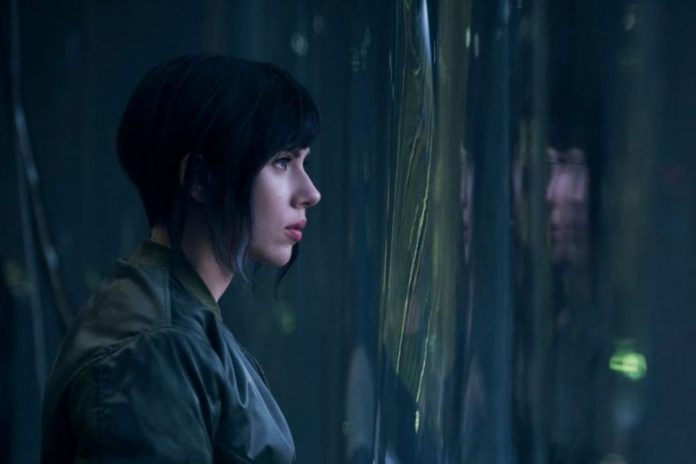
The latest Hollywood ‘racism’ scandal that has ethnically minded moviegoers filling up their skivvies is a photo of a stoned-looking Scarlett Johansson gazing at what appears to be a wall of glass. The still-shot from the upcoming Hollywood remake of Ghost in the Shell, based on the popular Japanese anime, shows Johansson as the lead character — an ostensibly Japanese cybernetic policewoman.

All would probably have passed more smoothly if the filmmakers hadn’t decided to give Johansson the character’s original anime-style hair. Further, the fact that her clearly Caucasian film character goes by the name “Motoko Kusanagi” is so hokey it’s comedic — almost as if Johansson were a guest on Saturday Night Live.

Given the ongoing public distaste with Hollywood’s recent casting choices (think Oscars 2016), I’m left unphased by Twitter’s accusations over the film industry’s choice to ‘whitewash’ what would otherwise be an Asian character.

Though diluted from all the claims that ‘Hollywood is racist,’ there’s a fleeting truth that proves we activists are forgetting how the film industry actually runs. As always, it boils down to money, folks.

What’s forgotten is that the film studios acquiring super high-budget films aim to make all of that money back when the film is released. Given that Hollywood currently has only a handful of actors that we could label ‘A-list’ — roughly 95 percent of whom are white — filmmakers are aware that if they do not acquire wildly popular actors from this small group of people, then film studios will have less interest in acquiring the rights to their expensive films.

In other words, Scarlett Johansson is what’s saving this film from being bumped to the ‘B-list’ that makes only a fraction of what it would make with a white actor playing the lead role. Sad, isn’t it?

So, let’s revisit this question. Is Hollywood racist? When it comes to making money, Hollywood will be as racist as it needs to be, while playing off the majority of mindless American film fans who enjoy the same darn actors re-packaged in mildly different ways. This means Scarlett Johansson dressed as every action-oriented, superhuman character in spandex — regardless of the ‘proper’ ethnicity.

The real question we should be asking ourselves is why the pool of A-list actors comprising Hollywood’s successful films is so small. Why aren’t there currently any mainstream female Asian celebrities to fill these roles? Let’s face it, our blockbuster entertainment industry is a system run by profit and trepidation — something of which we should all be ashamed.

So next year, don’t boycott the Oscars because you think it’s racist. Boycott it because it symbolizes an industry that takes your hard-earned money to stab your eyes with the same old crap because it’s scared of delivering anything else. Every single time.

You want a proper portrayal of Kusanagi? You’ll have to download the original.

Drop the pot charges already

3

[dropcap]L[/dropcap]egal marijuana is upon us! Health Minister Jane Philpott announced on April 20 (oh, the irony) that the process of legalizing pot would begin during the spring of 2017. Students, stoners, and probably several of our professors rejoiced.

As most Canadians know, the federal government has been promising to legalize marijuana since the beginning of Trudeau’s campaign. It’s a promise that really resonated with the younger electorate, and I’d bet was at least partially responsible for Trudeau’s popularity at the polls.

Considering the upcoming changes to drug laws in Canada, why are law enforcers still wasting their time and our tax dollars enforcing outdated and soon-to-be-off-the-books laws? Both the general public and members of the judicial system have already begun questioning the morality of criminal marijuana charges since the government announced the pending changes.

According to CBC, tens of thousands of Canadians are still considered criminals in the eyes of the law, despite the obvious change in attitudes around personal and medical marijuana use. The delay between promise and (hopefully) implementation of this law has created a moral and legal quagmire that is difficult to navigate. The only sane solution is to stop enforcing existing laws around possession for personal use and the sale of cannabis products in shops.

Criminal marijuana charges seem especially ridiculous when compared to actual violent or disruptive crimes that occur daily. Some direction for law enforcement on negotiating the interim period would go a long way to settling the concerns for those caught between old laws and new attitudes.

Unfortunately, to most law enforcement agents, the law is the law, illogical logistics be damned. It seems the responsibility falls on the Liberal government’s shoulders to urge law enforcement to stop the criminal pursuit of petty drug charges — which are a waste of time and morally ambiguous at best. This would be the best way to protect innocent Canadians from marring their (otherwise clean) criminal records.

Luckily for us, the Lower Mainland and its associated police forces have adopted a much saner stance on drug prosecution. CBC stated last September that Vancouver Police have made it clear they barely pay attention to marijuana dispensaries. Other than instances in which dispensaries have been accused of selling to minors, or being involved in organized crime, the Vancouver Police Department won’t pursue charges.

Moreover, the current dispensary crackdown in Vancouver is due to the fact that these shops are, by city rules, too close to public schools and community centres; not because people may have been found with illegal possession of the drug.

Vancouver Police Chief Adam Palmer has publicly spoken of Trudeau’s legalization of pot, stating that more dangerous drugs are his priority — as they should be! Politicians like Tom Mulcair, and Neil Boyd, director of the school of criminology at SFU, have publicly urged Liberals to pardon past and present offenders.

The entire legalization procedure is complex, and I understand that the logistics of such a major change in the law take time and planning. Still, this doesn’t negate the fact that these offenders aren’t really criminals any longer, and therefore should not be treated as such.

Woohoo, Boohoo

0

Woohoo: Croc tops

The crop top: Honey, I shrunk the T-shirt in the wash and it actually looks pretty cute now.

This top is a symbol of freedom, liberating lower abdomens and absolving body complexes everywhere. Check this belly out, baby! White crop tops make me feel like an elven queen wandering through the forests in her large feminist kingdom, looking for hot forest nymph babes to make out with.

We all have dreams, and the crop top always helps bring me a little closer to mine. The crop top is also Lara Croft’s go-to garment, and I absolutely love that “I am fully capable of killing you right now” aesthetic. The crop top is also great because it barely takes up any space; I have 300 crop tops in my backpack right now! What? What do you mean it’s strange that I have a bag purely filled with crop tops? Diversity is the spice of life!

Boohoo: Baby crocs

Look, it’s not that I’m denying that baby crocs look great. Baby crocs do look great. Crocs were made for babies — crocs become art when tastefully matched with the baby. The shoes reveal just the right amount of cute, fat baby foot to effectively entrance and seduce. The croc is a modern revolution in babywear.

My issue with baby crocs is that they’re everywhere: lying suspiciously in parks, beaches, and on sidewalks. Who are all these babies? Where do all these crocs come from? What happens to lone baby crocs once their partner has been lost?  Why do these babies keep losing their crocs? At this rate, the whole city is going to become covered in baby crocs and we will all descend into chaos. Baby crocs will flood the streets, the sea, the lakes, the parks, and the lives of unsuspecting citizens.

The a-croc-alypse is coming.

Alternative watering holes for SFU students to wet their whistles

0

Last month, the SFSS announced that  Highland Pub would be closed for the summer semester, causing an unplanned four-month hiccup in drunkenness to SFU’s Burnaby campus. But do not fret, my fellow classmates, as the notorious student-fee sinkhole isn’t the only place folks can go to for a drink on Burnaby Mountain; here are five alternatives for where you can get boozy after — or, let’s be honest, before — class.

Club Ilia: With happy hour everyday from 3 to 5 p.m. and a formidable menu to choose from, Club Ilia seems like the candidate most likely to become the go-to destination for Burnaby students to get gooned. The summer is also prime time for drinking on a patio, which Ilia counts among its amenities.

Mountain Shadow Pub: Located just a short 135 bus ride away, the Mountain Shadow Pub has been a staple of an SFUer’s liquid diet for the past three decades and… oh really? It did? Just last year? They tore it down to make room for more condos? Huh. Weeeeell let’s just keep the Shadow on this list as an in memoriam, okay?

The parking lot down the street from the new BC Liquor Store: April 13 marked a brave new era for Burnaby Mountain, with the opening of a BC Liquor Store within walking distance of campus. What the parking lot down the street from the BCL lacks in food and services, it makes up for in sprawl and pavement, solidifying its spot as a fan favourite for students to go drinking.

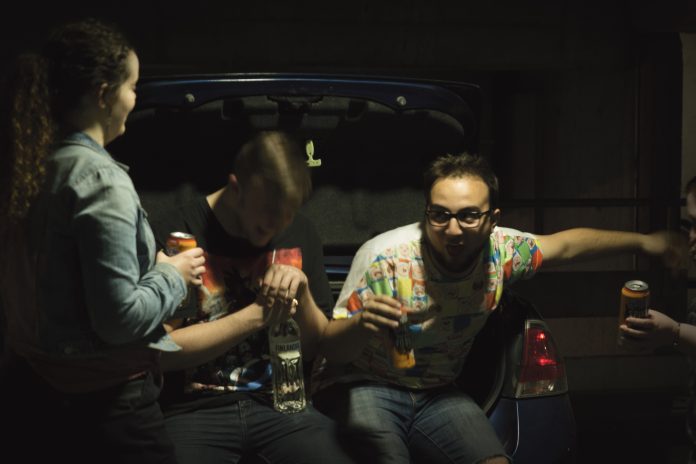
Visitor’s Parkade, West Mall: Are you a summer baby, but your birthday falls on a weekday this year? After class is over, round up your favourite classmates and head on down to the Visitor’s Parkade, which is adjacent to the lower bus loop. Sure, there are no fancy ‘chairs’ or ‘tables’ in this echo-filled, multi-floor parkade, but one student’s place to park their car is another student’s summer hangout spot. Just remember to keep an eye out for moving vehicles, and you’ll be making memories in no time.

A goddamn field: Let’s double-check the requirements a place needs to be a perfect haunt for you and your school chums to partake in the consumption of alcohol. Does it have ground or a floor for people to sit/stand on? Yes? Then this field passes with sky-flying colours. Just quit your complaining and make sure you keep an eye out for any buzzkill security guards who are really just trying their hardest to stop you from having fun.

Get your binge on

0

[dropcap]I[/dropcap]f you are not feeling the start of the semester, and you’re ready to wrap yourself up in a blanket burrito and sit alone in a basement for a week just binging the best of television, this feature is for you. A handful of our writers have put together this list of the most bingeable shows of all time so that you can curl up on the sofa and get the much-needed break you deserve!


Buffy the Vampire Slayer

Max Hill

There are plenty of better TV shows out there, but I would argue that there is absolutely no TV show more binge-watchable than Buffy the Vampire Slayer. Sure, it’s a little cheesy by today’s standards, and the show’s quality across its seven seasons is far from consistent. But what this show lacks in coherent story arcs and special effects that stand the test of time, it makes up in lovable, well-realised characters and fantastic, sharp writing. It’s a credit to its team that Buffy somehow manages to function as an addictive teen drama, an impressively high-concept supernatural horror, and a witty slapstick comedy all at once. Its best episodes — and seriously, there are at least 20 all-time great episodes — manage to balance all of these aims at once, making for something that TV viewers had never seen before and lesser shows are still trying to replicate. buffy

If you’re planning on binge-watching Buffy (and you won’t regret it if you do), here are a couple of things to keep in mind: a) the first season is mostly terrible, and you can either power through it or read the Wikipedia entry and skip straight to season two; b) do not read up on the series before watching it, as there are several big spoilers that will seriously hinder your enjoyment of the show going forward; c) the latter two seasons were aired on a different network after the show was booted from The WB, which is why those seasons are trying so hard to be ‘dark’ and ‘gritty.’ Despite all that, some of the series’ best episodes are to be found in its late run; and d) if you get really into the show, keep in mind that the story has been continued by Joss Whedon and company as a comic book that serves as the series’ canonical eighth season.


Daredevil

Alex Bloom

Daredevil tells the story of the superhero named… well, Daredevil. He is a lawyer by day, and crimefighter by night who was blinded at an early age due to exposure to a mysterious chemical — that same chemical gave him unparalleled senses.

MARVEL'S DAREDEVILApart from the beyond-belief non-visual senses, Daredevil is relatively realistic and gritty for a superhero show. It is truly refreshing to have a relatable superhero, and that’s probably why this show is so addicting and easy to binge watch. Daredevil starts with just a quickly thrown together costume and his fists, but he fights small-time criminals with the ultimate goal of uprooting corruption and greed in the city of New York. He doesn’t fight epic battles against alien invaders, but he saves children from kidnappers and protects fleeing wives from their abusive husbands.

Daredevil promises a much more human experience than other Marvel titles. Once you start watching Daredevil I promise you will not be able to stop, and Netflix has your back: All 26, hour-long episodes from seasons one and two are available right now. What are you waiting for?


Pysch

Tamara Connor

I’ve seen this series from start to finish more than 10 times. It’s gotten me through breakups, exams, weekends off, and all bits of life in between. Psych is simple in its concept: two best friends, Shawn and Gus, are consultants for the Santa Barbara police and always find themselves in some outrageous circumstance. Shawn has an unbelievable memory and Sherlock-like crime solving ability. Gus is his lifelong best friend and a type-A, tightly wound, lovable guy. Imagine The Mentalist as an hour-long comedy and you’ve got Psych. Shawn, the son of a cop, was just a little too goofy and rebellious to make it as a cop himself, so he started a psychic detective agency so that he could use his skills to help people, all the while bending the law. While his dad and Gus know the truth, to the rest of Santa Barbara, he is truly a psychic. psych08-01

My love for this show is almost unhealthy. I first binged Psych two years ago, right as it was going off air, and fell in love with it. I got through the whole series in a matter of months and haven’t ever really stopped watching it since. The plots to each episode are excellent, and humour is perfect but what really keeps pulling me back is the friendship between the two leading characters, Shawn and Gus. You can’t help but fall in love with them. Like many Psych fans, I would love to insert myself into the show and join in on their goofy antics. The whole series is available on Netflix and there are always reruns on the air. For anyone looking to go full hermit for a week, I cannot recommend this show enough.


Are You the One

Natalie Serafini

Reality show Are You the One? is superficial, dramatic, stuffed with tropes, and not to be missed. In the MTV show, 10 men and 10 women are put into a mansion. Each of them has a “perfect match.” Think OkCupid, but matchmakers interview the participants beforehand as well as their family, friends, and exes. The catch? The participants don’t know who in the house is their match. Over the course of several weeks, the 20 individuals must whittle down their potential couples. Are-You-the-One-Season-1-Episode-4-

At weekly matchup ceremonies, they hazard a guess at potential pairs. Here, they’ll find out how many of their guesses are correct, but not which ones. If every couple is correct, they’ll win $1-million (split 20 ways) and, theoretically, true love. If at the end of the show they don’t guess all 10 couples correctly, they’ll walk away with nothing. While it markets itself as a “social experiment,” the show is nowhere near scientifically legitimate. The basic formula for the show is (unlimited free alcohol) + (20 hormonally charged twenty-somethings) = trouble. Are You the One? is as ridiculous as it sounds — and that’s why I like it. The show leans unabashedly into tropes. Intentionally or not, this skewers our collective fascinations with reality show farce.

On Are You the One?, participants have to genuinely be in search of love — until love gets in the way of everyone else’s financial gain. Consequently, the individuals aren’t always authentic or even likeable. They scheme, manipulate, pick fights, and betray others in service of themselves. But sometimes they’re lovely, funny, and touching. They’re utterly human, and so you root for them. It’s The Bachelor and Big Brother all in one, with a bottle of Malibu in its hand. With three seasons under its belt, Are You the One? should last you through the summer.


Avatar: The Last Airbender and The Legend of Korra

Miranda Macfarlane

“Water. Earth. Fire. Air. Long ago, the four nations lived in harmony. Then, everything changed when the Fire Nation attacked.” If these words don’t ring any bells of nostalgia for you, then you need to hurry the fuck up and watch both Avatar: The Last Airbender and The Legend of Korra. Sure, these are technically two separate series, but they take place within the same universe so I’m going to treat them as one. Both are created by producers-slash-visionaries Bryan Konietzko and Michael Dante DiMartino, and both are pinnacles of outstanding television.

NICKELODEON AVATAR ANIMETaking place in a world where people have the power to manipulate the elements with their energy, these series focus on the adventures of two reincarnations of “the Avatar”: one who can manipulate all four elements and connect to another “dimension” called the Spirit World. Avatar: The Last Airbender (A:TLA) centers around Aang, a preteen Airbender who wakes up from 100 years spent frozen under ice to find that most people believe they have been abandoned by the Avatar. Meanwhile, The Legend of Korra (LoK) takes place 70 years after the events of A:TLA and focuses on the growth of Korra, a brash teenage Water Tribe girl who runs away from her sheltered upbringing to a big city.

Though LoK is commonly seen as less of a masterpiece than A:TLA, it has the excuse of being a shorter series, with less time to explore ideas in-depth the way its predecessor did. Anyone who is a fan of animation, martial arts, Eastern philosophies, history, or TV in general really must watch these. Even if you’ve watched them already, I’d say they’re worth another go around — currently, I’ve watched both series about four times, and each time they get better. Collectively, it only takes about 46 hours to watch both series all the way through — so get on it!


Steven Universe

Nathan Ross

It’s been said that Adventure Time is a magical cartoon show for children that also works for adults. Steven Universe is a more satisfying Cartoon Network product, complete with a linear storyline. The show revolves around boy hero Steven Universe and the Crystal Gems, who watch over as he grows and learns the role he plays in the future of the Earth. The Crystal Gems are genderless aliens (taking on the form of women) who came from outer space to protect Earth from rogue Gems many years ago, and during their time one of them fell in love with a man named Greg Universe. They had a child, who became the first ever human-Gem hybrid, and that’s how Steven came to be. stevenuniverse_000_cover_underwood_clr_fix

Plot aside, the real strength of this show comes out in its themes. Steven Universe is an incredibly progressive show for children that deals with gender and sexuality with a lot of kid-friendly metaphors. Also, the show has very good physical representation, with the animation team taking advantage of their creative freedoms to show a lot of different body types, with each playing to the strengths but also recognizing their flaws in a healthy, organic manner. This might just be the best show as an intro to intersectional feminism, and the fact that it’s aimed at children doesn’t hurt how impactful all the lessons can be for viewers of all ages.  

The show starts a little slowly as it builds up the universe (pun intended) that it exists within. However, with each episode being just 11 minutes long, it isn’t hard to breeze through the fun beginnings until the storyline takes over once everything has been established. The show has finished season two, and is the perfect television show to complement how fun and magical you want your summer to be.


Letterkenny

Bartosz Wysocki

What happens when you mix one part Corner Gas, two parts Trailer Park Boys, and a whole lot of sass? You get a fantastic Canadian TV show, Letterkenny, that’s what.

letterkennyLetterkenny is a show named after a small Ontario town filled with characters that play into long-held Canadian stereotypes. The setting feels like Dog River in Corner Gas, with farmland as far as the eye can see, and a town bar where everyone meets to get, and I quote, “absolutely interplanetary.” However, if you’re looking for a show with the squeaky-clean humour seen in Corner Gas, I’m afraid you’re definitely in the wrong place.

While I’ve never lived in a small town, I’ve certainly met the many types of characters present in the show, such as overly enthusiastic hockey players, and farmers with more wit than Yogi Berra. It’s that wit that makes the show: the main characters Wayne and Daryl can verbally beat down anyone with lethal one-liners, and with their fists if push comes to shove. All that, combined with the brashness of Trailer Park Boys, makes for a great time. This show has great physical humour working in tandem with hilarious line delivery. If you’re looking for some premium Canadian content to watch this summer, here’s your series.

There are six episodes, each around 30 minutes long, so it is incredibly easy to binge watch this show in one afternoon. I recommend that you watch the credits as well, as there are awesome bonus scenes after they finish rolling.  


Doctor Who (2005)

Vincent Justin Mitra

Doctor Who is the 2005 revival of the British sci-fi show which originally ran from 1963 to 1989. The show follows The Doctor (an alien who looks human) while he travels in his spaceship/time machine (which looks like a police telephone box) with the help of his companions. The show stands out for its constantly changing cast of characters and the driving concept of The Doctor as someone “never cruel or cowardly” and “never giving up, never giving in.” DrWho

This is a great binge-show because there is so much variety in tone and location from episode to episode. Stories have been set in the Wild West, a space station, Victorian London, 1930s New York, New New York, an alternate universe, outside the universe, the end of the universe, an asteroid orbiting a black hole, and Utah, with stories that range in tone from grand to personal, zany to spooky, tragic to uplifting. Plus, having finished its ninth season this past December, there’s a huge number of episodes available, and that’s not even counting the classic, pre-revival episodes.

The episodes are mostly stand-alone, often only loosely connected to each other or the story arc for that season, and the title character changes his face and personality rather often. You can start at the beginning, or you could hop around to whichever episodes look interesting and still get more or less the same experience. If you have Netflix, then getting through the eight seasons since the revival will be a breeze. To get a good overview, I recommend starting with “Blink” from season three, “A Christmas Carol” from season six, and “The Empty Child” from season one. 


Game of Thrones

Jessica Whitesel

The drama of Westeros was meant to be binged. The first time I watched this show was just as season three was about to air on HBO. From the moment the intro began I was hooked. The amount of detail placed into the opening sequence is insane. It is one of the few opening sequences that makes me feel bad if I miss part of it.

Aside from the detail of the show — which requires multiple viewings to fully grasp — the way the cliff-hangers are spaced throughout the season you can’t not binge it. You need to know what happens and having to wait a week between new episodes is the actual worst (I was there for part of season three and then season four and five I HATED IT.) If you are just starting out you will be fine, unless you go full hermit and watch all five seasons in just under a week, as each season has a total runtime of about 10 hours. But that is a problem for future you to figure out, because it will happen. gameofthrones2

One thing to keep in mind when watching this show is that it is not for the emotionally fragile, or anybody who gets squeamish at the sight of blood, guts, and gore. The creators didn’t hold back on any of the sex, violence, or need to keep characters around only because they are ‘important’ that was present in the series of A Song of Ice and Fire.

If the 9.5/10 IMDb rating doesn’t convince you of how well-done this show is, nothing I can say will. Just remember that if you get hooked on Game of Thrones, you will start to get super involved in fan theories and obsessively trying to find out as much as possible while avoiding spoilers. It is a roller-coaster that sends you up one side of the Wall and down the other, but I wouldn’t change anything about this show, or deny its binge-ability.   

LAUGH TRACK: Vancouver comedian punches up with her show Rape is Real and Everywhere

0

Three years ago, Heather Jordan Ross made the jump from being “one of, like, two female stand-up comedians on Prince Edward Island” to part of the burgeoning Vancouver comedy scene. Since then, she’s co-founded several local shows (Poke the Bear, Comedy Deux Soleils), but none as resounding as her latest project: the show Rape is Real and Everywhere (RIR&E). A brainchild between Ross and fellow comedian Emma Cooper, Rape is Real and Everywhere is a stand-up comedy show where survivors tell jokes about their rape and discuss the humour in an otherwise traumatic experience. Read on to learn more about how telling rape jokes is like “free therapy” for Ross and how she feels about taking RIR&E on a national tour starting later this month.

The Peak: Where does the idea for a comedy show about rape come from?

Heather Jordan Ross: I was raped and I reported it, and then immediately after reporting it I went onstage and did a set, and it was terrible. But I realized that a) I wanted to make rape jokes, because I wanted to joke about it, and b) I never wanted to hear rape jokes again. So it was a really weird place to be in. I was talking to Emma Cooper over beers, and said, “Wouldn’t it be great if we did a comedy show about rape jokes, but only by survivors?” and Emma said, “Yes, it would. We’re going to call Hot Art Wet City, I have five people we can do this with,” and she just went with it.

P: Historically, rape jokes have been at best controversial. How are the performers with RIR&E changing that standard?

HJR: When it comes to writing a joke, you have to think about why you’re writing it, and who you’re supporting when telling it. Always be punching up. If you make a rape joke and the person who laughs are the rapists, and the person who cringes are victims, you kind of suck. If you can tell a rape joke and you make me laugh, then you’ve done your homework. People doing this show, it’s great for them because they’re parsing through the experience and they’re making jokes about it, which is super cathartic. It’s been amazing for me, like free therapy where I technically get paid.

Funny shit still happens throughout your whole life, through the best parts and the worst parts. So it’s great to be able to talk about it. We want people to be able to talk about their rapes, but also talk about the funny parts. The fact that I got raped in Burnaby is the funniest thing in the world. The only thing worse than being raped is being raped in Burnaby.

P: All three RIR&E shows in Vancouver sold out. How does it feel to have found a topic that’s clearly resonating with people?

HJR: Really, really wonderful. It’s something that’s always been close to my heart, even before what happened two years ago. There’s this conversation not happening, in schools or in the workplace, it’s not happening fucking anywhere. So we’re just living in this epidemic, where we’re casually not acknowledging that one in four of the women and one in every 33 men you know has been sexually assaulted, and for some reason we’re all just cool with it. We’re just pretending this isn’t a thing where clearly, if there was a little bit more conversation, it wouldn’t be such an epidemic.

P: Has there been any negative feedback to the show, or people who struggle with the concept of finding humour in a systemic issue like sexual assault?

HJR: Mostly no. People have been very supportive, even survivors who’ve said they would never come to it themselves. The only negative things I’ve had have been guys I know sending me messages; I don’t even know how to articulate it, sending me messages saying, “I don’t know if I agree with the fact that you call it real and everywhere, and I feel like consent is a very grey area, and I also feel that women are liars.” It’s been really weird. I’ve deleted three people from Facebook who’ve been, “Um, actually…”

P: The show is hitting the road later this month for a Canadian tour. What inspired the transition from local show to a national one?

HJR: When we sold out the first show, we had people asking, “Why aren’t you in Toronto?” We encouraged people that if they wanted this show in the city, then they should do it, and then we thought, “Why don’t we just fucking do it?” People were asking across the country, survivors who liked the idea or comedians who wanted us to bring it to their city. The demand was there.

P: Aside from being performed in different cities, how will RIR&E change when it’s on the road?

HJR: We’re going to have local talent, which will be really interesting because we’re going from, “Hey, I’ve talked to you on the Internet,” to, “Hey, let’s talk about the worst thing that’s ever happened to you,” which is going to get pretty weird, but I’m excited for it. I just hope we reach the people we want to reach. Vancouver was much easier because we had a network already; with these different cities, we have to find people. It feels funny to go through my old contacts and be like, “Hey Charlie from university, want to come to my rape show? Hey Diane who I used to be a reporter with, want to come to my rape show?”

P: If there’s one thing you hope people take away from the show, what would that be?

HJR: Let’s talk about it. Let’s laugh about it, let’s talk about it, and let’s kill this epidemic. Rape is real and it’s everywhere, and it shouldn’t be. Let’s talk this out, let’s find out what’s going wrong, and let’s change this.

The Rape is Real and Everywhere: A National Comedy Tour Launch happens on May 15 at the Rickshaw Theatre, where Ross and Cooper will be co-hosting and performing alongside six other local comedians. Tickets are $15 and can be bought online in advance.

An interview with Deepak Sharma, our new SFSS president

0

[dropcap]I[/dropcap] met the newly elected Simon Fraser Student Society (SFSS) president, Deepak Sharma, on his fourth day of presidency. Outfitted in a suit and tie, the edge of which was taken off by his wide smile, he gave me a firm handshake followed by a soft-spoken introduction. As the interview progressed, I realized that in many ways, Sharma is composed of these two opposing sides: exuding professionalism and experience, but always with a tinge of the astute self-awareness of someone who’s still surprised to find himself in such a position.

Sharma describes his beginnings as humble. “I come from a place called Whalley. . . no, it’s not Surrey Central, no, it’s not Vancouver.” While it was a slip of the tongue that he regrets during a debate, Sharma still identifies with the “inner-city kid” who may find himself out of place in a student body president’s office.

But his experiences growing up in a fairly unknown school in a fairly unknown part of town also led Sharma to one of his greatest passions to date: youth mentorship. Sharma describes how he sometimes felt sitting next to classmates in his small-town public school who perhaps “. . . [weren’t] able to eat breakfast, or [got] involved in questionable activities after school just so [they didn’t] have to go home due to abuse or neglect. . . ” This experience inspired Sharma to return to his community as a mentor. “It’s easier for students to sometimes connect with someone they’re aspiring to be like in a couple of years. . . who won’t judge them,” Sharma says.

In addition to youth mentorship, the new president has experience volunteering in hospitals and homeless shelters, playing and then refereeing community-based football, and being a general ambassador for TEDxSFU.

“I’ve just got to make sure my actions speak louder than my words.” – Deepak Sharma

Despite an impressive level of community involvement — which led Sharma to be named one of the Surrey Board of Trade’s Top 25 Under 25 in 2015 — it was a lack of SFU-specific involvement that led him to student politics. Sharma’s political career began as a science rep, followed by VP Student Life, and now president of the SFSS.

Sharma’s disconnect with SFU’s extracurriculars stemmed in part from the fact that his early university experience was based on SFU’s Surrey campus, which he maintains has yet to have a complete sense of unity with the Burnaby and Vancouver campuses. Recognizing and embracing SFU as a tri-campus institution was a prominent topic in Sharma’s debates leading up to the election.

In Sharma’s opinion, SFU’s reputation as a “commuter campus” pre-empts students from being proud of their SFU identity and getting involved on campus. But Sharma envisions using SFU’s commuter culture as an advantage: “If we don’t address the fact that we’re a commuter campus, how are we going to have a presence at Vancouver and Surrey?” Sharma asks. “There needs to be a way to work alongside the [three campuses] instead of just being Burnaby-based.”

Sharma himself embodies the advantages SFU has gained due to its unique multi-campus organization. “SFU Surrey has allowed me to be involved further in the community I grew up in. . . because one of the campuses I attend directly affects my community,” Sharma says.

Sharma’s focus on providing an equal student experience to membership attending all three campuses seems to contradict his support for Build SFU, a project to build a student union building (SUB) and stadium that could cost the university, and thus students, up to $65 million. One of the major arguments against this controversial project has been that it unequally benefits Burnaby-based students, but students in Surrey or Vancouver will experience the same increase in tuition fees to fund it.

Sharma doesn’t deny the lower appeal of the project to non-Burnaby students. From his perspective though, the building’s potential to unify the student body would percolate out of the Burnaby campus to benefit all SFU students. “We [are trying] to say we’re all part of one community. . . . [the SUB] is [a step] towards building that community instead of further dividing it.”

Sharma seems the most at ease when discussing policy, rattling off the three main goals of his board: governance reform, enhanced communication among students and between students and their elected officials, and efficient reimbursement programs.

Sharma reports that reimbursement would begin increasing in efficiency as quickly as next week.

The SFSS supports over 400 active student groups in multiple ways, one of which is funding. “Due to the SFSS structure made a long time ago, we can’t accommodate the number of active clubs efficiently anymore,” says Sharma. “Some clubs get approved, but reimbursement doesn’t occur in a timely manner, and that’s not us supporting the students effectively.”

“SFU Surrey has allowed me to be involved further in the community I grew up in” – Deepak Sharma

Increasing reimbursement speed and efficiency is one of the major points listed in the three-year strategic plan laid out by the board under his predecessor, Enoch Weng. Sharma cites the plan as one of his motivators to run for president: “I felt I was in a good position to continue the work that had been done last year.” It’s also a much-needed tool to give his board direction and “keep everyone on the same page to reduce redundancies and increase efficiency.”

When Sharma is confronted with specific questions that his rehearsed rhetoric can’t adequately answer, his hesitance seeps to the surface. His shortcomings in addressing concerns spontaneously garnered the new president criticism during the debates leading up to the election, some of which came directly from his own board members.

Sharma admits that his debating skills often fall short and a personal challenge he already anticipates for himself is effectively communicating the work that is being done by the SFSS.

“If my board and the rest of the membership doesn’t know what I’m doing, that’ll be a poor reflection [of our work] and will limit the momentum we have,” Sharma states.

When asked for his opinion on additional criticism directed at the personal projects that dominated his trimester as VP Student Life, Sharma concedes that his agenda has thus far been portrayed as highly focused on social aspects, but that it is not an accurate representation of what he hopes to accomplish as president.  

Specifically, Sharma mentions four values that his board aims to address in the next year: along with student life, he lists student finances, academics, and (mental) health and welfare.

Sharma abandons both his rehearsed plugs and self-aware hesitance in excitement as he describes a specific initiative he hopes will shift the “skewed perception of [himself] as being focused on just social aspects.” It’s a cause that the SFSS previously has not played a large role in: the provincial elections occurring in 2017.

Sharma admitted that a personal challenge he already anticipates for himself is effectively communicating the work that is being done by the SFSS

By honing in on the fact that youth voter turnouts in elections have been following an upwards trend, Sharma paints a picture in which the SFSS uses the collective student voice to communicate student needs to government officials on a much larger scale. To this end, the SFSS aims to facilitate dialogue between the membership and their elected student body officials about what they expect from their local and provincial governments.

The board under Sharma is looking forward to beginning their lobbying efforts as soon as possible so that they can engage with political leaders as these officials are still creating their platform.

“There are so many things about our lobbying efforts that will affect students,” Sharma affirms.

“Does the membership know that we are not able to build more residences because the current government doesn’t want to provide us with a loan? Maintenance is another huge problem. . . the current government is unable to provide the school with more capital.”

Sharma also brings up the fact that, while current loans taken by the university have a six-month “grace period,” interest is still charged on the loans. Furthermore, “we’re the only province that is charged an additional 2.5 percent interest on loans in addition to the federal interest,” he adds.

Despite all the bold promises Sharma makes throughout the interview, he concludes in a manner I had come to expect: by acknowledging the other possible outcome of his term as president. “Of course, you may come back next April and ask me, ‘Deepak, what about this, this, and this that you promised to do but never did.’ That wouldn’t be very good,” he chuckles.

“I’ve just got to make sure my actions speak louder than my words.”

COLUMN | THE POLITICAL EYE: Alberta Health Services wrongfully blames ‘hookup apps’ for STI outbreak

1

The Political Eye is a new column by Tatum Miller, on BC and inter-provincial politics. Check back weekly for new content!

[dropcap]O[/dropcap]h, hookup apps. Never before has it been so easy to communicate sexual interest. A simple swipe to the right on a screen unlocks access to a wide market of potential mates. But can we really blame Tinder or Grindr for an STI outbreak?

Alberta Health Services certainly thinks so.

“To the extent that social media could be enabling these hookups to occur more often/frequently, social media would also be contributing to the STI rate increases we are seeing,” Dr. Gerry Predy, Alberta Health Services medical officer of health, told CBC News. Alberta does have a crisis: there were 3,400 reported cases of gonorrhea in 2015. This represents an 80 percent increase from 2014.

There isn’t any doubt that Tinder and Grindr facilitate hookups without the strings. However, a few issues arise with placing sole blame on ‘hookup apps.’ These apps only make it easier to meet new people, while the nature of the relationships is left to the users. It seems much more prudent to blame our culture of independence and aversion to commitment on this issue.

Admittedly, I have Tinder. So do many of my friends. It is a stereotype to say that Tinder is purely for hookups. The majority of people I’ve spoken to on Tinder say they aren’t looking to hook up (or maybe they just deny it). Many are innocently searching for platonic relationships, and many others are looking for long-term commitment. In fact, the CBC reported last year that a study by UBC instructor Jocelyn Wentland found most Tinder users are primarily looking for relationships over sex.

A Tinder match doesn’t confirm one’s interest in hooking up. I swipe right any time I see a profile from SFU. It’s a wonderful platform for breaking the ice and meeting new people. In fact, I had three Tinder matches from one of my classes this year, and it was great for sharing notes.

Tinder is just a new player in the already-existing hookup market. Clubs, bars, and parties were, and still are, notorious for sexual encounters. At least on Tinder you can view pictures and talk to somebody before deciding to hit third base. At a club, the lights are too low and the music’s too loud to properly meet somebody. On Tinder you can find out if somebody knows the difference between ‘their,’ ‘there,’ and ‘they’re.’

We live in a culture of non-commitment. I look at my circle of friends and good, healthy relationships are few and far between. They exist, but I’d imagine less than five percent of my friends are in committed relationships. How many excuses have I made to justify my avoidance of commitment? “I don’t know where I’ll be next year.” “What if I find somebody better?” “Every relationship ends in a breakup or marriage, so why bother right now?” “I’m too busy.”

Maybe I try too hard to convince myself to avoid the long-term. I’m young, have a decent job, and my education hopefully promises me a good future. Why stay single? Will there come a time when it’ll just ‘feel right,’ or is it a conscious decision to pursue something real?

Tinder reinforces the single life by exposing a wide world within the dating market. But I blame our culture and not our apps for the STI increase. Albertan authorities should stop making blanket statements about causations for sexual infections that they don’t have any data to support.

What I do know is that I’m scared of hookups now. Gonorrhea is the last thing I want.