Home Blog Page 842

CENTRE STAGE: Ballet Kelowna teams up with Continuum Contemporary Music and Belgian choreographer Thierry Smits presents ReVoLt

0
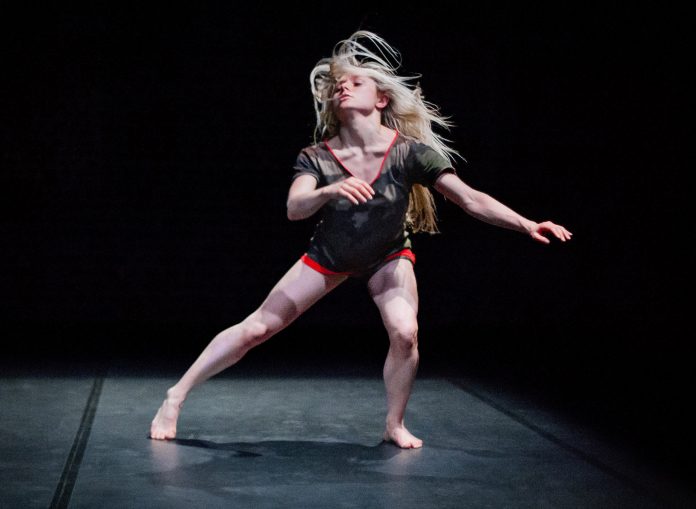
Nicola Leahey shines in Compagnie Thor's ReVoLt.

Renaissance – Ballet Kelowna

Chutzpah! PLUS

May 4–6, Norman & Annette Rothstein Theatre

Since becoming artistic director and CEO in 2014, former Ballet BC dancer Simone Orlando has led Ballet Kelowna to become a mature company presenting stunning contemporary choreography. Her dedication shows in the company’s production of Renaissance, presented in collaboration with Toronto’s Continuum Contemporary Music as part of the Chutzpah! Festival’s extended programming this year, Chutzpah! PLUS.

Musicians shared the stage with the dancers as they performed four pieces both new and old. James Kudelka’s Byrd Music, set to Rodney Sharman’s Pavane, Galliard and Variations, is a clever, symmetrical piece of choreography that features two dancers controlling the movements of two others as if they were dolls. Using every part of their bodies to manoeuvre the pair of inert dancers into different positions, this piece was performed with precision and wonderfully entertaining to watch.    

Another renowned choreographer followed with John Alleyne’s Split House Geometric set to Arvo Part’s piano and violin duo Fratres. The stark, repetitive music was paired with Alleyne’s sharp lines and geometric shapes, beautiful pas de deux sequences, and expansive solos.

The second half of the evening featured two new pieces of choreography set to two original compositions. Folie à Cinq by Heather Myers was accompanied by Folies d’Espagne by Michael Oesterle. The five dancers in this piece moved playfully around the stage with sharp, quirky hand gestures and eccentric group formations. Their unconventional movements elicited a few laughs from the audience, and the unique choreography, while lacking in elegance, was fresh and unique.

Orlando contributed the final piece of the evening, Before and After set to Jocelyn Morlock’s Night, Herself, which was inspired by Henry Purcell’s The Fairy Queen. The rich greens, blues, and burgundies of the costumes intensified the fluid choreography that gained momentum as the dancers moved in sweeping formations, filling the stage.   

While in the background for most of the show, the musicians of Contemporary Continuum Music filled the theatre with their interpretations of these compositions from Renaissance masters and current composers. Cellist Bryan Holt and violinist Carol Lynn Fujino had their moments in the spotlight with solo interludes between the dance pieces. They were both mesmerizing as they demonstrated the kind of skill that can only come after a lifetime of dedication.   

I look forward to seeing Ballet Kelowna continue to grow, and I hope they are able to make more frequent visits to Vancouver.


ReVoLt – Compagnie Thor

May 5–7, Scotiabank Dance Centre

This one-woman show is a barrage of hair-flinging desperation, and Australian dancer Nicola Leahey gave it her all both physically and emotionally. Belgian choreographer and artistic director of Compagnie Thor, Thierry Smits, has worked with her before, and Leahy approached him about the possibility of creating a show about female oppression. The result is a piece of relentless choreography that is a metaphor for female struggle and the necessity to fight back and revolt against existing power structures.

Wearing a short camouflage-print tunic, Leahey begins the show in a tormented state, being pulled and jerked in every direction by an unseen force and fighting for survival and escape. In a square of light she performs small stilted movements to a dissonant score of pops and static. Every so often the stage went black and the lights came up to reveal her in a new position of struggle.

One of the most impressive elements of this show was Smits’ use of hair as a choreographic element. Leahey’s blond tresses flipped, swooped, circled, and figure-eighted as she gradually gained more range of movement and repeatedly swung her upper body in circles. The hair often fell in front of her face obstructing her view and leaving her a faceless victim of her situation, but the choreography soon had her flipping her head to right it or using her arm to push it back.

Through the cyclical choreography, Leahey seemed to gradually become calmer and able to move more freely. Yet she was still not able to escape the cycle and was compelled to throw her body around, at one point throwing herself onto the stage as the lights turned off only to show her standing as they came back on and she repeated the motion over and over.

Leahey’s concentrated, resilient performance held this show for just under an hour as she seemed to be repeatedly pummeled by the choreography. Smits has created a powerful work that can’t help but hit you over the head with its message of fighting against oppression.

Toronto’s Harrison is a new kind of DJ

0
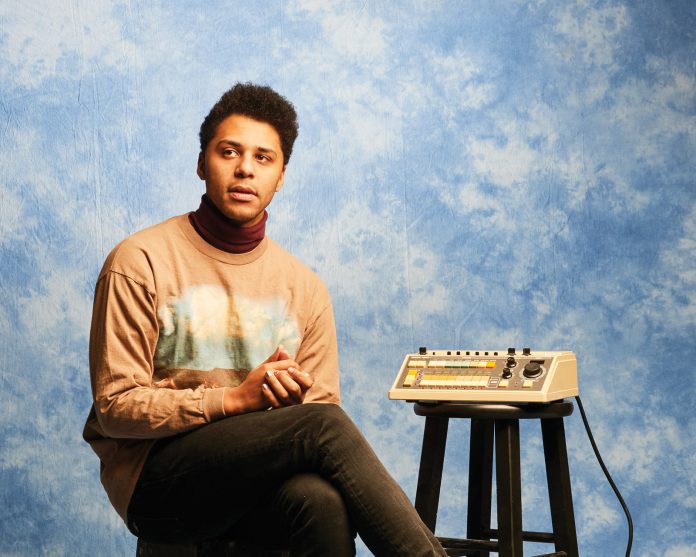
You don't have to scream to be heard, is the embodiment of Harrison's sound.

For those who prefer a more chill form of club music, Harrison, a DJ from Toronto, came to Vancouver to fulfil your most laid-back dreams. On his Secret Songs Canadian Tour with Ryan Hemsworth and Ryan Playground, Harrison graced Fortune Sound Club on May 6 with his electronic vibes.

Describing his sound as “electronic uplifting melancholy music,” this Canadian sensation has over 30,000 followers on SoundCloud. He has a unique sound, proving that even in today’s crazy world you don’t have to scream to be heard.

“It took a while to figure out how I wanted my own music to sound. . . I’m just really happy with the way it sounds now,” Harrison told The Peak. This happiness is evident in his music, which reverberates with good vibes.

Growing up on the Eastside of Toronto was a pleasure, according to Harrison. “It’s very nice and quiet. . . I’m not very good with dealing with downtown, hectic situations,” he said. “I don’t even like playing music live because it’s just too much sometimes. . . but I’ve gotten over that over time.”

Before starting the tour, Harrison revealed that having “never been to Calgary or Vancouver. . .  [it] makes me nervous for these two small shows.” He said that his nerves stem from an “ultimate fear of being booed. . . I don’t know how Ryan Hemsworth’s fan base will react to me.”

Despite performance anxieties, “I eventually would like to have an awesome live set,” Harrison said. “I don’t wanna be a DJ forever. . . I really want to have my own set list of songs, and go up there and play the keyboard for people.”

Harrison’s musical talents go beyond his producing: “I play the piano and the guitar, I’m trying to learn the trumpet, and I’m also trying to learn the drums.” He said the drums are a problem, because “I have a really big issue with making noise. . . drums are just so loud, and I don’t want to annoy anyone.”

Yet with music like his, it’s hard to be an annoyance. Harrison’s sound is understated, with hints of funk and soul influences. His music is not your typical big DJ beats, a fact of which Harrison is proud. Like really cool elevator music, his songs are incredibly chill and soothing.
Live, Harrison’s sound is much more upbeat, with a heavy reliance on rhythm. The audience loved it, the crowded club filled with an eager audience. The receptive room took to dancing and drinking as he took to the stage and started his set. Overall, Harrison’s travels to Vancouver could be looked at as nothing but a success, with a huge line out the door of the club, and pleased patrons taking to the dance floor.

FOOD FIGHT: Timber falls like a freshly logged tree

0
The food looks better than it ultimately tastes.

Timber, a relatively new gastropub on Vancouver’s Robson Street, is a thumbs-down from me.

Their brand is endearing, being a “Canadian comfort” gastropub, and they covered all the requirements: the waitstaff are dressed in plaid shirts and denim, the furnishings are polished wood and concrete with high ceilings, the TVs broadcast sports, and their menu is bursting at the seams with beer and Canadian comfort food. The ambience is as you can imagine: the interior very trendy, and reeks of the high-end hipster culture notorious in Vancouver.

So what went wrong? After trying three out of the four vegetarian mains they offer, I reluctantly gave up trying to love this place. What you get for what you pay doesn’t make the restaurant a worthwhile favourite.

Let’s start with the bannock, spicy maple, and haskap berry chutney: the bannock itself was well-done, neither too greasy nor too dense — really, how can you fuck up fried bread? The spicy maple was non-existent, though. The flavour impact just wasn’t there even with the chutney, making the dish rather bland and uninspired.

About Timber’s mushroom poutine: It was one of the most horrifying food experiences of my entire life. But first, let me defend the concept of mushroom poutine for a minute: poutine is great, mushrooms are great, you can do spectacular things when you put them together with maybe some sautéed mushrooms and spicy mushroom gravy. I had these high expectations, and they were crushed and marinated in a dense, cream-based, gritty mushroom soup just like my fries were.

Like the bannock, it had a good base: they didn’t screw up the fries, God bless them, and their cheese curds seemed to be high-quality. But they traded off gravy for this horrifying, cream-based, gritty soup and it was straight-up gross. I was actually quite confused when the dish arrived, for the menu clearly stated “mushroom gravy.” I gave it the benefit of the doubt and tried it. Moral of the story: don’t give it the benefit of the doubt, and try something else.

The mac ‘n’ cheese was super below-average. The taste was there, but the sauce should have been creamier and given some flavour. The idea of spicy mac ‘n’ cheese is fascinating, yet they just put a fetus-sized portion of sriracha-ketchup on top and that was it. The smoked potato crackling on top was flavourful but much too hard to chew and contradicted the soft mac and cheese too much to be enjoyed together.

Their happy hour snacks were satisfactory: the ketchup chips were their peak point, and their happy hour drinks consisted of but one beer. That’s offensive, though at least the beer was Canadian. Some of their cocktails were interesting and innovative, although the prices made me weep.

The vegetarian dishes were just the worst. My friend, who tried the duck burger on special, really enjoyed the potato salad, but found the duck to be so fatty she couldn’t bite into it and had to aggressively use a fork and knife.

Timber was, in a word, anticlimactic.

The Floating Points really are an experience

0
Floating Points combines different music genres to create a chill electronic sound.

If you like electronic instrumental music, not dancing, and spirographs, then this was the show for you! The Floating Points sound like Pink Floyd travelled in a time machine to present day, studied jazz at Capilano, and acquired an assortment of synthesizers. Apart from Pink Floyd, these guys remind me of bands like BadBadNotGood, Explosions in the Sky, and the Whitest Boy Alive. Their sound is a mix of post-rock, electronic, instrumental, ambient, and jazz.  

They didn’t actually start playing until 1 a.m. — a little past my bedtime. But I’d say in the end they were worth staying up for. While waiting I eavesdropped on a conversation going on beside me. I overheard one guy say to his friend, “I’m so excited! I’ve never experienced the Floating Points live before, only on my iPod.” I couldn’t hold back a scoff at the comment — more specifically at how he used the word “experienced,” like this was going to be some spiritual trip. Unfortunately, he noticed my scoff, and I was eventually put in my place once the Floating Points started playing.  

It was an experience. The multi-layered landscape of sound, characterized by a driving, quick jazz beat underneath and waves of slow, stretching and whining synth melodies on top was the perfect backdrop for deep introspection. The music was hypnotic and soothing. It felt like aural Ambien.  

I really appreciate it when a band makes an effort to include visual elements in their shows. Capturing the senses in more than one way, and not just with the run-of-the-mill bits of smoke and spotlights. Part of the Floating Points’ performance included this giant circle on which intricate spirographic shapes were traced as they played. They were clearly conscious of the whole experience they were creating for their audience — one which I found both thoughtful and original.

Overall it was a pleasure to see the Floating Points perform. I’d recommend checking them out.

Five new-ish albums from Vancouver bands that demand your immediate attention

0
Mu, Devours, Supermoon, Dumb, and Mark Mills have all released must listen LPs or EPs in the first part of 2016.

The year is less than half over, and already Vancouver’s music community has given us a wealth of memorable releases. Below are five top-notch albums — one for each month of 2016 so far — ranging from five-track debut EPs to 16-track dance marathons.

II, by Mu (Boompa Records)

Immediately from the album’s opening track, “Disarmed,” listeners are dropped back into the soundscape that duo Brittney Rand and Francesca Belcourt first constructed on their 2014 self-titled release.

While the exploration of relationships — both the welcoming and parasitic ones — remains a prominent theme throughout II, the sense of changing youth also rings true, from penultimate track “16 Years” to anthemic single “Debauchery.” As Rand and Belcourt serenade on the latter, “Debauchery ain’t what it used to be.” Thankfully, Mu prove they’ve not only maintained their charm, but they’re as potent and mysterious as ever.

Late Bloomer, by Devours (Locksley Tapes)

Full disclosure: I saw Jeff Cancade a.k.a. Devours open for another band back in February, and his set didn’t really stand out to me. There’s just something about Late Bloomer that commands attention, though. Maybe it’s Cancade’s haunting-yet-omnipresent vocals, or maybe it’s the undeniable catchiness of hilariously named tracks like “Freddy Krueger Honeymoon Suite,” but the synth-laden album makes for a hell of a first full-length for Devours.

Playland, by Supermoon (Mint Records)

A staple in Vancouver’s music scene since even before their debut album, Comet Lovejoy, four-piece Supermoon are back and more melodic than ever on their sophomore release Playland.

Distributed through long-standing Vancouver label Mint Records, Playland continues the band’s trend: pairing upbeat pop numbers with lyrics that take a second for you to register their intensity. More sullen tracks like “Witching Hour” and “Fast Fashion” provide a nice juxtaposition to songs like premiere single “Bottleships,” constructing an album that’s a cosmic treat for the ears.

Also, mark your celestial calendars, because Playland’s release party is happening on May 19 at the Astoria.

Beach Church, by Dumb (Independent)

Fantastic name aside, there are plenty of reasons to embrace the hype around the boys in Dumb. For one, they’re already three releases deep in a career that only started last year. Two, their cassette from earlier this year, Beach Church, while being a chaotic assortment of genres (notes of punk, shoegaze, grunge, and surf-rock, paired with unabashed vocals), somehow makes this medley work in a surprisingly listenable fashion. Add to the mix the accolade of having opened for grunge-rock golden boys Parquet Courts back in February, and you can see how Dumb has the potential to ride this wave of success all the way to shore.

1.6.16, by Mark Mills (Independent)

An import to Vancouver by way of Calgary, Alberta — where he’s already one of the sexier names in Canada’s dance-pop scene — Mills’ third full-length is his most ambitious yet, with 12 new tracks ready to quench your earbuds. Through a lens of “electro dance beats,” Mills explores themes you’d rarely find on a pop album, from pending personal mortality on “Dancing with Death” to Canada’s often glossed-over history of cultural genocide on “Colonial.” But moody lyrical overtones aside, 1.6.16 delivers a non-stop string of affectionately dubbed bangers, from the funky pop-onslaught “MRS.” to crown jewel “Bank Account.” There’s no dance party quite like a Mark Mills dance party.

Dream Alliance’s upbringing made for a true Dark Horse

0
Dream Alliance's humble beginnings make for an exceptional true story.

It is 9 a.m., and I am passing out in the corner of a Starbucks located around Burrard and Broadway. The result of a sleepless night of dumb adolescence: I made a pact to see a documentary film called Dark Horse for The Peak, so I wanted to ensure I didn’t miss it.

I arrive at the theatre. A man in his 30s, wearing glasses, smiles at me as I ask him if he is here for the screening. He replies to me “yes,” as he adjusts his cap embroidered with a stallion in the middle of it. A conversation surrounding his past of working at the Vancouver horse racing track for 25 years ensues, before I look at my watch and make an excuse to sit alone in the left corner of the theatre.

Aside from my admiration of horse symbolism in Tarkovsky films, I’ve never found a particular interest in horse racing. I wonder why I even bothered for this in the first place. I begin to tell myself how bad of an idea this was and prep myself for a disappointing 88 minutes as the theatre darkens. Eighty-eight minutes later, I leave the theatre emotionally crushed with an admiration for the art of horse racing and a wakefulness that exceeds every expectation.

Dark Horse is a documentary film that explores the success story of Dream Alliance: a horse that gets bought and trained by a group of working class individuals and later goes on to win the Welsh National Race of 2009, reach the Grand National Race twice, and earn over ₤134,000 in winnings.

However, viewers should not be misled by the simple ‘rags-to-riches’ framework outlined here. The film does indeed follow the same narrative structure, yet within the overarch the film discusses many themes that I was shocked to witness. There’s the prominently classist hierarchy that moderates the professional sport of horse-racing; the attempt to create a legacy amongst impossible circumstances; the indescribable bond that holds a tight-knit community together; and even a self-awareness in animals that blurs theories of conscious differences between humans and other species.

Every time the film catches footage of Dream prancing in the shanty town grass fields or walking up to the start line, the horse peeks towards the camera with this sense of self-awareness of how its actions are changing the lives of others. It becomes downright frightening to look into Dream’s eyes and say, “You are leaving a legacy that is changing the lives of millions,” only to have Dream look back and say, “Yeah, I know. I’m honestly just as astounded as you are.”

Aside from the horse, the film focuses on the old breeder couple Jan and Brian Vokes, both of whom are working-class folk that run a bar in the depressed Welsh village of Cefn Fforest.

Through various interviews with the warm and light-hearted Jan, viewers explore her path establishing a syndicate of village friends to fulfill her dream of breeding a racehorse. Each member of the syndicate — all warm and working-class themselves — are interviewed throughout the film. This outlines the many sacrifices that went into Dream’s upbringing from birth, which includes many of them investing more money into the horse than they could even afford.

Then, through some incredibly emotional moments that instigate near heart attacks, the story becomes that of a horse tying a community together and creating moments of purpose and meaning within a grey world of anonymity.

This is a phenomenally good film that illuminates universal truths through the framework of a passion that sways between art and sport. I recommend this film to anyone passing out in the corner of a Starbucks — it’ll wake you up.

Naturopathic medicine isn’t total crap

4

[dropcap]R[/dropcap]efusing readily available, life-saving medicine for your child is inexcusable. But in the outrage that is rightfully directed towards idolatry of natural remedies, we need to be careful to not throw out the baby with the ginseng, gluten-free bath water.

It’s true that ‘natural remedies’ have lost a lot of credibility in the developed world, especially in Canada, from lack of regulation. Last year, CBC’s Marketplace said that they managed to get their own sham product approved by Health Canada in six months without having to provide any information on its safety or effectiveness. People are rightfully skeptical of anything with the word ‘natural’ on the box, because we really don’t know if it works.

But it’s only in the past 100 years or so that modern medicine has become the tightly regulated machine that it is now. If we look back to around the turn of the century, we can find ludicrous products like “cocaine toothache drops” marketed to teething babies, and cruel procedures like surgeons removing teeth to treat mental illness. Obviously things have become a lot better since then, but it’s worthwhile to remember that in an institution as young as modern medicine is, there are still some wrinkles to iron out.

Take, for example, the fact that there wasn’t a good understanding of how the active ingredient in Tylenol worked until 2013. That didn’t make it any less of an effective painkiller, but it’s an interesting parallel to some natural remedies; we’re just looking for something effective and safe.

Modern medicine has, in some ways, been racing to catch up with traditional medicine. Even the idea of a vaccine (modern versions of which are extremely effective and safely protect us from diseases like measles, mumps, and rubella) was first put into practice in ancient India. The simple idea was that by introducing someone to a low dose of cowpox, they would become much less likely to contract smallpox; the famous smallpox vaccine developed by Dr. Edward Jenner in 1796 relied on this same principle.

Modern medicine still has a lot to learn from ‘natural’ medicine, and there are projects between scientists and traditional healers that are shedding light on just how powerful natural remedies can be. Ian Tietjen in the faculty of health sciences at SFU is collaborating with the University of Botswana to discover the active ingredients in the extracts that traditional healers use. By providing the healers with basic training and materials to test their own medicines, the study is discovering that these medicines really are effective antiviral agents, and that some of them might be capable of helping treat HIV.

So what medical knowledge in the world boils down to is this: there are medicines that seem to work for whatever reason, regardless of where they come from. But by testing all of them rigorously, we can see which remedies are safe and effective; whether they are made in a lab, or naturally occur in a leaf, it is up to us to use them to keep ourselves and our children healthy.

Peak Comics: A Slave to Chaos

1

A slave to chaos COLOUR

Students attempt to set up makeshift pub at campus Starbucks

0

The closure of the Highland Pub at SFU’s Burnaby campus has truly been a bummer for many students. Those hoping to grab a beer right after a long and drawn-out lecture will unfortunately have to look off-campus instead.

In response, a group of plucky rebels decided to take matters into their own, inebriated hands. In an action worthy of either Occupy Wall Street or Animal House (depending on who you ask), these students hijacked the West Mall Centre Starbucks and made it their makeshift pub.

“They busted through the doors clearly already pretty loaded and just pushed us away from our machines,” recounts barista Eric Davis.

Staff engaged in a brief brawl with the rowdy students before fleeing to alert campus security. Reports suggest the students began attempting to funnel liquor into the various coffee machines, all the while loudly singing along to “Bohemian Rhapsody.”

When campus security arrived on the scene, one of the drunken student leaders tried to start a hostage situation. Using Die Hard’s Hans Gruber as a model, he drunkenly attempted a German accent stating, “Ze hostages. . . [hic]. . . stay with us. . . yippee-ki-yay, motherfucker.”

Campus security were having none of it, and stormed into the building with all the finesse of the ATF at Waco. There were bruises, burns, and a few spilt drinks, but the situation was resolved.

Ringleader Frank Beergardener said he was only trying to stand up for alcoholically dependant students’ rights. Folklore about these students’ struggle has sprung up in the aftermath. It is clear that SFU has made a martyr of these men — or at least a grievance that students will get mad about but never actually act on.

Peak Comics: Peers

0

Week7(1)The Irony of Art