Home Blog Page 835

SFSS rejects Spring concert proposal

0
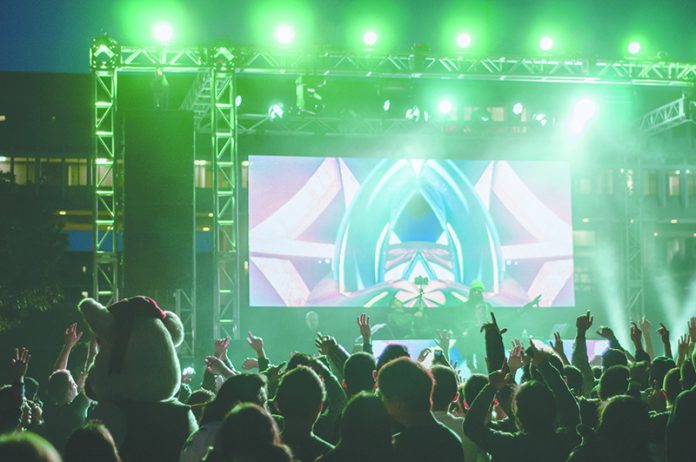
The 2015 Spring Concert (pictured) lost $56,731.

When Simon Fraser Student Society President Enoch Weng posted on social media, “What YouTube artists would you like to see come to Vancouver?” it seemed like part of a larger plan that was yet to come.

However, during a tense SFSS board meeting a few weeks ago, plans to host an alternative music concert in April showcasing local talent and a YouTube star were ultimately shot down after a month of planning from Weng.

The idea was conceived before Weng assumed the role of SFSS President. He expressed interest in providing another genre of music to SFU, in contrast to recent EDM-centric SFU concerts. Weng started researching in November and sought out quotes from YouTube artists, such as Andrew Garcia and Linda Dong.

The event, which would have potentially hosted hundreds of students at the Vancouver Playhouse, marked the first time SFSS considered an off-campus concert. Weng, along with Tiana Allinan, president of SFU Vanstyle, produced the final proposal to the board on Feb. 26.

During discussions on whether the proposal should go through, criticisms were raised in regard to the timeline, resources available, and its benefits to the school. Though the proposal ultimately did not succeed, the new idea wasn’t totally rejected by the board.

“The thing they really liked was that it was a shift from the old, so it was bringing in a new genre,” said Weng. “Largely, it was because of timing [. . .] I brought it up in February and the proposed event would have been in the end of April, giving us two and a half months.”

The proposal was rejected, though, because of the aforementioned problems, according to SFSS VP University Relations Brady Yano.

“There was concern with executing the event so late in our terms, with the new board just beginning to come into office,” said Yano. “Also in terms of other projects that would be wrapping up at that point [. . .] and due to the limited capacity of the board to participate.”

The proposal also raised the question on where the priorities of the society lie at the present time, according to SFSS External Kathleen Yang.

“Is this concert really in the best interests of our 30,000 members?” asked Yang. “It’s really hard for me to know that we’re spending $25,000 per concert, with the resources and time of the staff and volunteers. There’s high risk, the safety of our students, and a question of how many SFU students attend.

“There are so many other campaigns we have to do, issues that students are facing. I personally would not devote my resources to a one-day concert, because there are too many issues that need to be dealt with.”

The main issue which delayed Weng’s proposal until February was the search for a proper venue.

“The West and East Gym were doing [renovations] at this time,” said Weng. “Convo Mall has horrible acoustics for a sit-down concert, and security costs were way too expensive. [. . .] There were many limitations in SFU Theatre, and it’s hard to throw a musical event in there.

“I would say that’s what stalled the project,” he added.

While the concert proposal for this semester was rejected, that doesn’t mean it won’t ever happen, as Yano believes the proposal was the result of a good idea.

“The SFSS has heard lots of complaints from our members about the genre of the concerts, which are typically EDM-focused,” said Yano. “The concert would appeal to students that wouldn’t necessarily have been involved with previous concerts.”

Despite the failure of his proposal, Weng is still glad he brought it forward, and he sees it as a step towards one day getting a concert of this nature. “It was a big proposal, and a good step forward in creating future events,” he said.

Tokyo Swiftly: 7 days in Japan’s Capital City

0

[dropcap]M[/dropcap]y winter break in Tokyo can be summed up in three words: food, shopping, and claustrophobia.


My family and I spent seven days in Tokyo. . . a place that none of us had ever been to before. My parents did extensive research in the months leading up to this trip. Hours spent searching up different tourist attractions, shopping districts, modes of transit, and various types of Japanese specialty cuisine. But no amount of Google searching could prepare us for the beast that Tokyo was.

We spent our days chasing each other through crowded streets while taking in the sights, sounds and scents. I was most looking forward to trying authentic Japanese cuisine — specifically Japanese sushi.

As a Vancouver foodie, I had become so accustomed to our crazy take on sushi rolls: deep fried, covered in cheese, topped with chocolate shavings, and served with ice cream. . . the list is endless. And with mixed emotions, I can say I’ve tried them all.

Having Japanese cuisine in Tokyo was, in some ways, as if I never left home. But there were some qualities to the food that made it totally unique: massive sushi rolls that were half the size of my face, big pieces of fresh salmon from the fish market, massive bowls of ramen, and big cones of matcha green tea soft serve.

What was even more of a novelty was the fact that many restaurants have vending machines to take your order so as to facilitate efficiency. After punching in your order, you take your ticket and find a spot. Within 10 minutes, you have fresh food ready for you. . . it’s truly amazing.

In addition to the fine local cuisine, the Japanese are also quite skilled at Italian food, adding a little Japanese flair to their pasta plates. The portion were again huge, but it’s hard to complain when the food is this good.

I have been to other busy cities — New York, Hong Kong, Los Angeles — but there is something different about Tokyo

Though I didn’t come back home any lighter, my wallet lost a ton of weight. If you have a thing for unique fashions that are reasonably priced, look no further than Harajuku, loosely translated as “the original hub.” Packed with stalls that sell everything that you find in an ordinary clothing store, Harajuko stores are filled with Japanese fashion, known for being kawaii (cute). The incredibly bright and bold pieces along the Harajuku strip are a constant reminder that you will be walking away with a unique fashion that only you own. But if you are looking for something a little less flashy, consider Uniqlo, Japan’s powerhouse departmental store that boasts minimalistic and classic fashion pieces.

Alternatively, if you are more into technology and anime, check out Akihabara Electric Town. Brilliantly lit with colourful lights, it is an eclectic centre where techies, manga enthusiasts, and cosplayers come together to connect.

This being said, all the shopping does not compare to some of the beautiful sites that we took in. My family and I were able to take the Hakone ropeway, on which we had a spectacular view of Mount Fuji. We also went to see other sights like the Meiji Shrine, the Tokyo Tower, and various lesser shrines around the Tokyo area. Despite the massive wave of people, even places like the shrines were incredibly serene, enveloped in lush green forests with incredible historical architecture. Though I am not a Buddhist, I was amazed at the contrast that I was experiencing — quiet and serene temples enveloped inside massive forests, acting as a barrier from the hustle and bustle of the streets of Tokyo.

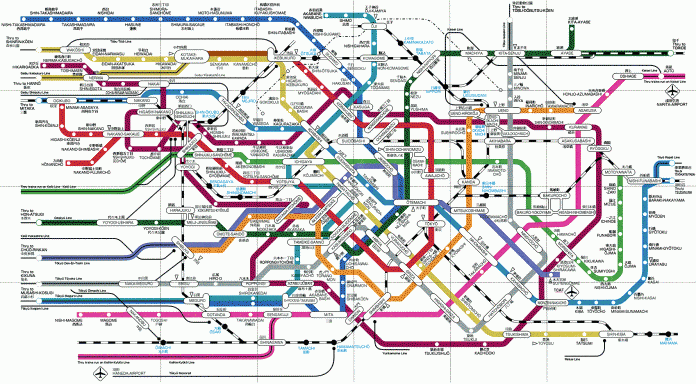
The hustle and bustle is a huge part of Tokyo’s character. I have been to other busy cities — New York, Hong Kong, Los Angeles — but there is something different about Tokyo. Tokyo was, in a word, a mess. But it only looked like a mess to us foreigners. In an endless sea of people, we stood like rocks grabbing onto the ocean floor. We had no idea where we wanted to go, and all the locals moved freely around us, paying no attention to the fact that there were five people just standing in the middle of the subway station, staring blankly at the colourful train map. As we crossed intersections and wove through the throngs of people in the marketplaces, I could only imagine that sardines had more legroom than we did.

What really made it difficult for us was the language barrier. None of us knew how to say anything in Japanese beyond konichiwa (“hi”), which no one seemed to say, and domo arigato (“thank you”), which seemed to be the only thing that people said. Asking directions required incredibly slow English and exaggerated hand gestures, but all we received in return was a stream of Japanese. To this day, I do not understand why that was. But I suppose that this is what travelling the world is all about. You will not be able to speak every language, so it is best to make do with what you have, and take a leap of faith. Wandering the city on your own terms, you get to see the city through a very different lens, something that no tour guide could ever give you.

If you are hard core into matcha and manga, sushi and shopping, or any combination of those, and are seeking a truly unique adventure, I urge you to fly to Tokyo and take in its 24/7 upbeat way of life.

Boxer Briefs

0

Famous Marvel anti-hero wants to be SFU’s newest mascot

[BURNABY] – SFU Burnaby recently became a battlefield between SFU’s very own McFogg the Dog and Marvel anti-hero Deadpool. The two engaged in a verbal dispute, with Deadpool expressing his desire to become the school’s newest mascot. Tensions escalated when McFogg argued that Deadpool was not qualified enough for the role. Deadpool responded in kind, saying that he should be the new mascot because he’s more Canadian than McFogg. After a tense argument, a fight became imminent. Campus security came and separated the two. Surprisingly enough, Deadpool backed off, only to say that he needed to hurry back to his movie before the post-credit scene began.

SFU Surrey offers chance to attend field school in Antarctica

[SURREY] – SFU Surrey recently offered a chance for students to attend a field school in Antarctica. This school offers something for everyone; interactions with polar bears, workshops that teach you how to boil water from ice, lectures on ice fishing, fieldwork on how to survive a snowstorm that will most likely kill you in seconds, and excursions exploring Antarctica’s great landscape.  All fees are covered, including hotel reservations, tuition, plane tickets (one-way only), and great meals at the banquet hall of ice. The school also features the top penguin professors, whose office hours are flexible and accommodating for everyone — but held underwater.

Burnaby Campus continues repairs after Walking Dead crew saves school from zombies

[VANCOUVER] – SFU Vancouver is still undergoing construction and repairs after Rick Grimes and the rest of the gang from The Walking Dead television series fought walkers on various areas of campus. The conflict escalated, forcing professors to cancel their classes and suspend midterms until further notice. When the walkers were dealt with, damages were calculated, amounting to over six million dollars’ worth of infrastructure repair. The rotting corpses created an unpleasant odour. Grimes and crew felt guilty, and gave autographs to avid SFU student fans as recompense.

We’re hiring for the summer semester!

0

Always dreamed of being a journalist? You’re in luck! The Peak is hiring for the summer semester. Applicants should send in a resume as well as a brief cover letter. Sample work relevant to the position(s) applied for is highly encouraged.

The Peak‘s hiring board is looking for the best and brightest SFU students to help report on stories that are of interest to the student body. If you are passionate about campus politics, student advocacy, arts and culture, local and regional sports, satire, leadership and management, graphic design, and free burgers, this is the job for you.

Working for The Peak is an excellent way to gain hands-on experience in the field of journalism as well as skills in communications, public relations, design, critical thinking, leadership, photography, and more. You will meet like minds who work hard and play hard in a high-energy environment.

Applicants must be registered SFU students for the duration of the semester for which they are applying. Previous experience with our newspaper is preferred, but not required. Please address your applications to The Peak hiring board at [email protected], or drop them off at our offices in MBC 2900. Any questions about the process can also be sent to this address.

Applications close on Friday, March 25 at 11:59 p.m. Job descriptions for available positions can be found below:

Production and Design Editor

Copy Editor

News Editor

Opinions Editor

Features Editor

Arts Editor

Humour Editor

Photo Editor

Multimedia Editor

Proofreader

Layout Assistant

Naomi Klein calls out Trudeau on “pretending to care” about climate change

74
Friday night's lecture at the Vogue Theatre was part of the SFU Vancouver Speaker Series.

What is something that former Prime Minister Stephen Harper has over Justin Trudeau? According to Naomi Klein, “at least he didn’t pretend to care” about climate change.

On Friday, the prolific writer and environmentalist spoke to the danger of a government that did not take climate change seriously at an event hosted at the Vogue Theater by the SFU Vancouver Speaker Series in partnership with SFU Department of Philosophy. The sold out show drew environmentalists, students from SFU’s semester in dialogue, as well as SFU President Andrew Petter himself.

“Is what happened in Paris a [. . .] breakthrough or an ecological disaster?” asked Klein, referring to the United Nations Climate Change Conference that took place in the French capital last year. At the end of the conference, 195 countries agreed to the Paris Agreement, which set the goal of limiting global warming to two degrees celsius above pre-industrial levels.

However, there are many criticisms against the agreement, including that it is non-binding, and may not be ambitious enough to prevent sea level rise that would wipe out some coastal nations. Klein argued that “these people [. . .] have a right to exist,” and that the lack of real effort to act in the Paris Agreement is not only disingenuous, but is “genocidal.”

This idea of social justice beyond borders is part of what brought Klein to Vancouver. Dr. Sam Black, professor of philosophy at SFU, organized a President’s Dream Colloquium course in spring 2013 that explored the idea of global social justice, and Klein’s latest book, This Changes Everything: Capitalism vs. the Climate, links social justice and climate change. In it, Klein explores the link between the rise of neoliberalism in the 1980s with the dramatic increase in carbon emissions and emphasized the need to take immediate action on climate change.

The complexity of addressing climate change, Black explained in an interview with The Peak, is partially because of how far removed the issue may seem. While Vancouverites may be moved to address homelessness because they see human suffering first hand, “in the case of global climate change, we’re talking about enduring sacrifices now for the sake of people who don’t even exist yet.”

On Friday, Klein criticized a recent statement by Trudeau that pipeline projects will pay for the transition to a low carbon economy. Klein said that the emissions resulting from projects like the proposed Liquid Natural Gas (LNG) terminal on Lelu island or the TransMountain pipeline expansion would break Canada’s carbon budget. Said Klein, “The science is clear and the numbers do not add up.” Recently, a group of 130 scientists have submitted a letter to the federal government criticizing the environmental draft report on the LNG terminal.

However, Klein ended her talk by offering some good news for those hoping for climate action.

She spoke to the gathering speed of divestment movements across North America, taking a moment to comment that so far, no major Canadian universities have committed to divest from fossil fuels. Other movements have been gaining steam however, including the extremely rapid conversion of Germany’s energy grid to renewable energy.

By tackling the multi faceted causes of excessive emissions, Klein argued that countries have an opportunity for dramatic social and economic change by promoting social programs and creating sustainable jobs.
She explained that that future is “not just better than the world if we don’t act [on climate change]; it’s better than the world right now.”

Apathy reigns supreme at SFSS Executive Debate

0
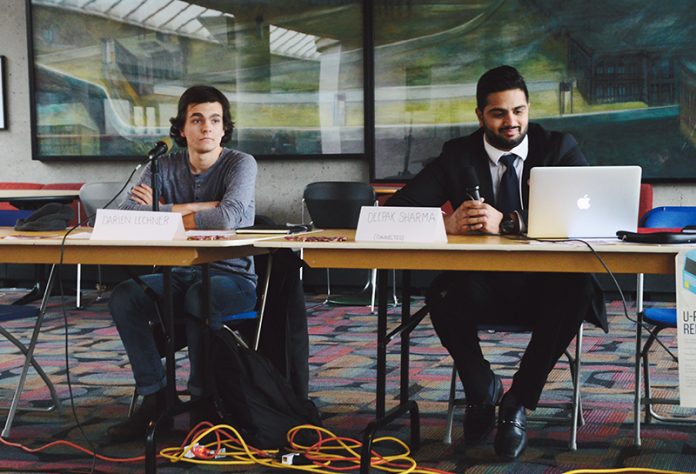
Darien Lechner (left) looks on as Deepak Sharma (right) checks his notes during the presidential debate.

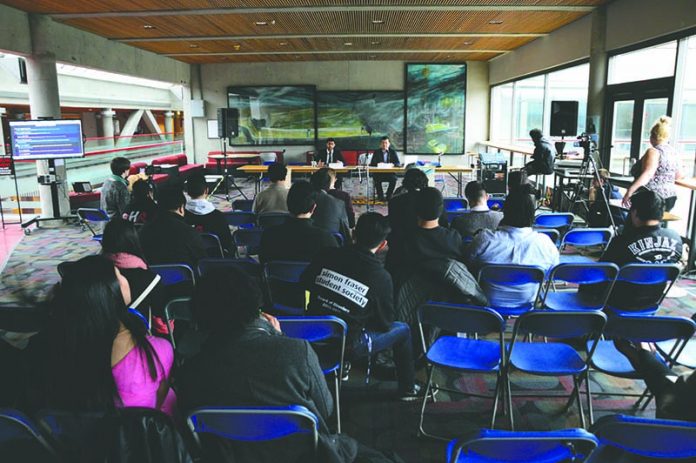
“I kind of expected there would be a lot more people up here,” remarked Simon Fraser Student Society presidential candidate Darien Lechner during his opening statement. He wasn’t the only one.

After an intense debate at last year’s Burnaby campus debates for those running for executive positions, including president and vice president positions, no one candidate was able to stand apart as a clear front-runner in a debate that took much less time than was budgeted for.

The afternoon was a low-energy question-and-answer period, with nine candidates jostling for six positions. Three of the positions (VP Student Life, VP Student Services, and VP University Relations) were uncontested, helping to contribute to the lack of debating between candidates.

There was only one slate, Connected, with members running in executive positions. Anyone else running was doing so as an independent.

VP External Relations – Archit Bansal vs. Christine Dyson (Connected)  WEB-External-Lisa Dimyadi

In their opening statements, Bansal indicated his intentions to focus on open textbooks and lowering student fees, while Dyson chose not to mention specifics.

Bansal argued that it was time for fresh faces on the board, springboarding off of members from the audience who questioned having continuity from current board members remaining board members.

Dyson responded by stating that she is currently working with open textbooks, an initiative which Bansal says he wants to get started with.

Bansal went on to campaign for his clear vision on the issues, and Dyson touted her experience and drive to find out “what students want.”

VP Finance – Ibrahim Hafeez vs. Hangue Kim (Connected)WEB-VP Finance-Lisa Dimyadi

The debate started with both Hafeez and Kim acknowledging they were friends, which came up several times throughout their short time at the microphones. Kim insisted that they had worked together on several projects throughout the year, and was glad they were having a civil and friendly competition.

Kim’s big priority for his campaign is the restructuring of cheque requisitions. He believes that, “if we improve [cheque requisition], it’s kind of a domino effect for other services.” Improving this service makes getting money back to students easier, and Kim said this was an issue that several students were complaining about.

Hafeez took a stronger stance. “I believe the system is broken,” he said answering how he felt the SFSS manages money. “The budget is created by the board before the new board is elected, and that’s not the way to go.”

He mentioned the desire to create something he called “The Opportunity Budget” which focused on incoming board members sitting down and determining a new budget that would reflect student wants and needs.

VP Student Life – Curtis Pooghkay (Connected)WEB-The Poogh-Lisa Dimyadi

Running uncontested, Curtis Pooghkay touted his ideas, which consisted of building engagement across all the campuses, and eliminating the idea of SFU being a “commuter campus,” wanting students to want to come here for more than just classes and go home.

He also threw his support behind the fraternities and sororities on campus, saying that Greek Life is “highly engaged” in student life, and they should be rewarded for their efforts.

VP Student Services – Larissa Chen (Connected) WEB-Larissa-Lisa Dimyadi

Chen highlighted her student desire to have services be more accessible in person, and pointed at the U-Pass as the number one service that students depend on, noting the importance of this year’s referendum. She also gave a shout-out to the copy centre, which she feels is an underutilized service on campus.

One of her big mandates for next year is to try and improve student well-being, specifically in regards to mental health. Chen acknowledged that issue is very dear to her, and wants to advocate for more staffing to accommodate a greater need from students.

VP University Relations – Arr Farah (Connected) WEB-University Relations-Lisa Dimyadi

The final uncontested debate was also the shortest, with Farah fielding few questions from the crowd.

He did say that while “the student society and the university have had a good relationship, [. . .] the student society has been taken advantage of by the university in many areas.” He pointed to Build SFU and maintenance as a couple examples, and said he would improve this relationship if elected, one which would allow the ability to advocate for these issues.

President – Darien Lechner vs. Deepak Sharma (Connected)WEB-Prez-Lisa Dimyadi

In the final debate of the day, the two candidates campaigning to be president got the chance to argue why they are worthy of students’ votes, with the two having to field so many questions from the audience that time had to be extended past the regulation.

Sharma pushed for the ideology of SFU to shift from a commuter school with satellite campuses to one that sees SFU as a “tri-campus university,” helping to increase connection between the three campuses.

As for Lechner, he made it clear that his main priority was to get students more involved in campus life, primarily through reducing the amount of money he was taking, and making it more obvious to student where the money that was being collected from them is going.

Both candidates were questioned by the audience about their evasive answers, with current VP University Relations going as far as to call some of their responses “fluff” on Twitter. (For more of the day’s tweets, check out our coverage here)

Current president Enoch Weng and VP Student Services Darwin Binesh had several questions for the candidates, and made sure to instill the notion that candidates could not agree to advocate for every issue brought their way, as the role of president is forced to make tough decisions.

Looking forward

With two more debates happening next week at the Surrey and Vancouver campuses, IEC chief Vanna Lodders believes that there is still plenty of time for students to show up and ask candidates about their platforms, which will be released by the debates.

She took responsibility for their unavailability today. “I extended the the due date to the 11th is because I didn’t communicate that early enough to everyone that they needed their platforms due and I know a lot of people wanted to take their time with them,” she said.

“I didn’t want to rush anybody and have them put out a platform they didn’t want and then ask me to edit it and then me tell them no. My own thinking was to give people enough time.”

Last year, the Burnaby debates were the most popular ones, with noticeably more students showing up there than the Vancouver or Surrey campuses. It will be interesting to see if more students attend the off-mountain debates given how few showed up for the main event this year.

Top 15 Tweets from the SFSS Executive Debates

0
There may not have been that many in the audience, but those that were took to Twitter.

The Simon Fraser Student Society election is in full swing: candidates for the big six positions on the SFSS Board of Directors met in the West Mall Atrium on Burnaby campus earlier today to field questions from students and debate their credentials. Several candidates are running uncontested, and references to a lack of engagement ran throughout the debate. Here are 15 key tweets from the over-two-hours debate.

  1. When the low turnout spelled doom for the debates.

(To be fair, there is a precedent for this)

  1. When the crowd went HAM on the VP External candidates.

  1. When no one was sure if Darwin was throwing shade.

  1. When the VP Finance candidates really wanted us to know they were friends.

  1. When VP Student Life candidate Curtis Pooghkay channelled Petter.

  1. When VP External Kathleen Yang got real about the SFSS’ most important services.

  1. When we maybe got a little too sassy to VP Student Services candidate Larissa Chen. (Sorry, Larissa.)

  1. When VP Student Services Darwin Binesh repped the U-Pass referendum.

  1. When our photo editor dropped some truth bombs.

https://twitter.com/Lenevalia/status/708433388965724160

  1. When Kathleen tweeted what we were all thinking.

  1. When presidential candidate Darien Lechner told us how he felt about Build SFU.

  1. When his competitor Deepak Sharma namedropped his Facebook page.

  1. When a group of kids threatened to send the whole thing off the rails.

  1. When Darwin stopped being polite and got real.

  1. When VP University Brady Yano dropped the damn mic on the whole debate.


NEW MUSIC FRIDAY

Follow The Peak on Spotify to stay up to date on New Music Friday.

“Dangerous Woman” – Ariana Grande

Jessica Whitesel: I really dislike Ariana’s voice. It is too nasally. This song has so much potential to be amazing, but it needed to go to a different artist. I couldn’t even finish listening to it.

Sarah Finley: I’m not typically an Ariana Grande fan, but this new track from Grande utilizes the lower parts of her vocal range, making it distinctly different from her usual music without losing the powerful effect.

Courtney Miller: I was unsure when the song first started, but it does grow on you — the lyrics really help with that because I find them relatable. Grande’s a great vocalist, but I always feel like it never shines through on her own music because she’s in this pop music bubble.

“WHERE THE HELL ARE MY FRIENDS” – LANY

JW: I like that it is a calmer electronic inspired song, but it doesn’t really ever go anywhere. It just kind of stays on the same level for the whole song. It is also very, very, very repetitive and it becomes pretty clear with the painfully consistent backing track.

SF: My friends are all studying for midterms, so I identify strongly with the title of this track. This song is mildly repetitive with simplistic percussion and chord progression, but somehow it’s still catchy. Kudos.

CM: It’s a little repetitive, but in that good, yes-now-I-can-learn-the-lyrics way. The music is varied enough that it doesn’t get boring and I get a bit of ’90s nostalgia from the overall feel.

“Hallelujah California” – Luna Shadows

JW: This song honestly doesn’t sound that much different from a Lana Del Rey or Halsey song. It doesn’t do anything new and Lana Del Rey is doing the same thing already but better.

SF: Luna Shadows has a dreamy seductive voice, making me desperately nostalgic over the summers I spent playing in Southern California oceans with my friends. I’m guessing any listener will experience the same effect, even if they’ve never travelled south of the border.

CM: The vocals remind me of Halsey, and the music is kind of a haunting-pop with lots of echo. That being said, it’s a great mellow track for quieter moments.

“What You Talking About?” – Peter Bjorn and John

JW: I love Peter Bjorn and John. Their music is just super fun, and, even if I’m having a bad day, never ceases to make me feel better. This song is in that vein, so 10/10.

SF: Peter Bjorn and John have been a long-time favorite, and this new release doesn’t change anything.

CM: I kept waiting for something great vocally to happen but every time it built up it fizzled out. For whatever reason it makes me think of polka music and that’s not really my style.

“Ghost” – Oliver Heldens feat. Rumors

JW: I want to ghost on this song. It’s the kind of song that comes on the in the club and makes you not feeling bad about having to stop dancing to go pee for the 50th time that night.

SF: This song features weak bass drops and a weird change of pace halfway through that leaves me wondering what happened. It’s like the artist decided to give up halfway through, but their label made them finish the track.

CM: It sounds like a bad video game’s soundtrack, where the music’s the best part. I am on this cusp of not being able to decide if I like it — I want to because I like the idea and the vocals, but I can’t because of that video game quality. Multiple listens push me to the ‘no’ side of things.

“Taste the Feeling” – Avicii vs. Conrad Sewell

JW: Merp. I don’t know what feeling that sound conveys, but this song is merp. It’s just a weird remix of a song from a Coke commercial and and it doesn’t make me want to drink a Coke or dance, so merp.

SF: I’ve never really been an Avicii fan, and although this isn’t their usual sound, I’m still not overly impressed. While the beats and synthesizer are catchy, Conrad Sewell’s gentle vocals don’t particularly blend well with the electronic vibe.

CM: This I kind of love. It’s a feel-good tune where the vocals and music work together nicely and nothing feels recycled or homogenous.

“Jesus Made Me Bad” – Laora

JW: This song should be called, “Jesus Made Me Make Bad Music.” This song is trying to do things that so many other artists have already done, but Laora isn’t even close to being on the same level as them.

SF: Firstly, I really appreciate the title of this track, but if I’m being honest, that’s all I’m feeling. Tropical sounds combine with distorted and echo-y vocals, and it just didn’t come across well.

CM: I think she’s trying to incorporate too many styles and elements into one song. I can never get comfortable with it and enjoy it because as soon as I start to get down with it, it switches up and I go “wtf.” All that aside, I love the lyrics.

“Shrubbery” – Bronze Whale 5-D

JW: Their flow reminds me of Twista, but the paired down, almost video game-inspired backing track makes it feel a little less frenetic and chill. Seeing as they are talking about smoking pot for the whole song the chill vibe is a probably a good thing.

SF: I love when formerly underground artists have a breakthrough and enter my life, and this is exactly what happened here. Bronze Whale and 5-D combine to feature extremely talented lyricists, DJs, and background percussion.

CM: The shrubbery is where this belongs. . . I’m impressed they can spit their rhymes that fast, but that’s probably the only compliment I have. There’s a disconnect at times between the rhythm of the rap and the dull track.

“The Magician” – Andy Shauf

JW: I love the laid back vibe this song has, and Shauf’s voice is AMAZING. Also it’s pretty sweet that he is Canadian too, but like I can’t get over his voice. I love this song, and just gets better the longer you listen.

SF: Andy Shauf is an all-time favorite, and this track featuring soothing, masterful piano chords, string instruments, and clarinets make “The Magician” just as good as the rest of his work. Shauf’s voice is uniquely calming, reminding me of frolicking through fields with my golden retriever when I was little. I could listen to this all day.

CM: Soulful guitar, cascading piano, a brass section — I’m loving it. The vocals are emotive, but he needs a little more confidence because he seems a little unsure of himself and his choices at times.

“Shore” – Hoodies at Night feat. Milk & Bone

JW: This song isn’t going to stick around for very long. It’s been done before. The “ooooohh-ah” with the squeak at the end is too much. Also the weird vocals that sound like an untuned horn suck.

SF: This track begins with snapping, and distorted feminine vocals, but after that it’s fairly forgettable.

CM: Kind of repetitive, doesn’t seem to do anything particularly interesting throughout the song. But the slow burn from a morose melody into an upbeat jam saves it from the anonymity of monotony. I’d dub it background chill noise.

“The Woman” – Bo Baskoro

JW: I wasn’t convinced of this song at first. It sounded pretty darn generic, but about 45 seconds in, it really picks up and Baskoro really lets his voice shine. It would be nice if he did it more throughout the song, because he can sing.

SF: Don’t listen to this song if you’re going through a breakup. Aside from the heartbreaking lyrics, Bo Baskoro has a beautiful voice and combines them effortlessly with a simplistic percussion beat and keyboarding.

CM: Sturdy vocals and rhythmic, melodic music go really well together on this track and I really love Bo’s voice. If you like alt-pop, you’ll probably like this.

“One More” – Weaves

JW: I don’t know what this song is. It is like it wants to be a talk-sing-rockabilly track, but it doesn’t really do any of those things well. If Weaves picked a sound and stuck with it, it might be a more successful song.

SF: This beach rock track, while typical of the genre, isn’t really my style. The artist’s voice seems to be at its limit throughout the entirety of the track, and the electric guitars are too screech-y. I’ll stick to my heart breaking Bo Baskoro.

CM: Nope. It starts off almost alright and then it builds into this hugely discordant cacophonous vomit before returning to the almost-alrightness it started with. Dude, it’s like you went, “Okay and here I just want every instrument we have to make a random sound — it’ll be good, I promise.” Don’t make any more promises.

SFSS Non-Executive Debate emphasises student engagement

0
Many of the seats for Faculty Representative positions are going uncontested this year.

“The SFSS, although a wonderful organisation, has failed to do its job in connecting with students,” said Alam Khehra, a candidate for the position of At-Large Representative. Throughout the first debate in this year’s election for the SFSS Board of Directors, many candidates also stressed the need to engage students and suggested their own ideas for how to do so.

The position of At-Large Representative is currently the most competitive of the entire SFSS election, with five candidates running for two positions. When asked about their feelings on it by current VP Student Services Darwin Binesh, all five candidates notably supported the Build SFU project. Binesh himself called it the “biggest project in the student society’s history.”

WEB-1
From Left to Right: Jaggy Kullar, Alam Khehra, Mudiwa BK Bwakura. Paul Hans, Moein Sharifi Moghaddam

Candidates differed on what their main focus would be as an At-Large Representative. While candidates Jaggy Kullar and Alam Khehra stressed the need to listen with and engage with Departmental Student Unions (DSUs), Paul Hans argued that this might be impractical considering there are 73 DSUs [The Peak was only able to account for 53]. Candidate Moein Sharifi Moghaddam explained his main focus would be increasing awareness about the services already offered to students, supporting the women’s centre, and establishing a men’s centre, a controversial proposal that has been debated on campus for several years. 

Khehra questioned Hans on the promises he made when he ran for senator, such as increasing student engagement and decreasing the commuting time from Surrey. Said Hans, “If you just look at the election, sure, engagement has gone down,” adding that he did not call for reducing commuting time but instead advocating for transit services, which he argues he did by addressing pass-ups with the 145.

Alan Lee, a candidate for Applied Science Representative, asked competitor Prashant Verma about concerns that Surrey students were left out of the process out of the process of approving Build SFU. Verma argued that while there was a need for greater engagement with Surrey and Vancouver students, Surrey students will benefit from the project still and the project will make the university more competitive with other universities.

Arts and Social Sciences Representative (FASS) candidate Blossom Malhan asked rival Erwin Kwok how he would increase voter turnout in the FASS, given the importance of getting enough voters to pass the two referendum questions. Kwok said he would use social media, approaching students in-person, and liaising with DSUs, noting his own time with Criminology student association. Kwok shot back with a question of his own about Malhan’s absences when she was appointed to the Events Committee. Malhan replied that she withdrew from the committee because she didn’t have enough time: “I didn’t want to do something where I knew I couldn’t be there and it would be just for show.” 

Blossom Malhan (Left) and Erwin Kwok (Right).

Jimmy Dhesa, a candidate for Science Representative, questioned his fellow candidate Tomas Rapaport about his success as a third year representative on the Science Undergraduate Society (SUS). Said Dhesa, “Since your term in the position the involvement of science students has decreased. [. . .] Since you were unable to complete the fundamental and simple role of your position, how can students trust you to take on many other roles as a science representative?”

WEB-5
Jimmy Dhesa (Left) and Tomas Rapaport (Right).

Rapaport called the premise of the question “false” and argued that he has increased participation in the SUS, citing 16 candidates running for 11 positions when there were six candidates the year before. Dhesa said that while there was an increase, it was “not significant enough.”

All other Faculty representative positions had candidates running unopposed, except for the Environment representative, for which no one is running. Notable highlights from uncontested seats include Education Representative candidate John Ragone speaking to his wish to create a faculty student union for Education instead of the current departmental student union, considering that Education is a faculty, not a department.

Health Sciences Representative Candidate Raajan Garcha, said that she would divert funds from “unnecessary funds” to create more faculty scholarships, increase social events for Health Science students, and named mental health as a particular concern for her.

Low voter turnout could invalidate referendum questions

0
The chances of losing the U-Pass are slim, but they do exist and need to be addressed.

With the fate of the U-Pass being decided at this year’s referendum, it is important to acknowledge that the worst case scenario is that students will lose their U-Pass. While Simon Fraser Student Society board members confident in a “yes” vote, that might not be their biggest concern in keeping the U-Pass for student.


With the reduced amount of candidates this year — roughly half the amount of last year — some fear that voter turnout will be lower than it has been the last few years. While the candidates will be elected regardless, this low number could affect whether or not the referendum questions will be counted as valid.


          This is because of Bylaw 17.8, which states that “No referendum shall be deemed valid or binding on the Society unless a minimum of five (5) percent of the members in good standing of the Society have cast ballots in the referendum.”


          “The concern we have is that not enough people will vote for it,” said Binesh. “We need at least five percent of students to vote. Even if you get a yes vote and 99 percent majority but less than five percent of eligible cast ballots, it doesn’t count. It’s not binding, we lose the U-Pass.”


          Binesh went on to say that if the election happened today, he doesn’t personally believe that they’d have the support for the referendum proposal to go through.  


          The SFSS’ current member registry lists 24,001 students, meaning that the SFSS will need 1,201 students to vote in order for the referendum to be considered valid.


          The referendum question is about raising the fees of the U-Pass by $1.50 for the next two years, seeing it go from $38 to $41 overall. This was the agreement reached by TransLink and post-secondary institutions in BC, and is happening because their previous deal from 2013 has expired.


          The other referendum question on the ballot is whether or not to terminate the student levy for Schools Building Schools, a decision which VP External Relations Kathleen Yang said is based on the two parties mutually deciding to part from each other.


          While Binesh is worried about the number of students voting, he feels confident in the way in which students will cast their ballot.


We know we have a lot of student who live three zones away — we’re a commuter school, that’s why a universal transit pass makes sense,” he said.


“I would be shocked if someone who lived three zones away said that $41 is too much to pay for a transit pass.”


          Should the worst-case scenario come true, the reality is that students would likely lose their U-Pass. If that happens, getting it back will not be an easy thing to do. According to Binesh, it could not happen until the proposed agreement with TransLink ended in two years, meaning that it would not be until 2018 when it would be discussed again.  


          While there has been no referendum that didn’t meet quorum in recent years, Binesh and others fear that complacency will creep in, and that will the deciding factor.


          “We’re confident that students will show their support,” said Binesh. “We’re just worried that students will think it’s a no-brainer or an easy win and they’ll flake out saying ‘I don’t need to, everyone else will.’ Usually that’s when surprises happen and we have unfortunate realities.”