Home Blog Page 832

CENTRE STAGE: Pre-professional CatchingART Contemporary Ballet shows off aspiring talent in West Vancouver

0
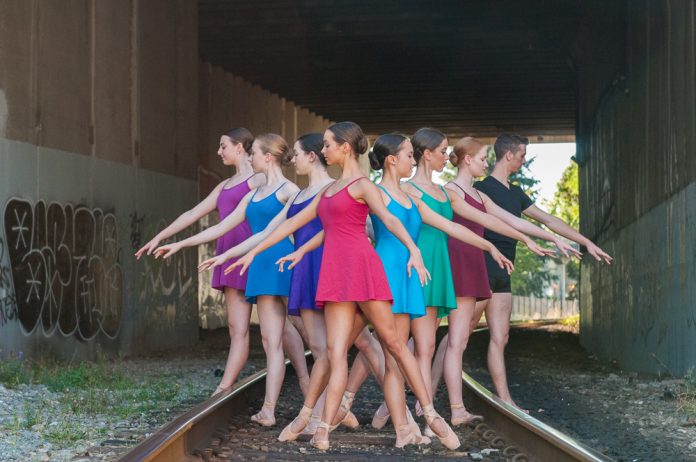
Pre-professional dancers get an opportunity to show off their skills.

Dancing a famous pas de deux from Le Corsaire at the Pro Arte Gala, Ethan Ponton and Cassia Slager of CatchingART Contemporary Ballet Theatre looked ready to step into professional roles. Slager effortlessly performed her turns and jumps while Ponton lifted her with ease and showed off his own powerful jetés.

The pre-professional company, part of Pro Arté Centre’s training program, prepares aspiring dancers for roles in professional dance companies or for further professional training. Two of this year’s graduates are heading to Les Ballets Jazz de Montreal, and one is off to the Rudra-Bejart’s ballet school in Switzerland. The dedication of these talented dancers was evident throughout the evening of both classical and contemporary works. Also featured in the show were younger students and those not yet part of the CatchingART group.

I thoroughly enjoyed the excerpts from Le Corsaire that were presented, as well as a beautifully romantic pas de quatre by Jules Perrot. Originally choreographed in 1845, its subtle beauty remains. Two younger dancers performed the always cute and crowd-pleasing Puss in Boots and White Cat pas de deux from Sleeping Beauty, and the first act of classical works flew by.

Act two was focused on contemporary pieces and featured live piano, violin, and vocals sharing the stage with the dancers. These musicians added to the emotional depth of the inventive choreography set to songs such as “Stay With Me” (Sam Smith) and “Cry Me a River” (Arthur Hamilton, not Justin Timberlake). We were also treated to a beautiful rendition of “Hallelujah,” paired with equally moving choreography.

The final number was a large group dance set to an instrumental version of the overplayed “Uptown Funk,” and while the choreography was playful and modern, I found it somewhat lacking in technical substance.

Before the classical ballet excerpts, the program notes, the ballet’s history, and a synopsis of the story were projected at the back of the stage, but after a few dense slides the wall of text was hard to get through. It would have been fine to leave that material in the program where we could read it at our leisure.

The almost full house at the Kay Meek Centre in West Vancouver cheered with approval as the dancers took their bows. While you could say that a lot of that applause is due to friends and family bias, it’s clear that these dancers have a solid base of training. With dedication to their craft, they’re going places.

SFU choir members perform in local opera

0
Mark Pepe (left) plays the role of Turiddu as Santuzza watches on, played by Talia Ryne.

Alexandre Vasilchenko had a busy schedule last week. The criminology major had his regular classes, studying for exams, and also had two performances of Pietro Mascagni’s opera Cavalleria Rusticana.

You could say it wasn’t a typical week for an SFU student.

Vasilchenko is in his third year at SFU, and has been a part of the SFU Choir for the past year. The director of the choir, Melissa Ratcliff, was a principal in Opera Opulenza’s rendition of the opera. When they needed more singers for their chorus, they drew from a familiar source.

“I’ve loved everything about being in an opera,” Vasilchenko said. “I have enjoyed learning Italian, because I don’t know it and the entire opera was in Italian. I have enjoyed acting on stage, because you don’t get to do that when you stand in a line with the SFU Choir.”

Five of the 12 chorus members are singers in the SFU Choir, with none of them ever having been in an opera before. They didn’t join in typical audition fashion, either.

“It was a little bit weird, actually,” recalled Vasilchenko, laughing. “[Ratcliff] posted on Facebook saying ‘This opera desperately needs people.’ I just liked the post with no intent whatsoever to sing the opera. I kid you not, 30 seconds later  she messages saying, ‘Hey Alex, we need you in the opera.’”

Ratcliff clarified that they weren’t just taking anyone — the SFU Choir members are a known quality.

“When I first joined [Opera Opulenza], they found out I was the director of a choir. I invited them to a show,” she said. “I told them they were all non-music students. None of them are musicians by trade or study music. And they were like, ‘Holy crap!’ and enjoyed the performance so much and were so impressed, they said ‘If anyone wants to join the chorus, we’ll take them without audition.’

“If you want to do a principal role or join the company, you still have to audition, but for the chorus stuff they were great.”

Not only did Ratcliff get to watch her choristers “lose their opera virginity,” she also had a debut of her own: this was the first opera that she was a principal in. She played the role of Lucia, the mother of Turiddu, a soldier who has returned from war to find his love, Lola, has married Alfio, a village merchant. In turn, Turiddu seduces Santuzza, a peasant girl from the village.

Lola becomes jealous of Santuzza, and begins an affair with Turiddu. Santuzza becomes suspicious and tells Alfio, who challenges Turiddu to a duel. It ends with Alfio killing Turiddu, with Lucia left to pick up the pieces.         

The opera was a very enjoyable performance, especially given the $20 it costs adults to see the show, which took place in Minoru Chapel. The voices sounded phenomenal, and the blend was pleasing both to musically trained and audience ears.

Andrew Greenwood, who played Alfio, was a commanding presence for every scene in which he was featured, and was a treat to watch. He brings out the best in other characters, and demands other performers match his talent when on stage. The tension leading up to the duel between him and Turiddu, played by Mark Pepe, was palpable and engaging.

Another standout moment was Ratcliff’s final moment in the opera where she learns her son has been killed. Her grief and despair brought the audience to tears, and was a powerful moment to close the show on.

The major difficulty seemed to be that the stage was too small for the ensemble, with the backdrop frequently being hit by chorus members and looking like it was in danger of falling over. Vasilchenko said they knew the stage was going to be small, and rehearsed in an even smaller space to try and prepare for the spacial limitations.

All in all though, this was a special experience for Vasilchenko. He said he never thought of himself as someone who could do opera, but now hopes to be able to do it again someday.

“Oh no, heavens no, I didn’t think I was the opera type,” he said. “I want to go take some classes, learn how to sing a little better, and then definitely return to it. If you have an opportunity to sing in an opera, do it.”

First ground broken for new Student Union Building

3
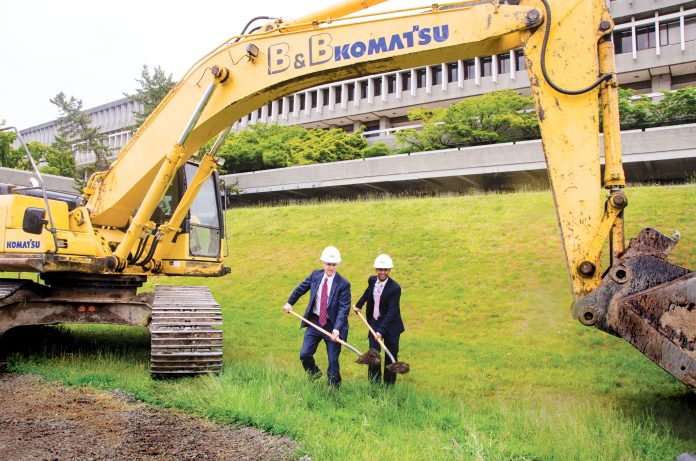
SFU President Andrew Petter (left) and SFSS VP University Relations Arr Farah participate in the groundbreaking ceremony.

It was a dreary, drizzling day, but ground has been broken for the construction of the new Student Union Building, and the next chapter of Build SFU begins.

With almost the entirety of the Simon Fraser Student Society (SFSS) present, as well as SFU President Andrew Petter, the groundbreaking was attended by only a handful of those who brought it forward, with a much larger celebration being planned for the fall.

After speeches from Elder Margaret George, Petter, and VP University Relations for the SFSS Arr Farah, the “groundbreaking” took place. It was more of a ceremonial event, as Farah and Petter donned hard hats and moved a shovelful of dirt each from a pile to underneath a bulldozer.

The event took place where the new building will exist by its projected fall 2018 opening, just outside the Maggie Benston Centre.

Despite the dreary weather — which reflected a “typical SFU day,” according to master of ceremonies Larissa Chen — there was a buzz of excitement in the air from those in attendance.

“It’s very exciting,” said Petter. “I know how hard the Student Society has worked over a number of years to get us to this point. But I also know it wouldn’t have happened without the support of the general student body over a number of years.

“I think it speaks volumes to the kind of students we have at SFU, how they’re really committed to not only their own education but to the future of students who will be here in years ahead.”

While this project has been in motion since 2012 with many SFSS members involved, it was Farah — only one month into his term as VP University Relations — representing the SFSS and by extension all students, as he shovelled the dirt.

“It’s been a long time coming,” he said. “It feels great. I remember being part of [student unions] running around campus and there being no space for us, so this solves this problem so I’m just really proud to be here.”

He admitted, though, that this isn’t exactly how he pictured the moment.

“I thought it was going to be sunny and beautiful, but this is BC. It rains a lot,” he laughed. “I’m happy that it happened anyway.”

With the groundbreaking underway, there was no time for all involved parties to stop and congratulate themselves. It’s one thing to hold a ceremony for starting the project, but it’s another to get the building finished.

“I think it’s a different kind of push,” acknowledged Petter. “Now it’s a matter of getting the building built and making sure it meets all the requirement[s] and that’s going to require some effort.
“It won’t be easy, but I think it’s going to go as smoothly as a project of this kind can.”

Album Reviews

0

By: Courtney Miller and Jessica Whitesel

Skin – Flume

When I first listened to this album, I was instantly reminded of my best friend. The mix of wild and calm playing off of each other to create perfect balance, all the while managing to be soothing, just reminded me of the kind of relationship that we have.

Sappy stuff aside, this is a beautifully constructed album. Every song just seamlessly flows into one another creating this somewhat disorienting sense if you end up missing the subtle transitions between tracks. I am making this sound like a fault, but it isn’t. Most albums play like they are trying to be hit factories, and all thought that should go into creating them is just forgotten. This isn’t the case with Skin.

If anything the single “Never Be Like You” sticks out the most, not because it is a single but because it just feels different from the rest of the album. Since it’s the second track though, it doesn’t throw off the well-constructed feel of the album as much as it could.

This is the kind of album that proves the importance of thinking about how songs flow. It’s also one that even non-EDM fans could enjoy, just because of the balancing between wild and calm. –JW


7/27 – Fifth Harmony

The album 7/27 is Fifth Harmony’s hotly anticipated follow-up to their debut, Reflection. The new album has a confidence that wasn’t present in Reflection, and with that confidence comes a freshness that wasn’t quite there before. It’s filled with self-actualization, swagger, and a more mature, sophisticated sound.

Album openers “That’s My Girl” and “Work From Home” follow 2015’s “Worth It” in style, and echo Rihanna’s own lyrical success (“Work, work, work, work, work, work”). OK, so it’s not a magnum opus, but it has some winners that make up for the others.

A great thing about Fifth Harmony is that the vocals go around. No one does so much more than the others, and they’ve really nailed that with this album. You can tell they tried to be more vulnerable with this record, especially with “Write on Me.” But the album closer “Not That Kinda Girl” might just be the best song on the album, and hopefully a tease of what’s to come. –CM


I Am Your Man – Daniel Wesley

I Am Your Man is the seventh record from BC’s own Daniel Wesley. It’s the first release from his label Beachgrove Records, and was made possible via Kickstarter. The album is full of laidback, sun-splashed tunes perfect for the coming summer. The Caribbean definitely influenced the album’s sound, particularly in the single “Shake” and “Come at Me,” the album’s first song.

Well-crafted, tight, and more acoustic-based than some of his previous work, I Am Your Man is full of light melodies that’ll have you singing along in no time. He also does some experimental work: “Beautiful” sounds inspired by the ‘80s, and “Funky Jam” is a fun, jazzy instrumental that’ll have you whipping out the air instruments.

It’s a record full of happy, relaxing music. Life is a great thing, and Wesley really tries to share that high-up feeling with every listener. –CM

SFU lab designs an advanced rat trap

0
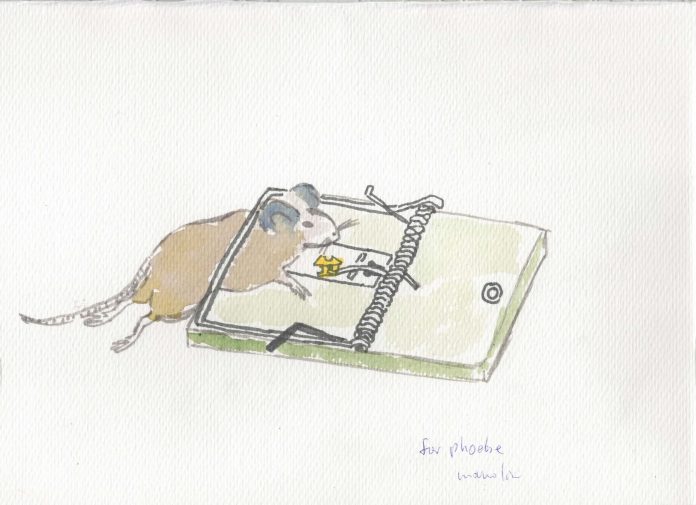
Traditional rat traps can scare away rats rather than lure them.

For as long as humans and rats have co-existed, humans have tried to exterminate rats, and rats have repeatedly learned to thwart these attempts. Dr. Gerhard J. Gries, a professor in the department of biological sciences at SFU, wants this stand-off with rats to come to an end.

Rats provide a difficult challenge for population control: as a result of interacting with humans for thousands of years, they have developed a healthy dose of fear and apprehension when presented with new objects, called “neophobia.”

Therefore, even with the promise of food, it can be difficult to entice rats into entering traps. As a result, we depend on traps such as poison boxes that are efficient at killing but result in the poisoning of animals that consume rats, including domestic cats and dogs.

The Gries Lab studies the communication systems of animals. “[W]e want to understand how animals, including rodents in this case, communicate and once we understand their language we can talk back and manipulate them to our advantage,” explained Dr. Gries.

Therefore, in order to bypass the rats’ neophobia, the Gries Lab has developed a trap that uses a three-pronged approach to exploit rat senses and communication strategies. The first property of the trap is food bait: the team has developed bait that is laced with odorants so that no matter the rat’s craving — be it nuts, meat, or cheese — it will be emitted from the trap. The food bait is important because its manipulation is necessary to trigger the snap mechanism that results in almost instantaneous death for the rat.

The second tool used to attract rats is the promise of a mate. Male rats mark their territory using urine. This urine contains sex-attractants that lure females and deter males. The Gries Lab isolated these molecules, and by including them in the trap capture 10 times the number of females; however, males will be deterred by their presence, therefore these traps are used only to target females.

Lastly, Dr. Gries and his collaborators created a device that synthetically produces the sounds of rat pups. When mother rats leave their pups alone, they often get cold and express their discomfort by producing short ultrasonic bursts. These were recorded and an algorithm was developed that generates bursts that differ in pitch, intensity, and duration, with intermittent silence between the emissions. Therefore, it is very difficult for the rat to realize that the sounds are artificial.

The next stage in trap development is to make it a multi-killing trap so that it does not have to be serviced after every catch. The team is also looking for a sex-attractant produced by female rats, so that a similar trap can be developed to target males.

As Dr. Gries said, “We have tried to get rid of [rats] for a long, long time.” With his lab’s development of the rat trap, we may be at a new frontier in population management: “It smells like rat, it sounds like rat, it must mean someone is there and it is safe to enter.”

SFU alumnus appears on The Bachelorette

0
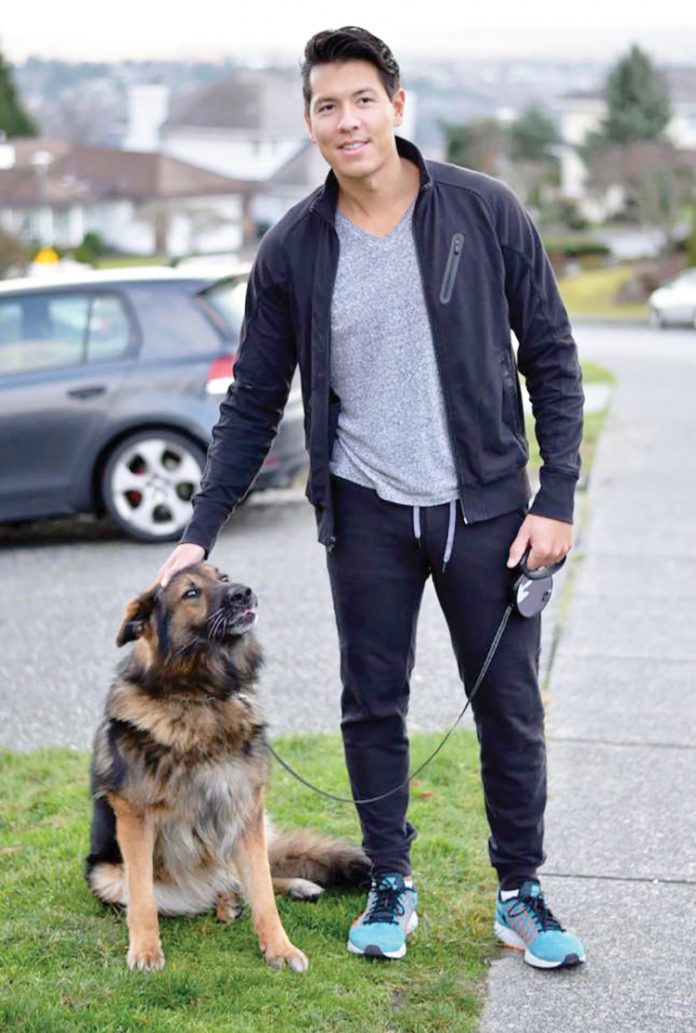
Jon Hamilton (pictured) may be no longer on the show, but his quest for love lives on.

ABC’s The Bachelorette got a dose of SFU this season.

SFU alumnus Jon Hamilton appeared on the season 12 opener of The Bachelorette. Sporting traditional Scottish garb, complete with a kilt, he went all out in what he described as a “make or break” opportunity to impress Jojo Fletcher, this season’s bachelorette.

“[Jojo] was either going to like it or hate it [. . .] [and] I have no regrets doing it,” Hamilton said in an interview with The Peak.

At first, going on The Bachelorette wasn’t Hamilton’s idea. A past girlfriend nominated him to be on the show, and it was apparent that his Canadian charm appealed to the show’s producers, as they reportedly bombarded Hamilton with a number of calls while he was out to dinner one night.

“I was having dinner at Local [in Kitsilano] when I got a call from LA,” Hamilton recounted. “At first I thought it was a crank call, and I clicked decline at least three times. But then I finally answered and found myself talking with a girl from ABC [. . .] it kinda snowballed from there, and turned into like ‘holy shit, you have to do it!’”

An avid follower of the series, Hamilton was curious about the experience of being on a reality TV show. After going through a series of interviews and flying down to LA for further meetings with show executives, filming began. This enabled him to experience the other side of a show that he watched so regularly.

While Hamilton lived with his parents, he would watch the show every Monday night with his mom: “It was a bonding experience for my mom and I. When the show was on, I knew exactly what I was doing every Monday night.”

When asked about his choice of attire, Hamilton laughed and admitted that while it was unique, he was used to it. Hamilton, who is half-Scottish and half-Chinese, takes great pride in his heritage thanks to his dad, a proud Scotsman.

“I wore a kilt to my high school graduation and my sister’s wedding, so it’s kind of commonplace for me,” Hamilton remarked. As for the show, he had his doubts, but in the end some of the producers asked him to wear it to add extra interest.

Before his stint on The Bachelorette, Hamilton graduated in 2009 with a Bachelor of Arts, majoring in history and minoring in economics. During his time at SFU, he also played with the hockey team and made a lot of friends through the program, some of whom he still keeps in touch with to this day.

When asked to describe a perfect date with money being no object, Hamilton described a grand picture of going to Italy via private jet, wine tasting in Tuscany, and having Mario Batali cook him and his date dinner.

But for Hamilton, the best way to really get to know someone is to have easy and flowing conversation. “The perfect date [for me] would be getting pizza and watching movies,” Hamilton said. “It’s easier to talk that way.”

Even though Hamilton was sent home by Jojo Fletcher, this handsome alumnus likely won’t have any trouble finding a girl willing to take him up on that offer.

Out with the mould, in with a new plan

0
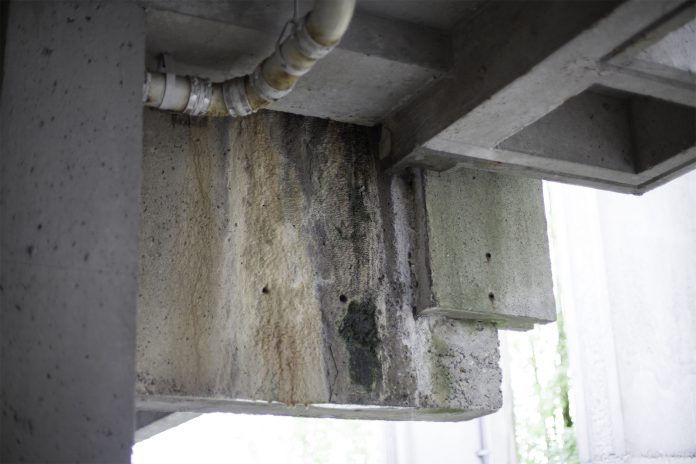
Mould is a rampant issue at SFU, but hopefully not for much longer.

In light of recent issues with mould in buildings on campus, SFU has developed a new Mould Control Program to combat the issue and its associated health risks.

An informational meeting was held on June 1 to discuss the revised regulations and procedures for handling mould, while providing an opportunity for questions and feedback from attendees. The team in charge of developing the program consulted a wide variety of “best practices” resources, including the CCA Mould Guidelines for the Canadian Construction Industry, as well as the NCCEH Mould Remediation Recommendation, a “summary of all the [mould remediation] literature up to 2014.”

According to Lesley Clements, an occupational hygienist hired by the university to assist in tackling this problem, the program seeks to “formalize a process” for effectively dealing with onsets of mould and mildew. It involves both a concentrated effort to respond to reports of pre-existing cases and administration of stronger preventative measures against future outbreaks.

People on campus are encouraged to report cases of mould or intrusive moisture in their residences, offices, and the like. From there, SFU representatives will perform inspections on the building in question, look into its history, and conduct interviews with occupants. As a result of the large number of buildings on each of SFU’s campuses, the project aims to ensure that the order in which mould cases are handled is prioritized based on how urgently intervention is required.

Meanwhile, building envelope engineers will be involved in “larger, more complex [construction] projects” on SFU’s campuses. They will verify that all building codes are being followed to the letter, identify and neutralize any potential mould-related health concerns prior to commencing construction, and approve the materials used.

The Mould Control Program will also be subject to an audit one year following its implementation, and once every two years after that. Though attendees of the meeting raised concerns that SFU’s internal auditor did not appear to be involved in the audits outlined in the program, presenters suggested that they could “bring it up with him” at a later date.

Mould has been an enduring issue at SFU over the past few years, especially in the controversial shutdown of the Louis Riel House residence last year.

Former SFU prof introduces gender equity bill to Parliament

0
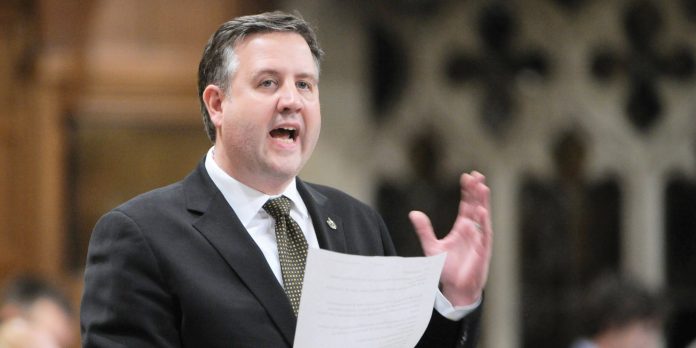
NDP Kennedy Stewart (pictured) believes that financial incentives can encourage parties to field more female candidates.

Last October, a record number of 88 women were elected to the House of Commons in Canada. Despite this new record, women still only comprise a mere 26 percent of the House’s 338 members.

NDP Burnaby South MP and former SFU political scientist Kennedy Stewart condemns these numbers: he noted that this percentage ranks Canada at 61st out of 191 countries, behind nations like Iraq, Afghanistan, and El Salvador. Even more upsetting, the country ranked at 21st in 1991, meaning that while other nations are progressing, Canada is falling behind.

In response to these numbers, Stewart is sponsoring a controversial bill, the candidate gender equity act, to bring gender equity to Parliament. First put forth in February, the bill would, according to Stewart’s press release, introduce “a financial incentive for political parties to run more women candidates and move towards parity in their nominations.”

In particular, Stewart criticized the Conservative party for running female candidates in only 19 percent of ridings. He compared this to the NDP and Liberal parties, who ran female candidates at 43 percent and 31 percent, respectively.

According to Liberal MP Anita Vandenbeld, “[l]egislative solutions [. . .] including financial incentives or penalties to encourage political parties to nominate more women, are considered by UN Women, UNDP, the Inter-Parliamentary Union, and other major international organizations, to be commonly recognized methods to achieve greater gender parity.”

The bill was drafted with advice from “numerous prominent female scholars,” according to The Vancouver Sun, and was endorsed by Green Party leader Elizabeth May; however, the bill also faces many opponents. Included in this group is Prime Minister Justin Trudeau, despite his move to appoint a gender-balanced cabinet upon election.

Also in opposition is Conservative Surrey MP Dianne Watts, who called the bill “truly offensive,” according to a transcription of the Parliamentary debates. Watts agreed that having more women in politics could have a positive effect on government, recalling her days as the first elected female mayor of Surrey in 2005. Having a female majority on council when she became mayor was “influential” in the success of dealing with issues such as child development and homelessness, she said.

However, rather than implementing quotas, she believes politicians need to do more to encourage and mentor young women. Watts pointed out that Surrey had no such quotas when they achieved a female majority.

She also expressed her belief that men who identify as feminists, such as Stewart and Trudeau, should focus on issues related to “their own gender,” such as domestic violence and sexual assault. “To have a guy stand up there and offer to give me something he thinks I need is not OK,” she stated.

Despite the controversy surrounding the bill, it will be debated again after the summer break.

Should Marvel give Captain America a boyfriend?

3
The Twitter hashtagging campaigns continue with Marvel's Captain America at the centre of the latest one.

Sexuality is fluid and Captain America’s should be too

By Tamara Connor

Giving Captain America a boyfriend in the next Marvel film would be one of the best decisions made by the franchise to date.

#GiveCaptainAmericaABoyfriend started trending on Twitter soon after #GiveElsaAGirlfriend started, highlighting Disney’s — who own Marvel Entertainment — problematic representation of LGBTQ+ characters. And by problematic representation, I mean no representation at all. There has since been a considerable amount of support for a queer Captain America. Fans of the comic books and movie adaptations alike were quick to point out the franchise’s lack of diversity, and saw the hashtag as an opportunity to remind everyone that queer representation is important no matter your sexual orientation.

Personally, I am all for giving Captain America a boyfriend. Here’s why.

1. Captain wasn’t always a little bit gay, but who cares

Anyone leaning on the excuse that Captain America never had a boyfriend in the comics, and should therefore not have one in the movies, needs to pull their head out of their ass. None of the movies are perfect recreations of the comic books, nor should they be. The comics should offer a starting point for plot. But writers should be encouraged to change things up for the movie adaptations. There wasn’t nearly this much opposition to any other of the changes made for any Marvel films, so this difference shouldn’t be a big deal either.

2. The Hydra double agent plot twist makes no sense

Anyone staying up to date on the latest Marvel news will know that a new comic was released where Captain America is revealed to be a double agent for Hydra, a terrorist organization in the Marvel Universe.

Wait, what? Captain America as a terrorist? What a needless plot twist. Captain America is meant to embody Western ideals, like freedom and independence; not be some pawn in a terror plan. To try and weave that into a film at some point would result in the destruction of a beloved character. Having a boyfriend, and exemplifying love and acceptance, would be much truer to Captain America’s nature than the Hydra arc.

3. His current love interest is the niece of his old love interest, and that’s super creepy

So in the last movie, Captain America: Civil War, the Cap was locking lips with Sharon Carter, niece of Peggy Carter. . . his ex-girlfriend. Do I really need to go on? It’s a weird relationship. Having the Captain explore his sexuality would be a way better plot, and way more relatable.

4. Why the fuck not?

How is Captain America having a boyfriend such a big deal that it merits me writing this article?

5, Representation is important

As my girlfriend puts it, if you don’t think representation is a problem, it’s probably because you are already being represented in movies and on TV. As one of the most influential franchises around the world, the Marvel Cinematic Universe could help change how the world sees the LGBTQ+ community, all the while giving those from the queer community a reason to feel acknowledged, valued, and empowered. Having diverse characters shouldn’t be something we quibble about. It should be an expectation. Excluding demographics will, in time, prove to be a mistake.

When it comes right down to it, queer kids need superheroes too, and they deserve to be represented. The #GiveCaptainAmericaABoyfriend conversation is about so much more than just having Captain America explore his sexuality. It was meant to draw attention to the fact that, as it stands, Marvel and Disney are making little effort to include all of their fans in the experience. It’s time for some proper representation.

Creating a new character would better serve the LGBTQ+ community

By Justin Stevens

As a comic book fan for the better part of two decades, I’ll be the first to admit that I struggle with the idea of change. However, I also recognize it’s necessary and natural to surrender to change. As we grow as a more diverse and inclusive society, it becomes increasingly necessary for us to evolve our ideas and predispositions. The inclusion of strong LGBTQ+ characters in the Marvel Cinematic Universe is certainly one of the strong ways to further this sentiment, as it enhances our viewpoints and makes us more empathetic of those with whom we share the world.

To that end, it might surprise you to hear that I am arguing against the trending Twitter movement, #GiveCaptainAmericaABoyfriend. I acknowledge the argument has just merits in regards to the downright ambiguous dialogue between Bucky Barnes and Steve Rogers — not to mention that lacking spark of vibrancy in his relationship with Sharon Carter. Ultimately though, I cannot help but disagree with the idea of making Steve Rogers gay or bisexual.

This is mostly due to the fact that I don’t think it brings anything all that enthralling to the character in terms of his ongoing development. I’d even go so far as to say that Marvel’s recent decision to make Captain America aligned with the evil organization, Hydra, is a more compelling change to the character’s mythology. The exploration of Steve Rogers’ sexuality could arguably go hand-in-hand with his constant struggle to integrate into modern society; still, I can’t help but feel it would be more captivating  and emotionally charged to explore the idea of one of the most iconic heroes turning against his fellow compatriots.

On the other hand, why not develop a new character to explore the idea of a time-displaced hero rediscovering his sexuality in the 21st century, instead of changing one that already exists? After all, it wouldn’t be the first time a new character was created based on a previously popular one.

Consider DC’s Apollo and Midnighter — regarded as interpretations of Superman and Batman, respectively. Their storylines explore the idea of the world’s finest as a gay couple. There are ways to explore ideas from different perspectives which not only incite discussion, but also bring something new and different to the existing universe.

More than anything though, #GiveCaptainAmericaABoyfriend showcases a lack of creativity on the part of those who push for representation of the LGBTQ+ community in film. The inclusion of a gay, lesbian, bisexual, or transgender character should not come as an afterthought to be applied to an already pre-existing character who has spent 75 years on newsstands. Especially with such a richly diverse cast of LGBTQ+ characters that exist and continue to be created in comics today.

While the idea of giving Captain America a same-sex lover is a commendable notion with genuine intentions, it’s sadly no more than damage control to a more prevalent issue. I wholeheartedly believe we owe it to the LGBTQ+ community to have gay, lesbian, bisexual, or transgender characters integrated into the Marvel Cinematic Universe — but with some forethought instead of reconsideration.

Dwarf Fortress lacks strong visuals, but that isn’t a bad thing

1
The complex gameplay makes up for the fact that it looks like a five-year-old puked on a calculator.

By: Vincent Justin Mitra, Peak Associate

Dwarf Fortress is one of the most open and ambitious video games out there.

Players can build complex structures that stretch high into the sky or far below ground. They can be a wandering adventurer, taking quests from villagers to slay bandits and dragons and vampires. They can pulp their own paper and have the dwarves write procedurally generated books. Or they can dig into hell itself and unleash the infinite and nigh-unkillable monsters beyond imagination.

Each new game is set in a randomly generated world. And when the game generates a world, it doesn’t just generate land and trees and people and towns, but histories as well. The stories that players can share after just one game are often surprising and absurd.

Visually, though, it looks like a five-year-old puked on a calculator.

First released in 2006, Dwarf Fortress is a labour of love made by brothers Tarn and Zach Adams, after years of closed development. Dwarf Fortress is funded entirely by donations, and the creators aim for the final product to be as close to reality as possible — or as real as a world filled with dwarves and goblins can be. It is one of the first video games to be featured in the New York Museum of Modern Art.

The biggest failing of the game is its incredibly steep learning curve. The graphics fall into the category of “ASCII Art” where alphanumeric symbols are used in place of pictures. In this game, a picture of a horse is instead a brown lowercase “h,” a goblin is a green “g,” and so on. The game also does not do a good job of explaining how things are done, with even experienced players needing outside assistance.

The game’s motto is “Losing is fun!” and it makes that crystal clear.

What makes the game amazing are its complex systems: how they connect and, more often, collide. For example, the game tracks the individual organs and layers of skin, fat, and muscle for each entity to determine health and damage.

I remember hearing about a dwarf who, in a fight with some goblins, got his torso cut open. The other dwarves were able to rush him to the hospital and patch him up. Later, however, while the dwarf was moving around the fortress, the player noticed two red tildes trailing behind. Investigating, it turned out that the doctor who performed the operation was good enough to save his life, but not good enough to remember to push his intestines back inside him.

I, too, had my own experience of comical tragedy. In one of my first games, a particular dwarf was super unhappy because he lost all his pets in a goblin attack. He was very sad, but he was able to soldier on. A few days later, however, he ate a bad meal, and that was the last straw.

He flew into a rage and ran down the hall, punching two or three of his fellow dwarves before calming down. These two dwarves, still also sad from the loss of their own pets and now with the added trauma of being punched, flew into a rage as well. This escalated to include their friends and family, who were now furious that someone they knew had been punched.

This, I learned, is what is known as a “tantrum spiral.” Soon, everyone in my fort was dead except for one dwarf who happened to be in the basement at the time and hadn’t made friends with anyone.

I limped along, trying to run a fortress with just one pair of hands, until a new wave of migrants arrived and brought things closer to normal. I named the sole survivor as the Captain of the Guard, to honour his experience, and continued running my settlement without incident.

Months later, a random dwarf snuck into the Captain of the Guard’s chambers, chopped off both of his legs, and merged back into the population before I could determine who did it.

The survivor was rushed to the hospital and successfully stabilized. But this was an earlier version of the game, before crutches were functional. So he lay sleeping in his hospital bed for years.

Later, after the game was updated, he woke up, grabbed a pair of crutches, and went back to work.

The game is still far from where its creators want it to be. Currently it stands at version 0.43.03, which is their way of saying it is only 43 percent complete, with a projected 20 years of development remaining. Even in its unfinished state, the game boasts a thriving fan community that has made game mods, tile sets (to replace the letters with actual pictures), and the aptly named Lazy Newb Pack, which is stuffed with tools and utilities to help beginning and experienced players alike.

And stories. Countless stories ranging from humour to horror about astounding things in a game nowhere near complete. Imagine the stories it could tell when it gets there.

Dwarf Fortress is available for free at www.bay12games.com/dwarves