

Why it’s time to rid ourselves of plastic waste for good
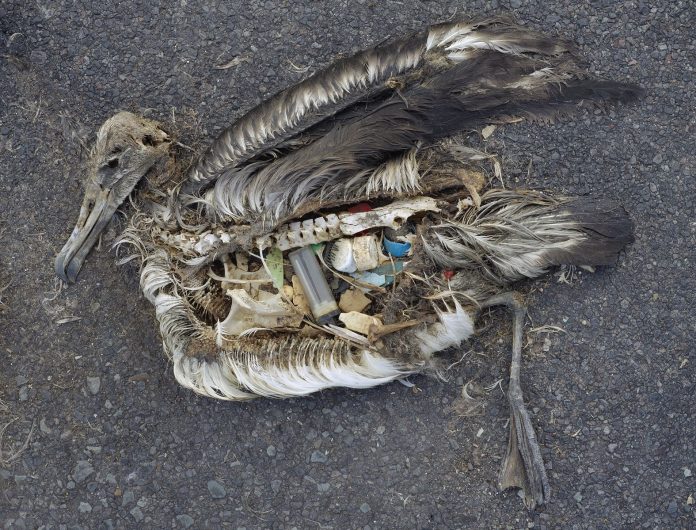
[dropcap]W[/dropcap]hen you’re at Safeway buying your groceries, the cashier drops the usual question: “Do you need a plastic bag?” Many of us reflexively answer with “Yes, please.” On campus, purchasing bubble tea in between lectures, we are often confused as to which coloured trash receptacle the cup goes into. I’ve named only a couple of instances that evoke a feeble voice within my head — do we really need all this plastic in our lives?
My attention was further drawn to our reckless disposal of plastic after watching a viral video (God bless the Internet!) of a plastic fork jammed inside a turtle’s nostril. Afterwards, I laid in bed questioning the world. We treat the environment, particularly oceans, as spheres of waste disposal for two (nerdy-termed) reasons: the free-rider problem and our anthropocentric view of domination towards nature.
When we don’t pay for the costs of polluting the water with our garbage while we’re on a cruise, we become the ‘free-riders’ causing the problem. When we believe that nature is here to serve us instrumentally, we dominate as we please. The end results are irreparable consequences on aquatic life and degradation of water resources.
The truth is that plastic waste has become a specimen of the hydrosphere all over the world; it now seems to be on top of the food chain, killing most things that live on the ocean surface. A study at UBC found 93 percent of birds called fulmars had stomachs stuffed with plastic. Plastic obviously isn’t tasty, but if I were a bird and saw a transparent head floating nearby, I’d think it was lunchtime as well!
Polyethylene has become our best friend. Its accessibility and reliability is a trait that fits my real-life best friend as well. The difference is that my real best friend is biodegradable, but plastic isn’t. All plastic produced since its invention in 1907 still exists even in the most minute forms on Earth today.
I didn’t conduct multiple experiments to accumulate this understanding over what polymers do. I simply wondered why the turtle or the fulmars’ fates were due to something that could have been avoided.
Plastics are used by various billion-dollar companies to make products for our purposes — for us humans. If we consciously advocated for a gradual ban of plastics in favour of more environmentally friendly and biodegradable alternatives — if we cared about the consequences of needless disposables — we would start to find fewer pieces of plastic in both land and aquatic animals.
A little throwback reminds us that plastic bottles started being recycled in 1977. My hope for the future is that we finally see the last plastic-anything be properly treated and recycled, before King Polyethylene takes over the Earth kingdom.
NEW MUSIC FRIDAY

By: Sarah Finley, Max James Hill, and Courtney Miller
Follow The Peak on Spotify to stay up to date on New Music Friday.
“Augustine” – Blood Orange
Courtney Miller: I get an ‘80s vibe from this, particularly from the whispery vocals that I’m not such a fan of. The song improves as you progress through it, culminating in the female vocals that seem to drop down from heaven in the latter half of the song. It’s pretty mediocre for me.
Max James Hill: Dev Hynes is at the top of his game, and this standout track off his new record is proof. I love the Prince vibes, the passionate vocal delivery, the lyrics that describe urban life and the black experience by way of the poetic writings of St. Augustine. I’ve listened a few times already, and each time I get something new out of it. The simplicity and sincerity are intoxicating.
Sarah Finley: Echoey, calm, and slow, this new Blood Orange track is perfect wind-down music after a long day. Or dissociating, if your brain is inclined to do such things.
“Sledgehammer” – Rihanna
CM: She’s got some great, majestic vocals that work with the movie soundtrack style she’s got going on here, but I dunno. It starts to feel too faux-majestic to really enjoy it outside of the context of its spot in the movie.
MJH: Kind of sounds like Rihanna doing a Radiohead cover or a Bond theme song? She’s definitely got pipes, but the backing instrumental just doesn’t have the usual groove and heart that her best songs always do, and the whole thing ends up feeling weirdly dispassionate and by-the-numbers. Give me “Stay” or “We Found Love” over this any day.
SF: I’m not used to hearing Rihanna create music that isn’t meant for partying or speeding down highways. Although she does successfully utilize the upper limits of her vocal range, the usual R&B singer’s basic lyrics and repetition don’t leave me overly impressed.
“If I Told You” – Darius Rucker
CM: Oh, is it time for ‘spot the country fan’ again? OK, so one of the things I love about country music is that it doesn’t try to be pretentious or any of that crap. There’s generally a lot of honesty and understated romance in the songs not about partying, and Rucker’s great for that kind of upstanding, easy to like music. His overall stellar vocals help, too.
MJH: Is it just me, or does this have the exact same chord progression as “Someone Like You”? So much about this song — the hypermasculine delivery, the boring clichéd lyrics, the predictable churn of twangy guitars and pounded piano strings — is so diametrically opposed to what I’m into that it almost feels like performance art. But, like, bad performance art.
SF: A country song about love? Whaaaaaaat? That’s new.
“Weekend” – Louis the Child feat. Icona Pop
CM: I was never a fan of Kidz Bop, or artists who randomly have children joining the chorus or whatever — it’s really kind of a ‘why?’ moment. That being said, the child aspect to this song isn’t overpowering, which is new and nice, and the song is strong with or without it. It’s fun, catchy, and has some cool instrumentation happening. I’m down.
MJH: This doesn’t quite have the punch of “I Love It,” but it’s enjoyable enough. The lyrics are surprisingly not terrible, and I like to think there’s a hint of sarcasm and snark in its depiction of early-twenty-something excess. The chorus is catchy and for some reason I don’t hate the kids singing in the chorus.
SF: Icona Pop can be filed under my guilty pleasures, but this track is just bizarre. Lacking any sort of background instrumentals for the first minute and replacing any drums with clapping, the song just feels empty and the shallow bass drops don’t exactly help.
“M.I.L.F.$” – Fergie
CM: Haven’t heard a bar and already I’m not looking forward to this. What the ever-loving fuck is this? You can’t make a song by replacing ‘milk’ with ‘MILF’ and you can’t declare yourself a MILF, that’s not how it works. The bridge is the best part because it sounds nothing like the rest of the song and there’s actual substance there.
MJH: As my friend Natalie told me, this song is like Amy Schumer’s “Milk Milk Lemonade” spoof, except it’s a real song. I’m all about Fergie owning her sexuality and stuff, but this song is trying to be about 50 things all at once, and it does exactly zero of them well. Even the recurring milk / milkshake metaphors are ripped off directly from Kelis without any of the winking charm that made “Milkshake” such a hit. Sorry, Fergie, this is more of a MILF: a Majorly Insipid Listless Fuckup.
SF: Oh, Fergie. Sometimes there’s comfort in things staying exactly the same for extended periods of time — Fergie’s sound is not an example. Complete with the spelling out of words, this track’s eclectic mashup of too many noises and not enough instrumentals leaves me entirely uncomfy.
“Fool’s Gold” – Dagny feat. BØRNS
CM: This song totally doesn’t need to be redone, but it’s definitely not a bad redux. The original power and amazing-ness is still kicking. Instead of it being a bad remix, it’s like the greatness you know and love, just taken a different way — the way remixes should be done.
MJH: I dunno, this song just kind of leaves me cold. It sounds like pretty much every other song on the radio, and yet it also sounds weirdly worse than anything else on the radio, if that makes sense. It mostly just feels like everyone involved is going through the motions, hoping no one would notice that they’re just there to get a paycheque. But I noticed. If a great pop song is real gold, then you know what this is.
SF: Upbeat and bouncey, this track is hands down my favourite of the playlist. BØRNS brings his signature vibe to this collab, including mini bass drops, head voice vocals, and piano chords.
“Tidal Wave” – Taking Back Sunday
CM: Oh pop punk — how I still love you even after all the years that’ve passed since high school. That being said, TBS was never a constant on my playlists. This is fine if you like that more roots pop punk style, and it’s uptempo and all that jazz but I wouldn’t listen to it again.
MJH: Pop punk isn’t really my thing — give or take Say Anything — but this is OK. Super formulaic and repetitive, sure, but at least they sound like they’re doing their best. Not something I would ever listen to again, but a cut above your average hyper-emotional pop punk song.
SF: Immediately electric guitar-heavy, there’s no denying this track sounds like it was made by a group of high school boys in their parents’ garage. Rough vocals interspersed with yelling and snare-heavy percussion finish the track.
“Surrender” – Tor Miller
CM: This is enjoyable to listen to, with a rock/easy-listening kinda vibe going on here. It does remind me of the kind of stuff that my mom listens to, but the power and musicality make up for that.
MJH: I like that Tor Miller’s voice is unconventional and has a little personality to it — too bad you can’t say the same for his music. Hard pass.
SF: Beginning with dramatic piano chords, the track segues into deep vocals singing equally dramatic and romantic lyrics. If you’re at all in the mood for love, give this track a listen. The dramatic piano chords never quit, and the song ends on the musical version of a cliffhanger.
“Hang Me Out to Dry” – Metronomy feat. Robyn
CM: It’s almost like there are two different songs competing with each other because of the disconnect between the chorus and the verses. That being said, it’s actually not bad, because despite the two sounds being quite different, using them to flow into and out of each other works really well and makes for an intriguing song.
MJH: I love Metronymy and I adore Robyn, but this song is just OK. I agree with Courtney — it sounds like two different songs that don’t quite match up. For me, it doesn’t really end up working out. Both parties do their best to sell it, but it’s just oil and vinegar.
SF: Electric-sounding vocals and soft masculine vocals go back and forth, singing romantic lyrics to the sound of electric bass plucks and a solid synthesizer background. If there were a music video, the actors would probably only be allowed to wear shiny spandex against a neon background.
“Fake My Own Death” – Sum 41
CM: Wow, these guys are still around? Last time I heard of Sum 41 I was playing as Tony Hawk to “Fat Lip” in a boys’ room more than a decade ago. Oh, how things have changed. Aside from nostalgia, there’s not much going for this song because I have long since grown out of the phase where I find screamy vocals even the tiniest bit palatable.
MJH: Poor Sum 41. It seems like they’ve wasted their time and ended up another casualty of society. They fell in line, and became another victim of their own conformity. They backed down.
SF: Similarly to “Tidal Wave,” this track, too, is immediately snare drum- and electric guitar-heavy. This one’s even worse, though. The vocals and lyrics remind me of middle school angst and that time where I almost slipped into a scene phase, but narrowly avoided it.
“Houseboat” – Sykamore
CM: I don’t know who I had to kill to get two country songs on this playlist, but I am probably the only one of us who is super OK with this. There’s an innocence and plenty of songwriting skill — she did, after all, win a songwriting contest in Alberta — and I’m plenty happy to listen to this song anytime. Of the two (why two?) country songs on this playlist, this one is definitely the better of the two.
MJH: Maybe it’s just because I tend to prefer female-fronted country songs. In any case, this sounds like Taylor Swift circa 2008, which isn’t the worst but definitely isn’t the best. Also, am I the only one who finds it weird that houseboats are now country music icons à la pickup trucks and barbecues?
SF: Another country, but this time it’s about a breakup rather than love! Admittedly, this track’s lyrics are markedly cuter than the first one’s. It helps that Sykamore’s lyrics fondly describe the gold coast and cinnamon whiskey.
“Storm” – I.Y.F.F.E. feat. Desiree Dawson
CM: It’s too repetitive in a monotonous way for me to enjoy it in any way. There’s no real need to listen past 1:45 because the second half of the song is basically just a repeat of the first.
MJH: Meh.
SF: Haunting feminine vocals to a background of instrumentals that remind me of Flume and Disclosure mashups create a track worth listening to. At around two minutes, a horn section joins the synthesizer and percussion, easily pushing the track from good to great.
Brexit is the product of personality politics

[dropcap]A[/dropcap]s a former resident of Britain, my mother spent most of June 24 on the phone with her friends and relatives who still live in England, consoling them on what they felt was a severe injustice to their nation.
The British exit from the European Union (EU) — dubbed “Brexit” for short — caught many by surprise as 51.9 percent of voters chose to leave in the recent referendum.
The process by which the UK came to this conclusion was undoubtedly democratic. However, the results have left a huge amount of the population frustrated and unsatisfied. One of the problems underlying this conundrum is the oversimplification and personification of the EU debate by the media.
Hours after the polls closed, Google publicized that searches by British users for “What happens if we leave the EU” spiked, more than tripling the average amount. Considering the 71.8 percent voter turnout for the referendum, it seems likely that many voters went in unaware of the full scope of the topic.
Leading up to the election, an overwhelming amount of the content produced by media focused on personifying the ideological dichotomy between the ‘remain’ and ‘leave’ factions: David Cameron versus Boris Johnson; millennial versus baby boomer; cowardly, unpatriotic progressive versus anti-immigration xenophobe.
It’s easy to understand why spinning the issue this way is so tempting: celebrity names and dramatic statements make for sexier headlines than long-winded policies and uncertain projections of how things may pan out. We’ve seen it done time and again with the US presidency, and even our elections here in Canada.
However, this trend actively works to convolute the democratic decision process and increase voters’ remorse in the long run. If you’ve been keeping up to date on the topic, you’ve probably seen interviews with UK citizens stating that they voted to leave, but didn’t expect it to go through, and now wish to repeal their vote.
For many people, the referendum became a channel to show their discontent with British elitism; a way to give the democratic middle finger to Prime Minister David Cameron — who has since resigned, and will officially leave office next October.
Data show that 3/4 of people aged 18 to 24 voted to remain in the EU. As the voting demographic that will have to live the longest with the consequences of this decision, their discontent with the outcome illustrates a civil fissure in beliefs.
Younger generations are also the ones who use the travel, work, and study benefits that are offered to members of the EU. They are the ones who grew up with the Internet, and likely see the world in a more global than nationalized sense. Additionally, many younger people with a vested interest in the decision who were too young to vote in the referendum feel they’ve been cheated by their older counterparts.
The campaign to leave has cited immigration as a staple issue for their cause. What was less talked about was the fact that Britain would still have to abide by EU policies for two years, in which they would not have a part in the discussions or votes, effectively making no difference to immigration in the immediate future.
It does mean, however, that people who wanted to stay in the EU and have a say in what is happening no longer have that option. There is still a small glimmer of hope for them, though.
A poll that went up following the referendum results calling for a re-vote gained over four million signatures in less than a week. With the current economic downturn and the drop in British currency, I have no doubt that it will quickly garner even more.
As for my mom’s friends and family across the pond, I hope that they are able to reach a settlement that appeases more of Britain’s population. If not, I hope they’re prepared for the long haul of economic and social turbulence.
Why Canada isn’t all that bad

Ahh, Canada, that patch of snowy desolation that inspired such a lack of interest from the French they simply told Britain, “Fuck, just take it.”
Canada has done a lot of growing since the 19th century. While it still isn’t exactly the most glamorous place to live, Canada Day celebrations are more exciting than just sitting at home watching TV. Unless of course the new season of Orange is the New Black is streaming, then definitely watch that instead.
If you don’t have it, however, or you miraculously don’t know how to use the Internet then it’s worth coming out for the good ol’ Canadian tradition of drinking beer and yelling at fireworks in a crowd of red and white cape-wearing fools — er, rather, patriots.
Canada certainly has its flaws, such as a lack of a living minimum wage or gender equal pay, mild to extreme racism, a history of oppression of First Nations Peoples, an irreparable rift between Francophone and Anglophone Canada, and Molson Canadian — but hey, at least we have the best maple syrup.
Yes, there is that whole Bill C-51, deprivation of constitutional freedom thing, yadda, yadda, but your fear or life in prison will disintegrate when you see a Mountie riding up to arrest you in their bright red uniform and ruffled pants. While we may be a bunch of freeloading commies with our government healthcare, at least we’re polite. Canada is so polite that we’re even polite about invading other countries, or “peacekeeping” as we call it.
Canadian history and politics may be boring, but hey, at least it isn’t the US. They don’t even say please down there, which is reason enough to hold up your beer proudly and say, “Happy Canada Day.”
SFU administration revisits plan to build gondola

SFU president Andrew Petter re-opened the concept of a gondola on Burnaby Mountain during a Q&A at the Burnaby Board of Trade AGM on June 14.The proposed SFU gondola would run between Production Station and SFU.
Despite the project’s projected environmental, economic, and social benefits, the $120-million plan was ultimately excluded from the $7.5 billion 2014 Regional Transportation Investment plan by the Mayors’ Council on Regional Transportation.
The Tri-City News reported that Petter said the “business case developed for TransLink shows the aerial link to be be an efficient and reliable alternative to conventional buses, with the economic and social benefits far outweighing the costs.”
Petter also mentioned the “significant” advantages to this proposal. The Mayors’ Council noted this would remove the more than 20,000 bus trips up and down Burnaby Mountain every day, as the Tri-City News reported. That number is expected to increase 60 percent over the next two decades.
The president also drew comparisons with Metro Vancouver’s SeaBus system, which went from being considered a pleasant addition to a “‘need to have’ component of our regional transit system,” reported the Tri-City News.
Engineering consultants CH2M Hill produced a business report in 2011 on the SFU Gondola, which said that the plan has a 3.6 total benefit-cost ratio in dollar terms.
The report found that annually, there are more than four million bus trips per year to and from SFU, and this number could double by 2021. The gondola would save “500,000 annual hours of auto travel time,” result in “26.1–29.2 million fewer vehicle kilometres,” and eliminate roughly 7,000 tonnes of greenhouse gas emissions.
The report also made note of “poor travel times and low reliability in the winter.” Students reported waiting at Production Station and other stops up to 30 minutes for a bus. Poor travel times could discourage public transit and encourage automobile use.
The federal government recently announced $740 million in transit funding for Metro Vancouver. Unfortunately, “the [SFU] gondola didn’t make it in the mayors’ 10-year vision,” said Vancouver mayor Gregor Robertson. He added that the SkyTrain extensions to UBC and Port Coquitlam are also priority projects.
There have been times when students have become stranded at SFU in the winter when buses were unable to make the trip. A gondola would eliminate this problem, says SFU urban studies professor Anthony Perl, who said “SFU is still not accessible year-round.
“One hundred twenty million [dollars] might seem like a lot to students . . . but to the provincial government it’s not,” said Perl, adding it is a “fraction of the cost” of the Evergreen Line and UBC’s proposal. “You can get a lot of results from a relatively low capital investment . . . [the gondola] is a real value deal.”
When asked why the project didn’t go forward, Perl noted that it was never an “either/or decision” between the gondola and the Evergreen Line or UBC. They’re separate pieces of infrastructure, and “formally, no level of government opposed [the gondola . . .] it simply wasn’t put forward as a priority.”
This reflects the history with rapid public transit in Metro Vancouver, said Perl. “Everyone’s for it in principle,” he said, but the government would “rather build big bridges and expand highways.”
Perl noted the real attraction should be that “it’s fossil fuel-free.” It would run on electricity and eliminate the need for diesel buses.
He claimed that, when you look at the billions of dollars spent on highway and bridge improvements, it “tells you something about the [BC Government’s] priorities,” adding that BC was once a climate leader, but has now become a “climate laggard.”
SFU students, Perl said, should support the project because it would benefit them greatly. He advised contacting MLAs and the BC Climate Action Centre through email, or social media to “let the government know that this is a priority.”
He suggested students share their personal transit horror stories to highlight woes with the current transit system.
Squamish Nation takes NEB to court over pipeline

The Squamish Nation is filing a court challenge against the National Energy Board (NEB) for recommending the approval of the Kinder Morgan Pipeline expansion.
The recommendation report, which was issued on May 19, consists of 157 conditions that the Nation alleges did not sufficiently and carefully address their concerns or the concerns of other BC First Nations.
The NEB allegedly failed to thoroughly consult the Squamish Nation about the conditions before going forward to recommend that the federal government approve the pipeline expansion.
“The conditions established by the NEB aren’t reflective enough of the Squamish Nation’s beliefs, [which] need to clearly be represented,” said Ronald Johnston, director of the office of Indigenous Education at SFU, who emphasized that he speaks respectfully and independently from the Squamish Nation and does not represent them.
This $6.8 billion expansion project is slated to nearly triple the capacity of the pipeline, which currently transports 300,000 barrels of oil per day from Alberta to Burnaby. It will also reportedly increase the risk of oil spills in the Burrard Inlet by up to 600 percent, and tanker traffic will be multiplied by almost seven.
“The standard for meaningful consultation has been established by precedent Supreme Court decisions and lawsuits,” Johnston said. “It stems from the Constitution Act Section 35 that affirms the rights the aboriginals have within the act.”
The Squamish Nation is not the only BC First Nations taking a legal stand against the NEB’s actions. The Tsleil-Waututh Nation filed a lawsuit against the NEB under similar claims in October 2015.
“We’ve had a chance to look at [the reports] and have come to the conclusion that they didn’t seriously take into consideration Squamish’s concerns. Therefore, we must file a writ to protect our interests,” Chief Ian Campbell told The Vancouver Sun.
Prime Minister Justin Trudeau’s government has put the final decision on hold until December 2016, as three court challenges have been filed for similar reasons against NEB — from the City of Vancouver, Squamish nation, and Tsleil-Waututh.
“For them to have taken legal action, it means they were left with no alternative,” said Johnston.
“It’s not just about a conflict between the First Nations and the NEB, it’s about any person who faces an alleged act of unlawful conduct and disputing it in court. That is a natural response.”
CINEPHILIA: Top five movies of 2016 so far
My favourite movies of 2016 so far are anomalies. As our southern neighbours have stooped closer to madness with each passing day of their erratic election campaign, a few great films are returning to simple sincerity; clinging to an older time to mask the current one. Here are my top five movies of the year thus far, all of which are more than worth your time.
1. Knight of Cups
This peculiarity by Terrence Malick (The Thin Red Line, The Tree of Life) is the only film on this list with its sights set on the future. Progressing the director’s form to a realm even more fractured and ethereal, we can sense the soul of the cinema separating from its body, ascending to something higher.
The film leaves conventional narrative behind for images that are solely metaphorical or emotional in signification. Knight of Cups borrows themes from The Pilgrim’s Progress and sets them against Hollywood’s hedonism. The film, dense with meaning, is about now — economic inequality, representations of women in the media and pop culture, the hegemony of materialism — but it also taps into something more eternal, more spiritual.
2. The BFG
Steven Spielberg’s return to family movies is an instant classic; your kids will be showing it to their kids. With spellbinding visual effects, the film immerses us in another place, another time, and another reality. Based on a novel by Roald Dahl, we follow an orphan snatched into a world of giants by the klutzy and kind Big Friendly Giant. It’s a simple story of friendship that is beautifully told, accessible to children but universal in its expression of pathos.
3. Midnight Special
Jeff Nichols’ sci-fi chase movie, following a messianic boy who is being pursued by the FBI and members of a cult, feels like a lost classic someone dug up from the mid-’80s. Midnight Special harnesses and pays homage to films like Close Encounters of the Third Kind and John Carpenter’s Starman, harkening back to when films about faith demanded a little of it from their audience. Its emotional pull sneaks up on you, building to a powerful and understated climax.
4. The Wailing
I gave up piecing together the perplexing plot of this gonzo Korean horror film, which is about a series of mysterious murders in a small, secluded town. What I’m now left with are the eerie sounds, the nightmarish images, and the overarching hysteria. The Wailing jumps between genres and effortlessly maintains a chilly atmosphere. A crime drama, a zombie film, a slapstick comedy, an exorcist flick; despite all of the different ingredients, the film is remarkably singular and coherent. This is the best horror movie I’ve seen this year and by far the scariest.
5. Everybody Wants Some!!
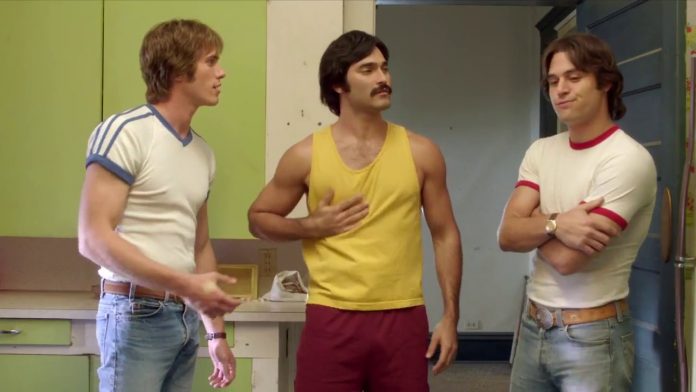
Over 20 years after Dazed and Confused, Richard Linklater returns with a film he calls its “spiritual sequel.” Moving us from high school to college and from the ’70s to the ’80s, Everybody Wants Some!! is a painfully funny look at early adulthood at the end of an era. Linklater balances escapism with sadness, and nostalgia with unblinking truths about the period and the characters in it. Among many miraculous things, it’s a film that somehow manages to make moustaches cool again, which is no small feat if you ask me.
Album Reviews

Band of Horses – Why Are You OK
By Jessica Whitesel
Indie group Band of Horses is back again with Why Are You OK, which left me asking if the band was OK.
Their 2006 song “The Funeral” is one of my favourites, along with its album Everything All the Time. Yet their latest release falls flat. While consisting mostly of indie and indie-folk offerings, they for some reason tried to incorporate a heavier sound throughout, making the album seem like it’s going through an identity crisis.
Some of the songs do sound similar to what they cultivated with Everything All the Time. But the sloppy production and inconsistent tone make for an album that is about as exciting as watching paint dry. This album is destined to become background noise, if it isn’t totally forgotten about.
Red Hot Chili Peppers – The Getaway
By Jessica Whitesel
Don’t stop doing drugs, kids.
That is the main takeaway from listening to this album. RHCP is trying to recapture some of the magic from Blood Sugar Sex Magik and Califonication, but it ends up just sounding like the third disc from Stadium Arcadium nobody asked for. Both of those albums were released before the band got clean and when they still took risks.
“Dark Necessities” just sounds like one of those tracks that only hardcore fans might be interested in, not because it is great but because hardcore fans love to be pretentious and know all of a band’s songs — even the bad ones.
This album is too safe, and sounds like one really, really long song. If you are a hardcore fan then by all means listen to it, but casual listeners should take a pass.
The Strokes – Future Present Past
By Tanya Humeniuk
I swear that the music released by the Strokes gets better and better every time. There aren’t very many bands you can say that about. And each time they come up with something new, there always remains that distinct Strokes sound.
This trend still holds for their latest EP, Future Present Past. The first thing I noticed when listening was the fullness of the sound. The quality of production and songwriting on this record is top-tier.
Characteristic to the Strokes, the EP features Julian’s angsty vocals which will pull at your heartstrings, catchy melodies, synthy guitar, and satisfying chord progressions and resolutions. My favourite track is probably “Threat of Joy,” which includes some delicious vocal harmonies.
Everything one can love about the Strokes is included in this EP, with added maturity and finesse.
Bard on the Beach is about the experience, not the production
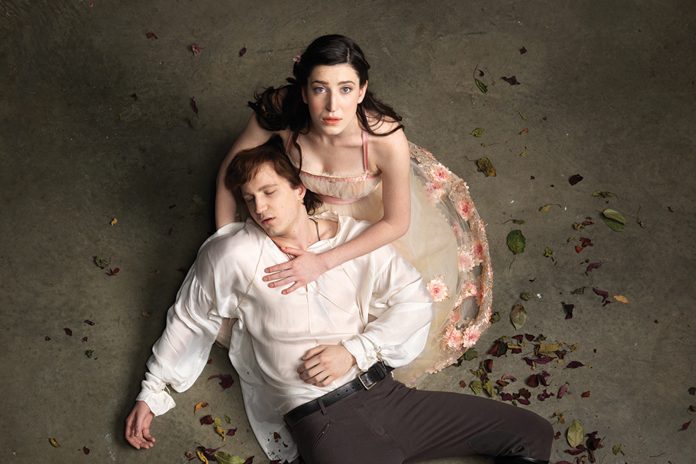
With its 27th season in full swing, patrons new and old alike have been lining up in front of the wrought iron fences and white tents to see the players of Bard on the Beach. With two of Shakespeare’s greatest works, Merry Wives of Windsor and Romeo and Juliet on the mainstage, the season was anticipated to be a good one.
While the costumes were gorgeous, the opening night of Romeo and Juliet did not wow. The production failed to differentiate itself from other retellings of this evergreen story. When a story has been told as many times and in as many different ways as Romeo and Juliet, you had better have something new to offer spectators if you are looking for the standing ovation.
Everyone is familiar with the plot of Romeo and Juliet: two young and foolish lovers end up dead because of their actions. This traditional interpretation of the text exuded a staleness that many productions of this play have been plagued with. Not a lot can be said about the production because it fails to stand out from other adaptations. What saved the performance was the unbelievably charismatic cast. Despite the lacklustre adaptation, the cast delivered a beautiful performance by engaging with the audience and delivering the emotion and humour needed to balance this tragic story.
But this mediocre production begs the question: why do we bother with Bard on the Beach? And to this, the answer is simple. Bard on the Beach is about the experience, not the individual productions.
Located on the edge of Vanier Park in Vancouver, the set always includes a big opening so that patrons can catch a glimpse of the cityscape, the beach, and setting sun during evening performances. While this can lead to a chilly performance, it also creates a truly unique backdrop for classic stories.
The Bard village located in between the two stages and entrance also adds to the undeniably comfortable and enjoyable atmosphere. The concession sells local wine and beer and a variety of tasty snacks, but it’s the beautiful twinkling lights and flower arrangements that make intermission feel more like a whirlwind patio pitstop than a break between acts.
I have been attending plays at Bard on the Beach for years, and there are a few that have wowed me, but there have been many others that have felt underwhelming and stale. And yet, I return every year — and I can’t imagine a summer without a trip to Vanier Park to indulge in one of these performances. I don’t come for the performance, I come for the intriguing venue and dedicated staff.
Not every play we see needs to be a life-changing one. . . mediocre productions won’t ruin the whole experience. There is a very rewarding feeling you get when you let yourself indulge in cultural experiences like theatre. The local theatre program has prided itself on being a not-for-profit source of education for patrons, and it has undoubtedly contributed to the cultural growth of Vancouver over the years. So give Bard a chance this summer, even if the play doesn’t do it for you, the ambiance and atmosphere will satisfy.


