

Stop catcalling me!
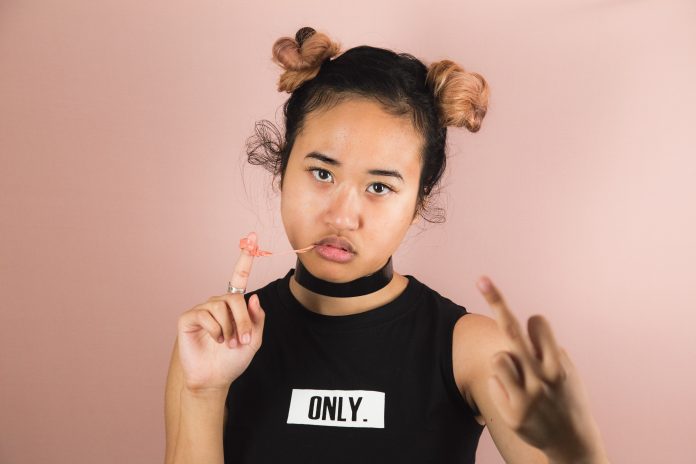
[dropcap]C[/dropcap]atcalling is not okay. By that, I mean whistling and shouting unnecessary sexualized comments at people. It also illustrates serious problems in the way people interact with one another, and it’s time to clarify some things.
Catcalling is harassment, and for many women it happens regularly. That leads people, particularly men, to think that we should be fine with it, or just shrug it off.
I know a lot of people justify catcalling with “Well, maybe you were asking for it.” This is simply untrue, and I know that first-hand.
I was at SFU Surrey campus one Tuesday morning. For those of you who don’t know, the campus is inside a mall, and as I walked down the stairs to the food court to pick up a snack, a group of men entered the mall a good distance behind me. They abruptly became very loud and rowdy, and so I walked a little faster, as I had no interest in what they were saying.
Then they started yelling: “You in the jeans, why you walking so fast? Girl, where are you going?” At this point I realized they were talking to me. I looked back, and because they were pleased to get a reaction out of me, they became even louder, spewing more vulgar comments. No one else in the mall said or did anything.
Because they were pleased to get a reaction out of me, they became even louder, spewing more vulgar comments.
Let’s begin with the fact that catcalling makes most women feel highly uncomfortable, especially when those catcalls comefrom a group. It makes many of us feel the need to walk in the other direction, to cross the road, or to just avoid the harasser at all costs. The fact that someone is making vulgar comments to a person they don’t know leaves women in fear of what could possibly happen if they chose to keep walking down a certain path.
A lot of people will just advise you to ignore them. Well, that’s far easier said than done, as this kind of harassment can be very hard to ignore. If someone is yelling at you from across the street with “Hey girl, nice legs! Well, you could at least say ‘thank you’,” how do you expect me to ignore that? I’ve been singled out in front of everyone, and now I’m being expected to accept a ‘compliment’ that I didn’t want in the first place? What is wrong with you?
I don’t need to be told that I look good in my outfit. I know I look good, and that’s why I put it on. I’m not saying that women don’t like to be complimented, but it must be done in the right way. Why can’t you just politely walk up to me and say that I look nice, or just keep it to yourself? I am in no need of your approval.
Why am I forced to think twice before wearing something that may cause unwanted attention? It just makes me and other women feel highly self-conscious. It’s dehumanizing and verbally abusive.
Dear catcallers, please hold your tongue, because I don’t care what you think.
When you buy lecture notes online, you only cheat yourself

[dropcap]T[/dropcap]ruth be told, I get a little protective of my notes when scouring eyes peer over shoulders and onto my personal class materials during lecture. Maybe I’m too uptight and I should ease off my exam mode during regular class time, but I am a firm believer of the phrase “You get out what you put in.”
And this is especially true in the case of taking proper and personal notes during class to help achieve a kick-ass grade at the end of the semester.
A recent article in Australia’s The Age investigated the buying and selling of class notes online, following the success of a University of Melbourne student named Alastair Weng. Weng, who is incredibly talented and organized, also sells his notes to other students online. According to him, this allow him to “[help] students understand some weird concepts” while also bringing in a little bit of income on the side.
To me, buying notes to study just seems like a cop-out, and makes a student who has purchased these notes seem lazy. I get it: life gets in the way, time runs out, and suddenly it’s 3 a.m. and you still have no idea what weeks eight to 11 were about. Essentially, you are cheating the system and paying someone else to do the work that you are supposed to do.
As a self-proclaimed keener, I do make the effort to go to every class and take my own notes, not only because I’m paying $177.39 per credit hour, but also because it is the right thing to do. Instead of wasting time (and money) to seek out notes from others, why not just buckle down, go to class, take some notes, and study them?
With no context of what went on during the lecture that day, it might be hard to put the words on the paper together.
It’s clear that this trend is not unique to Australia. Note-selling has become a hot market in the United Kingdom, the United States, and even here in Canada. There are many websites available to help students sell their lecture notes to desperate students at affordable prices.
A quick search turned up that SFU students are also supplying their own notes on various sites. One website in particular allows students to access a vast wealth of notes from about 90 different SFU programs, with specific notes for courses in those programs.
Having this easy way out perpetuates the idea that we don’t have to work hard because there will always be something to fall back on. But what guarantee is there that the notes someone else took will work for you? With no context of what went on during the lecture that day, it might be hard to put the words on the paper together.
Further still, what if (God forbid) the professor changes their lecture material? That would throw those notes and whatever money you spent on them, down the drain. And even if the notes do work out, how well will you really learn the material when someone else has already done the work for you?
The benefits seem to be far greater for those writing up the notes than those using them to pass. Don’t waste your money by buying notes while also spending money taking classes — sit down, roll up your sleeves, and write some damn good notes that would make your mother proud.
Boohoo, Woohoo

Boohoo: OtterBoxes
Or, more specifically, the stalled potential of the popular cell phone case called OtterBox. Don’t misunderstand: my lavender case is a beloved and key player in the fight to keep my iPhone from befalling the same fate as its poor, traumatized predecessors. But I feel we’ve stopped short of a level of quality to match the exorbitant amounts of cash we invest in our cases.
Why stop at protection in a variety of colours? Why can’t I have an OtterBox modelled after the faces of famous Canadian politicians? What about ones modelled after famous pieces of Renaissance art? When someone cute asks for my number, I want the power to hide my butterflies behind a static Mona Lisa smile.
If you love your consumers, OtterBox — and I hope you do, considering we keep your cushy Colorado-based operations running while eschewing the starving artists producing aesthetically superior knock-offs — then I’d like to request that you please answer to the public’s needs.
Woohoo: Boxes of Otters
It’s 2016, which means yet another year of celebrating cute animal videos and otherwise commodifying living things for our comfort and amusement. It should be no surprise that this is the latest in security measures.
Don’t want your screen cracking? Shelter it in a clump of soft, cuddly mammals. Scared of water damage? Considering the otters will already be fighting over precious aquatic real estate while cooped up in that box, your device likely won’t even be in the running for a turn in the morning shower. Worried that friends will glimpse sensitive texts from your ex about all that stuff you left at their apartment? Your team of waterborne ninjas will guard your secrets as zealously as the SFSS conceals the contents of in camera meetings.
Treat them with love, and when the rest of your squad is too busy to slide into your DMs, you’ll have better friends to keep you company.
My worship of superheroes is no laughing matter

[dropcap]W[/dropcap]ith 600 miles from Calgary to Vancouver, I had more than enough time to reflect on the havoc running away from home had created. Watching the sunset from the back of my taxi to a crackling playlist of bhangra music, I sat quietly and wondered if home would be there when I arrived, and if I was even worthy of returning.
On the pages of a recently purchased graphic novel, the Dark Knight faced a fate not unlike my own. Lost in time, Bruce Wayne had thrust himself into an impossible situation for which success was seemingly unobtainable; much like myself, he too needed to find a way home but did not know the way.
Waiting for my plane to arrive, I read Batman: The Return of Bruce Wayne to find escape in my time of greatest sorrow. But instead, I found something greater in the hero’s long trek back to Gotham: a path to redemption and forgiveness.
By the time I turned the final page, I had arrived in Vancouver. Both Batman and I had finished our journey in unison. We had been pushed to our brinks, but we had both grown stronger as a result of our venture, both finding a way home in the process.
Today, my Batman graphic novel sits upon a shelf with hundreds more like it. It’s commonly misconstrued as a miniscule sliver in an ever-growing collection of superhero merchandise, when it and other works have become so much more to me.
The world of superheroes is not just a fandom for me; it is a religion.
Whether it’s the friendly neighbourhood Spider-Man struggling to juggle his myriad responsibilities, the Green Lantern Corps pushed to their mental and physical limits, or simply the Devil of Hell’s Kitchen teetering on the edge of good and evil, there’s always been something for me to unpack in the world of capes and domino masks that helps me in my daily life. And every bit of it has been an integral part of making me the man I am today.
These tales, as tall and extravagant as they are, have offered me more poignant anecdotes and complex situations than I could’ve ever anticipated. Their persistence today has a worldwide effect not only on myself, but also on others who seek both guidance and redemption in their struggles.
Superheroes don’t just depict humanity’s strength, but also our potential. Superheroes challenge us to be the best we can be. They dare us to soar higher and to persevere even in the face of defeat. They inspire us to be the most heroic versions of ourselves.
And without them, I know I would be truly lost.
There are days when I wake up in the morning feeling paralyzed by the weight of my past failures to such a degree, I could swear that a kryptonite crystal was pressed against my chest. On those days, surrender feels too strong to resist. It feels inevitable.
But because of superheroes, I endure. Because of them, I fight through the pain and take one more step, even if it is agony. I learn to keep moving forward amidst fear, and always believe in the power of justice, hope, and love.
All you have to do is look just under the surface to find something you or anyone else can identify with. Although they may be just pencil and ink on splintered panels of paper, superheroes are always coming to my rescue and teaching me to believe in the most important element of the life-changing miracle machine: myself.
Canadian Blood Services once again proves its needless discrimination

[dropcap]I[/dropcap] have been donating blood since 2013, and it deeply saddens me to hear that Canadian Blood Services (CBS) will be adopting a complicated new protocol on August 15 with regards to blood donations from trans* people.
Dr. Mindy Goldman from CBS told the CBC that the new protocol “recognize[s] that [trans* people are] a group of Canadians interested in participating in blood donation.” The dark truth, though, is that the new policy is just another way to discriminate against trans* women who’ve undergone gender confirmation surgery by preventing them from donating blood for one year after the procedure.
We’ve been through this kind of thing before, namely with CBS’s former ban on donations from gay men who had had sex within five years. The good news is that CBS has finally smartened up somewhat by lessening the wait period for these men to one year. Still, the donation protocol is nowhere near as practical as it should be.
Having been a registered donor for most of my eligible life, I’m familiar with the tests, warnings, and security questions asked during every donor screening. I completely understand the importance of being careful about donating blood. Dr. Goldman called trans* women a particularly high-risk group, given that an estimated 27.7 percent of Canadian trans* women live with HIV, as the CBC reported.
The policy is being implemented because 30-50 of the over 400,000 registered donors identify as trans*. That’s 0.00125 percent at most, and sure, there may be some more individuals who don’t identify as trans* yet — but that number is still extremely small. Show me the need for a policy impacting a group of people that constitutes a tiny percent of the registered donor population, and I can show you needless and discriminatory rule-making.
The discrimination is aimed at trans* women because of the policy’s focus on gender confirmation surgery. Dr. Adrian Edgar, a trans*, queer, and reproductive health expert, told the CBC there’s no proof that gender confirmation surgery directly affects the safety of trans* people’s blood.
As CBS’s website explains, the organization tests all blood collected for diseases. Since the tests are imperfect, additional precautions are necessary because of “window periods,” which occur after infection but before the current testing can detect the virus.
However, the focus of the policy is on surgery, not sexual relations. It doesn’t seem like the policy is necessary, and the CBS even alludes to this idea on its eligibility requirements webpage, which states that undergoing any type of surgery generally doesn’t impact a person’s ability to donate, just the medical condition that sparked the surgery.
They further clarify that one only needs to be fully recovered and feeling well before donating. If the donor received blood transfusions during the procedure, then they have to wait 12 months before donating (as goes for any blood transfusion services).
In plain language, this suggests that the surgery isn’t the issue, but rather the reason for the surgery is. In other words, the gender confirming surgery isn’t the issue; the trans* identity is. If you don’t think that’s discrimination, then maybe you need to re-evaluate your perspectives on equality.
The new policy reinforces two common feelings within the trans* community: that of not being valued, and of not being seen as part of society. It supports the erasure of trans* identities while hiding behind a fake podium of support and recognition. Shame on you, CBS.
SFU hopes to become first Canadian university to offer NCAA beach volleyball

SFU hopes to join in on the NCAA’s fastest-growing sport by launching its own NCAA beach volleyball program as early as 2018 or 2019.
The initiative to bring a beach volleyball program to SFU has been spearheaded by women’s indoor volleyball head coach Gina Schmidt, who has wanted to establish a beach program since it was recognized as an official NCAA championship sport in 2015.
The tentative plan for the program is to start small, and to pull from current indoor players and coaching staff. Currently, only a women’s team is planned to be introduced at SFU, as the NCAA does not yet sponsor men’s beach volleyball.
Beach volleyball is relatively inexpensive to implement compared to other programs, taking roughly $100,000 to $150,000 to implement, with operating costs between $35,000 and $50,000. As such, the Department of Recreation and Athletics’ goal is to build sand courts on the Burnaby campus, to be used for the program, as well as by recreational groups and the SFU community.
The courts and the program would eventually be able to generate revenue themselves according to SFU Athletics, as the courts could be used to hold beach camps, leagues, and tournaments. Currently, the unused tennis courts by the visitor’s parkade are being proposed as a location for sand courts.
In general, the basic skills and concepts in indoor and beach volleyball are alike. However, the two sports differ in the number of players on each team (two for beach, six for indoor); the outdoor elements that beach players face, such as sand, sun, and wind; and the different strategies required.
Besides allowing current indoor volleyball players the opportunity to play both indoor and beach, a beach volleyball program could also give SFU huge advantages in terms of recruiting prospective athletes.
Schmidt noted, “Currently, beach volleyball is not a sport sponsored by the CIS (Canadian Interuniversity League), so it would make us unique in that regard.
“The NCAA indoor season (August to December) is different than the CIS season (October to March), so athletes could play indoor in the fall semester and beach in the spring semester.”
Schmidt also noted that the large pool of high school athletes in BC and across Canada who presently play beach volleyball could be a good source from which to draw when building a new team. “If we were the only school in Canada providing the opportunity to play beach in college, I’m confident there would be a lot of interest in our program,” she added.
Because of the limited number of universities with beach programs on the west coast, SFU would also have the notable opportunity to play top Division I schools with well-established beach programs, such as Pepperdine and UCLA.
With 55 schools currently offering an NCAA beach volleyball program, the sport shows no sign of slowing down. In Canada, the two hotspots for beach volleyball are here in Metro Vancouver, and in Toronto, where the national team training centre is located.
Schmidt concluded, “Even five to six years ago, beach was just something young kids did for fun in the summer. Now there are beach clubs, camps, and full time training for athletes interested in specializing in beach.
“With at least three Canadian beach teams qualifying for the Games in Rio, I can see the sport continuing to grow in popularity.”
An interview with Karen Sawatzky, the student going up against the Vancouver housing market

[dropcap]I[/dropcap]n the midst of a worsening housing crisis in Vancouver, one SFU student’s novel approach to figuring out the causes has blown up in the news.
Meet Karen Sawatzky: previously a journalist and technical writer, and now a master’s student in SFU’s urban studies department.
Sawatzky described her experience at SFU as “somewhat different than the other students’ in the program”: she is a mature student, and the first person in her family to pursue post-secondary education. She recalled always being interested in housing and urban development, and as a long-time renter, the growing scarcity of rental properties in Vancouver hit close to home.
“Housing is interesting because it’s a necessity of life, but at the same time, when you live in Vancouver, you can’t help but be aware that it’s also a global trading commodity,” she said.
It was this dynamic that led her to investigate the effects of the popular rental website Airbnb in relation to the accelerated commodification of housing in Vancouver. “The question I’m asking is: what is the nature and extent of Airbnb listings in the city of Vancouver, and what are the implications of this information on Vancouver’s rental housing policy and goals?”
Sawatzky began her research by hunting for information about the number, distribution, and types of listings in Vancouver on Airbnb. Since these statistics are not readily accessible on Airbnb’s website, she had to enlist a programmer to develop a piece of software code she could use to gather the data over the course of a year.
The numbers she unearthed garnered her media attention from outlets such as The Vancouver Sun, The Globe and Mail, and Global News.
In November 2014, Sawatzky recorded 2,900 total listings in Vancouver on Airbnb. She categorized them into three groups: private rooms, entire units (apartments, houses, or condos), and shared spaces (couches or bunks). Then in December of 2015, she went back and noted 4,728 total listings. There had been a 63 percent increase in total listings in a single year.
For her, the most surprising result from her research was how fast Airbnb’s popularity was growing in Vancouver, and how a majority of the listings were entire units — properties that would traditionally be rented out long-term. She also paid special attention to where Airbnb listings were concentrated in Vancouver: the highest concentrations of listings were in tourist locales such as Downtown Vancouver, the West End, Kitsilano, Mount Pleasant, and Grandview-Woodland.
“Thanks to Airbnb, competition is being set up between tourists and tenants,” Sawatzky said.
“Airbnb provides financial incentive because you can charge higher rates and make more money from short-term tourists versus long-term residents,” she explained. Additionally, when hosts list their properties on Airbnb instead of renting them to long-term residents, their tenants are no longer covered by the Residential Tenancy Act. This, according to Sawatzky, could allow hosts to evade any legal responsibilities and the rights of long-term tenants as many will opt for the ease of short term renters.
Looking at the growth rate of Airbnb throughout the course of her research, she expressed concern about the future for tenants in Vancouver. “It was a problem before Airbnb entered the scene,” she remarked, but she said she believes the company has definitely accelerated the housing crisis in Vancouver.
“Unless the city is able to get a handle on [the housing problem] through regulation, there will be fewer tenants that are able to live in Vancouver in the future,” she added.
One of Sawatzky’s main conclusions from her research is the need to urge the City of Vancouver to “stop the conversion of housing space to tourist space.”
Although she admits her research doesn’t provide quantitative data on the extensive effects of this phenomenon on property rental prices, Sawatzky proposed that “by logic, you can extrapolate that if people are able to make more money from a property [such as through Airbnb], they’re going to feel justified asking for higher prices for that property [when renting].”
Sawatzky also testified to the circulation of anecdotal reports of people buying properties just to use as Airbnb investment properties, further exacerbating the crisis.
Currently, the keen grad student is in the final stages of finishing up her thesis. When asked about her future plans, she simply laughed and responded, “I’m trying not to worry too much about that right now; I can only be stressed about so many things at once!”
She hopes to continue researching, and might combine her master’s thesis with her background in communication as she further contributes to the urban development academic scene.
NEW MUSIC FRIDAY

By: Courtney Miller, Jessica Pickering, and Jessica Whitesel
Follow The Peak on Spotify to stay up to date on New Music Friday.
“Friends” – Francis and the Lights feat. Bon Iver
Jessica Whitesel: I’m really loving this. The mix of Justin Vernon’s vocals over a more bass heavy track is surprisingly good. Also when it picks up and gets more layers? Dayum.👌 I think I’ve found my new jam. Sorry not sorry to everyone around me.
Courtney Miller: It’s a rhythmic, sultry little number. I could easily jam to this, but I think they’re overdoing the vocal effects by a lot because it at least halves the enjoyment of the song.
Jessica Pickering: I love the music — it had so much promise! — but the auto-tuned vocals leave a lot to be desired. This song would have been so good if they hadn’t messed with the singing. As is, the whole mood of the song feels off. Oh well, they can’t all be winners.
“Rising Water” – James Vincent McMorrow
JW: If there ever was, like, an indie-folk-rock-dance track, this would be it. It still has the laid-back vibes that are expected of the genre but the drums and bass kick it up a notch. It’s not going to be a club banger by any stretch of the imagination, but I don’t care. You can see yourself out while I’m dancing around the room.
CM: The intro sounds like “Harder, Better, Faster, Stronger.” After that, I find it to be pretty repetitive and monotonous. It’d be fine for background, easy-to-ignore music, but I feel no need to seek it out to listen to it.
JP: I like this song but there’s something about the intro that feels out of sync with the rest of the music. It’s not a deal-breaker, but it’s definitely hindering how often I would listen to this song. It’s not even like I could just skip it either; it repeats throughout the song, too.
“Hang Out With You” – Mary Lambert
JW: Mary Lambert being featured on that Macklemore track back in the day was the best thing that happened to music. Not because of Macklemore, but because the world finally was introduced to how great Lambert is as an artist. This song is a little more poppy than her usual work and doesn’t really feature her super strong vocals as much as it could, but she makes it work, and it’s pretty great.
CM: This is a pretty cute song, and I get a little Owl City from the music-not the vocals. I think it drags out a little much at the end, but I’d listen to it again without complaint.
JP: This song starts out with a list of things Lambert doesn’t want to do and on the one hand, same, but on the other, is this how annoying I sound when I complain? Because if so, I will stop immediately. This song is very repetitive and, in all honesty, a little boring. You’d think a song with such an upbeat back track would be more interesting.
“Falling” – RIVRS
JW: I love the backing track to this one. It’s got enough drops to be a roller coaster but it’s leveled out by the drums and the way it was produced. The vocals are also pretty great if not a bit generic. I might not seek this one out but if it came one again I wouldn’t complain about it either.
CM: I can get down with this. It’s catchy, more of a laid back rhythm than relentlessly upbeat. The vocals work really well with the track and they actually seem to go together which is great.
JP: I don’t think I’m feeling the electro-pop vibe today. This song isn’t bad; I just don’t want to be listening to it. I think on any other day I’d really like this song. Maybe this is just the type of song you have to be in the mood for. Or maybe it’s me. I’m willing to bet money it’s me.
“Fall” – Lisa Hanningan
JW: This sounds like the majority of the music that I listen to: restrained vocals, simple guitar, and pensive lyrics. I like this one. It has a sort of pretty quality to it which is very enjoyable. I’ll get this one on to some of my playlists.
CM: This has an indie-folk feel to it, particularly with just the lone guitar accompanying the gentle vocals. That being said, I could go for a little more power throughout the song, as Hannigan does have some few-and-far-between moments of it.
JP: This is more my speed today. Very relaxed, very mellow song; I can see myself falling asleep to this song — in a good way. God I would love to go to sleep right now. The ending is kind of weird but the song as a whole is pretty good. It’s not the worst song on this playlist.
“Go Ahead” – Pillow Person
JW: How much are arcades now? The backing track is sounds like one and it makes me want to relive my childhood and being bad at video games. When the bass line comes in it sounds like you are couple of consoles away from someone playing DDR. It’s a pretty distracting backing track but that’s OK since the vocals are pretty lacklustre.
CM: I get a video game feel with this, right off the bat. Is that a new trend, like why is this happening? Other than that, once you hit the first chorus it improves, but it stays pretty homogenous throughout.
JP: This is the worst song on this playlist. I hate the “music.” I’m putting quotes around music because I don’t know if it can really be called that; it’s so mismatched and disconcerting. After a couple minutes I started to think it was sounding good so I paused and started it again: nope, still bad.
“Get Mine” – Midas Hutch feat. Shakka
JW: “Har-dee, har, hard.” This is all you need to know about this song. It’s pretty boring, and lyrically it’s more of a fit for the mid-’00s when everyone was rapping about how many chains and how much money they had. If you pass this one you’re not really missing much other than that one line.
CM: I’m not feeling this. The first like 10 seconds are a WTF moment, like honestly should I re-evaluate my life choices because they brought me here, kind of a moment. The bit at 2:30 is the best part of the song, but it can’t save the rest of the boring song.
JP: I think this song is good? Every time I start to get into it they do something to change that — usually it’s a change in the music. There’s a lot of conflicting music styles here; some of them work, some of them don’t. I wouldn’t seek this out to listen to again, but if a friend put it on I wouldn’t object.
“You Don’t Know Love” – Olly Murs
JW: It’s going to do great on the radio, but I’m not really feeling it. It’s just another electro-pop breakup dance track. Like, it’s OK but it’s just not really my thing. I also I don’t know if want to dance to something that basically says love is pain.
CM: This is fantastic. “You don’t know love til it tears up your heart,” is both accurate and forcefully sung. It’s got awesome rhythm, a reliable yet dynamic enough backtrack, and I would definitely seek this out to listen to again. No question.
JP: I was going to make a joke about how young Olly Murs is but then I googled him and he’s in his early thirties. Dude, now I’m just embarrassed for you. Like if he was Justin Bieber’s age I’d say this song was okay, good even, but at 32 you’re getting too old for this shit man. In all honesty, I do actually like this song, I’m just blown away that Olly Murs is an adult. Like a real adult.
“I Got the Keys” – DJ Khaled feat. Jay-Z and Future
JW: Future wasn’t really necessary. DJ Khaled being a walking meme factory at the beginning wasn’t really necessary. But the backing track and Jay-Z sounded great together. If anything, the backing track could have been toned down a bit to let Jay stand out more.
CM: I think I used my WTF critique too early. This one. This one deserves it the most, except the moment lasts all song, not ten seconds, and I’m now near tears because of how much I don’t want to listen to this.
JP: Two of the first sentences are “we the best music” and “another one.” I think the former is the lie DJ Khaled tells his reflection in the mirror every morning. The latter is what everyone is thinking to when there’s a new DJ Khaled song. They’re really just coasting on Jay-Z’s fame at this point.
“If You Want It” – Sam Roberts Band
JW: I don’t really know what I expected from this song, but it wasn’t this. I mean, it is classic Sam Roberts Band, but it just sounds like all their other releases. If it wasn’t on New Music Friday I would have thought Spotify broke and decided it was time to play old Sam Roberts Band. It will probably do well on rock radio, and it’s not bad, just really same-y.
CM: I feel like I’ve heard several songs very similar to this before. It’s not bad, it just isn’t amazing. Again, I think it gets dragged out too long, nothing is added to the song — it just repeats into oblivion and it’s unnecessary.
JP: So, as far as I know, this is the first Sam Roberts Band song I’ve ever listened to and I really like it. I can see myself listening to this song a lot. It’s the perfect tempo and everything seems to meld really well together. I wasn’t paying too much attention to the lyrics, but they sounded pretty alright. Probably my favourite song on this week’s playlist.
“Concrete” – Crystal Castles
JW: Oh man. This is suuuppppeeeerrrrrr EDM-y. Like, wow. If I were faded in the club this would be the best thing ever. But I’m sitting at my desk, at work, in the morning, trying to not fall asleep, so nope. This song has a time and place, but it’s not here and now.
CM: I can’t tell you what the sparse vocals are saying — I find it to be completely unintelligible. I feel like this would be apropos for a rave, complete with laser show, but for regular listening, I’ll pass.
JP: Well this is just noise, and not very good noise at that. I don’t even know what genre this is. Is it even in a genre? This is static and random noises and yelling and I do not care for it at all. I really wanted to just skip this song after the first 10 seconds but I stuck with it for you guys. You’re welcome.
“Love Me Better” – Love Thy Brother feat. Ariel Beesley
JW: This is a fun dance-feeling song, but also one that could work for road trips. I really want to know what Ariel Beesley is capable of vocally because it does feel like she is holding back, but all in all it’s not a bad song.
CM: I like her range in this. Other than that, it’s kind of meh. I zoned out during it, so I replayed it and zoned out again, and that might be the best review I can give.
JP: I don’t know how to describe this song. I’ll give it a shot, but it might be better to just listen to it yourself. The vocals are odd. Her pitch is kind of weird and doesn’t work well with the music during the verses. The vocals work better with the chorus, but it’s still not great. It’s not the best song, but it’s, tolerable I guess.
CENTRE STAGE: Western Gold Theatre presents Splitting Heirs and White Rock Player Club presents both gender versions of The Odd Couple
Splitting Heirs – Western Gold Theatre
PAL Studio Theatre
June 24 – 26, 2016
Western Gold Theatre serves a vital purpose in our local theatre scene: they focus on producing plays that feature roles for actors over 55 years old. While they originally began as a company solely comprised of those in their golden years, the company now works with younger actors and mentors them along the way. Their recent production, Splitting Heirs, was Freyda Thomas’s adaptation of Le Legative Universel, a French farce by Jean-Francois Regnard.
The protagonist of this story is an old duke, Geronte, played by Bernard Cuffling — a regular in the Vancouver theatre scene. Geronte is close to the end of his life and keeps threatening to die. He doesn’t want to leave his money to his nephew though — his rightful heir who he considers to be a wimp. Two servants take the side of the nephew and end up having to disguise themselves to carry out their plan.
“The language is just wonderful,” said director Anna Hagan, describing some of the insults the female servant Lisette (Annabel Kershaw) and Geronte throw at each other: he calls her a “silly slut” while she calls him an “old curmudgeon.”
Hagan explained that this production was a staged reading, meaning that the actors had scripts in hand while on stage. The decision to do a staged reading is largely based on financial restrictions: the actors need less time to prepare and therefore the company only needs to hire them for one week contracts instead of weeks of rehearsals.
Despite this, the set, lighting, and costumes were all in place, and Hagan spent some time with the actors on blocking and setting the scene. She described many audience members saying they forgot about the scripts after the first few minutes. Most of these actors didn’t need to rely too much on the script and the papers essentially act as another prop that is simply integrated into the show. Also unique is the way this play is written in verse, almost like rhyming couplets as Hagan described. This adds a challenge for the actors, and they all enjoy that, said Hagan.
The Odd Couple (female version) – White Rock Players Club
Coast Capital Playhouse
June 7 – July 2, 2016
The female version of The Odd Couple has been done before, but according to the White Rock Players’ Club, not in the Lower Mainland. They are performing both gender versions in repertory, but having seen the male version elsewhere already, I decided to opt for the female version. This was a nice treat to see the play from another perspective; to see Olive and Florence instead of Oscar and Felix, and to notice how the different genders affected the dynamic.
Neil Simon’s play is full of witty writing and relatable characters, and I particularly enjoyed seeing it translated into this version: instead of poker night, it’s Trivial Pursuit; instead of the ditzy Pigeon sisters the girls invite over the Costazuela brothers who are full of over-the-top Spanish affectations.
Olive (Launi Bowie) and Florence (Sarah Green) stood out amongst the cast as the ill-suited roommates as they butted heads. I found Florence’s performance to be perfectly melodramatic as she constantly has some new ailment or is complaining about some mess that Olive created. The two of them have great chemistry — and they need to as they share the stage for the bulk of the time.
There are plenty of laugh-out-loud lines here, and after 30 years this female version is still fresh and entertaining. The show is set in the 1980s, when the female version was written (the original version premiered in 1965), and the rotary phone and brightly coloured floral dresses and accessories firmly set the piece in that era.
With a recent 2015 television remake and countless stage versions performed all across North America, it seems we still find this classic roommate tale relevant and entertaining. The White Rock Players’ Club version certainly is.


