

Book Nook: Xiran Jay Zhao’s Iron Widow series

By: Phone Min Thant, Staff Writer
Content warning: brief mentions of murder and war.
Those familiar with Chinese history are probably no stranger to Empress Wu Zetian, the only legitimate empress of The Middle Kingdom. But, did you know there is a connection between Zetian and SFU? This connection is none other than Xiran Jay Zhao (the name may be familiar for those who frequent BookTok), an SFU health sciences alum whose fictionalized sci-fi duology reimagines Zetian. Their books, Iron Widow and Heavenly Tyrant, have both achieved number one spots on the New York Times bestsellers lists.
To put into perspective why the books are so popular, imagine medieval China and Gundam robots in the same universe, at the same time — exciting already, right? Set against the backdrop of a war against aliens in the fictional nation of Huaxia, Zetian is a pilot serving in Huaxia’s military-run patriarchy which takes pride in pairing boys and girls in piloting mechs together. The downside? The boys are treated as military heroes and the girls as concubines of their co-pilots.
Iron Widow follows Zetian’s quest for vengeance for her younger sister, who has been murdered by her co-pilot. What comes afterward is a tale of retribution filled with assassinations, betrayals, love triangles, violence, and a whole lot of moral greyness.
I’m an avid reader of fictional retellings of history, but Iron Widow stands out for a few reasons. Firstly, there is no lengthy dwelling on any one theme. If the plot orients too much towards love, an action-packed battle sequence jumps in. Too much battlefield violence? You will be put on the edge of a different type of seat through the many instances of political intrigue.
“From corrupt governments with hidden agendas to gods, psychic powers, and robot battles, Zhao expertly constructs the environment that Zetian has found herself in, explaining controversial decisions she takes as the story progresses.”
Next, the world building is spectacular. From corrupt governments with hidden agendas to gods, psychic powers, and robot battles, Zhao expertly constructs the environment that Zetian has found herself in, explaining controversial decisions she takes as the story progresses. Since the protagonist herself is morally questionable throughout the story, the rich world-building helped me understand some of the decisions she made and allowed me to sympathize with her. It’s always tiring trying to find out whether your favourite morally-questionable hero has a spontaneous villain arc, right? Apart from how the characters are written, I think this is due to Zhao’s ability to maintain a good balance between historical inspiration, mythology, and the plotline. There’s no overwhelming reliance on a single issue, which I think is a refreshing way to handle historical fiction.
Lastly, Iron Widow handles the overarching issue of gender equality so well. It shows that feminism isn’t only about righteousness and a desire for change. Zetian possesses those traits for sure, but she is also driven by her personal ambitions. It shows that the pursuit of equality may sometimes be difficult and contested. Zetian manipulates and betrays other pilots, kills her conservative family, and engages in acts like torture.
Heavenly Tyrant is Iron Widow’s sequel, released in December 2024. Continuing the storyline after suffering a defeat, Zetian is now in control of Huaxia but finds herself sharing power with a resurrected Emperor-General. Heavenly Tyrant takes Zetian to the uncomfortable position where she can truly exercise power and authority and decide on changes that she wanted to bring about in book one.
While less intense than Iron Widow, the plotline still has twists and turns, especially as Zetian navigated her new-found (even forced) romance with the Emperor-General and her fight to give women more power in Huaxian society. What I liked about Heavenly Tyrant is its ability to show readers the politics of a revolution — how an idealistic protagonist finds herself making uneasy alliances to achieve her ultimate goals.
The second book, however, may feel a bit slower in some places to readers used to the rapidity of Iron Widow. There are certain parts of the book which focus on exploring key themes such as capitalism and communism. While it is important to understand the ideological concepts underlying the main theme of the book, some dialogue feels particularly simplified, which takes the readers away from the main plotline in my opinion.
I found Heavenly Tyrant extremely captivating at the end, especially with Zhao’s explicit focus on political intrigue and Zetian’s utilization of sex as a weapon to achieve her larger aims. While readers of Iron Widow may find the change in pace a bit divergent from book one, Heavenly Tyrant is still an exciting, interesting read nonetheless.
Iron Widow and Heavenly Tyrant are both available to borrow from the Vancouver Public Library.
It’s a bird, it’s a plane, it’s Joy Johnson!

By: Yasmin Hassan, Staff Writer
In a revelation that left the SFU community astonished and amused, it appears our esteemed president and vice-chancellor, Dr. Joy Johnson, is not just an accomplished academic but also a master of multiple personas. After a thorough investigation (a Google search), The Peak has uncovered a series of alter egos that Johnson has been meticulously maintaining in the shadows — or so we’d like to believe.
By day, she leads SFU with vision and dedication. By night, she transforms into a motivational podcaster and wellness coach. Under the moniker “Joyful Fit Life,” she inspires individuals to live better lives with insights on balance, fitness, and self-care. Who knew she could go from drafting academic policies and letting go of hundreds of staff to recording life-changing podcast episodes?
Boeing Johnson
Oh, yeah, did I mention that Johnson also works on airplanes? Yup! She’s the executive staff analyst for Boeing Commercial Airplanes, When she’s not casting background actors to look engaged on campus, she’s crunching numbers to ensure those 767s don’t fall out of the sky. Beyond catering to the university’s benefactors, she always ensures her private jet is fueled up (we don’t have any evidence that she owns one, she just has that vibe). After all, increasing parking allowances for executives doesn’t end at ground level. How else do you think a person this busy is going to get up the mountain?
Nollywood Johnson
As if academics and engineering weren’t enough, Johnson seems to have found time to break into Nollywood. Yes, there’s a Joy Johnson starring in Nigerian cinema classics like The Thing About Men and Vid Chron Ultra, bringing drama and intrigue to the big screen (like she doesn’t already do that at SFU). It’s unclear how she manages to juggle university presidency while attending red-carpet premieres in a different country (the private jet, I’m TELLING you), but we’re sure it involves impeccable time management.
Marathon Johnson
Did you know that seeing frustrated students approach you at a concerning speed makes you run faster? Johnson has mastered this trick, so scientists hate her! This impromptu training method allows her to run the university and record-setting marathons. This Joy Johnson, a legend in her own right, holds the title as the oldest woman finisher of the New York City Marathon, completing the race an astounding 25 times. While the now moneyless students waving their fists at her may stop after a couple of minutes chasing her, Johnson probably has the endurance to keep running away from our problems.
While it’s highly improbable (or is it?) that Johnson is all these people at once, it’s comforting to imagine her as a young adult like us, taking any odd jobs she can to earn some cash. It is a bit annoying seeing her excel in every conceivable field but, maybe the lesson here is that wherever there’s a Joy Johnson, there’s . . . more Joy Johnsons. And if you ever meet another Joy Johnson, don’t be surprised if she asks you to keep her double life a secret. Oh look! We just spotted Special Effects Johnson in the distance!
The race that defined 12 years: a peek into the Chinese zodiac
By: Izzy Cheung, Arts & Culture and Sports Editor
My family has always celebrated the New Year with confetti and candy at the turn of midnight. At the end of January or the start of February, we go to my grandma’s to celebrate Lunar New Year. Even so, I’ve never followed the Chinese Lunisolar calendar — it wasn’t the main calendar to follow in Canada (where I was born), so it never ranked high on my list of priorities. However, as I’ve grown older, I’ve realized that learning more about this calendar means preserving my culture’s history despite moving from its point of origin, which is something I’ve set my sights on doing.
My grandma has two birthdays. Her first birthday is the actual day that she was born, way back when she lived in the busy city of Macau. This is the birthday we celebrate with her to this day. Her second birthday didn’t come until she moved to Canada. Due to Canada’s use of the Gregorian calendar, she had to convert her Lunisolar birthday to align with the new calendar. As a kid, I never understood why this was the case. Why did she follow a different calendar, and how did this calendar come to be?
The Chinese Lunisolar calendar uses both the orbits of the moon around Earth, and the Earth around the sun, to record time. Because of the complexities behind this, this calendar has a 13th month in it every couple of years. If there are occasionally 13 months, though, then how are the years decided?
I first learned about the great race in a kindergarten classroom. When I had more questions, I went to my family. Even now, I’ve had to consult some online sources to polish off some details. What I can garner about this story is that no two are the same — but all of them follow the same idea.
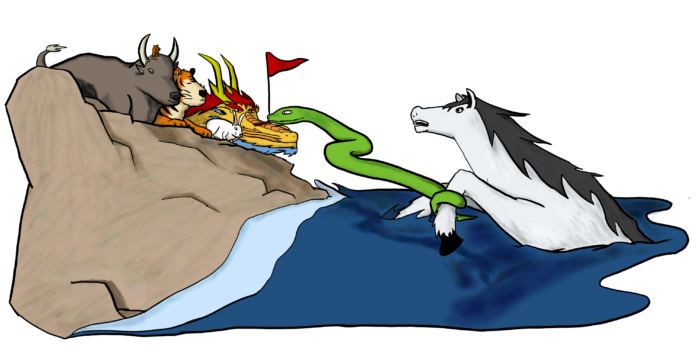
Myths state that twelve animals were called together to partake in a race. The emperor, who orchestrated the competition, told the animals their placement in the race would dictate the order of their zodiac. Each year that passed would be given to a particular animal, hence why Chinese New Year celebrations will typically include depictions of that animal.
Myths state that twelve animals were called together to partake in a race. The emperor, who orchestrated the competition, told the animals their placement in the race would dictate the order of their zodiac.
The way the story was told to me was that the rat was teased for being too small. The other animals thought, because the rat was smaller than them, it would be the slowest of the creatures. However, towards the end of the race, the animals had to cross a deep river, and many couldn’t traverse it on their own. The rat, who had grown friendly with the ox during the race, asked if they could hop on the ox’s back as they crossed the river. The ox agreed, and the two crossed the river together. When they reached the other side, the rat crossed the finish line first, with the ox coming in second.
The tiger came in third place, having bravely fought through the river to finish the race. In fourth was the rabbit, who had a little help crossing by jumping onto rocks and floating logs. The dragon, who could have flown over and easily came in first, finished in fifth. They sensed that others needed help and decided to take care of them instead. While retellings of this story differ, they all end with the same order. The snake came in sixth, the horse in seventh, the goat in eighth, the monkey in ninth, the rooster in tenth, and the dog and pig in 11th and 12th respectively.
Learning about the great race has been a long process for me. It started when I was young, and has grown throughout the years. I view it similarly to how I’ve immersed myself in my culture. Things were introduced to me as a child, but I hadn’t opened my mind to exploring them until now. I can’t say the Chinese Lunisolar calendar is currently my main source for time — but as Lunar New Year approaches, I’m excited to see what the year of the snake has in store.
Keep reading to see which zodiac animal is yours!
Note: Because Chinese New Year tends to start anywhere from mid-January to early February, this may mean that a person born in January of a particular year is actually part of the zodiac from the previous year. For example, someone born in January 1996 would have been born during the year of the pig instead of the rat.
Rat — 1972, 1984, 1996, 2008, 2020, 2032
The rat is known for its ability to think quickly and effectively, which helped it secure first place in the race. Other attributes include being “smart, versatile, and good at saving money.” Every new cycle of the zodiac animals starts with the rat, meaning that 2032 will be the next time the calendar refreshes itself.
Ox — 1973, 1985, 1997, 2009, 2021, and 2033
Those born during the year of the ox are seen as having “diligence, perseverance, honesty,” and more. You’re a hard worker with a loyal heart. In the context of Chinese New Year celebrations, the ox symbolizes “agricultural abundance” and “prosperity.”
Tiger — 1974, 1986, 1998, 2010, 2022, and 2034
Tigers carry great significance in Chinese culture. Highly regarded as “the king of all beasts in China,” this zodiac animal is known for being cool as a cucumber with unparalleled confidence. Go get ‘em, tiger!
Rabbit — 1975, 1987, 1999, 2011, 2023, and 2035
Universally speaking, rabbits are regarded as cute, cuddly animals, though the Chinese zodiac views them a little differently. Because of their nature, the characteristics most associated with this zodiac are “longevity, peace, and prosperity.”
Dragon — 1976, 1988, 2000, 2012, 2024, and 2036
While the tiger is a big part of Chinese culture, the dragon may be considered an even bigger factor. Dragons are thought of as “majestic and powerful,” in part due to their intimidating personage.
Snake — 1965, 1977, 1989, 2001, 2013, 2025, and 2037
2025 is the year of the snake. Similar to the rat, this zodiac animal is renowned for its intelligence, as well as its “charm, elegance, and transformation.” The year of the snake begins on January 29.
Horse — 1966, 1978, 1990, 2002, 2014, and 2026
If you’re born during the year of the horse, the horoscopes typically say that you are “hardworking, warm-hearted, and independent.” As well, it’s said that the horse has an energetic and extroverted spirit.
Goat/ram/sheep — 1967, 1979, 1991, 2003, 2015, and 2027
In Chinese culture, the goat (also known as the ram or sheep) is described as being very “nurturing” yet determined. A docile character, the goat is more of a caretaker compared to some of the other animals’ individual and hard-willed personalities.
Monkey — 1968, 1980, 1992, 2004, 2016, and 2028
Like the rat and the snake, the monkey is thought of as a jokester who uses their penchant for entertainment to exhibit its fast thinking and wit. Monkeys are highly intelligent animals that “can be great companions.”
Rooster — 1969, 1981, 1993, 2005, 2017, and 2029
The rooster is a confident animal that has a very high sense of self-worth. A blunt animal, it prides itself in working for what it’s owed and keeping things honest. With its extroverted personality, it can command a room like no one else.
Dog — 1970, 1982, 1994, 2006, 2018, and 2030
Those born in the year of the dog are loyal to the highest degree. These animals aren’t loyal like the nurturing goat — instead, they regard their loved ones like partners. They won’t coddle you, but they will do everything in their power to ensure your happiness.
Pig — 1971, 1983, 1995, 2007, 2019, and 2031
The final animal of the Chinese zodiac is the pig. As the last animal to finish the race, the pig is regarded as a symbol of “wealth, felicity, honesty, and practicality.” Some even claim that piggy banks were inspired by the zodiac animal’s characteristics, as people believe that the animal will “bring good luck monetarily.”
What Grinds Our Gears: Bean sprouts

By: Izzy Cheung, Arts & Culture and Sports Editor
I always get odd looks sent my way whenever I choose to pass on the bean sprouts at any pho restaurant. The people I go most often with already know the story, but to newcomers, the question is always the same.
“Why don’t you eat bean sprouts with your pho?”
It’s a complicated answer. One time when I was a kid, I went out for pho with my family. Everything seemed normal — I got my usual kids meal, my parents asked the staff if they could cook our platter of bean sprouts, and we drank our waters while indulging in our meals. I was young, clueless, and unaware that a single bean sprout had wormed its way into my spoon. As I scooped the noodles into my mouth, something slashed at the back of my throat.
That dastardly bean sprout!
I coughed wildly, dropping my spoon in shock as tears sprang to my eyes. How could this bean sprout do such a thing? How could I have been so naïve as to trust this plant?
My anger towards bean sprouts has remained fiery ever since that night. Whenever I go for ramen, I ask for no bean sprouts out of fear that they’ll come to hurt me again. If they come with my stir fry, I’ll pick them out with a simmering sneer. Never again will I allow these creatures to hurt me like how they once did. Besides, they don’t even taste that great. Why take the risk?
Canada falls to Czechia in WJC quarterfinals again

By: Kaja Antic, Sports Writer
For the second year in a row, team Canada fell in the International Ice Hockey Federation World Junior Championship quarterfinals to Czechia. Though Canada holds the record for most tournament titles with 20, the team has seen little success since last winning the tournament in 2023.
Despite their first win against Finland 4–0, Canada struggled with scoring throughout the group stage. The team held a 1–0 lead against Latvia until the final seven minutes, when Latvia scored on the power play to tie the game late. Canada scored 64 seconds later on their own power play, and all seemed well for the host team before Latvia made it 2–2 with under three minutes to go in the third period. Overtime solved nothing, and outstanding performances from goalies Jack Ivankovic and Linards Feldbergs took the shootout to eight rounds before Eriks Mateiko scored to win the game for Latvia. This was a team that Canada had beaten 10–0 in 2024. In 2025, however, Latvia earned their first win over the host country, who showed glaring issues with the ineffectiveness of their offensive, and their passiveness on defence.
Goaltending was the only constant throughout the tournament. Canadian goalie Carter George shut out Germany in Canada’s third preliminary game — the host team winning 3–0 against a team that narrowly missed relegation the previous year.
Canada dropped their final group stage game to the defending champions, the US. The Americans took the lead early in the game, before Carolina Hurricanes prospect Bradly Nadeau scored on the power play, under two minutes into the third period. The hopes for a Canadian win were quickly dashed however, as the US team scored three unanswered goals — two power plays and one empty net — to take the 4–1 win.
“A team that Canada had beaten 10–0 in 2024 earned their first win over Canada, while the host country showed the glaring issues with the ineffectiveness of their offensive, and their passiveness on defence.”
Heading into the quarterfinals, Canada looked to get revenge on their Czech opponents after their shock elimination the previous year. Czechia took a commanding 3–1 lead in the first period alone, though Canada powered back to tie it, scoring in the second and adding the equalizer in the final five minutes. The dream of a Canadian comeback was dashed, however, when Nashville Predators prospect Andrew Gibson took a kneeing penalty with under 3 minutes to go. Canada tried to hold off the Czech attack, though with 17 seconds remaining on the penalty to Gibson and 40 seconds remaining in the game overall, Adam Jecho scored to make it 4–3 Czechia, virtually eliminating Canada from the tournament.
With the team’s tournament now over, many looked to the glaring issues that caused the repeated premature elimination. Canada only scored 13 goals in the group stage, compared to 23 in 2024 and 42 in 2023, showing a dramatic drop in offensive performance across the board.
Another main issue was lack of discipline. The tournament uses IIHF rules, which are seen as more “strict” when compared to NHL rules, and Canada’s squad had not adjusted their play accordingly — unlike the rest of the teams they were playing against. Canada had incurred 113 penalty minutes over just the five games they played, 22 over Czechia in second-most with 91. In the quarterfinal alone, Canada had earned 55 penalty minutes — almost an entire regulation game — over Czechia only getting 10.
Though his team had 8.7 penalty minutes for every goal they scored, Canadian head coach Dave Cameron claimed he had “no regrets” after Canada’s disappointing finish. Czechia went on to win the bronze medal after a record-breaking 14-round shootout against Sweden, and the Americans won gold in overtime against Finland — earning their first ever back-to-back World Junior Championships.
With the 2026 tournament headed south of the border to Minnesota, the Americans will look to extend their history-making run, while Canada looks to pick up the pieces of repeated disappointing performances from a nation used to dominating this tournament, and the sport overall.
At SFU, we care
By: Karen Aylot, Vice President, Care, Compassion, and More Care
Dear SFU community,
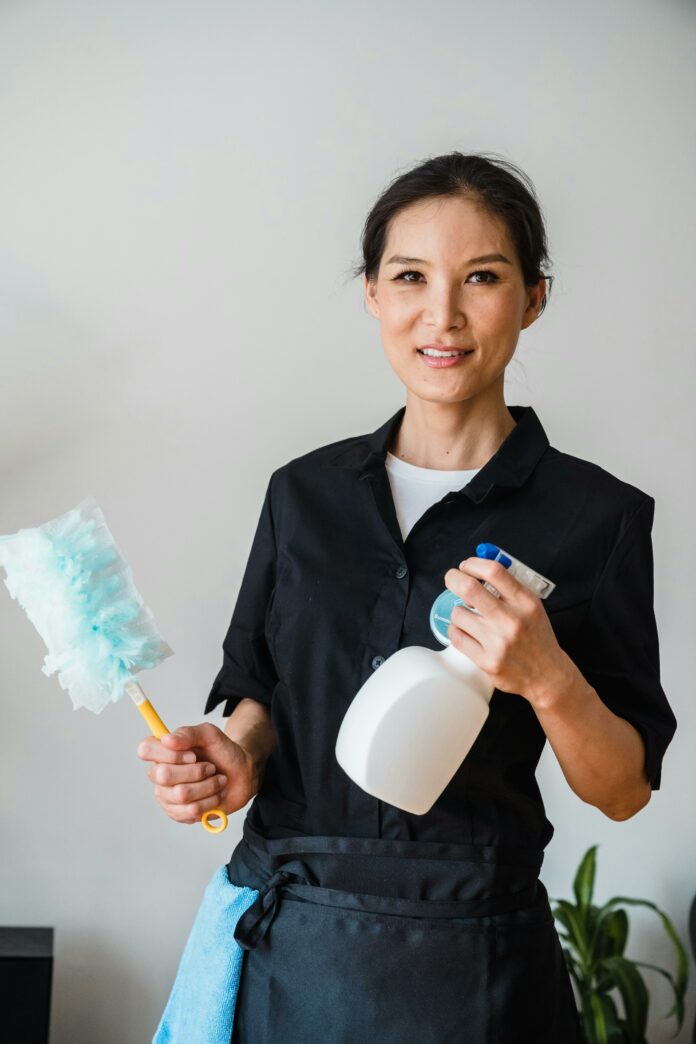
As you know, we care a lot about our wonderful employees — like, a lot. In fact, we care so much that it scares us, and we’re afraid that if we cared anymore, we might actually care too much. That is why we continue to employ cleaning and dining staff indirectly through third-party companies, even though employees may wish otherwise.
Don’t worry, though. Whether our employees are contracted in or out of house, we make sure they’re treated fairly. Just don’t ask them. Not because they would tell you otherwise, but because, well, like we said, we just care so much that we want to save them the hassle of having to explain how fairly we treat them. Yeah, we care that much.
You may or may not have seen a report from a few years back analyzing what it would mean for us to contract in vs. out of house. And yes, the report did conclude that switching to direct, in-house contracts for cleaning and dining staff may “improve service quality, progress mission to educate, and enable career pathways,” and “promote SFU’s equity and diversity.” But the report also said that transitioning to in-house contracts might result in more absences, because staff would receive paid time off. We’d hate to see all this caring go to waste for something trivial like a doctor’s appointment or root canal.
And that’s the thing — there is one thing that the analysis failed to take into account. Can you guess what it is? Exactly — just how much we truly care. Some things you just can’t measure — care, love, pay . . . you just can’t put a number on that stuff. But if you really did have to, we can assure you that our out of house staff make an exceptional satisfactory liveable wage. Trust us. You don’t need to look at the living wage for Metro Vancouver and then check out our hourly wage chart. We already checked to save you the trouble, because we care about you too.
SFU slang to unimpress your profs!

By: Hailey Miller, Staff Writer
If you want to be a successful scholar, you’ve got to speak like one. I, your local overly-seasoned scholarly chick who’s well-versed in degrees, dialogue, and drama, will cover all your slang-chatting needs! Look no further than SFU’s Scholarly Slang 101 dictionary. You’ll be using that literary lingo in no time!
Coffee Zombie
The Coffee Zombies arrive late to class after waiting in an absurdly long caffeine lineup.
Literally every student who’s ever had to wake up at any hour of the day to drag their ass down to campus and take some course they haven’t even paid attention to because they’re too tired to pay said attention. Is the caffeine even doing anything at this point? Coffee Zombies should take a nice little stroll (in their stroller) to the nappy room. Looks like someone needs some nappy time!
Mousetrap
I’ve got a class in the Mousetrap and I have no idea where it is!
None other than the AQ, of course! If you thought you were good at those kids’ maze books when you were in the prime of your youth, think again! All you coffee zombies will be lost the moment you enter any doorway that leads to the mysterious labyrinth that is the most musty building on campus — full of real mice, I’m sure!
Nappy Pants
All the Nappy Pants are headed to their favourite hideout on campus to sleep away the stress.
A student who lives in the nap room on the Burnaby campus 24/7 and most certainly doesn’t abide by the “two-hours max” rule. They just live on campus at this point and can’t survive a class without getting a pre- and post-nap in. No blankets, no problem!
Nester
The nesters love to hangout at Nester’s.
No, I’m not talking about someone who’s still living at home with their parents. Been there, done that. Rather, the “nester” refers to the Average Joe who loves to hangout at Nester’s Market (in Vancouver or Burnaby!) between every class. Among the elitists, they’ve got more points on their non-existent NestPoints card than they’ve got credits under their degree. What a super scholar!
Prop Graveyard
“I’m off to return the theatre props to the (prop) graveyard.”
Creepy dolls galore! Fully equipped with every prop under the sun, all the artsy theatre and film students at Goldcorp head down to the prop shop (AKA the “graveyard”), where every unused prop remains for the rest of time.
Studio D (for Dramatic)
“Did you catch the multidisciplinary performance in Studio D?”
Where all the dramatic theatre shit goes down — literally — to the basement of Goldcorp that’s nearly never used. The mysterious spot that everyone knows, but no one talks about. Nothing says “dramatic” like a dungeon-esque performance space.
The Attic
Music majors practice their compositions in the Attic above the music room.
The prime acoustic practice spot to jam out if you’re lucky enough to know the code to get in. So exclusive, so fancy! Nothing screams “productive studio session” like being cooped up in a claustrophobic, pad-locked narrow hallway hovering over the main music room at Goldcorp with flawless acoustics! Not.
The Blonde
Dance majors choreograph their latest numbers in The Blonde.
The most prestigious dance studio at Goldcorp. It has zero windows and a million mirrors to make your head spin. Want to practice your pirouettes without getting dizzy? This is the place for you — with blonde wigs spewed everywhere, and a piano to trip over in the middle of the room. Five, six, seven, eight, it’s Britney, bitch!
The Concurse
“I’ll meet you in the Concurse to eat stale refreshments and have an unproductive study session.”
Harbour Centre’s finest meetup spot. Absolutely bustling with so much chatter that you won’t even get the chance to think. Who needs to study anyway? Perfect for escaping all those last-minute assignments you’ve been procrastinating. There’s no networking event like a concurse networking event!
The Stairmaster
“Meet ya at the top of the Stairmaster to watch the sunset!”
Every damn hill around the Burnaby campus, duh! Whether you’re an avid outdoorsperson or not, you chose SFU for a reason, right? Gotta love a nice round of bootcamp every time you step foot on campus and have to climb the stairmaster of a mountain.
The SUBmarine
One of the favourite hangout spots on the Burnaby campus is the SUBmarine.
You’ve heard of the SUB, but what about the SUBmarine? The moment you walk through the union doors — that your fees are paying way too much for — you’ll be swimming in schoolwork with not even an ounce of concentration because the party vibe is going so hard you won’t need to study anyway.
Chinese and Vietnamese Lunar New Year celebrations

By: Kayle Cole, SFU Student, and Jessica Liu, SFU Student
The spiritualism of Vietnamese celebrations — Kayle Cole
My Lunar New Year celebrations start when my mother calls her Vietnamese fortune teller to ask questions about everybody in the family. She gives the psychic our birthdays and time of birth. I can only guess that the fortune teller has a little book on the other side of the phone that categorizes the star signs and success level each person has in the new year. My mother always tells me, “If a psychic predicts your baby’s gender, it’s a 50/50 chance,” yet somehow she still goes to them for answers. I believe it’s reassurance that she’s doing something right in parenting.
Sometime on the eve of Lunar New Year, we visit My Tho Supermarket, a Vietnamese grocery store on Kingsway. There, you’ll find 30 mothers picking out the best looking fruit, ensuring they get more variety. It’s believed that the more fruits you have to offer, the better chance you’ll have at a more prosperous year.
At home, my mom places the fruit on a large plate, making sure it’s stacked like a pyramid. While she cooks a feast including rice, bitter melon soup, stir-fried vegetables, and claypot-cooked fish, we look around the house for a display table. A display table is a table that sits in our front doorway for one day of the year that will be used for praying.
We put the plate of fruits on the table, a cup of uncooked rice to hold up the incense, and a pot of tea with two cups. All the other food my mother has prepared will be on our dinner table with chopsticks and bowls to eat with — but we’re not allowed to eat it yet.
“Once everything is ready, and it’s late in the night, we open the front and back doors to allow the spirits to move through our house.”
Once everything is ready, and it’s late in the night, we open the front and back doors to allow the spirits to move through our house. My mother lights three incense sticks and says her New Year’s prayers, then my brother and I grab one each and do our internal thanks. We wait for about an hour with the doors open before closing them and eating the delicious but cold dinner.
Celebrations in China — Jessica Liu
Chinese Lunar New Year has always been a heartfelt festival I celebrate with my family. It reminds me of my Chinese heritage and honours the memories I create with loved ones; for instance, playing mahjong with my aunts and cousins as we chat and give each other life updates. Here’s how I celebrated Lunar New Year when I lived in China.
One of my favorite ways to spend the festival is making dumplings for our New Year’s Eve reunion dinner. We would normally make three types of dumplings: pork and cabbage, shrimp and chives, and chicken and corn. Instead of the traditional boiling cooking method, we steam and fry the dumplings for our family. We would gather around the kitchen table and divide ourselves into different roles: making and rolling the dough, making the different fillings, and folding the dumplings. It was usually the women of the family who made dough and the fillings, and the men would be in charge of cooking them. This is also when the elders would give the young red packets, which are envelopes they put cash into and give to the younger generations to bring them peace and good luck.
After dinner is when the annual New Year’s Gala would begin streaming. Our whole family would sit in the living room and watch the four-hour show. It usually consists of comedy skits, singing, and dancing performances — our family loves guessing what kinds of skits, songs, or dances they will perform. I remember being fascinated by this one performance during the 2014 New Year’s Gala, when a woman was twirling in a white flowy dress for four consecutive hours without stopping on a separate small stage, from the start to the end of the event. Each hour, there would be different colors and patterns of light reflected on her dress, representing the four seasons and the upcoming new year.
Finally, no Chinese Lunar New Year would be complete without ending with fireworks. Watching the night sky filled with colorful lights reminds us of how lucky we are to gather as a family and spend the new year.
Brighter Side: Quiet library floors

By: Samia Chowdhury, SFU Student
For me, being on the Burnaby campus inevitably means seeking out the quietest floors of the library. The satisfaction of finding a perfect, secluded desk with panels on three sides, nestled among rows of heavily loaded bookshelves, is unmatched. Pair that with a charging outlet and a birds-eye view out of public sight, and you’ve got the ideal spot — whether for a focused study session or a three-hour nap — whichever you choose.
This little corner is perfect in all kinds of weather. Picture a snowy winter morning with a cup of hot chocolate in the middle of January, a warm summer evening filled with sharing suppressed laughs through the bookshelves with your friends, or a rainy afternoon spent turning pages of a novel or buried within a mountain of schoolwork.
One can easily lose track of time here — sometimes gazing out the window to people watch, other times absorbed in silent study without any distractions or interruptions. It’s a versatile haven where you can focus, relax, daydream, or even catch up on some much-needed rest.
No matter the season or mood, this sanctuary on campus is always there, ready to offer a slice of calm amid the chaos of life.

