Home Blog Page 813

Metro Vancouver needs to provide space for people of African descent

0
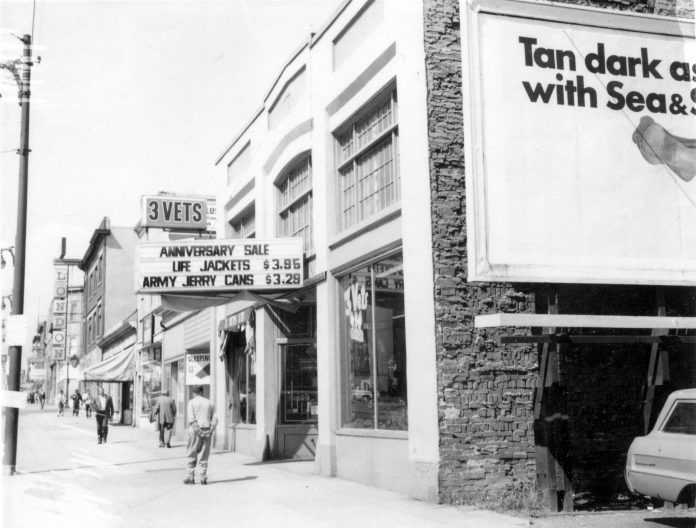
832 Main Street in Hogan's Alley, 1969, Vancouver, B.C.

[dropcap]P[/dropcap]eople of African descent have lived on the West Coast for more than a century. The first large migration of the black community, from California, settled in BC in the mid-1800s, mostly in Victoria and Salt Spring Island. Another wave of immigrants came to Canada during the 20th century, mainly from the Caribbean and Africa.

Today, Metro Vancouver is home to a significant number of people of African ancestry, many of whom are entrepreneurs, teachers, police officers, students, activists, and journalists, among other professions. Despite their enormous contribution to social, political, and economic development in the city, Vancouver’s African community has experienced systemic social problems such as discrimination, geographic displacement, and poverty.

One of the most notable historic injustices committed against Vancouver’s African community was the destruction of the Hogan’s Alley community — a prominent Afro-Canadian neighbourhood in Vancouver, comprised of residences and businesses at the south-western side of Strathcona. Hogan’s Alley was demolished in the 1960s and early ‘70s in order to pave way for the construction of the Dunsmuir and Georgia viaducts — a decision that is still widely perceived to have been racially motivated.

Despite recent municipal acknowledgements, the Hogan’s Alley community hardly exists today. Sociologically speaking, the destruction of Hogan’s Alley created large displacement amongst Vancouver’s African community, thus dispersing what most resembled a cultural ‘hub’ at the time.

Metro Vancouver’s African community is one of the few communities that does not have an officially recognized neighbourhood or cultural centre.

Today, Metro Vancouver is known for its vibrant migrant communities: Chinatown, Japantown, Greektown, Little Italy on Commercial Drive, Surrey for South Asians, the Filipino community near Kingsway, the Iranian community in North Van — the list goes on, with the glaring exception of Afro-Canadians.

Metro Vancouver’s African community is one of the few communities that does not have either an officially recognized neighbourhood or cultural centre. As a result, Afro-Vancouverites feel marginalized and excluded by municipal governments.

The African community in the Greater Vancouver area deserves, first and foremost, an official apology from the City of Vancouver for the demolition of the Hogan’s Alley community and the eviction its residents. We also must see the restoration of the African community and the implementation of a cultural centre, where Afro-Vancouverites can congregate to celebrate their diversity and debate major issues affecting them.

More importantly, the creation of African spaces in Metro Vancouver would act as a node for integration of the African community. They would capacitate the African community to assemble and reflect on its social and economic status within Canadian society and Vancouver.

Spaces would also enable the community to gather and discuss some of the most pressing issues — such as discrimination, migration, multiculturalism, and resistance against police brutality through Black Lives Matter, which has inspired a chapter in Vancouver.

The recognition of Black History Month by the City of Vancouver in 2011, the annual Caribbean Days Festival, and Vancouver’s recent African Descent Festival also act as models for addressing the lack of spaces for the African community in Metro Vancouver.

Afro-Vancouverites have made tremendous contributions to this metropolitan city, and therefore we merit a postal code.   
SFU’s course withdrawal system needs to be dropped

0

[dropcap]T[/dropcap]his year has been a rough one for me, personally and academically. Between a cancer scare and my mental health feeling like it has been rapidly deteriorating, school has unfortunately not been the number one priority.

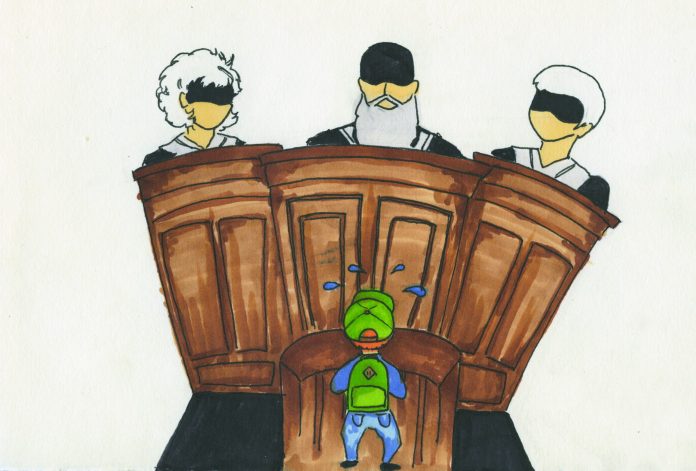
This being my first year at SFU, I thought dropping a course would be a relatively simple process; since the school already has my money, what more could they want from me? It turns out that since I didn’t find out early enough that I would have to drop a course, the number of hoops I’ve had to jump through has made the process almost not worth it.

Summer courses began on May 9, and the last day to drop all classes without any record of it on your transcript was May 15. One week is fair enough for students to decide if a term is not for them. Should students decide they only want to drop a single class, they had an additional week — until May 22 — to drop a class without any consequences.

After that, the pressure is on for students to figure out if they’ll be able to complete their classes. This term, the last day to withdraw from a class through the Student Information System was June 12. That’s the end of the fourth week; after that, students have to go through the extenuating circumstances (WE) process.

To put that into context, if this semester had a reading week for students to catch up on their student duties, they’d have to decide beforehand if they needed to drop their class. This was the case during the spring semester this year, and it seems counterintuitive to force students to commit to these decisions before they have had a chance to re-organize their lives.

It’s simply unfair that students need to know so far in advance how their semesters will shake out.

What happens when a student has extenuating circumstances? This is where the process becomes unfair and borderline demeaning. Students are expected to prepare a package explaining why they are unable to complete the class, and discuss with the manager, student academic appeals to be judged if they validly cannot do so.

The package consists of a personal essay explaining why they are unable to complete the course, as well as supporting documentation to show that they can fully prove their reasoning.

According to SFU’s website, “It is not possible to lay down clear rules specifying precisely how WE applications will be adjudicated because the reasons for such requests are so varied,” which can be intimidating for students who want to know if it’ll be worth it.

The general criteria that SFU suggests for considering dropping a class consists of medical grounds, employment grounds, compassionate grounds, and ‘other’ grounds, each with a brief description of what those mean.

To sum it all up, it’s unreasonable for the school to pull such a power maneuver, because it shows once again how uncompassionate it can be with its students.

I’m not advocating for a penalty-free system. I don’t think the money paid should be returned, and the transcript should still reflect the withdrawal. It’s simply unfair that students need to know so far in advance how their semesters will shake out, and being judged as to whether or not your reason for dropping out is worthy enough is draconian. It puts unnecessary pressure and guilt on students who clearly need a break.

As a transfer student, I once had to drop a class in week nine for personal reasons back at Mount Royal University in Calgary. It was as simple as going to the registrar’s office, filling out a form, and never looking back.

Unfortunately, SFU’s course-drop policy is just another example of how out of touch the school is with its students.

SFU needs to prioritize funds for sending students abroad

0

[dropcap]A[/dropcap] couple years ago, I was intent on studying abroad for a year in Amsterdam. I am Dutch, and having grown up with various Dutch traditions, food, and attitudes — especially when visiting Oma and Opa — the prospect of spending a year immersed in the culture that had such an influence on my upbringing was alluring, to say the least.

As much as I love to travel, I’ve never been to the Netherlands, nor overseas for that matter, so it’s understandable that I’d find SFU’s sleek “Study Abroad” ads promising. Sadly, to go abroad requires quite an application process, and after having conversed with willing parents (at the time), I spent the next couple months gathering together submission materials — reference letters and all.

A hurried week before the application was due, my parents decided that they wouldn’t be funding the small difference I needed for the trip after all; not because it wasn’t affordable, but because they didn’t want to afford it. Needless to say, I was pretty bummed, and guilt-ridden as I sent apology emails to the lovely faculty members who’d taken the time to write letters on my behalf.

Now, I understand that funds aren’t always available to send students overseas, and I’m no longer upset with my parents in their financial decision — after all, it’s their hard-earned money. Though I see a much broader picture that seems to have swept our society: many individuals and families today simply do not perceive value in hopping borders for a diverse education.

The Canadian Bureau for International Education (CBIE) released a report in 2014 stating that student and family perspectives on international education would desperately have to change if Canada is to survive among global markets in the near future.

We live in a post-secondary society that does not value an international education.

Both of my parents were raised during the ‘70s, in more or less quiet and conventional homesteads; a time when the world was not as globalized nor was it as easy to hop a plane and explore the world. Travel was seen as a distant luxury, not a financial priority. To this day, my parents enjoy the safety net of their own home, like many people of their generation do. When travel is an actual option, it can require extensive planning and even mental preparation.

Moreover, these perspectives are clearly reflected in Canadian university culture: there’s an increasing number of international students studying in Canada, while only three percent of Canadian students go abroad — a percentage that, according to CBIE, will need to increase five times over.

We live in a post-secondary society that does not value an international education. The fact that schools such as SFU are so culturally diverse creates the illusion that an ‘international experience’ is right at our doorstep, as Yuen Pau Woo, former president and CEO of the Asia-Pacific Foundation, explained to The Globe and Mail. Why move away when other cultures are moving here?

For more perspective, an article in The Globe and Mail from 2014 stated that while Australia is shelling out $100 million to send students to nearby Asia-Pacific countries, the United States has planned to increase its percentage of overseas students to 20 percent. Meanwhile, Germany wants to send away 50 percent of its students.

What does this mean for Canada? It means that SFU and other universities should be setting aside considerable funds for outgoing students, big time.

Given the idea that global forces will very soon affect all career paths, I think the time has come for us to finally shift our collective mindsets on the merits of global study. Let’s not cloud ourselves with ideas that a global experience will come to us; instead, let’s prioritize funding that will create the most important opportunities for careers in a globalized world.

Safe policing starts without handguns

0

[dropcap]W[/dropcap]e hear about police brutality far too often these days. It seems like every day I read about another innocent civilian shot; often an unarmed black man who was complying with police orders. One of the best ways to prevent these situations would be to strip police officers of their service handguns, at least for standard duty.

Having a handgun changes the mindset of the carrier, making them see the world in terms of threat levels and potential targets. The bearer is also forced to carry with them the fear that their firearm may be turned on them. An unarmed attacker can become a deadly assailant if they seize an officer’s handgun; as such, officers are taught to treat every threat as a potential threat on their life.

A criminal with a gun can kill, if only because of a split-second decision. This, understandably, ferments fear and escalates situations. Fear and semi-automatic handguns do not mix well. This causes the police officer to think like a soldier, and to treat the streets they are meant to be protecting like a warzone.

Instead of carrying handguns, officers should be trained extensively in non-lethal methods of apprehending individuals, such as using tasers, and on de-escalating potentially violent situations. If a criminal does have a gun, however, there should still be a firearm that the officer can get from their cruiser, or a tactical team that they can call upon for backup. A firearm should not be the first solution to every problem though, simply hanging at the hip, ready to kill.

A firearm should not be the first solution to every problem, simply hanging at the hip, ready to kill.

Before you start arguing that “blue lives matter,” and telling me that I hate police officers, it is important to remember that my proposal is not revolutionary. In the UK, for example, most officers do not regularly carry handguns, and they are not having a big problem with officer safety. In the UK, they stress de-escalation tactics and proper non-lethal apprehension.

It is worth watching the video from the UK in which an incoherent man is brandishing a machete: the officers do not shoot him. They get the riot gear out, they make sure they have enough officers on the scene, and they subdue him by slowly advancing on and overwhelming him. No one gets shot, and no one dies. I have heard multiple reports of policing like this in the UK, and we in North America need to follow their example.

Officer safety still needs to be taken very seriously, but handguns for daily carry are not necessary. In many cases, having a handgun immediately accessible does not make officers any safer — such as the shooting of three police officers in Baton Rouge, where the officers were ambushed and were not able to react quickly, anyway.

Having easy access to a gun only escalates dangerous situations. If there is a chance to react in an instance that truly requires a firearm, then the officer should have time to get an assault rifle from their cruiser. At least that way, the officer is forced to think about whether or not a firearm is really necessary for the situation.

What makes officers less dangerous is if they develop a relationship of understanding with the communities they police, as well as having enough personnel on the scene. Handguns only create distance between the police and the public. If we truly want a police force that serves and protects, and if we truly believe that the lives of all citizens — including black citizens — matter, then we need to take guns off the streets, starting with service handguns.

CENTRE STAGE: Dancing on the Edge wraps up an impressive 28th year

0
Thus Spoke pushes the boundaries of dance.

This year’s festival was as dynamic as ever, with more of a focus on local choreographers along with a few visitors from elsewhere.

Jennifer Mascall, who has been involved in the festival almost every year since it began, presented her new full-length work, The Outliner, at St. Paul’s Church. The audience was seated on rolling pews that were moved around the space by many stagehands. For each segment of the show we were seated with a different perspective of the stage, and this was such a simple yet effective way to make the performance even more dynamic.

The performers and their unique costumes were equally impressive. Ballet BC dancer Gilbert Small performed a solo holding a large tree branch in each hand, and these were incorporated so seamlessly into the choreography that they seemed like extensions of his own limbs. Another duet featured a pen and paper high up on the back wall that was attached to a clever contraption controlled by the dancer’s movements.

Robin Poitras graced the stage in a wooden cone that was sliced horizontally into many pieces. The cone ominously moved around the stage and reappeared several times before she finally emerged and the cone became many wooden rings shaped to her contours. Probably the most impressive portion of the show was a dancer wearing a harness of porcupine quill-like spikes, who swung them around to create larger than life silhouettes. Mascall’s innovation in both costumes and choreography make her a master.

Another standout full-length show was Frédérick Gravel and Étienne Lepage’s Thus Spoke . . . from Montreal. Gravel explained that the show is a hybrid of theatre and dance, and there were monologues throughout the performance. The opening monologue talked about privilege: the privilege to be at the show, to want to be there, to put in effort to be there, and to understand it.

Gravel and Lepage have created a show that gets you thinking about societal norms and the meaning of your life. These performers take this show very seriously while not taking themselves seriously and the result is brilliant.

Dorsale Danse of Ottawa brought Douce Tourmente to the Firehall Arts Centre. Sylvie Desrosiers’ choreography was paired with beautiful video projections that added a subtle poignancy to this reflection on romantic relationships. Heidi Strauss and Marc Boivin were in their own intimate world, pushing against each other and pulling away — constantly trying to find a balance between them. This was a demanding hour of dance for these performers, both emotionally and physically. I was impressed by their stamina but I felt that the ending could have come sooner.

The Edge and Edge Off programs always feature a wide range of hit and miss content. Sometimes I go to see one choreographer I know I will like and leave pleased with all of the pieces, but sometimes there are disappointments. I was impressed with Ouro Collective’s fluid group work, and Wen Wei Wang’s piece that featured aggressive group movements cascading across the stage. Meredith Kalaman’s more introspective work was interesting but not as impressive.

I went to Edge Four to see Out Innerspace Dance and was once again impressed by their conceptual choreography, although the pounding music was enough to give you a headache. Olivia C. Davies’ Open Fire was an emotional narrative about an Argentinian girl whose mother had been taken away by soldiers while they sat outside at a coffee shop. The interpretation of the story was clear in the choreography, but the plot being read aloud alongside the dance detracted from a focus on the movement.

Edge Off Two began with Julianne Chapple’s the edges of things are ill defined which was a slow-moving piece full of floor work and controlled lifts. As a light was moved around the stage, they performed an acrobatic duet that was immersive but eventually a bit repetitive. Wags Alternate by Theonn Glover was an other-worldly performance that featured red ropes hanging down from the ceiling. While I was confused by the narrative of the piece, the ropes served as innovative props that the dancers used to swing around and create interesting patterns.  

Contemporary dance encompasses so many different styles and sensibilities. Dancing on the Edge always impresses, inspires, and provokes with its mix of choreographers from near and far.


This piece was originally published on Tessa Perkins’ blog.

Real life monsters you may have forgotten about at SFU

0

With all the excitement over Pokémon Go, a lot of today’s youth have forgotten about the glories of observing real animals in the wild. Alas, according to young people today, it’s just not as titillating as catching a digital pocket monster. I call bullshit on that — especially considering all the hidden creatures residing at SFU, which for too long have gone unnoticed. So, pry yourself off your phones for a second and see something you gotta catch a glimpse of!

Were-raccoons

were-raccoon

Raccoons are a furry staple of SFU’s Burnaby campus — but what about those who are transformed by raccoons? While most doctors will tell you the worst to come out of a raccoon attack is rabies or some other virus, there’s a secret locked away by the medical profession. That’s right: the fearsome were-raccoon! Some students have been sighted transforming into these giant part raccoon part man creatures, only to chitter at the moon and rummage through garbage bins hoping to eat thrown-out Triple O’s. Chilling!

Library zombies

library zombie

Ever notice a moaning in the aisles of Bennett Library? Some say it’s not merely tired students groaning from essays, but the walking dead. Students who have starved themselves to death and re-animated to haunt the library looking for brains to consume so they can succeed in their studies. Their limping existence is a testament to the great horror that is exam season!

Dark McFogg

five nights at foggys

McFogg the Dog, our beloved mascot, might be hiding a dark secret. In fact, it may not McFogg at all, but rather an evil replacement. Stories of a shadowy McFogg-like figure from an alternate timeline have become common folklore among students. With red eyes and a fearsome, wolfish grimace, think twice about hugging this mascot and posing for a selfie.

Residence demons

residence demons

Enduring another lousy floormate making an ungodly racket? Well, what if I were to tell you it was something much more unholy and bone-chilling? Students who recently knocked on an agitated neighbour’s door were shocked to find it vacant but still producing eerie noises. Could it be a loud iPod trapped in the wall, or is it really a demonic presence? All I know is that no human being would really leave “Who Let the Dogs Out” by Baha Men blasting.

Kwantlen students

KPU students

Yes, that tribe of moochers who are rumoured to have invaded study spaces at SFU’s Surrey campus. Some say their existence is mere legend, but others have terrifying tales of having to force Kwantlen students out of their study areas. The blood-curdling whining and moaning of the Kwantlen students as they are forced to leave is said to be excruciating. Some say they’re merely bored students from a different university, but the most dangerous threats are sometimes the most seemingly innocuous. Beware, friends!


Hire faculty that represent the student body. . . it’s that simple.

5

Blind to the problem

When I was younger, I never thought about representation in media, in academia, or in politics. If you’re white, you probably didn’t, either.

I didn’t really start thinking critically about how gender and race are portrayed or represented in the various aspects of our culture until I was almost done with high school. All of my teachers throughout my four years were white or white-passing, and less than half were women. Granted, my hometown of Eugene, Oregon is hardly the face of racial diversity — the town remains a predominantly white community.

It will get better in university, I would think to myself, growing bored of learning the same lessons from the same people.  

To my surprise, when I entered SFU as a bright-eyed and fresh (white) faced first year, the university that boasts about “engaging the world” was hardly diverse. To paint a picture, I enrolled in two gender studies courses, a Middle Eastern history course, an international studies course, and an Arabic course. Only my Arabic professor, who was born in Lebanon, was non-white. Imagine: a white male teaching Middle Eastern history, and another teaching a course in a faculty called ‘international studies. While there was near gender parity among my professors, as two of the five identified as female, I could not help but feel that might be because I was in gender studies classes. The spring term yielded similar numbers.

According to Catalyst, an international non-profit organization aiming to “accelerate progress for women through workplace inclusion,” visible minorities make up only 17 percent of university professors in Canada. According to the 2006 census, only 2.1 percent of university professors in Canada had indigenous ancestry.

SFU students have noticed something isn’t right

This lack of representation can have some troubling effects. According to Alisha Lee, a Chinese-Canadian second-year student at SFU, racial representation is a “necessity” if the end goal is to expand students’ knowledge.

North American schools spend years and years in grade school teaching about the same notable white men, and learning in university should take that a step further. I don’t want to learn about the same handful of people,” she said, noting that throughout her first year, the only female professors she had were concentrated in the gender studies department.

“Something great that I’ve seen in my courses, specifically those gender studies courses, are the notable women with vast ranges of ethnicities, backgrounds, and experiences, and how history has pushed them into the shadows. [. . .] In most cases, representation is easily forgettable when you don’t have the experiences tied to being female or someone of colour.”

For political science major Elsie Cherop, who identifies as a black woman with Kenyan ancestry, the importance of representation is more personal. She, too, noticed the overall lack of representation in SFU’s faculty, and has yet to have a professor who shares her ethnic background. Cherop explained that the presence of such a professor would have “allowed the discussions to be more intersectional and not sideline the experiences and existences of minorities.” Cherop also added that “having students well-represented not only reduces the microaggressions students from minorities face on a daily basis, but also gives them some hope of succeeding in a world that is conspiring against them.”

It’s time to learn about Canadians who aren’t dead white men, students demand it.

White students probably don’t think too much about microaggressions — and that’s a big problem. For anyone unfamiliar with the concept, a microaggression is when a derogatory comment is made that seems commonplace or casual. In other words, it’s covert prejudice being passed off as everyday conversation. The sad thing is microaggressions are a regular phenomenon for many.

A problem that extends past hiring?

Not only is there a representation issue, but there’s also evidence of a payment issue. In mid-July of last year, Anke S. Kessler and Krishna Pendakur from SFU’s department of economics, published a study that found women at SFU are making less than their male counterparts. In their report, they stated that from 2004 to 2008, “SFU hired many women, increasing their faculty complement from 200 (28.6 percent) to 277 (32.6 percent).” That being said, during this same period “gender disparity [in terms of wage] grew from roughly zero to about $2,000.” What’s worse is that Kessler and Pendakur added in that same report that since 2008 the numbers have not shifted in any kind of substantial way.

The lived experiences of SFU students, and the findings from researchers within our institution have pinpointed a problem — and a big one. On a very systemic level, representation can be hard to tackle. Academia has hid away in its ivory tower for a long time, unyieldingly keeping the status quo. But SFU has prided itself on being a place of engagement, a place of progress and research. If it wants students to take that more seriously than just a marketing slogan, it needs to start by having the long, hard conversation about how to address ever-concerning issues of representation and equality on campus.

Expectations versus reality: Promises for next semester

0

What you say: “I’ll start my essays way before they’re even due!”

What you’ll actually do: Sit around playing League of Legends and watching videos of cats jumping on pianos. Shit, you’ll even watch paint dry, anything to avoid that essay!


What you say: “I’ll actually read the syllabus next semester!”

What you’ll actually do: Glance over the grading scale and the assignments, before proceeding to ask the professor several dozen questions that are clearly answered in the syllabus.


What you say: “I’ll get used textbooks and sell my old ones — save some money, you know.”

What you’ll actually do: Wait until two weeks into the semester before realizing that you have readings to do. Rush to the bookstore, only to find that they are out of stock. End up ordering online, paying $100 for shipping.


What you say: “I’ll have perfect attendance! Missing class is like burning money!”

What you’ll actually do: Shamelessly sleep through three-hour lectures that start at noon, like a billionaire lighting their cigarettes by burning $1,000-bills.


What you say: “I’ll make a real effort this time. I’ll participate in discussions, be friendly to my classmates, and even attend office hours.”

What you’ll actually do: Drag yourself from class to class like the bleary-eyed zombie that you are, grunting unintelligibly at anyone who says “Hi,” and sustaining yourself with the knowledge that you can finally sleep when you get home.


What you say: “Social media is a distraction. No Facebook, texting, tweeting, chirping, beeping, or bleating on campus.”

What you’ll actually do: Bring your laptop to class for “notes” and immediately log into Facebook at the start of every class, spending each lecture staring enviously at your friend Chip’s vacation photos from his latest trip to Cabo.


What you say: “Work first, then fun. I’ll stay on a strict homework regimen.”

What you’ll actually do: Binge-watch all of BoJack Horseman and Parks and Recreation, because come on, what’s another hour anyway? You’ve got all night to start your essay.


What you say: “I’ll join a club and make some new friends. SFU may be a concrete jungle, but it’s time I act like the social animal that I am!”

What you’ll actually do: Talk to a half-dozen club representatives on clubs day, saying lots of things like “Sounds interesting,” and “I’ll definitely drop by.” You sign up for an email list and subsequently ignore every email they ever send you.


What you say: “I’ll get up way earlier than I need to for that one tutorial on Friday. I’ll have breakfast, shower, do some homework, and then go to school.”

What you’ll actually do: Hurl yourself out of bed at the last minute, greasy hair flapping in the wind, and arrive panting and sweaty just in the nick of time.

Peak Comics: Peers

0

Peak Comics: Serious Bananas

0

SB_003