Home Blog Page 808

Your awful summer romances as Pokémon

0

          Magikarp

 magikarp-romance


When you were 16, you spent a whole month at summer camp being felt up by the kid with headgear because you understood that he was a secret babe. You knew that beneath that metal prison was a flower waiting to blossom into a hunk with a set of perfectly aligned teeth and a great jawline. Once his headgear was removed though, he realized the superiority of his evolution and stopped flailing around with you and started flirting with other people. On the plus side, though, you are pretty sure he’ll never forget your Dragon Rage — not with a scar that big.


         Snorlax
snorlax-romance


There was that sweaty summer, the one where you and your boyfriend snacked hard. The two of you dared to explore a whole world of cheesecakes, a universe of candy, and a motherfucking multiverse of chocolate. You quickly gained 60 pounds. Your boobs were awesome that summer. Even though your food-based love was essentially perfect, it eventually dawned on you that sleeping an average of 16 hours per day was pretty unproductive. Also, you were pretty sure your heartbeat was becoming audible.


         Bulbasaur

bulbasaur-romance

 
The summer you spent travelling alone through Europe was the summer you met that guy in Amsterdam with whom you smoked a lot of grass. After a month with him, you found yourself becoming a Grass type yourself. You two would do a Petal Dance each night in the sweet and soft light of his lava lamps. After leaving Europe, though, you noticed a strange itching on your own petals — yipes! You didn’t know that he was a poison type!


            Slowbro

slowbro-romance
You hit puberty the summer you turned 13, and your huge boobs made you the most popular girl in school (because misogyny is deeply rooted in the constructs of society). With this newfound power you obtained because of your breasts, you decided to date that dumb beefy jock with the pouty lips because he was older and you assumed older guys were sophisticated. Oh, were you ever wrong. He once asked you what a Burn Heal did, and believed you when you jokingly said that it healed paralysis.  When you ran into him again after years had passed, he told you that he recently joined Team Instinct and thought it was the best team of the three. Poor dumb bastard.


         Lickitung

lickitung-romance


Actually, that was a great summer.

BrainDead puts a funny sci-fi twist on American politics

0
Aspiring documentarian Laurel Healy (Mary Elizabeth Winstead) gets mixed up with mind-controlling space ants in BrainDead.

By: Vincent Justin Mitra, Peak Associate

Politics in the United States have been rather extreme lately, and it is because mind-controlling space ants have eaten the brains of members of Congress. At least according to BrainDead, a show which premiered in mid-June of this year.

BrainDead, a political science fiction horror dramedy created by Robert and Michelle King (The Good Wife), follows Laurel Healy (Mary Elizabeth Winstead), an aspiring documentarian, forced to work for her brother, Democratic Senator Luke (Danny Pino) in Washington, D.C. to fund her film. The show also follows Republican Senator Raymond “Red” Wheatus (Tony Shalhoub), who is initially incompetent but, after being infested by the space bugs, is focused, driven, and serves as the primary antagonist from then on.

Things grow even more complicated when Laurel begins a relationship with Gareth Ritter (Aaron Tveit), Red’s chief of staff. The characters also include Rochelle Daudier (Nikki M. James) and Gustav Triplett (Johnny Ray Gill), two scientists investigating the string of head explosions caused by the space bugs.

The show is, at its heart, optimistic. It criticizes extremism on both sides, advocating bipartisanship and cooperation. Both party heads are depicted as satirically extreme after being infested with the bugs: Red is constantly calling for war and encouraging citizens to take up arms, while his Democratic counterpart is shown as caring more for the welfare of cute animals than people.

BrainDead is able to maintain a light-hearted tone despite its horrifying subject matter of politics and insect invasions. Yes, there are brain explosions and paranoia, not to mention the threat of a costly and unnecessary war, but the space bugs also seem to all really enjoy listening to “You Might Think” by the Cars, and every episode begins with a musical recap sung by singer-songwriter Jonathan Coulton.

The show’s relevance, in addition to its frequent use of clips, quotes, and homages to the current American election make BrainDead one of the best political satires on television today.

BrainDead airs its season finale on September 11, on Global TV and GlobalTV.com

Woohoo, Boohoo

0

Woohoo: Gay club

I recently had the fortune to check out a gay club in Vancouver, called the Junction. Going in, I assumed that it’d be like any other Vancouver club, besides a slightly different clientele. However, as I received a stamp on the arm from the topless man at the coat check, it dawned on me that this place was unique.

It wasn’t just the nearly seven-foot-tall drag queens, or the half-naked men on the dance floor sucking face with a passion I wanted to take notes on; it was the utter joy on people’s faces. It was seeing everyone be who they were without compromise. Young, old, straight, gay — the binaries disappeared and partying hard was all that mattered. Security personnel seemed almost ornamental: the space’s safety never felt compromised.

Gay clubs are a beautiful microcosm of love and passion that other nightclubs could stand to emulate more. Not to mention, the one place where you’re guaranteed not to get dry humped without consent.

Boohoo: Nightclub

Looking to spend your hard-earned pay cheque on watered down booze and a night you’ll probably forget? Grab some comfortable kicks and a shirt you don’t mind staining with sweat: it’s time you hit the club.

You’re only one arm-and-a-leg cab ride away, if you can get past the velvet rope and the self-hating bouncer. It’s smooth sailing after that, and all that’s left to do is fork over an overpriced cover charge and coat check fee to get into a club that couldn’t reach maximum occupancy if it tried. But, hey, you’ve thrown $100 down the drain without even trying — you might as well go all the way. Start bumping and grinding to a mix that your 10-year-old cousin on Froot Loops could have mastered better.

To conclude your night of dancing (or a poor excuse of drunken shuffling, whatever), try procuring transportation back home. Have fun forgetting that it’s the taxis with the lights on that are available.

Our student society sucks. Join a club anyways

0
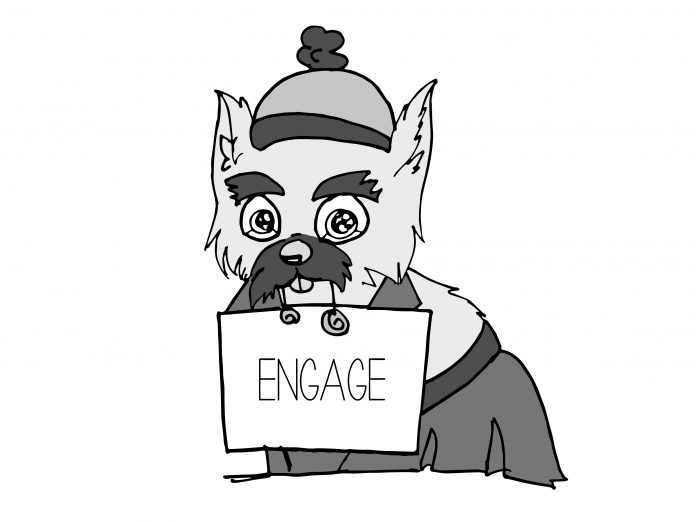
How could you not listen to a dog as cute and extracurricularly involved as this?

As an SFU tour guide, I give every potential student I meet this piece of advice: join a club. It’s the first tip I got as a new undergraduate, and I firmly believe in it — despite how naïve that may sound to anyone who’s dealt with the Simon Fraser Student Society (SFSS).

You may be familiar with the failings the SFSS suffered over the summer, but not everyone realizes how consistently they botch even their organization’s most basic functions. As a longstanding executive of the SFU Choir, I’ve seen countless examples of their blunders. One must ask how an organization meant to help clubs continually makes it harder for them to exist.

As six former presidents of the choir can attest, the SFSS has made several, and often reoccurring, mistakes that hindered club experience.

“I have watched dozens of events unfold where the SFSS [. . .] have caused us problems that range from minor annoyances and inconveniences, to major issues that inhibit our operation and our growth,” wrote former president Jennifer Pollock in a compiled letter to SFSS executives.

They don’t update clubs’ contact information in their records. Processes like approving room bookings stall for weeks, despite the actual work taking minutes. Once that’s completed, further complications appear: you’re only given the space for half the semester until you make yourself a big enough nuisance that they’re magically able to give it to you for the full term, or the SFSS neglects to inform you that an exam study session is occurring during your practice time.

We at the choir hoped the upcoming Student Union Building, supposedly a space for clubs, would solve some problems. When the SFSS was collecting student input, we requested rehearsal space (which requires a room for 120+ students). Imagine our disappointment upon discovering that our designated rehearsal area won’t seat half of that. We’ll never be able to use it.

Every semester, we face the same issues from an organization that should be helping us, not wasting our time and money. Yet despite all the problems my club and I have faced, I still believe getting involved on campus is a worthwhile endeavour.

Initially, coming to a school with over 30,000 students can be more than a little intimidating. Even if you make friends in lecture, there’s no guarantee you’ll see them next semester, and that can make a 500-person class feel utterly lonely. Getting involved can change that. The best proof I have is personal experience.

I started getting involved in my first year, and since then, I’ve felt like part of a community. Joining a club means meeting people who share your interests. I’ve gained some of my best friends through clubs.

I’ve had a lot of benefits academically and professionally, as well. Some of the best courses of my degree were suggestions from clubmates, and I’ve gained over three years’ worth of enjoyable job experience by being part of the choir’s executive team — experience that has led to multiple career opportunities.

I can’t say university has been the easiest thing I’ve ever done, but knowing I had friends waiting for me every Thursday night helped me get through even the most stressful midterm seasons. Joining a club made SFU more than just a school to me: I’ve had experiences I never would have encountered otherwise. It hasn’t always been ideal, but goddamn, it’s been worth it.

Why Harambe memes are less harmless than they seem

2
The site of Harambe's memorial, where mourners left flowers and other tributes.

You’ve likely seen your fair share of memes involving Harambe the gorilla: images that relegate his death to a glamourous source of amusement. These memes, and those who create and share them, make light of what happened to Harambe simply to have fun at the expense of his death. It’s wrong, and it exacerbates the zoo staff’s grief.

The story began when a child got into Harambe’s enclosure and encountered the gorilla. For the sake of guaranteeing the child’s safety, Cincinnati Zoo staff put down Harambe before he could do any harm to the child. Anaesthetic agents weren’t an optimal response, as staff were unsure if the drugs would activate in time.

The death of Harambe was deemed unfortunate — but the Internet saw it as an opportunity to make a new meme.

The memes initially spread as criticism of the child’s family, whom many found irresponsible for not watching their kid properly.  However, these critiques were soon corrupted by people embedding meaningless, offensive phrases into them and drawing attention away from what happened to Harambe; people trying to be witty to gain attention.

Some use “3dicks out for Harambe.” Others praise Harambe because “he died for our sins,” and isn’t a regular gorilla. A few have even ignited racial controversies, by comparing retired Australian Aboriginal football player Adam Goodes to the gorilla, reinforcing racist stereotypes of his community.

Ultimately, Harambe was just an ordinary animal whose innocent life was taken because someone couldn’t keep an eye on their child.

Unfortunately, people have been blindly sharing memes without actually thinking about the significance of what happened. People bombarded the Cincinnati Zoo through social media with these memes and jokes until zoo director Thane Maynard had to address the problem.

“We are not amused […] Our zoo family is still healing,” Maynard told the Associated Press. “[T]he constant mention of Harambe makes moving forward more difficult for us.” The zoo’s social media accounts closed in August because of these jokes.

These jokes continue to resurrect talk of the incident, adding to the guilt that the zoo staff suffer. It revolves around dragging out pointless discussion of an animal’s death for an unreasonable amount of time. Would anyone do that to their own pets?

If not for the risk he posed to a child’s well-being, Harambe could have lived a happy life. While I believe that the zoo did what was best in the interest of saving their patron’s life, if the child was properly supervised and the barriers were more inaccessible to visitors, this situation wouldn’t have been created in the first place.

These memes were never funny in the first place, but absurdly enough, they have survived and grown. Yes, everything can be a meme, but there should be a basic boundary drawn in popular social media: we shouldn’t promote and glorify the pain of animals.

This meme has contributed nothing of value to anyone, and it hurts people’s feelings. The best thing we can do is stop sharing it.

Be careful with who you’re blaming for government mess-ups

0

Remember that Christmas holiday Justin Trudeau took with his family in the Caribbean? Cute photos, nice weather, tabloid coverage, et al.? If the answer is “no,” that’s OK, because it’s not actually as big a story as you might think — unless you’re a Conservative MP, that is.

See, the recent gossip is that some of the Trudeaus’ travel companions had their names redacted from the flight manifest. As it turns out, the Trudeaus were joined by nanny Marian Pueyo, as well as Sophie Grégoire Trudeau’s parents, Jean Grégoire and Estelle Blais.

Controversy surrounding the new prime ministerial clan has already blossomed over the discovery that the public’s taxes are paying for things like nannies for Justin and Sophie’s children, and the extra security plus specialized flights required for their vacations. The redaction, followed by such a seemingly innocuous revelation, has set many political figures on edge. Some, such as MP Blaine Calkins in an interview with CBC, have gone so far as to say that it “smacks of a coverup.”

I understand the frustration. A lack of transparency is bad enough; an unnecessary lack is even more so. But this fuss is about minutia that Trudeau’s opponents are taking advantage of: championing “honesty” not because of any serious breach, but because they want an excuse to criticize the prime minister. It’s time to put down the “controversy” surrounding this undying adventure.

It’s not like Trudeau personally dived into the records and illegally destroyed information; the redactions were a decision made by national security, and I assume he has every reason to trust them to do their jobs correctly. That their judgment slipped in this case is hardly a bad reflection on him.

As for Trudeau overspending on his holidays? He doesn’t have much choice. Canada’s prime minister isn’t allowed to take ordinary commercial flights when he travels, because of the security risks. Sure, maybe losing out on exotic vacation destinations is a first world problem, but punishing his family for his job still seems unreasonable.

Besides, Trudeau actually did personally pay out quite a bit for that trip. While taxpayer dollars cover some expenses, the PM and pals still pay the equivalent to economy-class fare. Relax, guys — he’s not using you to gallivant across the land for free.

As for non-family member Pueyo? Of course the government paid her travel costs: she’s their employee, and it’s totally legal for them to do that for a residential staff member. Frankly, why would anyone see a job that requires you to pay enough money for a Caribbean visit as anything but counterproductive? Who would willingly take a job like that?

None of this is new procedure, either: Harper was doing it too. His New York weekend with his family in 2011 for baseball and Broadway expended $45,000 in taxpayer money.

I’m not saying that these are invalid concerns; there’s definitely merit to arguing against this, and critically analyzing your country’s leadership is important. But if you’re fighting for better allocation of your money and better transparency, stop blaming the guy who’s been in office for under a year. Political issues like this typically don’t trace back to just one person, and the problems people have come from long-standing policies and institutions.

That’s what we should focus our energies on challenging — not the three people you didn’t know were flying with Trudeau’s family.

What my zodiac sign taught me about my heritage

0

I was born on February 25. My mother tells me I was smiling. If that’s the case, it was probably only because I was too young and naïve to realize the odoriferous truth: I was a Pisces.

For those who evaded the misfortune of being born under this subpar cosmic arrangement, I’ll break it down. We’re dead last on the zodiac cycle, probably because nobody cares about us. Our symbol resembles a gigantic “H,” which shows that the twin fish clearly can’t spell, so there goes any career opportunity I might have had in the arts.

The most confusing factor of being a Pisces is this. You know how everyone allegedly hates Geminis for being two-faced? We’re like that too, but at least Geminis have pretty faces; we’re stuck with ugly fish faces.

I like to believe that I’m not really as aromatically repulsive as real fish, but this dual existence is probably the one way in which I feel a genuine rapport with my sign. See, I’m a person of contradictions. Now, I embrace that; growing up, doing so wasn’t quite as natural a process.

I grew up in a vaguely conservative, but still fairly progressive, Afghan household with a loving family and well-defined Eastern values. The environment elsewhere was most definitely not that. I felt consistently out of touch with the people with whom I shared classrooms. I didn’t recognize their artists or find their jokes funny; I didn’t know how to deal with them and remain true to myself.

But the older I got, the more I realized my knowledge of even my mother culture was lacking. Nuances of etiquette escaped me at every family function; switching languages caused words to jumble together into a tapestry of miscommunication.

There was no place where I felt anything besides inadequacy. Progress in one area seemed to lead to regression in another; the happier I was outside my home, the less happy I was within, and vice versa. Knowing that I was far from the only person to experience such a situation, I couldn’t understand what rendered me so incapable of resolving it.

There wasn’t any earth-shattering event which reinvented my perspective; the pressure rose and a dam just broke. Nobody controls what they’re born with — not birthdays, not bodies, not blood. But we can make it all work for us, because it’s usually a sweeter deal than we think.

I saw my identity as the site of some fairytale struggle between the different aspects of my heritage, my personality, my likes and dislikes. But perhaps this wasn’t a war in which one side had to be victorious. Thesis and antithesis could synthesize; two fish could synchronized-swim their way to happiness.

Don’t worry so much about how people perceive your hurricanes of emotion. Learn about your roots instead of expecting the information to magically appear. I’ve been blessed with wonderful friends and family, and I finally feel like I’m on the road to being part of both the Canadian community I was born in and the Afghan heritage I’m linked to.

I might complain about literally every aspect of my life, but ultimately, I’ve accepted the different facets of myself. Including the part with a bizarre vendetta against tuna and marine life.

Zine-phobia runs rampant in the world of Blackbird

0
While having a graphic novel that was originally released in France in 2008 sounds like a good idea, the boring plot and artwork makes Blackbird both frustrating and forgettable.

Take a second to picture a world where the distribution of self-published content could have you arrested. Now, imagine a group of rebellious skateboarding anarchists taking the fight to a corrupt government and its crooked politicians through the illegal circulation of zines — a war on censorship fought with blood, sweat, and ink. Sounds pretty cool, doesn’t it?

Well, it isn’t. And by God, is it frustrating.

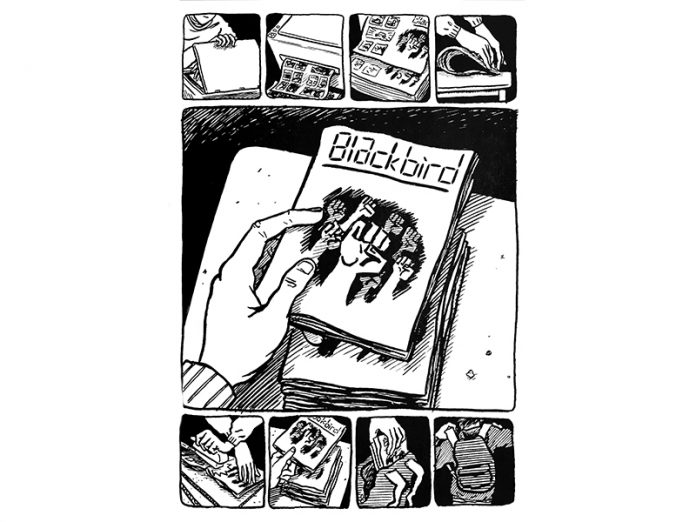
Pierre Maurel’s Blackbird is a collection of a six-issue zine series originally published in France in 2008, and one that wasn’t really worth collecting in the first place.

I could honestly throw every insult I could at this story — even the kitchen sink just for good measure. Instead, I will simply say that Blackbird is about as captivating as Ferris Bueller’s teacher reading a syllabus, and that this story somehow manages to have slower pace than two sloths making love on their honeymoon.

As for the characters themselves, I am almost speechless. To be fair, a story that has no names for its characters may sound groundbreaking, and even a little inventive. Ultimately, though, it just leads to total disinvestment from the characters and their journey. It also leads to further frustration given that the character designs are so underwhelming, making it hard to know who is who at the best of times.

Arguably, though, the most infuriating element of Blackbird is that we’re never given enough information on any of the characters to feel invested in their cause. There isn’t any sort of character exploration to see what drives them to anarchistic action. Hell, we never even get to find out why they’re passionate about making zines or what their illegal publication is even about.

Blackbird had everything going for it as a graphic novel and yet found a way to under-deliver in virtually every way imaginable. It stands as not only a monument to lazy storytelling but as a marriage between all that is pretentious and dull.

Given the choice between reading Blackbird or doing classroom readings, I would unequivocally suggest the latter.

COMIC: Jeremy’s Excuses 7

0

SFU proposes “badass giant mech” as transit alternative

0
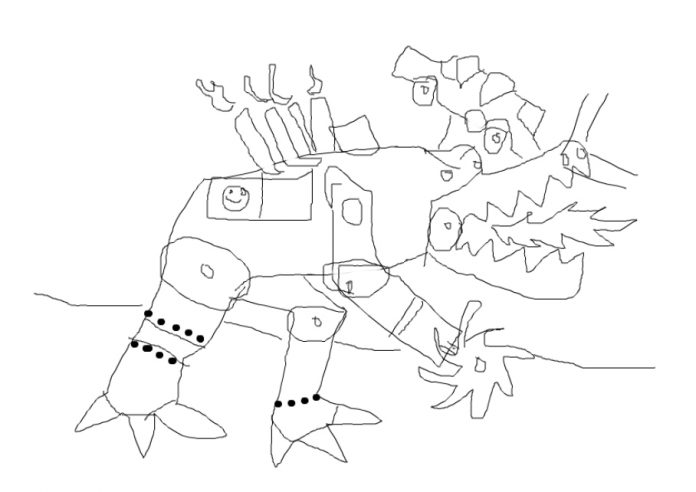
An artist's rendering of the robot (Credit to Andrew Petter.)

An SFU committee tasked with determining an alternative mass transit option has forced the school to rethink its current bus strategy because of the cost of fuel, shitty Compass Card U-Passes, and unpredictability under inclement weather.

After reviewing many proposals, the committee finally settled on the next generation of commuting options for the Simon Fraser community. The committee surprised the audience, as the press release was originally supposed to announce a new proposal aimed at increasing community participation in the planning process.

Notable rejects stood out as the committee announced its decision late Thursday evening. Using existing roads and transit infrastructure to create San Francisco-style trolley cars was cited as “pretty lame” by a committee representative, while the oft-mentioned gondola proposal was rejected by the representative for being, in their words, “stupid. Let’s be honest with ourselves. A gondola?”

While many proposals failed to meet the committee’s strict criteria outlined at the beginning of the exploration process, the winning proposal has been met with controversy, given that it was proposed an hour before the announcement.

SFU president Andrew Petter announced the winning proposal as “the best thing I’ve come up with today. It wins.” The project, which has been projected for a 15-year completion time and a cost of $1.8 billion, was described by the committee as a “badass giant walking robot with like lasers or whatever.”

The robot will be able to ferry close to 25 students up to the university every half hour. “Picture it. You’re a new student. SFU. You’re all like, ‘holy shit!’ That’s what I want for this community,” a jubilant Petter exclaimed during the five-minute presentation. He continued on, explaining how the project is part of a larger strategy to attract “those anime kids. Gee whiz, they’re rich.”

The project has been met with controversy, with one critic calling it “the most outrageous thing I have ever goddamn heard of, and that includes that crazy gondola idea the drunk guy said at that one meeting.”

In a bizarre turn of events, the committee attempted to appeal its own decision, to which Petter replied dismissively, “I run this town.” Planning will move ahead as funds will need to be raised immediately to start construction.

The president additionally announced that an online contest open to SFU community members will be held to name the first of the two vehicles, so expect another email spam fest asking for your participation to some survey or whatever. “The winner gets like, an iPad Mini or whatever piece of shit consumer electronic toy is in vogue at the moment,” Petter stated. He continued to explain that “iPad minis are the worst. Not a phone, or a real iPad. What are these kids doing with their lives?”

The bid for the service contract was narrowed down to two finalists. “It’s between Chartwells and TransLink. Hold up. Chartwells wins,” Petter announced, stifling giggles as he cited their excellent service and quality track record. Construction is expected to begin by 2030.