


For Addy Townsend, it’s a family affair

In Addy Townsend’s case, there was never any question about “going anywhere else.” Not because she isn’t an extremely good runner — far from it. No, it’s because everyone in her family has either ran or is running at SFU. Oh, and her mother, Brit Townsend, is the coach of the team.
“Obviously it has its pros and cons sometimes,” said Townsend on having her mother as her coach. “She tries to tell me ‘OK, you know, don’t talk back to me in front of people,’ and it’s hard, because at home obviously that happens. I respect her a lot, she’s a great coach and she is going to be a part of my future for a long time. So I think it’s just trying to really focus on her as a coach, which is really hard sometimes.”
With her mom as the coach, her older sister Dana on the team, and her father a former runner at SFU, it’s no surprise that her family life revolves around running.
“Probably if people come for dinner they think ‘Wow, do you guys ever stop talking about track?’ [. . .] We watched the Olympics, [and now] we’re watching it on demand, every single night, watching every race over and over.
“I went with track and I’m really happy, and I think it was the right choice for me.”
“It’s just kind of how we’ve grown up. We’ve always been at SFU with all the teams, the whole team going up to Whistler since we were born. It’s just kind of my life forever, going to SFU.”
Townsend was also a high-level soccer player growing up. She played on provincial teams with such players as SFU’s Jenna Baxter before deciding to focus on a career in track.
“Having my mom as my coach she was always leaning towards track for me, for my future,” she explained. “I stopped in Grade 12 because I was going to try and do both [track and soccer] at SFU actually, but it just didn’t work because it’s too hard [doing] two sports plus school and travelling. I went with track and I’m really happy, and I think it was the right choice for me.”
Now that she is at SFU competing, her and her teammates’ goal this season is to retake the GNAC championship. The Clan won the title in 2014, only to lose it the following year.
“Last year was pretty hard,” said Townsend. “We didn’t have the best team chemistry, and I think this year we were really working on it in Whistler. The bond with our team is really strong, and I think it’s hard to get [that], as track [and cross country] is more individual. So I think this year we have a really good chance.”
Townsend further elaborated on the difficulties of being a team player in a sport as individualistic as running.
“For me, I played soccer my whole life until Grade 12, so I think I have a lot of team spirit, and I really try and bring it to the team,” Townsend said. “But I find that having a background in team bond[ing] is really important. Just try to really focus on being a team instead of if someone passes you, thinking ‘Oh, well it’s done.’
“In cross country you just need to work together, because you can’t get to nationals with one person,” she continued. “If we all want to go, it’s everybody stepping up to the plate, not just one person.”
Another challenge is being constantly on the road. Unlike the soccer team for example, SFU cross country doesn’t have any meets at home; they are constantly on the road competing.
“School is definitely tough, but our team is really good on trips,” she said. “Everyone is down in the lobby, talking, doing their homework, on the bus we all have our books out, so I think it’s just [about] getting used to that. [. . .] It was tough the first year, but now you kind of get in the hang of it.”
A health science major, Townsend plans to be a realtor after she graduates, but also wants to run as long as possible after her collegiate career.
“I think sometimes after university, it can be a huge jump,” Townsend said. “But I think that’s where a lot of things can happen. I want to take it as far as I can and see what happens.
“I want to run as long as I can. I think it’s a possibility for anyone, so I want to take that as far as I can. With my mom too, I think that can happen.”
FUN FACT: Go-to pump-up song?
I like rap, so [usually] some Drake. [. . .] I don’t actually have a favourite song [of his], I just roll through any song that’s really really good.
Even with its flaws, Deus Ex: Mankind Divided is worth playing

Deus Ex: Mankind Divided is the next entry in the Deus Ex series following 2011’s Human Revolution. An action-based game with role-playing elements, the game is set in the near future of 2029 with the primary conflict revolving around how humanity is split between those who are augmented — fitted with cybernetic prosthetics or implants — and those who are not.
Players control Adam Jensen as he works with both Interpol and the Juggernaut Collective, a hacker group aimed at combatting corruption.
A major selling point for the Deus Ex series has been providing players with the choice to approach situations however they wish. Mankind Divided allows players to choose between using stealth, walking into a room guns blazing, or a mix of the two to complete objectives.
Players who choose stealth have abilities such as cloaking and remote hacking, whereas those who choose combat as their preferred path can upgrade their weapon handling, armour, or unlock weapon augmentations such as nanoblades (the ability to shoot swords out of your arms) and TESLA arcs (the ability to shoot electricity).
There are also choices offered on how to progress the story and complete side quests. As Jensen, it is up to the player to decide to either support Interpol or the Juggernaut Collective. For example, after acquiring an important piece of evidence the player has to decide whether they should trust the item to their superiors at Interpol or hand it to their allies at the Collective in hopes of uncovering more information.
Side quests are also affected by the actions of the player: some can be lost forever as a result of players’ choices, while others will be unlocked.
The gameplay is very strong, keeping with the series’ trend. There is a lot of enjoyment in seeking out the best way to tackle a room full of enemies one at a time without alerting the others in a stealth playthrough. It is also challenging and rewarding to take on large groups of enemies in straight-up combat with a mix of abilities and weaponry. Augmentations help keep things interesting, as some abilities can make situations easier or help take advantage of the various level layouts.
The game is also technically impressive. The cutscenes are stunning and the level of detail put into Prague and other locations gives the game a sense of realism. The music is fantastic at capturing the feeling of various scenarios whether it be the exhilaration of combat or the calmness of walking down the street. The voice acting is also quite memorable, with a great cast of actors providing compelling performances.
Mankind Divided excels in many areas, but there are some noticeable flaws in the finished package, including notable visual problems such as hair clipping through clothing, long loading times, and other various bugs. The biggest issue, however, is that the game ends somewhat abruptly, with many of the threads never coming to a conclusion. It isn’t as though the game is incomplete — players can expect to spend about 30 hours finishing the game — but one can’t help but feel like there are some parts missing.
Overall, Deus Ex: Mankind Divided is a worthy sequel and a great title that anyone can enjoy. The small number of flaws do not do enough to detract from an enjoyable experience. You can’t go wrong picking up this title.
New semester, new music

By: Jaiden Dembo, Max James Hill, Tanya Humeniuk, Courtney Miller, Natalie Serafini, and Eva Zhu
Emotion Side B – Carly Rae Jepsen
Emotion Side B is an extension of Carly Rae Jepsen’s third studio album Emotion, which came out in mid-2015.
Side B is an EP full of pure ‘80s synth-pop with big choruses that will get stuck in your head and be played over and over. The whole thing kicks off with “First Time,” a song about having a heart that breaks easily but wanting that one-night stand to know the repercussions.
These tracks portray Jepsen as the victim of relationships gone awry, but in a refreshing way. The weakest track is “Store,” which sounds more like a nursery rhyme and doesn’t flow well with the rest of the EP. “Higher” and “Roses” are two of the best tracks, and show the positive side of relationships.
Overall, I would definitely recommend checking out this EP. It’s some of Jepsen’s best work to date. –EZ
How to Be a Human Being – Glass Animals
What does it mean to be human? Glass Animals explore this idea through an amalgamation of character studies resulting in their new album How to Be a Human Being.
Glass Animals strive to create an atmospheric sound, while maintaining the experimental side reflected on their first album Zaba. How to Be a Human Being lacks the jungle vibes of that album, but features the occasional bongo or wind instrument as an homage to their previous sound. It plays with unconventional sounds and shows that the band is stretching its musical wings.
From the video game-like echoes in “Season 2 Episode 3” to gentle contemporary pop in “Agnes,” Glass Animals test their artistry with a wide range of tones. –JD
My Woman – Angel Olsen
Angel Olsen’s My Woman is full of love stories, but it isn’t saturated in sap. Even in her softness, Olsen is powerful.
Her musicality hasn’t changed drastically from 2014’s Burn Your Fire For No Witness: simple yet compelling lyrics, and a voice that slips easily from strength to sentimentality. The album opens with “Intern,” a song that smacks a little of Twin Peaks. That wavering, wistful tone is left behind as Olsen bemoans that you’ll “Never Be Mine,” and yells at you to “Shut Up Kiss Me.”
None of the tracks are clearly defined by genres: many are indie-folk-inspired, but still skip between rock (“Shut Up Kiss Me”), country (“Sister”), and dreamy ‘60s nostalgia (“Those Were the Days”). Even with this genre-hopping, none of the tracks sound out of place. They are all distinctly Olsen, strung together with a voice that is unflinchingly emotional. –NS
Kiss Me All Night – Junior Boys
Looks like the Canadian electronic duo Junior Boys have been having a super productive 2016. Earlier this year they released a new album called Big Black Coat and now, six months later, they have a new EP.
It’s called Kiss Me All Night, a romantic title which suits its sensual and laid-back atmosphere. It would make for great late-night make-out music. Unfortunately, the EP only runs for 18 minutes and 20 seconds front to back — hardly enough time to kiss all night. Oh well.
There is still much to love about this record. I especially love the start of the second track “Baby Fat” when the heavy bass kicks in underneath a high-pitched synth erratically dancing around. And the EP is full of great moments just like this one. –TH
Give a Glimpse of What Yer Not – Dinosaur Jr.
Dinosaur Jr. has three eras: their early era, post-breakup era (when bassist Lou Barlow left), and post-reunion era (when Lou came back). I’m a big fan of their early stuff, but I could never get into post-breakup Dinosaur Jr. Now, a few LPs into their post-reunion era, Dinosaur Jr released Give a Glimpse of What Yer Not.
I was a little worried when I started listening to the LP. The first two tracks sounded too post-breakup era. They followed a formula: J Mascis’ reticent vocals slightly drowned in crunchy guitar, with a Mascis-ian guitar solo two minutes in.
After those tracks, things got better for me. “Be a Part” reminded me of Built to Spill’s cover of “Cortez the Killer.” “Love Is” was intense and full of passion. And “I Walk For Miles” saw Mascis step out of his usual vocal range. –TH
Kinda Don’t Care – Justin Moore
This fourth album from Justin Moore is a classically contemporary country record, filled with quintessential, if a little clichéd, themes.
The title track is all about trying to do everything right, and then saying “fuck it” and doing the things you want to do instead. The lead single “You Look Like I Need a Drink” is extremely relatable, and characteristic of the genre. It tells the tale of your boyfriend/girlfriend/boo coming by to break up with you, and you can see it in their face. So, of course, the only proper response is to need a drink in order to handle whatever they have to say.
Because just about every country record has at least one, “Hell On a Highway” is the upset, melancholy, yet a little nostalgic throwback to a heartbreak.
The album isn’t anything special, but it makes for some easy listening for your backyard or for rolling along in your car with the windows down. –CM
Morning Report – Arkells
Morning Report is Arkells’ fourth full-length album, and the record continues their alt-rock vibe. The first single is “Private School,” but it’s mediocre for these Canadians. The vocals are lacking as they acquire an uninspired and irritating buzzing quality that appears in spurts throughout the chorus.
On the other hand, the haunting introduction to “Passenger Seat” captures attention efficiently, and the tale spun by Max Kerman meshes really well with the meditative, reflective ballad-style song he’s got going.
“Making Due” has more of a classic rock vibe — it would not be out of place in a John Hughes movie. Another similarly upbeat track is “Round and Round,” which opens with one of my favourite lyrics off the album: “I had the grace of a diplomat on his best behaviour.” The best track is “Hung Up” which is catchy, with solid bass, and danceable drum riffs.
The album is a solid listen overall and could easily serve to pump you up while writing papers. –CM
What I wish I knew on my first day at SFU
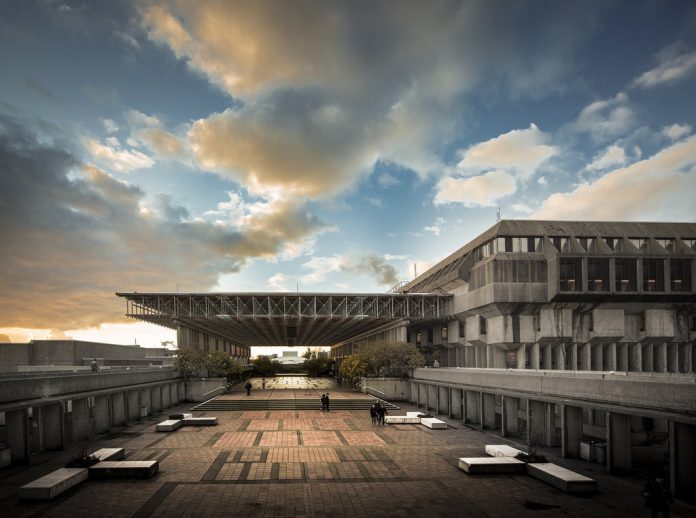
[dropcap]I [/dropcap]recently completed my undergraduate degree and people aren’t joking when they say that achieving milestones makes you weirdly sentimental. Since summer semester ended, I have spent a lot of time reflecting on my past four years at SFU. When all you have to do in a day is sleep and eat, there is a lot of time to reflect.
I’ve come up with a list of things that I wish I had known when I began my academic career at SFU. My hope is that these tips will help first-year students ease into what will be a challenging, yet rewarding undergraduate experience.
1. Don’t be intimidated by the “university is really hard” mantra you hear in your first week
University is challenging, but it is by no means impossible to succeed. This classic prof-led rant is directed at students who think they won’t have to work to see results. If you work steadily and efficiently, you’ll be fine!
2. It’s not weird to be friendly
Don’t worry about getting pegged as “the weirdo.” One of the great things about university is that you’re way more likely to find like-minded people now than you ever could have in high school. Turn to the person sitting beside you on the first day of class and introduce yourself! Making friends in your classes is also advantageous from an academic perspective. Personally, I was a lot more motivated to study with other people than by myself.
3. Make an effort to go to class
Trust me, just go. The price of a coffee to get you there is worth not having to pay to retake the class next semester.
4. If you have no idea what’s going on, chances are other people are experiencing the same confusion
One of the easiest ways to make friends is to bond over collective cluelessness! It’s also worth emailing your TA/prof with your questions or posting discussions on Canvas.
5. Get on the good side of your TAs and go to their office hours
TAs are graduate students who may have just finished their undergraduate degrees, or are only a year or two out of undergrad. With their own undergraduate experience freshly in their minds, they know what you’re going through, so know that they are by no means “out to get you.” If you don’t agree with a grade you’ve received, don’t be afraid to address this in office hours. While your grade will most likely remain unchanged, you will become more familiar with your TA’s grading scheme, which will pay major dividends for future assignments! At the very least, going to office hours shows your profs and TAs that you care. Believe it or not, if you are on the cusp of a higher letter grade, this effort might factor into your prof’s decision when determining your final grade. It also gives you the opportunity to personally introduce yourself to your prof or TA!
6. Don’t freak out if you fail a midterm
Failing a midterm is not the end of the world — it does not mean your chances of doing well in the course are over. Go see your prof, go over what you did wrong, pray to the almighty curve gods, and then move on.
7. Use breadth requirements as an opportunity to explore subjects that interest you
I started at SFU as a kinesiology student, but will be graduating with a history and French degree. Anything is possible.
8. Use your department advisor
You’ll soon come to realize that drop-in hours with your department advisor are a godsend. Some advisors are very sticky about students bringing the appropriate paperwork to an advising appointment (i.e. your advising transcript, accessible on your goSFU account), so come prepared! Advisors are employed to answer questions about degree requirements and it’s a lot easier to go to them rather than attempting to figure out the ins and outs solo.
9. Don’t buy your textbooks right away, or at all
Books are expensive. So why drop $800 if you don’t have to? Before you step foot in the bookstore, ask your prof if the latest addition is required and then do some research. Compare bookstore prices with prices on Amazon and Better World Books. On the other hand, if you don’t want to buy books or can’t afford to buy a textbook at all, ask your prof to put the textbook(s) on reserve at the library. You can check out reserves for a set period, and can renew a reserve online up to three times.
10. Use the resources available at the library
At the beginning of each semester, the library (at least on Burnaby campus) holds information sessions for students regarding techniques for adjusting to the academic demands of university. You’ll receive an email about these sessions, and I encourage you to attend at least one of them. The Student Learning Commons is also a great resource that is available to students throughout the entirety of the semester and is worth checking out!
11. Opt out of health and dental early if you’re already covered!
Why insure your teeth twice?
12. If you are going to drink coffee, drink responsibly
A lot of places on campus will give discounts if you bring your own mug! Save a little by going reusable.
13. Cheer on SFU Varsity Athletics
As the only NCAA school outside of the US, SFU has many sports teams that compete in the Great Northwest Athletic Conference (GNAC) against American institutions. Heading to a sporting event is a great way to hang out with friends while showing support for your university. Student athletes train tirelessly in order to represent SFU to the best of their abilities, so your attendance at their games acknowledges that their efforts are appreciated! See the SFU Varsity Athletics website for information on team schedules and more.
14. Get involved
Getting involved is a great way to make the most of your experience at SFU. Whether you decide to join a club, take up student politics, become a member of your department student union, or write for this newspaper, undergrad is not only about finishing with a high GPA — the most memorable parts of your time as an undergraduate student will come from the opportunities you decide to pursue and the relationships you are able to build. While university facilitates academic development, involvement in non-academic endeavours allows students to grow on a personal level as well. So take advantage of the incredible opportunities available to you and get ready for one of the best experiences of your life!
Cross country team determined to return to winning ways

For both men’s and women’s cross country, this season is about focus and preparation. Both teams are returning a large number of runners, and the key will be to see if they can stay focused throughout the entire season.
“I’m excited about the season, we’re really I think keeping everybody very positive, [and] keeping those negative thoughts away are going to make a big difference,” said head coach Brit Townsend. “I think both squads are going to make it there, if we stay focused, healthy, and believe.”
One thing that has Townsend and the coaching staff excited is the commitment of the runners to training over the summer, for both men’s and women’s teams.
“It looked like people came into the camp a little more ready and prepared than they had in the past,” she explained. “I think we’re going to have some good opportunities this year.”
“We have to fight every time we get on the line, and we can’t take anything for granted.”
A major loss for the men’s team will be Cameron Proceviat. He was “consistently one of our top five guys,” according to Townsend, and will be a tough gap to fill on the team. One runner that will be expected to do that is Oliver Jorgensen, who has struggled with injuries early on this season.
“I’m hoping that by the time we get to the middle of our season, he’s going to be healthy and contributing,” said Townsend. “I’m hoping he’s running the following week. But he still won’t be where he should be because he’s had several months off. However, he’s a proven cross country runner. If we can get him healthy, he’ll be a big part of it.”
For the women’s side, it’s about focus and commitment. After winning the GNAC title in 2014, they finished a disappointing fourth last year, and will be looking to regain the title this upcoming season.
“I think part of it last year was we were a little bit complacent,” said Townsend. “I think the kids thought ‘Oh yeah, we’re going to get there, we always get there,’ and so I don’t think everyone was on.
“We weren’t 100 percent committed right from the beginning, that we had to fight as hard as everybody else to make it,” she continued. “So that’s what we are going to focus on this year. We have to fight every time we get on the line, and we can’t take anything for granted.”
Another key for both sides will be staying healthy, especially when balancing a travel-heavy schedule and regular schoolwork, a unique challenge for the team.
“This is a tough schedule for most of these kids. Most of them go all through cross country, all through indoors, all through outdoors, so there’s no downtime for them,” Townsend said. “They are constantly training, and obviously doing their schoolwork. We’re also travelling every weekend, so for them keeping healthy, making sure they don’t overdo it early in the season [and] taking care of injuries [will be important].”
Your guide to student eating

Gourmet instant ramen
Recommended by Max James Hill
If you’re a university student living on your own, chances are you’re more than familiar with instant ramen. These dollar-a-bag delights are OK on their own, but you can turn a mediocre meal into something extraordinary by following these simple steps.
 Step 1. Buy better ramen. My favourite brands are Shin Ramyun, Mama, and Maruchan. Please don’t buy Mr. Noodles.
Step 2. Only use half the seasoning packet. The whole thing will overpower any other flavours you want to add.
Step 3. Add green onion, pepper flakes, and an egg to the broth while it boils. The egg will come out creamy and delicious.
Step 4. If you’ve got the cash, head to a nice produce place for some bok choy, bean sprouts, and mushrooms. If not, a bag of frozen vegetables (carrot, peas, and corn) will work fine.
Step 5. Add your own sauces and condiments — vinegar and miso paste work wonders. Fish sauce will also do, if you’ve got some lying around.
Step 6. Splash in a little lemon juice or milk at the end (but not both, unless you like curdled dairy) and you’ve got yourself a delicious bowl of ramen.
Everything but the kitchen sink curry
Recommended by Courtney Miller
If you’re looking to make a large, one-pot solution to your dinners this week, this is your best option. Making one large curry and portioning it out in some containers is a great way to have home-cooked meals all week. You can use any vegetables you have on hand, and anything in the fridge or pantry. If you buy a package of lemongrass (usually around $2), freeze the extra stalks to use at a later date. If you skip the lemongrass, it’ll still be delicious, just not as delicious. Curry paste doesn’t go bad for a long time. Store extra in the fridge for next time.
Heat a big pot on medium-high, add oil when hot.
Add lemongrass, garlic, and ginger. Stir for 30–60 seconds. Add onions, carrots, celery, potatoes, turnip, and rutabaga. Cook until onions are translucent, stirring often. Add protein and cook until browned.
Add curry paste, stirring it around for one minute.
Add half the stock and stir until curry paste dissolves. Add remaining stock, soy sauce, and sugar. Reduce heat to medium-low and simmer for 20 minutes (the longer you simmer, the more flavour will come out in your dish).
Stir in coconut milk, mushrooms, cauliflower, and bell pepper. Bring back to a boil. Cook for five minutes. If you have leafy greens to add, add them now, and cook for three minutes.
Season with salt, pepper, lime juice, and cilantro. Goes well over rice or noodles.
Ingredients
4 tbsp vegetable oil
1 stick lemongrass
2 tsp minced garlic
1 tbsp ginger, minced
2 onions, chopped
4 carrots, diced
6 sticks celery, diced
2 potatoes, peeled, diced
1 turnip, diced
1 rutabaga, diced
2–3 cups protein (tofu/chicken/pork/beef/beans/lentils/etc.)
2 tbsp, heaping, curry paste
4 cups stock (chicken or vegetable, or possible substitute: water)
3 tbsp soy sauce
2 tbsp sugar
2 cans coconut milk
1 cup halved mushrooms
1 head cauliflower, diced
1 bell pepper, diced
2 cups leafy greens
Salt
Pepper
3 tbsp lime juice (optional)
Cilantro, chopped (optional)
Baked Kraft Dinner
Recommended by Tamara Connor
 If you’re total trash but want to feel a little less greasy, I suggest spicing up a good ol’ box of KD. This Kraft Dinner bake is pretty simple.
Step 1. Make a box of Kraft Dinner. You’ll need some margarine and a splash of milk.
Step 2. Grate up some cheese and mix it into your Kraft Dinner.
Step 3. Add a can of tuna.
Step 4. Warm up some frozen peas and toss them in.
Step 5. Pour everything into an oven-safe dish and sprinkle more cheese on top.
Step 6. Put it in the oven at 350 C for 10–15 minutes!
And there you have it. The perfect way to disguise your cooking incompetence.
Hog heaven
Recommended by Jessica Pickering
This is a great recipe because it’s simple, cheap, filling, and heats up well the next day.
Step 1. Preheat the oven to 350 C and grease an oven-safe dish.
Step 2. Cover the bottom of the dish with two cups of chow mein noodles, then layer on top a sliced zucchini, a small diced onion, and a sliced tomato or red pepper.
Step 3. Pour one cup of broth, vegetable or chicken, over all of it.
Step 4. Season with salt and pepper (and fresh basil if you feel like being fancy), then bake for an hour, using more broth if it starts drying out.
Step 5. Top with shredded cheese and broil until it melts.
Overnight oats
Recommended by Phoebe Lim
 If you’re anything like me, you love food but hate cooking. Especially in the morning when you’re groggy from pulling an all-nighter on that term paper or project presentation. Well, fear not! Overnight oats require zero cooking; all you need is a jar, oats, and a few other items you likely already have or can find at your local grocery store. Mix it together in a jar, seal the lid tightly, leave it in the fridge overnight, and wake up to the cool, delicious taste of oats. I’d take this stuff over hot oatmeal any day.
You can modify it as much as you like — try mixing in different foods to make it your own.
Ingredients
⅓ cup Greek yogurt (sometimes I even use yogurt drinks or Kefir)
½ cup (heaping) rolled oats
⅔ cup milk
1 tablespoon chia seeds
½ teaspoon vanilla extract
2 tablespoons honey or maple syrup
4-6 frozen strawberries, cut into smaller pieces
Future of Highland Pub uncertain as fall semester begins

Burgers and brews at the Highland Pub won’t be a thing of the past — at least for the time being.
In May, Martin Wyant, CEO of the Simon Fraser Student Society (SFSS) spoke to The Peak in the wake of the announcement that the campus pub would be closed during the summer semester. The closure meant that not only would thirsty students have to look elsewhere for a post- (or pre-) class beverage, but that the students who work at the pub would be left without shifts for an entire semester.
The decision to close the pub during SFU’s least busy semester was made by the Food and Services branch of the SFSS, which claimed that the pub’s loss in sales was too steep to justify being open for business. However, as Wyant explained in a recent interview, the semester-long closure “was an opportunity to identify the problems there and what we can really improve on.”
Wyant and SFSS interim president Larissa Chen confirm that the pub will indeed be open for business during the fall semester, but with a new business model in the works. They hope to explore a “more event-based, catering-based business offering to see if it will help us generate a better return for students,” explained Wyant. The new business model will be presented to the board in mid-October.
The pub will indeed be open for business during the fall semester, but with a new business model in the works.
Chen mentioned some possible ideas for future pub events in hopes of sparking student interest, including a “speaker series, open mic nights, karaoke, [and] trivia nights,” as well as reintroducing previously successful regular events such as Wing Wednesdays.
A possible game changer would be for the pub to allow minors. Wyant expressed that he is aware “students don’t always want to be in an environment that is dominated by alcohol,” and hopes to look into other options when it comes to the pub’s licensing. However, this move also poses difficulties, as the restaurant’s licensing is in the hands of SFU and not the SFSS.
Shayne Grimmer, a fan of the Highland Pub who has watched the pub’s decline in recent years, noted that these changes are long overdue. He told The Peak, “Until I see a detailed breakdown of why it’s costing over $700,000 [Editor’s note: The Peak was unable to confirm this number] to run a pub that’s only open five days a week and during school time, I will be very skeptical that something isn’t right.” He and friends who have worked at the pub believe a makeover like this is crucial for the pub’s survival and claim that fresh ideas for improvement of the pub have even been shot down in the past. From their perspective, poor management has contributed to the pub’s losses, and a change in how the pub is run could benefit everyone involved.
Attendance is only one half of the issue. Chen and Wyant emphasized that finances were the main reason why the pub was closed down this past summer, and continues to be a prominent issue for the SFSS.
As Wyant explained, there are a number of large expenses that must be paid to keep the pub open, including staff wages, operating costs, rent paid to SFU, and most significantly, the skyrocketing costs of food — especially in the last couple of years.
Furthermore, Chen noted that “there seemed to be inconsistencies with record-keeping” before Wyant began working for the SFSS. Sources close to staff at the pub attested to this, as they had previously experienced days and weeks of great sales from the pub and could not imagine that finances would be a problem.
The SFSS suggested students to offer feedback on what they want to see in the pub, emphasizing its value as a student space. However, it is unclear if there is a direct route for students to offer this input. Chen suggested this can be done by joining the SFSS Events and Promotions Committee, by emailing VP services, or filling out the input box on the SFSS website.
With files from Ashley Fraser.
Public forum on pipeline and energy strategy at SFU held by Terry Beech

“Facts show the project should be rejected.” So said economist Robyn Allan of the Trans Mountain Pipeline expansion project on September 7 at SFU’s Diamond Alumni Centre.
She made the statement at a public forum organized by Burnaby North-Seymour MP Terry Beech, the most recent in a series that began in July. Allan and a panel of experts from pipeline-related fields spoke to the over 250 citizens who came to voice their concerns about the pipeline expansion.
During the introduction to the event, Beech made it clear to the attendees that the experts were invited in response to public feedback from previous events, and that their presentations were not vetted by any approval process.
Allan appeared to take full advantage of the freedom, explaining emphatically to cheers and applause that not only the pipeline, but the pipeline approval process was flawed. She questioned the arguments supporting the pipeline’s construction, accusing the National Energy Board (NEB) of “betraying” Canada by recommending conditional approval of the project on May 19.
Vancouver alone could lose up to $1.2 billion in the event of a spill.
The Trans Mountain Pipeline transports oil from Edmonton to Burnaby, and the proposed expansion would triple its capacity. During the NEB hearings, many environmental and community groups criticized the project for posing a risk to the environment and public safety, and tabling aboriginal rights.
There was also criticism of the NEB itself, which reportedly did not consider some environmental impacts in its assessment, and had a former oil industry consultant appointed to its ranks by the Harper government.
A common argument against the pipeline is that a catastrophic oil leak or spill would cause billions of dollars worth of damage to British Columbia’s economy, impacting fisheries, tourism, and local water supplies.
Michael Lowry of West Coast Marine Response Corporation explained that there are many resources in place to rapidly combat an oil spill, but critics insist that the measures are insufficient. The local environmental group Stand argued in a media statement that “the best way to prevent oil spills is not to increase tanker traffic.”
The NEB report on its decision explains that $1.3 billion has been set aside by various oil companies and international bodies, but a UBC study said that Vancouver alone could lose up to $1.2 billion in the event of a spill. There was also some controversy during the forum about whether spill responders could clean up the diluted bitumen in the same way as conventional oil.
Another recurring theme of the evening was the sentiment that the Liberal government has already struck a very different tone from its predecessor since its election in October 2015.
Canada-Asia expert and UBC professor Paul Evans explained that “[former prime minister] Joe Clark often talks about our new Liberal government [. . .] as, he’s never known a government that has tried to do more things more quickly and with more consultations.” Beech was also praised widely by MPs Joyce Murray (Vancouver Quadra), Joe Peschisolido (Steveston–Richmond East), and audience members for organizing the public events.
However, attendees voiced concerns throughout the evening that the Trudeau government’s approach to the environment and energy seemed to be out of sync. “I don’t think we yet have an energy strategy,” Evans said, explaining that Canada’s relationship with China is currently undergoing rapid change. The capacity increase to the pipeline has been marketed as a way for Canada to sell more oil to the Asian superpower.
This past August, in Montreal, protesters marched into the NEB meeting room for the Energy East Pipeline that would carry tar sands oil from Alberta to New Brunswick. Two NEB meetings were cancelled in response.
During the response period, some members of the audience expressed that same defiant attitude, with one explaining that the government could choose to not approve the project in December, or things would have to be done “the hard way.”
What you need to know about Fringe Fest 2016

Vancouver Fringe Festival is a massive celebration of all things theatre. Some of the productions are weird and offbeat, while others are of a more low-key nature. It’s an opportunity for everybody to find something that they are interested in, but with over 700 performances to choose from, it can be more than just a bit overwhelming.
This is our solution to the overwhelming nature of Fringe: a guide that contains a few helpful tips and tricks so that when you decide to go to Fringe you don’t yell, “Fuck this shit, there is just too much and I can’t even.”
PLAN AHEAD
While this would seem obvious, it never hurts to be reminded. There are numerous venues that take part in Fringe (with the majority being on Granville Island), so one way to plan ahead is to pick a specific venue if you want to watch a little of this and a little of that. It also helps to know how you plan on getting places. Find out what the transit schedules look like for the area and if buses run late. Nobody wants a $50-cab to a SkyTrain station. You could also make a show-by-show schedule if you know there are only specific ones you are interested in. The program guide is available on the festival’s website or at select Blenz Coffee locations.
GO WITH A GROUP
Just like any other festival, it can help to go with a group. Having other people to rely on can take away some of the uncertainty if you are debating what to go and see, as there is usually at least one person within the group who has a set idea on what shows to attend. If that person isn’t you, it will help you to make a decision without feeling overwhelmed, and can also introduce you to something that you didn’t know you liked.
KNOW YOUR AGE RESTRICTIONS
Some of the venues are 19+. So make sure that if you are underage you don’t set your heart on a show at one of these venues.
TICKETS, MEMBERSHIP, AND OTHER BORING THINGS
There will be some tickets sold at the door beginning 45 minutes before the show starts, but sometimes shows will sell out early, so if you really want to see something buy your tickets early. All tickets are $14 unless you purchase a Frequent Fringer card, which will get you discounts.
You also need a Vancouver Fringe Theatre Society membership to get into the shows. It’s $5 and is good until September 6, 2017. You need this to get into any and all shows, so make sure you have it with you at all times, or you’ll be charged again.
Be there early. Every show starts right on time, and with over 700 shows scheduling is important. If you aren’t there on time you won’t be let into the show. No exceptions.
An interview with Mayumi Yoshida, creator of the play NeOn
Alex Bloom, Multimedia Assistant
Mayumi Yoshida’s NeOn weaves together many different stories to explore how love shapes us. Yoshida is a Japanese actor, playwright, and director. Born in Yokohama, Japan, she has lived in Belgium, Washington state, and currently resides in Vancouver. She grew up speaking Japanese and learned English at a young age, but NeOn is her first time writing and directing a play in English.
The Peak: What was your vision in writing NeOn?
Mayumi Yoshida: I wanted to see how many different types of people could be on stage and mesh together. They’re so different but they still coexist. Which is what we live in right now. I feel like what I tried to do is [. . .] everybody is so different but they seem to have similar problems, even in different time periods, different races, backgrounds we seem to struggle or strive for something that is quite similar.
P: Why the capitalization of the “N” and the “O” in NeOn?
MY: Right, because in Japanese “Né” is a sound that we have, and it has so many meanings, and “On” [means] sound so Né-On, it’s two different words but in English it means neon.
P: Would you consider yourself more comfortable speaking in Japanese or English?
MY: Japanese. Sometimes I dream in both languages, though.
P: Do you think in English or Japanese?
MY: It depends on the topics. I taught an acting class in Japan when I went back. I did these acting exercises and it was so hard because I kept on thinking in English. Some things are easier to do in English and sometimes it’s vice versa. I don’t [know] where or how my mind separates that.
P: What is it like writing a play that’s not in your first language?
MY: Actually I wrote the first two-thirds of the play in Japanese and then translated it. It took a while. It felt like I was writing two scripts but by that point I had the tone of the English-speaking characters and how I wanted to have these dialogues flow, so it was easier to just write in English.
P: How much Japanese remains in the play?
MY: My part is entirely in Japanese. We’ll have subtitles, and I’m playing two parts: I play a grandmother and her granddaughter having a conversation over lunch.
P: Why the choice to have English and Japanese in the play?
MY: I always felt like there was this weird division that we have, not just racial division, but we assume that people won’t be able to accept something that’s foreign when what matters more is the story and not just the language. I wanted to see how much I could blend that foreign language factor into an English-speaking play. So that the two languages can coexist. So it doesn’t feel like, “Oh, I just saw a Japanese play.”
P: What is it like directing a play that you are also acting in?
MY: Um. . . Terrifying?
NeOn
The Cultch Historic Theatre, 1895 Venables St.
Show times:
Monday, September 12, 10 p.m.*
Friday, September 16, 8:30 p.m.
Saturday, September 17, 2:00 p.m.
*Half-price
An interview with Johnny Wu, assistant director of The Dance Teacher
Tessa Perkins
Disclaimer: The Dance Teacher centres on themes of sexual assault and may be triggering for some viewers and readers.
SFU theatre and criminology student Johnny Wu is the assistant director of The Dance Teacher at this year’s Vancouver Fringe Festival. He talked to The Peak about how the play explores the many perspectives in a sexual assault case, what he’s learned from this directing experience, and how everyone can relate to the themes of the play.
The Peak: How did you become assistant director of The Dance Teacher?
Johnny Wu: I met Gerald [director and playwright] while working on another show and he asked if I would be interested in working on The Dance Teacher. We had a meeting and I read the script and said yes right away. It’s a topic I’m very interested in.
P: Can you describe the story of The Dance Teacher?
JW: It’s a fictionalized version of a sexual assault case, and it’s about the social reaction to the case. We don’t see any of Justin’s students, but we hear from parents of the children, detectives, professors, and his former dance teacher who had assaulted his students. It’s broken into small scenes such as Justin talking to a reporter or being interrogated. It’s almost like learning a bit more about the story each day if you were reading about it in the newspaper, and then you piece it together. The glue that holds those pieces together is your own critical thinking. By the end of the play you start to really question whether Justin is innocent.
P: What are you studying at SFU?
JW: I’m a theatre and criminology double major, and this show has a lot of connections to my criminology studies. I always want to tie social issues into the theatre, and this show ties all my studies together.
P: How has this experience contributed to your studies?
JW: I used to think that theatre always had to have a message, but now I see theatre as a medium to start discussion. We don’t know all the answers, and this show asks us as creators how we view sexual assault cases. I’m enjoying the process of questioning, and in class I’m going to ask more questions instead of always looking for answers.
P: What makes this show relevant and relatable?
JW: The show deals with the dilemma between being rational and emotional, and I think that resonates. We know rationally we need to think one way, but emotionally we feel another. In sexual assault cases we start using emotional connections to jump to conclusions; the show asks us where we stand in this dilemma.
P: Do you like Justin’s character?
JW: There’s something about Justin that makes you want to like him. He’s a sexual assault victim himself, so some people sympathize with him based on that, but it brings up the question of whether his victimization justifies his actions. It’s so hard to say whether you like him; he’s not made to like or hate and the play doesn’t push one way or the other.
P: Are there other SFU connections in the show?
JW: Tony Giroux, a communication alumnus, plays Justin. He’s a professional dancer in the city and he actually taught me dance in the past, so we joke that he’s my dance teacher.
P: Is Justin’s sexuality discussed in the play?
JW: The director wanted to create the idea that Justin is asexual. He has neutral relationships with both men and women. His dance students are mostly boys, so this adds another layer and raises questions of gender. One of the fathers says, “This is not rape because they’re not girls,” and one of the detectives mentions that for most sexual predators it has nothing to do with sexuality, gender, or marital status. It raises those questions about whether his sexuality even matters.
P: Sounds like a very interesting, multifaceted story.
JW: There is so much detail, and I see something new every time I watch it. It’s exciting to produce plays that are more than just entertainment.
The Dance Teacher
Studio 16, 1555 West 7th Ave.
Show times:
Monday, September 12, 5 p.m.
Wednesday September 14, 7:45 p.m.
Saturday, September 17, 9:45 p.m.
Sunday, September 18, 5:15 p.m.


