Home Blog Page 798

The best movies you probably didn’t see in 2016

0
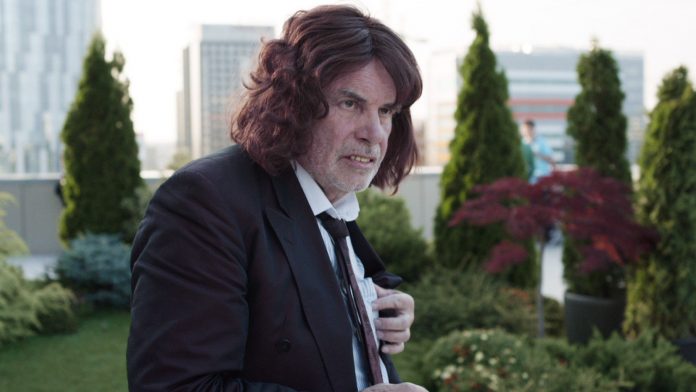
2016 might have been the year of men with bad hair. Peter Simonischek in Toni Erdmann donned his wig for pure comedic effect.

Hurt and healing, dependency and recovery; these were the subjects of my favorite films from 2016, a year where cinema was not simply art or entertainment, but a form of sustenance, a means to keep on keeping on. But if these films are of any value, it’s because they’re more about feelings than answers, less about advocacy than about therapy.

Knight of Cups

No American narrative filmmaker working in the last decade has expanded the possibilities of cinema more than Terrence Malick. His films Tree of Life, To the Wonder, and this year’s Knight of Cups have pioneered a whip-whirling montage aesthetic while articulating a vacuity begotten by most mainstream cinema: an isolation from what is true in our materialistic, postmodern hell hole.

Toni Erdmann

A lonely, retired, and divorced man adopts a silly eponymous caricature to sabotage his daughter’s corporate lifestyle, inserting humour and humanity into a one-percenter world completely absolved of those two things. Defying categorization or even mere description, Maren Ade’s Toni Erdmann is familiar in concept, but miraculous in execution; schematic in narrative, but inventive in structure. It’s also just really, really funny.

Certain Women

The latest film by Kelly Reichardt — perhaps the most overlooked American filmmaker working today — is a collection of three stories revolving around women in a small Montana town. Each character carries with them an abstracted history only made visible through gesture. There’s no backstory to any of these characters, no exposition of how they got to this point of estranged melancholy, but without being able to pinpoint exactly why, we feel their plight and we sense their desires and displacement.

Silence

Martin Scorsese’s adaptation of Shusaku Endo’s novel of the same name could very well be one of his finest films. Following a Portuguese priest in 17th century Japan where Christianity and its practices are outlawed, Silence is both Christian art and a deconstruction of it, a film to challenge the faithful and the faithless.

Manchester by the Sea

Lee Chandler faces Job-level tragedies in Manchester by the Sea, a film which isn’t about endings or resolutions, but intersections and interruptions. Instances where petty trivialities get in the way of catharsis: a cell phone buzzing at a funeral, a gurney that won’t fold properly into an ambulance, or a conversation about Star Trek immediately following a visit to the morgue. Kenneth Lonergan’s anti-three-act structure takes Chandler’s grief seriously, denying any simple narrative of recovery, and recognizing that things will never be the same.

Our Little Sister

The simple and optimistic cinema of Hirokazu Koreeda is easy to write off as fantasy, not because it feels dramatically contrived or farfetched, but because the filmmaker whole-heartedly believes in the perseverance of human goodness — even while in less-than-ideal circumstances. About three sisters who adopt their half-sister following their estranged father’s passing, Our Little Sister interrogates inner turmoil with generosity and kindness.

The BFG

Steven Spielberg’s adaptation of the Roald Dahl novel is a fantastical and whimsical immersion into another world. A simple film about family and friendship, here is one of the few Hollywood films of the year to have sincere, classicist values.

Little Men

Little Men traces the doomed friendship of two boys divided by race, class, and their parents’ dispute over rent. Ira Sachs’ film is The 400 Blows relocated to a gentrifying New York City, turning a political issue into sophisticated, balanced drama.

20th Century Women

A montage of memories, Mike Mills’ new film humorously and poignantly recounts an ideological divide in a family during the late ’70s, and a boy’s coming of age at the center of this conflict. Negotiating between his mother’s first-wave feminism and pragmatism and his generation’s radical politics, 20th Century Women is more than a collections of indie-oms, but a perceptive inquiry into how the historical period we’re born into shapes our individual values and identity.

Werewolf

Ashley McKenzie’s emotionally devastating and formally inventive debut feature is the fragmented story of a Cape Breton couple on the methadone recovery program. Werewolf is a part of TIFF’s Canada’s Top Ten Film Festival, which comes to The Cinematheque at the beginning of January.


The worst songs of 2016

1
2016 was a big year for the girls of Fifth Harmony, not only did Camila Cabello leave the group, it also made it on to our list of worst songs with "Work from Home."

“Me Too” – Meghan Trainor

Meghan Trainor’s “Me Too” is the most painful thing I heard in 2016 — and that’s being nice. The chorus is just “If I was you, I’d wanna be me too” repeated multiple times. Did Trainor sit down with her producers and think, “You know what would be a great idea? A song insulting my entire fan base!” This song is three minutes of her bragging about how great her “rich and famous” lifestyle is, and it perfectly shows how she’s fallen to the trappings of fame.

“M.I.L.F $” – Fergie

Fergie, stop trying to be cool. You haven’t been cool as a solo artist since 2006. “M.I.L.F $” makes my ears bleed. I understand you want to show the world that moms can still be fun and flirty, but is “You got that, you got that, you got that milk money. I got that, I got that, I got that MILF money” really the way to do it? You’re just setting yourself up for ridicule.

“Work from Home” – Fifth Harmony

Fifth Harmony wrote a song about needing sex so much they’d rather their men be fired and “work from home,” a.k.a. please them in bed. This is a terrible metaphor. These girls can produce much better music than a song where “work” is repeated 106 times.

“Gold” – Kiiara

Apparently Kiiara either could not be bothered, or could not think of more lyrics for this song because the chorus is just random words pieced together from the verses. The chorus is also indistinguishable by ear. “Gold” relies on reverb and choppily structured beats for the melody, which isn’t pleasant. Add in some high hats, and you’ve got yourself a bad pop song.

“On My Mind” – Ellie Goulding

Ellie Goulding tried to write a diss track. It didn’t turn out so well. She tried her hand at rapping. It also didn’t turn out so well. This song is a poor attempt at getting back at Ed Sheeran for his brilliant track “Don’t.” The lyrics are weak with the chorus just being “Why I got you on my mind” repeated. The melody is the same three-second synth riff looped over and over again.

“Treat You Better” – Shawn Mendes

Shawn just wants what’s best for this girl that he has a crush on. . . which is, apparently, to be with him. This is another pathetic nice guy anthem where he seems to know all the reasons why the current boyfriend of a girl is a shithead. How can you prove you’re a better guy, Shawn? Is it just supposed to be because you say you are?

“No” – Meghan Trainor

“No” is supposed to be a feminist song telling a guy to back off because she doesn’t need him to have fun at a club. However, it just makes her sound like she’s basing her opinions of men only on their appearances, which is incredibly shallow.

“Starving” – Hailee Steinfeld, Grey ft. Zedd

The verses here are passable. The chorus however, is a mess. “I didn’t know that I was starving ’til I tasted you” makes Steinfeld seem like someone who needs a man to make her feel something. What happened to the “I don’t need a man to give me pleasure” message?

SFU scores season high 80 points in win over Concordia

0
Ellen Kett (centre) had 14 points and nine assists in SFU's 12th win of the season.

2016 for SFU ended the same way it began – with a win against Concordia University. After defeating the Cavaliers on January 2, 2016, they did the same on New Year’s Eve, with a 80–58 victory.

Coming into the contest, SFU and Concordia were on two vastly different streaks. The visitors had lost four of their last five games played. In contrast, the Clan had won four of their last five.

The early portion of the game perhaps reflected the difference in confidence – SFU jumped out to a 20–4 lead and never really looked back — apart from a slip up near the end of the third quarter, when their lead was reduced to seven. After that, SFU went on a 13–3 run which was enough to eventually seal the win.

Leading the way for SFU was freshman Ozi Nwabuko, who had 18 points to lead the Clan in scoring. It’s her fifth game this season scoring 15 points, and has now become an indisputable part of the team’s starting lineup. A day after playing a mostly defensive role shutting down Western Oregon’s leading scorer Shelby Snook — limiting her to only six points and registering four assists — she’s shown a versatility that can hopefully continue throughout the season.

Senior Ellen Kett went four for six from behind the arc to register 14 points, while Elisa Homer had 12. Tayla Jackson returned to the lineup and had a limited role, playing only six minutes, but providing a block and an assist. Overall, it was a good night for SFU shooters as they went close to 50% from the field.

Despite scoring a season high 80 points, it was defence that was equally as impressive. SFU was able to force 23 Concordia turnovers, and SFU had ten blocks — four from Meg Wilson alone. Sophie Swant had four steals in 26 minutes of action, tying a season high for her, and also had six defensive rebounds.

Next up for SFU are games against Central Washington and Northwest Nazarene, both on the road, on Thursday and Saturday respectively. Central Washington is 0–3 in conference play, but have one of the best scoring defences in the GNAC, sitting third with 58.7 points per game. Northwest Nazarene in contrast are 3–0 in conference play, third in scoring offence with 77.9 points per game, but have the worst scoring defence, giving up 75.9 points per game.

They will likely be drastically different games for SFU, but the good news is that this team appears to be able to win many different ways — high scoring games such as the 78–75 win over Dominicana State on November 22 and tight defensive contests such as the 56–47 victory over Cal Poly Pomona on November 26. Recent history is also on the side of the Clan; SFU was a combined 4–1 against Central Washington and Northwest Nazarene last season, including a 78–67 victory in the playoffs last season over Central Washington.

Men’s basketball falls five points short of comeback against GNAC leaders

0
Kedar Wright had a career high 28 points in SFU's loss to Western Washington. SFU is now 2-10 on the season.

While most teams — the coaches, at least — hate the term “moral victory,” if there ever was one, it happened Friday night in the West Gym.

After suffering a 41 point loss the night before to the Montana State University Billings Yellowjackets, the result didn’t look like it would be much better for the men’s basketball team on the second night of a back-to-back. The Clan, who sit in last in the Great Northwest Athletic Conference (GNAC), were taking on the conference-leading Western Washington Vikings, a nationally ranked team.

The night before the battle with Western Washington, SFU was never in the game, and an effort like that would have likely had a much worse result against Western Washington.

“After last night I didn’t know what to expect,” head coach Steve Hanson told The Province.

Instead, SFU fell just five points short of handing the 19th-ranked Vikings their first conference loss, with a score of 103–98. While the game marked the second-most amount of points scored against SFU, it also marked their best offensive game this season, even better than exhibition games where SFU was the dominant team.

The game didn’t always look that close. While the game started out with the two teams trading leads for much of the first four minutes, Western Washington took control, building up a 19 point lead with just over three minutes to go in the first half. It was beginning to look a lot like the night before.

However, 11 consecutive points and a three-pointer with four seconds left in the first half by Othniel Spence put SFU within seven at halftime. Spence, though limited to 11 minutes, put up two threes on the night.

Throughout the second half, SFU was able to hold the Vikings off of rebuilding their lead, and slowly eroded that lead before tying the game at 93–93 on a pair of free throws by Kedar Wright at the three-minute mark.

However, the Clan were unable to sustain the momentum and allowed Western Washington to build a slight lead. They fell by five points.

Still, it was an effort the team can be proud of, especially after the night before. It showed that this team can compete, even if they don’t put up the most wins. If they can play like this more consistently, there will be a few more wins.

SFU had some bona fide offence with the team going 34 for 60 (56.7%) from the field, and eight for 13 (61.5%) from the three-point line. They also made the most of free throw opportunities, going 22 for 30 (73.3%).

Kedar Wright put up a career high 28 points to lead the team, in addition to five rebounds. Four players — Wright, JJ Pankratz, Michael Provenzano, and Izaiah Sherman-Newsome — put up double-digit point totals. Sherman-Newsome notched a double-double, recording 12 rebounds and 15 points.

NEXT WEEK: SFU continues a four game homestand with games Thursday and Saturday in the West Gym against University of Alaska Anchorage and University of Alaska Fairbanks.

Both teams are some of the best defensive teams in the GNAC, sitting at the top in scoring defence. Anchorage allows only 62.2 points per game, while Fairbanks is a distant second, allowing only 71.4 points per game (tied with Northwest Nazarene). For reference, SFU allows 87.5 points per game.

Anchorage sits in second place in the GNAC with a 2-1 conference record, and an 8-3 overall record. Fairbanks is one of four teams with one conference win and has a 6-6 overall record.

Tipoff is at 7 p.m. for both games.

Year in Review: Major SFU news from 2016

1

While 2016 has been an eventful year globally, SFU has experienced some major controversies and changes this year. Here is a rundown of the top SFU news stories of 2016.

Virgil Hill
On April 1, former SFU basketball head coach Virgil Hill stepped down from his position. This came after a series of allegations from some players of the men’s SFU basketball team, many of whom left the team earlier in the year. SFU has since hired Steve Hanson; in May, the former lead assistant coach was promoted for the spring 2016 season.

The Highland Pub – Debt, debt, and more debt
In May, The Peak reported that the Simon Fraser Student Society (SFSS) Highland Pub holds a $3 million dollar deficit, which lead to the closure of the Highland Pub for the 2016 summer semester. Later in the year, the pub re-opened in September with a slow start. SFSS CEO Martyn Wyant revealed that he would be unveiling a new business plan for the pub to try to reduce some of this deficit. The plan would also combat the competition from the recent openings of restaurants and the BC Liquor Store on campus, including the potential to allow minors into a closed off area of the pub. Later in October, The Peak reported that the pub was $60,000 behind schedule following only a partial opening in September with reduced kitchen staff and shorter opening times.

Deepak elected at SFSS president
In March, Deepak Sharma won over the majority of SFU students and was elected SFSS president over his opponent Darien Lechner. This was only just the beginning of a string of controversy within the SFSS and with their elected president for 2016–17. In June, Sharma resigned as president as he did not receive membership eligibility status due to failing to enroll in courses for the summer 2016 semester. Larissa Chen, former VP student services, stepped in as interim president (as is required of the VP student services) and announced that an official byelection would be held in October 2016.

. . . actually, Larissa elected as SFSS President
Chen had the chance to take on the role of president of the SFSS for the rest of the fall 2016 to spring 2017 term when she was initially offered the interim role. Instead, she resigned from her position as interim president, only to run in the official byelection alongside former president Deepak Sharma and independent candidate, Darien Lechner. However, Chen was voted in as official SFSS president with a 55.8% majority by 6.1% of the student body.

Cancellation of the stadium project
Other notable scandals and controversies from the SFSS include the cancellation of the SFU stadium which caused a huge backlash from SFU athletic teams students. Roughly 70 athletes stormed the SFSS board meeting at the end of August. While the project came in at $20 million dollars over budget, the SFSS was questioned on their transparency over the project. No word, as of yet, to potential options for the future of this project.

Sexual violence policy at SFU by May 2017
The student body is awaiting the draft release sexual violence policy on January 4, 2017. In 2016, it was made clear that SFU was in need of such a policy following the alleged mishandling of three sexual assault allegations at SFU residence. Since then, SFU has held sexual assault policy consultations at each campus with various SFU audiences. The university intends to finalise a policy — like all other post-secondary institutions in British Columbia — as mandated by the provincial government.

Upgrades to SFU infrastructure
Two major announcements were made this year post SFU’s 50th anniversary. In July, The Peak reported a $10 million renovation to the infrastructure running from the Trottier Observatory to the SFU fountain, in order to replace some deteriorating materials which may cause leaks and other issues. In October, SFU also announced a $126 million project to expand the Surrey campus, building a five storey building for the new Energy Systems and Environmental Engineering Program, SFU News reported. This announcement was welcomed by a visit from Prime Minister Justin Trudeau.

Burnaby Mountain tank farm expansion
On November 29, the Federal Government approved the controversial Kinder Morgan Trans Mountain pipeline expansion. Throughout the fall of 2016, The Peak has reported increasing safety concerns over the expansion of the Burnaby Mountain tank farm located just a mile below SFU’s Burnaby campus. While students such as Grayson Barke spoke out about the safety risk the expansion poses, SFU formally announced their stance on the pipeline project with a detailed report, which outlined its risks, just one day before the federal government’s announcement of its approval.

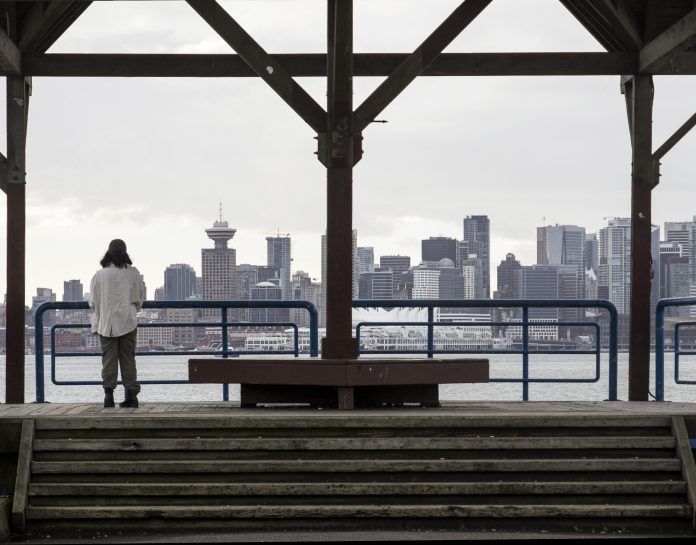
43% of homes in Metro Vancouver worth over $1 million

0

By: Alex Smiciklas

In his latest research, Andy Yan, SFU City Program director, showcases that in 2016, the percentage of Metro Vancouver homes worth more than $1 million jumped from 28% to 43%.

In previous years, Yan’s data had only included Vancouver proper, but the symbolic line that once only lived between the west and east side of the city has been pushed further out, including the increasing home prices within Metro Vancouver. The 2016 assessments taken in July 2015 saw Richmond, Burnaby, North Vancouver, West Vancouver, and Vancouver combined having over 60% of homes worth at least $1 million. B.C. Assessment has cautioned that single detached homes in the regional district will be assessed 30 to 50% higher for 2017 taxes than in 2016.

According to The Province, interest rates, housing supply, the exchange rate, and the province’s new interest-free loan program for first-time home buyers are all factors that could impact the continued rise of real estate cost. Likewise, Yan believes property speculation and constrained supply for single family detached housing are also at play. And while recent intervention from the government with the 15% foreign homebuyers’ tax and tighter mortgage rules have slowed down the rampant housing market, there has yet to be any reflection in price.

Unfortunately, the alternatives to home ownership can be just as daunting in a city with a rental vacancy rate almost at zero. According to an article published in The Peak earlier this year, the price ceiling in B.C. for rental homes is projected to rise another 2.9% in 2017 as per the government controlled price limit.

Yan also looked at other factors that can contribute to housing affordability, such as transportation costs. There is a misconception that living further out of the city reduces living costs, a term that he quoted as “phantom affordability.”

“This idea that you can drive (further from the city) until you qualify (to buy a home) doesn’t take into consideration that as home mortgages (cost less) transportation mortgages (in some areas) go up,” Yan said during an interview with The Province.

So what does this mean for millennials that hope to live anywhere in the Metro Vancouver region? According to a report by Vancity, a millennial couple between 25 and 34 years of age buying an average Vancouver home will have no discretionary income and will rack up $2,745 worth of debt per year after paying for essential expenses. Vancity also found that 61% of millennials in Metro Vancouver live at home, and 23% of those between 25 and 34 have yet to move out.

Amidst all of this insecurity, there may be a silver lining. According to the Vancouver Mayor’s Office, Vancouver City Council preliminary year-end numbers show that more than 1,800 new rental units were approved in 2016, surpassing previous years, which is expected to combat the city’s 0.7% vacancy rate. The city also plans to invest $80 million in the 2017 capital plan for affordable housing, the highest amount to date. It might not be too long until millennials see a difference in the housing market.

While the situation may appear bleak, municipalities are increasingly cognisant of this financial burden and 2017 will hopefully see more affordability measures put in place, particularly with the rental market. In the meantime, our parent’s basements will just have to do.

Breaking news on breaking your bad habits

0
This year, I'm ready to keep swimming and embrace my time here at SFU.

I’m a big-city girl who came to an even bigger city to study abroad at SFU. Looking back at my freshman days, I realize that a lot has occurred and a lot has changed; those things have shaped me far more than anyone could’ve predicted.

Stereotypical hurdles like the freshman fifteen might’ve been a myth for me, but my first year consisted of a lot of other failures, including a failing grade among the marks on my transcript.  I thought, how could I be salvaged? My redemption seemed to be out of the question. So at the first sight of danger, I ran back to my big city in India for the entire summer.

I did return, though, and my sophomore year was a year of transition. I mellowed my natural tendency to party, I tried to be more organized and disciplined, and I managed to turn my Cs into lousy Bs. Even though there were times where I was critically harsh on myself for making what I felt wasn’t nearly enough progress, I just kept swimming.

Sure enough, I made it to shore. My third year took a complete turn: I hit my first A, while taking a bunch of extra curriculars and managing time as if I were running on a 25-hour clock. I made all the time I needed.

But, hey! I gave myself three years to get to a healthy position, and contrary to expectations, healthy doesn’t have to translate into perfect. I still hand in assignments at 11:59 a.m. on Turnitin, each time telling myself that I’ll never do it again. I reach my lecture halls panting and I still get distracted during lectures as I scroll through food pages on Instagram.

I make all of these mistakes as a third year student. Who cares? I’m ready to stomp through this spring, not because I have a universal solution to academic success, but because I know I have to keep going forward — quite simply, because it’s my ambition.

It’s not about getting As, or even an undergraduate degree. It’s growth in my academic field; learning more of what I’m studying, for the sake of learning. It’s showing up on time for meetings and lectures, catapulting myself into an unshakeable routine. It’s developing the necessary zeal to not fall back into a slump. Most of all, my ambition is to be as self-reflective as I can be.

I’ve realized a few things over the course of my SFU experience. My procrastination isn’t a result of my incapability to manage time; it’s because I’m lackadaisical, and sometimes cocky about my abilities. I grumble or struggle with assignments when I haven’t put enough thorough research into them. I repeatedly justify myself with, “I could have easily scored better if I had put in more time.” Realizing that these justifications were excuses, not reasons, was what led me to connect the dots of my shortcomings.

I formed bad habits and let myself believe I was hardwired to behave the way I did, but that is so not true. Breaking habits requires a lot of conscious effort, but believe me, a little time and introspection can break through the thickest habit that you have.

You’re a sinner if, for one second, you believe that you aren’t capable of ridding yourself of the person you’ve been before — even worse, a convict for letting yourself stay stagnant. Keep swimming.

New year, new me(aningless promises)

0
Don't feel the need to drastically remodel yourself just because the calendar has changed.

The relationship between time and us here at SFU is gorgeously complex. We beg for more of it, demand the impossible from it, and curse the concept of it. Making deadlines, outings, and self-care fit together is like assembling a puzzle with no clue how the final product should look.

It feels nice, then, to believe that time’s secretly got our backs, injecting magic into particular dates and hours for us. It’s hardly surprising that we’re so hung up on waiting for the exact turn of the year to turn over new leaves.

I’m not really in love with the concept of New Year’s Eve. Oh, it had its charm when I was younger, but it doesn’t feel special anymore. I’ve made so many resolutions growing up, and it’s only now that I’m realizing that I just don’t have it in me.

I hate New Year’s resolutions; let me tell you why.

I hate the lead-up. Reminding myself of every mistake I’ve made, compiling an ugly itinerary of every flaw I’ve yet to fix about myself — and yes, doing so and learning from your mistakes is important, but why do it on any schedule besides my own?

I hate the parties, because they feel false and forced. What are we celebrating? A new calendar? Why? What was so special about the year before? The year after? Is it just that we’ve survived this long? Congratulations!

I hate the follow-up. Checking in with myself, falling short of my ambitious hopes every time and knowing that if I didn’t have it in me to change in 2016, it will take more than 2017 to fix that.

See, I’ve spent more years than I care to count being told that I don’t ‘fit’. I stretch out the ends of my sentences like rubber and run through the rest at double-speed, all in a voice that doesn’t fit my appearance. I smile too much; I don’t smile enough; I am too abrasive or too passive. Paper-thin first, too heavy later, and I wear the wrong things in the wrong temperatures.

This time of year, I’m constantly asked what my resolutions are, and therefore, constantly reminded of the traits that have stayed with me for nearly two decades — some of which I’d like to change and some of which I’m sick of being criticized for.

There’s magic in accepting superstitions, but as much as I love magic, it’s never helped me get in shape, or be a happier person, or help my crush to get a clue. Letting myself believe that there’s anything special about January 1 gives me nothing but disappointment. I choose not to.

I don’t get caught up in the traditions that don’t ring true for me anymore, and that doesn’t stop at New Years. Tradition has sort of broken me in more ways than I care to count, and if that’s true for you too, then I’m telling you that things don’t have to be that way. Figure yourself out at your own pace.

You aren’t wrong for doing or thinking differently from friends and family. Celebrate what you want; place value on what matters to you, not on what you’re told to. Don’t fret because you’ve changed too much or not enough, and don’t worry about making resolutions just because that’s the common thing.

As you read this, 2016’s been over for a while. I’m probably on a bus somewhere with no promises carried over from the year before, sipping my tea, and thinking of nothing much at all.

Stronger Internet needs to come with stronger policies

0
The internet should be as free as the wilderness.

Going home for the holidays is always a welcome escape from school and the everyday hustle and bustle of life. However, ‘back home’ for me is the boonies, the sticks, the country. While the slower pace is nice, I always get a little more slow than I bargain for. Slow Internet, that is.

Sometimes, it’s slow enough to be deemed unusable. The idea of Internet in the bush is more of a symbol or an idea, a technological feat to strive for, than an actual service. With the United Nations declaring the Internet a basic human right in today’s technology-minded world, it’s astonishing that some rural areas still don’t even have basic access.

I’m not just a millennial with a socially acceptable addiction to being connected: the Internet is essential and crucial to functioning in our current society. So, it’s about time the Canadian Radio-television and Telecommunications Commission’s (CRTC) decided to treat broadband Internet access as a “basic telecommunications service,” which means it’s finally time for them to give us in the countryside all the Internet.

They report that they hope to reduce the 18% of Canadian homes without adequate Internet to 10% in the next five years, and eradicate it entirely within the next 10 or 15. They’re also requiring service providers to put money into a fund — projected to grow to about $750 million worth — to facilitate these changes.

This may translate to increased prices on services to compensate. With no regulation on rates accompanying the new mandate, consumers are in a tight spot: if the CRTC makes service providers pay more money, those providers will take it straight from our pockets, and without proper policies in place, there’s no telling whether or not we’re going to be charged fairly.

The overall goal is to be able to offer high-speed Internet services to rural areas, with only the hope that they will be affordable. This isn’t good enough. This doesn’t equate to providing adequate Internet to all citizens, not when that access might itself be unfairly inaccessible for financial reasons. This lack of foresight demonstrates a real failure to provide the fundamental human right. What, exactly, is the CRTC doing?

The CRTC has come under fire for being stuck in the past and an obsolete regulator, but in spite of those flaws, it’s still the only credible Canadian regulator which is separate from government. While policing the Internet has always been frowned upon, financial regulation done in the interest of providing it for everyone at an affordable price would be in the best interests of Canadians.

The Internet has become key to meeting our most basic human needs. Newspaper classifieds have gone the way of the dodo. Finding a job, finding a place to live, and, not to mention, socializing is all done via a broadband connection. Even inmates have the right to access the web. Providing Internet service to all at a respectable speed is imperative, but not the final goal — it needs to be at a reasonable price, and we need to do more to ensure that.

Canada is ranked only 33rd in the world for Internet speed. If the CRTC is going to be relevant in our expanding technological society, it needs to work harder to protect the ‘public interest,’ even if the regulations and policies necessary to truly accomplish that are at the expense of the companies which provide Internet services.

How to deal with people ragging on your passions: don’t

1
Neon Genesis Evangelion is great, and don't try and shame for liking it.

Did you know that your hobbies and interests are subject to review by a jury of Reddit users with ugly neckbeards, elderly people with control issues, coworkers who think the whole world is a high school, and countless others? No? Good, because they aren’t, and you’re allowed to like whatever you like.

Unfortunately, a lot of people miss that memo. A shocking number have quite a lot of shit to say about the food, movies, games, etc. that others love, and if you’re not sure which rude busybodies I’m referring to, let me break down a few examples for you.

The snobby film buff

Wearing glasses fatter than Andrew Petter’s wallet and sweltering under that quirkily mismatched infinity scarf-vest combo, his voice echoes every time you turn on Mean Girls: “You obviously don’t know real movies.”

Um, no, I just have concerns beyond who had the deepest and artsiest cinematography or who’s closest to your vision of “Hollywood in its prime,” such as. . . enjoying myself. I’m not following the crowd by preferring pop culture icons over whatever obscure ‘60s movie you pulled out of your ass to prove your heightened taste. I’m just appreciating that film quality comes in a lot of varieties.

Overly conservative parental figures

No, playing Grand Theft Auto won’t instantly transform me into a delinquent. No, your kid didn’t become a sexual deviant because I introduced them to Spring Awakening, or because they like trashy magazines. On that note, if you are not, in fact, my parent, then I don’t know why you’d think you have any right to tell me what I can and can’t spend my time on, or to place any moral judgment on me.

Even if you are, please trust that you probably raised a good child, and that the world won’t flip inside-out if they consume some media you don’t agree with. If they trust you enough to be open with you about their interests, please return that, and let them be their own people.

The bigoted greaser in the fedora

People who think you can’t like, or must like, a piece of art due to your particular arrangement of gender, sexuality, or race are the enemy. These people might not tell you to your face that they feel that way, but you can see it in their attitudes: girls can’t like comics and still be feminine, straight boys can’t like magical girl anime, and all Asian people listen to K-pop.

This isn’t just being a dick; it’s outright discrimination and ignorance. Also, your 30-plus-year-old ass doesn’t get to tell me I’m ‘too young’ to ‘really appreciate’ Neon Genesis Evangelion until you lay off the friendship-wielding ponies.

The health nut

If you think you can change my diet when I, living in my own body, haven’t — think again. Other people’s eating habits can be a sensitive topic, and unless you really know what the other person is okay with and have a very legitimate reason for worry, it is absolutely not your job to micromanage them.

There are more categories than these for sure, and, not everyone who seems to fit the above descriptions is really malicious. I’m also not saying you can’t speak honestly about disliking what others love. But be aware of the line between sharing your feelings and crapping all over somebody else’s.

Ultimately, use your common sense and don’t be a colossal asshole when there’s zero interest in your rude opinion.