Home Blog Page 785

Voluntourism is just soft colonialism

0

Voluntourism — a portmanteau of “tourism” and “volunteering” — is a rising phenomenon. Volunteers from abroad work a few hours a day building schools, hospitals, libraries, etc. In their free time, they tour and partake in cultural activities.

Interest in voluntourism has grown tremendously over time; organizations specifically target middle- and high-schoolers. But is voluntourism really a practical instrument of good? I’d say it’s just another practice borne of modern colonialist thought.

Voluntourists might tell themselves that they’re aiding the places they visit, but some report their work to be less efficient than what local labourers could accomplish alone. Blogger Philippa Biddle, who wrote about her experience in Tanzania, called her group’s work building a library there so shoddy that locals had to work at night to compensate.

She ‘worked’ just 33 hours in the 20 days she was there — and spent upwards of $6,000 on the experience. There’s a reason people pay to do this work: it’s less about helping and more about the feeling of helping — the novelty of travel.

For instance, Free the Children (a multi-million dollar charity) has been accused of “[promoting] emotional experience over education” when it comes to recruiting students for ‘humanitarian trips’ to countries such as Ecuador, India, Kenya, and several others. Their website has been criticized for “[advertising] exposure to a variety of cultural practices” as a selling point — as if humanitarian aid was a fad to buy into.

Voluntourists even relate being assigned tasks essentially for the sake of doing them. For instance, Jingting Kang, former volunteer in rural China, was surprised when the students to whom she was teaching the alphabet picked it up so quickly.

Later, she discovered that she was the seventh person who had taught it to them.

“The alphabet wasn’t something the kids were prepared to learn,” she reported. “It was just something the volunteers were prepared to teach.”

True, voluntourism exposes relatively privileged Canadian kids to harsh realities like scarcity and poverty. These trips, which often include politically and culturally grounded interactions with locals, could give people a more diverse and nuanced understanding of society and culture, equipping them to make more long-term positive differences in the world.

Yet that theoretical outcome often isn’t realized. Just look at social media’s portrayal of voluntourism. Travel videos often showcase students’ great difficulty with so much as pronouncing the name of the country they stayed in. Photos seem to focus less on actual cultural learning, and more on giving Instagram and Snapchat accounts an aesthetically pleasing ethnic vibe — or letting people brag about their altruism.

“One person can change the world,” Me to We’s website states. “We all have unique gifts to give, and when bonded together, we build a movement that’s diverse and exciting.”

While inspirational, the notion that someone with no technical skills or understanding of where they’re going can help a community, without any real training, is toxic. There’s no movement here; voluntourism is a business model designed around young millennials yearning to create change.

Usually, there are no real positive changes made — unless you count the volunteers who feel better about themselves. We’re just propagating the notion that privileged westerners have the solutions to completely change other societies, who should embrace us for it. Sounds like modern colonialism to me.

Government regulations are great, because some people are awful

0

This is in response to the previously published article “Canada, stop nannying your people.”


The world is in a rocky place right now. We have a bloody war being fought in the Middle East, rapidly spreading viral outbreaks, and a cartoonishly expensive housing market. No, I’m not even going to touch what’s happening in the United States.

But what I think should be somewhere in the bottom third of our concerns right now is how our government is regulating food and tobacco.

While I agree that the government does influence many, if not all, facets of our lives, there’s substantial evidence that we need to regulate some things to prevent average people from being screwed over.

An early-ish example of this is the absolutely terrible, and sometimes fatal, working conditions of the Industrial Revolution. Factories often fined their workers for doing the smallest thing wrong, and forced them to work with horrific chemicals without protective gear. Potential side-effects of working in a match factory included having your jawbones dissolve. It took unions to push for safe working conditions, and even today, plenty of people are still exploited in this way.

Let that sink in for a second: it took innumerable deaths and a political movement to get some employers to (partially) stop being assholes.

But wait; there’s more, even in 2017. When an industry stands to make a lot of money, they tend to push back against pesky things like research that shows their product is making their customers sick. Paper after paper has examined the tobacco industry’s interference with science that showed irrevocably that smoking causes lung cancer and a host of other diseases.

People at some level knew that they were selling something harmful, and they tried to cover it up so people would keep buying it. I know, this sounds like the cliché-ridden plot of a left-leaning Saturday morning cartoon, but it actually happened.

Even now, the industry is pushing back against planned plain packaging legislation that will take effect in Canada in 2017. Tobacco companies are saying that the law, which will replace the remaining part of the cigarette pack label with plain text, is misguided and irrelevant.

But in their internal communications, they’re still reportedly making decisions on branding because sales show that the packaging does matter. Despite what they claim, they care so much that one tobacco manufacturer, JTI-Macdonald Corp, has set up a website and social media campaign called “Both Sides of the Argument” in order to rally opposition against the plain packaging law.

They’ve even done a survey that they say shows broad Canadian opposition to the law, but the company that they hired to do the survey has been criticized for sketchy methods in the past, including cherry-picking the same phone numbers to call repeatedly, leading to an inflation of the same sorts of responses.

When a company is prepared to spend huge amounts of money to keep their skeletons in the closet and generate grassroots style support, I don’t think that everyone will be able to see their product for what it really is.

Obviously, I get that some companies are actually trying to do the right thing. I’m also not saying that everyone who smokes has been ‘duped.’  It’s just that there is a long history of people treating each other like absolute trash. We’ve needed government-level regulations to help protect people from industries in the past, and I really doubt that we’ll stop needing them any time soon.

SFU and the path to a fairtrade campus

1

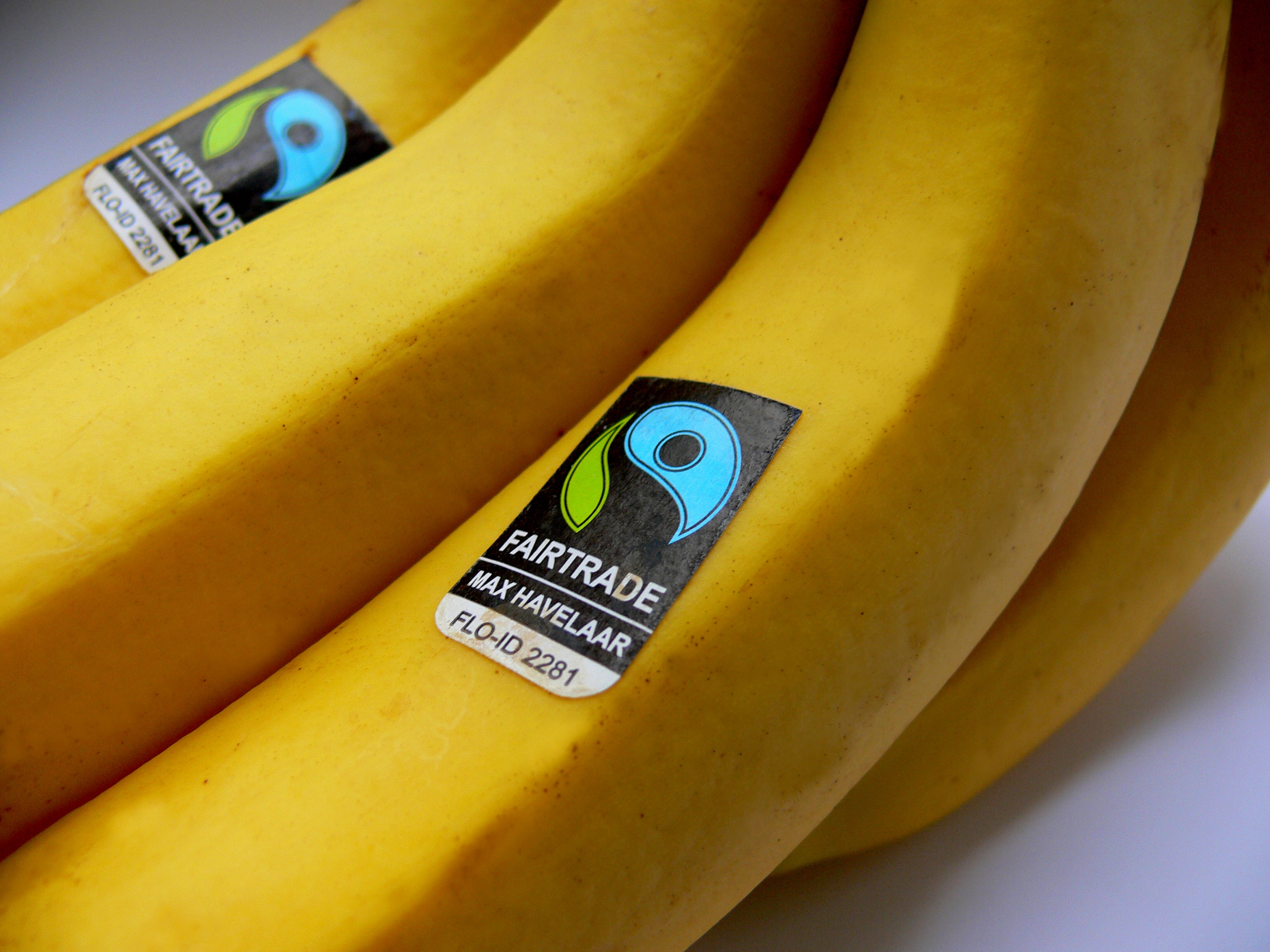
SFU being a fair trade campus shouldn’t be news to anyone. In addition to meeting the requirement standards as set by the Canadian Fair Trade Network, SFU has pushed the Starbucks franchises on campus to adopt fairtrade practices on campus.

But with any larger initiative comes benefits as well as shortcomings, and SFU’s fair trade ‘utopia’ is no different.

So what is fair trade?

Fairtrade Canada tells us that better working conditions, fair wages, and environmental justice are the major lures. With ideals like these it’s not hard to see why SFU was attracted to the initiative.

SFU has preached fair trade for a few years now, leaning heavily on how it can deepen SFU’s commitment to sustainable living and global equity. There is, however, strong opposition to the movement, with arguments such as poor quality product and internal flaws to the system undermining the initiatives stated benefits.

While the consensus on the project may be left unsettled, as far as SFU is concerned, fair trade is the future.

Finding fair trade on campus

Since 2012, SFU has been dedicated to implementing fair trade policies at every SFU administered dining service. Fair trade tea, coffee, and chocolate options can be found at almost all major food retailers on campus. Even the SFU bookstore has started stocking the shelves with fair trade chocolate bars.

In a survey last fall, 40% of students said that fair trade at SFU was “Very important,” 44% said it was “Somewhat Important,” and only 16% said “Not Important”.

Over 85% of Starbucks’ coffee is fair trade, and in 2013, the franchises on Burnaby mountain began to offer a fair trade espresso option. This initiative bore fruit to the university in the form of an inaugural award for “Campus of the Year” by Fairtrade Canada in 2014. SFU has been using brands such as Ethical Bean, based in Vancouver, to try and support the local economy as well.

“I believe the true reason Tim Hortons avoids offering fair trade coffee is because it hurts their bottom line.” – Mark McLaughlin, executive director at Ancillary Services

While SFU has been trying to develop a fair trade portfolio, the same can’t be said about every group on campus. Tim Hortons — a franchise that attracts great demand from the student body — has had no obligation to adopt the same fair trade position as the university. The heated conversation with Tim Hortons has been fired up for a couple years now and will surely continue.

Students fall in love with fair trade

How can the student body help SFU’s fair trade vision? In an attempt to implicate the student body, SFU and the Canadian Free Trade Network (CFTN) sponsored students to visit Costa Rica’s mountainous region of Talamanca to acquaint themselves with the origins of fair trade.

The students mentioned that they had gone on the trip feeling skeptical, but returned with a very pleased view on fair trade and its possibilities. Upon return, students Sarah Heim, Prodpran Wangcherdchuwong, and Joana Bettocchi brought with them valuable insight on why making the switch to fair trade is worth the while. The trio spent seven days in Costa Rica learning the history, challenges, and benefits that exist in implementing a fair trade system. “Fair trade isn’t charity,” stressed Wangcherdchuwong.

“The cooperatives we visited in Costa Rica mainly cultivated coffee and cocoa, as well as bananas. A cooperative is essentially an organisation where farmers collaborate to sell their product as a company,” added Heim.

“It was eye-opening to see that this cooperative had 6,000 members, but also disappointing to know that only 10% of their produce is sold under fair trade,” Wangcherdchuwong continued. The students bring back compelling arguments from their travel as they learned that 90% of produce is sold under conventional prices even though all the produce is cultivated under fair trade terms.

“Operating since the ‘60s, these cooperatives have come a long way. They use their profits altruistically for communal good and a big thing for them is ecological conservation,” explained Wangcherdchuwong. “They don’t use chemicals on their crops, replant trees, and are constantly educating locals to adapt these means of cultivation.”

After understanding the powerful impact cooperatives have on prices and practices, the two students were convinced about the magic that is created in Talamanca. However, in retrospect, the students questioned whether fair trade works in all situations.

Referring to the low requirement standards by the CTFN, Wangcherdchuwong explained that this has enabled every university to get on board with the program. However, there will soon be levels added to the fair trade program such as bronze, silver, and platinum that SFU will aim to climb.

Perhaps such specific certification will answer people who are skeptical about fair trade practices on campus.  “There are certain limitations to fair trade as it works within and against the market,” elaborated Heim. She explained why fair trade cannot accommodate all products in reflection of what she learnt in Costa Rican cooperatives.

When asked about their thoughts on fair trade initiatives at SFU, both Wangcherdchuwong and Heim agreed that SFU’s efforts are genuine. “Students are a huge market for commodities such as coffee and a push from the students on fair trade products could be impactful,” said Heim.

Wikipedia-Fairtrade-Max_Havelaar_Bananen

“Students could shift to fair trade coffee, perhaps, as the pricing isn’t drastically different. But, the same can’t be said with other products. In such situations, a larger institutional push is required,” Wangcherdchuwong continued.

Building on that same idea of an institutional change, Heim added that “SFU could potentially have courses around fair trade and could send more students on origin trips, such as the one we went on.”

While these students might have returned home with a strong pledge in their heart, they feel other SFU students might not share their passion. “I felt that students have a fair amount of indifference to this cause. After returning, I have made changes to my consumption habits such as looking at labels to see fair trade percentages,” Heim said.

Working behind the scenes

SFU’s fair trade initiative has grown over the years thanks to student engagement and the administrative team that works under the umbrella of SFU’s sustainability program. Getting Starbucks on board and providing fair trade sugar and chocolate options are milestones that we can be proud of.

Besides having Fair Trade Campus Week once a year and communication through social media, SFU currently lacks a framework for further implementing fair trade products. As a result, the administration is planning to assemble an integrative committee that would include all stakeholders to address fair trade issues soon. Such a committee could slowly solve the challenges that a commitment to fair trade brings with it.

Jana Vodicka, manager of Campus Engagement and Sustainability, explained the crux of the situation. “Working with established brands means that we have to abide by their business model. To get them on board, we have to be strategic about the types of brands we partner with and provide on campus to meet SFU values, while still meeting the purpose of providing the dining services students and staff expect and need.”

Vodicka’s concerns bring us back to Wangcherdchuwong’s assessment — that there are simply too many conflicting interests. However, Vodicka optimistically expressed that the purchasing power at SFU is far too great to not be taken advantage of, and believes that student awareness would only thrust it forward.

Double double standards?

Mark McLaughlin, executive director at Ancillary Services, explained how students buying fair trade products, especially coffee across 36 universities at Starbucks, has measurable and positive change for farmers in developing countries. But he agreed that much work still needs to be done.

“As we pushed Starbucks to change its procurement channels, we have been pushing Tim Hortons. We called Tim Hortons management to meetings at SFU and  UBC over the years, and just last October we teamed up with UBC, McGill, Ottawa, and Brock and met their management at their corporate headquarters in Oakville,” explained McLaughlin, only to inform that Tim Hortons still hasn’t turned a new leaf.

When asked about our dear Timmies’ central resistance on the transition, McLaughlin explained that “back in 2013, Tim Hortons told us that their logistics prevent them providing a fair trade option as they only serve one blend.”

However, Tim Hortons has introduced new roasts. “They replaced the [original roast] with dark roast, since then. I believe the true reason Tim Hortons avoids offering fair trade coffee is because it hurts their bottom line they want to pay the least possible for coffee beans, satisfying their shareholders, but often to the detriment of farmers.”

As often is the case with any profit-seeking business, it is with no doubt that this will be a longer struggle than Starbucks, and one that calls for students’ attention.


TIM’S BIT: America shouldn’t make Canadians forget their own news

0

#NotMyPresident. No, really! The orange coloured capricious individual — the only person on Earth actually closest in colour to a Lego-man — is not my leader. Yet I am reading more about Trump’s crazy in Canadian papers than I am about what our own politicians are doing. That’s not good! I think it’s time for the national media to take a deep breath and reassess story importance.

I’m not naive. I know that, due to the prolific globalized world we live in, Trump will cause impacts almost everywhere — that has been the same for any American president over the last few decades. Is it good to be aware of what he and his congress are up to, especially when he’s going exactly to the nutty extremes he said he would? Yes. Should it overpower our own federal, provincial, or even municipal politics? No.

Yes, he is making changes that will affect Canadians. His first week in office was a flurry of executive orders, many of which will have implications here. And yes, I want to know what the MPs who we elected to deal with other countries face.

https://youtu.be/lSKdQh1Dd9c

The Trans-Pacific Partnership is unlikely to continue without the US. The removal of privacy protection on foreign data means that all our information that is shared by Google, Facebook, and even private email or data centres (which outsource to the US) will have even fewer protections than they did before. Our leaders will continuously have to reassess how they broker new deals, and adapt to Trump’s whims.

But my issue is this: the whole past few weeks, and even prior to his election, it’s Trump’s actions which are making headlines here, and not our leaders’ actions about how they are going to deal with a Trumped-up America. I don’t want to hear any more alternative facts propaganda from the White House; I want to hear about what we’ll be doing in response.

Even aside from that, there’s plenty of entirely unrelated news that the media should be updating Canadians on. In BC, there’s an election coming up, and I’m willing to bet that more than half the people reading this can’t even name the leader of the NDP or Green Party — John Horgan and Andrew Weaver respectively — let alone their own constituency candidates.

For months, the BC government has been bragging about its new upcoming “modernised” liquor laws. Now, the update is here, and the only real modernisation I can see is that they are allowing for more licences to be awarded.

And in a move towards reconciliation, the City of Vancouver is holding events using funds earmarked for the Canada 150 Celebration. These events have been designed to foster healing with, and education about, the indigenous nations that were stewards of the land before colonialism.

The need to be informed is important to democracy. The media as the fourth estate is meant, in part, to help me, the citizen, be aware of what is happening in government — our government. If all I hear every day is trumpeting from our loud downstairs neighbours, I can’t do that. If we can’t turn them off, let’s at least turn our own music up to 11, so that we don’t forget about it.

SARRS rampages through SFU, start of outbreak could be deadly

0

Even though there has been no case of Severe Acute Respiratory Syndrome (SARS) reported worldwide since 2004, there’s a new type of SARRS in town — and it’ll leave you feeling just as sick.

A new club on campus, fueled by the rise of nazis in America as well as the general indecency of people today, is focused on bringing down the “harmful” stereotypes of being white men. They call themselves Students Against Reverse Racism and Sexism (SARRS), seemingly unaware of the disease associated with them.

“It’s been really hard to be a white man lately, and this is supposed to be our chance to be ruining other people’s lives,” said Josh Spencer, the self-dubbed CEO of SARRS. “If you’re going to say that racism and sexism are real things [editor’s note: they are], then obviously reverse racism and sexism are even more real [editor’s note: they’re not] and so we’re just doing our civic duty and making life good for us again.”

When asked about realizing the association that people had between SARRS and the epidemic virus SARS, Spencer said that he felt that SARS was a “historical” term, and that it’s wrong to assume that two things that sound the same are the same.

“SARS with one R is a historical term that is not going to resonate today thanks to unpleasant associations due to it killing a bunch of people back in 2004, and I think that people who say SARRS with two Rs is a whole new kind of thing,” said Spencer.

“We’re not SARS, we’re SARRS!” he insisted, oblivious to the fact that he was just shouting the same thing over and over.

Despite the fact that the club seems like it has been around since forever, they only became official very recently — but that hasn’t stopped them from already hosting events.

Last week, they played Call of Duty for 72 hours straight to raise awareness over the lack of a “Men’s Studies” major at SFU. Yesterday, they had an event where they just stood outside the Women’s Centre and yelled at them for hours.

Many on campus are arguing that groups like SARRS are incredibly toxic to any community, not just a progressive place like a university campus. Those claims have been largely ignored by anyone in power, claiming there should be a wait-and-see approach.

“Look, they’re new, and who knows what they are capable of accomplishing?” argued a university representative, seemingly oblivious that those were the same fears they were dismissing. “We just don’t have enough evidence at this time to say that SARRS is harmful and that we should quarantine to prevent a potential disaster.”

The Peak reached out to multiple people who were opposed to the presence of SARRS on campus, but they almost all said the same thing so it is tough to credit just one person. Basically, they maintained that SARRS was harmful to everyone, there was an overwhelming amount of evidence to support this, and that by ignoring its existence, it gave SARRS free reign to infect as much of campus as they can. [editor’s note: they’re right]

Pressed for a follow-up to these claims, Spencer refused to speak and instead had his press secretary issue the following memo:

“YOU DON’T KNOW ANYTHING ABOUT SARRS. WE’RE REALLY GREAT! WE’RE DONE HIDING IN THE CORNERS. THERE ARE NO FACTS ABOUT SARRS THAT PROVE THAT THERE IS ANYTHING BAD ABOUT SARRS. JUST NO FACTS AT ALL.”

[editor’s note: there are]   

If you are concerned about the risk of SARRS on campus, The Peak recommends being a decent fucking person and educating yourself on what you can do to help those who need it most right now.   


In the news…

0

Stuff we like and don’t like

0
(Elena Hsu / The Peak)

Stuff we like: The Good Place

I know I’m a little late to the party, but this clever sitcom set in the afterlife is as delightful as it is deep. Veronica Mars fans will find plenty to love in Kristen Bell’s lead performance as Eleanor, a terrible person who somehow ends up in a kind of quasi heaven, and Parks and Rec lovers will be happy to know that creator Michael Schur has brought the same warmth and wit to his latest project. It takes a lot of moving parts for such a high-concept show to work, but The Good Place pulls it off. Also, the season finale is killer.

Stuff we don’t like: J. Cole

Is there a rapper out there as cheesy as J. Cole? Okay, maybe Macklemore, but J. gives him a run for his money. His latest release, “High for Hours,” is as on-the-nose and maudlin as political hip-hop gets, and this is coming from the guy who once boasted (ridiculously) that he was better than Slick Rick, Rakim, and LL Cool J — on his first album. Cole’s rapping is boring, and lines where he compares himself to leftover lasagna and boasts “you can’t out-fart me” don’t exactly scream lyrical dexterity. His upcoming split LP with Kendrick Lamar is sure to make for the most one-sided pairing since Simon and Garfunkel.

Stuff we like: Chrissy Teigen’s Twitter feed

Chrissy Teigen is mostly famous at this point for being John Legend’s wife and having incredibly gif-able facial expressions, but she deserves extra credit for her fantastic Twitter feed. When she’s not flirting with her husband in a somehow-charming-and-not-disgusting way, she’s blasting white supremacists and fangirling over Beyoncé. Celebrities using Twitter tend to come up with mixed results (just ask Alec Baldwin), but Teigen has mastered the art, and her interactions with fans and fellow famous people are always a pleasure.

Stuff we don’t like: Coming-of-age movies

Dear The Space Between Us: did the world really need another bildungsroman starring Asa Butterfield? By this point, we’ve seen something like 100 million movies about precocious white boys stumbling into adulthood (see: Almost Famous, Boyhood, The Perks of Being a Wallflower, etc). I don’t know about you, but I am dead tired of hearing about how hard it is to be a suburban middle-class kid. That’s why movies like Moonlight and Blue is the Warmest Color are so refreshing: films need to tell more stories about POC and LGBT kids, and less about dinks like Asa Butterfield. Sorry, Asa.

The April Fools Childrenhood

0

Creating an album is a challenge, even for seasoned veterans of the music scene who have the full support of a record label, and a team of producers behind them. It’s even harder when you’re writing, recording, and mixing whole albums solo. Add in being a university student, as well as involvement in another musical project, and it makes the whole task seem impossible.

Low Colour and its creator David Cowling (The April Fools Childrenhood) are proof that the impossible is possible.

Music wasn’t always what Cowling wanted to do, but following a fateful Christmas at the age of 14, everything changed: “My parents got me a red Fender and I started playing music then, but I didn’t start taking it seriously until about 2010. I did some recordings like a couple of EPs in my room in 2008 and 2009, but 2010 was when I put out a thing that I was really proud of and did a lot of work on.”

Cowling hasn’t looked back since those early days, and his guitar collection has grown since then, but he still has the original Fender that started it all. But it’s not the only thing that has stayed with him since the early days.

The name The April Fools Childrenhood has been around since pretty much the beginning, too. It came out of the desire to play all the songs that he learned over the course of the year. Cowling recounts, “[The concert as a gift was] really ephemeral, and doesn’t inherently give you anything to put under the tree. I started thinking about ways I could have a ‘present’ under the tree that announced the concert that night. So I made a poster advertising a concert in the living room on December 27. And I figured I should make up a name.

“It’s a cross between my birthday and one of my favourite video games. I’m born on April 1st (April Fools Day), and one of my favourite video games is called The Neverhood. Childrenhood is just a play on Neverhood and childhood. I’ve never seen reason to change, and I like how insane of a name it is.”

2014 was also a pretty big year for Cowling, when he released an album titled Youth is Yesterday that was made up of a collection of songs from 2012–2014, and got some album sales and recognition from CBC Searchlight by making into the top 100.

But then Cowling moved, right around the release of Youth is Yesterday. For anyone who creates, the space in which they work is incredibly important, so the shift in space caused some creative difficulties: “I just like, for whatever reason, totally lost the ability to make music. It was just terrible. I don’t know what it was about the old place. It was a wider space and bigger, and I felt more comfortable making noise in my room. But [in the new house] I’m so interconnected to everyone that lives in the house, I think I got nervous about making music.”

Finally, at the end of 2015 Cowling was able to write what he described as “a kind of OK song,” which broke him out of his creative funk. “Out of writing like 20 songs, the four on Low Colour came out of that end of 2015 beginning of 2016 [writing period], when I felt like I wasn’t writing anything that sucked anymore,” recounts Cowling.

Even though there are four songs on the album, Cowling is hard pressed to pick one as his favourite. “More than anything I’ve ever released, this feels more like a collection, and I’m really happy with how it all works together,” he said. “That was something I was thinking about early with this. I don’t really have one [song] that is my favourite, but I’ve ended up going with ‘Miss Resentment’ as my single. But that’s as a result of me thinking that it is more accessible and has more going on in it.”

Cowling also would describe “Miss Resentment” as the least experimental song on Low Colour, since there is an absence of drums on all of the tracks, but it doesn’t really fit in with any genre. According to Cowling, “It’s not pop, but l like writing poppy hooks and melodies — it’s got that influence in there. I could go with folk, but I’m not living in the country in the ’60s. I don’t really have any folk insight, I’m talking about being in love. So I go with ‘experimental will cover it,’ since it’s slow and atmospheric. But genres are bad, I just go into describing how it sounds.”

While there is a focus on love and break-ups on the album, Cowling — self-described as serially monogamous — said that it’s more about general feelings surrounding love and break-ups than any one person. Cowling took his writing inspiration from Sean Vanaman, and decided to inhabit a character and took the emotion to an extreme place, as opposed to a real feeling.

Other than being excited about the four songs that are featured on Low Colour, Cowling is also looking forward to the upcoming dual album release show with Leave bandmate Emma Citrine on February 10 at 2625 Kaslo St, Vancouver. “It’s this giant concrete room, and it’s super reverberant. I’ve wanted to play there ever since I saw the space. I’m also going to show off new stuff since the songs on Low Colour came out of 2015 and 2016. I’ve written new stuff since then.”

However, don’t expect Cowling to head into the studio to make another album just yet, “I’ve been working on this thing for so long that I’m just so pumped to just play shows. I’ve already got four booked for February and March. I want to not be worried about recording at the same time. I have songs that I’ve written that I’m excited for, but I think that I’m just going to workshop those and refine them, and figure out what they are going to be.”

He is also going to place a focus on scoring a feature length film for Vancouver Island-based filmmaker Graeme Higginson, and the remaining composition courses for his BFA in music.

Light rail transit gets the green light in Surrey

0

Surrey is one of the fastest-growing cities in the country, currently housing 20% of the region’s population. With Surrey’s population expected to exceed that of Vancouver over the next 30 years, the city is looking to upgrade the current transit system to keep up with the growing demand.

As part of phase one of the 10-Year Investment Plan, the mayors of Metro Vancouver announced that the plan for light rail transit (LRT) in Surrey will go ahead, with construction of the first phase of the South of Fraser Rapid Transit Project expected to start in 2018. This first phase will connect Surrey Centre (where SFU’s Surrey campus is located), Guildford Town Centre, and Newton Town Centre. A second phase will eventually connect Surrey to Langley, allowing those who live in Langley easier access to the SkyTrain.

Andy Yan, the current director of SFU’s The City Program, described Surrey’s decision of LRT as “an important investment for the city.”

“Particularly since there is an SFU campus there [in Surrey], the LRT will be able to further allow students, faculty, and staff [who] live in the region more access to SFU Surrey on frequencies that they weren’t able to before,” Yan said in an interview with The Peak.

Aside from access, Yan cited positive benefits for the city, including lower cost as compared to other modes of transit, increased economic benefits, and improving the overall livability of Surrey.

Third-year geography student JT Cowan, who lives in Surrey, echoed Yan’s thoughts with regards to the LRT, particularly with regards to the ability for the future LRT to sustain ridership with the increase in population as well as accessibility for all.

“I am definitely in support of the LRT,” said Cowan. “Future development signs all over previously vacated land [. . .] tells me the corridors will be able to sustain ridership and create easy access for riders to their homes and jobs.”

He went on to say that the street level transport will greatly improve accessibility, as everyone will be able to walk on and off regardless of their challenges, as opposed to relying on elevators.

But not everyone is in favour of the LRT.  The most vocal voices opposing the LRT are those behind the SkyTrain for Surrey web page. They argue that the cost to build the LRT and SkyTrain are the same, but in the long run, SkyTrain would cost less to operate. As well, they note that having a transit system that is “fully separated from vehicle traffic is imperative to making sure there are alternatives to being stuck in congestion.”

Matthew Furtado, a fourth-year communication and business student who also lives in Surrey, stands behind the SkyTrain for Surrey campaign, calling the LRT a “small bandaid on Surrey’s clogged, congested traffic arteries.

“I think this [LRT] is setting the bar too low, the problems with LRT are much too significant to call it an ‘expansion’ or ‘improvement.’ [. . .] LRT is no faster than a bus during rush hour,” Furtado said. “Not only would trains be delayed by Surrey’s frequent traffic accidents on its routes, but it would also prove impossible to navigate around them when accidents take place on its immobile tracks.”

For Furtado and many others behind the SkyTrain for Surrey campaign, a petition has been created to call on the Mayor’s Council to consider the alternative of SkyTrain and Bus Rapid Transit so as to avoid making what the campaign describes as the “most expensive mistake in the region’s history,” coming in at a proposed cost of $2.6 billion.

One thing that both sides of the table can agree upon is that Surrey is quickly outgrowing its current transit system and is in dire need of an upgrade in order to keep up with Surrey’s growth. With the start date for construction about a year away, both sides hope to make their arguments known to the public, all with the intention of moving Surrey forward.

Life as a Disney Princess

0

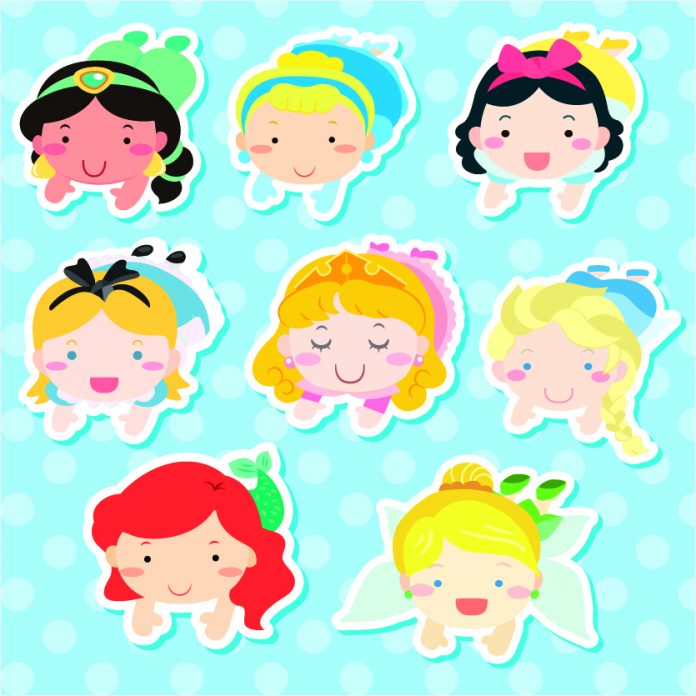
Snow White

Pros:
Rent is super cheap when split with seven other roommates.  

Cons:
How can you possibly enjoy apple pie after going through a poisoned-fruit fiasco?

Belle

Pros:
In your own personal library, you never have to fight some dude playing Candy Crush for a spot to spread your crap and study, and you’re allowed to eat whatever you want without a librarian baring her teeth.  Additionally, there’s no problem if you accidentally touch some gum under a table — it’s yours.  

Cons:
The furniture in your house shouts at you day in and day out.  Could you imagine your fridge yelling at you to “go easy” with the ice cream?  Nobody needs that kind of negativity.


Jasmine

Pros:
Pet tiger.  Come on.      

Cons:
Imagine the hairballs that thing yacks up. (Unless you’re working on a wig-making startup, in which case you’ve got yourself a double-pro.)

Ariel

Pros:
There’s absolutely no need to shower when you live in the world’s OG bathtub — which comes with complimentary salt scrub, all-you-can-eat sushi, and unlimited seaweed wraps.  

Cons:
You have to hunt for two appropriately-sized and matching seashells every time you need a new bra.  Can you imagine how time-consuming mermaid puberty must be?  Victoria’s Secrets may slice your wallet into teeny tiny pieces, but turns out it’s a walk in the park. Also, how can you enjoy sushi when you know your salmon roll’s name?

Merida

Pros:

Nobody will dare to question you about having a “special someone” at family reunions — not even your slightly racist, very ancient, widowed Aunt Margaret.  

Cons:

Medieval Scotland hasn’t discovered Moroccan oil yet.  Good luck with those curls, girl.  

Sleeping Beauty

Pros:

One-hundred years of sleep.  ‘Nuff said.  

Cons:

Every time I blink I have a new paper to write, three extra shifts, a presentation to give, and I’m leading a discussion group in a class I didn’t even know I was enrolled in.  Imagine the workload after a hundred years of sleep.  Alas, ‘tis the double-edged sword of procrastination.  

Cinderella

Pros:
Magically turning any vegetable at hand into your ride is much more convenient than any public transit known to man: you’re not using any fossil fuels and basically composting as a you go.  Everybody wins.  

Cons:
The constant fear that your best friend will get lured by a tantalizing piece of cheese and then mauled to death by a mouse trap.

Mulan

Pros:
Feminist icon who can do whatever a man does, but in a dress (unless you’re in the mood for some kickass armor, because that’s cool too).

Cons :
Donald Trump exists anyways.