
Writer and journalist Housam Al-Mosilli, who was born and raised in Syria, was arrested three times and tortured by Syrian security because he was reporting on anti-government demonstrations. He was forced to flee from his home country, in 2012 and did not find a safe place to call home until August 2013.
Al-Mosilli is one of many artists worldwide whose stories of persecution prompted SFU to partner with the City of Surrey to create a committee, resulting in Surrey becoming Canada’s first City of Refuge for persecuted artists and writers.
Surrey will join with more than 60 cities worldwide that have been accepted into the International Cities of Refuge Network (ICORN). This is an organization that aims to protect and promote writers and artists who are at risk. The program has placed over 140 artists and writers into safer homes, where their artistic abilities can be put to use without fear of persecution. ICORN not only places the artists in a host city, they also assist the writer in distributing their works. This opportunity gives the artist a strong voice in the world.
Najati Tayara, a writer from Syria, wrote in a testimony to ICORN’s effectiveness that the organization gave him “two years to organize [his] life, and to enrich and activate [his] experience.” While in his host city, Tayara continued to write for “Arabic newspapers and websites,” the difference being he was able to write without fear that he would be harmed for his work.
“SFU’s Surrey campus is thrilled to partner with the City of Surrey and KPU [Kwantlen Polytechnic University] to help designate Surrey as Canada’s first City of Refuge,” said SFU’s Surrey campus executive director Steve Dooley in a press release from the City of Surrey. “We are working to open doors that might have otherwise been closed on these important literary voices.”
Dooley explained to SFU News,that while the refuge is here, there will be opportunities for the writer to be part of the Surrey and SFU community. He continued to say it shows “that we recognize and value literary excellence, no matter what the underlying struggle.”
The process of opening Surrey’s doors to the first artist has begun. A committee comprised of the City of Surrey, SFU, KPU, and the Surrey Public Library is currently working on the next step in the process, which is selecting a candidate and fundraising for their arrival. The committee is searching for an artist or writer who will thrive in the Surrey community.
In a recent interview with The Peak, Surrey Councillor Judy Villeneuve stated that the ideal candidate will be someone who is willing to “talk about their writing, and share their experiences” with the community.
Similar to the ambitions of Dooley, Villeneuve hopes to see the artist “inspire our own students, as well as remind our citizens that we take so much for granted. In Canada, we can express freely in our arts, while writers and artists elsewhere don’t have this ability.”
SFU contributes to Surrey becoming Canada’s first City of Refuge

World News Beat

Iceland – Pirate party falls short of poll predictions in general election
The results of Iceland’s October 29 general election reveal that the Pirate party, positioned pre-election to become the country’s biggest party, won just shy of 15 percent of the vote. The Pirate party was formed by Internet activists, who value government transparency and pure democracy. More voters opted for the Independence party, which won 29 percent of the vote and ran on a platform of lowering taxes and further economic recovery. The election was spurred by the resignation of former prime minister Sigmundur David Gunnlaugsson after the Panama papers scandal in April, which brought to light the existence of offshore accounts held by Icelandic officials.
With files from The Guardian and Reuters
Italy – Country’s worst earthquake in over 30 years leaves 15,000 homeless
On October 30, an earthquake of magnitude 6.6 hit Italy’s central region, the highest magnitude recorded in the country since 1980. The region had been experiencing tremors for the past two months. The earthquake, the epicentre of which was near Norcia, affected several towns, non-critically injuring 20 people. The civil protection agency said it was providing assistance to 15,000 people forced from their homes, and providing shelter to 10,000 of those. Norcia residents mourned the collapse of the 13th century Basilica of St. Benedict, described as the cultural and historic heart of the town.
With files from BBC News and Reuters
Morocco – Death of fishmonger sparks protest
Protests were held October 30 in several Moroccan cities in response to the death of a fishmonger. Mouhcine Fikri was crushed in a garbage truck while trying to recover the fish he had bought at a port. Following this, many took to social media to denounce “hogra” a term for injustice, while the fish were confiscated by the police. These rallies are being compared to demonstrations during the Arab unrest in 2011, which were organized by the same activist group responsible for the current protests.
Adrian VanderHelm is swimming towards the 2020 Olympics in Tokyo
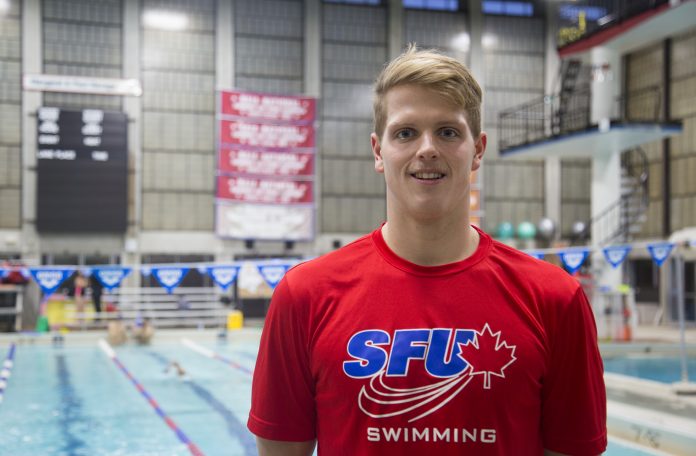
If Adrian VanderHelm’s journey had to be summarized in one sentence, the Muhammad Ali quote “Impossible is nothing” would probably be a good one. The freestyle swimmer revealed to The Peak where his passion for swimming came from.
“Swimming was never a family thing. I was the first person ever to swim in my family. I started swimming after the 2008 Olympics. I watched Michael Phelps winning gold and said to myself, ‘That’s pretty incredible. He is by far the most amazing athlete of all time.’”
Despite a tough childhood due to health-related problems, swimming has built VanderHelm’s confidence.
“I took it natural into the pool because I was overweight when I was young, so I was able to float really well,” he chuckled. “I had asthma and I was borderline diabetic. Swimming changed my life in a lot of ways. Because of it, I can attribute a multitude of positive impacts on my life. I wasn’t confident when I was younger and I was ashamed of my body. Swimming also helped me with health and social complications.”
While many student athletes deliberately choose SFU for its uniqueness in being the only Canadian institution in the National Collegiate Athletic Association (NCAA) Division II, the Ontario-native recalled what brought him all the way to the Canadian West Coast.
“SFU is chosen on three accounts. First, it is the only NCAA school outside of the States. I was born in the States and I wanted to compete in the States, but I wasn’t sure about living there. The second reason being three of my best friends go to SFU and they’re all from Barrie and they all went to SFU for swimming. I was interested to see if I could follow them out here and recombine my friendships with them.
“The third reason is that SFU is the only school in Canada that can offer full athletic scholarships, which I ended up obtaining.”
VanderHelm is the first member of the Clan swim team to qualify for the NCAA Division II Championship; he also became the first male All-American swimmer at SFU, achieving both accolades in his freshman year. But when it comes to the Olympic level, the likelihood of qualifying for the world’s most popular sports event is slim to none. For junior VanderHelm, this dream could become a reality, as he’s already been to the Olympic trials for the 2016 games.
“As a student athlete, I would say it is one of my biggest accomplishments if not my largest and most proud moment [thus] far. As college swimming goes, being able to swim at the Olympic trials in hope of representing Canada was another one of my top moments. I am still hoping to represent Canada at Tokyo 2020. That was always kind of my goal.
“2016 was kind of rushed. I haven’t been swimming for very long. I started swimming in Grade 9. Somebody like Phelps, or any other competitor, would start when they’re four or five.”
Despite his massive achievements in swimming, adjusting to the student-athlete lifestyle is an ongoing process for junior VanderHelm.
“My biggest struggle? I would have to say the choice between napping and studying. I don’t have a nap schedule, but I should really make one. It’s really hard to distinguish when it’s responsible and academically viable to take a nap versus study. You have to manage your time very well and that’s difficult because you need to sleep and eat [a] lot when you’re swimming. I’m in four courses and I have to get good grades in order to compete. Our coach set a goal for us to reach a 3.0 GPA. You have a sense of recompense when you feel like you’ve accomplished things socially, academically, and athletically. Those are the three pillars of my life.”
Apart from the benefits swimming had on his life, VanderHelm gives a lot of credit to coach Liam Donnelly for helping him grow as a person.
“We have four coaches on our team and I deal directly with Liam. He has coached athletes in the Olympics and the World Games. My relationship with him is really good and we have moments where we’re proud of each other. I plan on swimming after graduating and I would like to do that with coach Liam.”
Richmond mayor hopes to reduce Canada’s food waste by 50 percent by 2030

“The best way to make change in the world is to make it rather than talking about it,” said Massachusetts Institute of Technology (MIT) Media Lab professor Neri Oxman at Vancouver’s Zero Waste Conference.
The annual gathering brought together intellectuals, designers, and executives from diverse backgrounds to address the challenges of eliminating waste, while improving life for consumers in the process. The goal of the conference is to move to a “circular economy,” where everything is reused, recycled, or composted.
Oxman gave the morning keynote speech, explaining how the MIT Media Lab is drawing inspiration from nature in order to create replacements for plastics and new surfaces for buildings. In particular, she explained that “the world of design has been subjugated by the rigours of manufacturing and mass production.” She suggested designers could transition to using 3-D printing and reactive materials to build complex structures in one piece rather than assembling many different parts.
“We don’t want to work with plastics anymore in the products design realm,” she said, adding that instead we would have products that could biodegrade on demand.
Later in the conference, Stephanie Bertels, professor at SFU’s Beedie School of Business, hosted a discussion with industry leaders in redirecting waste from landfills. The audience heard from companies like Ecovative, which uses lab-grown fungus to make replacements for styrofoam packaging, and Looptworks, which has created designer luggage lines that use scraps of material collected from other industries.
The federal government joined in on the action, too. Joyce Murray, Liberal MP for Vancouver Quadra, told attendees that it was time the government “get [their] own house in order.” She explained that the government will take progressive steps to achieve a 40 percent cut to emissions by 2030, including shifting government fleets to electric and hybrid vehicles and retrofitting government buildings to make them more energy efficient.
The biggest announcement of the conference came when Richmond Mayor Malcolm Brodie spoke to the Zero Waste Committee’s desire to take a bite out of food waste.
He announced a newly created National Food Waste Reduction Strategy, which outlines different steps that will be taken with the goal of reducing food waste in Canada by 50 percent by 2030. Practical regulations to target food waste at the consumer and distributor ends by clarifying best-before labels on perishables and using tax credits to incentivize food bank donations over food disposal.
Vancouver has already been a hotbed of this kind of waste reduction and other green initiatives in recent years. Since 2008, the city has reduced its solid waste going to landfills by 23 percent, with the goal of reducing it by 50 percent by 2020. SFU has a similar program in place that has already achieved its goal of diverting 70 percent of solid waste from landfills.
For SFU students who are hungry for more opportunities to reduce their environmental footprint, they can also participate in the Food Rescue program organized by Embark, SFU’s student-led environmental organization.
The program receives donated food from the Nesters Market on Burnaby Mountain and hands it out to students in Blusson Hall.
The Peak is hiring for the spring semester!

Don’t give away your shot: The Peak is hiring for the spring semester. Applicants should send in a resume as well as a brief cover letter. Sample work relevant to the position(s) applied for is highly encouraged.
The Peak‘s hiring board is looking for the best and brightest SFU students to help report on stories that are of interest to the student body. If you are passionate about campus politics, arts and culture, local and regional sports, satire, leadership and management, photography, graphic design, in-depth investigation, sex jokes, and/or free pizza, this is the job for you.
Working for The Peak is an excellent way to gain hands-on experience in the field of journalism as well as building skills in communications, public relations, illustration and design, critical thinking, leadership, photography, and more. You will meet like minds who work hard and play hard in a high-energy environment.
Applicants must be registered SFU students for the duration of the semester for which they are applying. Previous experience with our newspaper is preferred, but not required. Please address your applications to The Peak hiring board at [email protected], or drop them off at our offices in MBC 2900. Any questions about the process can also be sent to this address.
Applications close on Friday, November 18 at 11:59 p.m. Job descriptions for available positions can be found below:
Weirdest research at SFU

Built on top of a mountain blanketed in fog, SFU was destined to have a mysterious, at times almost eerie, feel. Flash forward 50 years: SFU has become a leading Canadian research university. Hidden somewhere within the concrete expanse of SFU lays many research labs — each with their own story.
You may pass them on your way to a class, or while lost in the Shrum Science Centre, but for the majority of students here (in particular undergraduates), that’s the extent of our relationship with these labs.
These shrouds of intrigue have stories to tell. Here are some of the most eccentric research projects SFU has ever seen.
Fall for science
The slapstick comedy staple: a guy walking down the street and slipping on a banana peel still earns laughs to this day. However, if this were to happen in Dr. Stephen Robinovitch’s Injury Prevention and Mobility Lab, your fall would be a bunch of data points for the lab to analyze in the name of science — specifically to reduce fall-related injuries in seniors.
Even though most falls are “benign events,” Robinovitch explained that “falls are among [the] top 10 cause[s] of death in seniors. About 25 percent of hip fracture patients will die within one year, and 50 percent will have a major decline in independence, often moving from their community-based homes to long-term care.”
So along with Fabio Feldman (then a PhD student in his lab), he set out to study footage captured from cameras of common areas in long-term care facilities — the places where seniors would frequently fall.
After analyzing about 1,700 falls experienced by over 500 seniors, they were able to analyze the most common types of “imbalance events” that caused the falls.
Surprisingly, slips are rarely the cause of falls. Instead “incorrect shifting of body weight” and “loss of external support” were found to be the major causes. Though, even if there is no resultant injury, falls can result in “loss of confidence, fear of falling, and restriction of physical activity.”
But in this case, what they found isn’t as interesting as how they found it. For this and other studies, the researchers built the “Slipitron 2000”: a large “perturbation platform” that literally makes you fall.
Unsuspecting volunteers are fitted with reflective markers on their joints, and movements are recorded by a 3-D motion capture system. The volunteers then stand on a plastic rug which is on top of a flat cushy surface and, without notice, the rug is pulled off.
The data captured is fed into mathematical models to measure muscle activation, and other physics-related things that are far beyond my understanding.
After examining the videos, the researchers were wondering if there was indeed a way to teach people to fall. In other words, an ideal way to fall. Their answer: judo.
Judo practitioners train in the ukemi falling technique, where they don’t block a fall by stretching out their hands; instead, they fall sideways, slam their arm down, and roll it off. The judo experts performed as well as the average Joe on the Slipitron, suggesting that “hardwired responses may override training.”
Currently, the researchers are trying to analyze the benefit to seniors of exercise programs that focus on “training balance recovery and safe landing strategies.”
Paranormal activity: The research dimension
Some of us will always want to believe — and Dr. Paul Kingsbury’s research certainly adds fuel to the fire of any X-Files fanatics or Alien believers out there. He’s out there tracking and profiling UFOs, ghosts, and Bigfoot hunters.
As a cultural geographer, he has previously been to the Fusion Festival in Surrey to look at Bollywood music, Navroz celebrations in West Van to study the role of food, and has examined the role of TVs and cafés in Portuguese and Italian communities during the World Cup, to name a few. But nothing compares to his research into the supernatural seekers.
“The paranormal, in many parts of the world, has gone mainstream,” Kingsbury said, highlighting the influx of paranormal content in movies and in television.
The project doesn’t aim to prove or disprove the paranormal claims, but instead looks at “attending to their cultural aspects.”
Now two years into a four-year project, Kingsbury has gone on seven excursions with paranormal investigators across the Lower Mainland, as well as two UFO conferences, as part of his research. Unlike popular belief, UFO conferences (at least structurally) are increasingly mimicking regular academic conferences, where the attendees are a mix of lifelong devotees and novices.
As Kingsbury explained, “One of the reasons why people get into ghost investigations or ufology is that they themselves have experienced a paranormal activity that they can’t explain, and they want to interact with other like-minded people who wouldn’t judge them as crazy.” The investigators are mostly middle-class, average income individuals working in banal jobs, who like to try and explain the unexplainable each weekend.
The investigators do take the assistance of technology to aid them, such as voice recorders, electro-magnetic frequency machines, and the “spirit box.” These are used to scan different frequencies they claim can capture voices from the “other side.” The teams themselves are a paradox: while some use equipment to get to a basic scientific explanation and debunk the haunted feeling, the mediums try to “feel any presence or residual energies.” As Kingsbury said, “the typical paranormal investigator is a skeptic; they want to disprove the ghosts.”
When asked about a particularly spooky expedition, he recounted when he went to the Vancouver Police Museum. It was about 2:30 in the morning, in a room used to drain bodies before they went to the morgue. It was a spirit box session, during which he felt there was a sustained communication with a paranormal entity, from the way the paranormal investigator was interacting with the “obscure voice-like phenomenon.”
Oliver Keane, one of Kingsbury’s PhD students, is overseeing the cryptozoology aspect of the project, by analyzing sasquatch investigations. Cryptozoology looks at both folklore and fossils to study creatures whose existence is as yet unsubstantiated or questioned heavily. However, according to Kingsbury, this is no pseudoscience. As Keane mentioned, pieces of evidence have been examined relating to the sasquatch, the most prominent being footage captured by Patterson and Gimlin in Bluff Creek, CA, in 1967, showing what appears to be a “female sasquatch.”
According to Keane’s research, there have been striking similarities between the depictions of the sasquatch in First Nations stories and what investigators have imagined it to be through their findings.
Creepy, crawly research on campus
Saywell Hall, to me, is nothing but a long flight of stairs, followed by a longer walk to the bus loop. But did you know that under that corridor in a corner of that building lies an RCMP-protected research lab?
I sat down with Dr. Gail Anderson, a professor of forensic entomology and co-director of the Centre for Forensic Research at SFU, to enquire about how she studies insect-infected corpses to help law enforcement solve homicides.
When Anderson finished her PhD in pest management at SFU in the late ‘80s, she wasn’t set on what she wanted to do, though she “always wanted to do something applied.” In a quintessential moment of a mentor guiding their protégé, her biological sciences professor Dr. John Borden suggested she use her knowledge to aid police in a local homicide case.
Soon after that, she became the first full-time forensic entomologist in Canada.
Many of us would have dissected a rat, or an organ of some other animal in high school — likely with shaking hands and (hopefully) a calm stomach. Anderson, meanwhile, has conducted multiple studies using pig carcasses, which apparently make for an acceptable replacement for humans.
The process: leave the carcass on the ground, or bury them under ground — maybe submerge them in lakes — essentially observing how insects colonize carcasses in different environments.
Given the ostensibly odd methodology of solving crime, she recalled that law enforcement was quite welcoming of her, and she would often get calls from cops to come inspect a body. The trust has built up over time. As she put it, “once they saw it in action, once I had a case, and I could come up with results that could help the case, then they started to appreciate it more.”
Repeatedly collecting samples and examining them is a task very few may be able to do regularly, but Anderson has been able to do important research without flinching.
“Every one of them is different,” she said, when asked if any case stands out to her. “The ones that stand out are the ones that I testified in,” she added. In one of the more infamous cases, her work helped convict Robert Pickton, a serial killer who was charged with the killings of more than two dozen Vancouver women.
Anderson said that interest in forensic entomology is growing rapidly. Who knows where we will be with this kind of science in a few years.
The Vancouver Tea Festival is back and bringing even more to the table
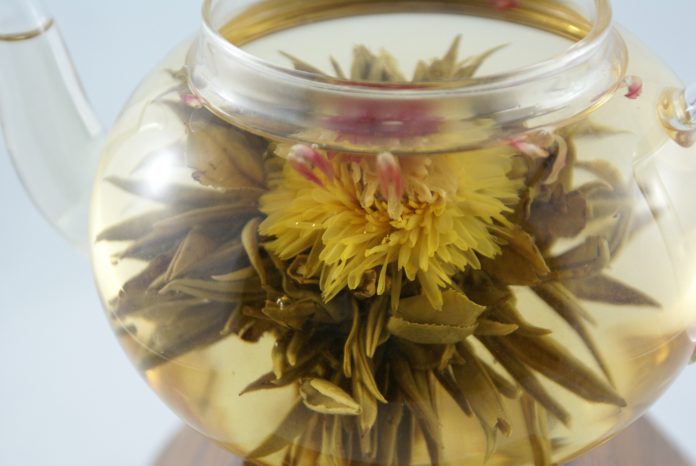
The Vancouver Tea Festival is set to kick of its third year November 5 at the Dr. Sun Yat-Sen Classical Chinese Garden and the Chinese Cultural Centre of Greater Vancouver.
Don’t worry, though: just because the festival is located in Chinatown this year doesn’t mean it will only talk about and sample Chinese teas. Featuring a marketplace of almost 30 tea purveyors, you would be hard-pressed not to find something you like or that’s in your budget.
Not only does your ticket grant you access to the by-donation workshops and tastings throughout the day (the event runs from 10 a.m. to 6 p.m. — that’s a lot of tea!), but it also lets you into the Chinese Garden.
New to the festival this year are plants for sale, tea leaf readings, music, and botanical experts who will be on site.
Festival co-founder and executive director, Del Tamborini — an SFU alumnus and instructor at Vancouver Community College (VCC) for the tea sommelier certification program — talked with The Peak about the festival’s inception, present, and future.
It all started with innocent musings with his friend and colleague, Sharryn Modder, about why Vancouver didn’t have a tea festival — especially since Vancouver is “A gastronomically sophisticated city with such a fondness for quality food and drink.” Together, they brought even more friends into the fold, and created the Vancouver Tea Society, a non-profit with the goal of fostering tea culture, promoting knowledge, and appreciating specialty tea in Vancouver.
The biggest challenge of putting on the festival each year?
According to Tamborini, it’s marketing: “Just getting the word out, ensuring people know this event is happening, and even more than that, communicating to people why it’s worth their time and money to come.” A secondary challenge is keeping it a fresh experience, but Tamborini and company still have plenty of ideas to innovate for future festivals.
Part of future aspirations for the festival include Tamborini’s goal to “Increase the international dimension of the festival in future years and, as our budget allows, bring in some prominent speakers or presenters from the tea industry in other parts of the world. We’ve already had interest in speaking [or] presenting at the festival from several luminaries within the tea world.”
When asked if he likes tea, Tamborini laughed, “You could say that. I eat — well, drink — sleep, and breathe it.” He added that he has thousands of different types of tea in his home and, in addition to the Vancouver Tea Society and teaching at VCC, Tamborini is also working on establishing several companies “that are either tea-focused or have a tea component to them.”
If you don’t have thousands of teas in your home and want to expand your tea repertoire, the Vancouver Tea Festival is your destination for expertise and experience.
To end off with a tea joke, courtesy of Tamborini:
Why did Karl Marx only drink herbal tea?
Because “proper tea” is theft!
NEW MUSIC FRIDAY

By: Sarah Finley, Courtney Miller, Anahi Silva Palomec, and Jessica Whitesel
Follow The Peak on Spotify to stay up to date on New Music Friday.
“Setting Fires” – The Chainsmokers feat. XYLØ
Jessica Whitesel: Bless the Chainsmokers for going beyond “#Selfie,” but damn them for making basically the same song over, and over, and over. It’s a little much now. Maybe one day I’ll rank all of their samey-sounding songs in order from worst to best, but based on what my sleep-deprived brain remembers of the rest of their music this one is going to be pretty close to worst.
Anahi Silva Palomec: I can’t say these lyrics will be winning the next Nobel Prize for Literature, but the beat is a good substitute for coffee when trying to drag yourself out of bed at 7 a.m.
Sarah Finley: I mean … they tried. They really did. This song is just too boring; it sounds like they took a Tumblr text post, “Set on fire to keep you warm,” and then auto-tuned the shit out of it. I’ll pass.
Courtney Miller: When it started I was like, this is probably going to be something I dislike. But funnily enough, I kind of dig it. It’s the kind of synth-heavy pop you need to be in the mood for, but the vocals, beat, and track are all pretty solid. It made my work much more entertaining, but it’s nothing new.
“Highway Vagabond” – Miranda Lambert
JW: Well, it sure is country, but in like a lyrically old-timey way. It’s nice that it has nothing to do with breaking up, drinking beer, having sex in a pickup truck (directly), or America being the greatest place ever. That being said, I’ll never listen to it again if I can avoid it because it wasn’t that good.
ASP: Because Lambert fits into the country genre and the song still has nothing to do with back porches and breakups in Texas, I commend her. However, the song still rings as repetitive and drawn out far too long.
SF: If you’ve been thinking to yourself lately, “I really want to listen to my wanderlust angst being verbalized with a dramatized Southern drawl,” this is the track for you. These lyrics admittedly are right up my alley —- wanting to drop everything in favor of a road trip — but I’d rather listen to Mac DeMarco or Stu Larsen sing them tbh.
CM: The vocals have a weird echoey thing happening that I don’t like. It makes it hard to understand the lyrics, but there’s still enough twang in the mush to know it’s country. It’s like it was recorded underwater almost. I actually quite like Miranda Lambert, I’m just not feeling this song. The intro guitar bit was solid though.
“Peace Trail” – Neil Young
JW: The first rule of listening to Neil Young is to not think about what he looks like. Seriously, he looks a little axe murderer-y. The second rule is to appreciate that he’s been making some pretty similar music for well over 40 years, but still manages to make it feel fresh in a classic rock kind of way. While this isn’t his strongest track ever — it just feels a little unbalanced, like it’s live but clearly isn’t — it’s still not too bad either, so that’s a bonus.
ASP: Despite his name, the Canadian singer is really old and being able to still turn out some good music is impressive. Young’s new track delivers soft-spoken vocals and a powerful message: “If I believe in someone, I have to believe in myself.” A nice contrast to 2016’s favourite themes of booties and money.
SF: This is the perfect track for sadly staring out a bus window on a rainy day. Gentle and soft, complete with quiet shakers in the background, this will be making you nostalgic over all those memories that up until now you’d been so successful at suppressing.
CM: The best way to describe it is that it’s Neil Young. Kinda folksy, a little bluesy, strained vocals that don’t do much for me. I also feel like it’s a little long and that there were plenty of musical breaks in the middle of the song that did not have to be as long as they were. Long songs are good if they’re long with reason. This wasn’t. Even so, props for still kicking after several decades.
“Burn Break Crash” – Aanysa feat. Snakehips
JW: OK, 2005 was only 11 years ago, people, and it wasn’t that great tbh, so for the love of all that is good in this world, stop trying to bring it back. This song is about three members short of a DC4-era Destiny’s Child non-single. It’s kind of terrible. So in the words of the song: “All I wanna do is burn, break, crash, and explode” this song.
ASP: This starts out really well with some cool beat sampling (it could be some glass sounds), but it immediately goes downhill. If I had to choose between listening to this song again for another 30 seconds or reliving midterms, I’d definitely choose midterms.
SF: Suddenly I am transported back to the cafeteria of my middle school, surrounded by sweaty 12-year-olds trying to dance with each other under a half-broken disco ball. When can we move away from songs about how captivating dudes are? I’m tired.
CM: The high-ish tempo makes the optimism pour out of this song. “I’ve tried, but I can’t hate you” sums it up pretty well. It’s not a great song, it’s not a very different song, but it’s still catchy and fun, and I like it despite not liking a lot of other similar tunes. Lyrics could use some work, though, for sure.
“Versace on the Floor” – Bruno Mars
JW: Bruno Mars started wearing track suits and chains and turned into your creepy uncle. This song is the embodiment of that. Also it sounds like the ’90s, and not in a good way. I can picture so many things happening in my head right now and I’ve managed to simultaneously make myself sad and realize there are a lot of ’90s music videos swirling in the darkest corners of my mind. The ’90s were a dark and strange time.
ASP: Whoa, where are the mullets, because this song takes you back to a time when the music was abnormally slow and ways too dramatic. The ballad has the melodic influence of Boyz II Men, with a hint of Lionel Richie. Turn back, Bruno, before it’s too late.
SF: I’ve admittedly never been a Bruno Mars person (I was that one in your friend group who took it personally that for the Super Bowl, the halftime show was advertised as Bruno Mars featuring Beyoncé — excuse me?). This is just a whole new level of tacky-bad-romance with Bruno staying at the edge of his vocal range for the entirety of the song. Make it stop.
CM: Mars is back with his smooth vocals. I personally don’t know anyone with Versace who would just toss it on the floor, not even for sex, so it’s one of those unrealistic songs about sex. The creep factor is definitely there, too. Don’t add it to your getting busy playlist.
“Måste va en dröm” – Christoffer Gustafsson
JW: I’ve listened to a lot of Swedish music since starting New Music Friday. Normally I like it because it’s different, not just linguistically but also musically. So when this song started playing I immediately felt like it should have been on the soundtrack for Life as a House, a movie from 2001 that I now realize I only watched multiple times because it had Hayden Christensen in it. Oh, 15-year-old me you were a mess. Just like this song.
ASP: I love that this piece highlights the simplicity of the guitar and percussion instrumentals. The relaxed mood makes for a really great downtime listen.
SF: Gentle vocals with lyrics in a different language — the perfect song to casually show off to that new bae you’ve been trying to impress, not-so-subtly hinting that you’re cultured AF. In all honesty, the instrumentals are beautifully arranged and this track as a whole is perfectly calming.
CM: It starts off musically introspective and reflective with a twinge of sadness, and stays that way consistently throughout the four minutes. It’s not mind-numbingly slow — it’s just on the border of what an acceptable tempo for a sleepy-time playlist. The vocals are calming, even if there’s only one lyric in English.
“Faith” – Stevie Wonder feat. Ariana Grande
JW: I can see every choir and a capella group singing this from now to Lord knows when. That’s not a good thing. What makes choir and a capella interesting is changing up arrangements of well-known songs to make them unique. This one is just a few people short of already being there, and honestly don’t half-ass two things — whole-ass one thing. Either be a choir or don’t.
ASP: You can never go wrong with Stevie Wonder and usually I can’t stand Ariana Grande, but their voices entwine harmonically in this piece without overpowering one another. This song is kind of exhausting to listen to though, so I wouldn’t prescribe more than one listen.
SF: Stevie Wonder and Ariana Grande is a duo I never would’ve imagined in my wildest dreams, but honestly they make it work. Upbeat enough to motivate you right before you run a marathon, I can only imagine what a live performance of this would look like.
CM: The rhythm in this is top notch. It’s fun, the vocals are classy, and the melody works really well. I don’t know what the lyrics are yet, but I want to sing along and just groove around. Approved.
“Elegy” – Leif Vollebekk
JW: Not going to lie, this sounds kind of like a bluesier James Bay that’s singing some sort of mediocre poem. Lyrically it’s meh, vocally it could be going places, and musically it sounds like a looped track made in GarageBand. I’d be willing to try to listen to more of his music, but if it sounds like this I’m going to be so disappointed about the wasted potential.
ASP: This track feels less like a song and more like a short, sad story set to music. It transports the listener through Vollebekk’s experiences with the descriptive lyrics. I’m just not sure if I want to be transported there.
SF: Sad romantic lyrics sung over slow piano and rim hits on a snare make this track the perfect addition to your heartbreak playlist. I’m a sucker for sad songs, and this is no exception.
CM: This starts off super mournful, and then the percussion slides in and lifts everything up just enough to make it sound more nostalgic than melancholic. It’s a little bluesy and his voice is bluesy too, although you can hear the folk in it. If you’re feeling a little sad, but not completely down in the dumps, this is your tune.
“Oceans” – Leo Stannard
JW: Oceans are cool because they have sharks, octopuses, and all kinds of other amazing life forms. Also there’s the crashing of waves, the salt spray, and something that makes you feel alive blowing through the air. This song has none of that and could be described, at best, as meh.
ASP: The repetition in this song works to Stannard’s advantage. It reinforces the feeling of idleness and emotional immobility, while also taking a rather overused beat and making it sound almost fresh.
SF: Stannard’s unique voice makes this mildly angsty track significantly better than your typical angsty track. Stannard’s angstiness and my own seem to align, so perhaps that’s why I like this track so much, but if you’re a uni student feeling claustrophobically trapped on all sides by midterms, stress, and shitty weather, this may be the track for you, too.
CM: If you were going to create a photo montage with brief breaks of funny video of you and your friends at the beach one summer with that old-timey camera filter, this would be the song you picked for at least part of your soundtrack. For whatever reason, I can see Taylor Swift doing that kind of video to this song. Take that how you like.
“Ghosting” – Rykka
JW: I want to ghost on this song. It’s alright, but it’s been done so many times before and it’s been done better. This is like the off-brand love child of Taylor Swift, Carly Rae Jepsen, and the Chainsmokers. I stuck it out to the end but, like, I don’t get paid enough to have to put up with that kind of shit on a regular basis.
ASP: I can only hear “we’re ghosting” so many times before buying this CD just so I can set it on fire. The only good thing about the song was the imitation of a Stranger Things-sounding intro. Sadly, that only lasted a whole six seconds of the song.
SF: Gh-gh-gh-gh-ghosting. Muted instrumentals in the distance combined with an impressively limited vocal range, I could barely make it through this entire track. Don’t waste your time.
CM: I like the flow of the lyrics, the melody, and the vocals. The track is fine, it’s dynamic enough not to bore me unacceptably. Rykka uses “ghosting” in a new way: “We’re ghosting away to paradise.” But overall the song is just kind of average.
“Find Me” (Radio Edit) – Sigma feat. Birdy
JW: This is a pretty cinematic song. I feel like there should be someone running across a field or something like that. But it sort of is a mishmash and sounds like a sanitized Disney-ified Florence and the Machine, with some weird EDM effects thrown in because why the fuck not? It’s 2016 and nothing makes sense anyways. ¯\_(ツ)_/¯
ASP: Birdy’s voice has the same haunting tone as that of Lana Del Rey, but the song can’t seem to decide what to focus on. It jumps between some weird and overpowering EDM beat to her voice. I’ll get back to it when it decides to be less disjointed.
SF: Damn, the sad tracks on this playlist are hitting me hard. Birdy’s voice is the kind that makes you cry over relationship woes you’ve never even experienced. The opposite of Rykka, Birdy’s vocal range made me feel all the things that I was not necessarily prepared to feel.
CM: This song starts off purposefully slow, and by the time it ends, it’s gone through such a good buildup that I can’t help liking it. The vocal range is impressive and the power is nice. It’s not my usual style, but it’s enjoyable.
“The Drugs” – Mother Mother
JW: I mean, while the message is kind of nice, “You’re better than the drugs I used to love,” it’s also kind of very super problematic. DON’T be addicted to a person, it can be just as destructive as drugs. Also musically it’s repetitive, boring, Franz Ferdinand-esque 2004 alt-rock. Pass.
ASP: This song creates a cohesive melody, lyrics, and tone blend. Checkmark for that. Maybe it is because the song is formulaic in its soundscape so they didn’t have to work that hard to come up with the melody. A little tired.
SF: Pro tip to anyone out there who dates men: if any boy who’s too attractive for his own good ever says some shit like “you’re better than the drugs I used to love,” run away and don’t look back. His fake poetic ass won’t be worth sticking around for. I promise.
CM: Classic Mother Mother vocals blends with Ryan Guldemond’s slightly skewed voice, combining with the cleaner vocals from Guldemond’s sister, Molly, and Jasmin Parkin. It’s a great alt-rock tune and stays true to what fans of Mother Mother have loved about them since the beginning. But yeah, lyrically the sentiment is problematic.
Student society blues: corruption in student governments is too rampant to ignore

[dropcap]T[/dropcap]he Connected slate thought they were in for summer lovin’ when they took over the Simon Fraser Student Society (SFSS) office space this past May. But soon, it turned out that their first semester in office would be one filled with summertime sadness, as president Deepak Sharma resigned less than six weeks into his year mandate.
This story was hot on the tails of the news that the Highland Pub would be closed all summer due to a deficit. Now cue the start of this Fall semester: athletes and students are told there will be no stadium built, despite the overwhelming approval of the project in the 2015 Annual General Meeting.
The SFSS Board of Directors have had no honeymoon period with the student populace, and with the byelection right around the corner, a lot of students are left asking themselves how we as a student body got here.
As long as I’ve been a student at SFU, I can recall some scandal involving the SFSS. From the alleged physical altercation between two elected members, to speculations that the Build SFU campaign was withholding information, to now running half their board meetings behind closed doors, the SFSS can’t stay out of trouble.
I — like a lot of SFU students, I assume — found all the scandals tiresome and disenfranchising. I just wanted the disputes to end and for someone to address my concerns with the U-Pass program, student fees, and resources available to me; but I found myself waiting for the SFSS president that never came. I have in recent semesters, however, come to believe this isn’t inherently the fault of the SFSS. Rather, the responsibility landed on me: the student and the voter.
I’ll admit it: I didn’t vote in the elections my first two years as a student here. The first year I voted, I did minimal research, and attended no debates. This, of course, didn’t stop me from being frustrated with my student government. I was part of the reason why subpar, underqualified, and uninspiring candidates were being elected to positions of power.
I’ll never be able to go back in time and vote for a president who doesn’t make a ridiculous Disney reference every other sentence, but I can try and encourage all of my fellow students to take an interest in the election, even if it is a byelection for a student president. Comparatively, the SFSS has been a passable student union. Below are some examples of what happens when students don’t get to know their candidates, and accidently elect sadness.
Mount Royal University (MRU)
In 2012, a former student union president robbed a bank shortly after resigning from her position. Meghan Darcy Melnyk reportedly walked into a local credit union in Calgary, and gave a note to a bank teller asking for an undisclosed amount of money, further suggesting she was in possession of a weapon. Melnyk was caught and processed, but left in her wake a shocked student population.
Kwantlen Polytechnic University (KPU)
When people think of 2005, they think frosted tips, flared jeans, and Gwen Stefani’s problematic hit, “Hollaback Girl.” Unless of course you were a KPU student at that time, in which case all you can think about is how you were allegedly robbed by the student society representing you. As The Ubyssey reported, the student union ended up suing five of its former executive members for allegedly mishandling millions of dollars in student fees.
It all started when Aaron Takhar was appointed the head of the student union. Soon after becoming chairperson, changes in bylaws came flooding in. In a Special General Meeting (SGM), the student association presented a 200-page document to be voted on. With special prize giveaways at the SGM, like tropical vacations, students probably didn’t much care what was on those 200 pages. Some of these changes, of course, were questionable in nature: during Takhar’s reign, executive directors saw a salary increase of 130 percent, democratically elected councillors lost their positions, and others had their mandate doubled.
After Takhar finished his rule as chairman, he did not rerun. The former councillors who were expelled after the SGM, however, found themselves back in office. They committed themselves to auditing the society’s recent activity. What the audit revealed was shocking. The Ubyssey reported “nearly $150,000 of student funds had been paid out without supporting documents. This included $67,000 paid to a consulting firm called AST Ventures, which Aaron Takhar later confirmed to Maclean’s that he was the sole director of upon incorporation.”
The audit also alleged election manipulation and missing financial documents, but these allegations have not yet been proven in court. Takhar moved forward by transferring to SFU in 2006.
University of Regina (U of R)
While serving as VP of finance on the University of Regina Students’ Union (URSU), Haanim Nur admitted that she misused funds at students’ expense. At that same time, Nur reportedly held a position with the Canadian Federation of Students (CFS), and neither association was keen to confirm that the stolen funds were theirs to claim. Nevertheless, Nur was was under investigation from the CFS for forging cheques that totalled $700.
During this investigation, however, Nur continued her candidacy for URSU president, and was triumphantly elected by the student population despite the ongoing investigation into the missing funds.
Taste of playoffs bittersweet for women’s soccer with first-round exit

Win or lose, SFU’s women’s soccer team had already made history. In the team’s first-ever playoff appearance in it’s National Collegiate Athletic Association (NCAA) era, the Clan was the underdog against a Western Washington team that was ranked first nationally and had been undefeated in the regular season.
For the team, it wasn’t good enough just to make the playoffs — even if they were faced with the toughest matchup in Division II women’s soccer.
“One of our goals this year was to make the Great Northwest Athletic Conference [GNAC] [playoffs], but for us it was something that we assumed we could reach — it wasn’t an unattainable goal,” said assistant coach Anna Picarelli. “Going further in the playoffs was our bigger goal.
“A lot of people expected us to come in this game with the mentality of nothing to lose, but for us, [our mindset] was to come out and show them that we’re more than [that] — we’re somebody who wants to compete,” she continued. “I think the girls showed that. It was unfortunate what the scoreline was, but I don’t think that was the tale of the game.”
In the end, SFU fell 3–0 to the team whose only blemish all regular season was a 0–0 tie. Western Washington held possession for much of the game, and was just too fast. The team gave up few chances, and had some deadly opportunities that could have made the score greater than 3–0 were it not for SFU goalkeeper Priya Sandhu.
Despite this, SFU held on for much of the first half. Western Washington was awarded numerous free kick opportunities, but Sandhu kept the door shut. The Clan’s best chance of the half came about 10 minutes in, when Monpreet Heer set up Katelyn Erhardsen with a scoring opportunity to give them the lead, but Erhardsen’s shot went just wide.
Western Washington finally got on the board with 13:56 left in the half. It turned out to be all they needed, but in the second half, the Vikings shored up their lead with two goals scored within 1:17 of each other.
“A lot of people expected us to come in this game with the mentality of nothing to lose”
SFU put up some solid chances in the last part of the game, but was ultimately shut out. Sandhu made eight saves in the game.
Though the first-round playoff loss on home field stings, the women’s team has made some clear progress. The second consecutive year that SFU’s home field played host to the GNAC Championship, it was the first time in NCAA history that the team has made the playoffs, having fallen just one win short last season.
When head coach Annie Hamel took over in 2014, she inherited a team that in its previous three seasons had only four wins combined. After her first season where the team went 2–16, SFU put up consecutive winning records. And now they’ve had a taste of playoff action.
“It’s one step forward for the program, and hopefully next year we take one more,” said Picarelli.
Now comes the time to put in the work to take that next step.
“The offseason, that’s our favourite time of year,” explained Picarelli. “It’s our time to actually give the girls proper training and hours on the ball. When you’re in season, it’s one day of training and then a recovery day, then a game, and it’s really hard to actually be able to teach.”
With two consecutive Freshman of the Year awards, recruiting has been a strong spot for the team. With some solid additions, this SFU core could certainly take that next step in the coming season.
While the game’s result was a heartbreaker, the future is bright for this young team.


